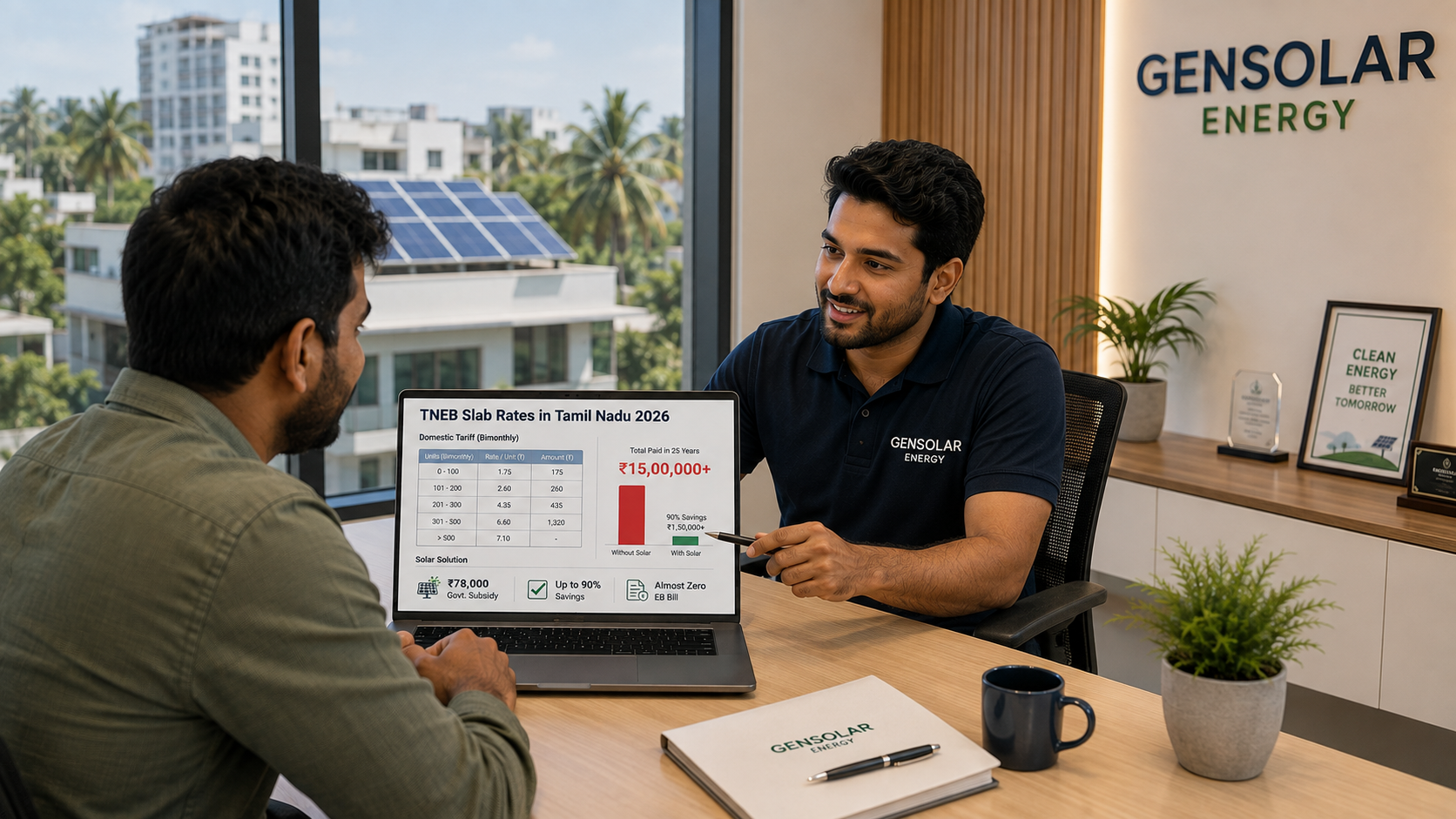
Why is my TNEB bill above Rs 4,000 every two months?
Almost every Chennai household asks the same question when the bimonthly bill lands: nothing changed at home, so why does the amount keep climbing? The answer is not your air conditioner alone — it is the way TNEB prices electricity. Tamil Nadu uses a telescopic slab tariff, which means the last units you consume are charged at four to five times the rate of the first ones. Cross a slab boundary by even fifty units and the marginal cost of your electricity jumps sharply.
This guide breaks down the current slab structure, shows what a a custom quote bimonthly bill actually costs across 25 years once normal tariff escalation is applied, and explains exactly how a rooftop solar system with net metering removes the expensive top slabs from your bill. You can check your own numbers any time with the GenSolar Solar Calculator.
Update: Tamil Nadu state top-up starts in September 2026
From 21 September 2026, Tamil Nadu adds a state top-up to PM Surya Ghar. Combined central and state support is now up to ₹1,00,000 for eligible residential systems of 3 kW and above — ₹78,000 central plus ₹22,000 from the state. Read the full Tamil Nadu ₹1 lakh solar subsidy guide for the new slabs, application steps and payment timeline.
What Is the TNEB Slab System — And Why It Punishes Higher Users
TNEB bills domestic consumers on a two-month cycle, and consumption is split into slabs. The first 100 units in a bimonthly cycle are free for eligible domestic consumers. Every block above that is charged at a progressively higher rate, and only the units that fall inside a block are charged at that block's rate.
The consequence is simple: the cheapest units are the ones you use first, and the most expensive are the last few hundred. A family consuming 900 units bimonthly is paying nearly Rs 9.45 per unit at the top of its consumption while the neighbour using 400 units pays Rs 2.35 at the top of theirs. Solar removes units from the top of the stack — the expensive end — which is why the bill reduction is far larger than a straight percentage of consumption suggests.
| Units consumed (per 2 months) | Rate per unit |
|---|---|
| 0 – 100 units | Free |
| 101 – 400 units | Rs 2.35 |
| 401 – 500 units | Rs 4.70 |
| 501 – 600 units | Rs 6.30 |
| 601 – 800 units | Rs 8.40 |
| 801 – 1000 units | Rs 9.45 |
| Above 1000 units | Rs 10.50 |
The Real Cost of a a custom quote Bimonthly Bill Over 25 Years
A Rs 5,000 bimonthly bill looks manageable — it is Rs 30,000 a year. The problem is that electricity tariffs do not stay still. Applying a conservative 6% annual escalation, which is roughly what Tamil Nadu consumers have experienced over the last decade, the same household's yearly outgo more than quadruples by year 25.
Across the full 25-year window, that a custom quote bimonthly bill costs the household a custom quote. That figure is the honest comparison point for a rooftop solar system — not the first year's saving, but the entire bill you would otherwise have paid to TNEB over the life of the panels.
| Year | Annual electricity bill |
|---|---|
| Year 1 | Rs 30,000 |
| Year 5 | Rs 37,900 |
| Year 10 | Rs 50,700 |
| Year 15 | Rs 67,900 |
| Year 20 | Rs 90,800 |
| Year 25 | Rs 1,21,500 |
| Cumulative 25-year total | Rs 16,45,700 |
How Rooftop Solar Actually Escapes the Slab
A grid-connected rooftop system does not store your power — it offsets it. During daylight hours the array supplies the house directly, and whatever is not consumed flows out to the TNEB grid through a bidirectional net meter. At night, or on a cloudy afternoon, you draw back from the grid. At the end of the billing cycle TNEB nets the exported units against the imported units and bills you only on the difference.
This is why the saving is disproportionate. If your household consumes 900 units bimonthly and a 3 kW system generates around 720 to 800 units in that period, the units that disappear from your bill are the ones charged at a custom quote and a custom quote — the top of the slab, not the bottom. Most Chennai homes we install for see their bill fall by 80% to 95%, with many left paying only the fixed charges.
The two numbers that matter are generation and consumption. Size the system to your actual bimonthly consumption pattern, not to your roof area, and the slab structure does the rest of the work for you.
- Daytime generation supplies the house first
- Surplus units are exported and credited by the net meter
- Import and export are netted each billing cycle
- Solar removes the most expensive slabs first
The Real Cost of Solar in Chennai — And Why Now
The most common residential size in Chennai is 3 kW, typically quoted between a custom quote and a custom quote fully installed. Take a a custom quote example and follow the actual money flow rather than the sticker price.
- Step 1 — System requirements are confirmed after the roof survey and a custom quote is approved
- Step 2 — You pay a a custom quote down payment to begin the order
- Step 3 — Eligible customers can explore collateral-free PM Surya Ghar bank loans, subject to the lender's terms
- Step 4 — Installation is completed in 8 to 10 hours; TNEB net metering follows in roughly 2 to 10 days
- Step 5 — After commissioning, the Rs 78,000 central subsidy is credited directly to your bank account
- Step 6 — You prepay the subsidy into the loan, leaving an effective cost of about a custom quote after accounting for the down payment and subsidy against the financed amount
PM Surya Ghar Subsidy — The Central Government Cashback You're Missing
PM Surya Ghar: Muft Bijli Yojana pays a fixed central financial assistance amount based on installed capacity, not on invoice value. The slabs are Rs 30,000 for 1 kW, Rs 60,000 for 2 kW and Rs 78,000 for 3 kW and above — and Rs 78,000 is a hard cap, so a 5 kW or 10 kW home system receives exactly the same amount as a 3 kW one.
The subsidy is transferred directly to the beneficiary's bank account after commissioning. It is never paid to the installer, and any vendor asking you to sign it over to them is operating outside the scheme rules.
| System size | Central subsidy |
|---|---|
| 1 kW | Rs 30,000 |
| 2 kW | Rs 60,000 |
| 3 kW and above | Rs 78,000 (capped) |
Which Chennai Homes Benefit Most
Solar pays back fastest for households already sitting in the upper slabs. If your bimonthly bill is above Rs 3,000, you own or control the terrace, and the roof gets unshaded sun between 9 am and 4 pm, a 3 kW system is very likely to be the highest-return investment available to you at a 3 to 4 year payback on a 25-year asset.
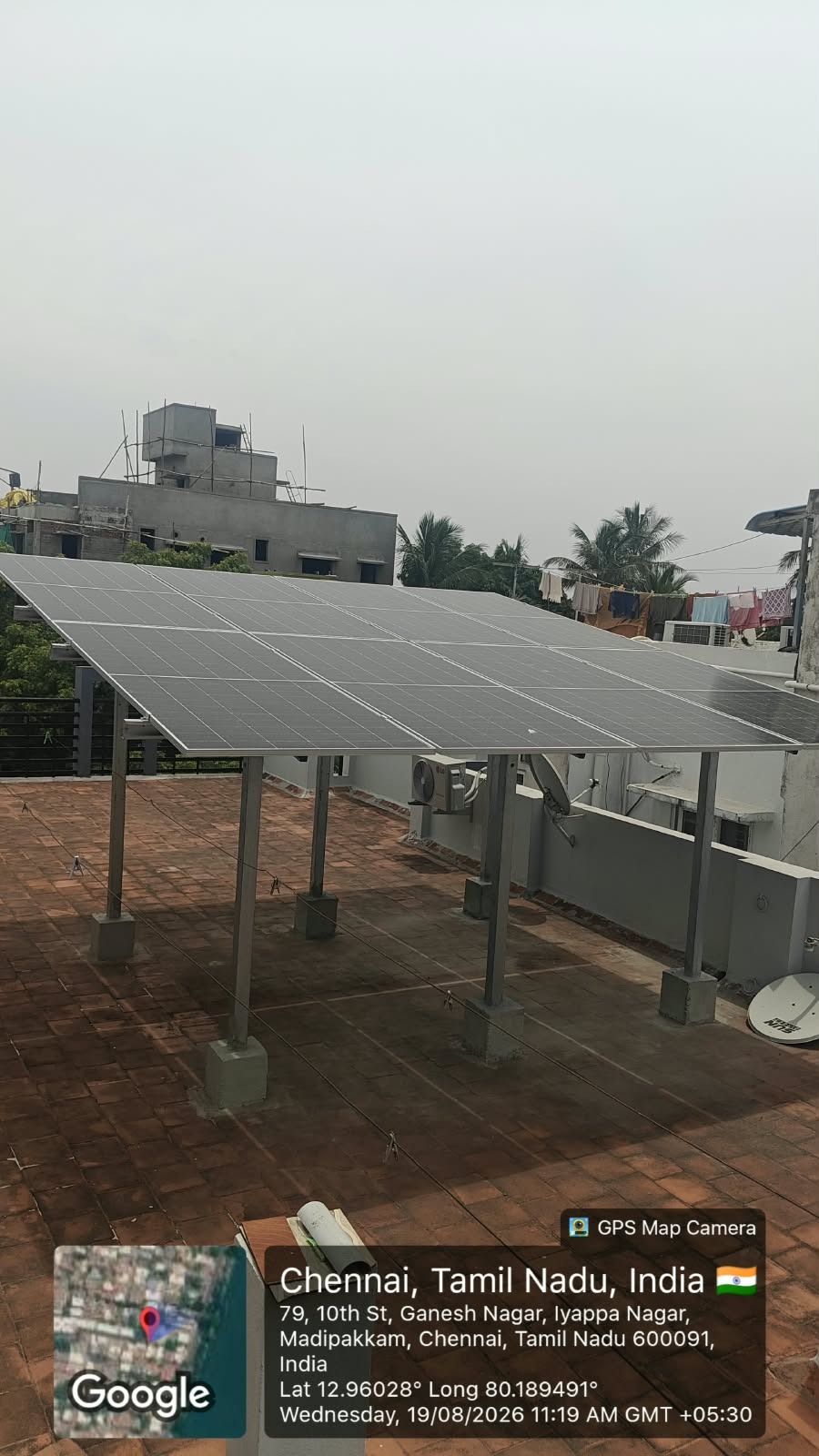
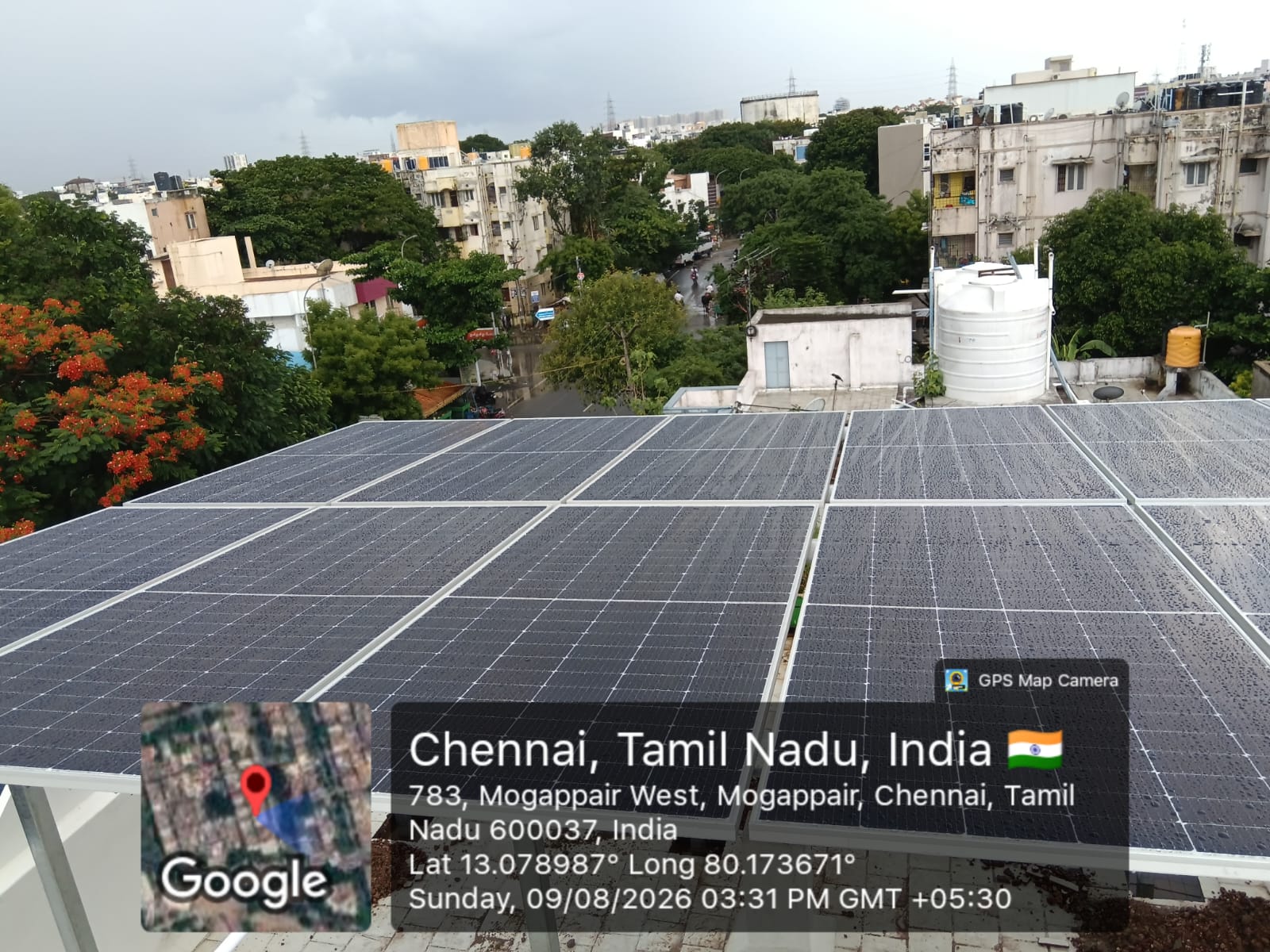
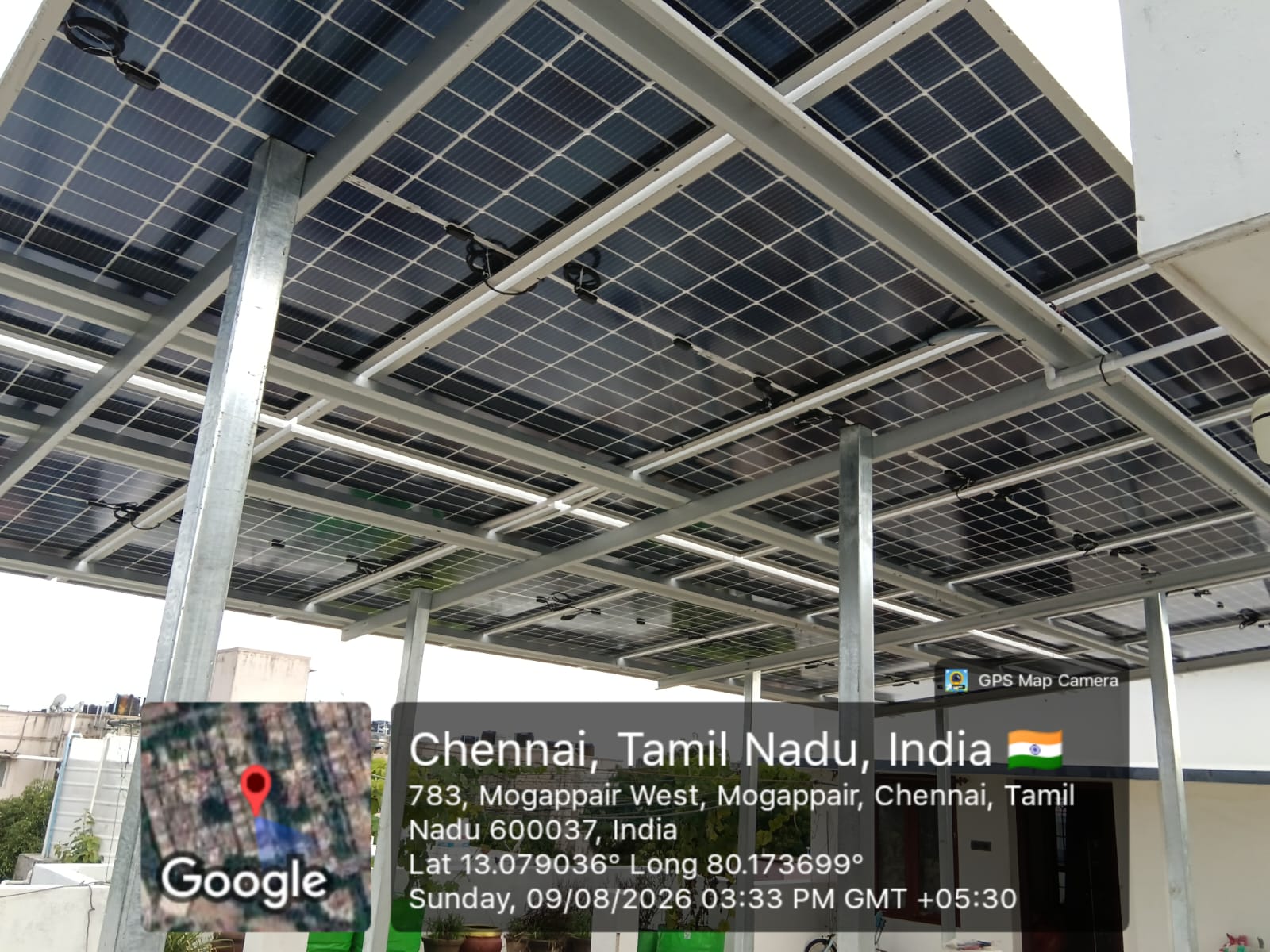
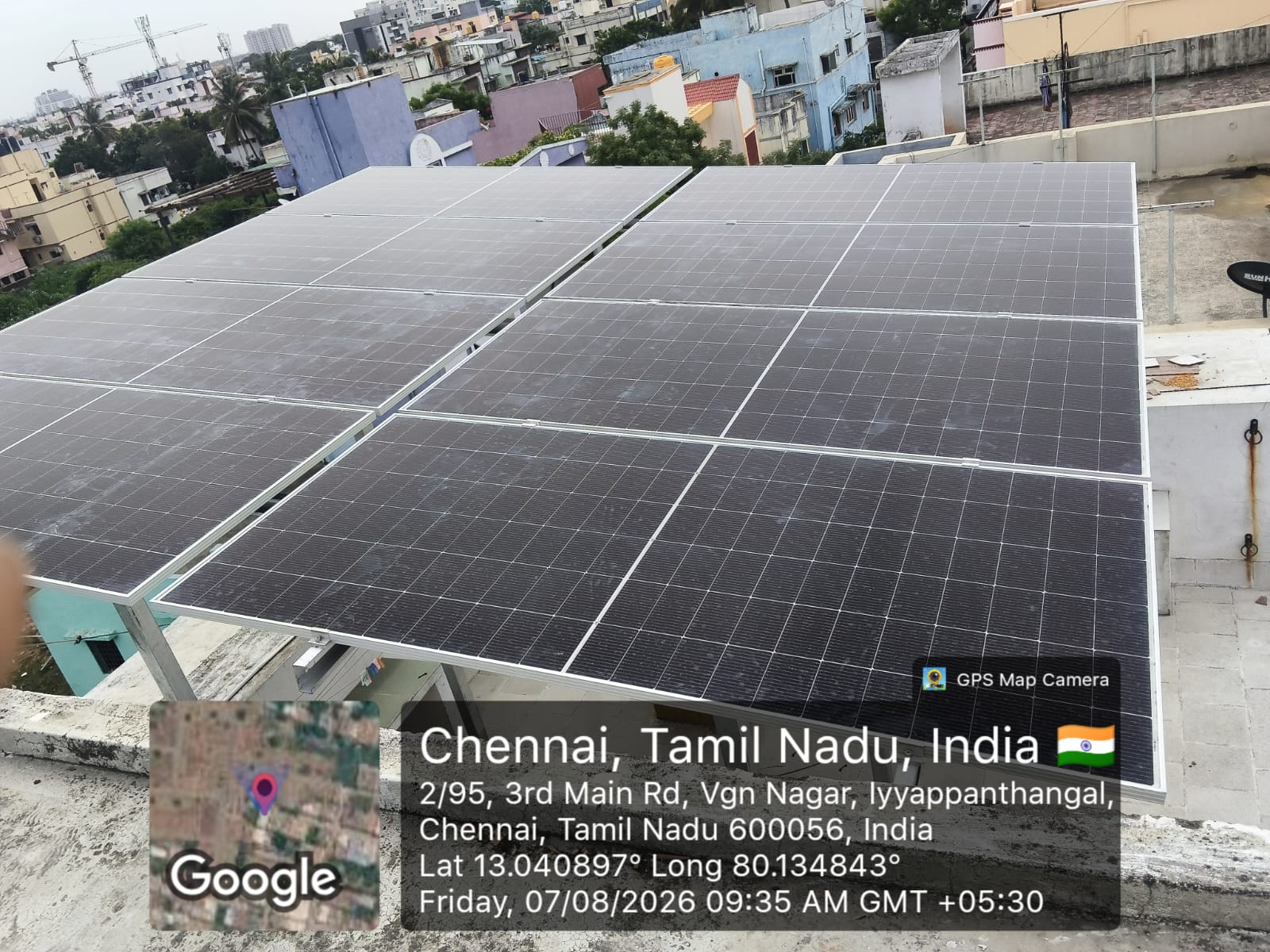
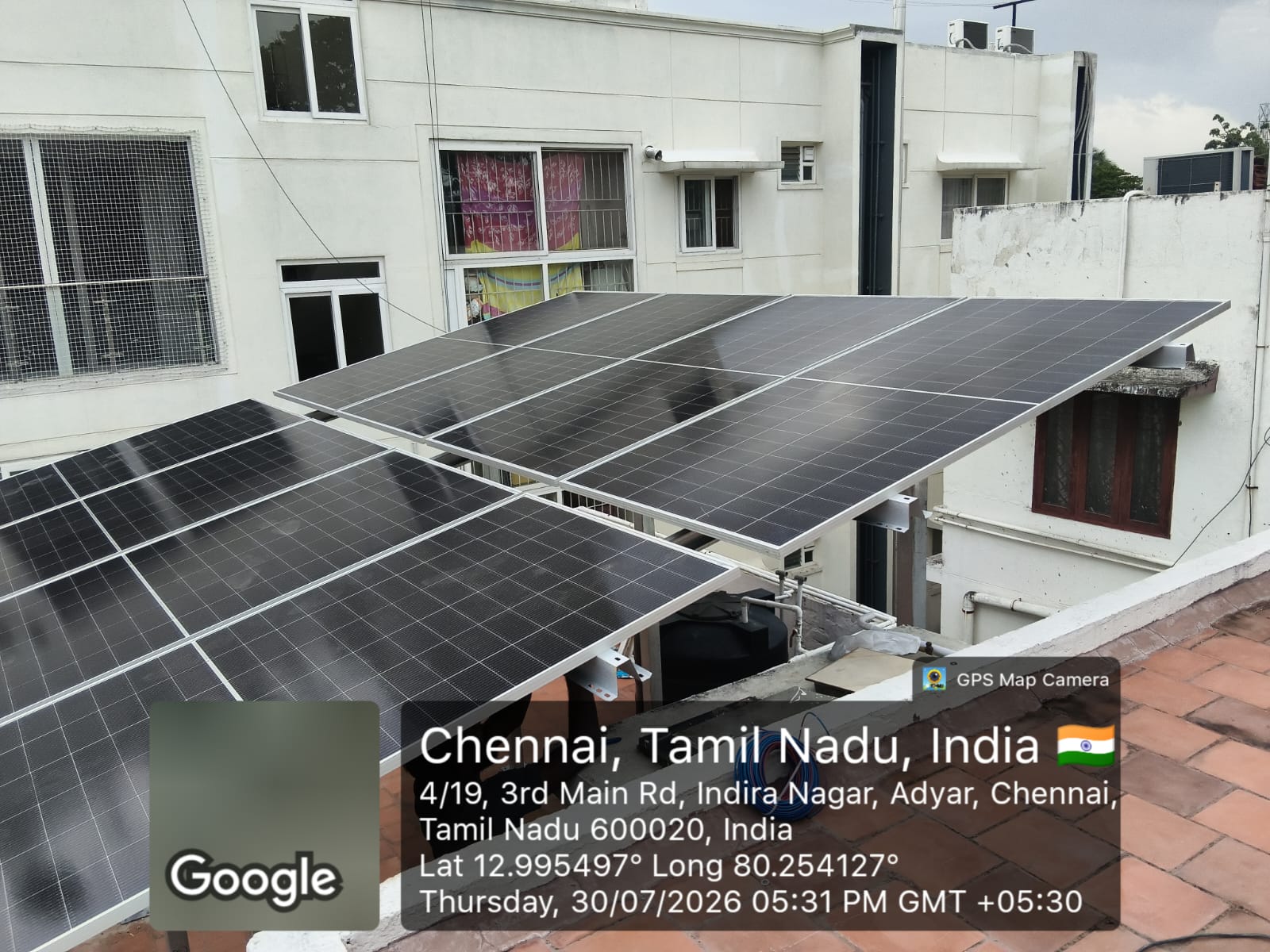
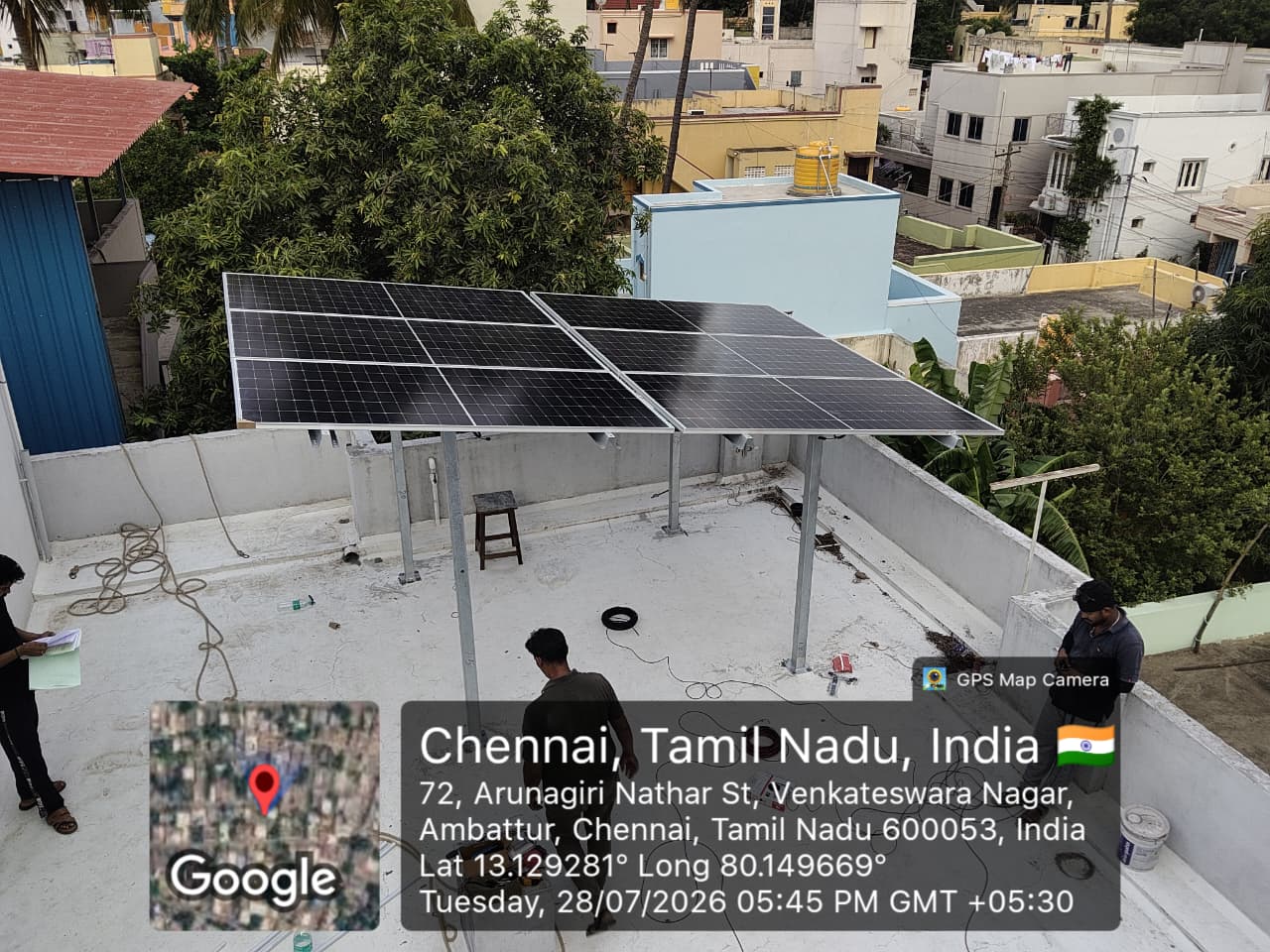
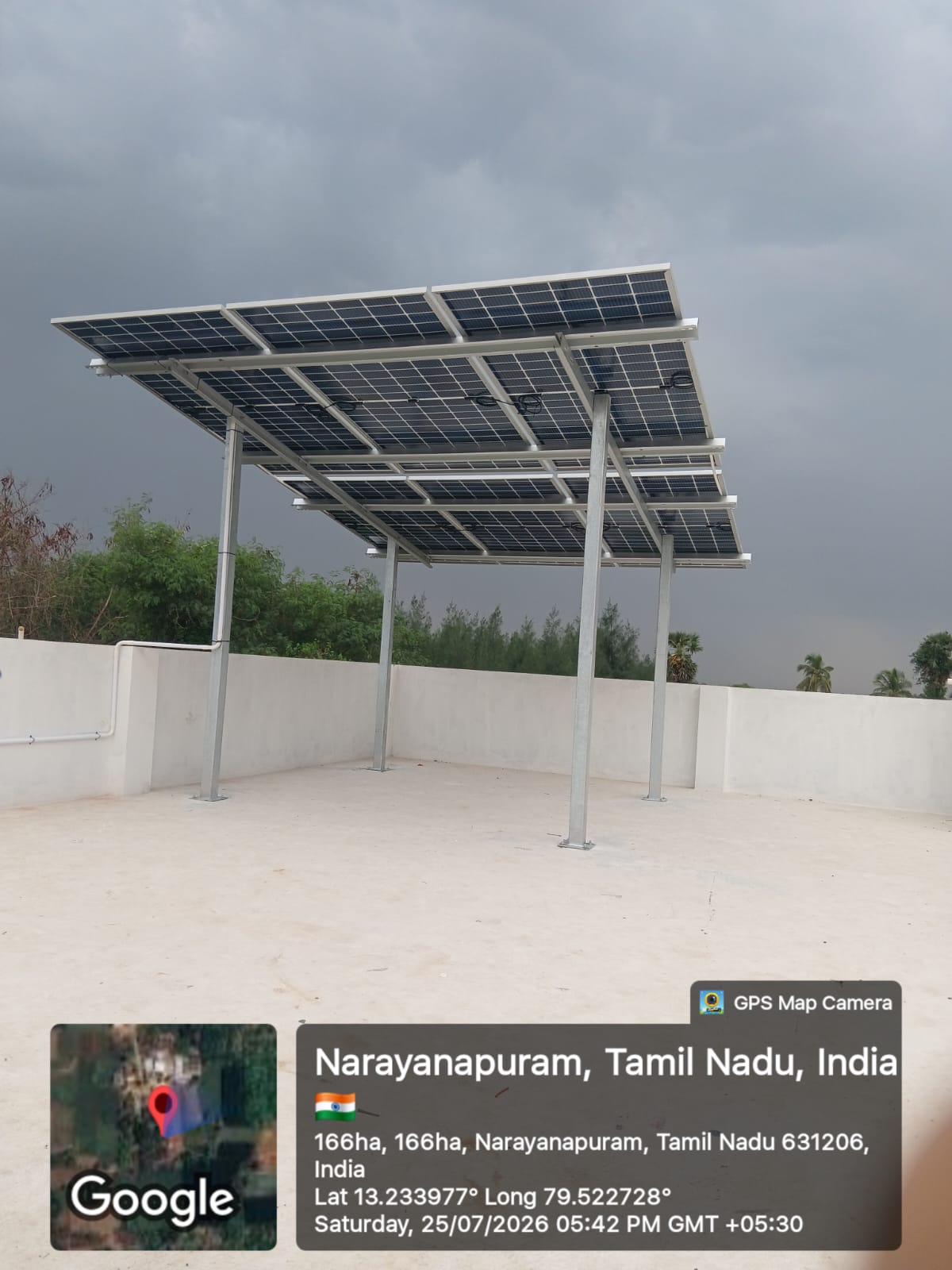
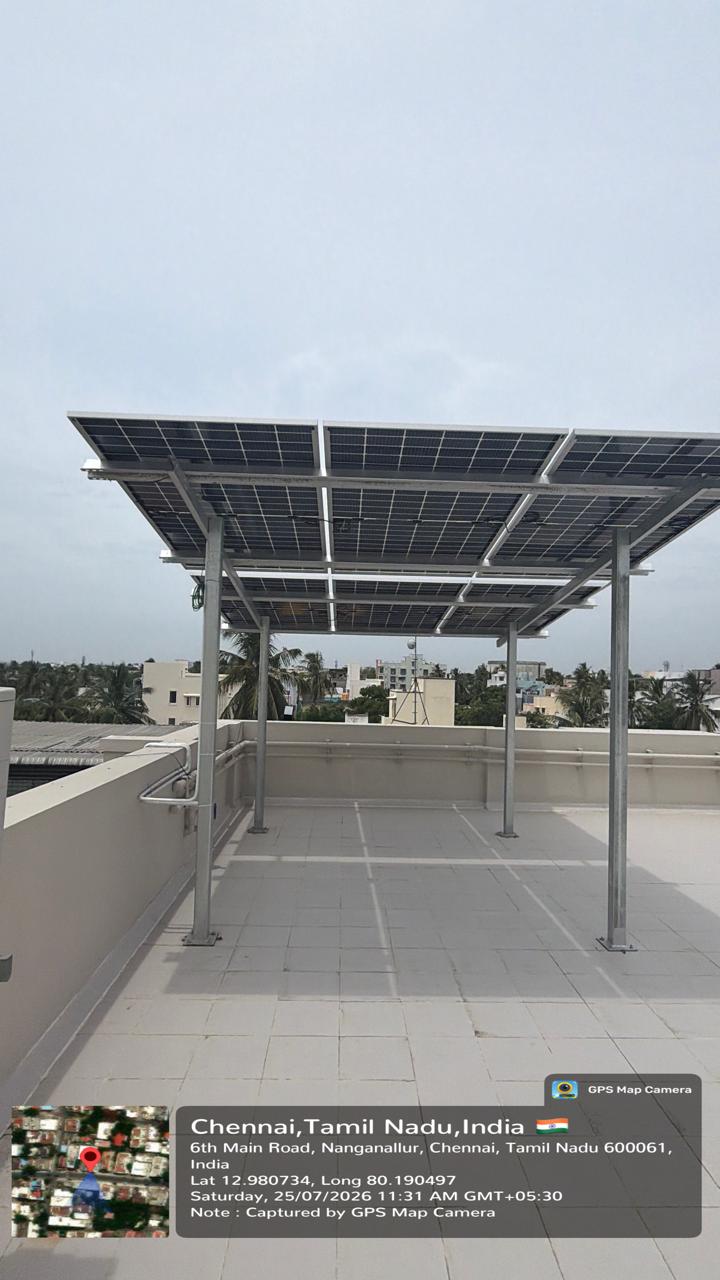
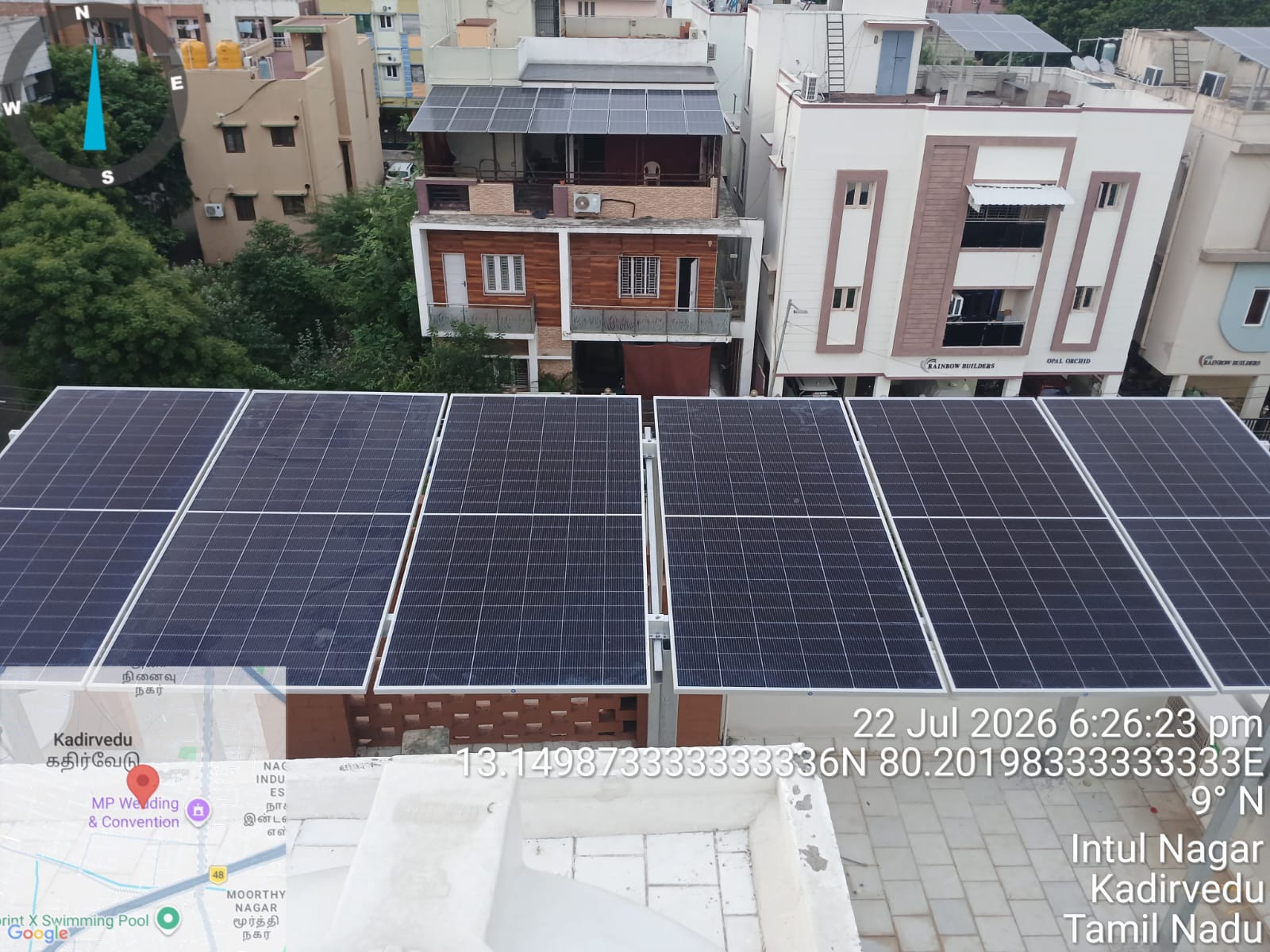
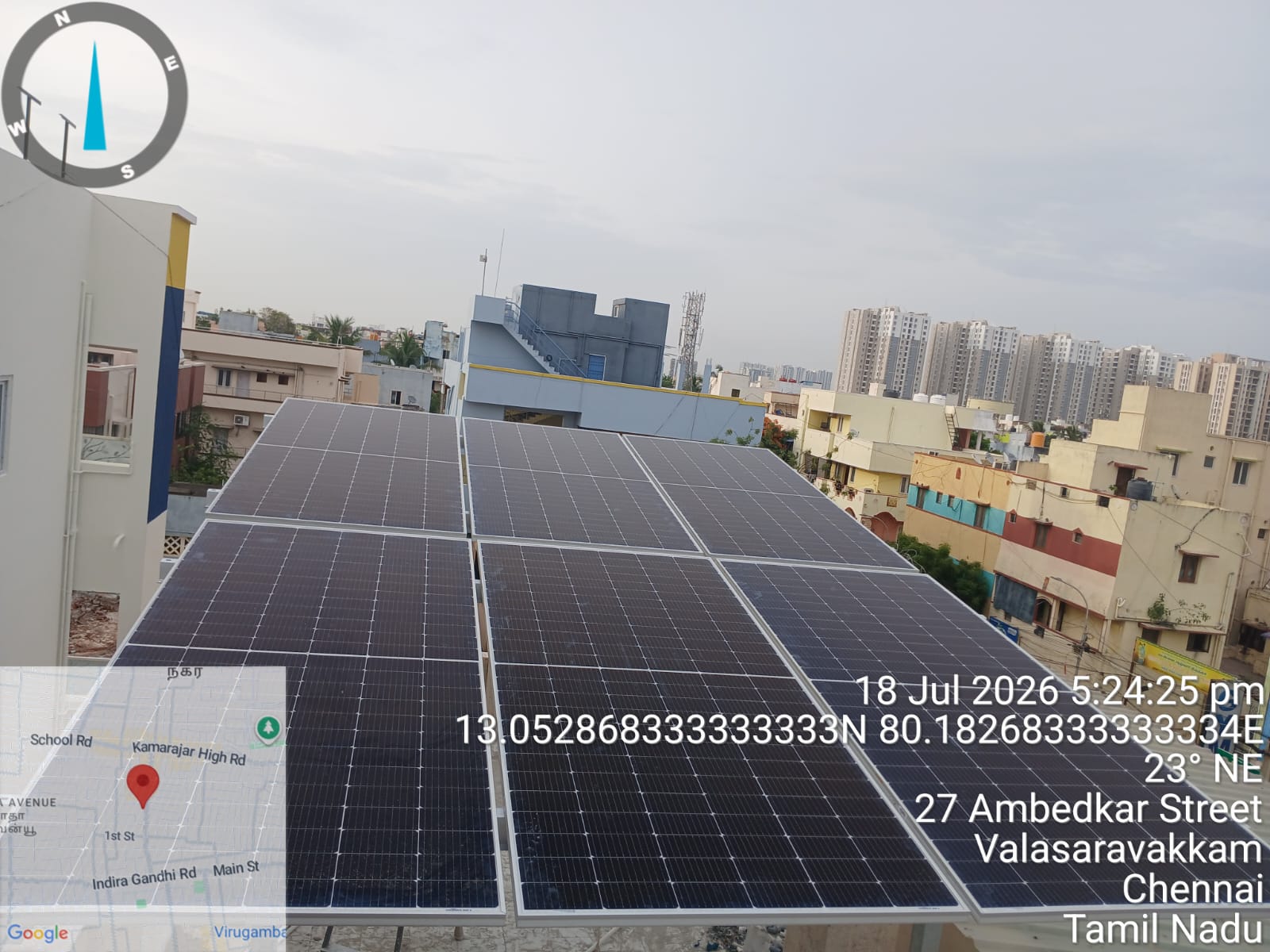
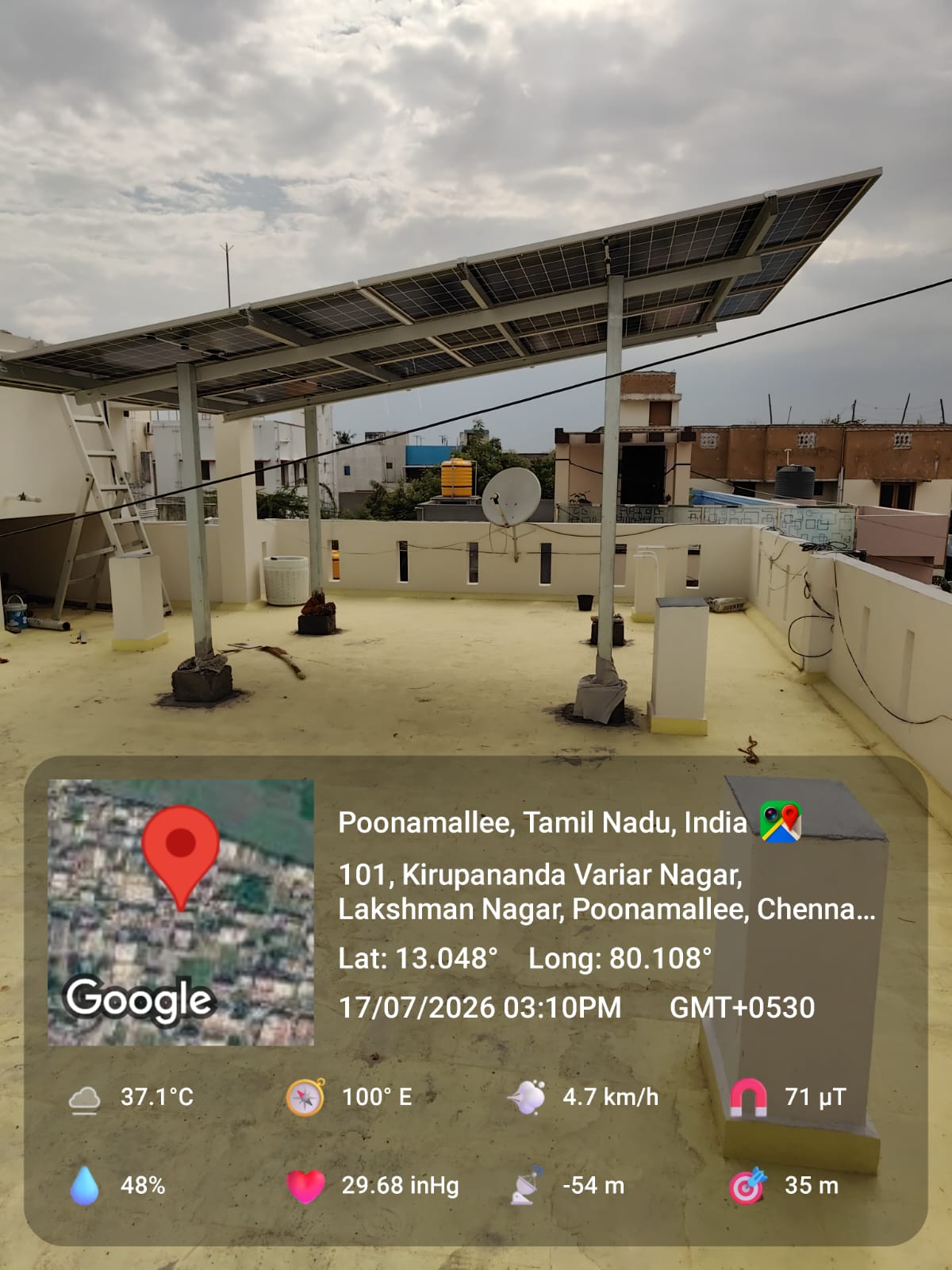
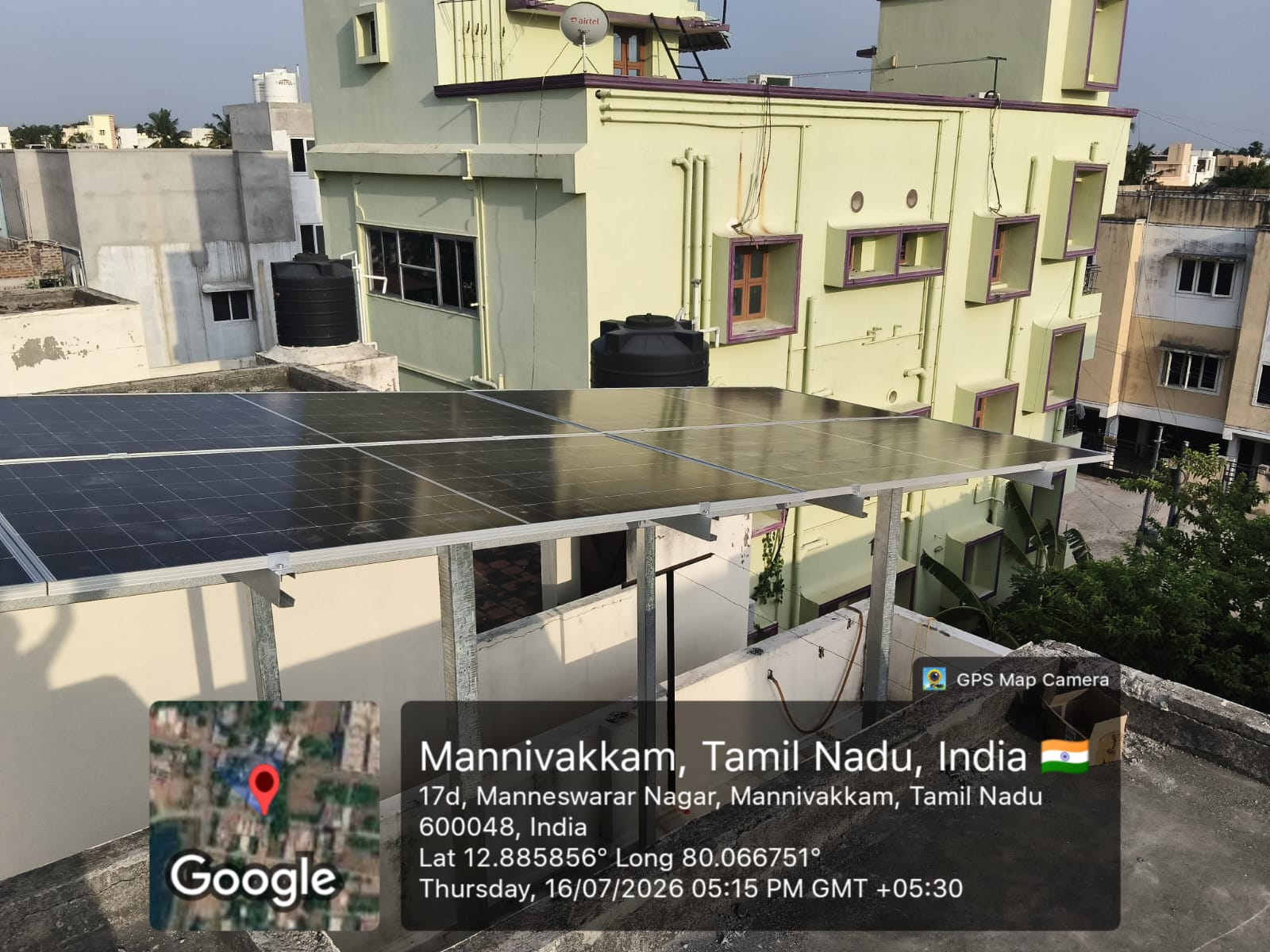
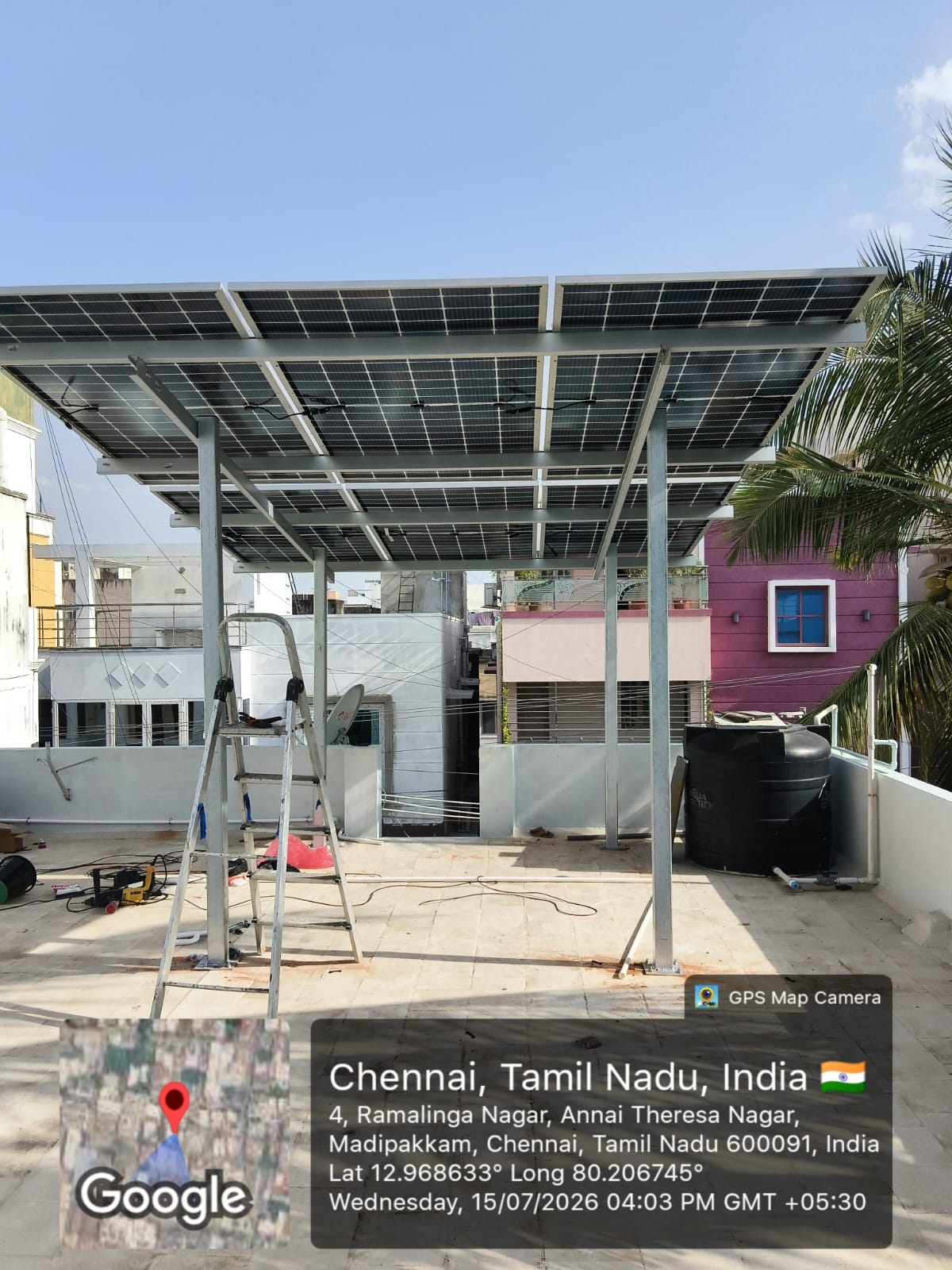
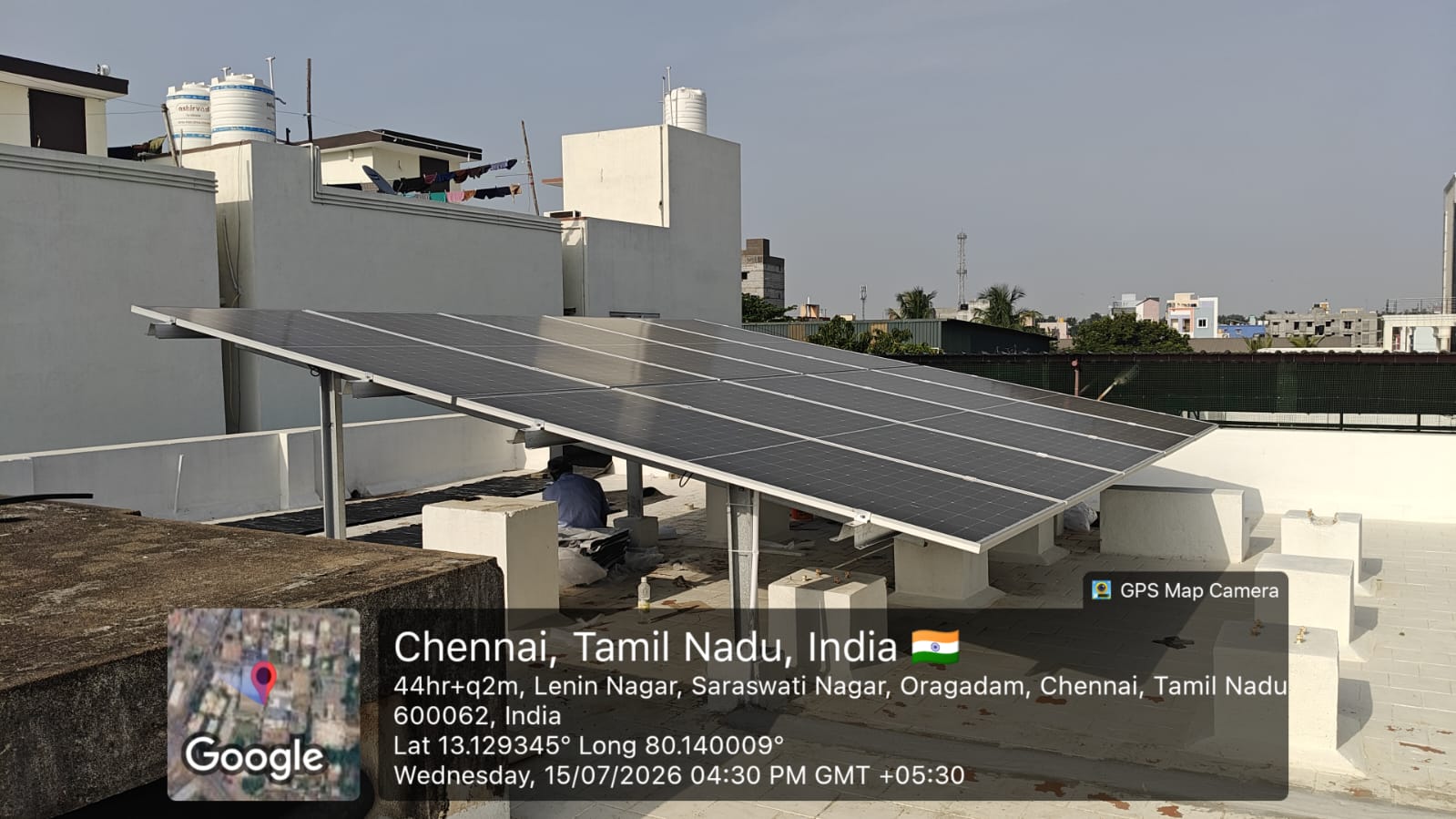
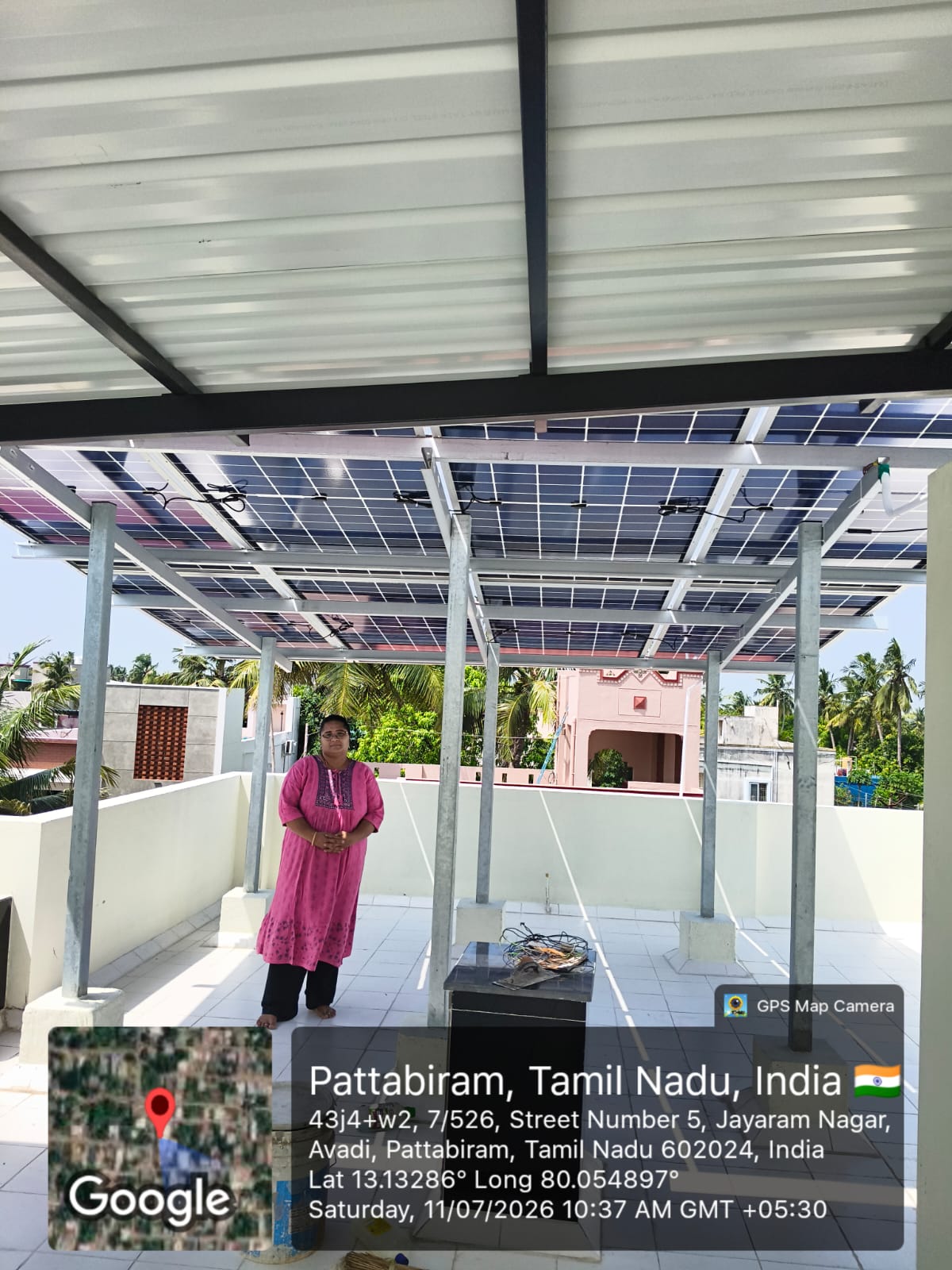
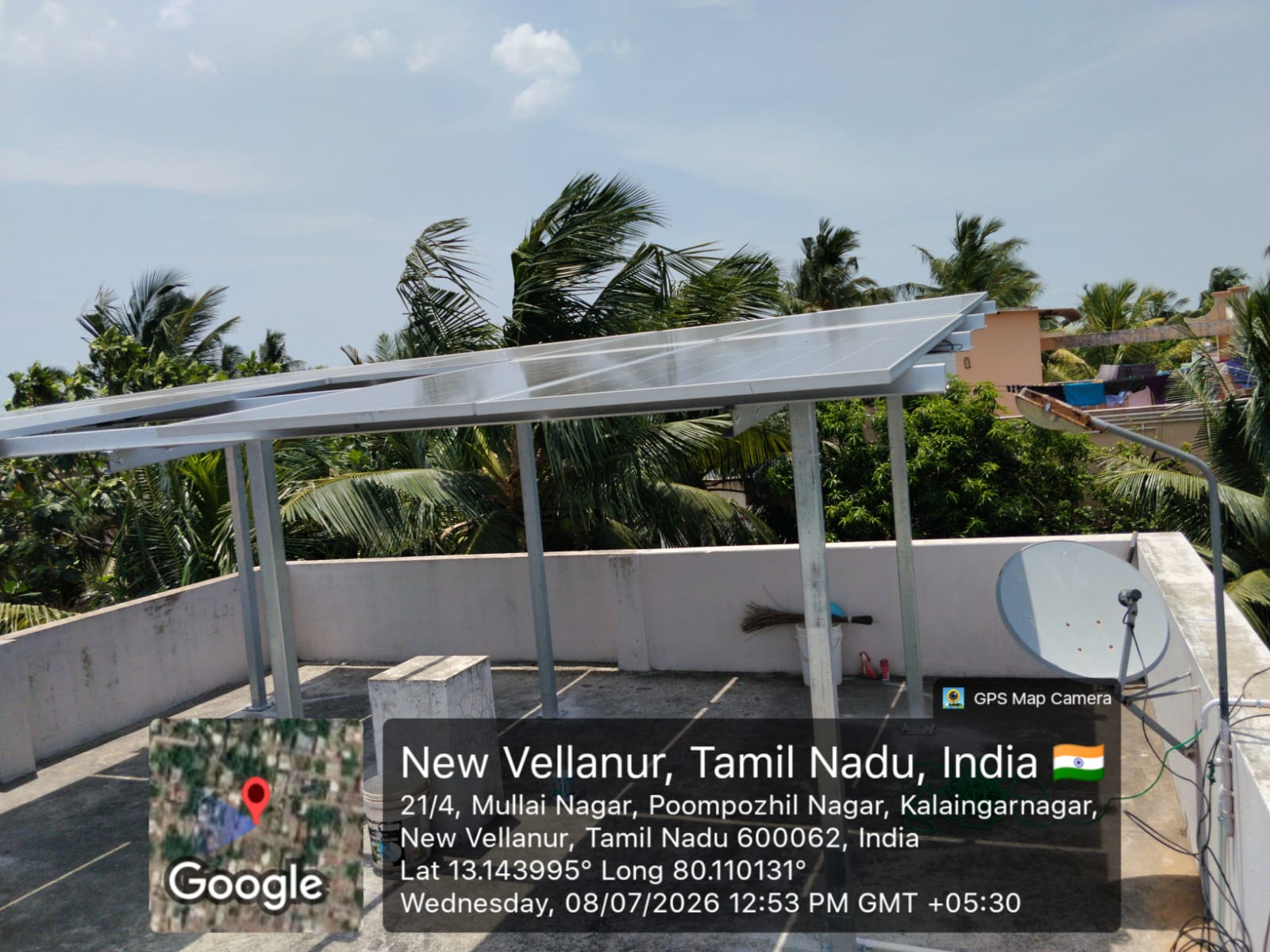
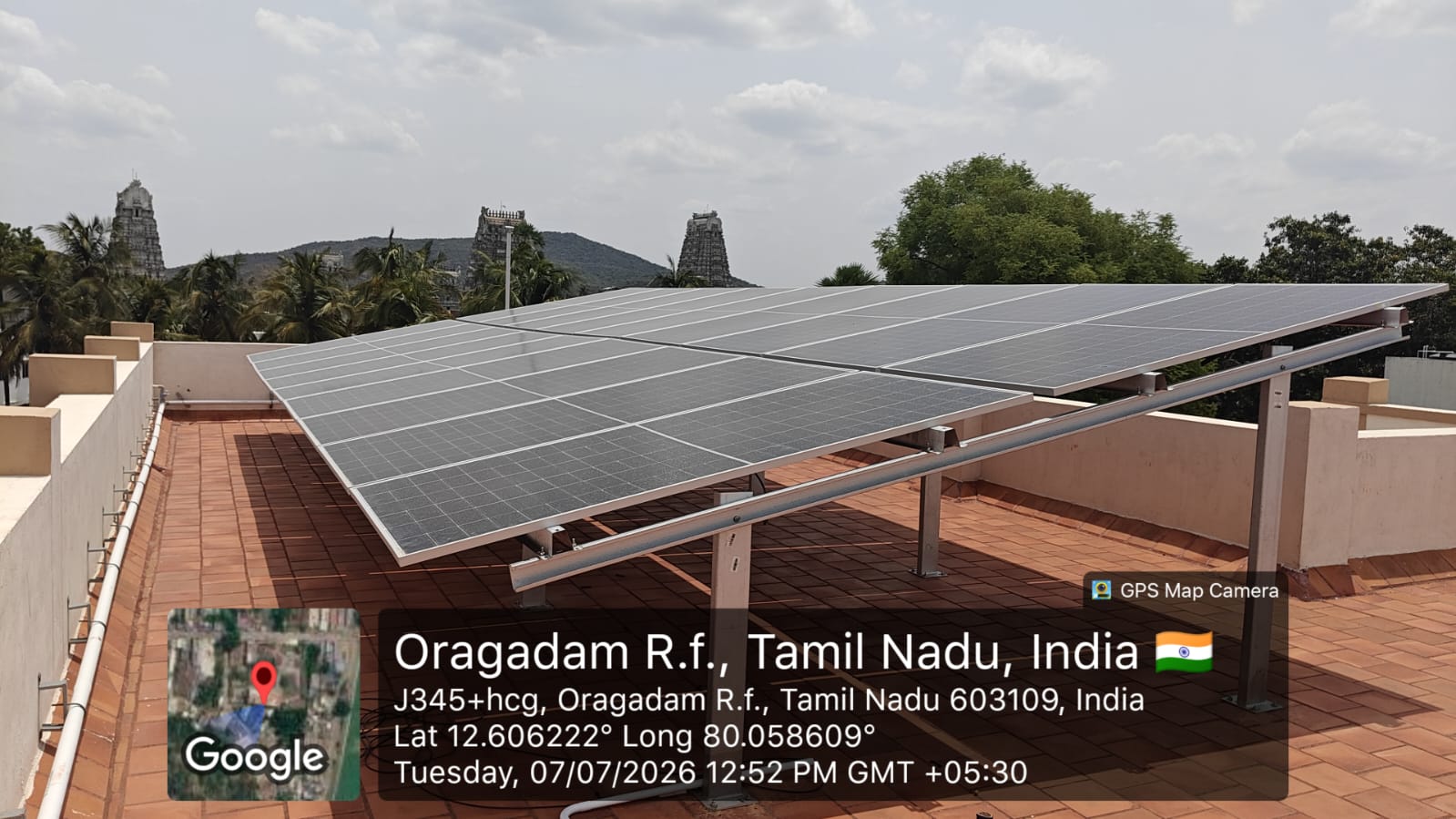
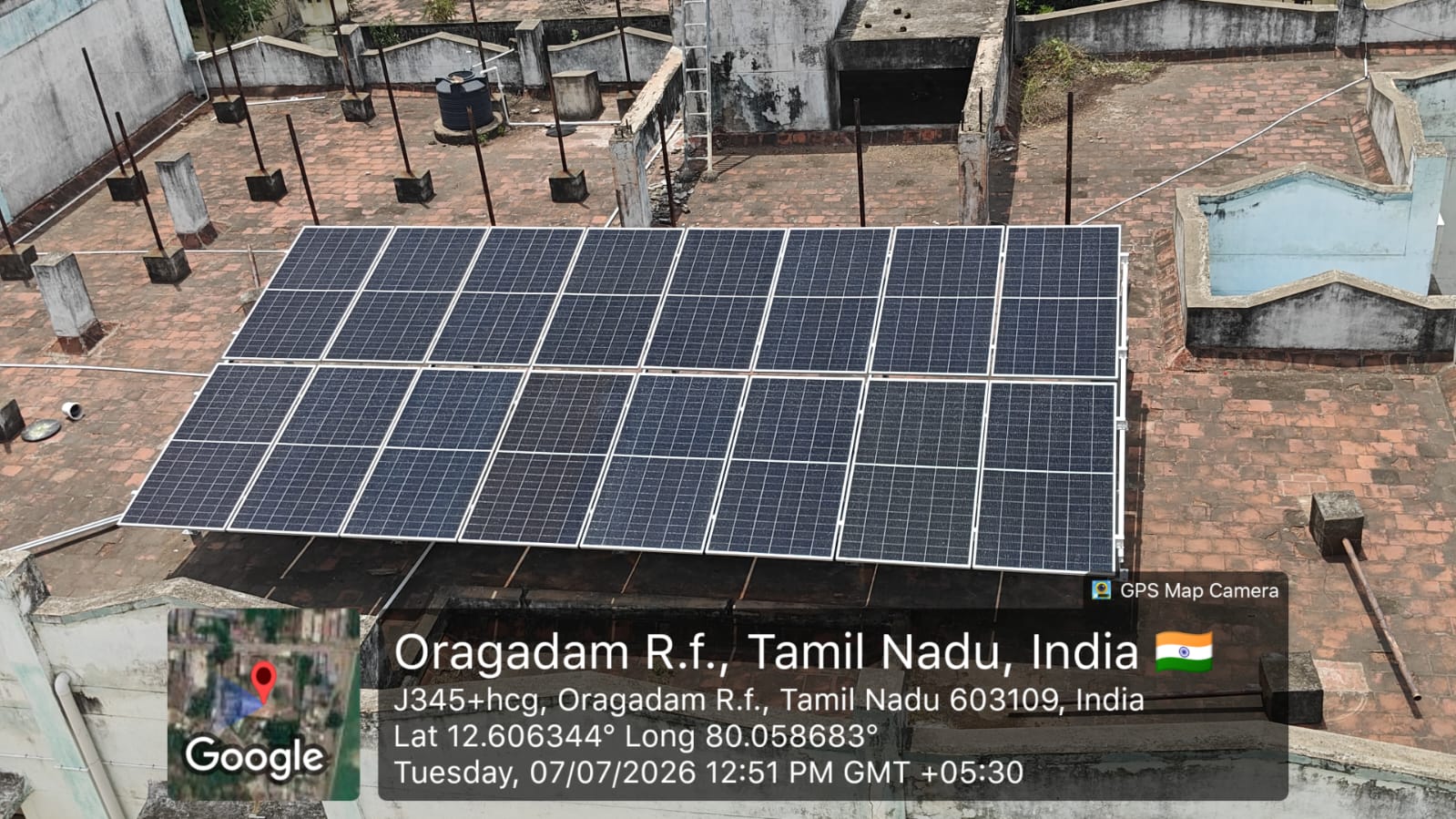
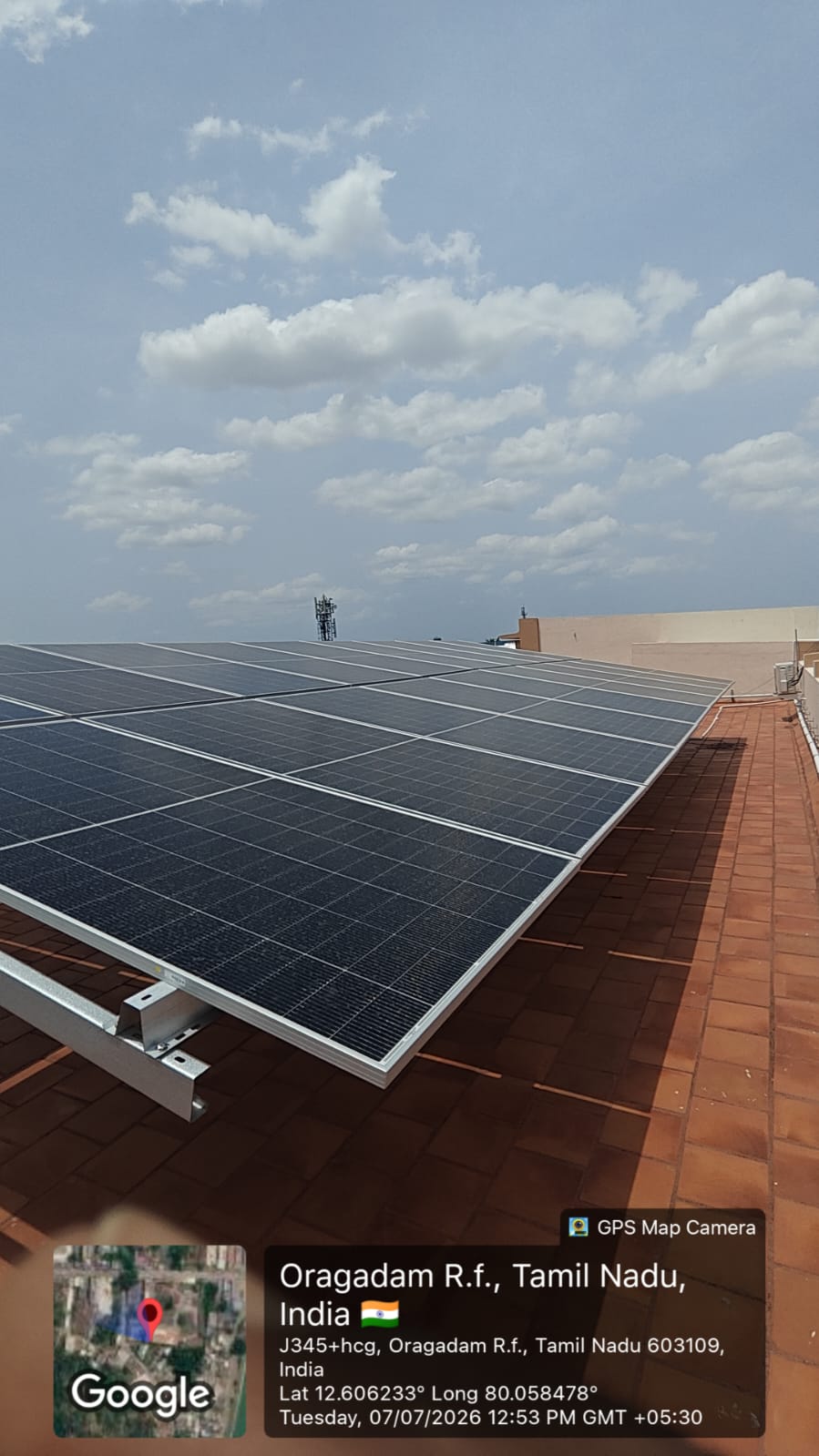
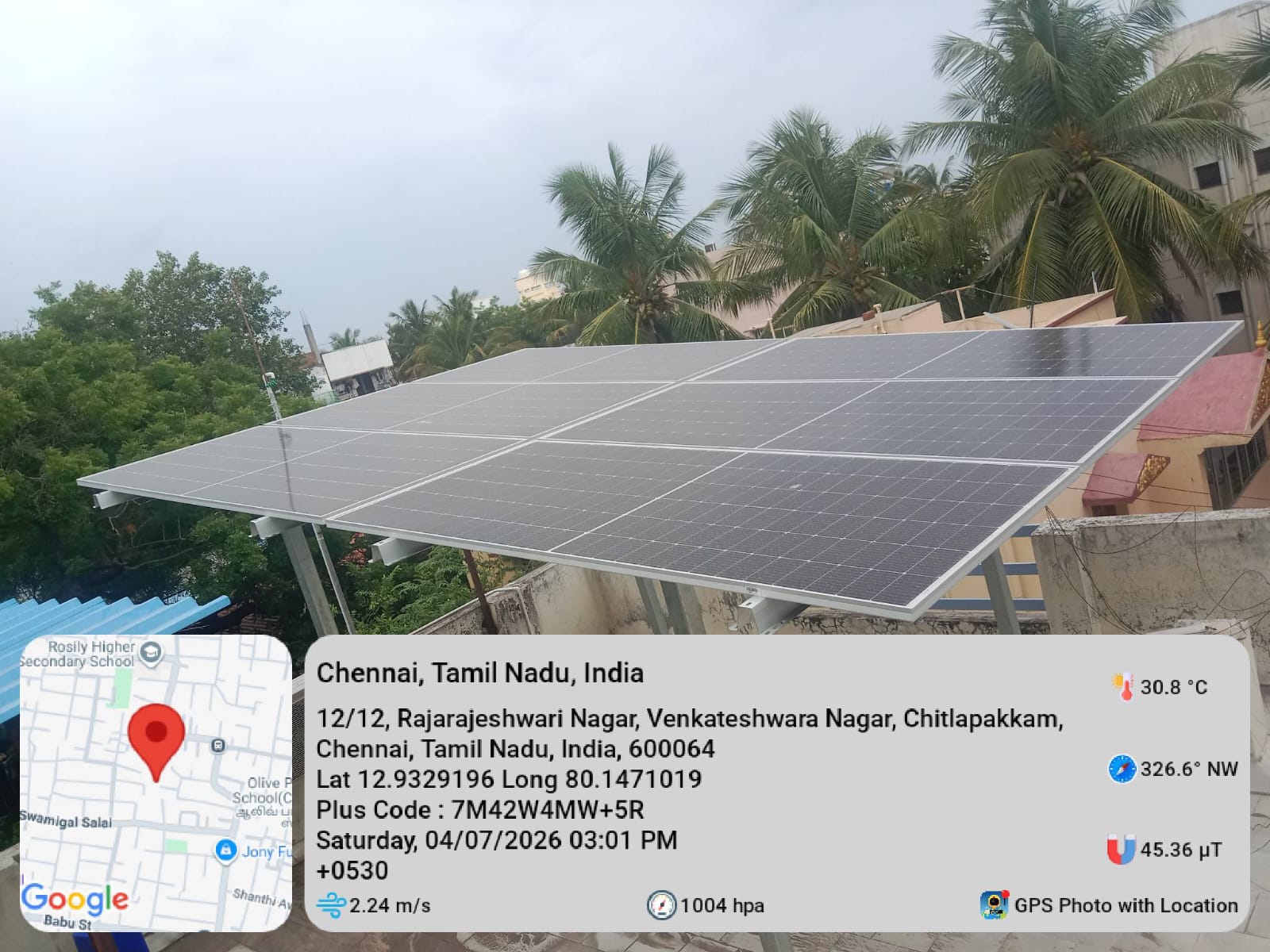
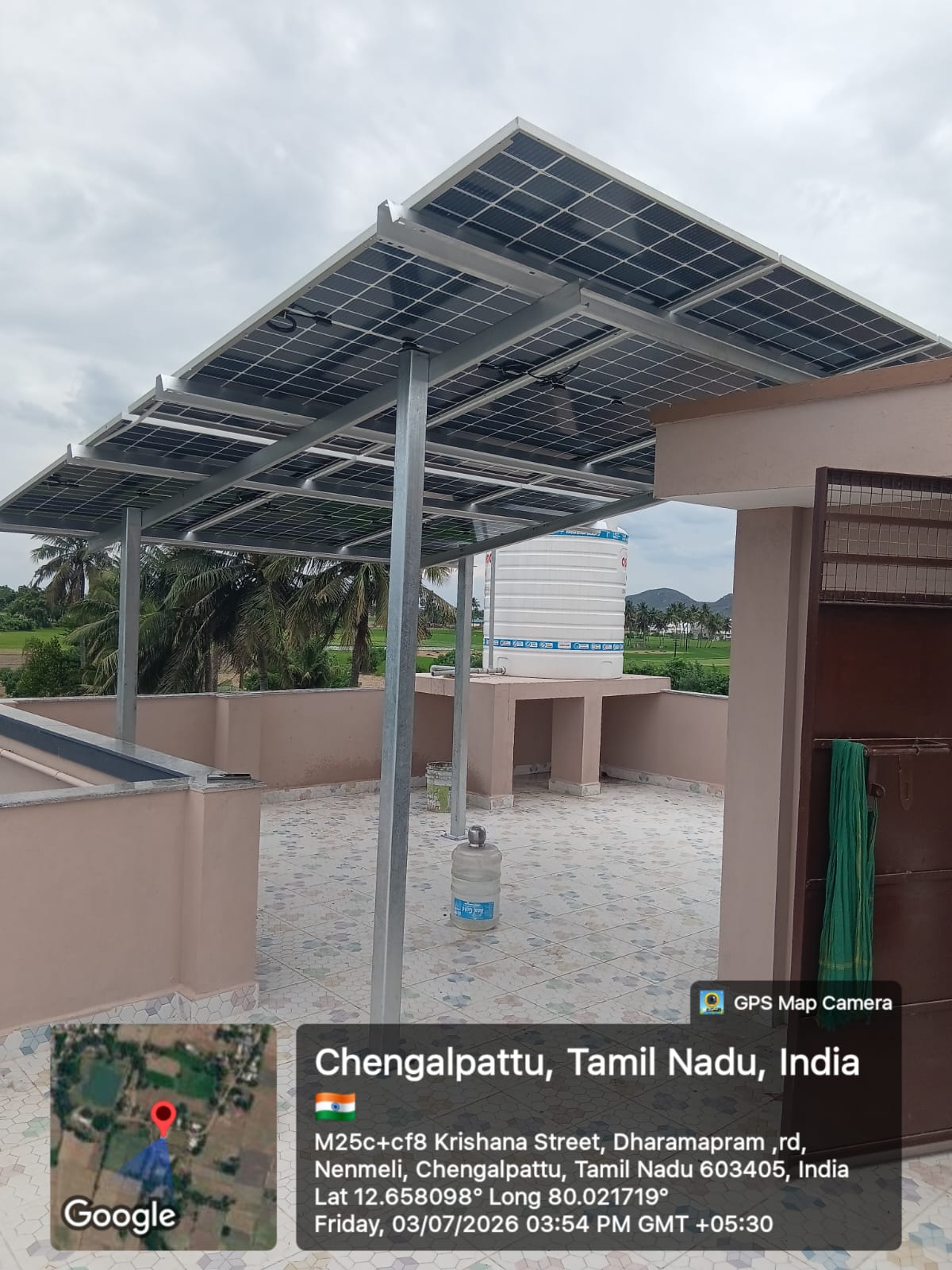
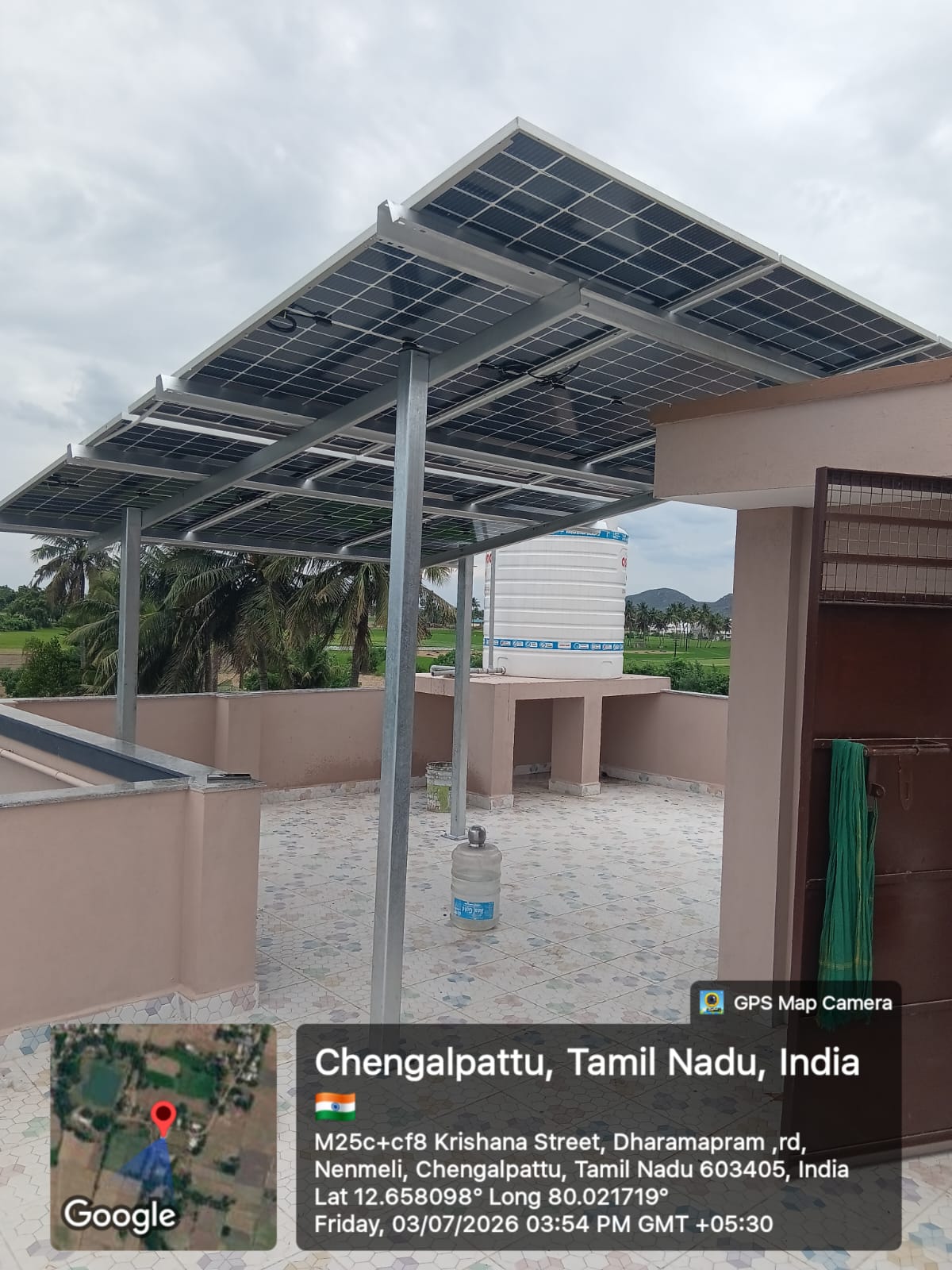
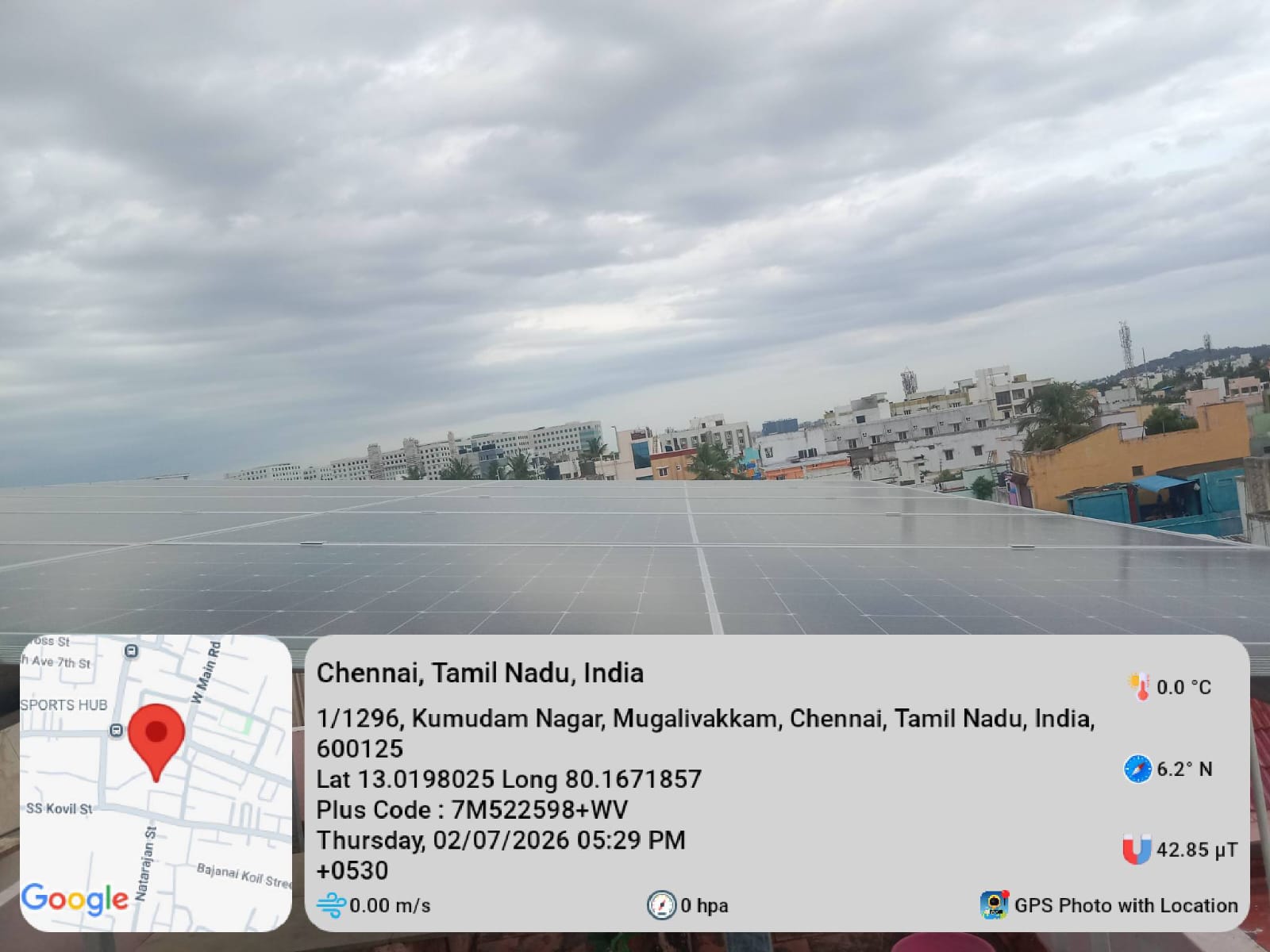
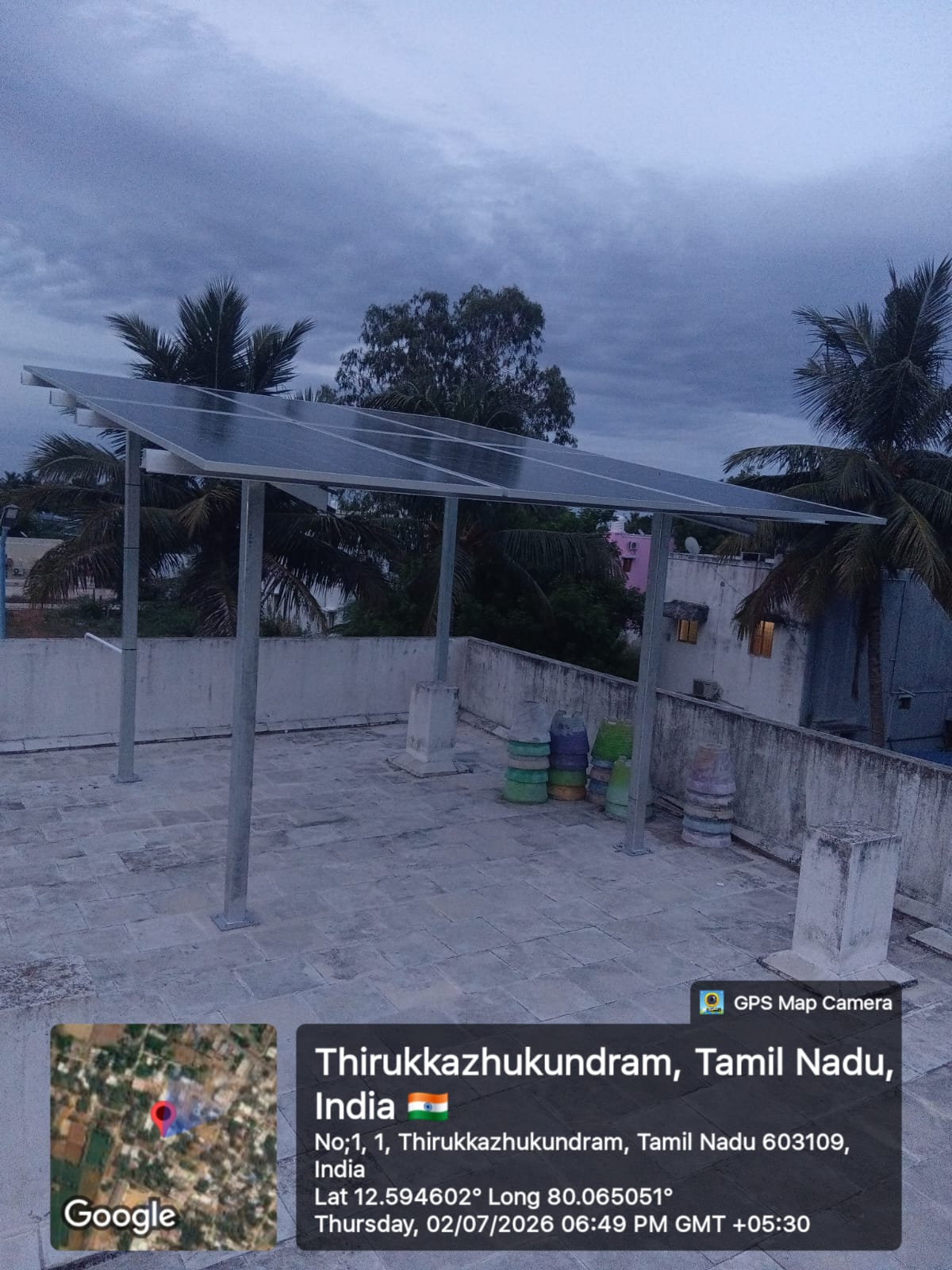
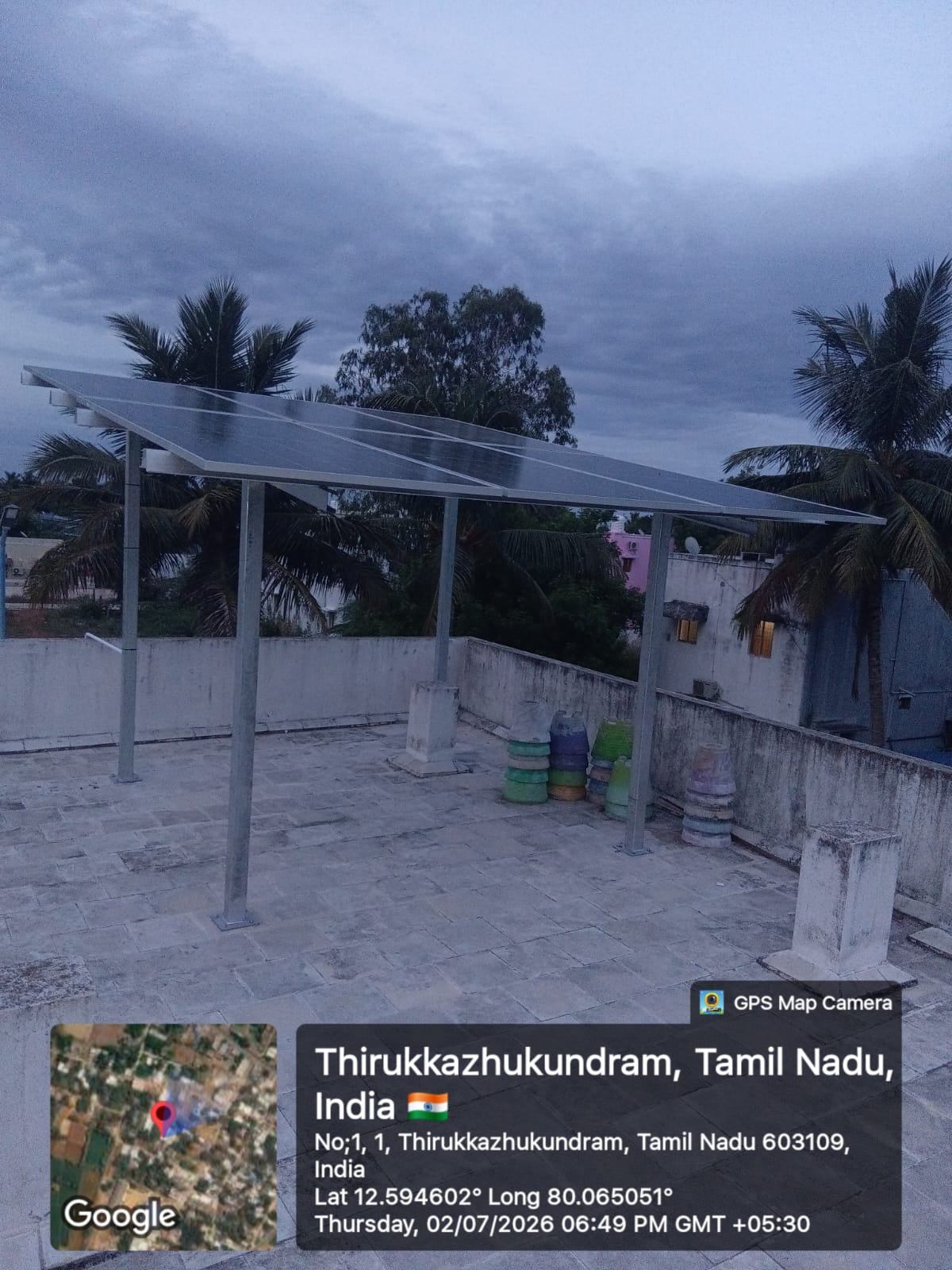
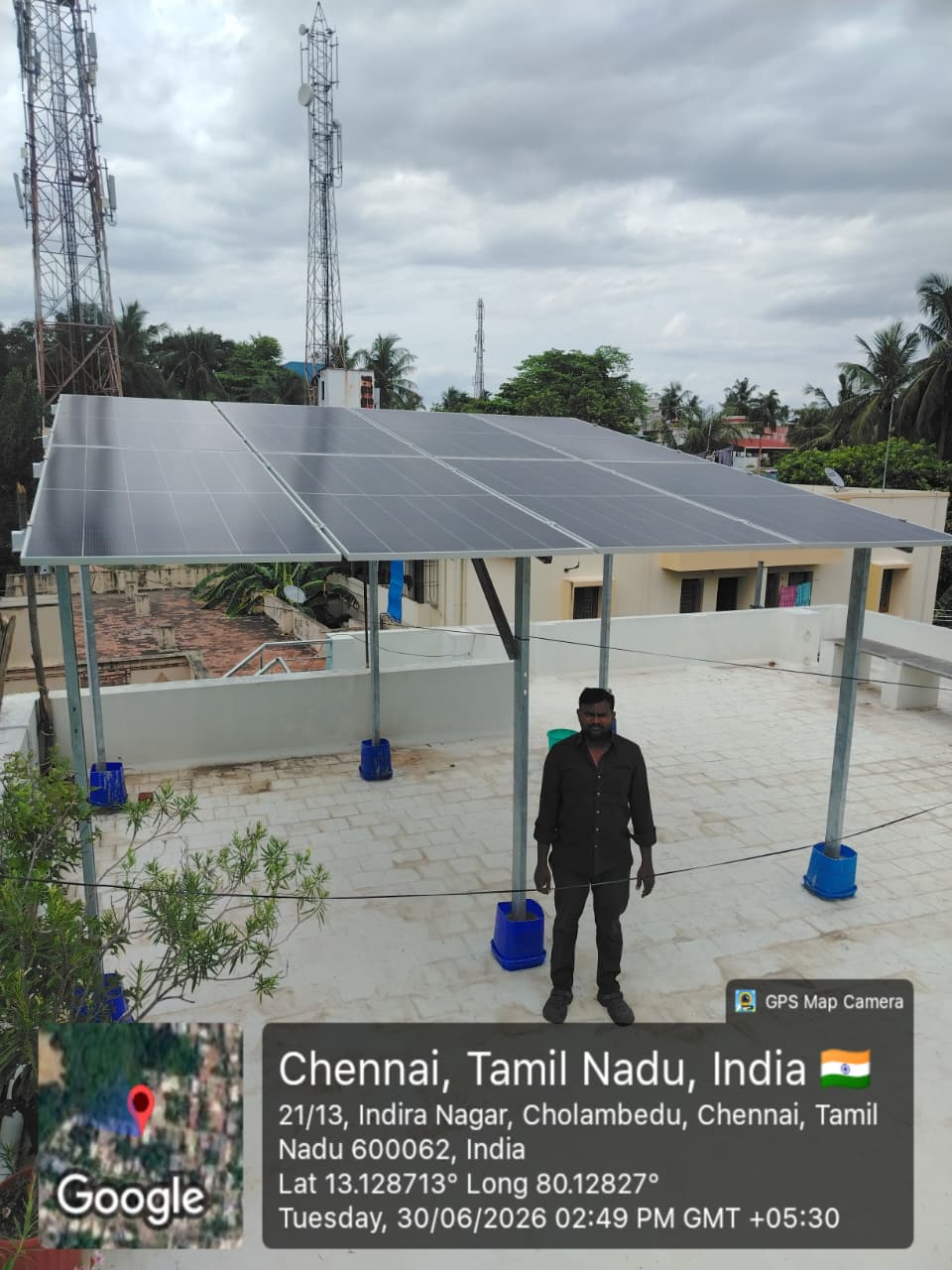
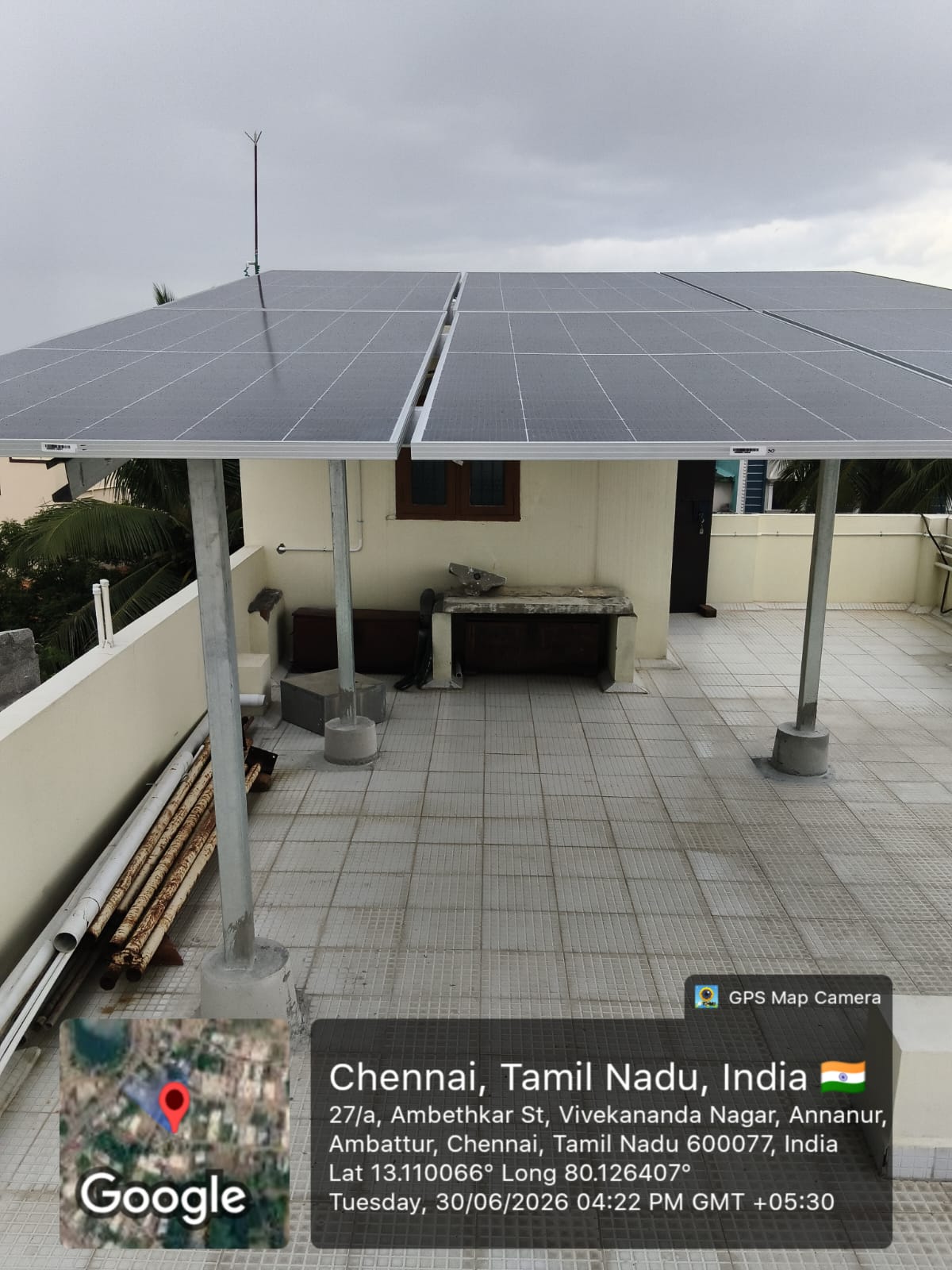
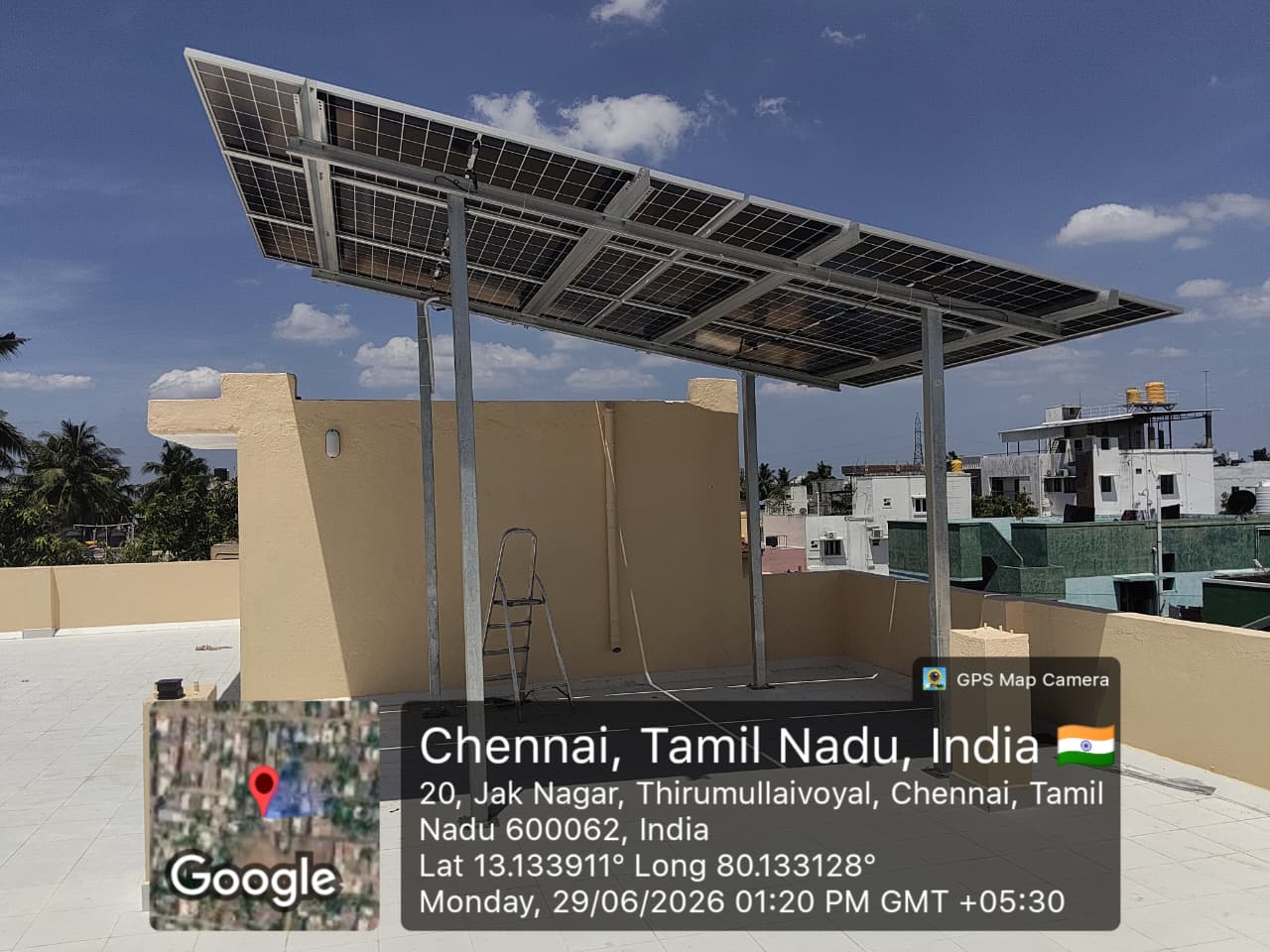
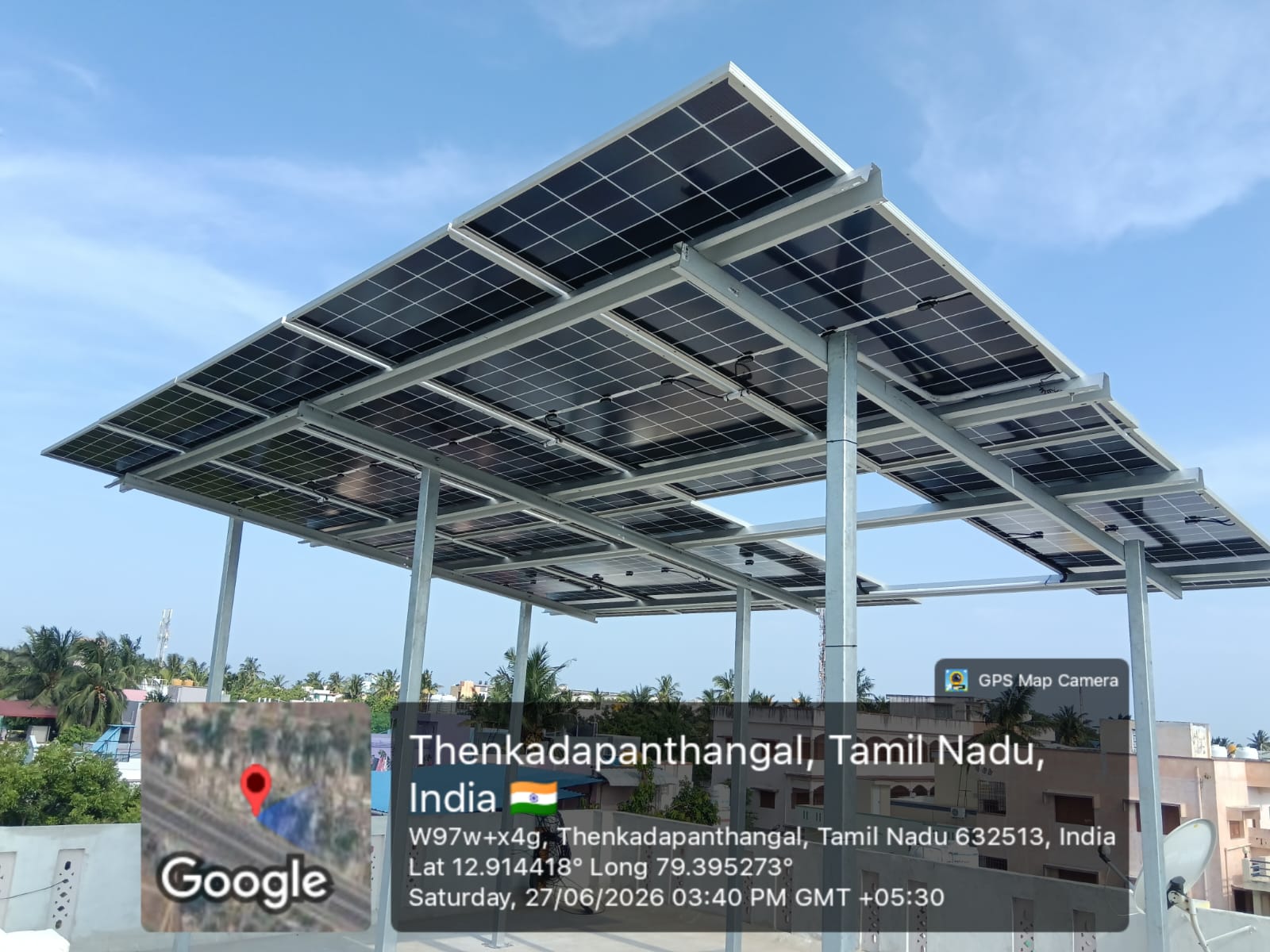
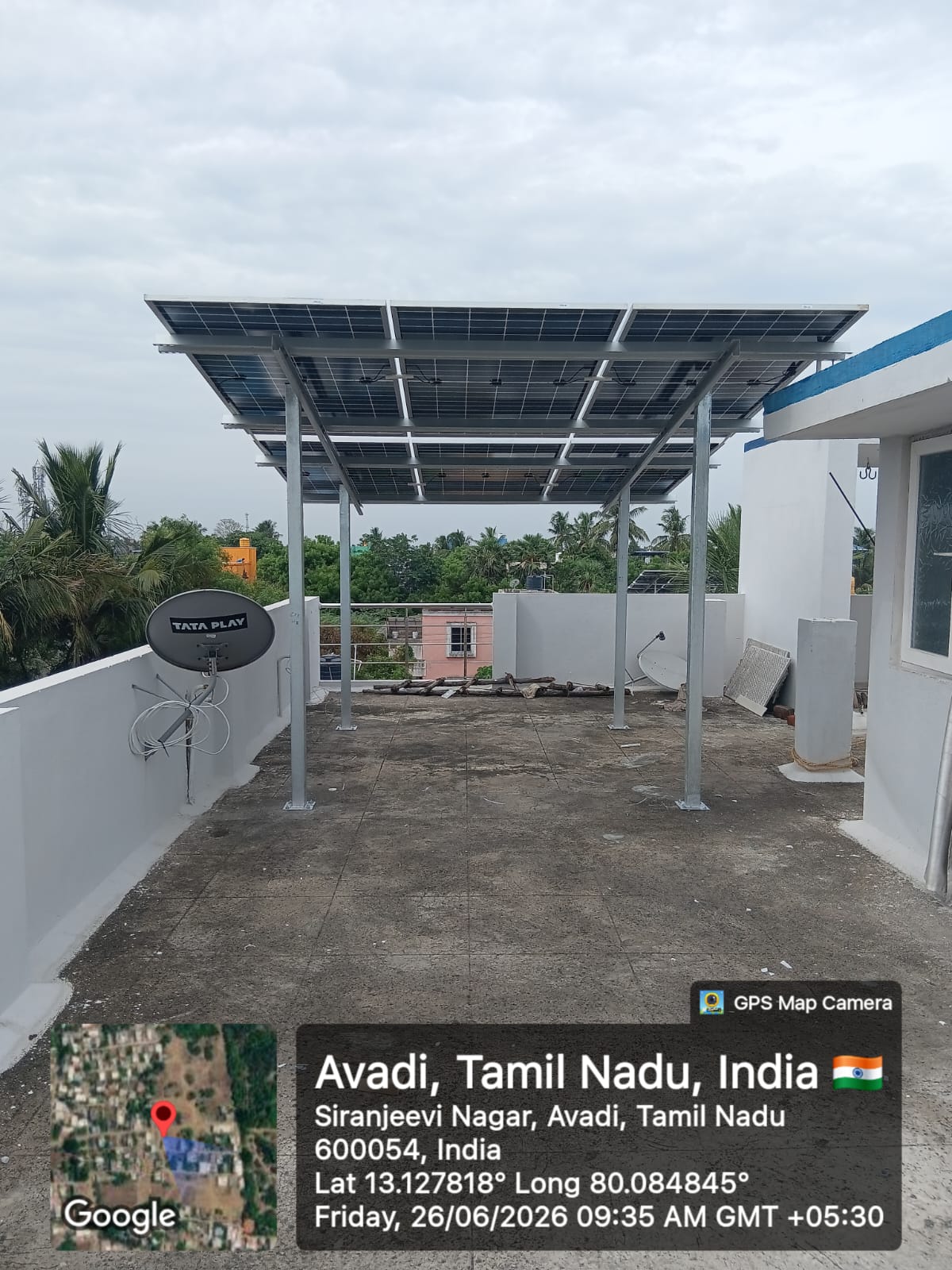
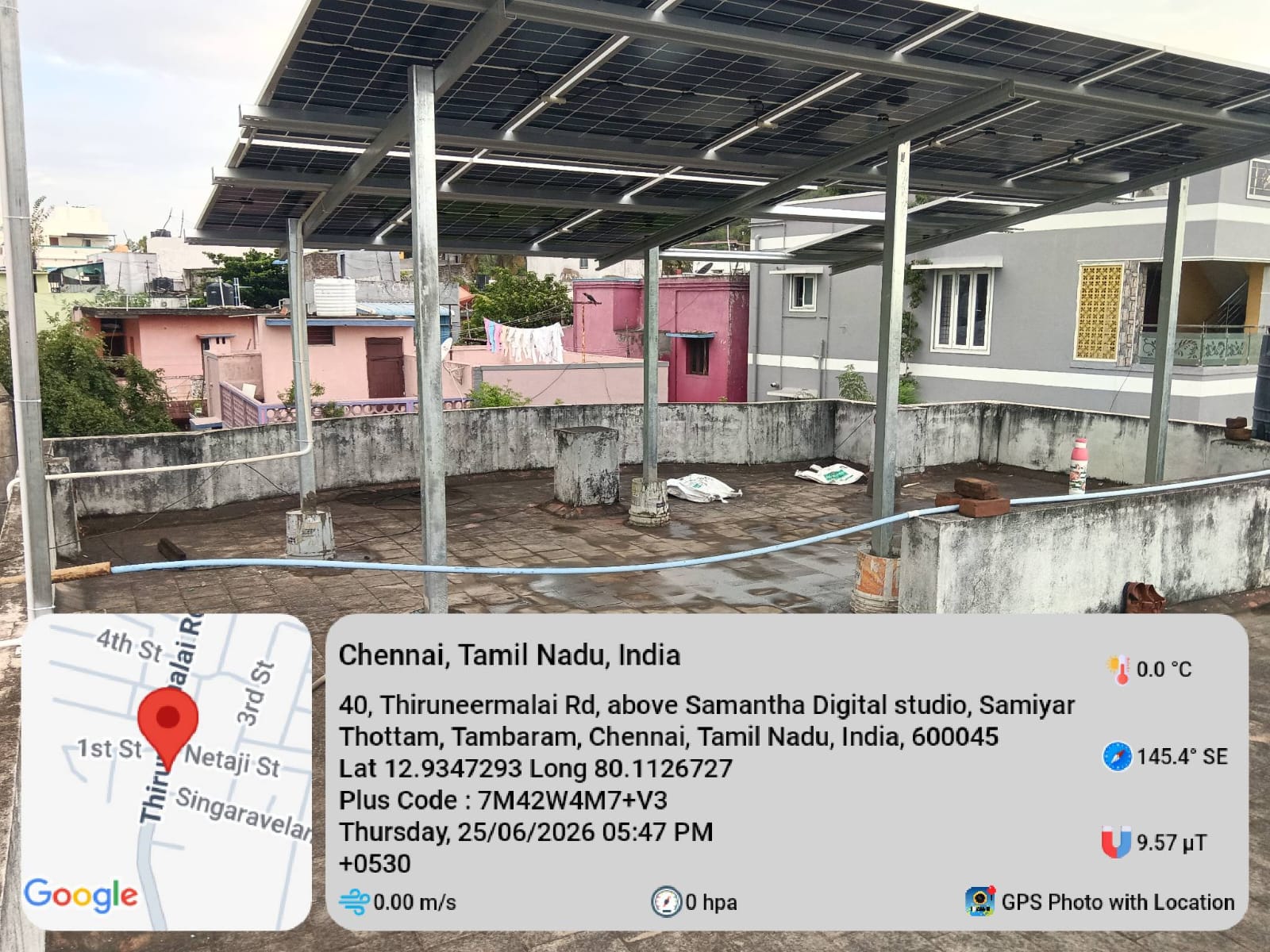
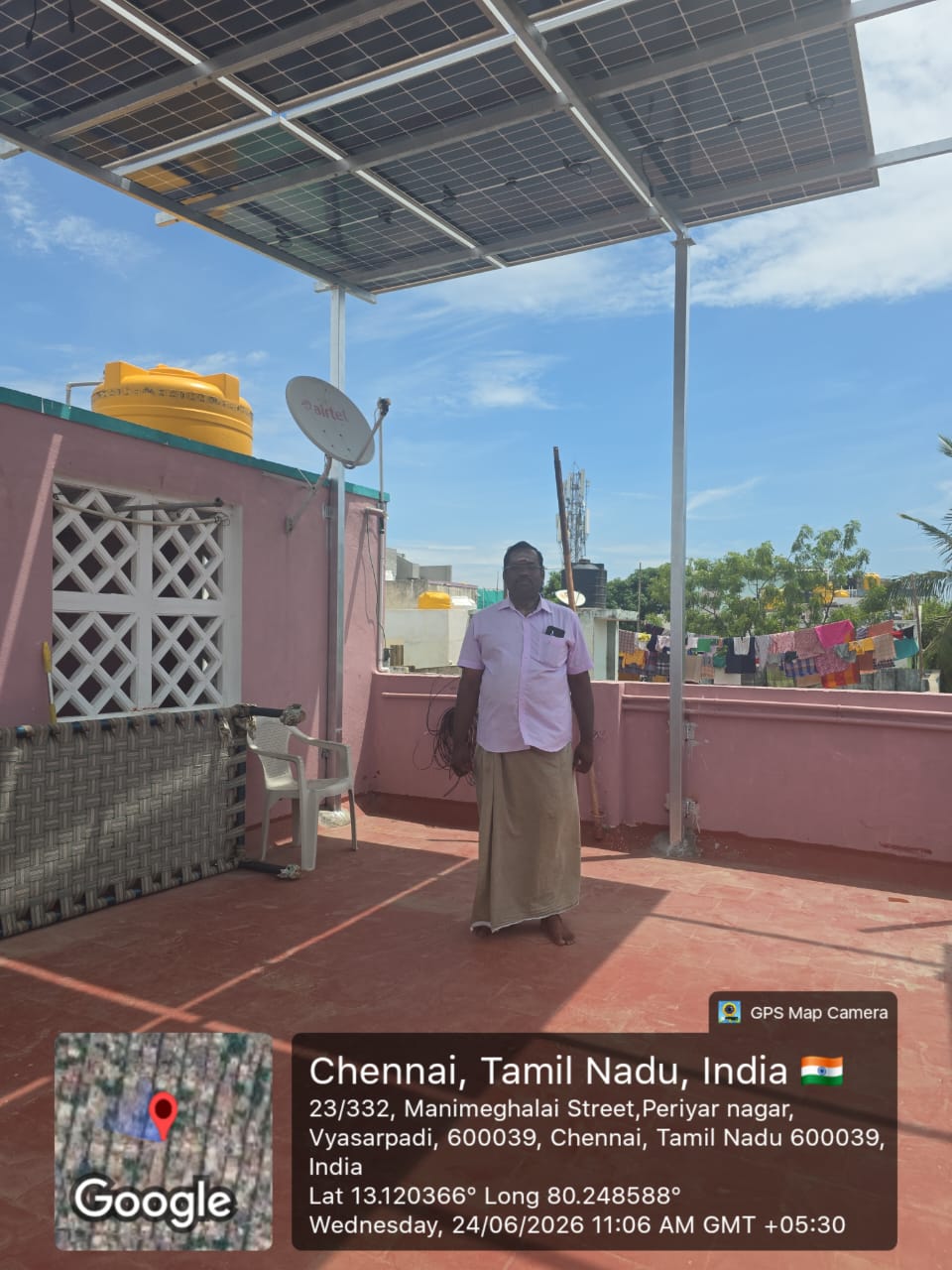
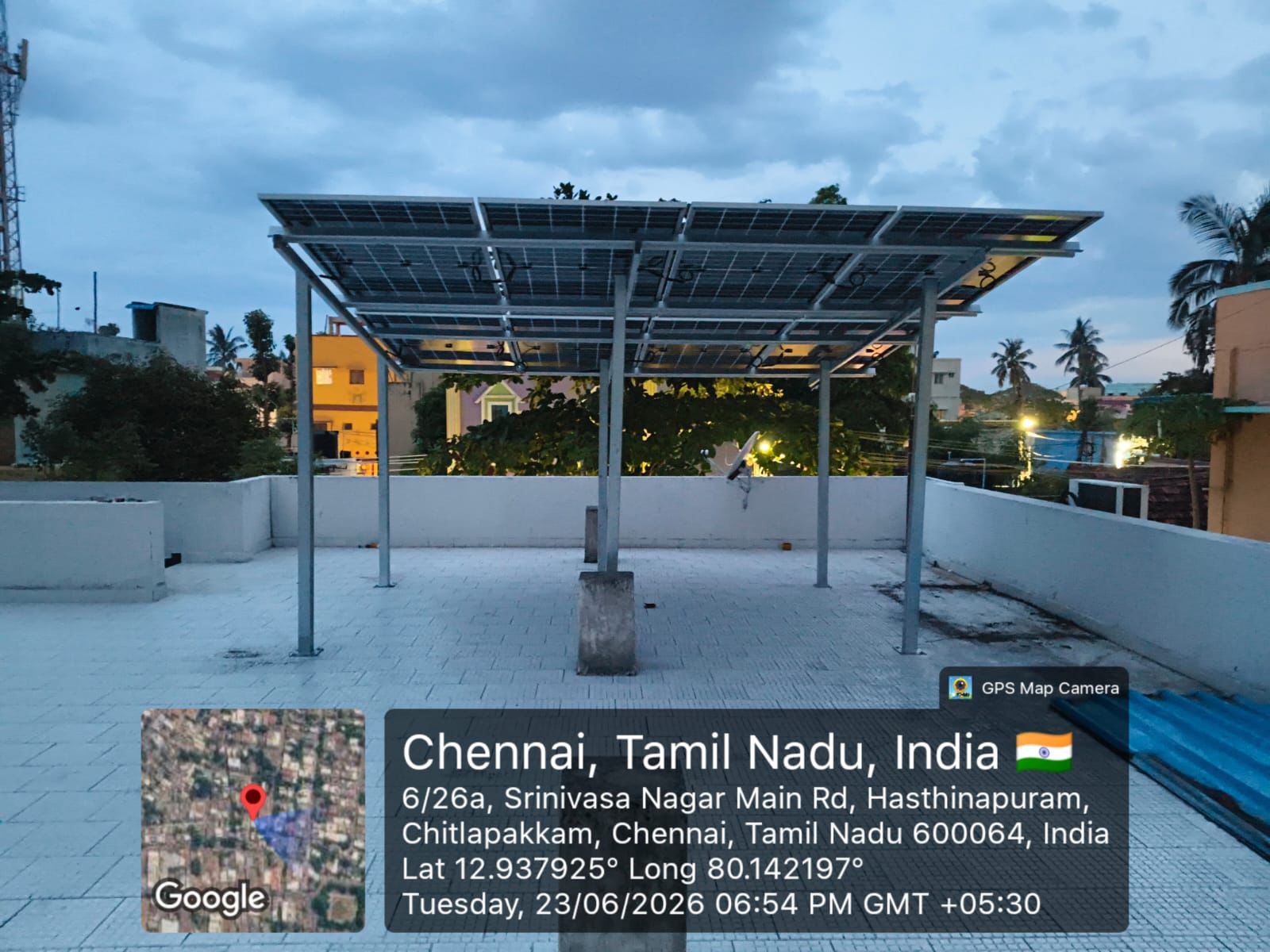
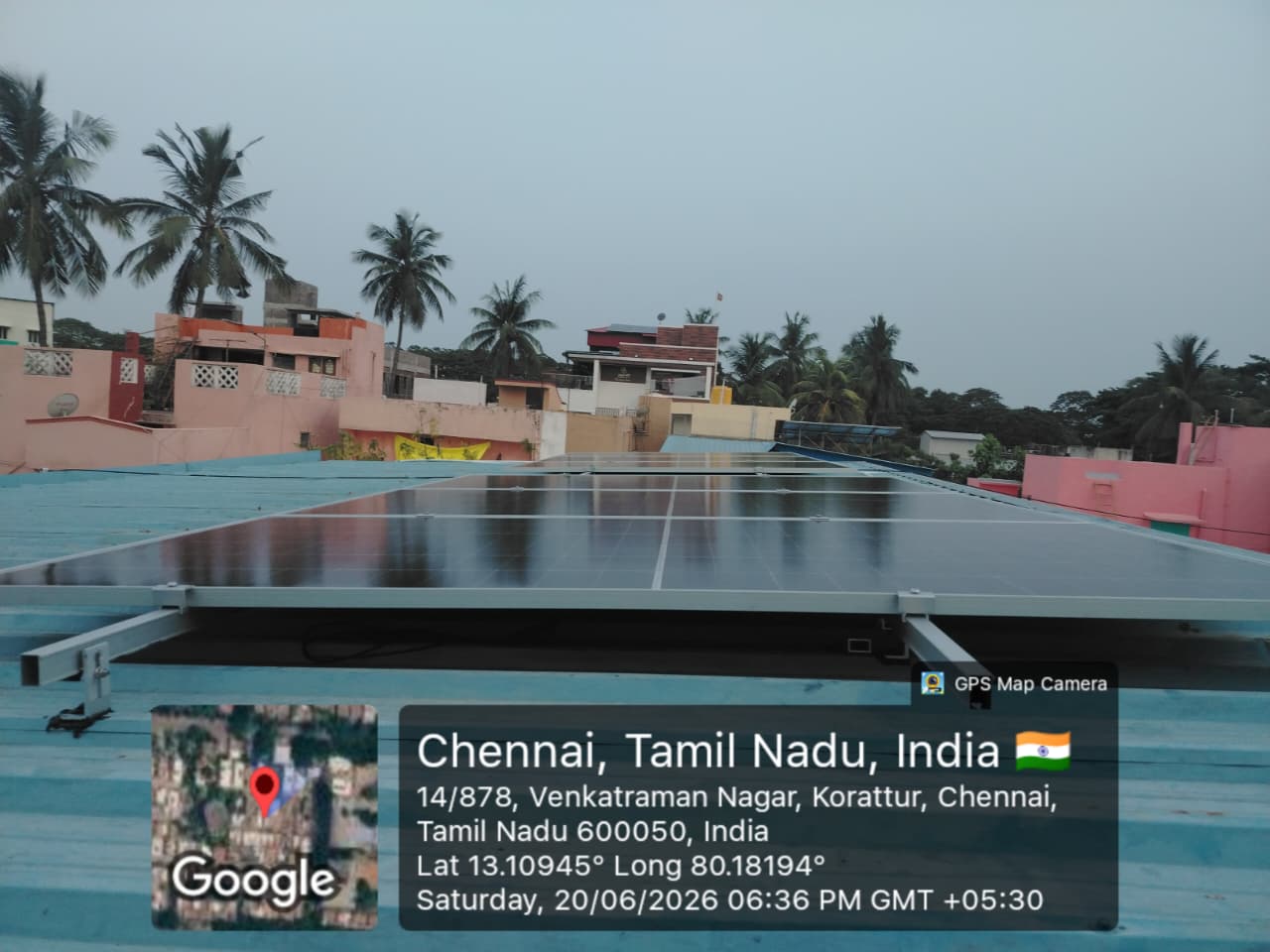
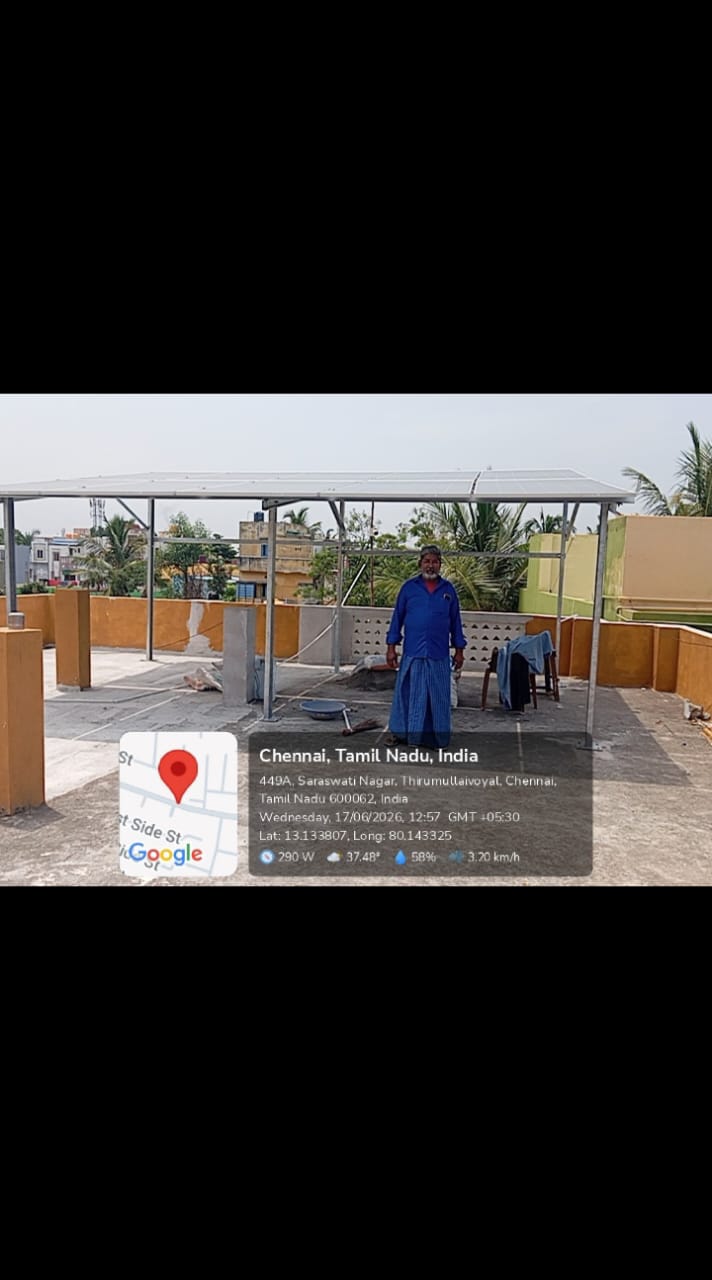
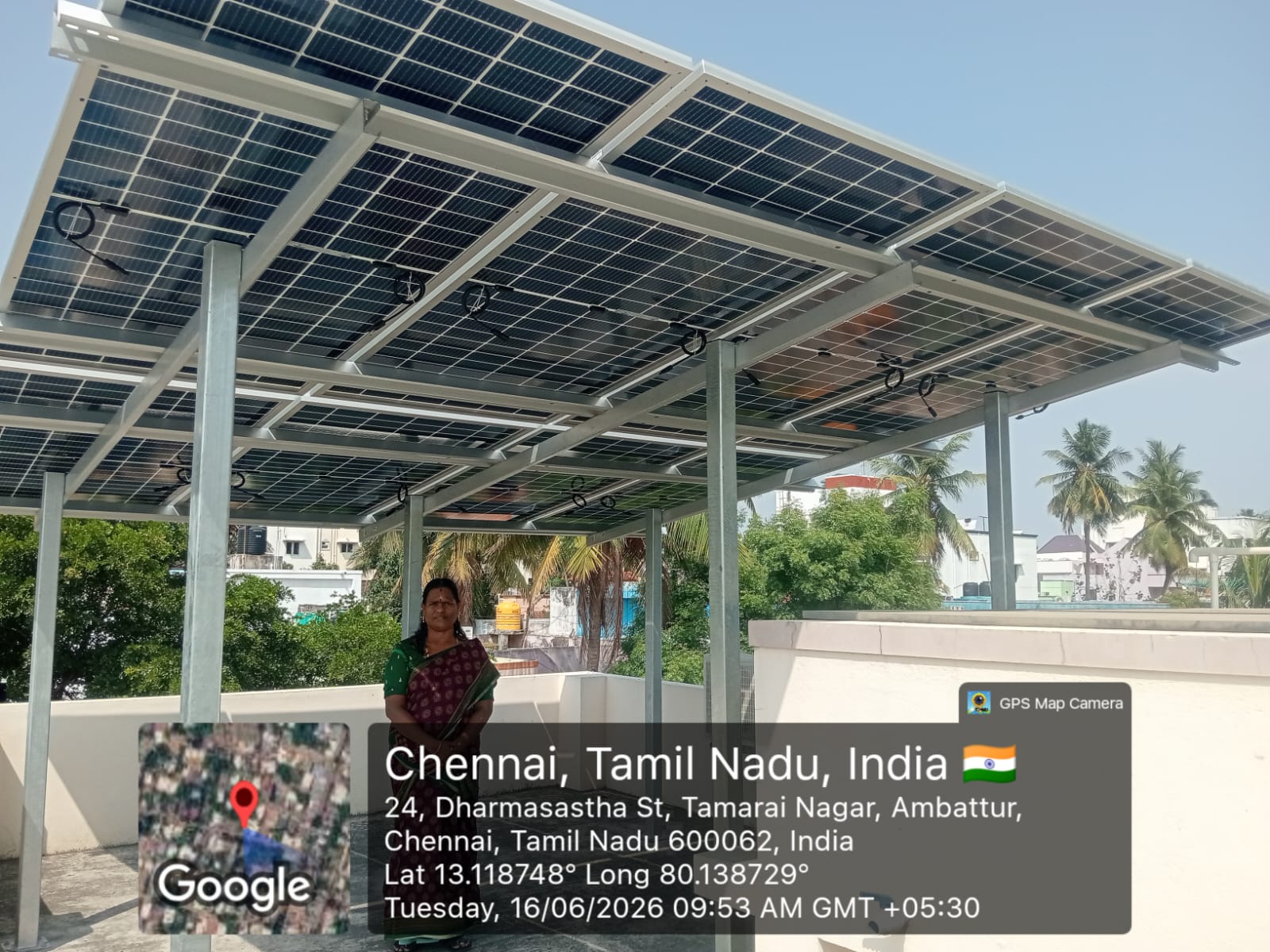
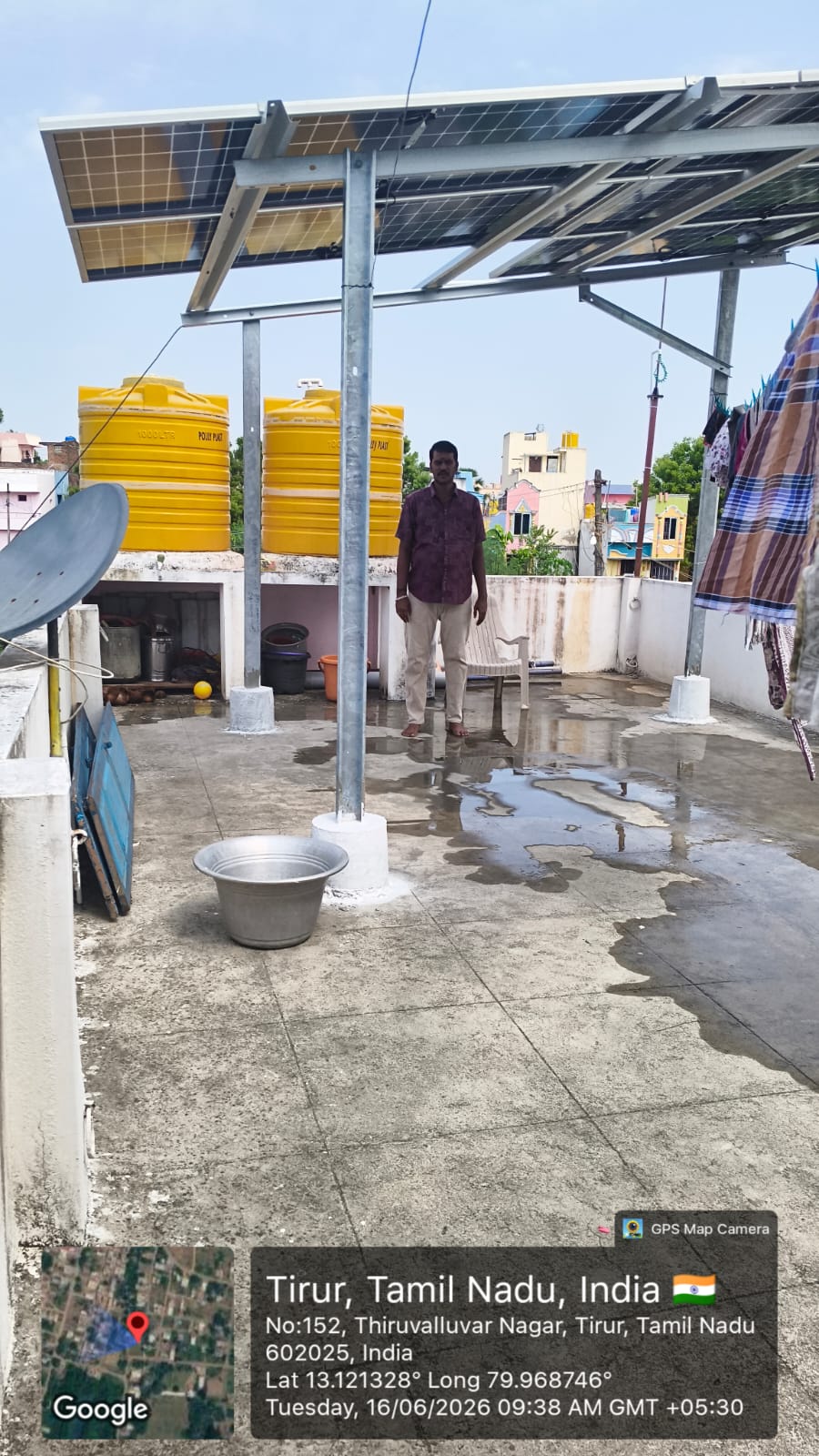
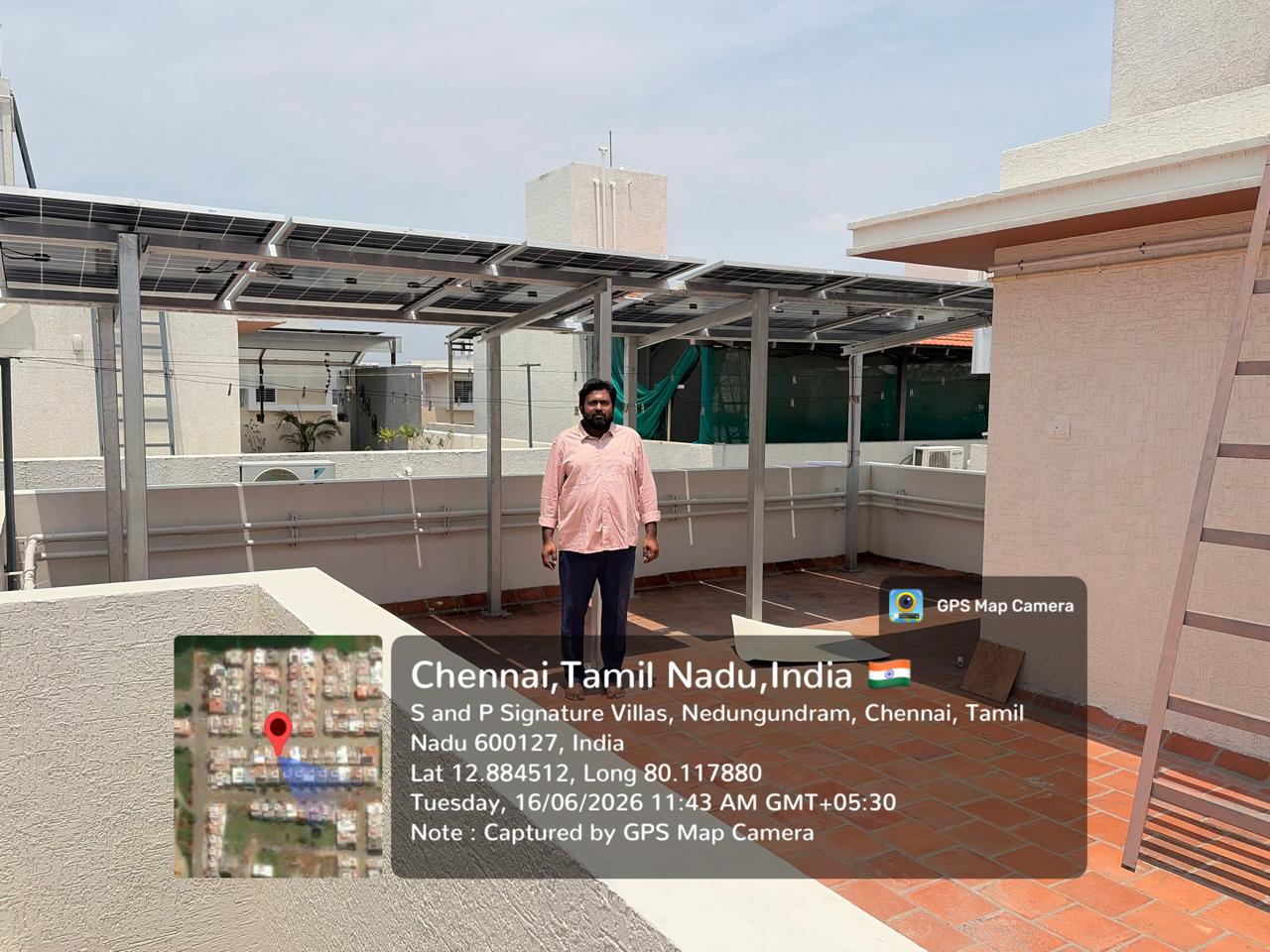
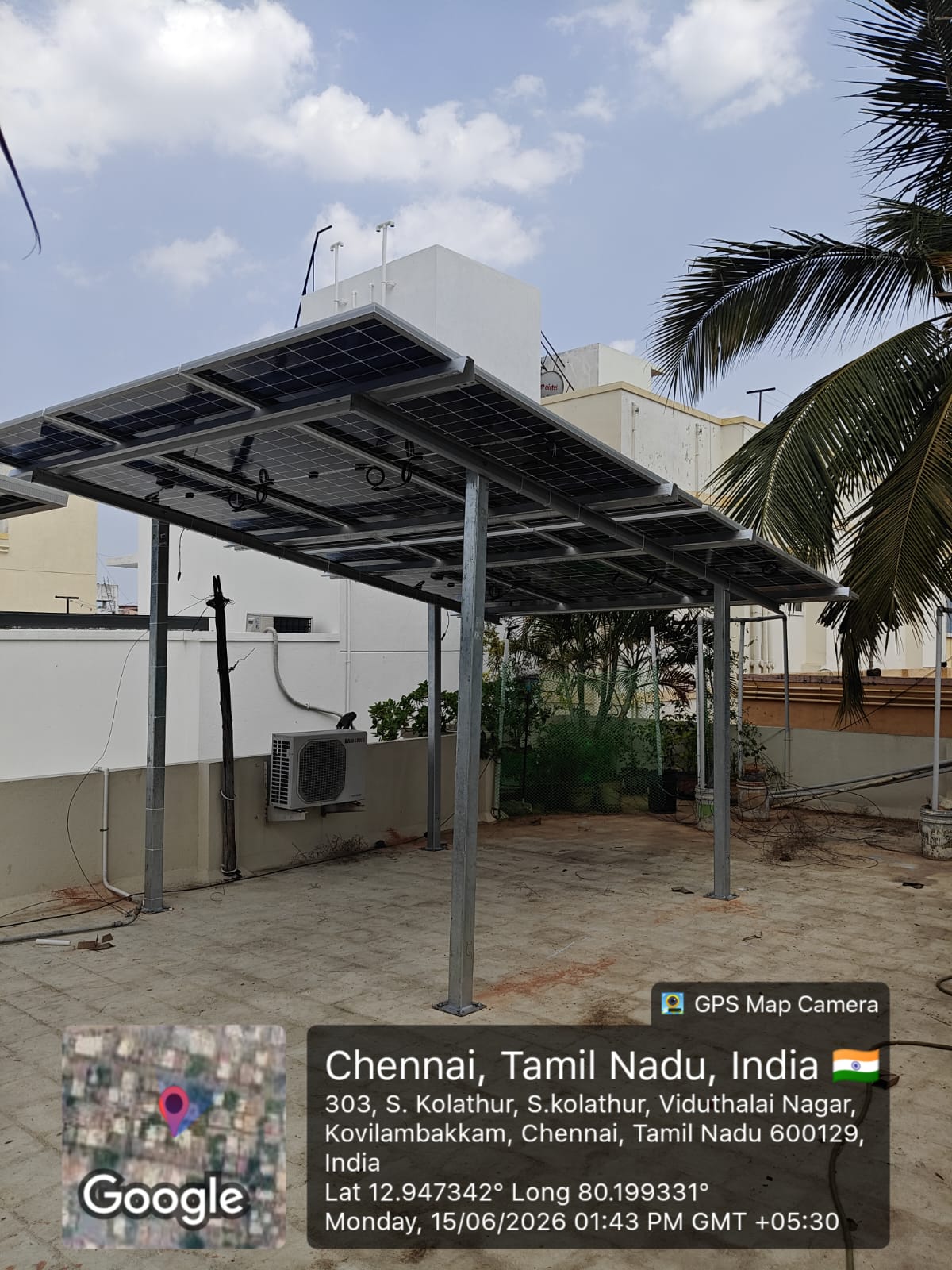
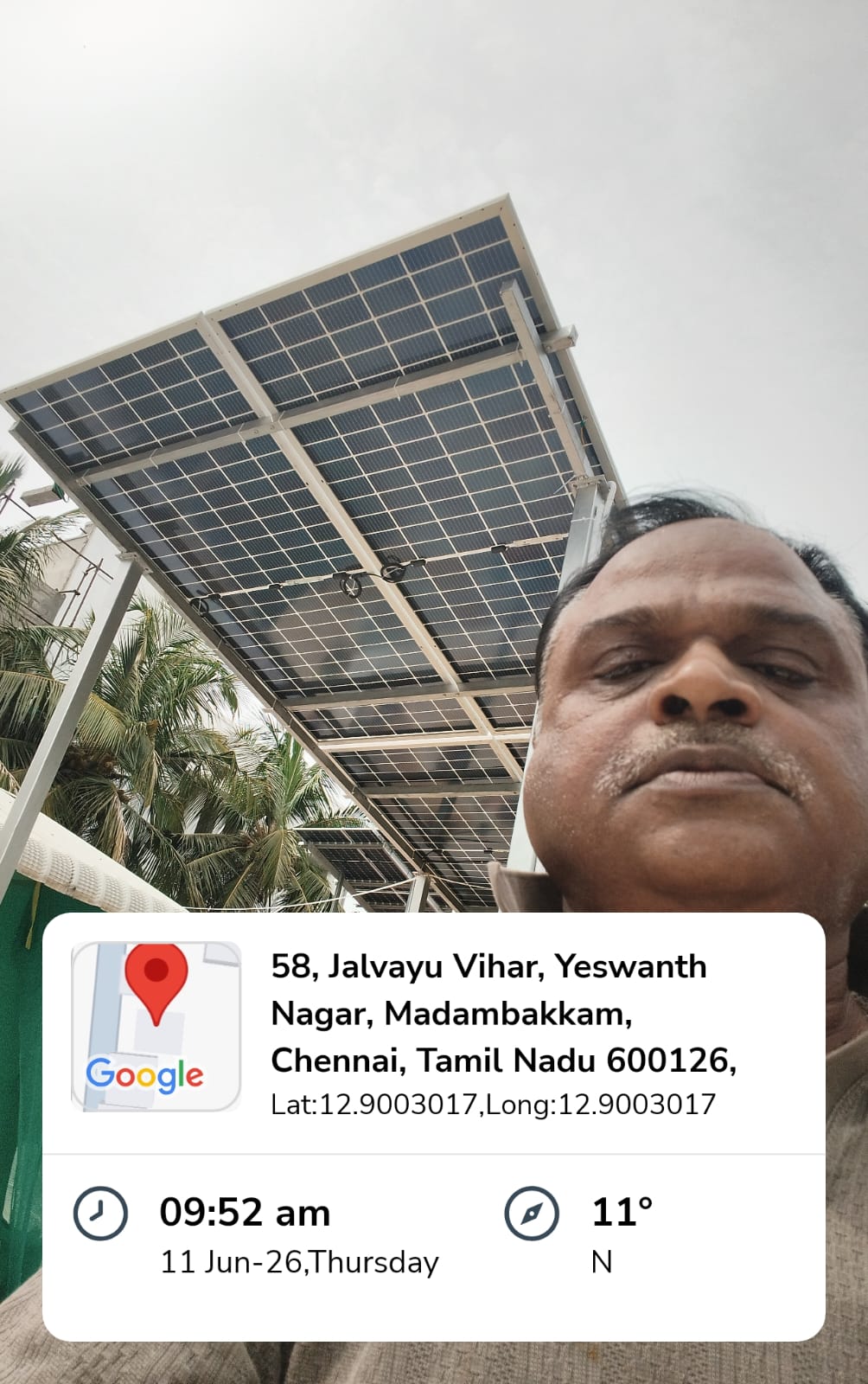
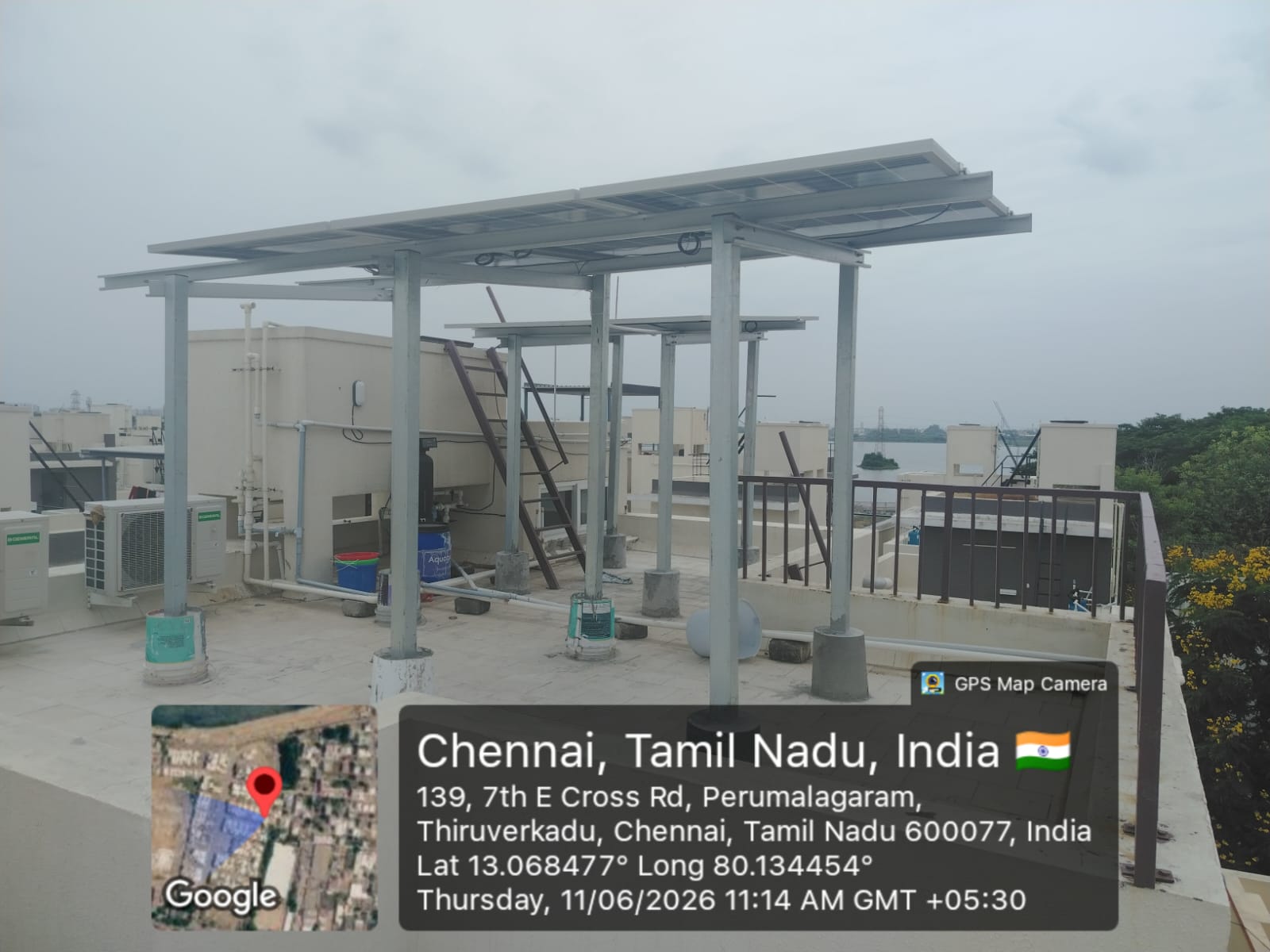
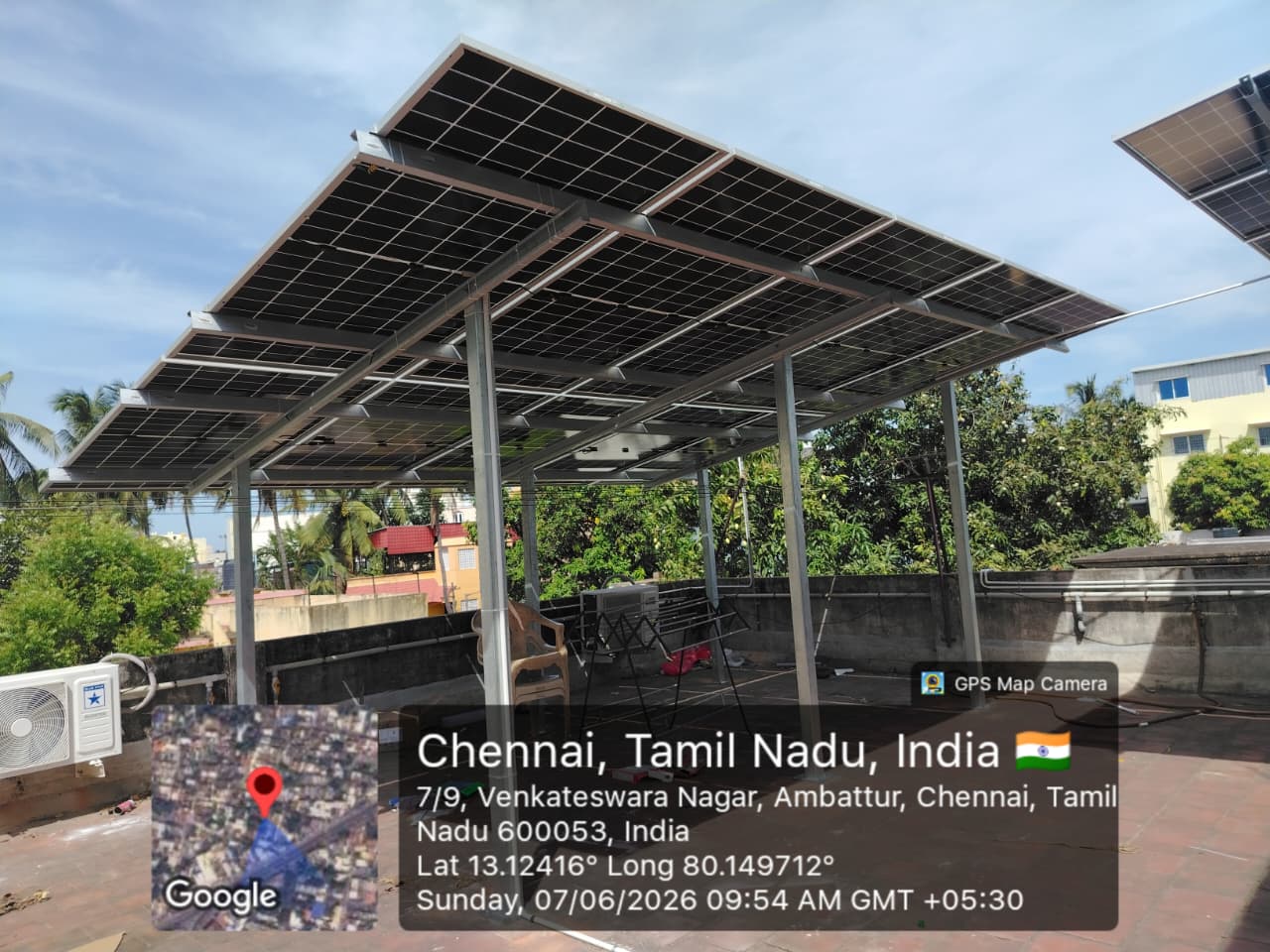
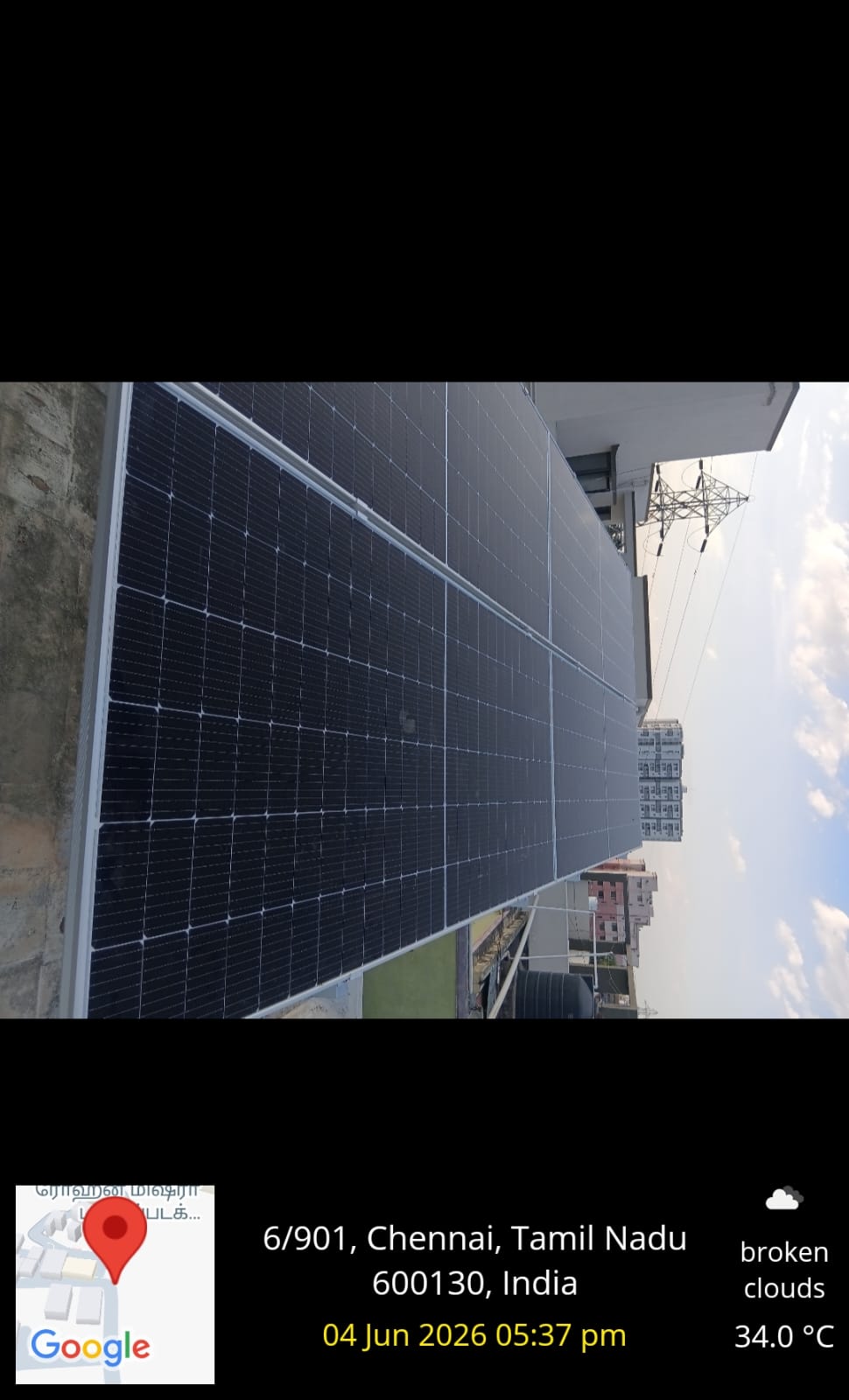
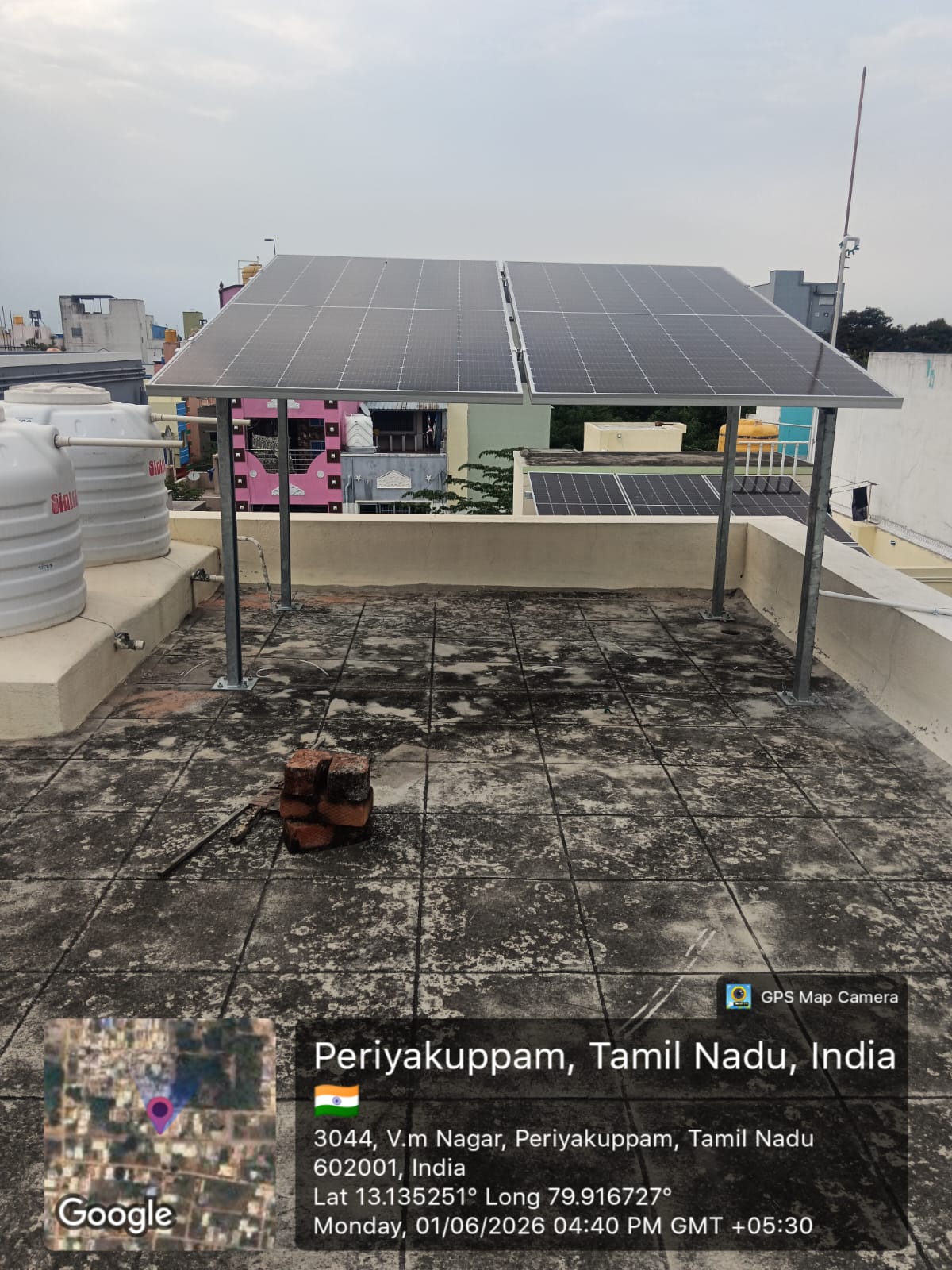
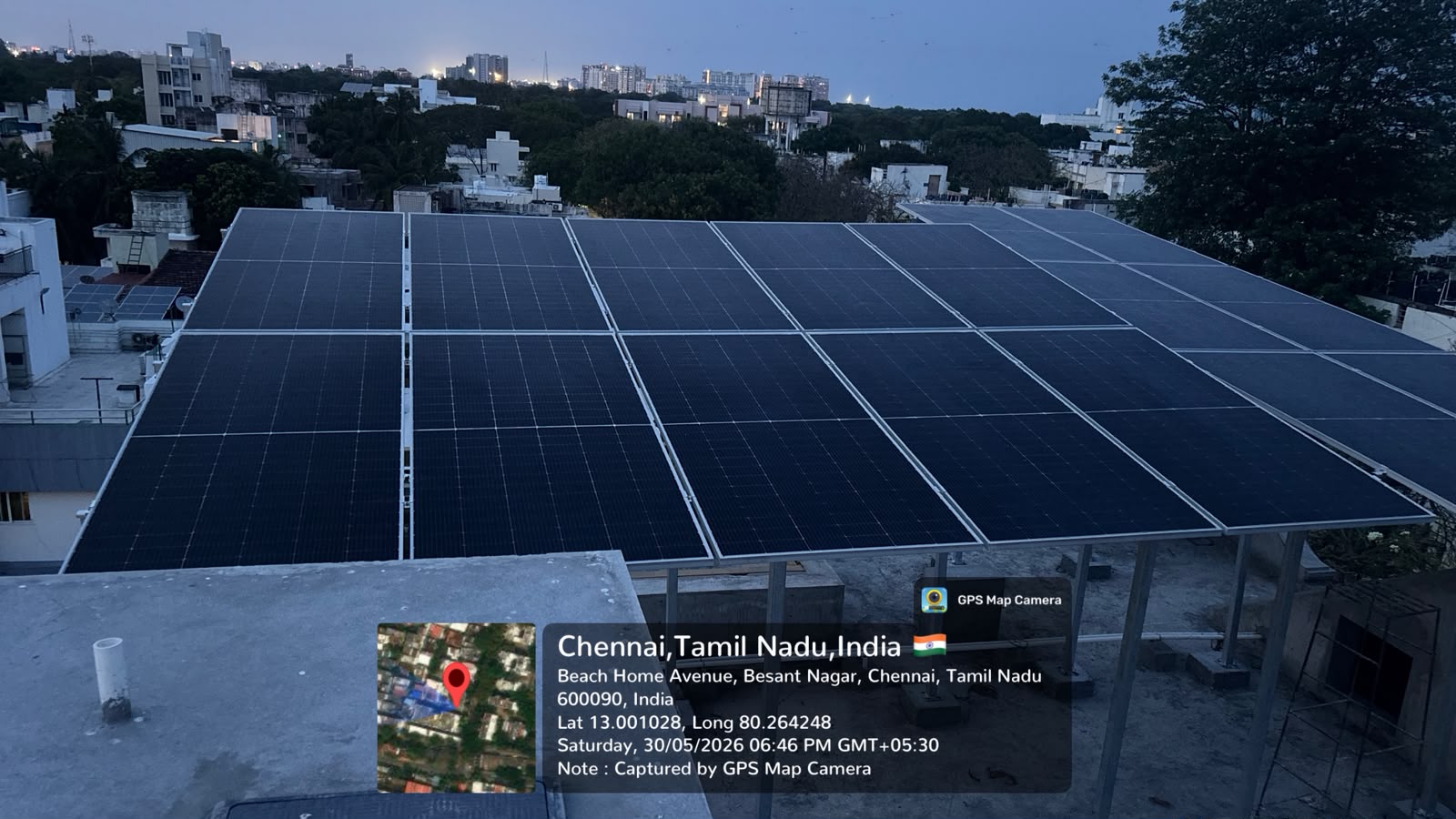
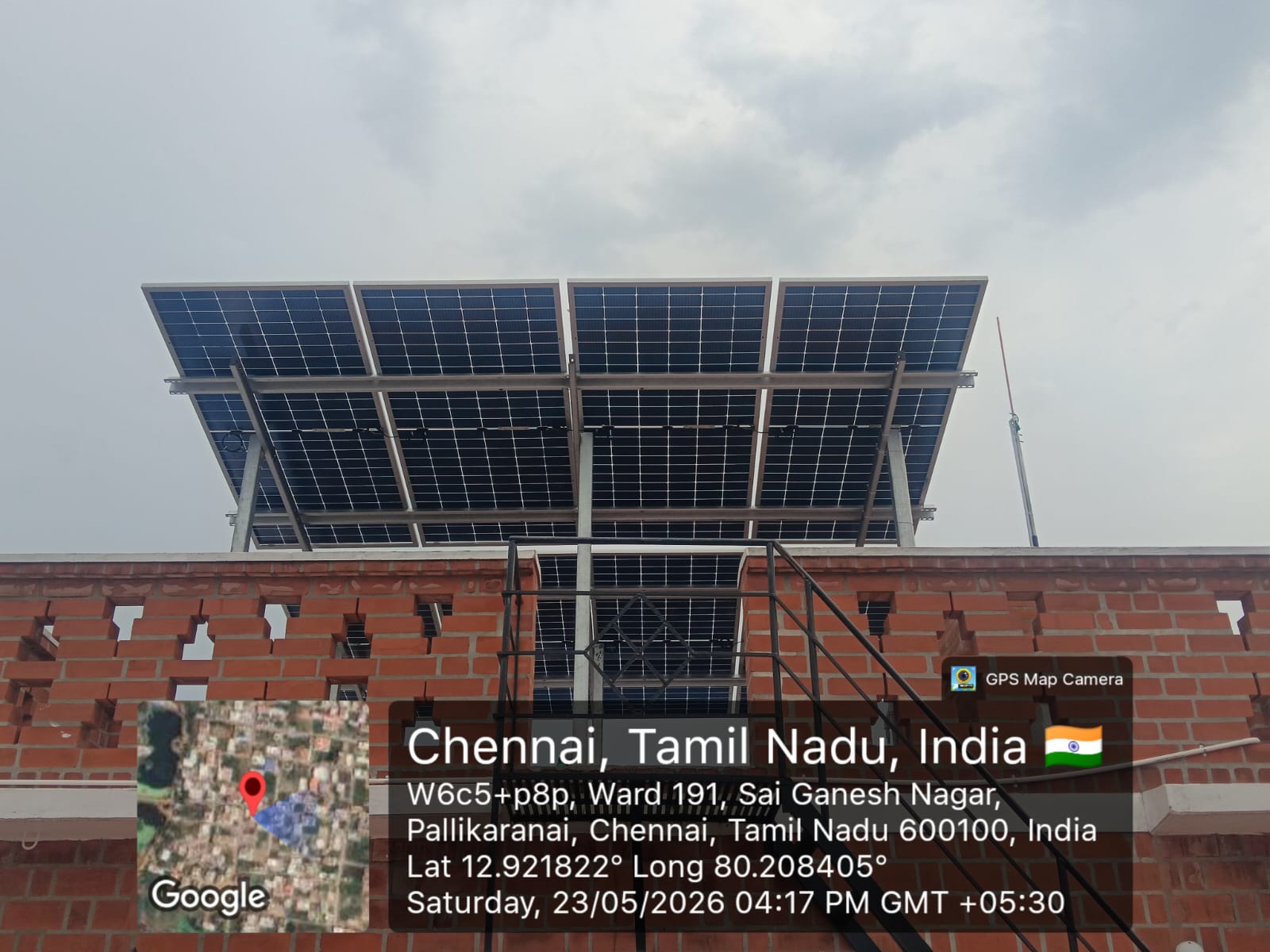
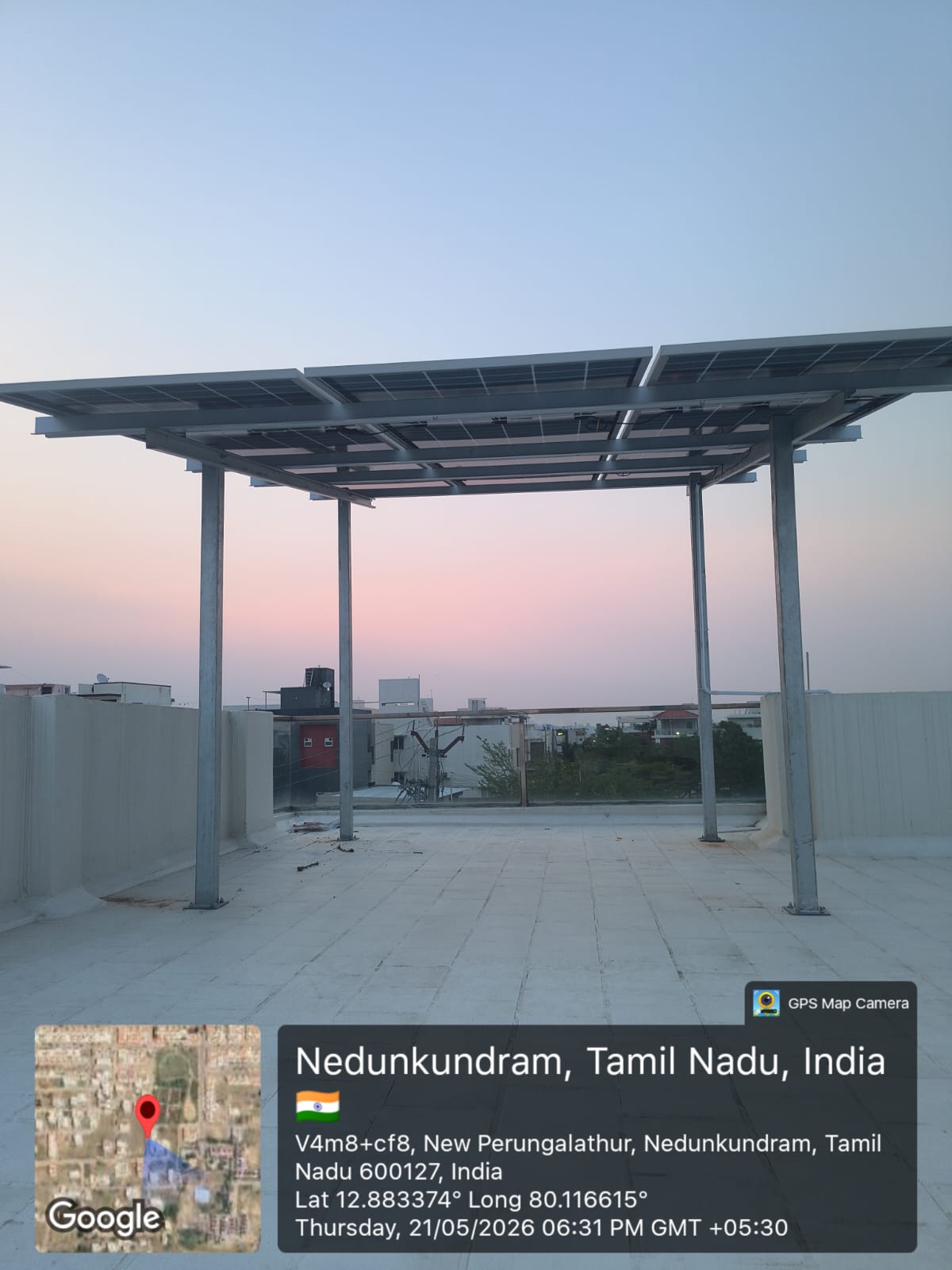
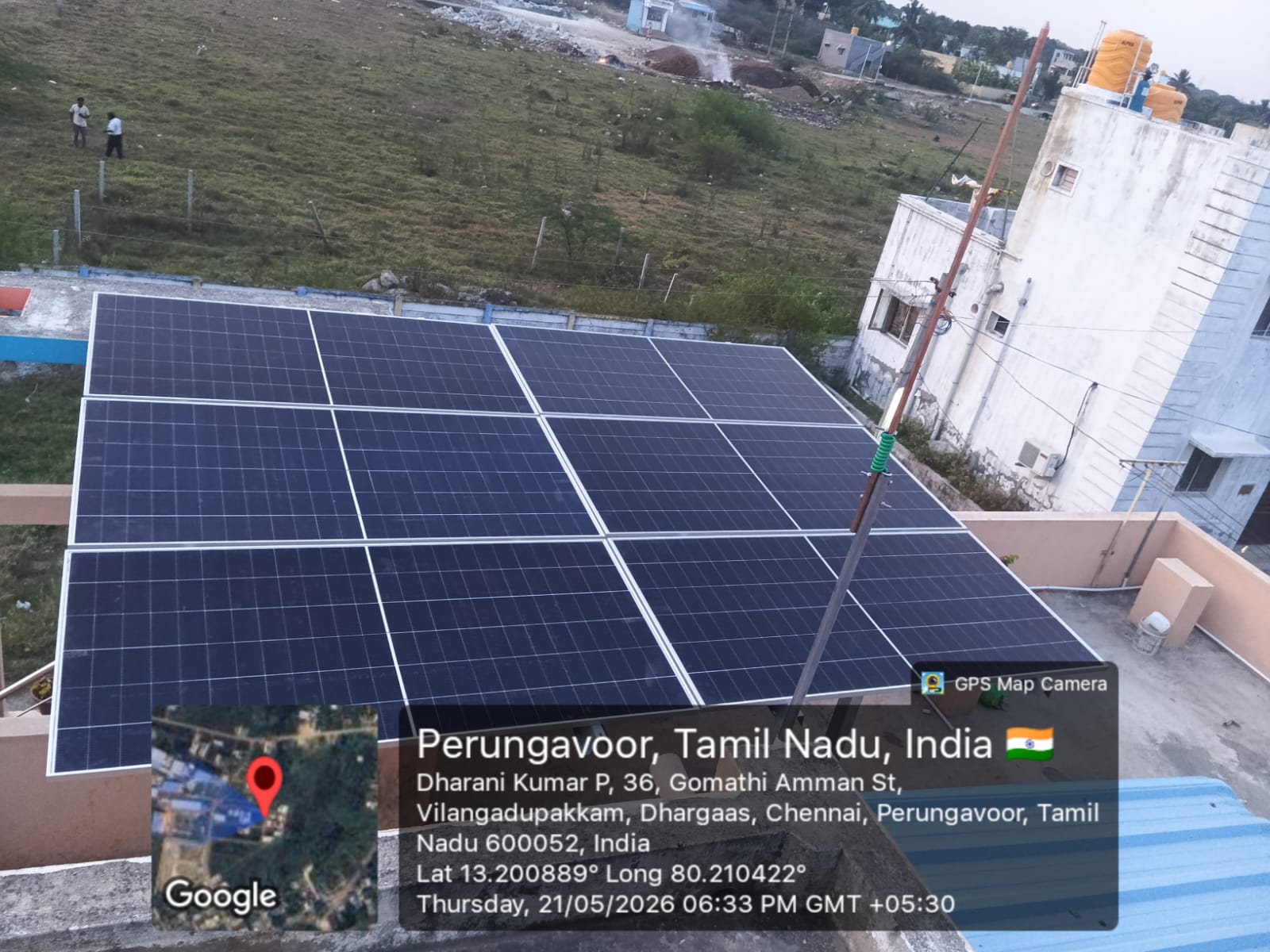
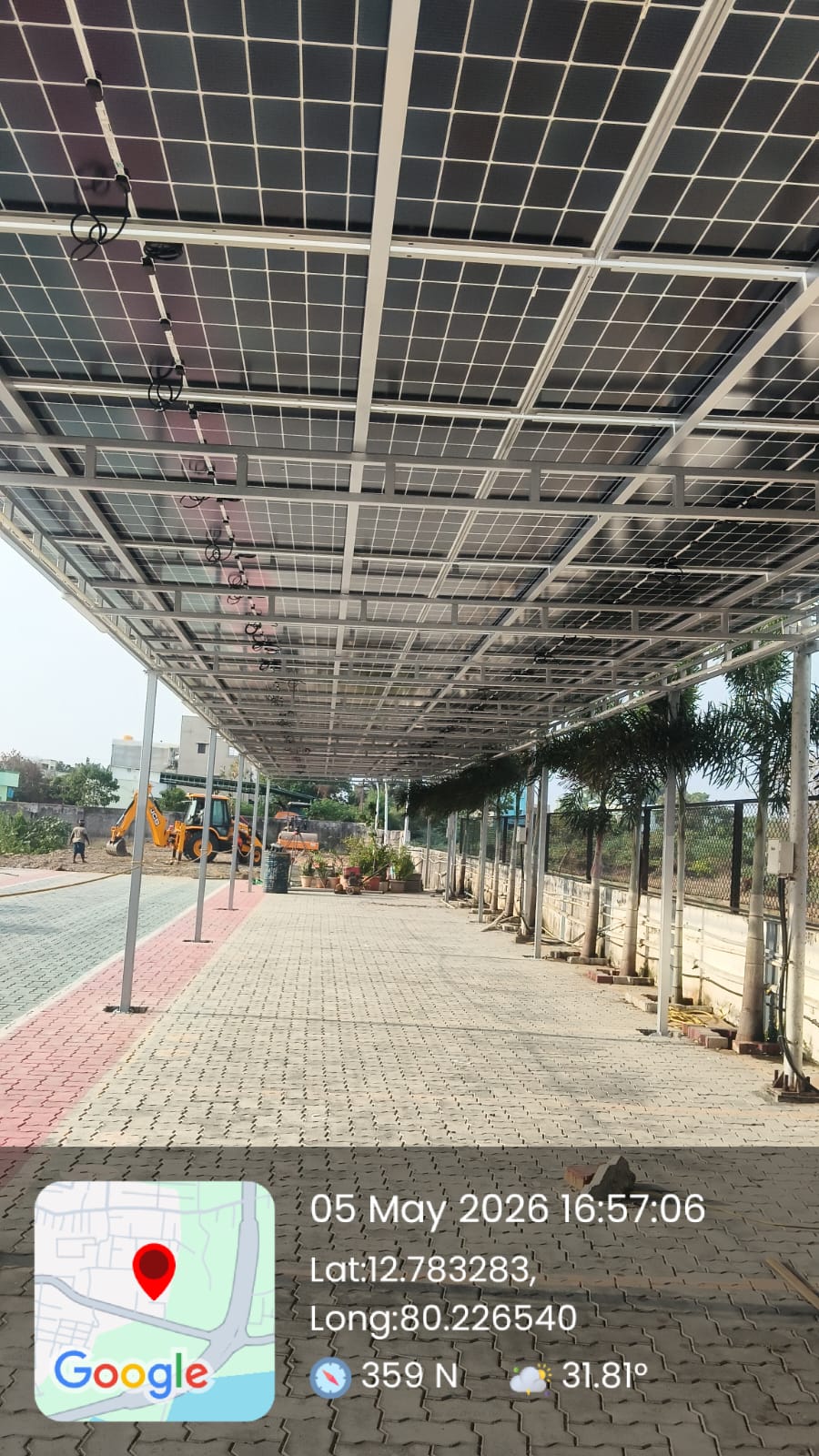
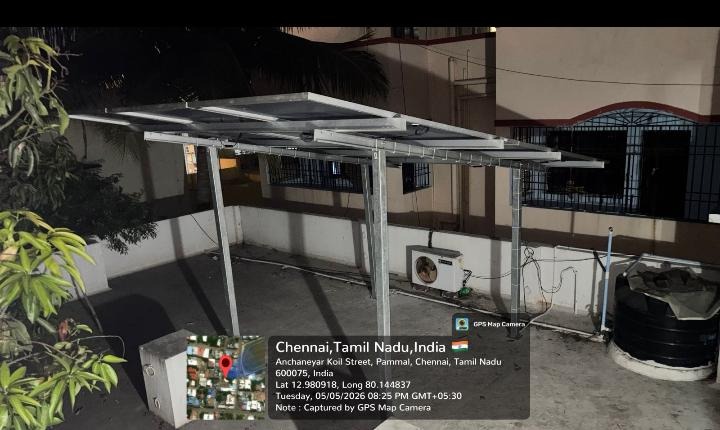
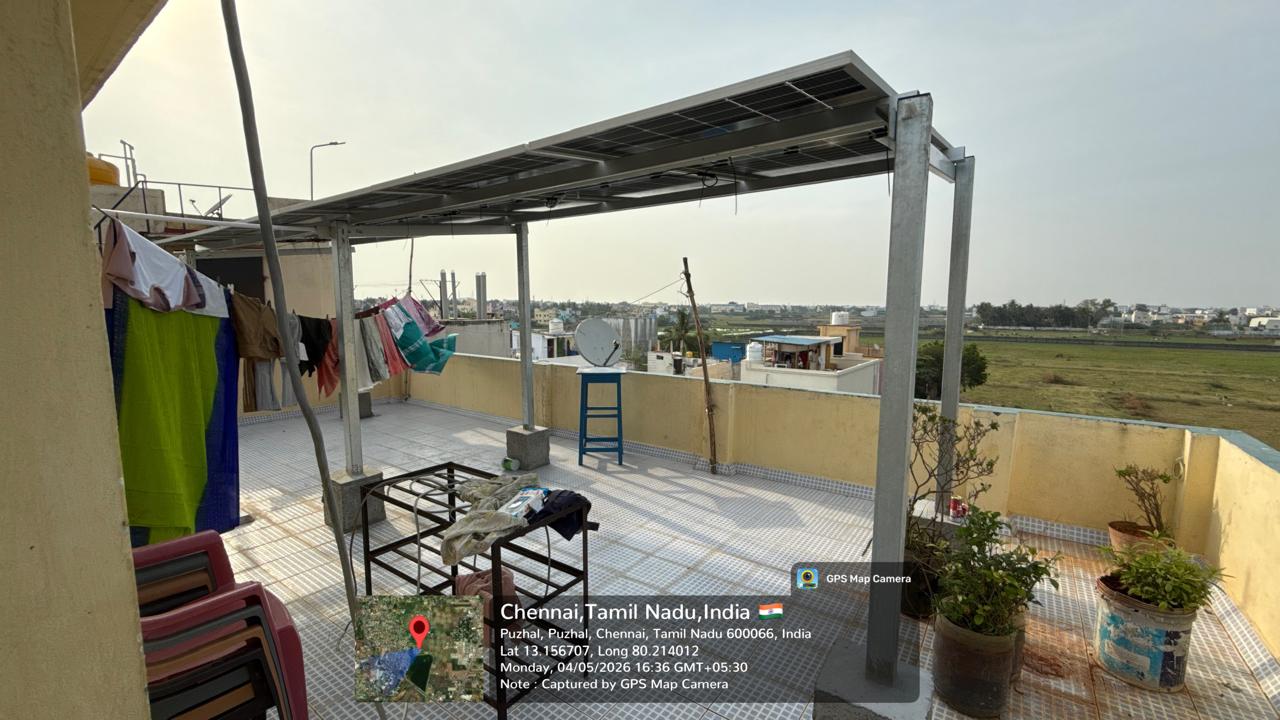
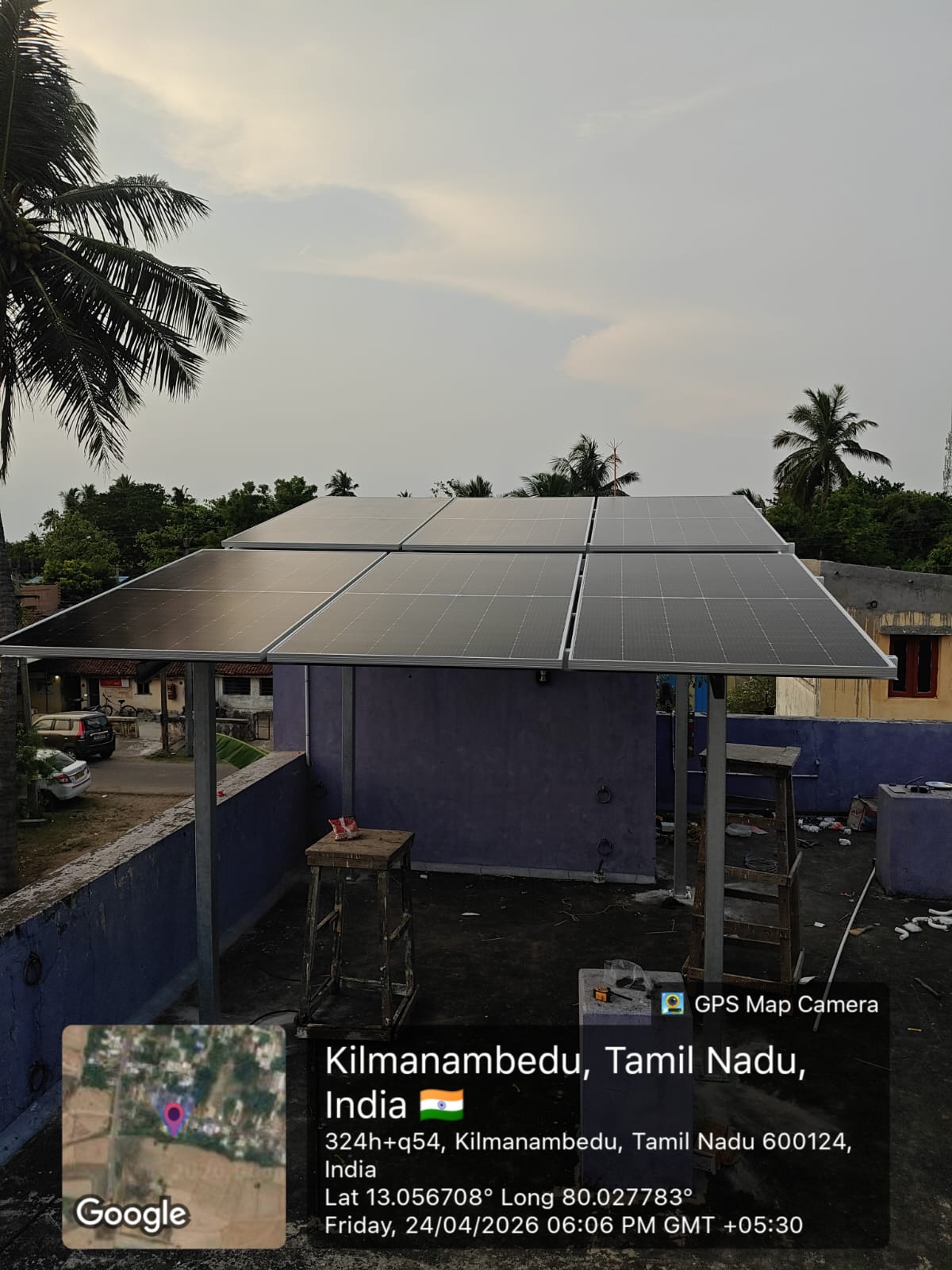
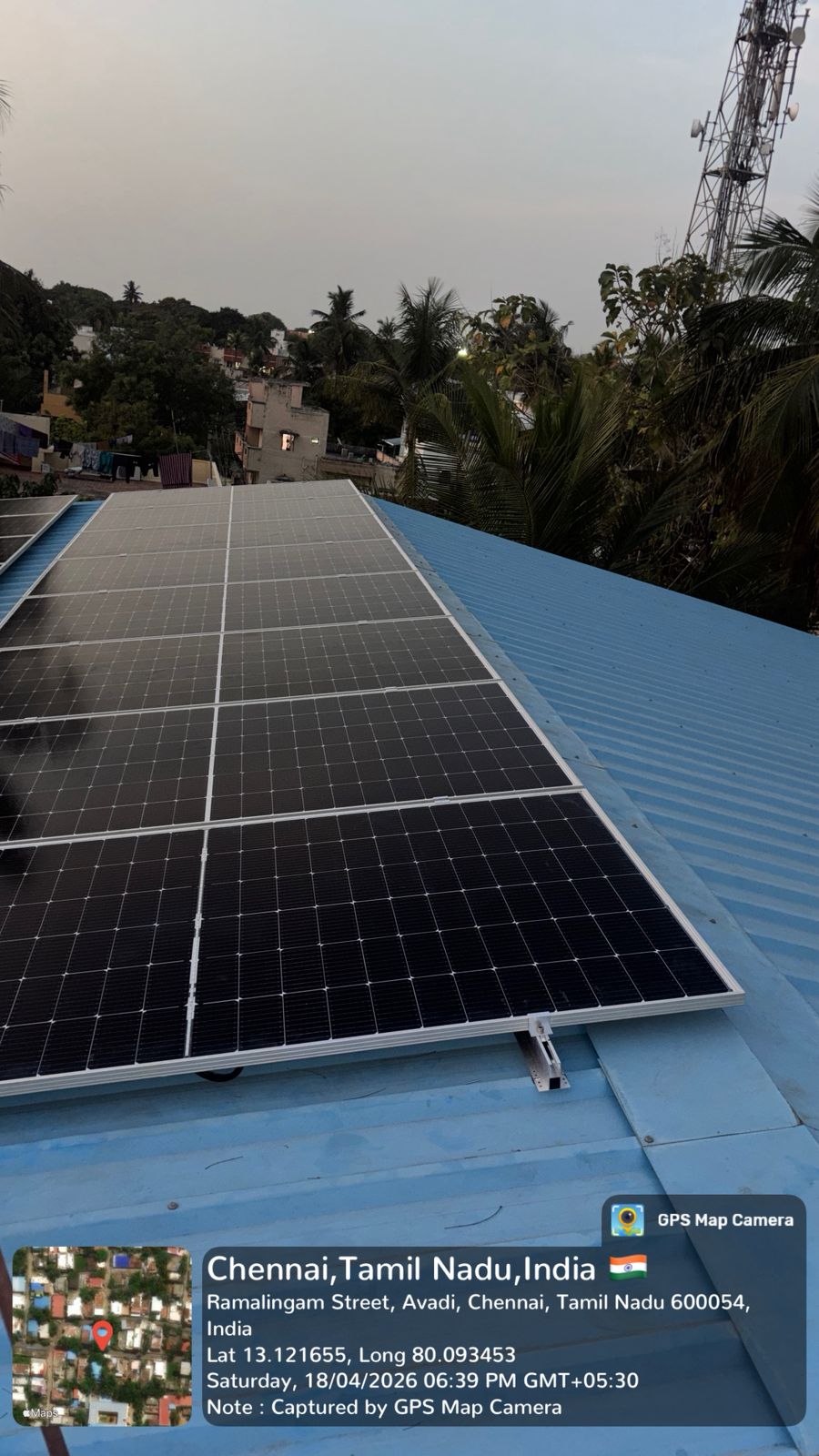
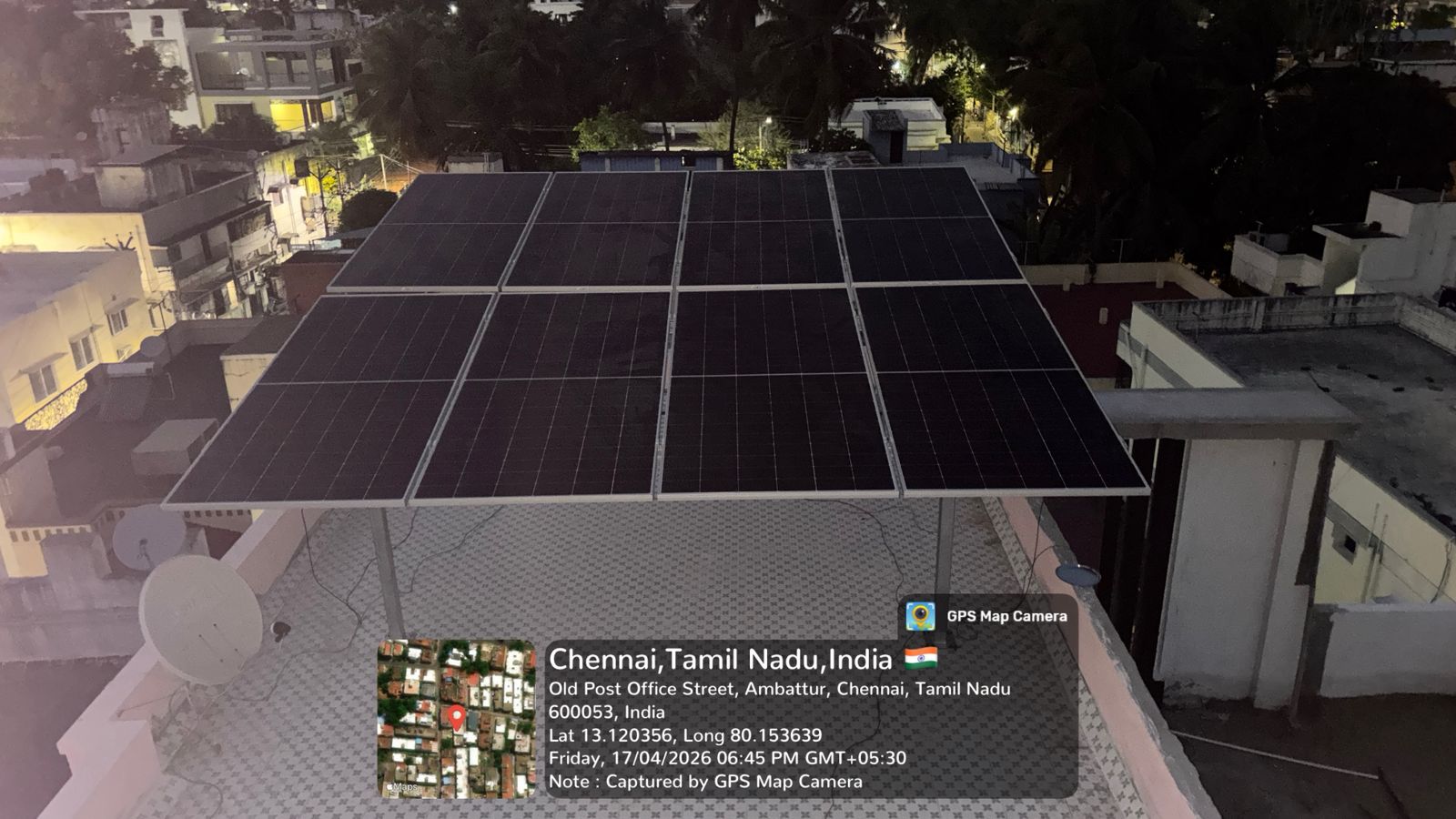
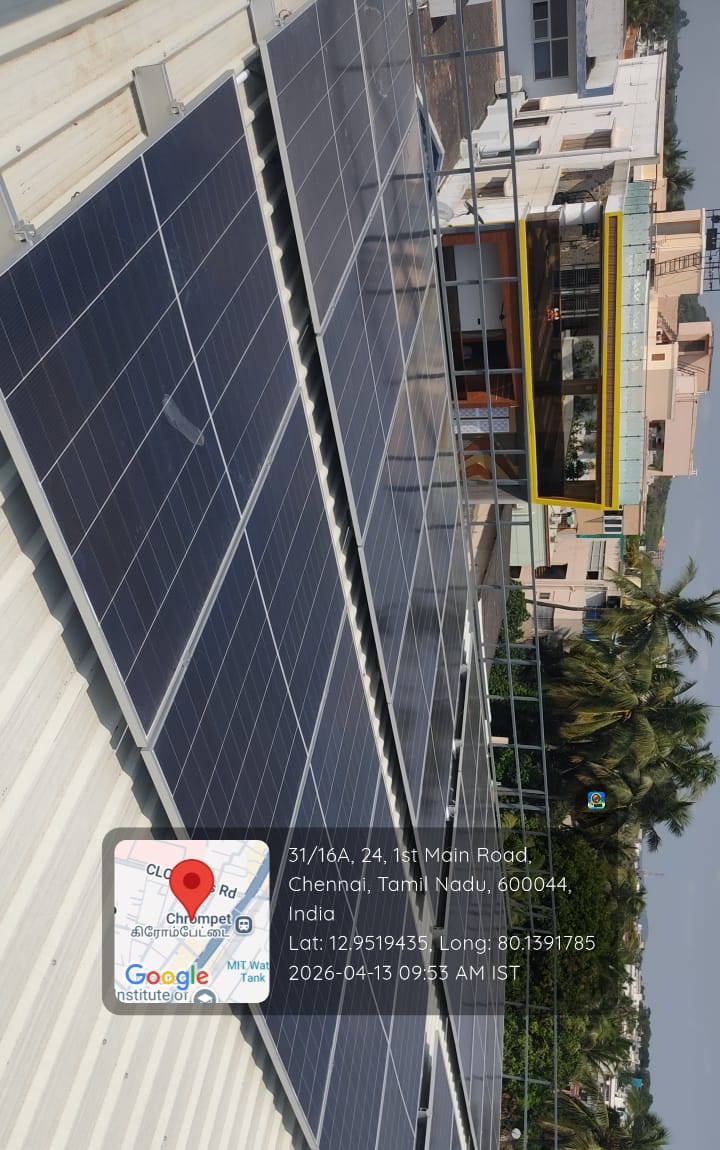
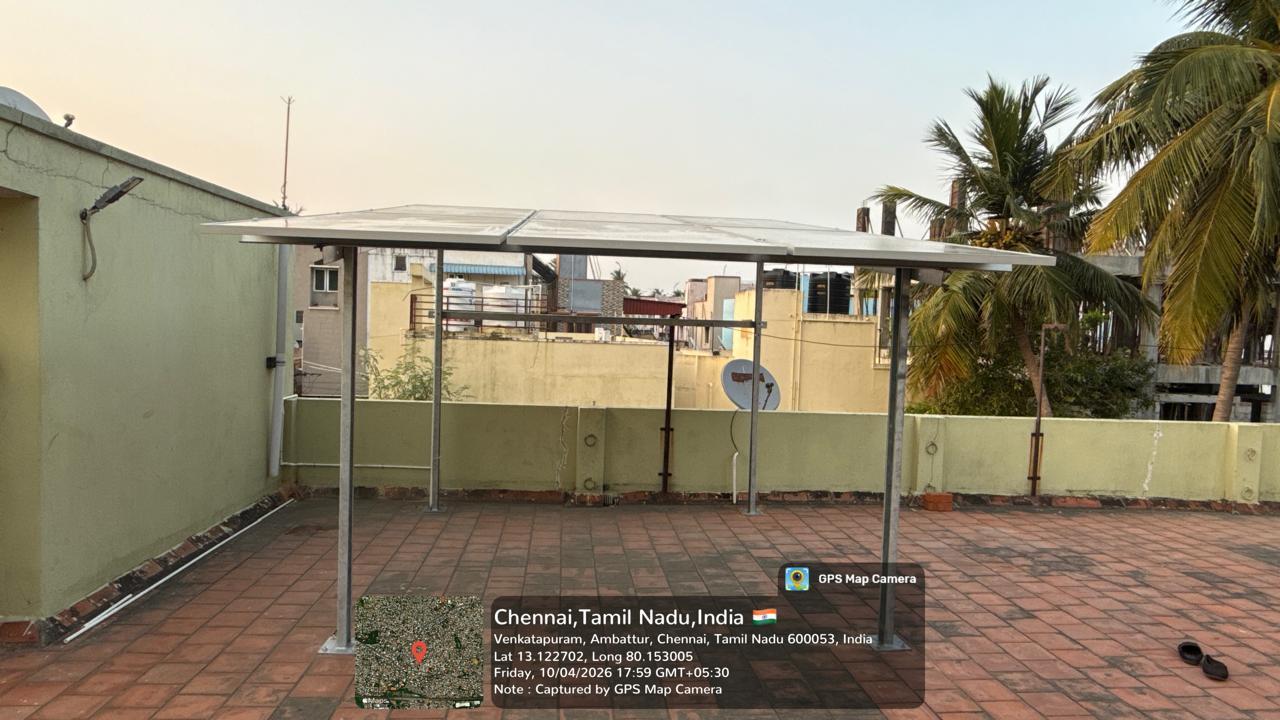
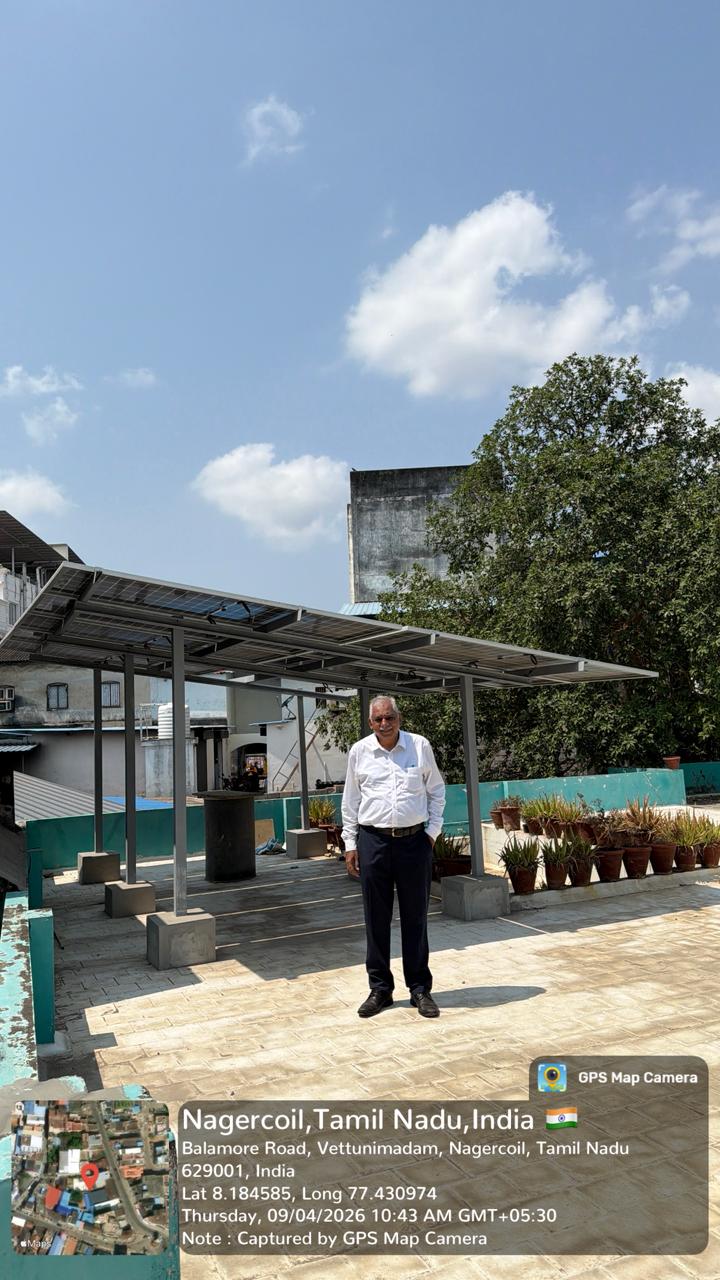
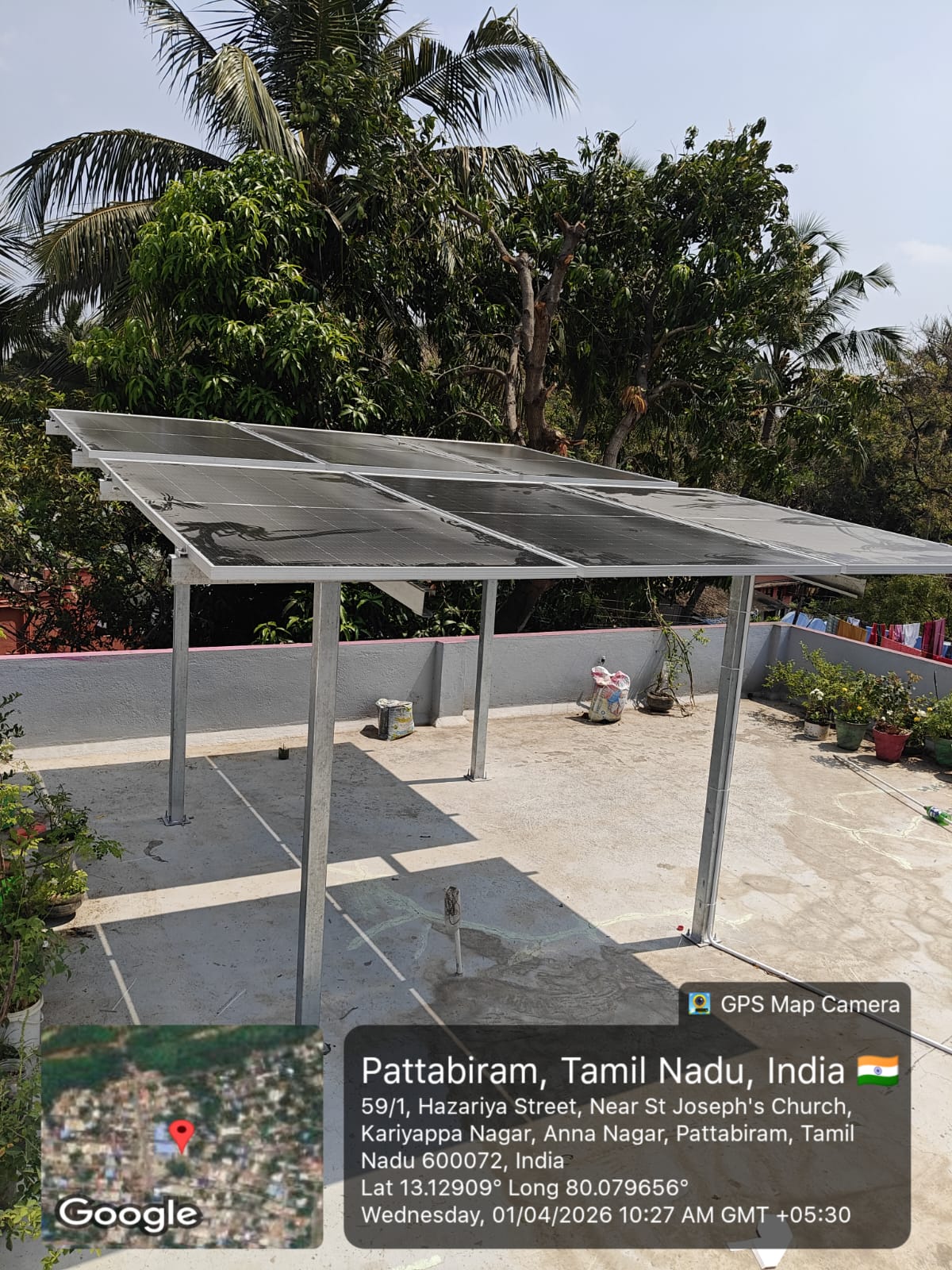
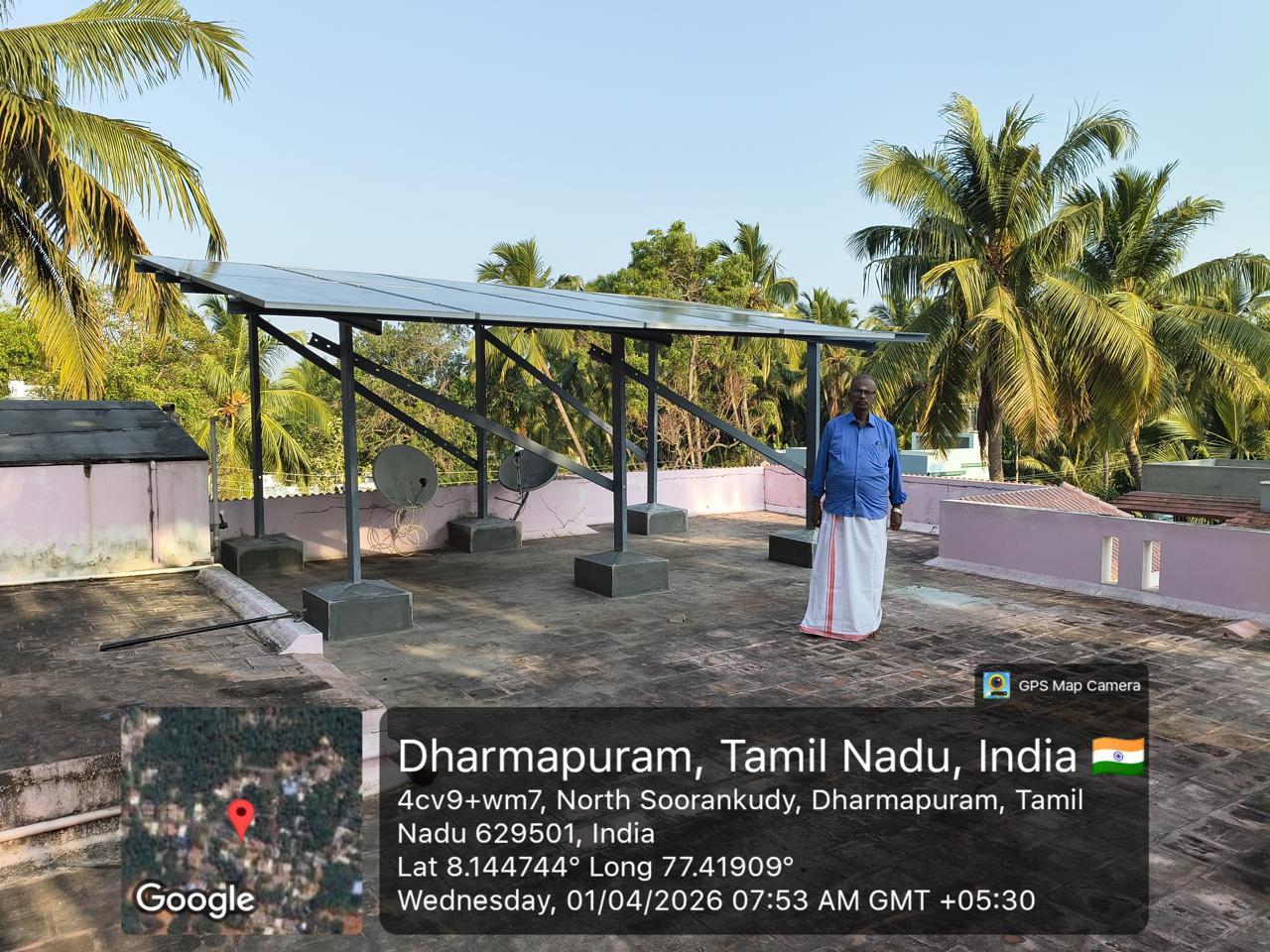
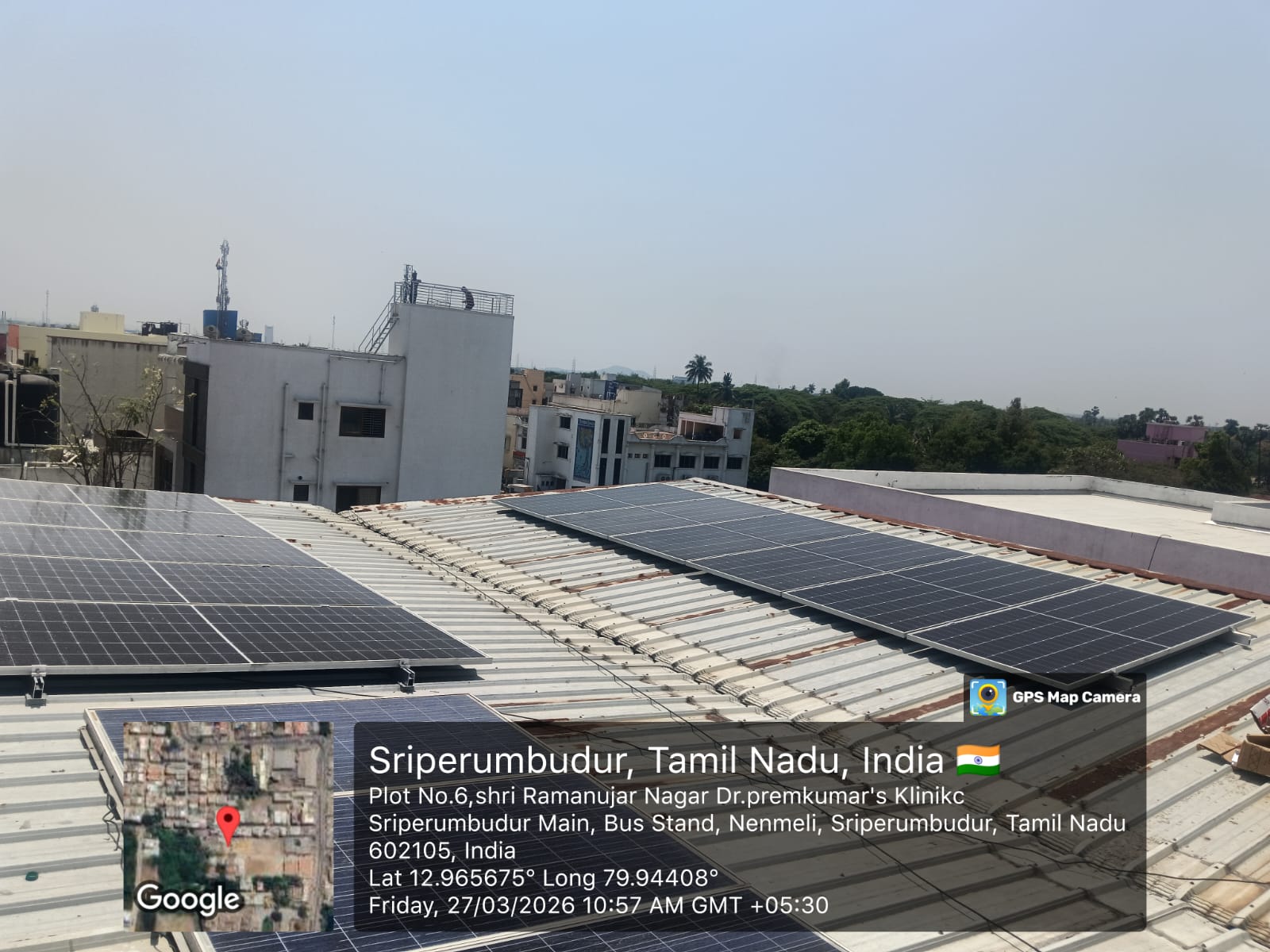
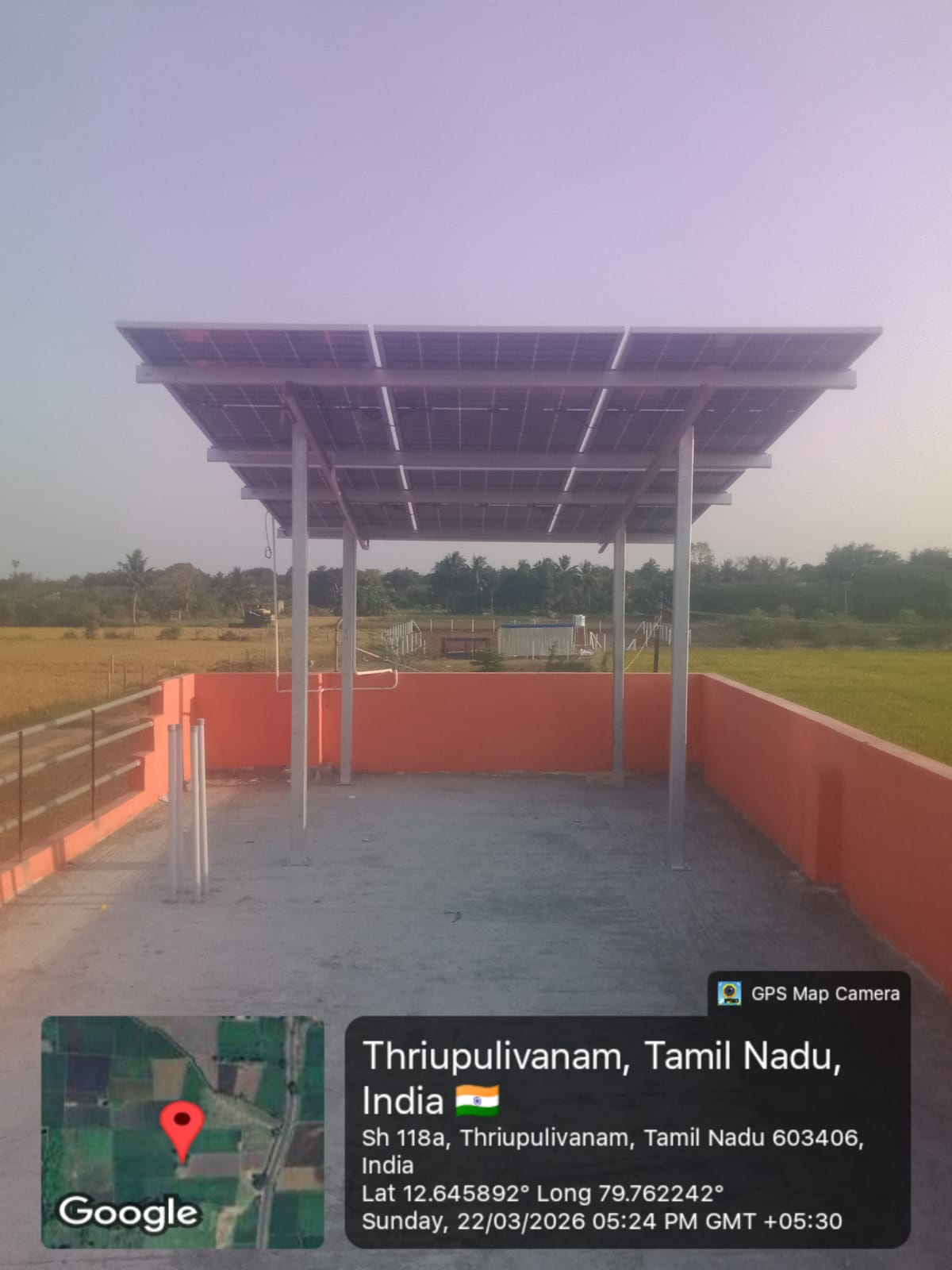
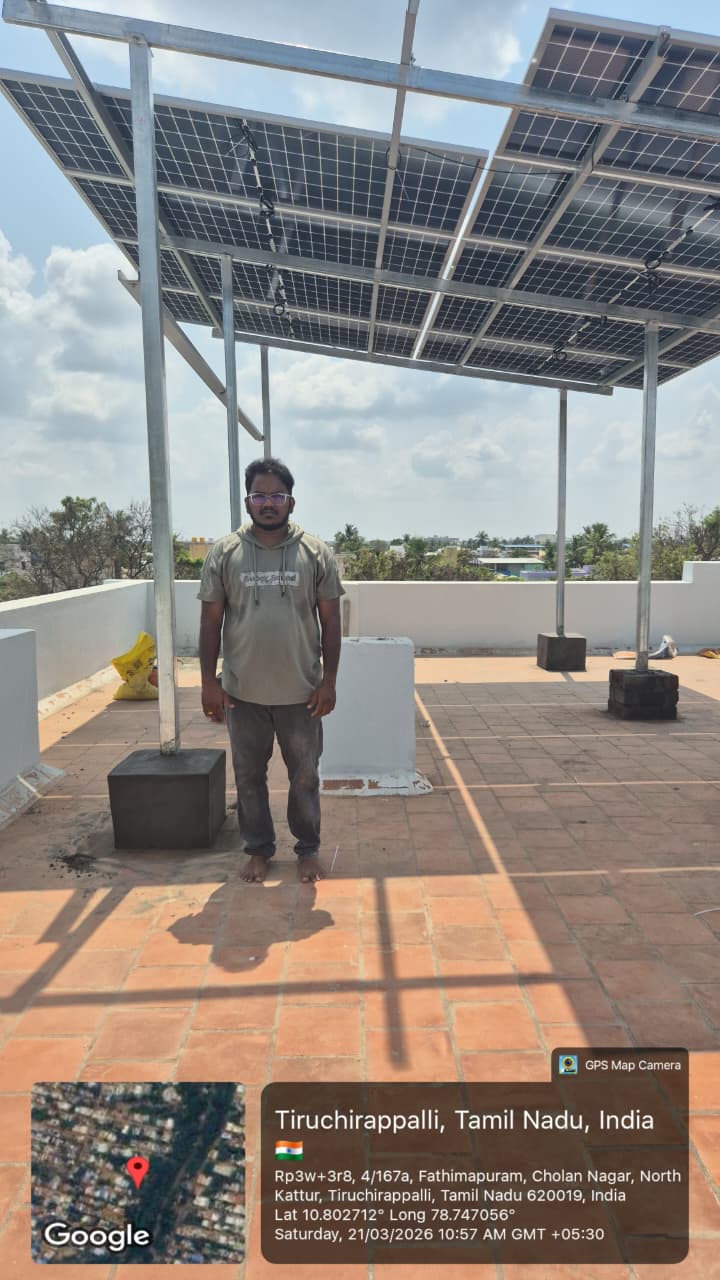
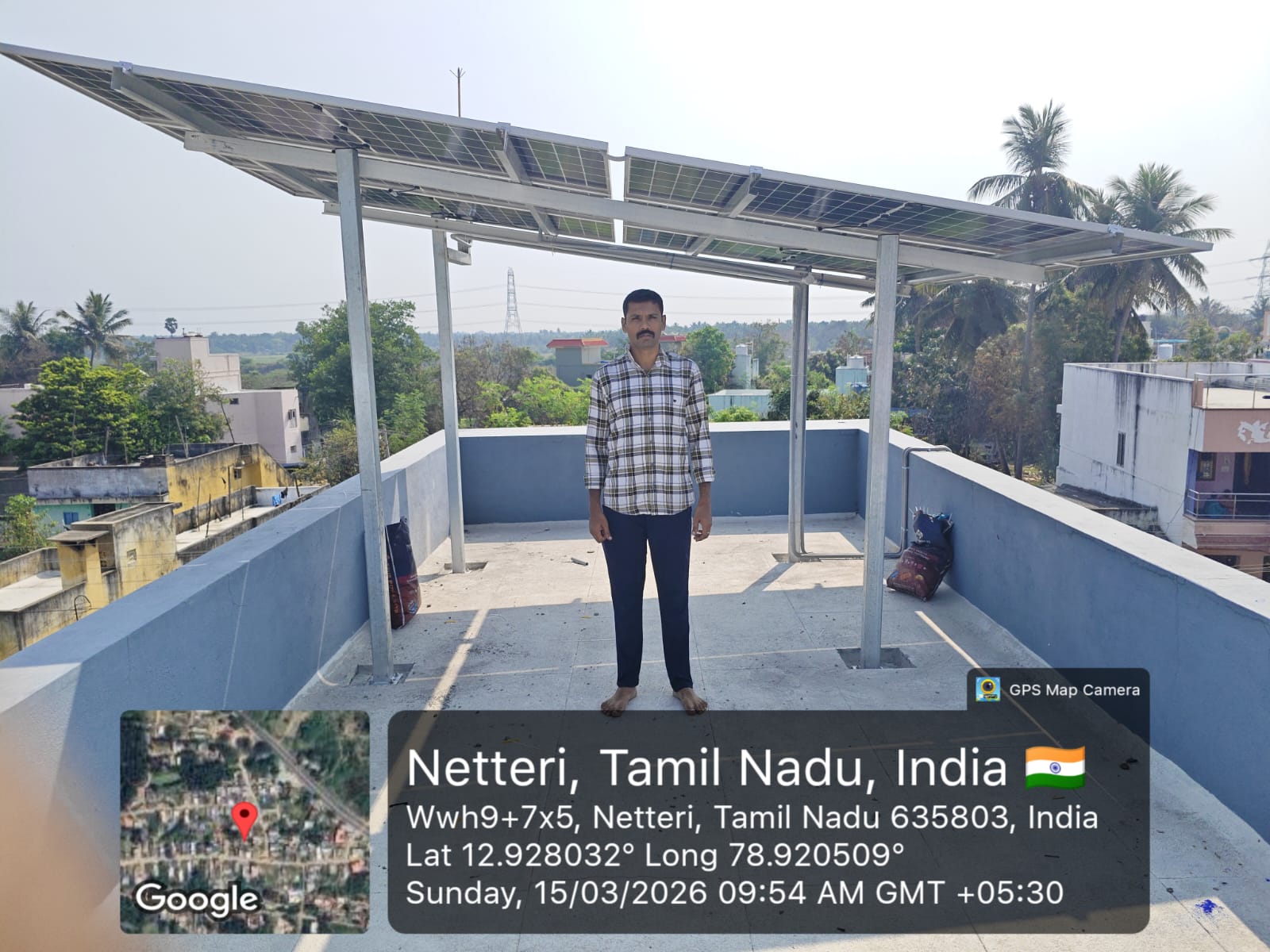
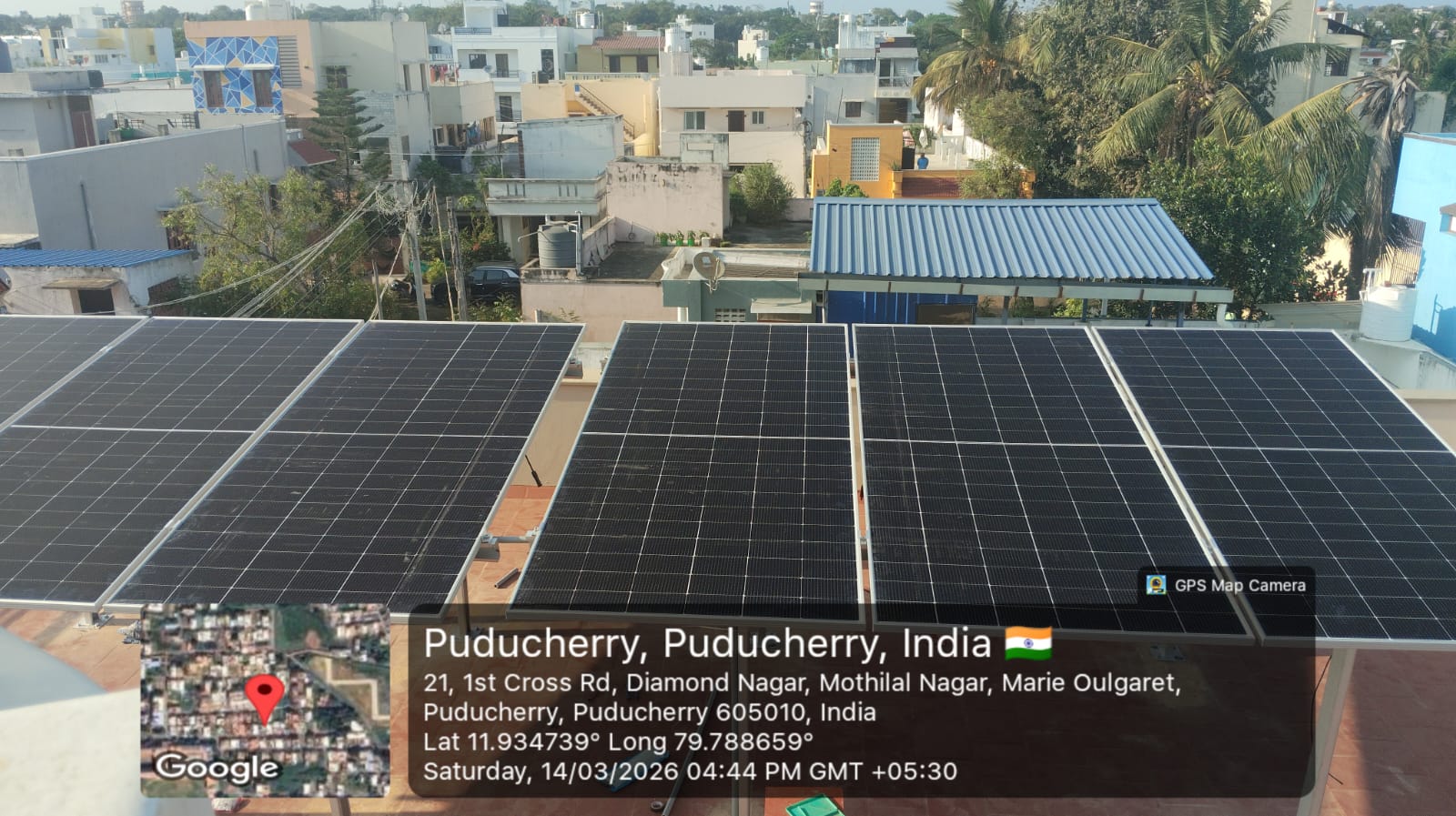
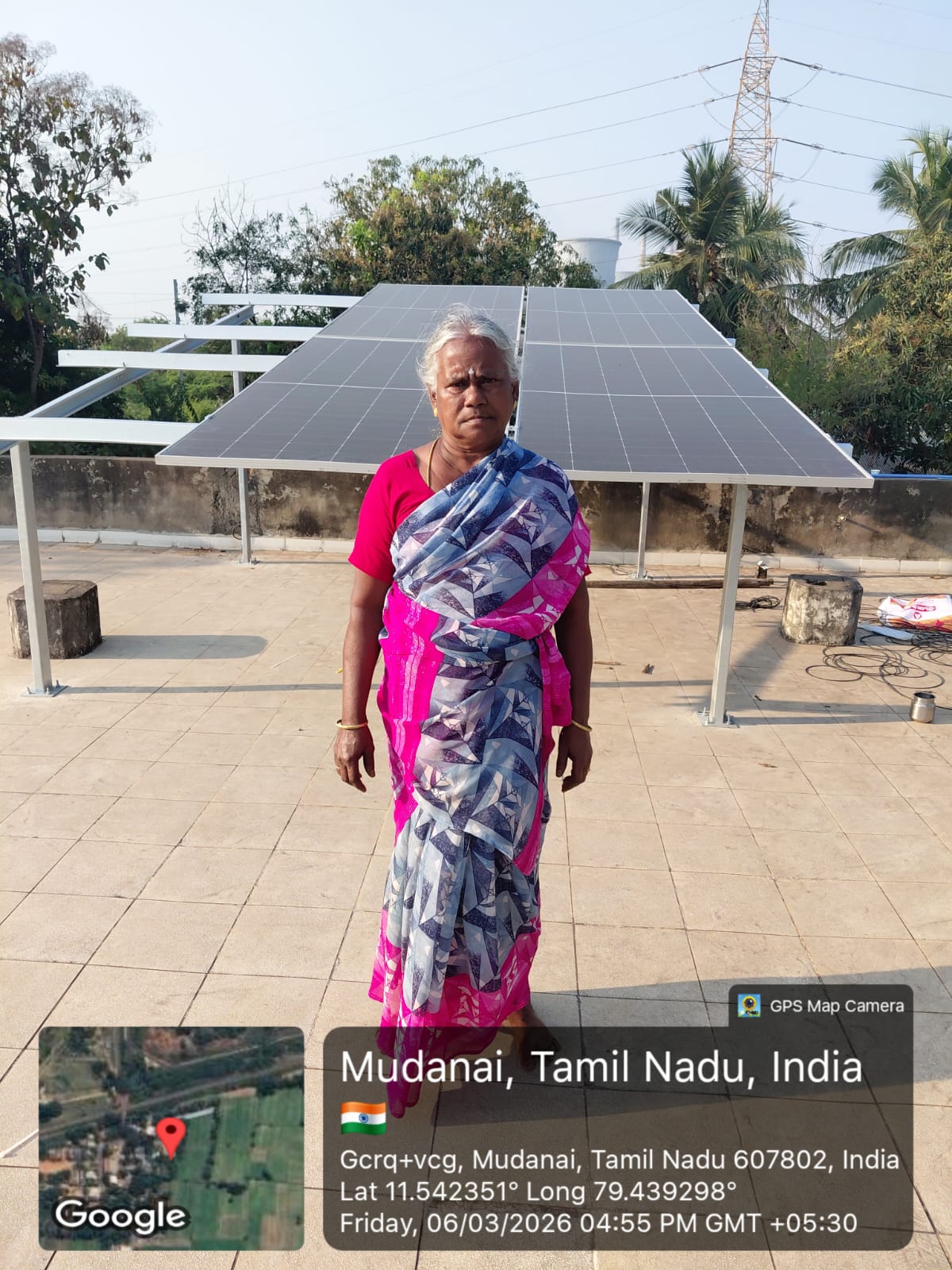
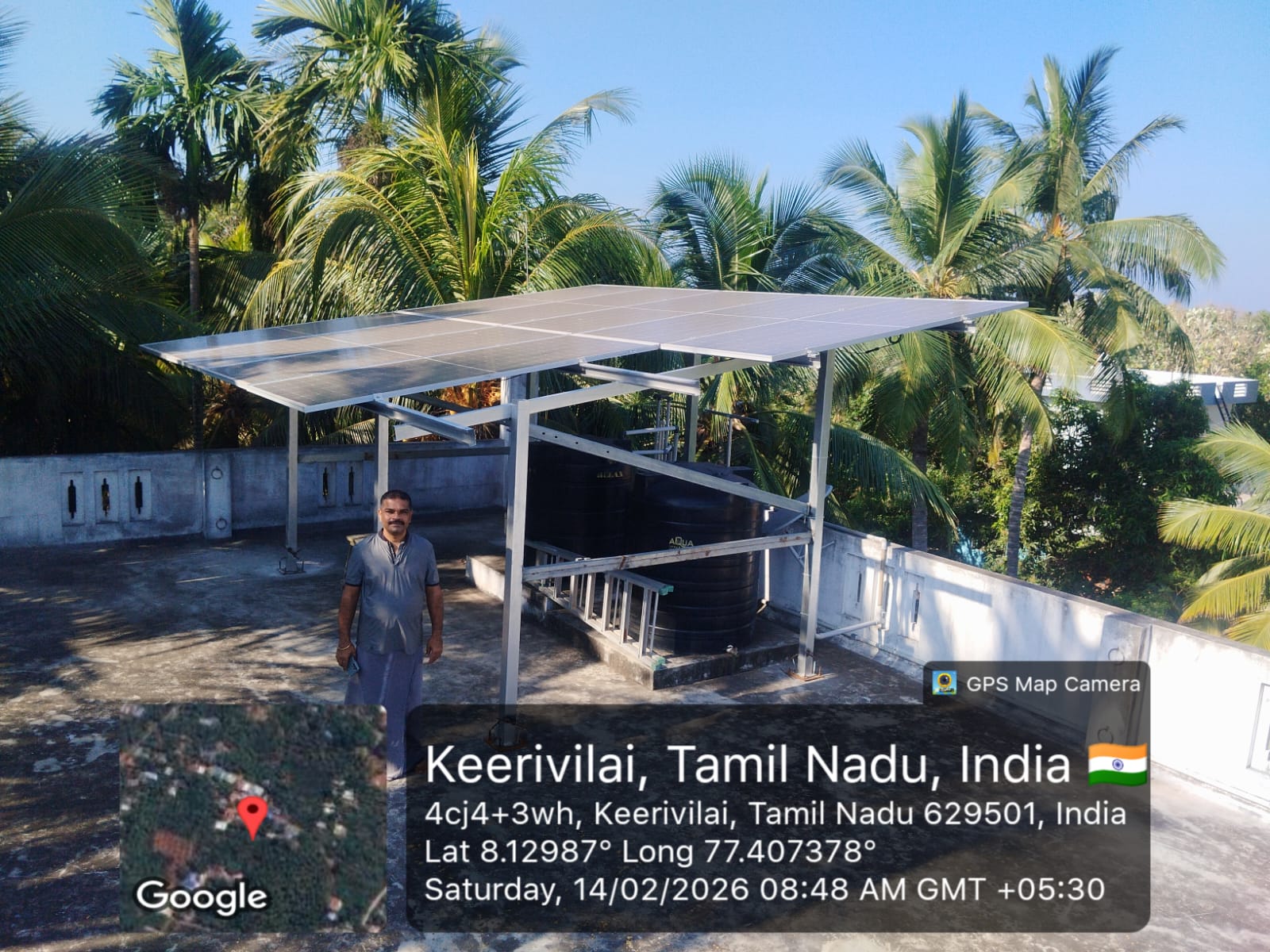
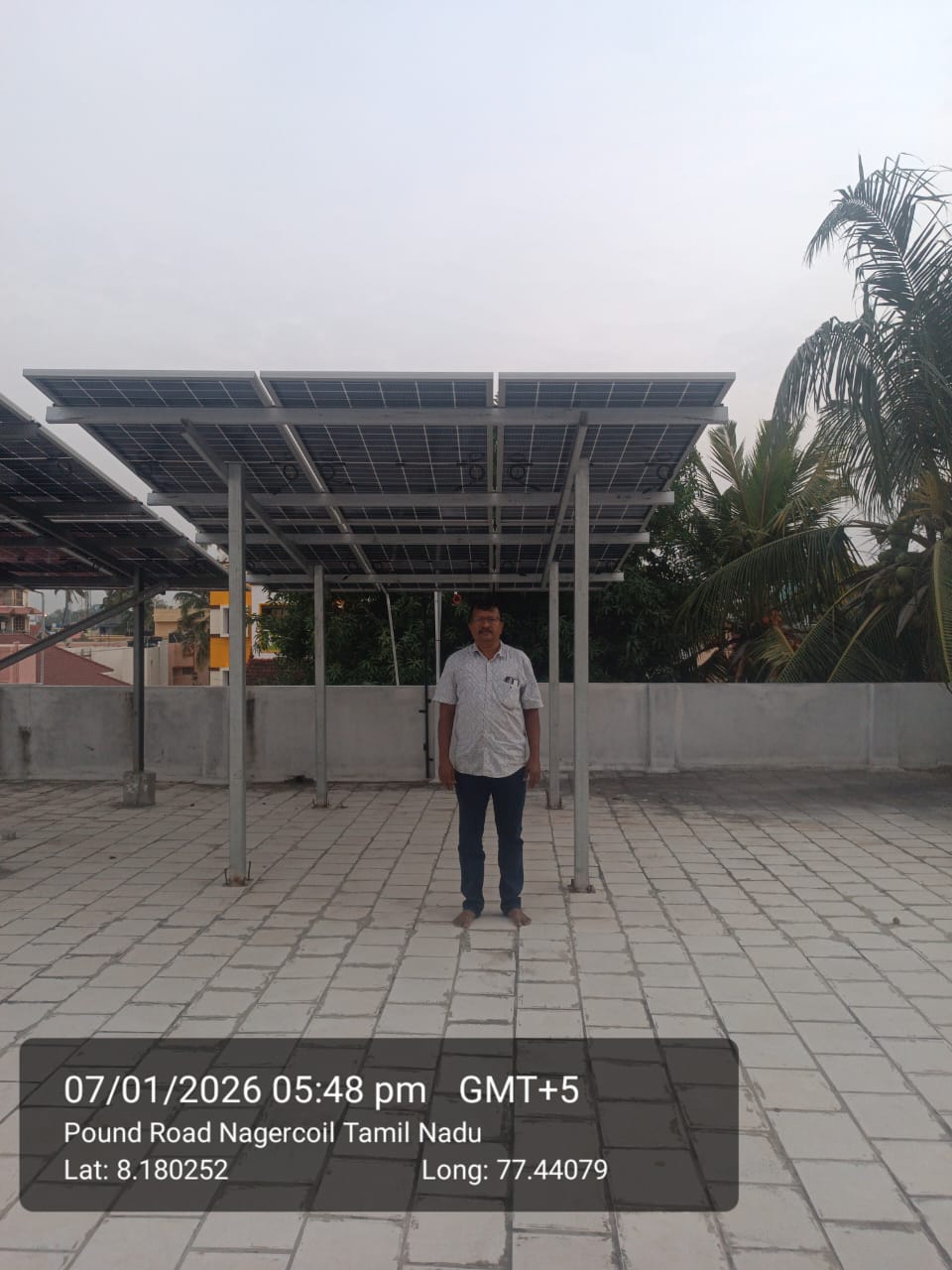
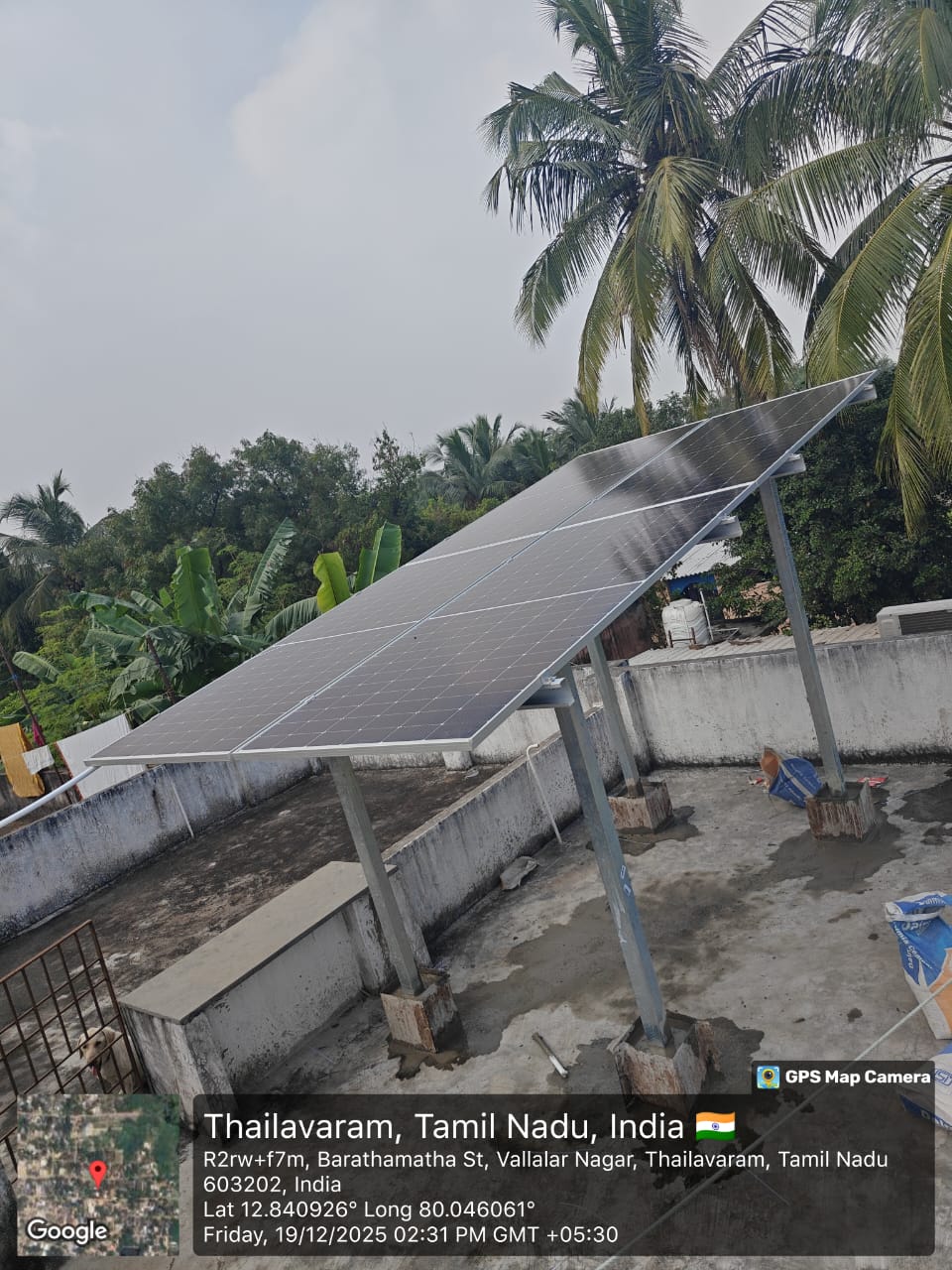
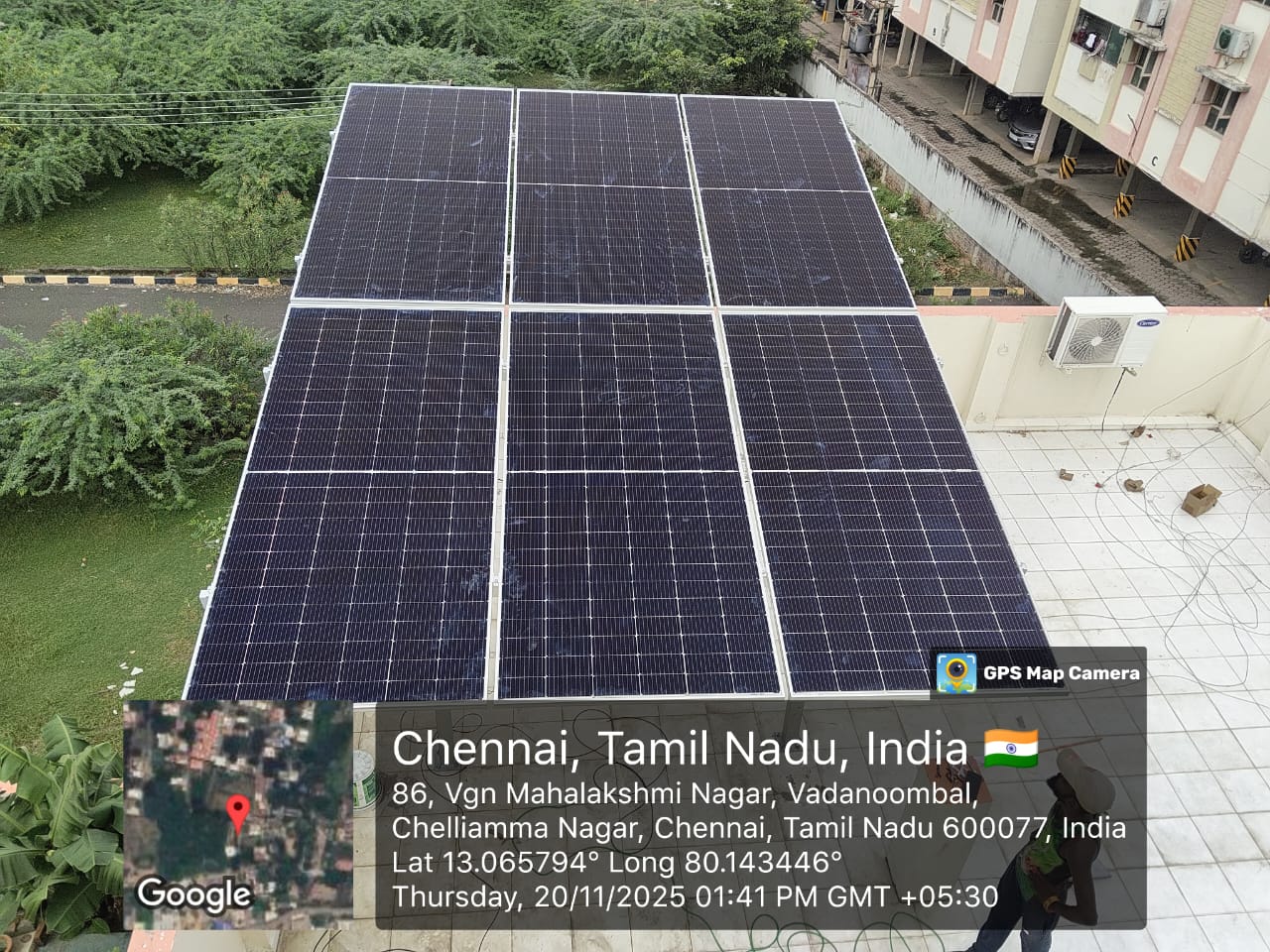
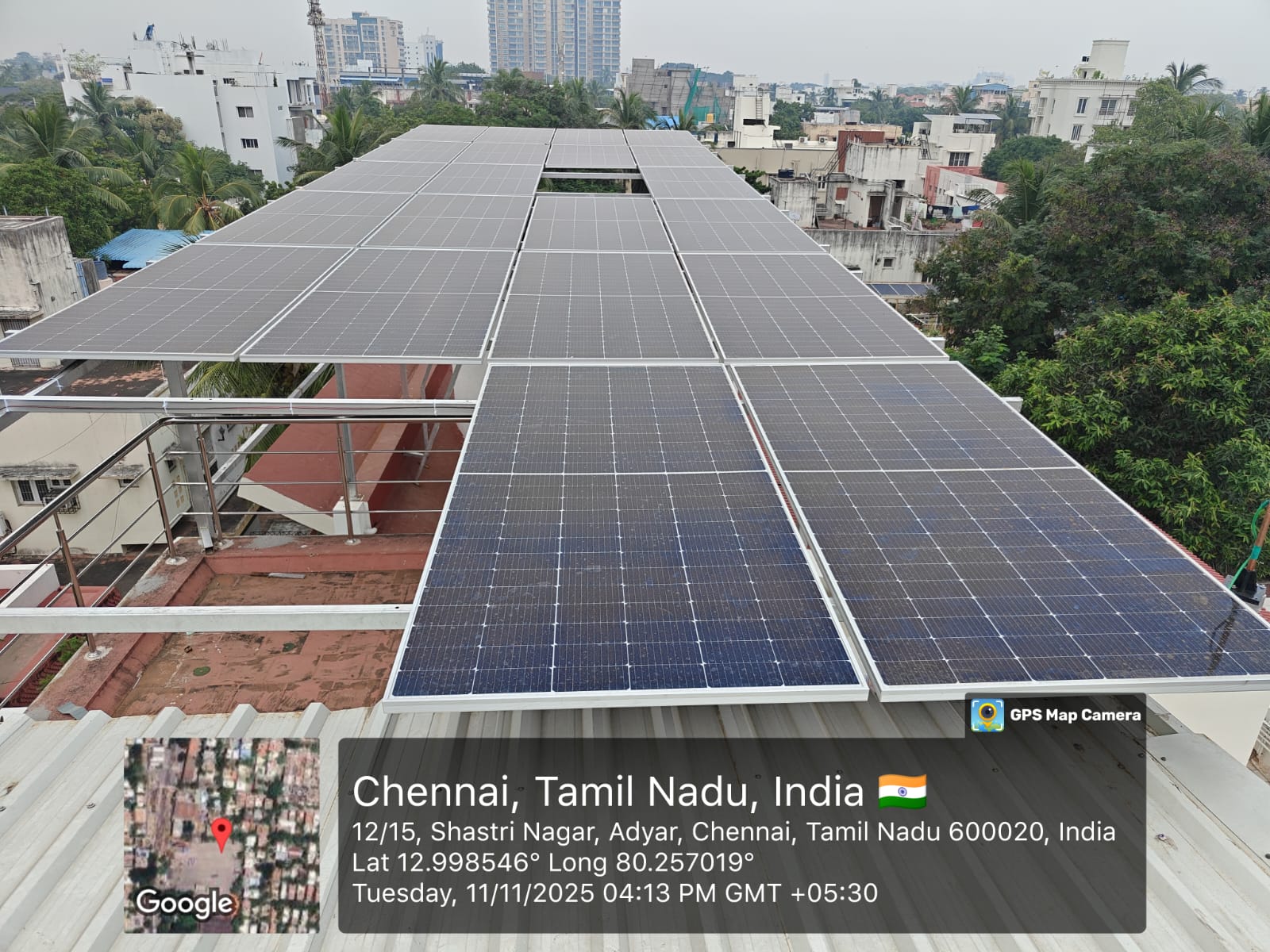
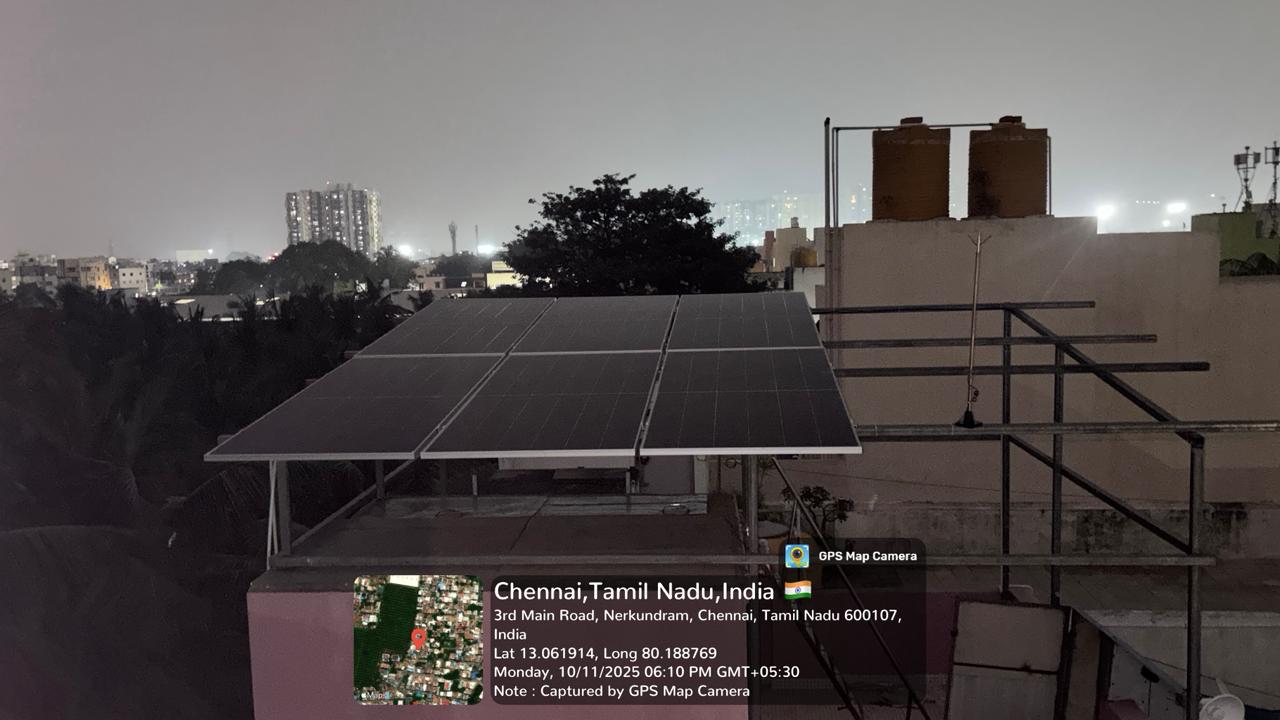
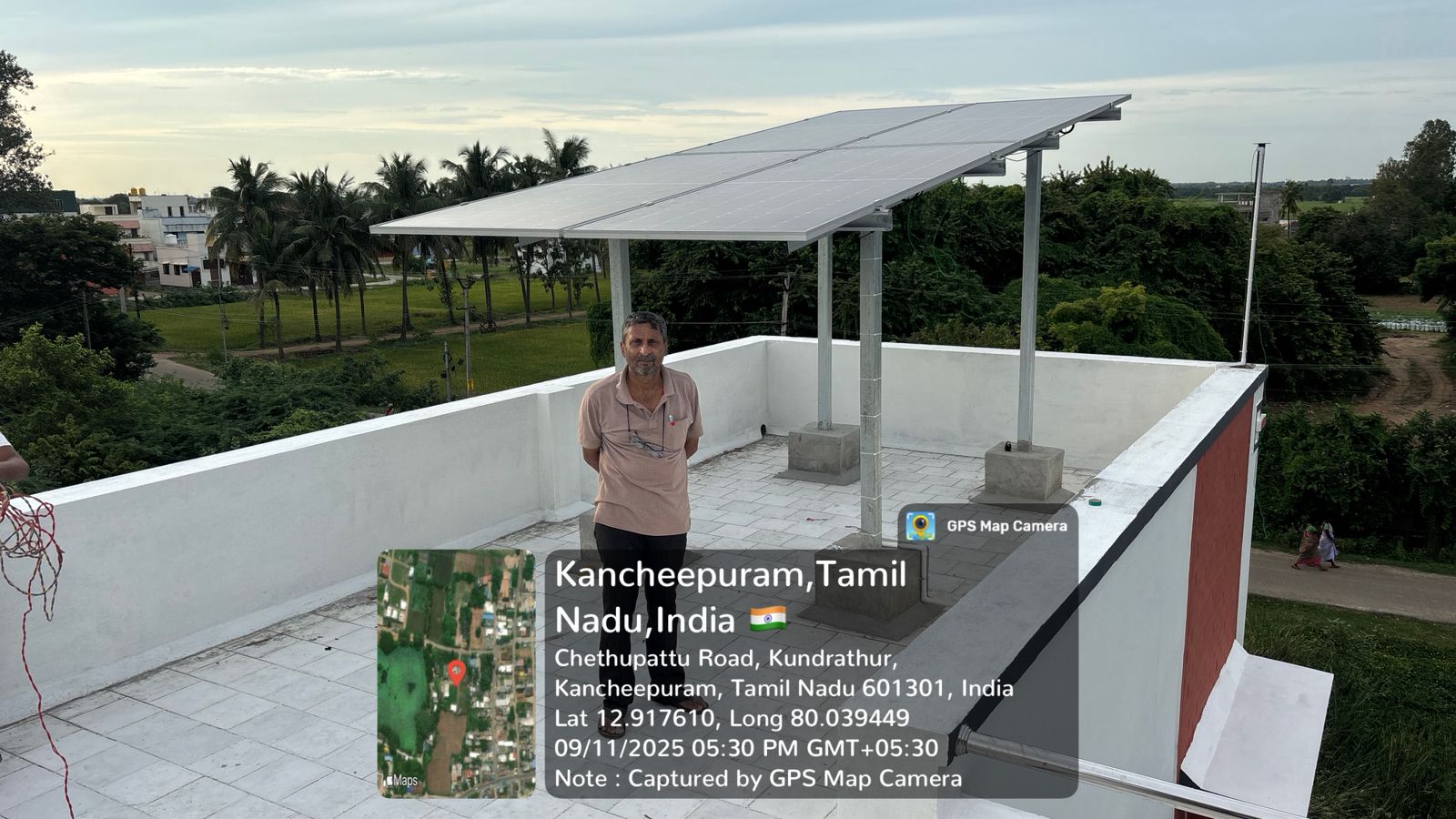
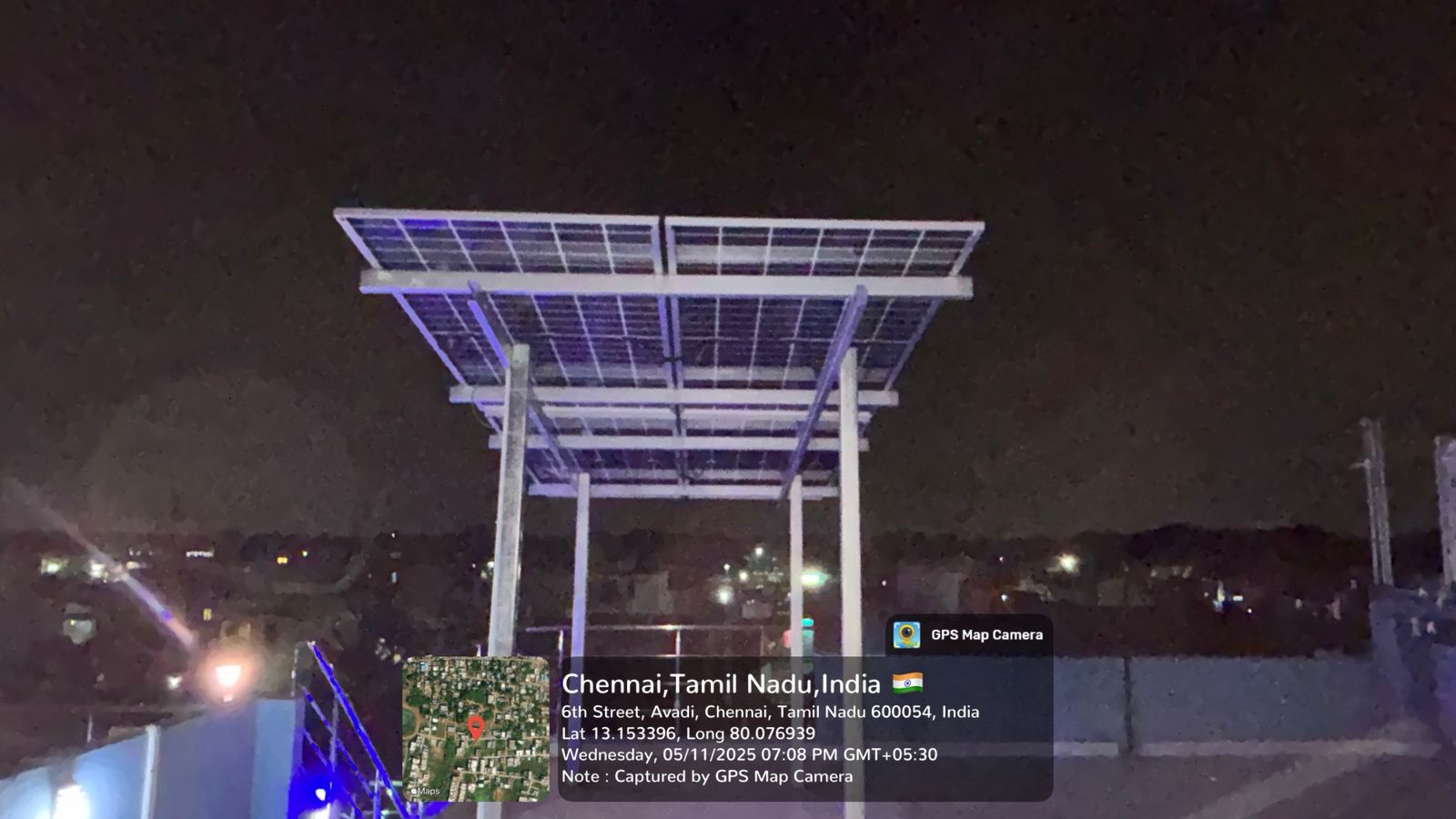
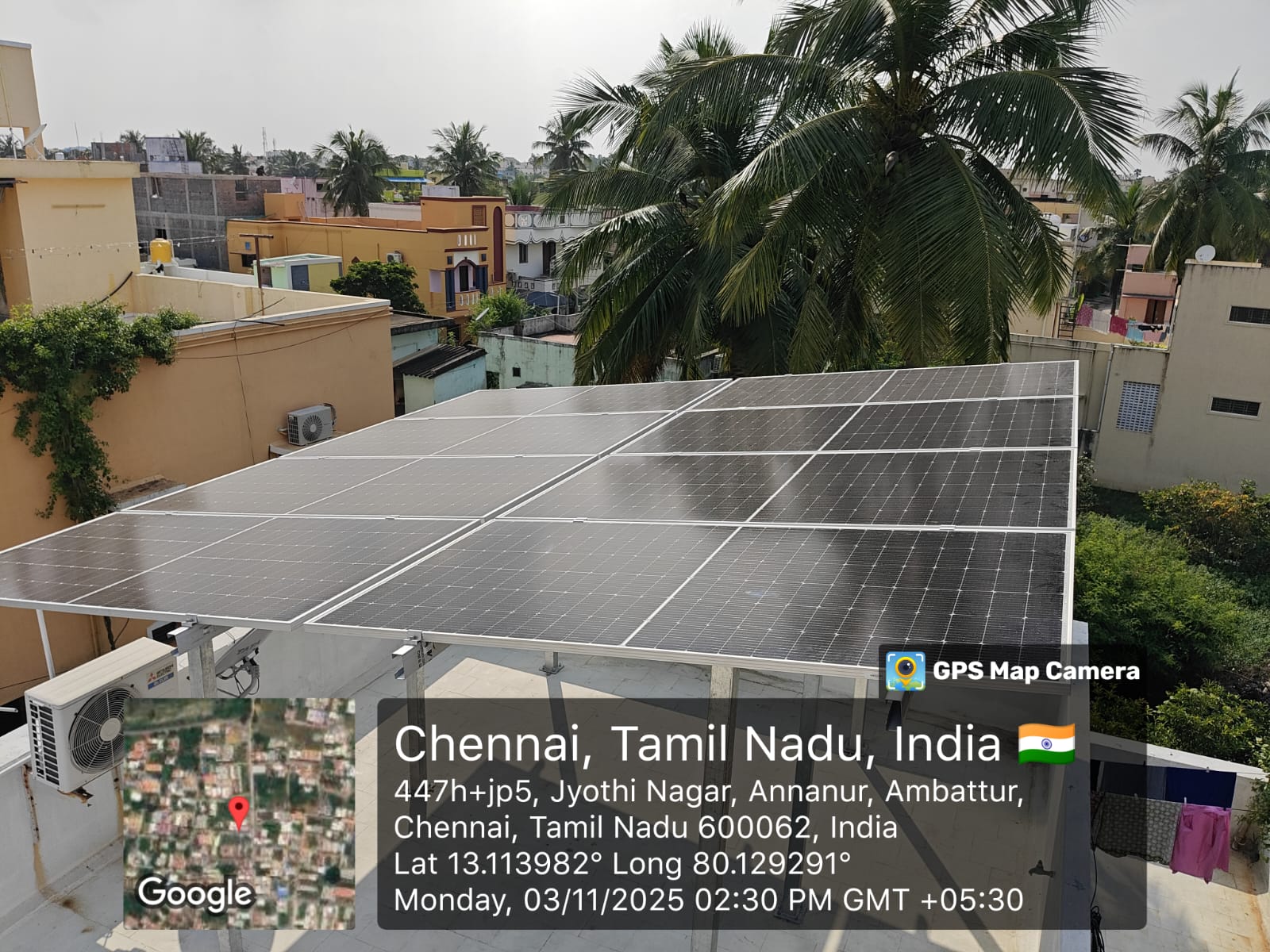
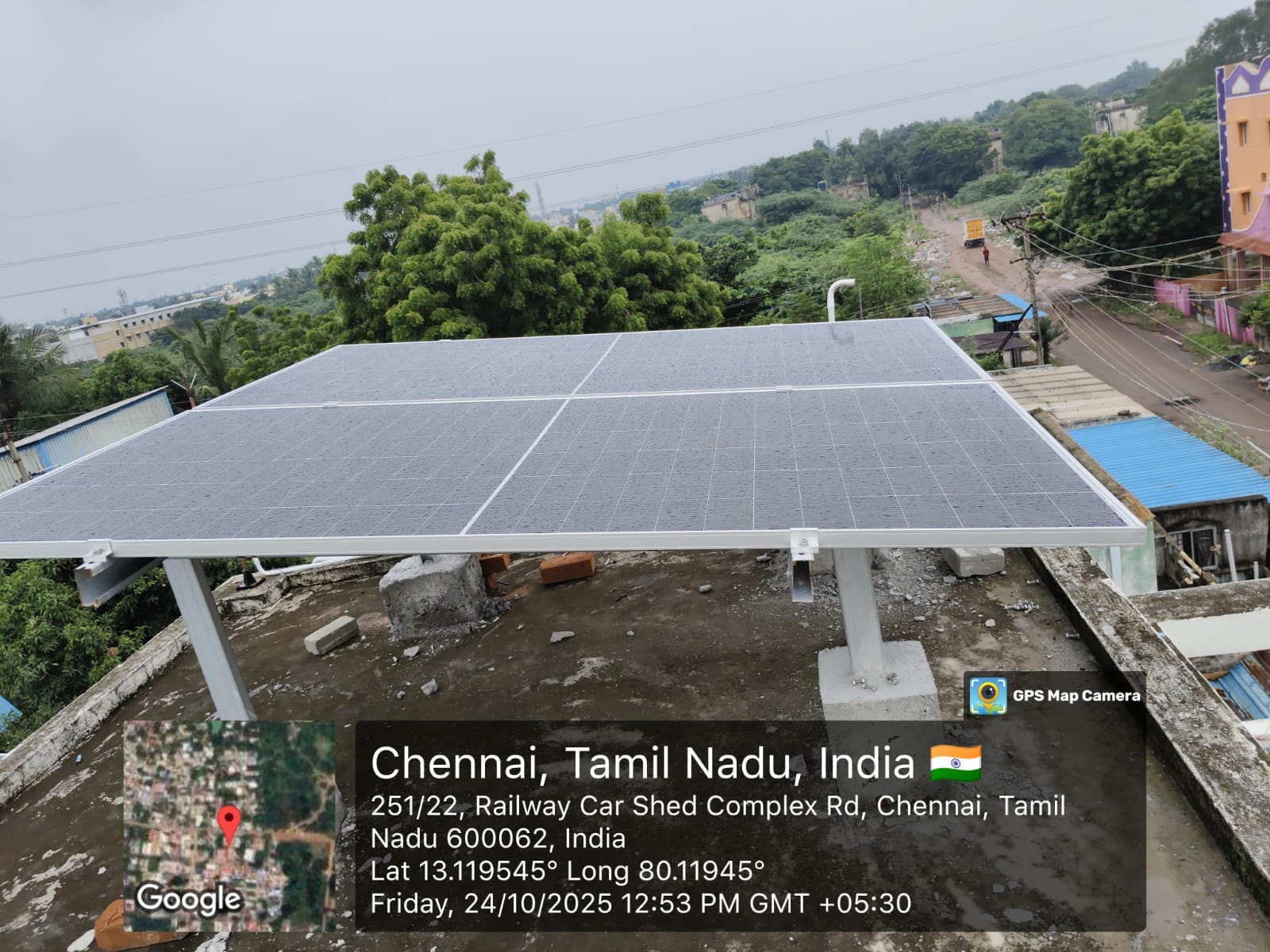
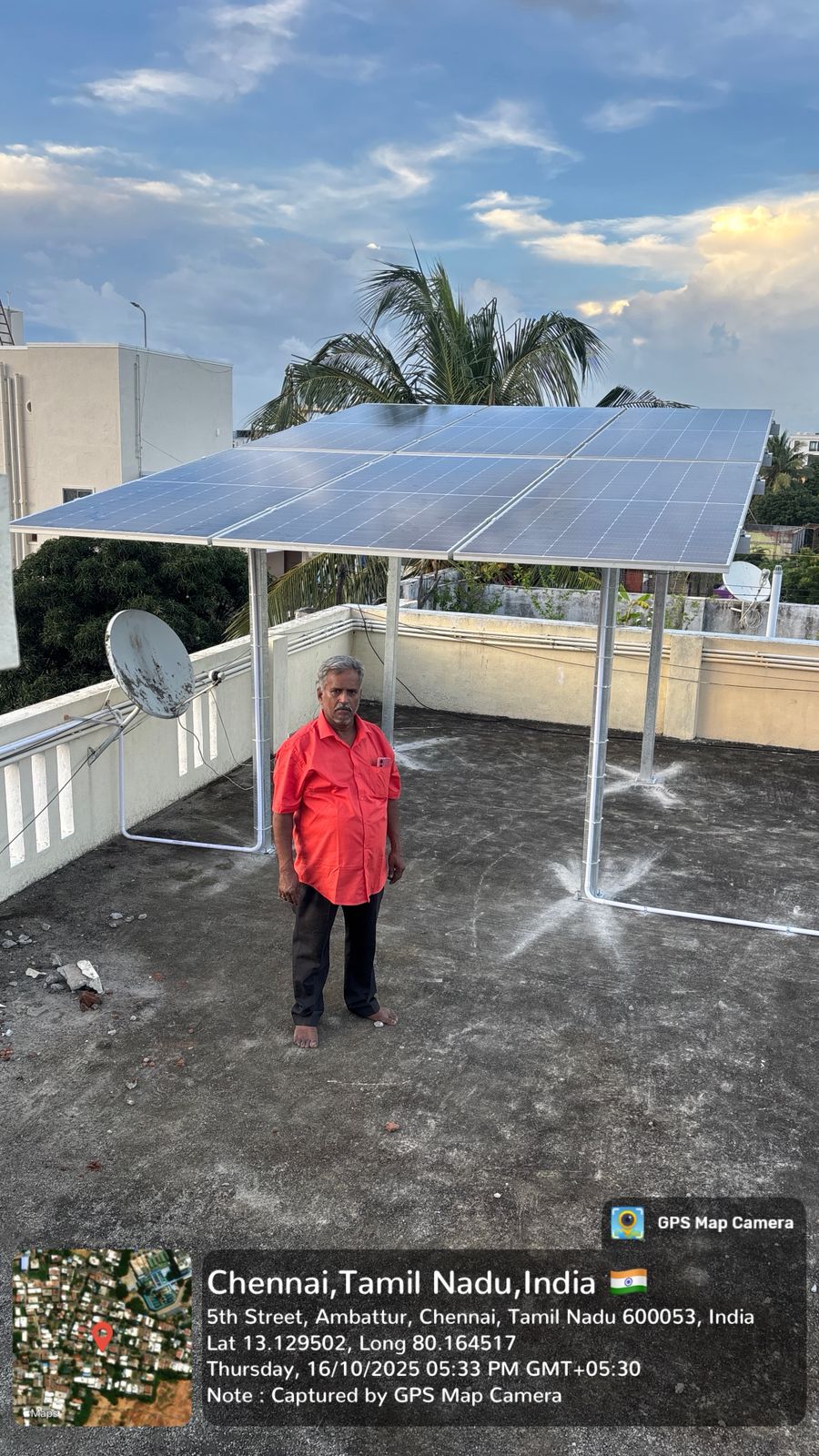
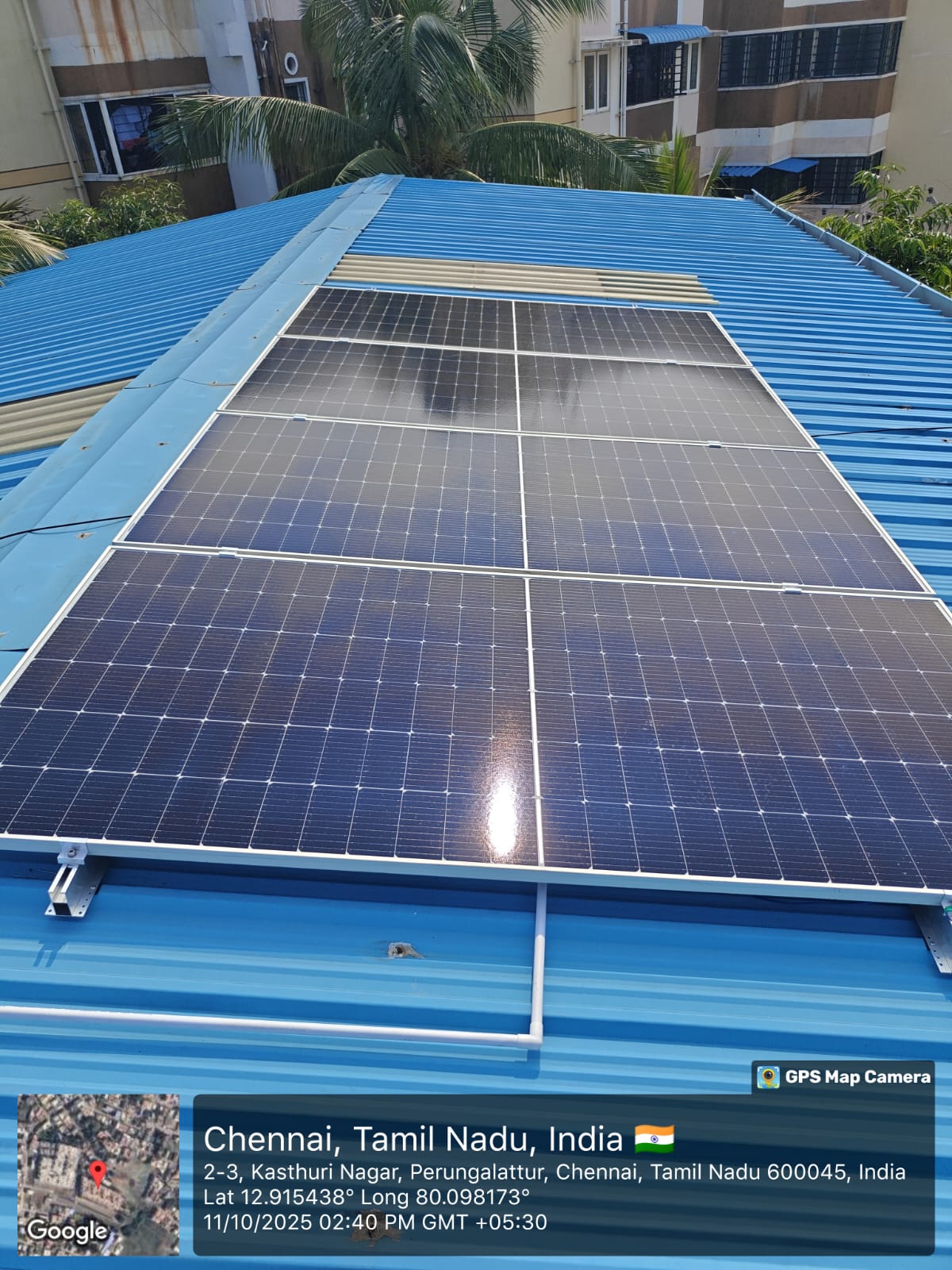
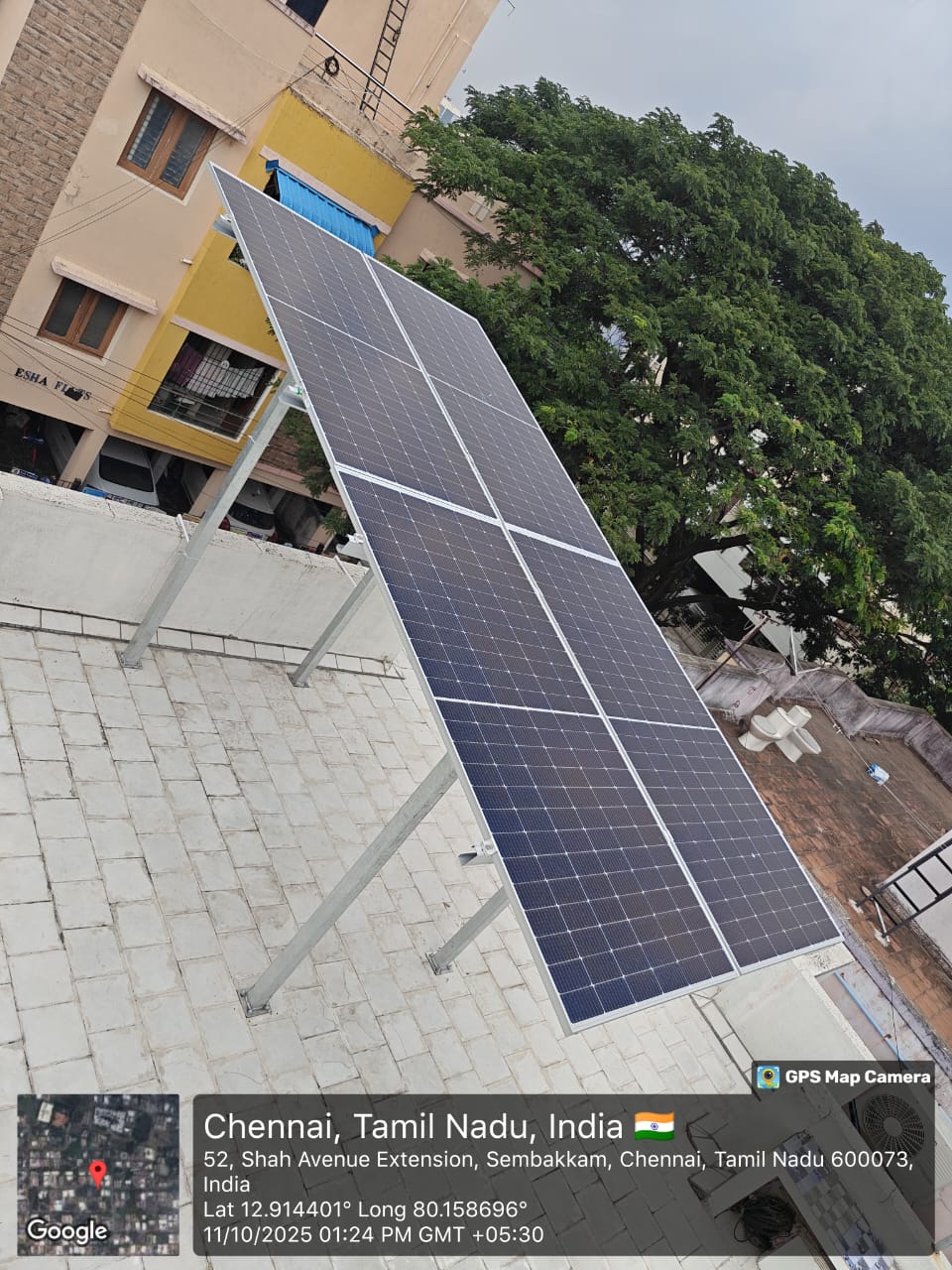
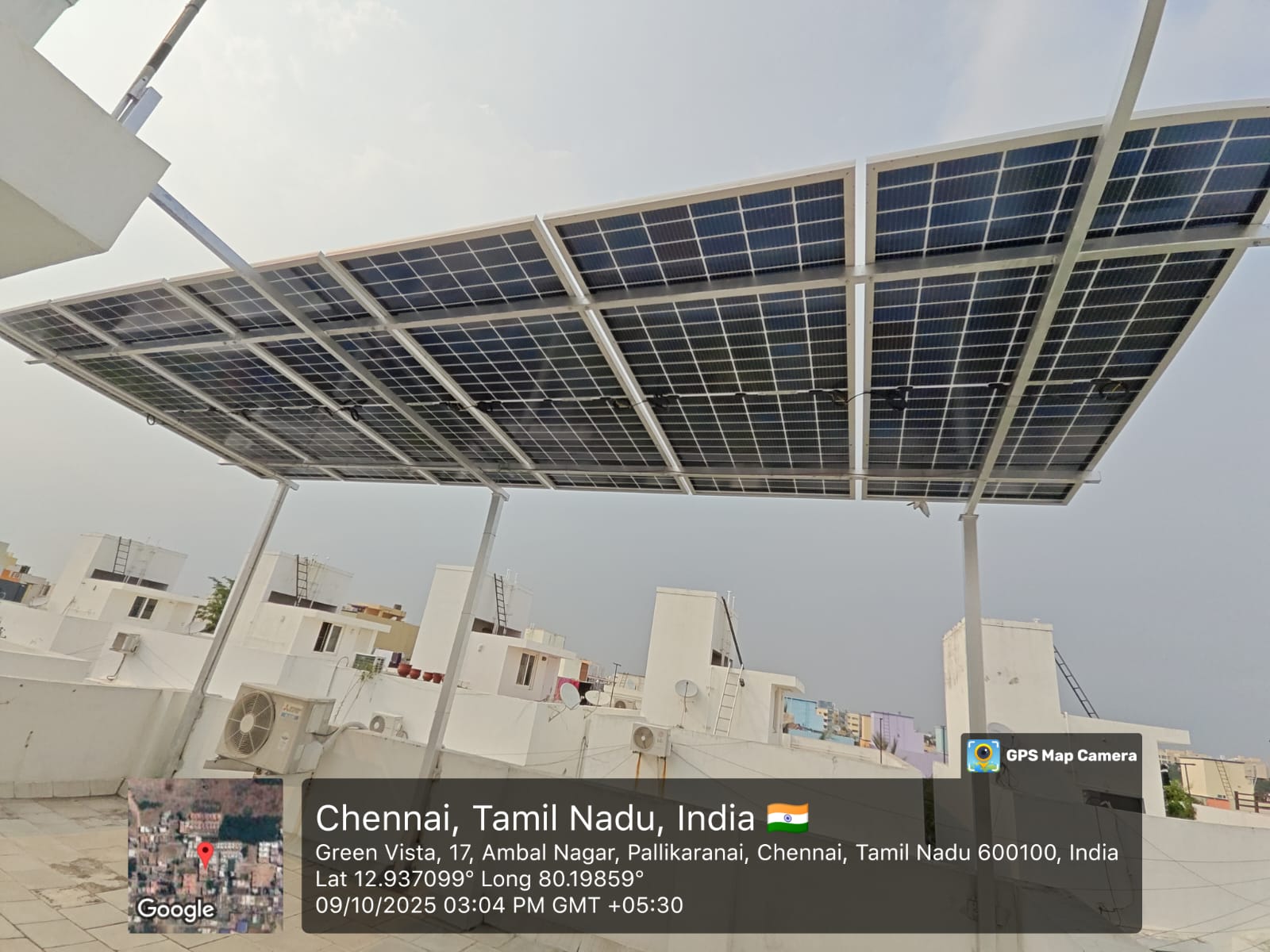
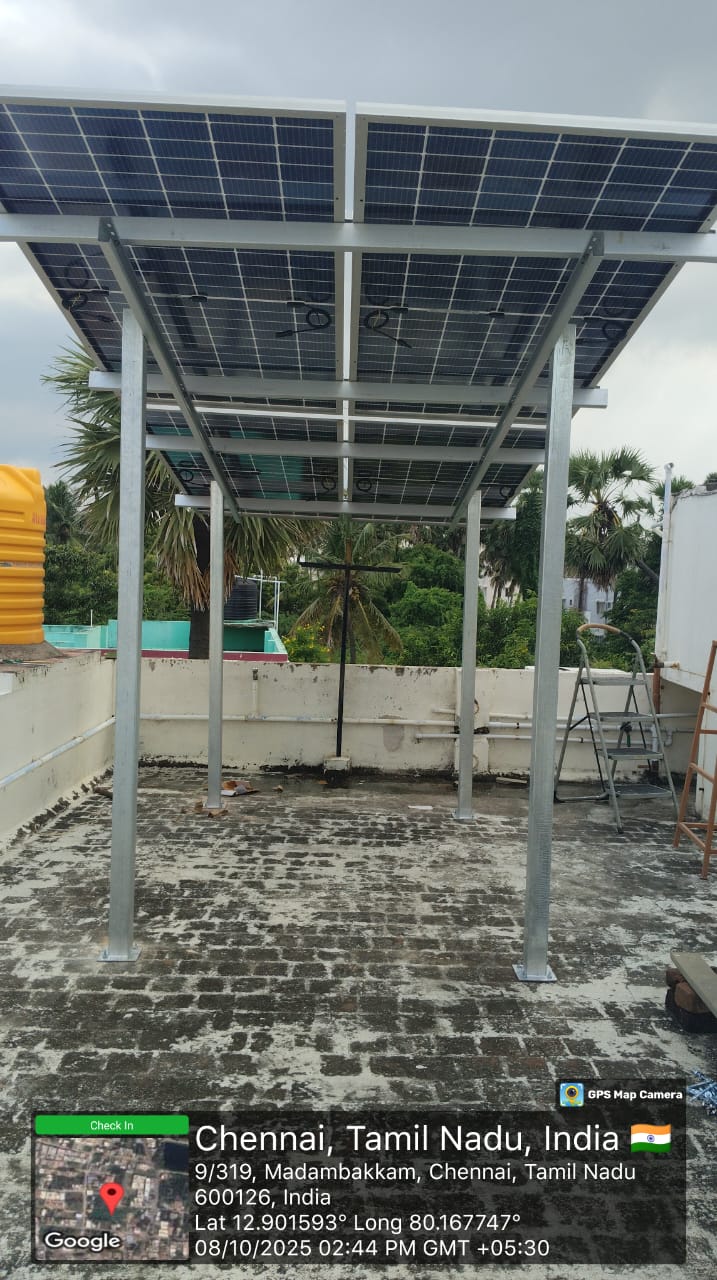
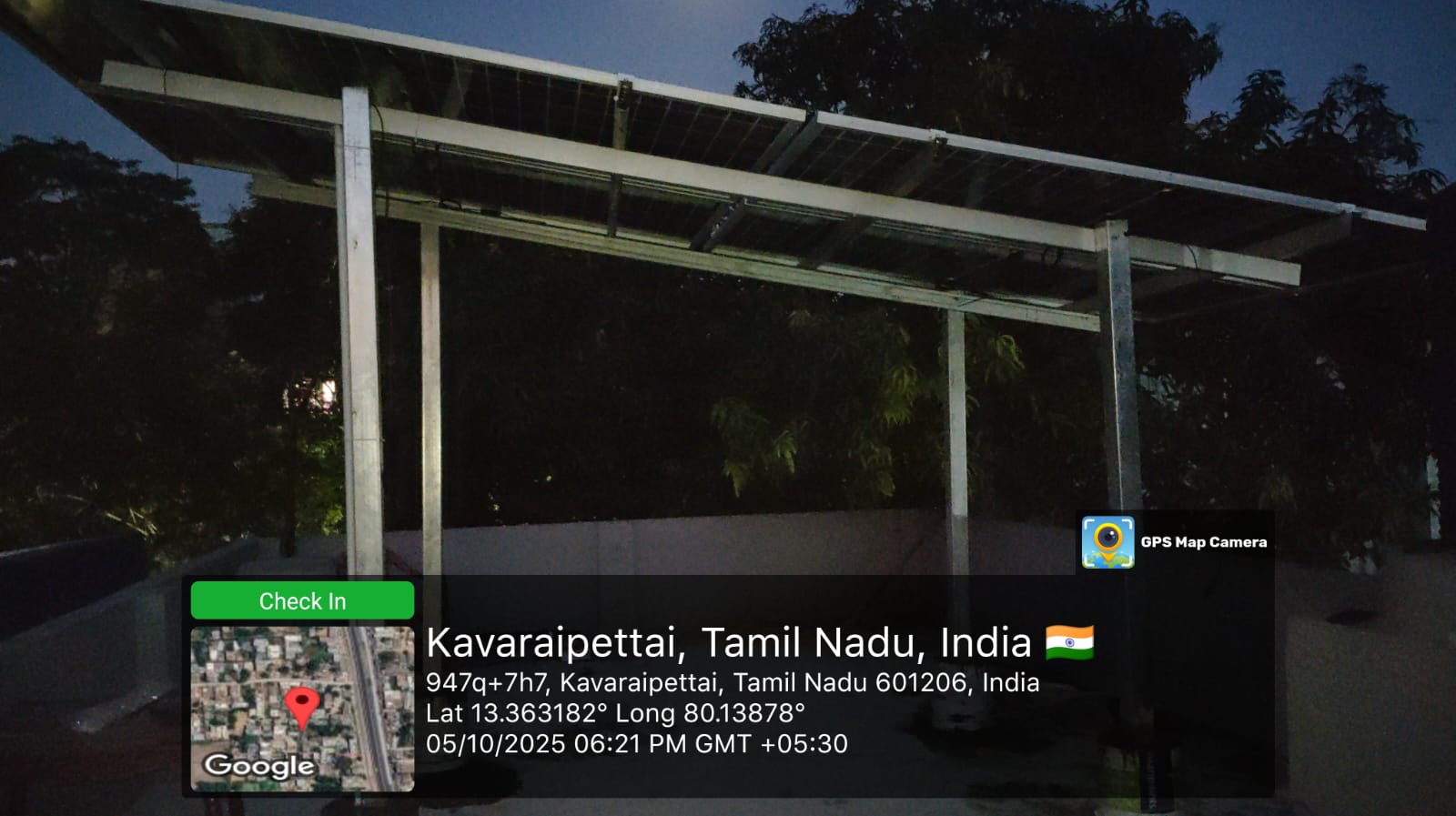
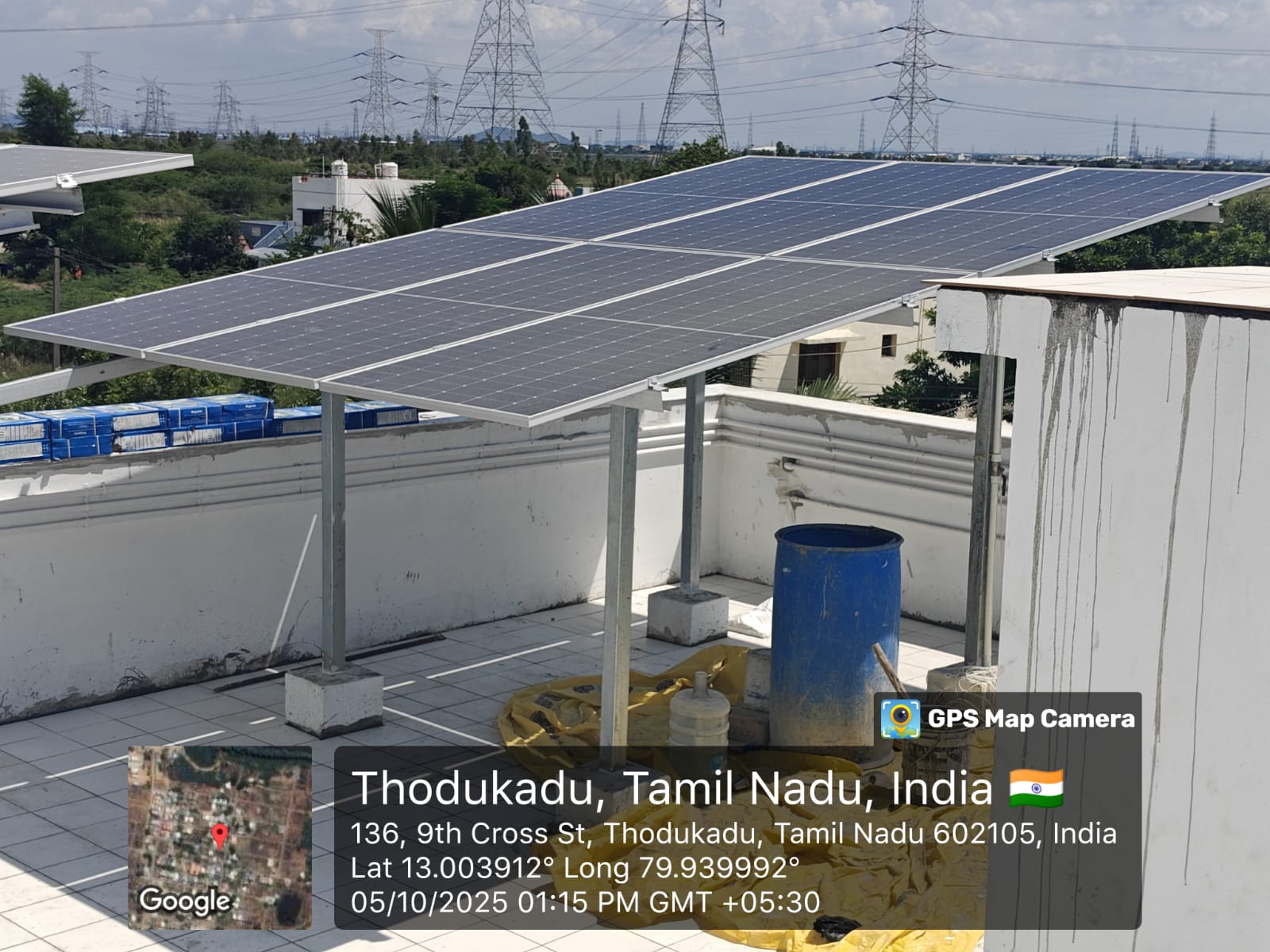
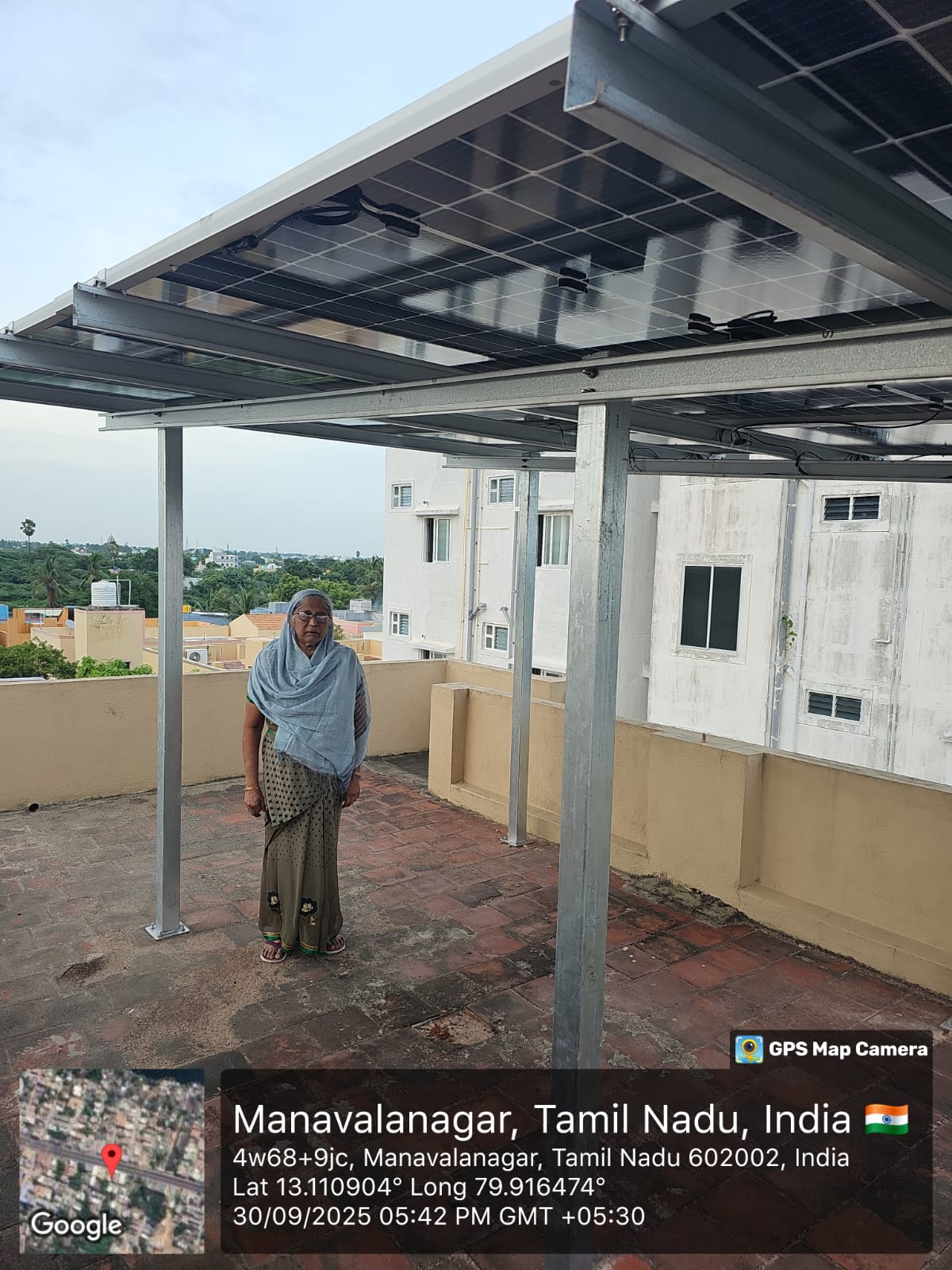
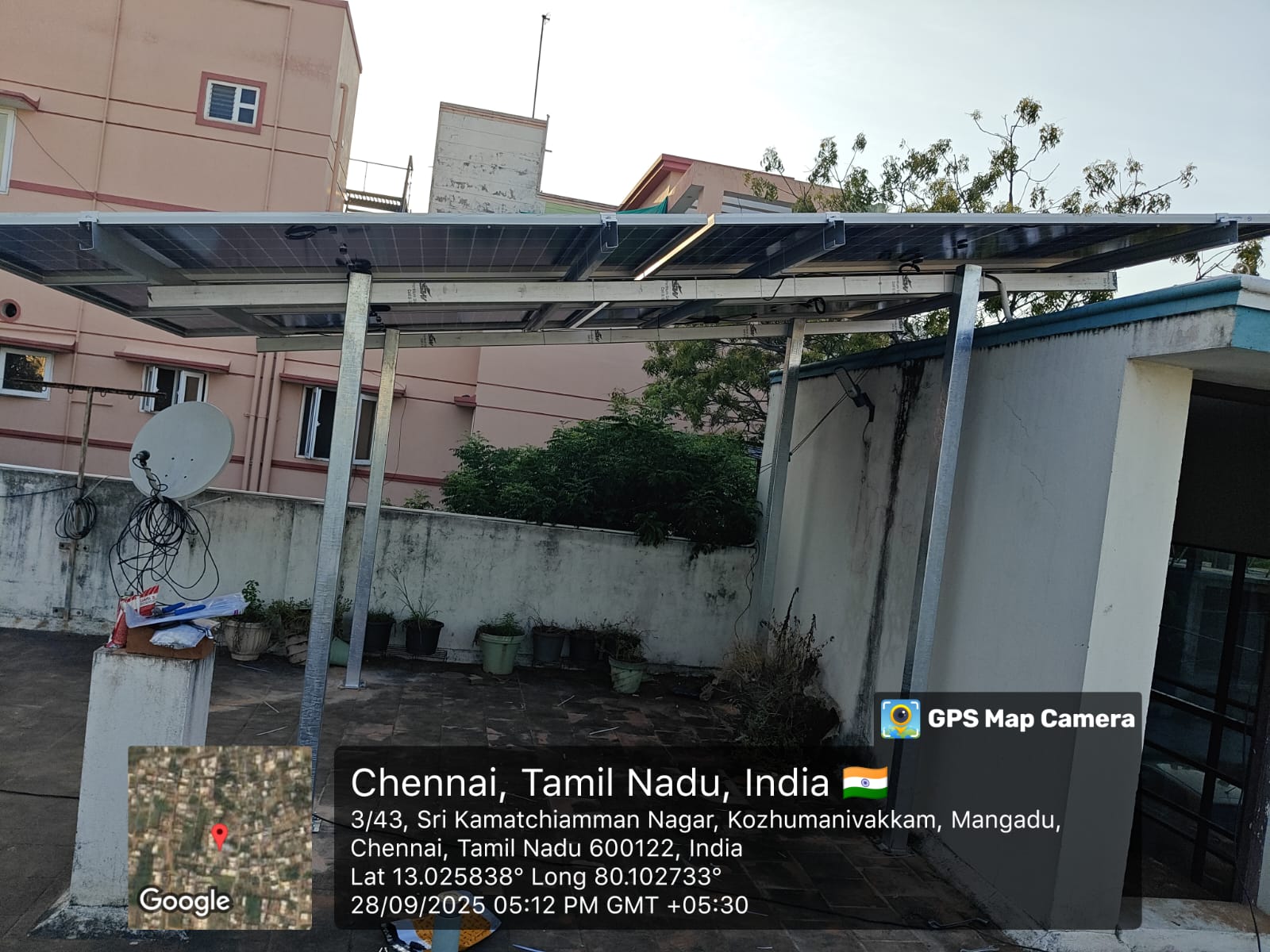
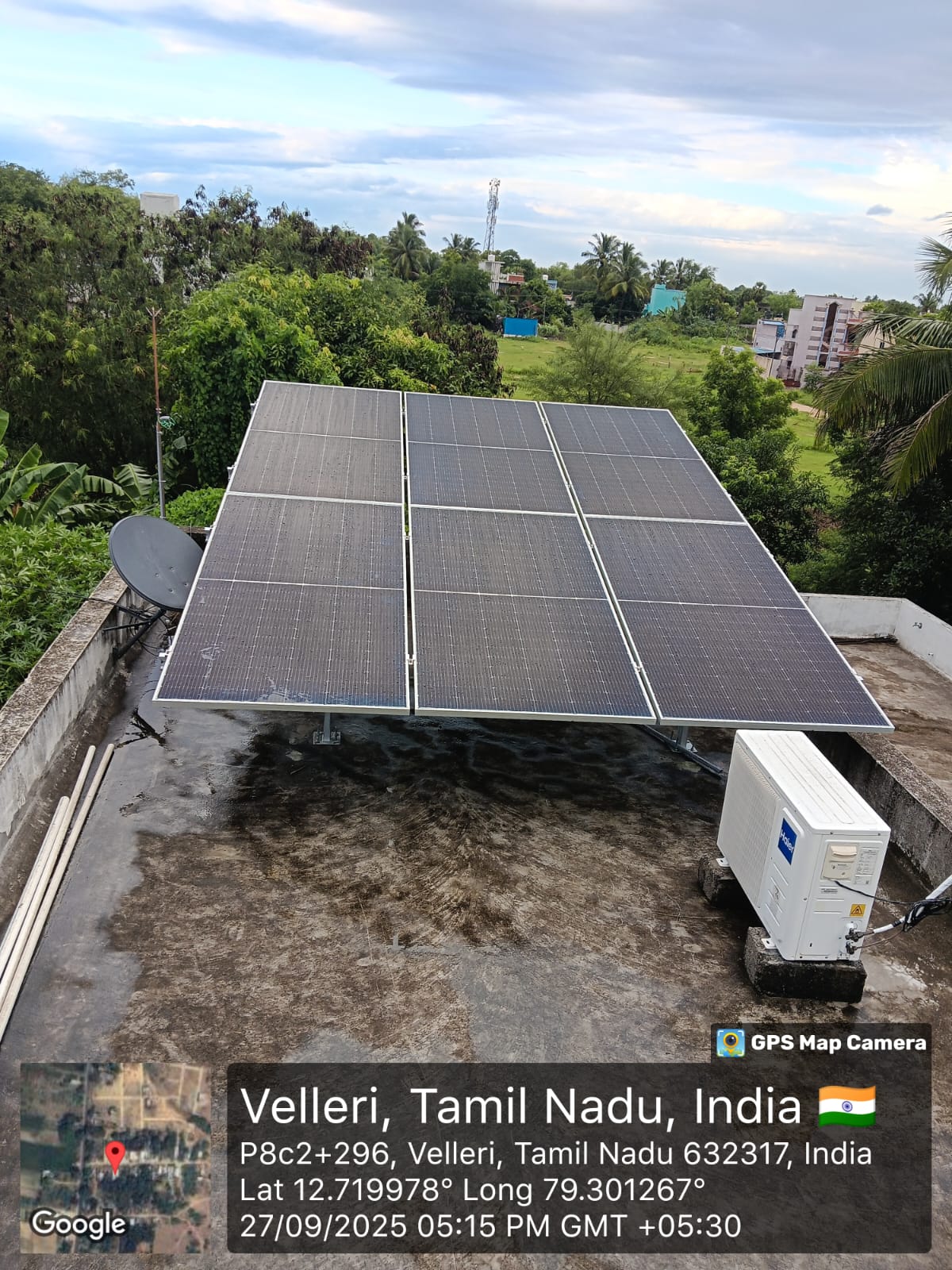
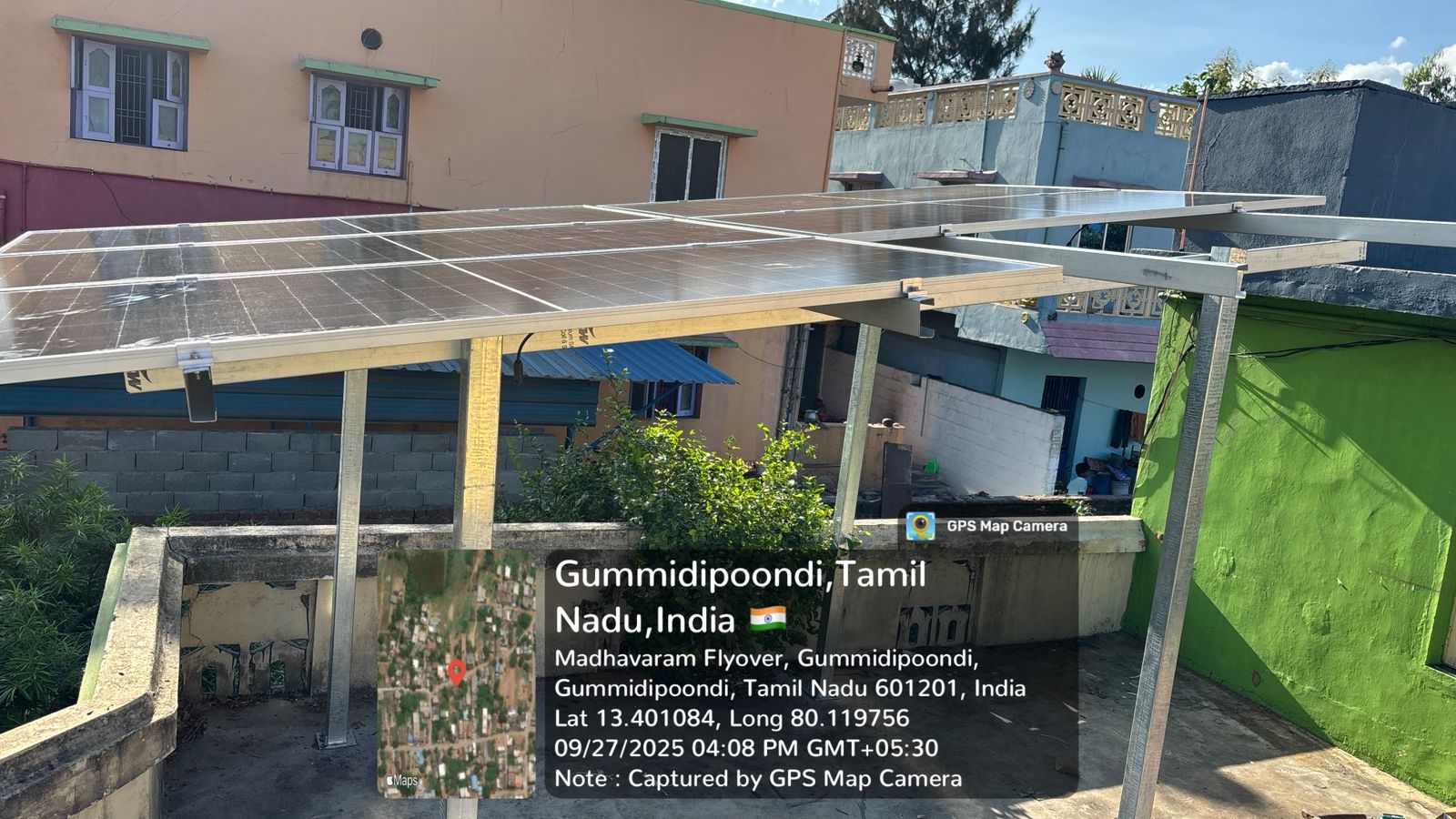
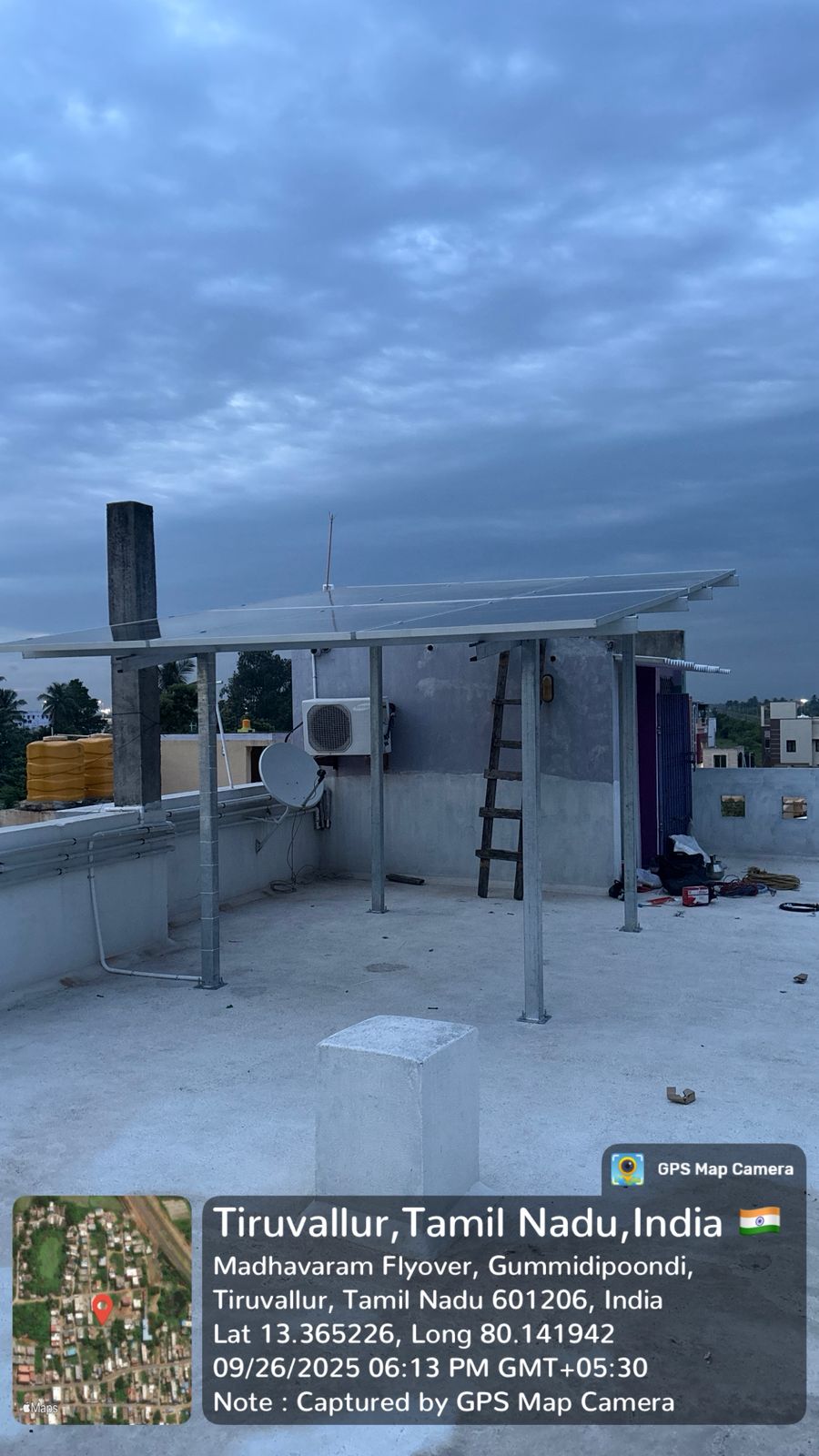
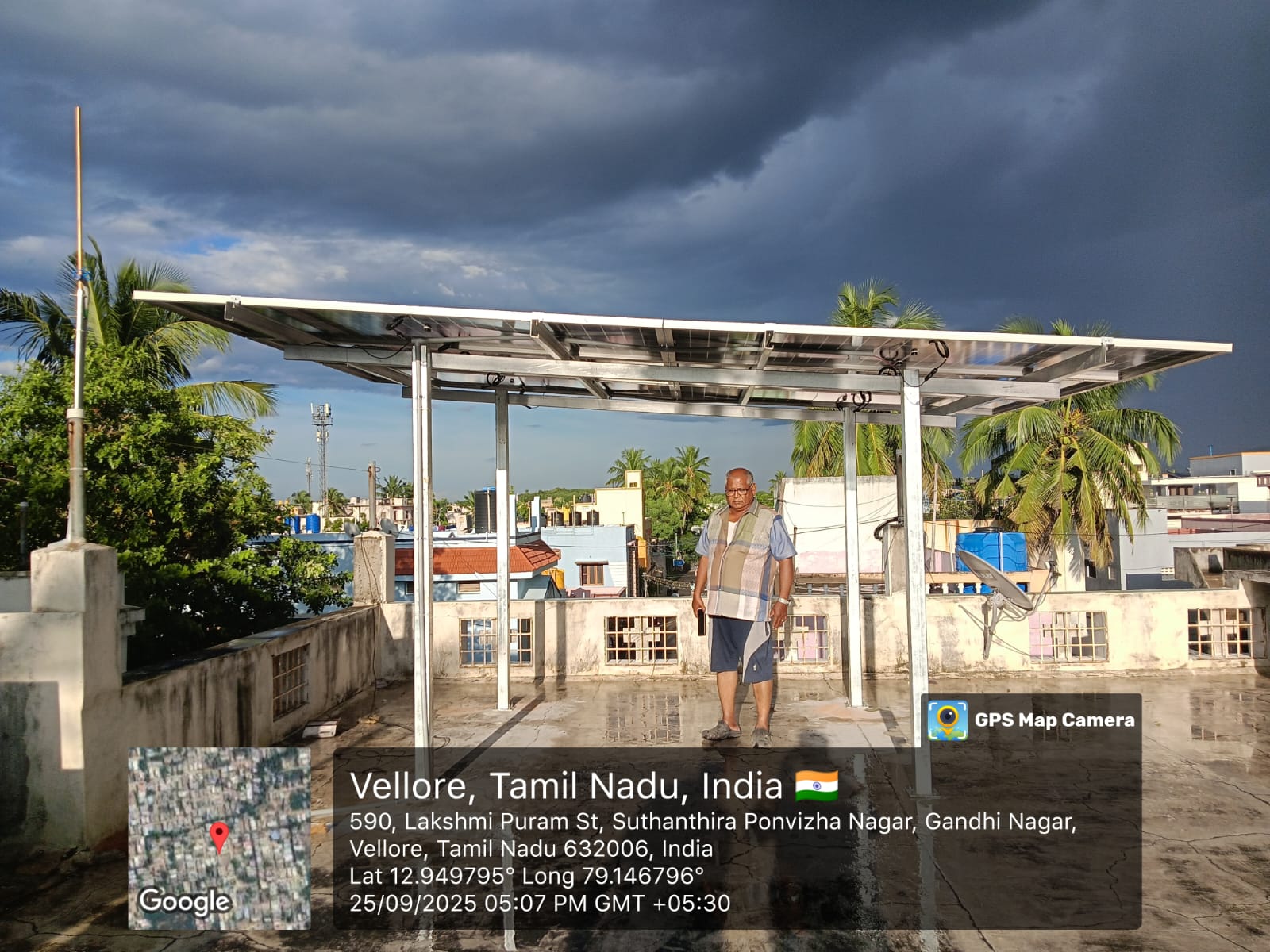
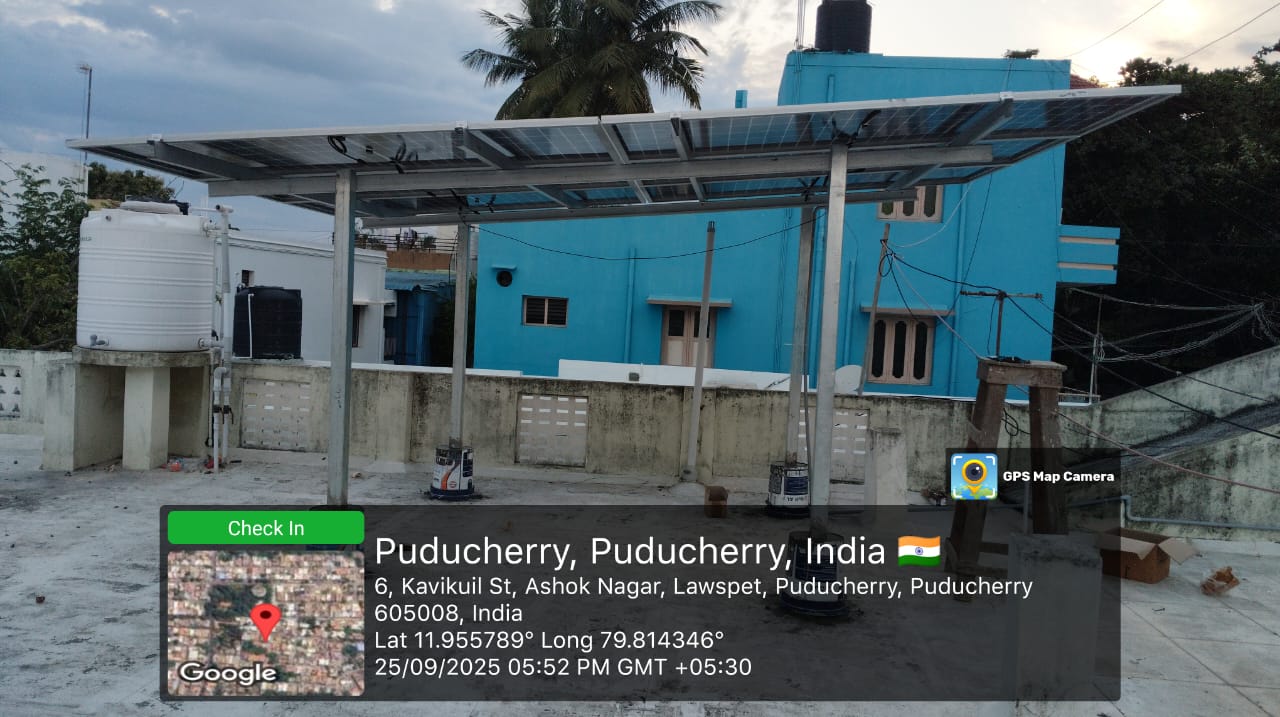
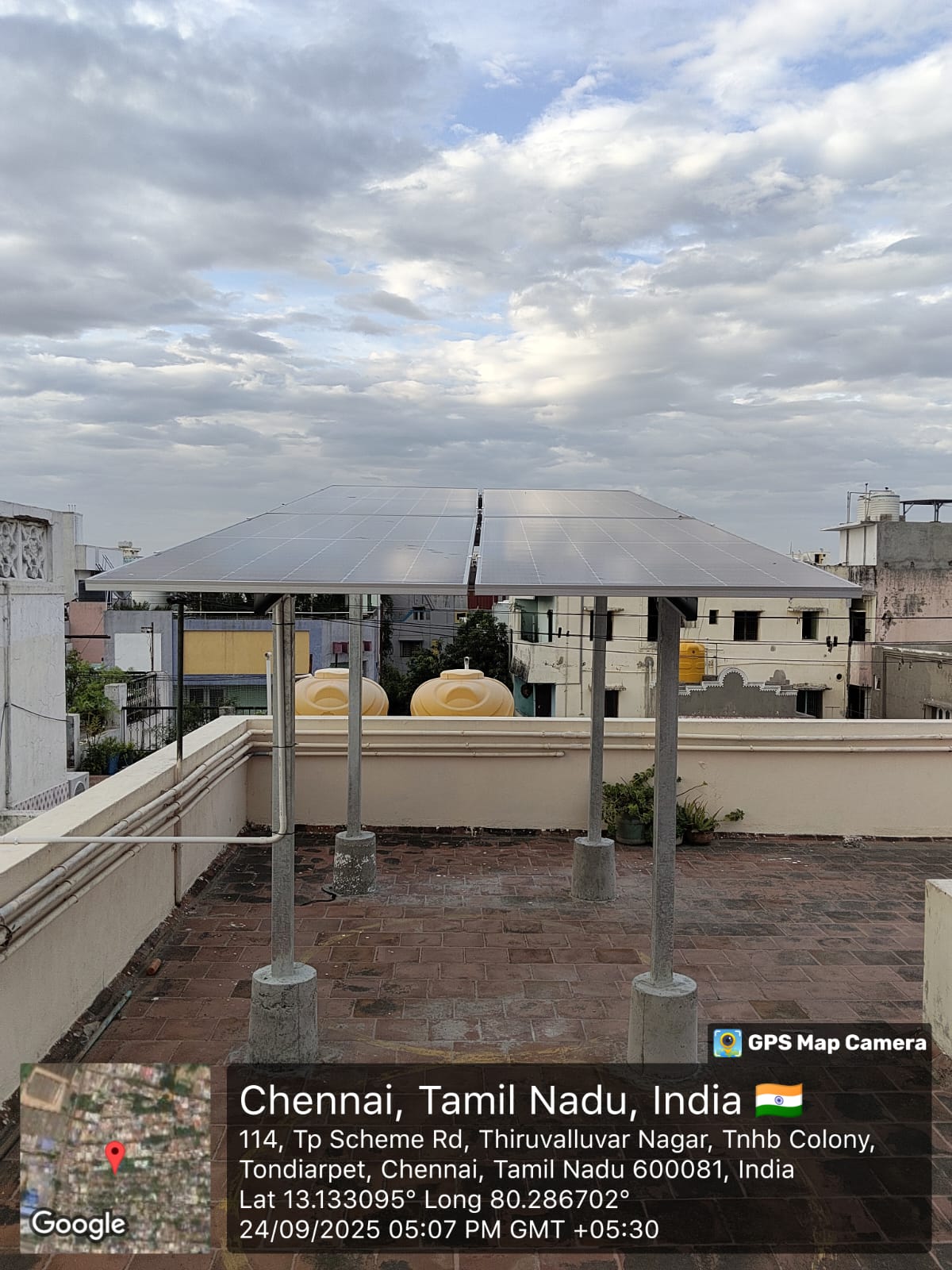
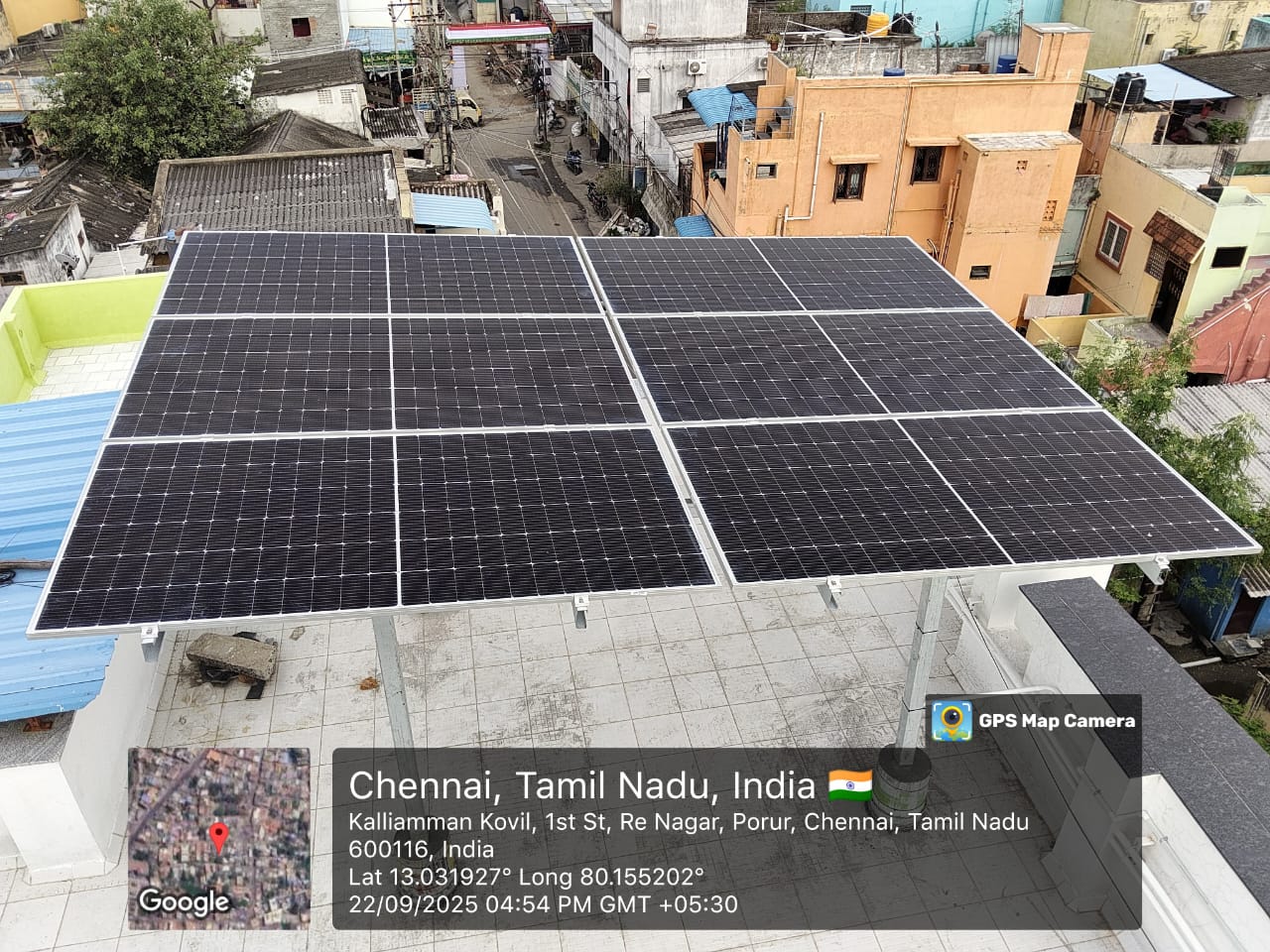
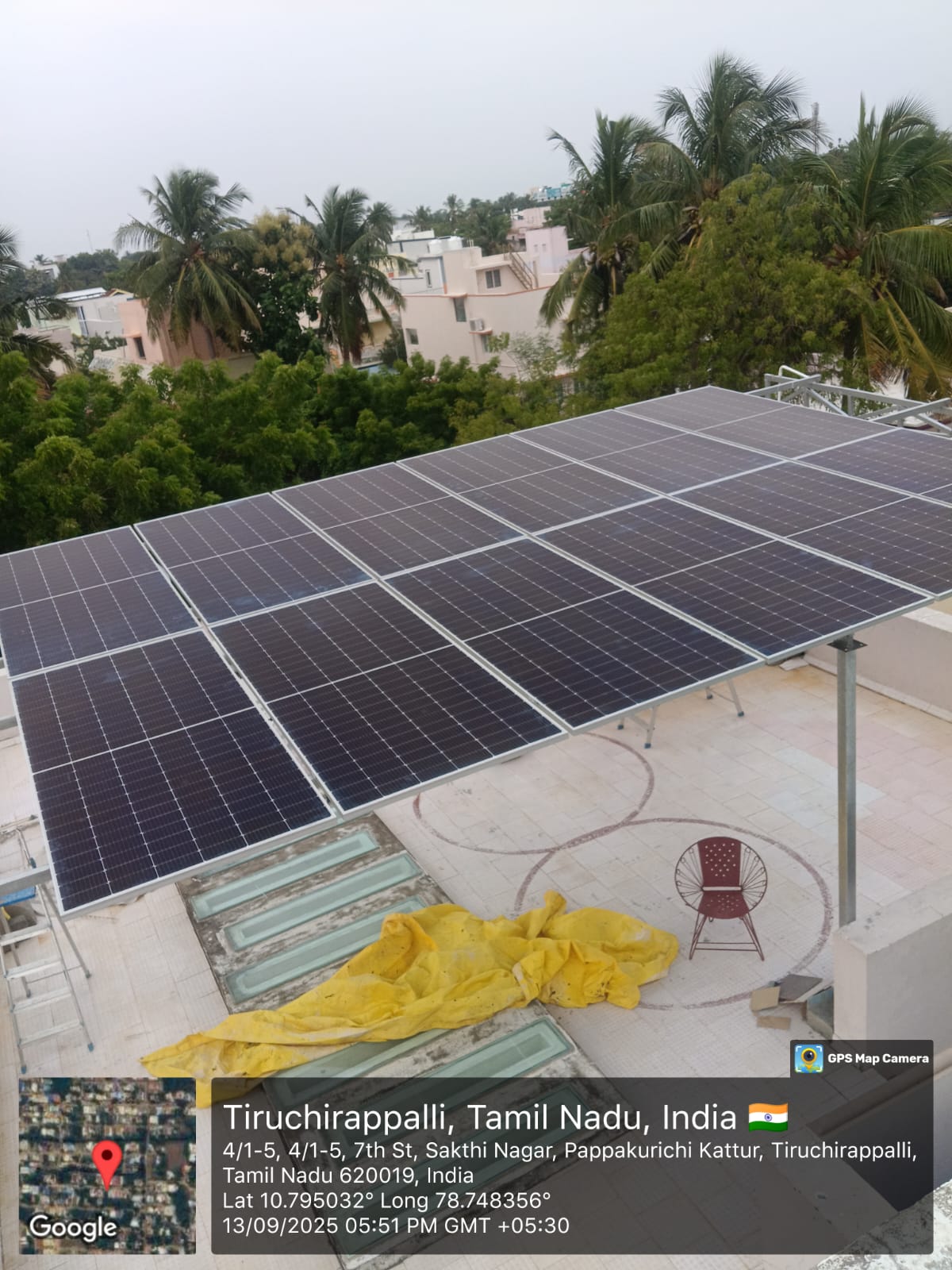
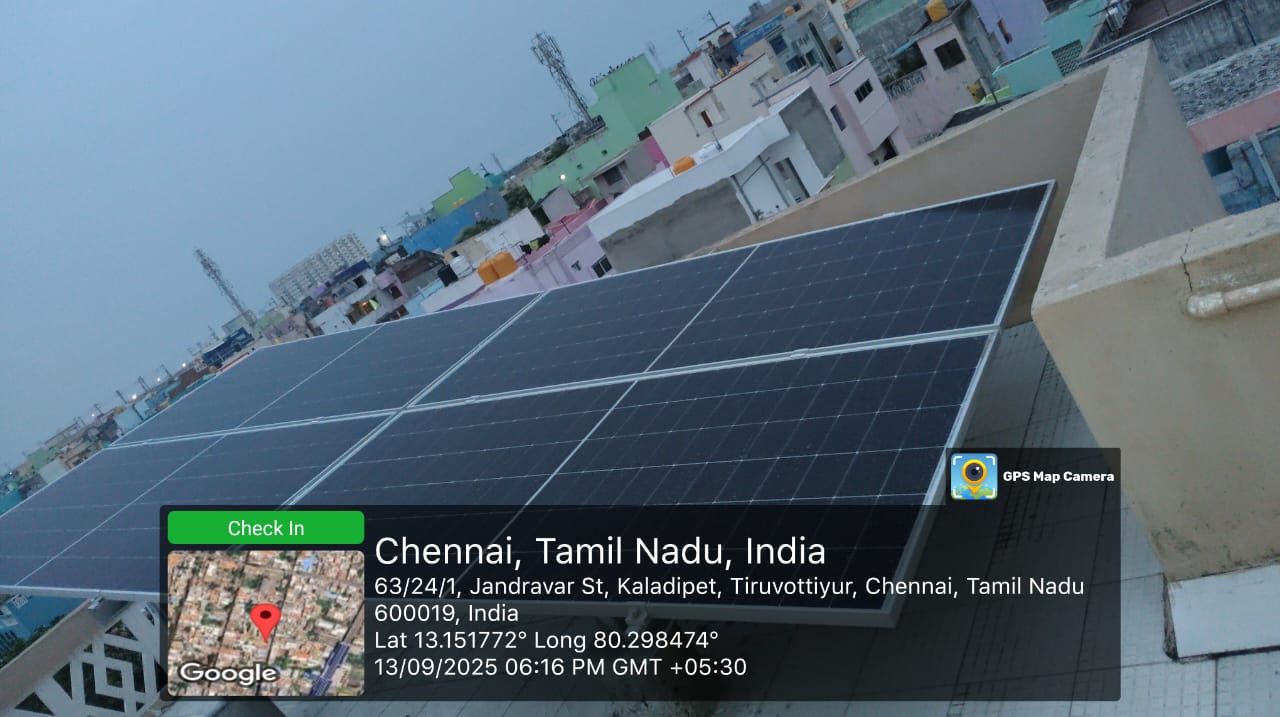
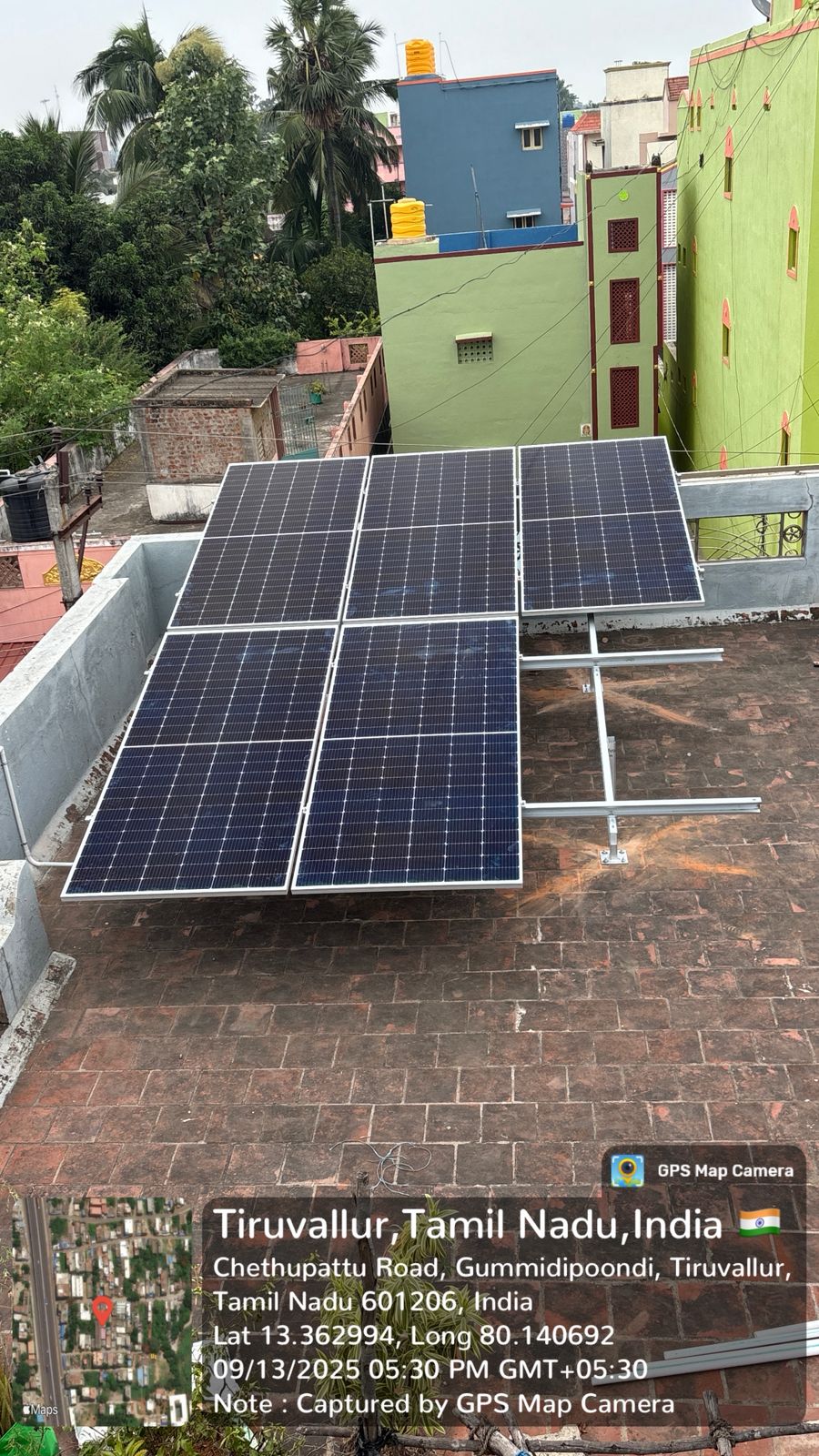
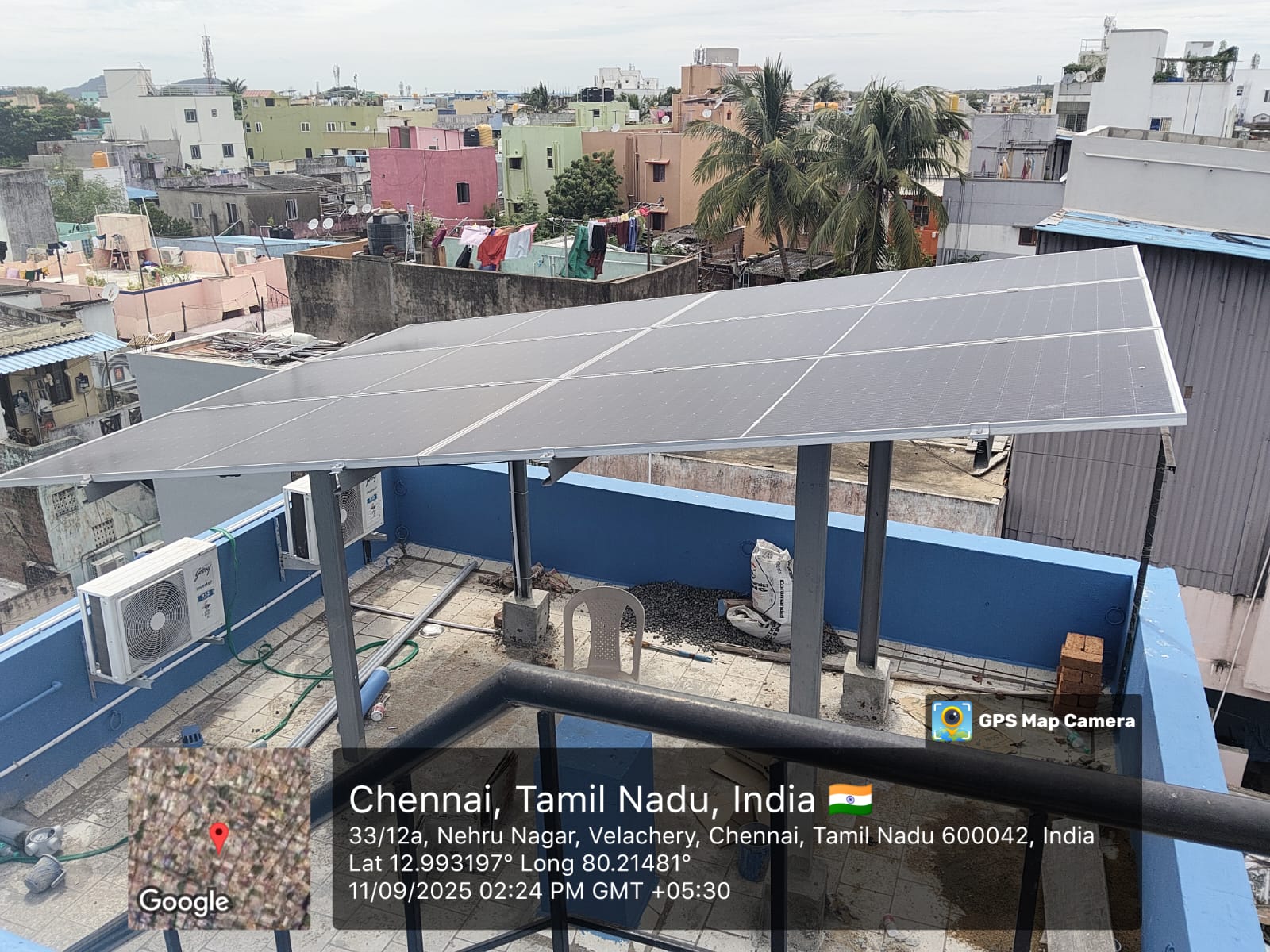
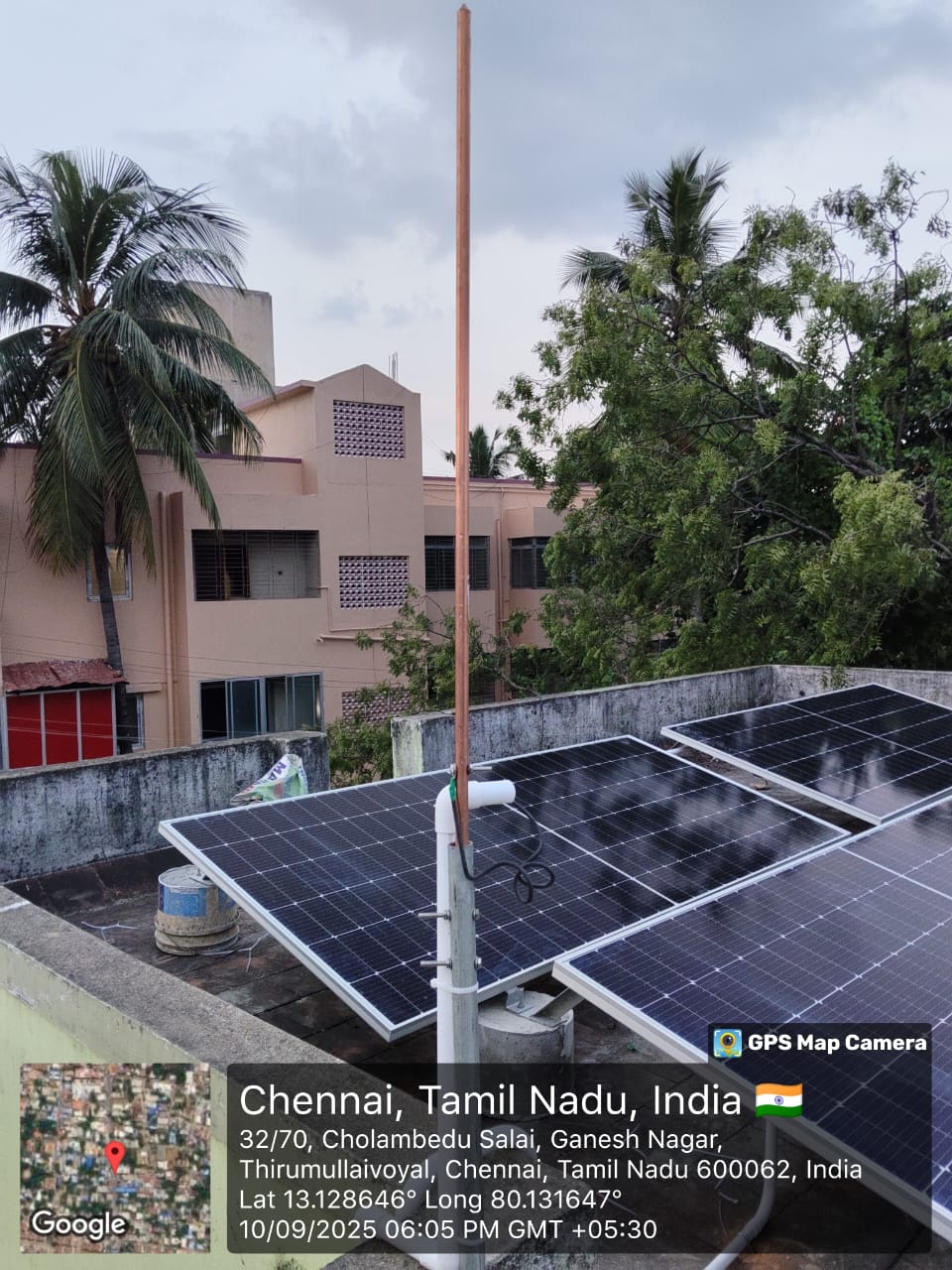
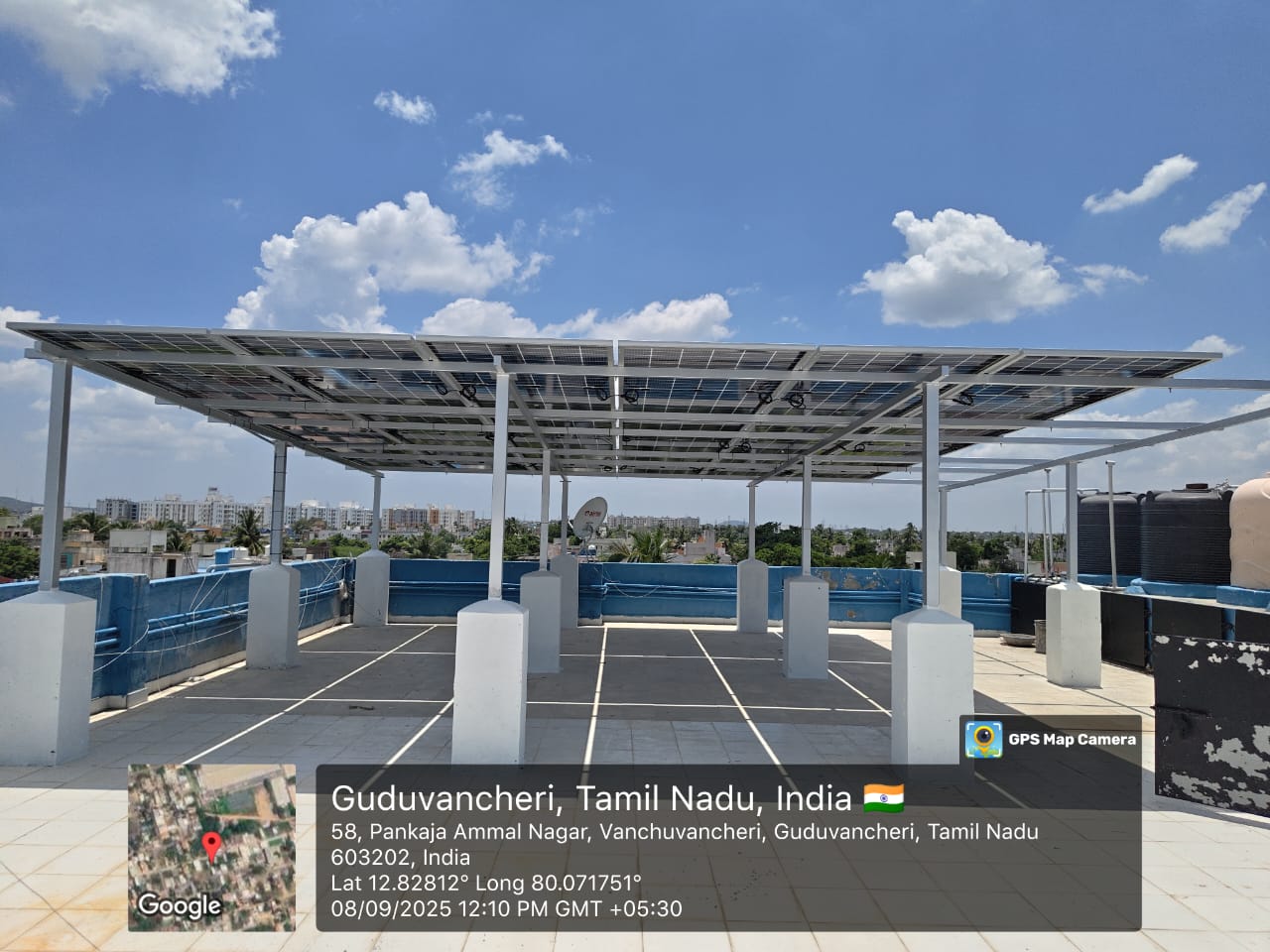
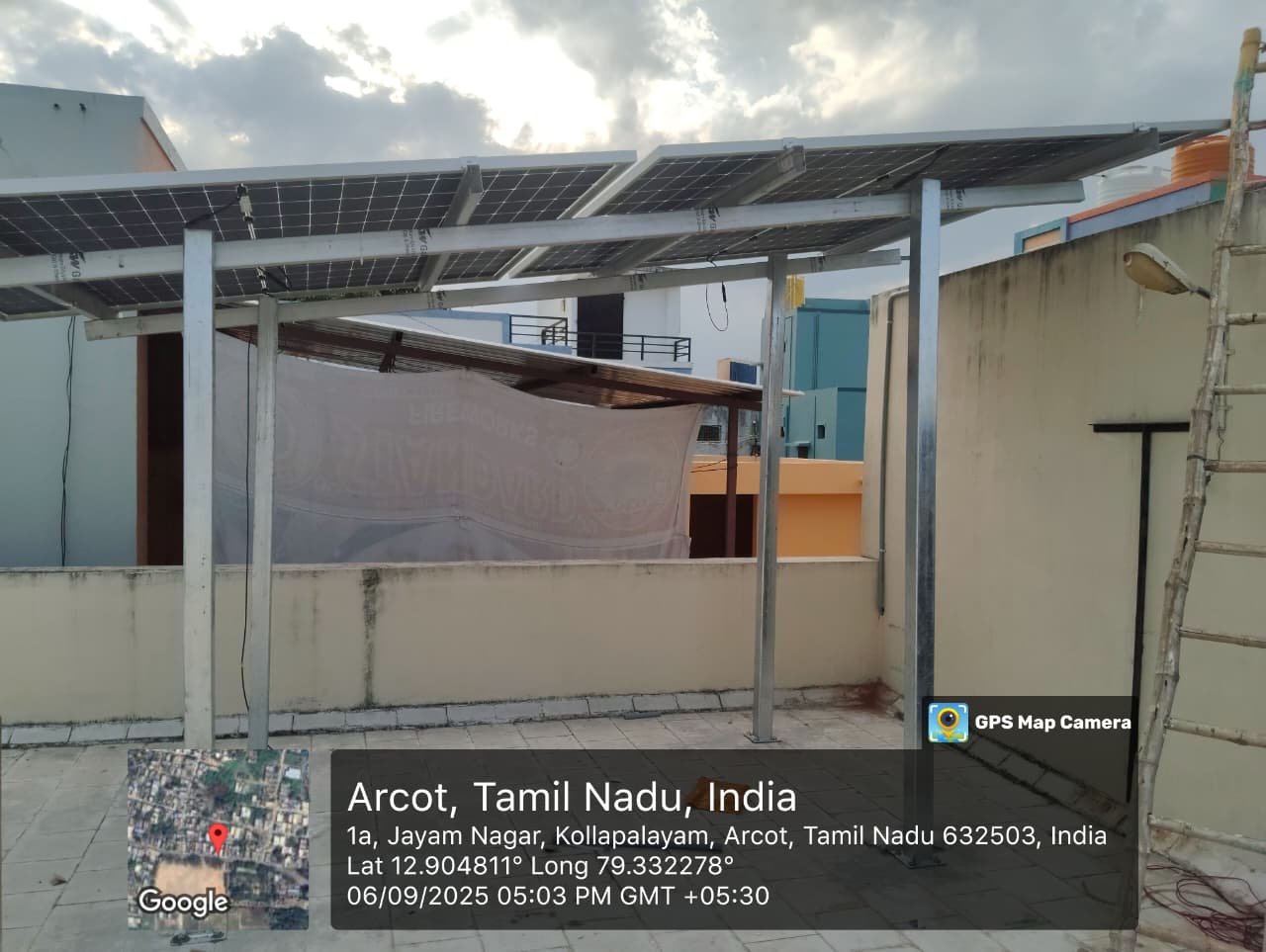
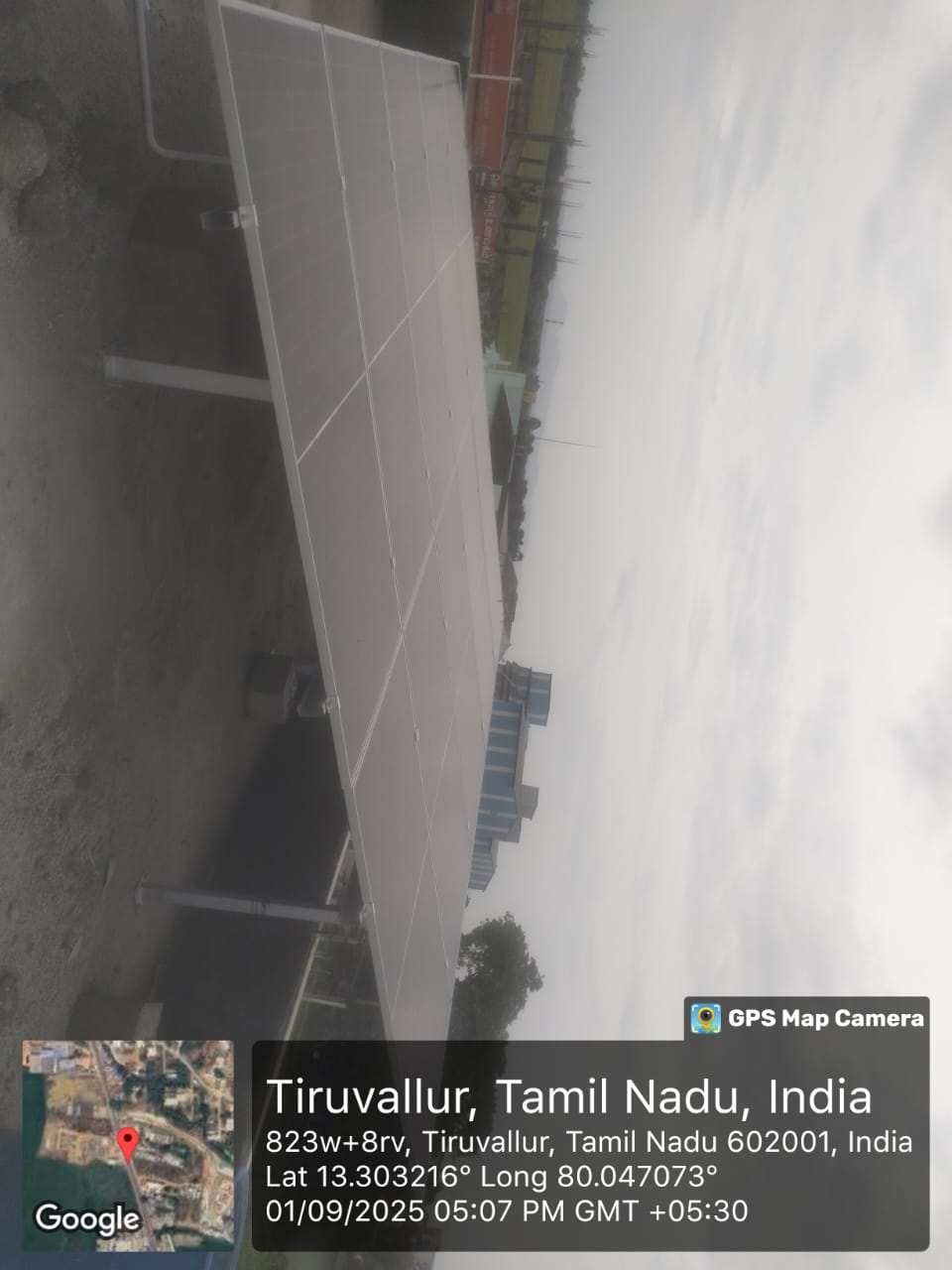
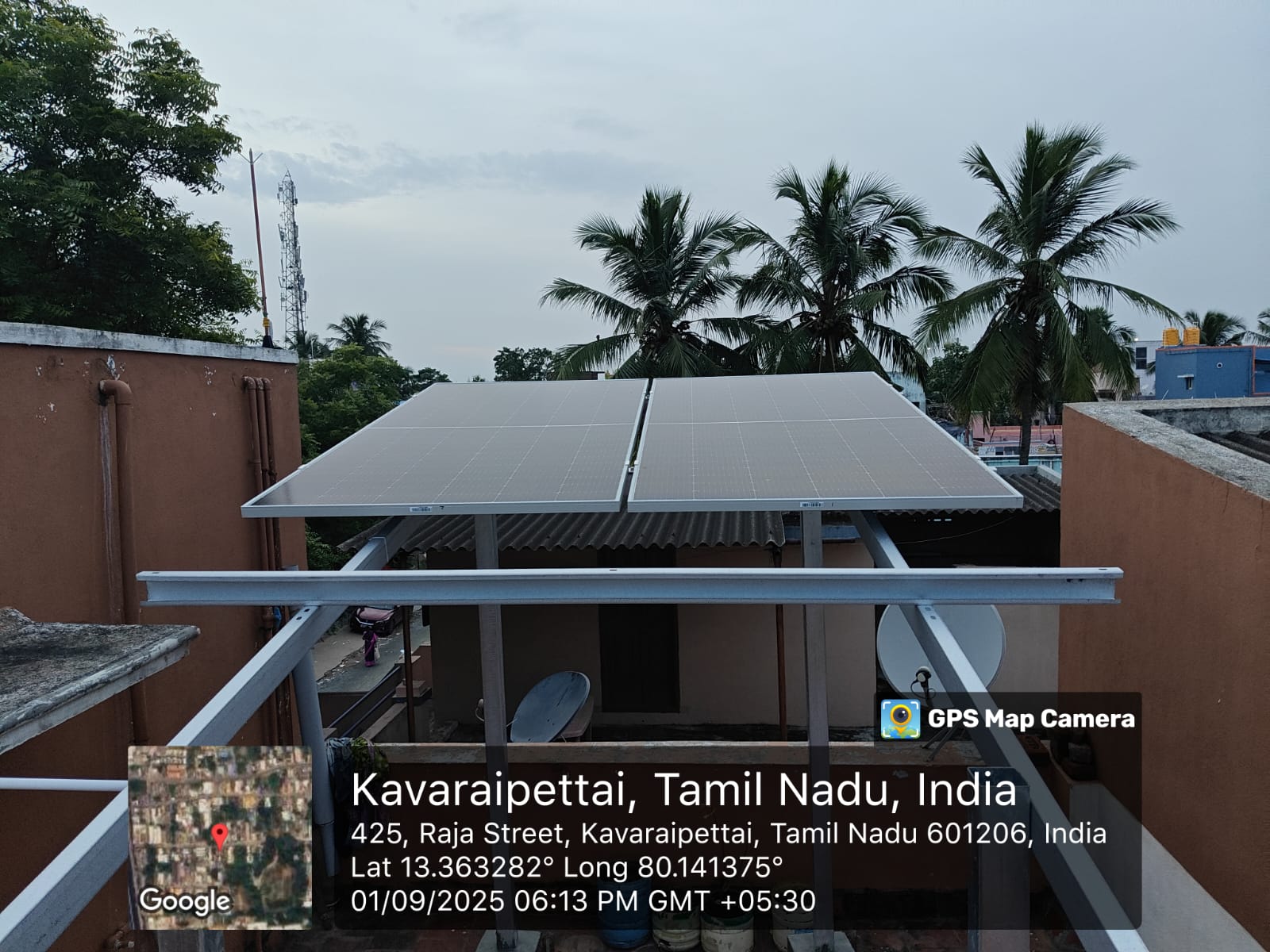
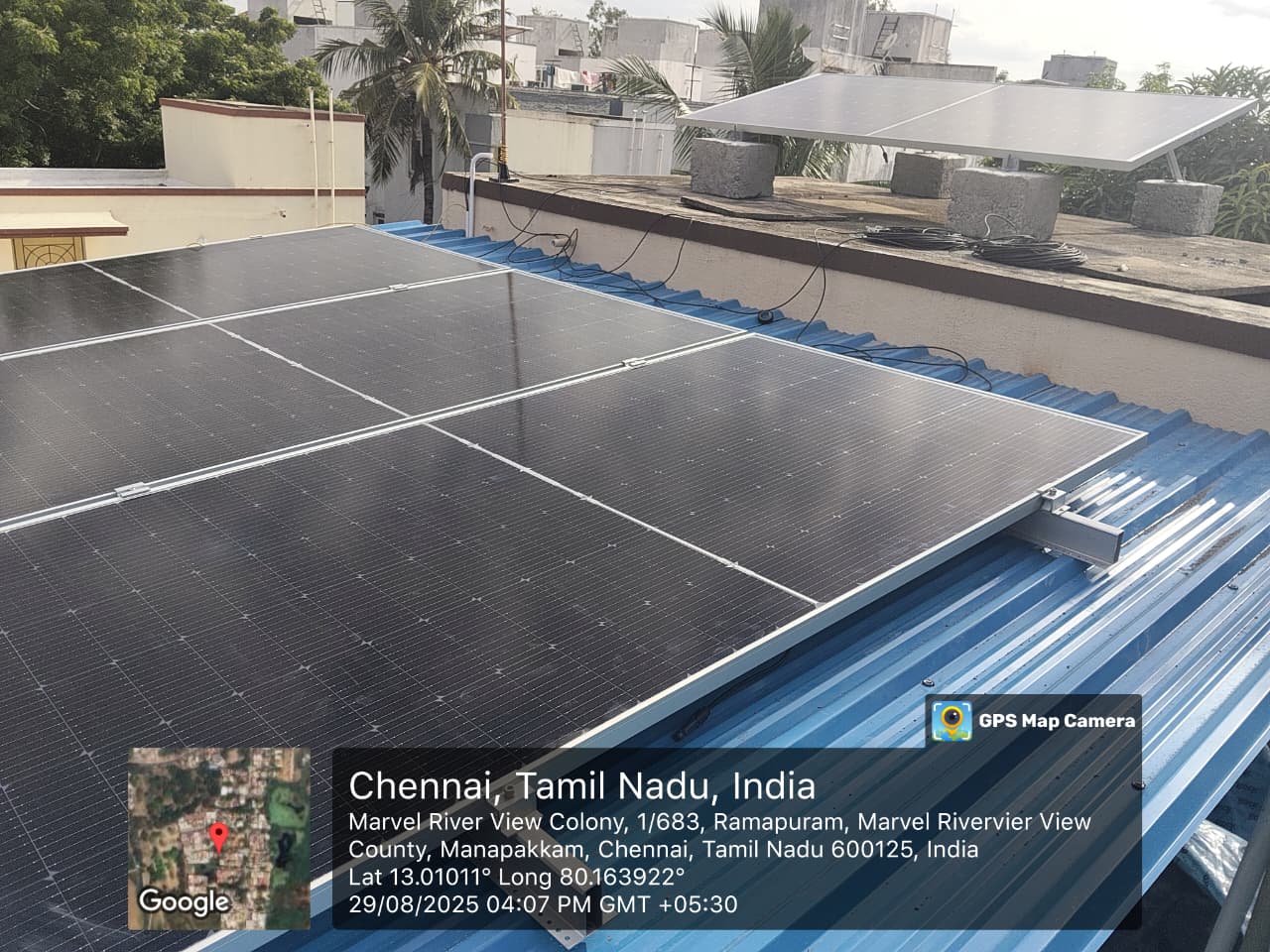
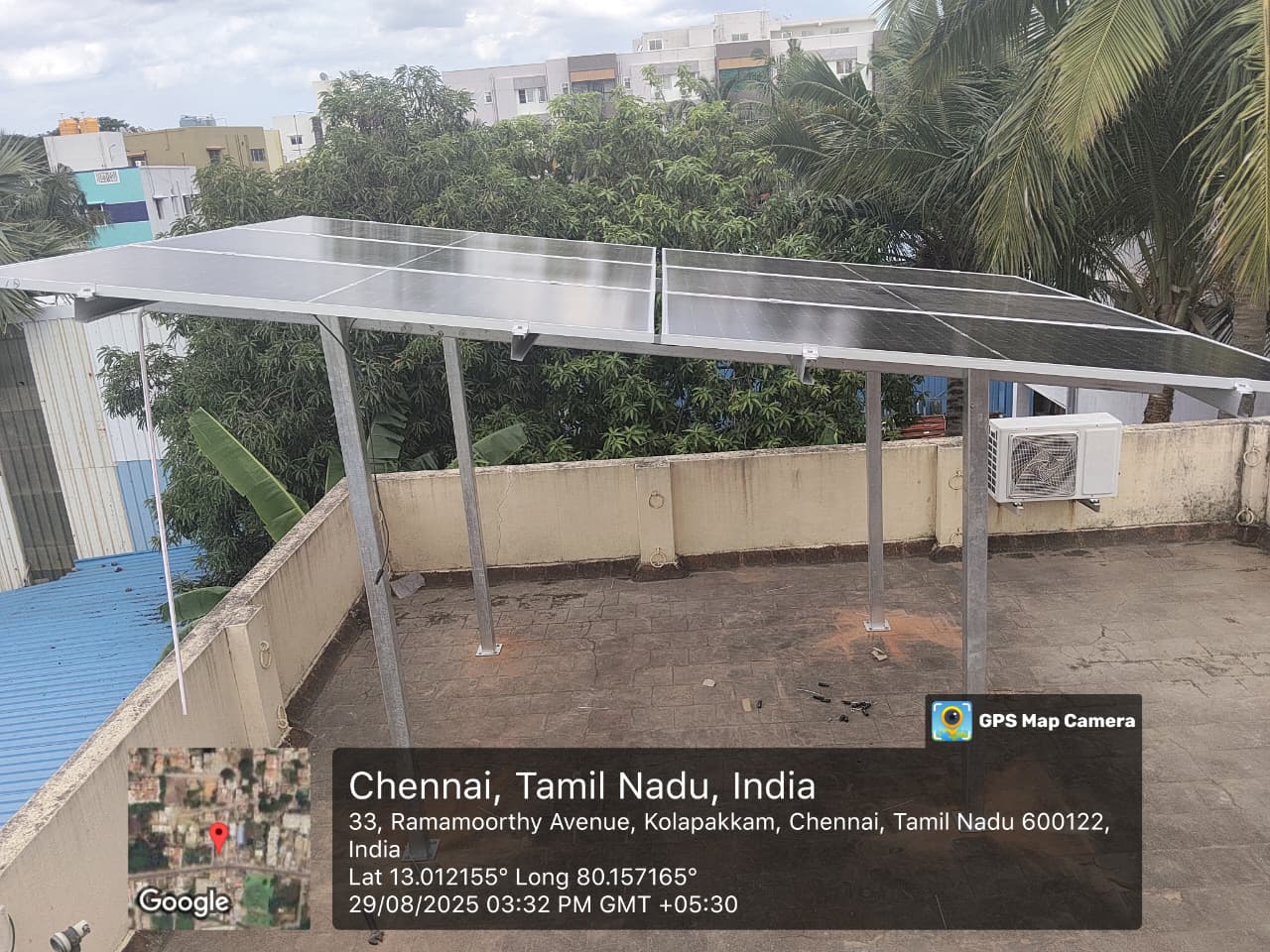
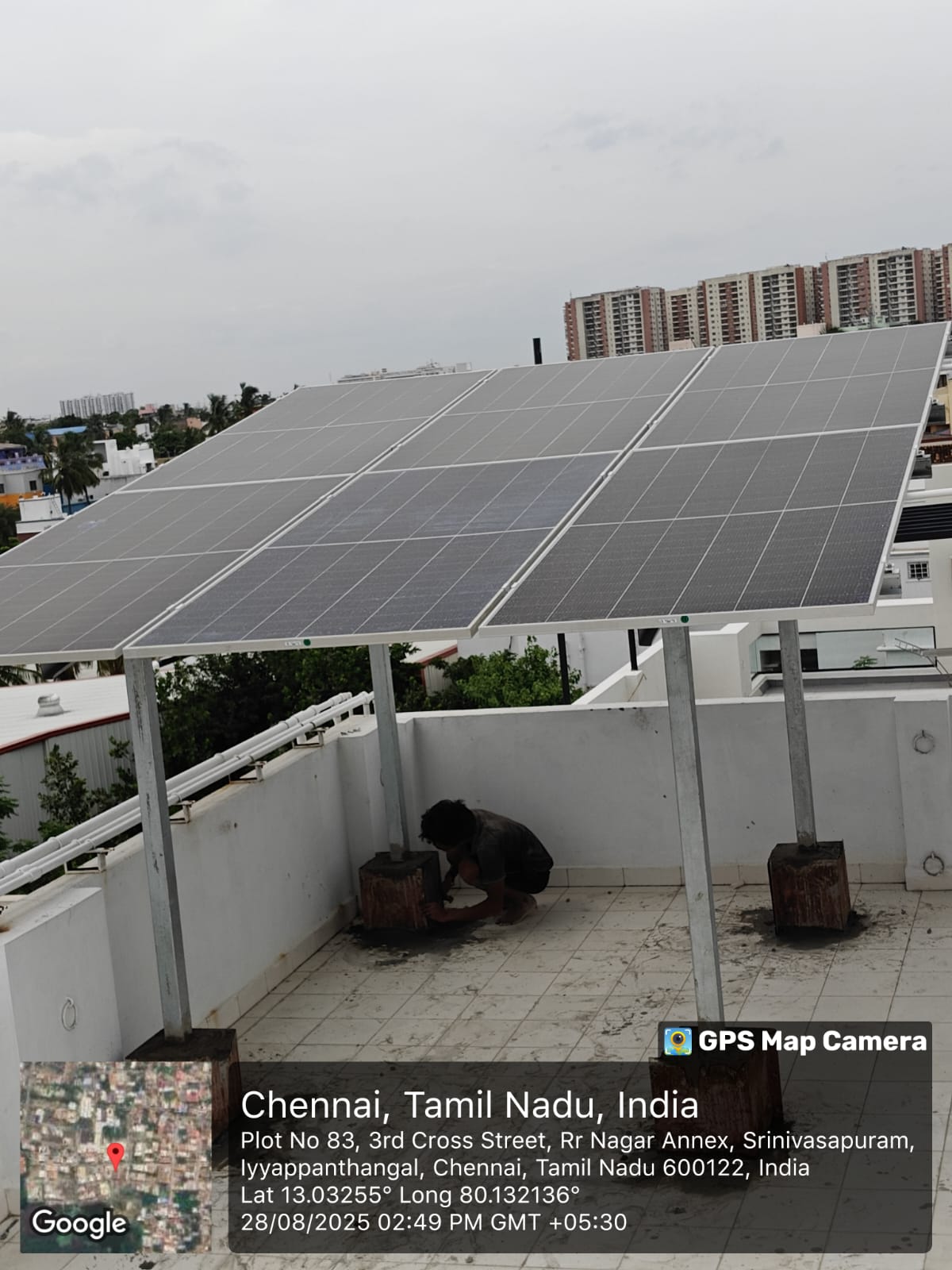
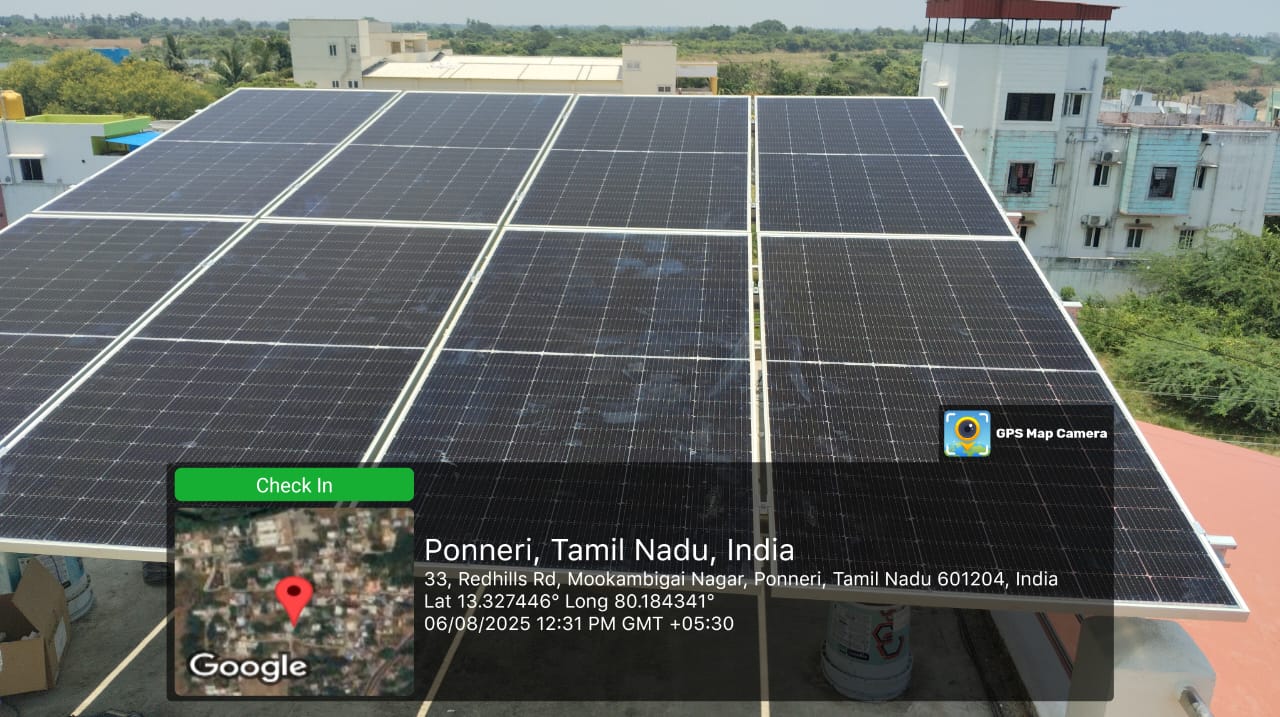
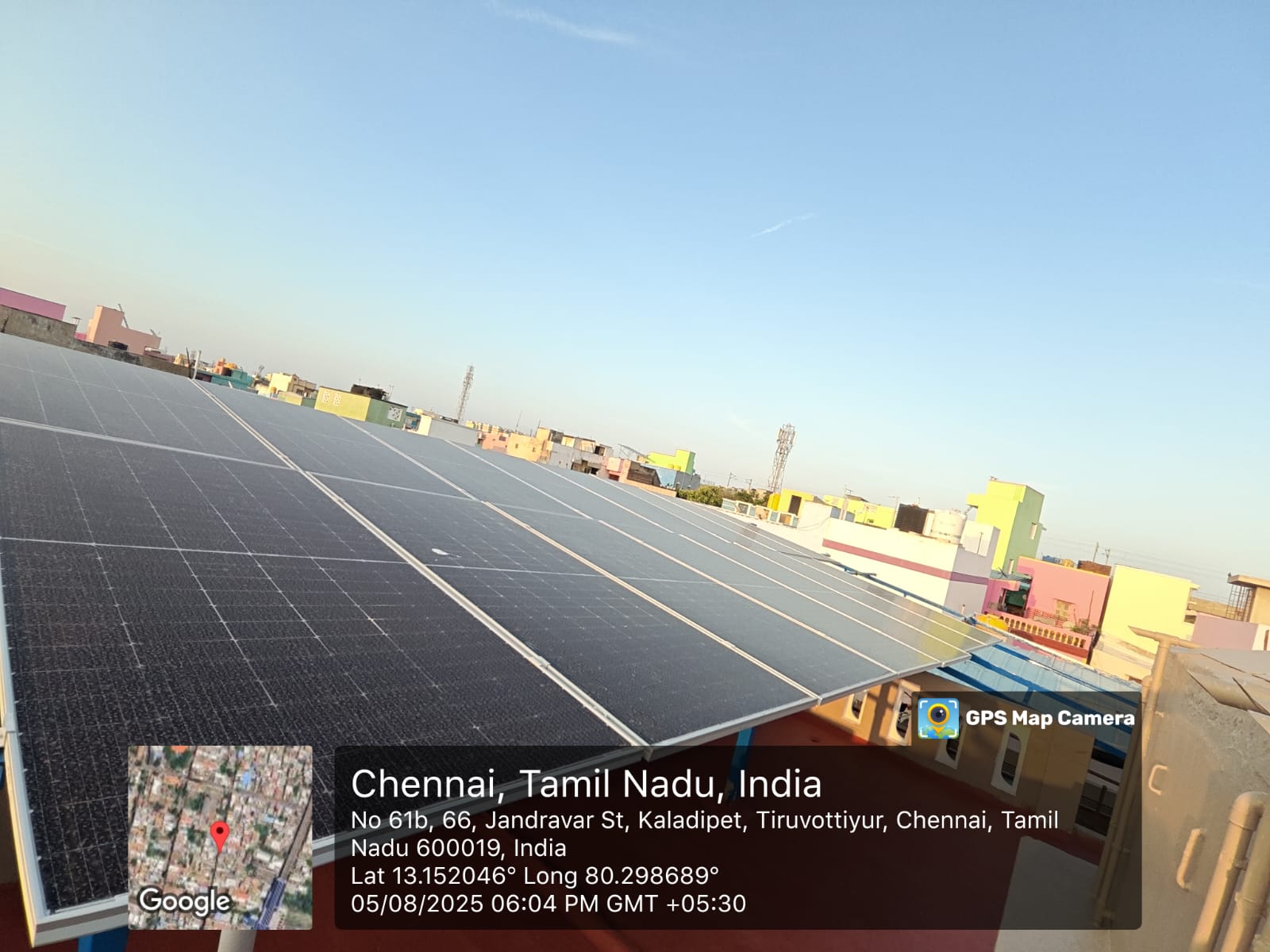
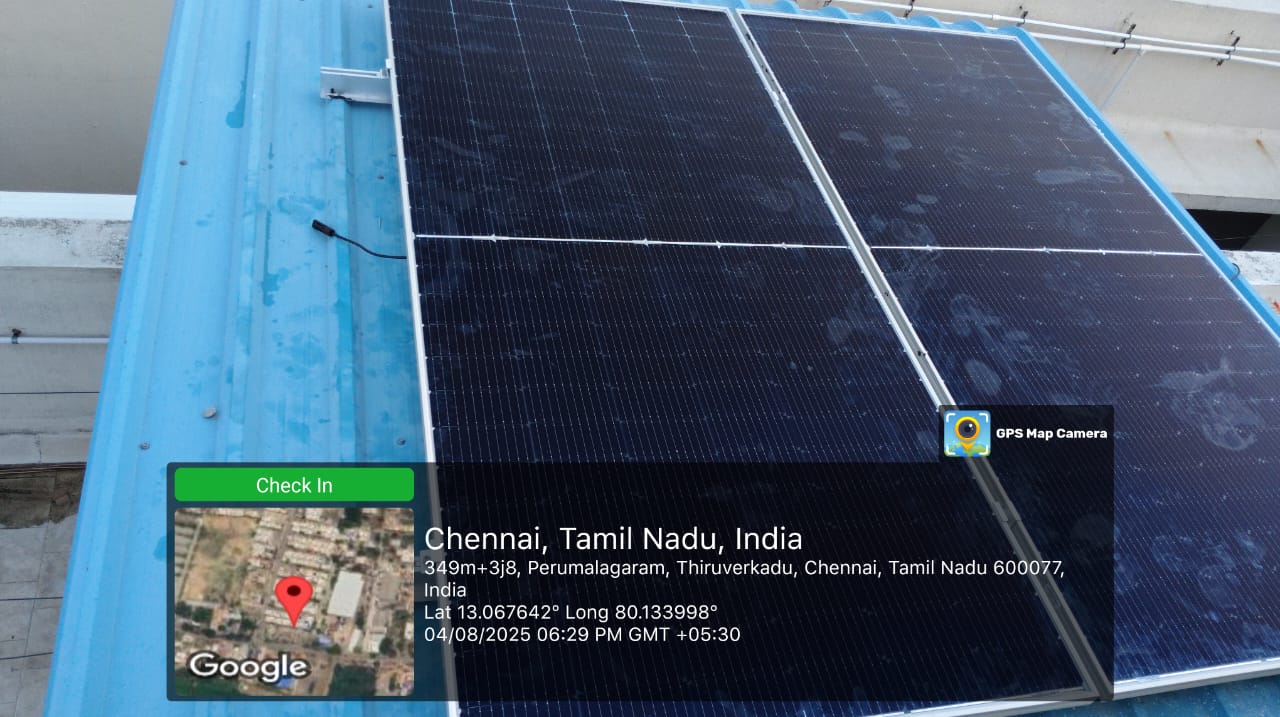
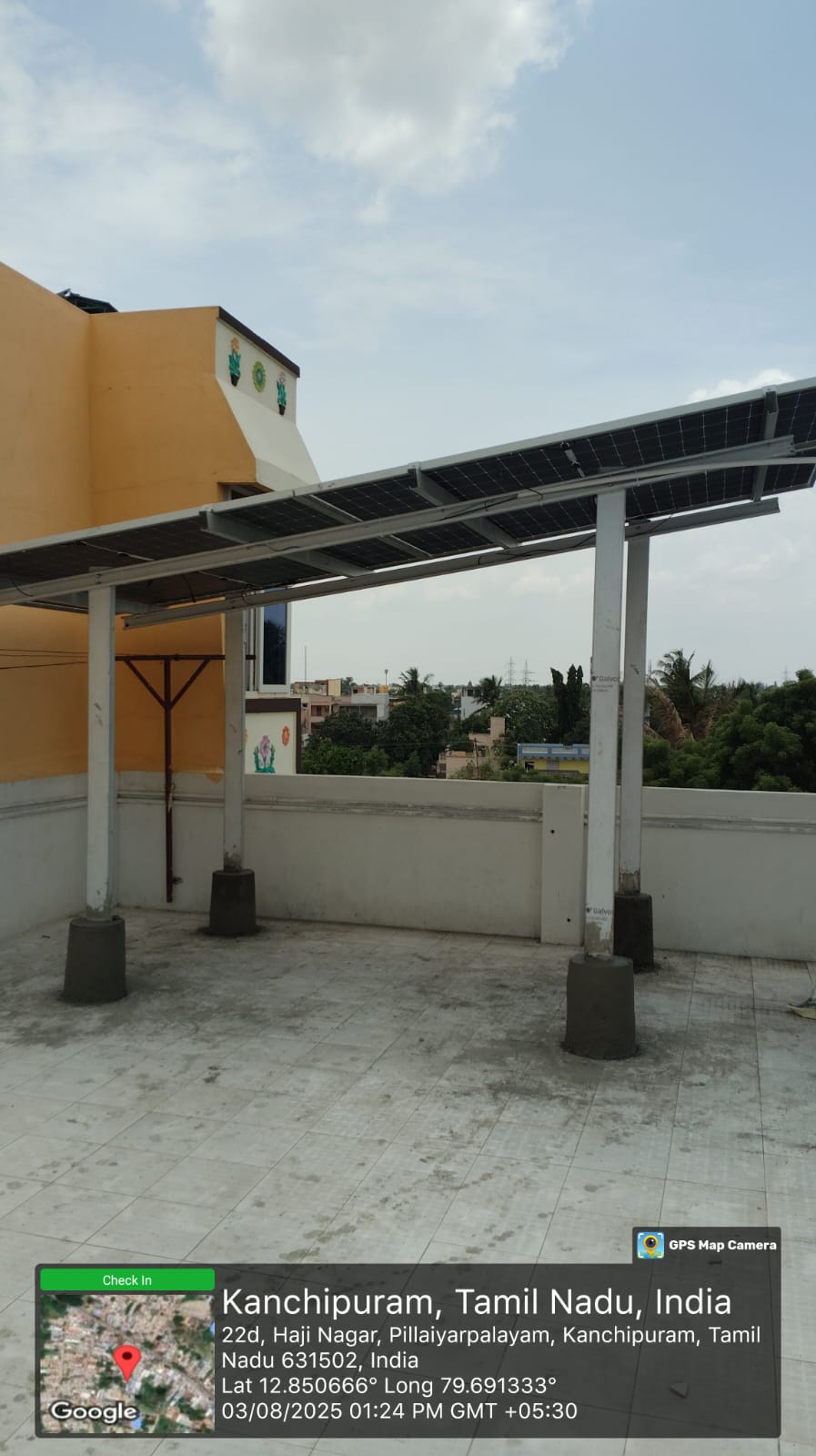
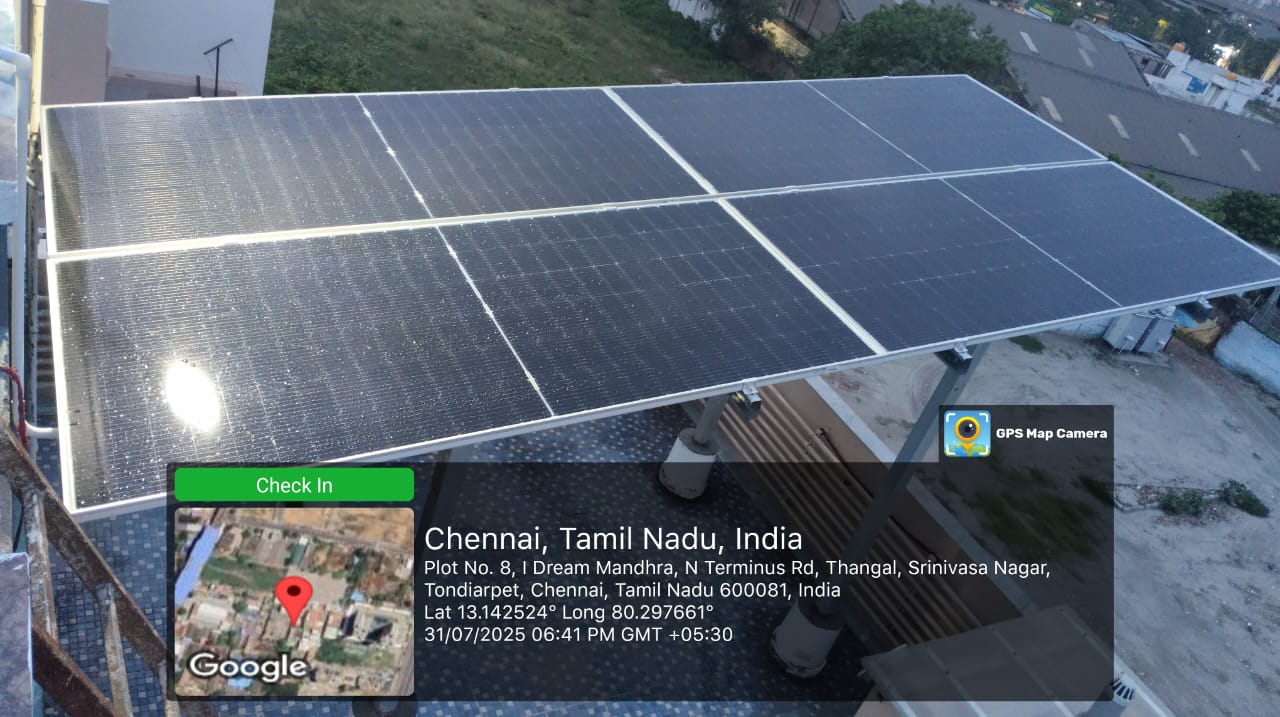
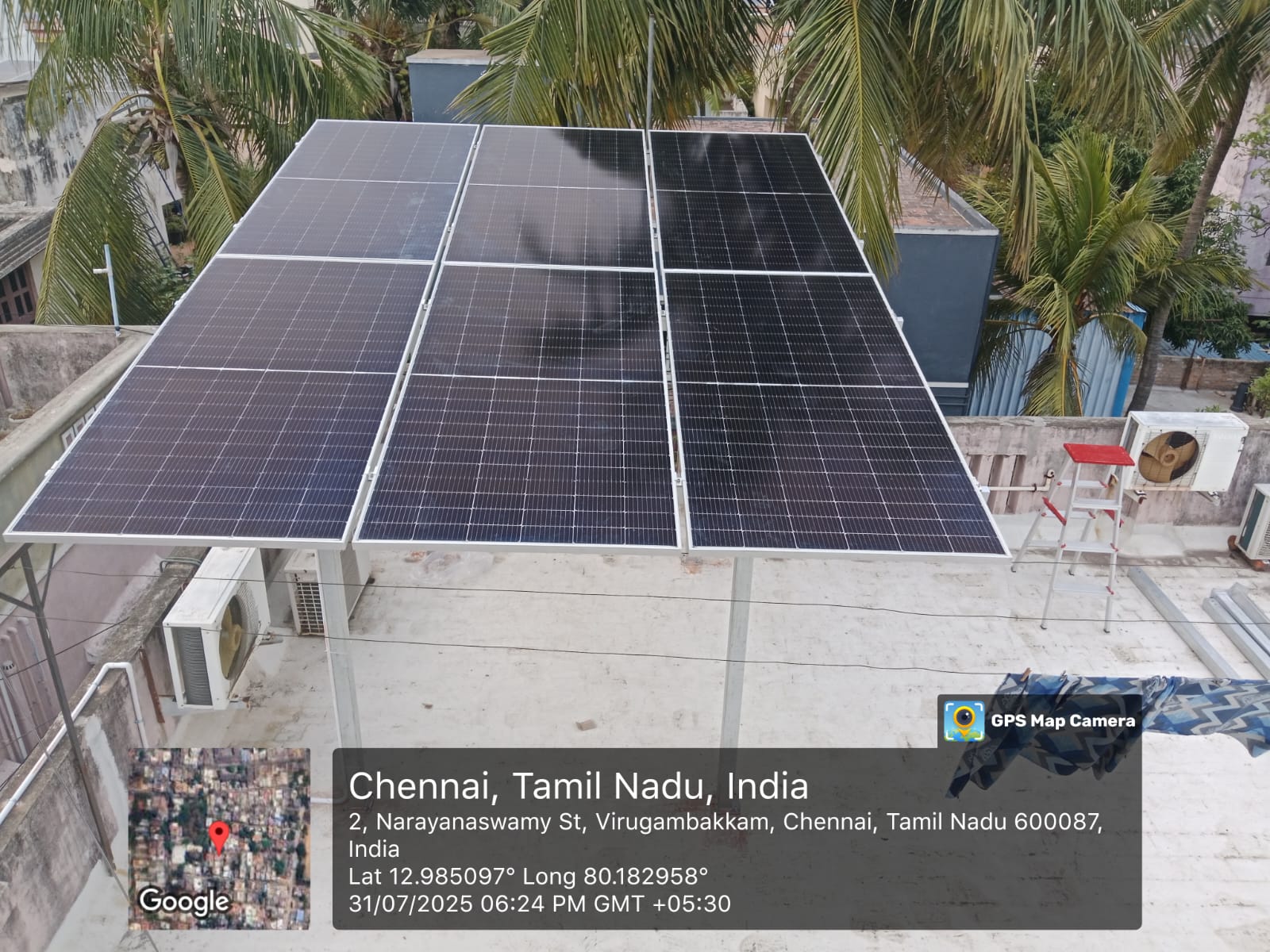
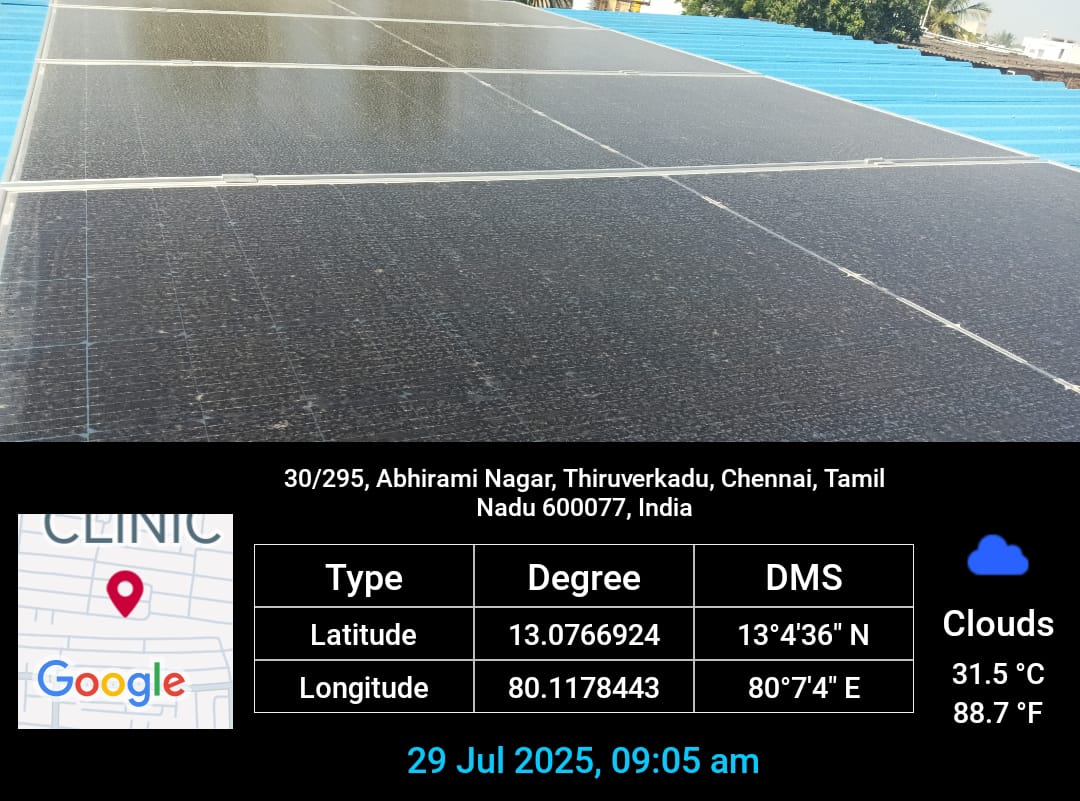
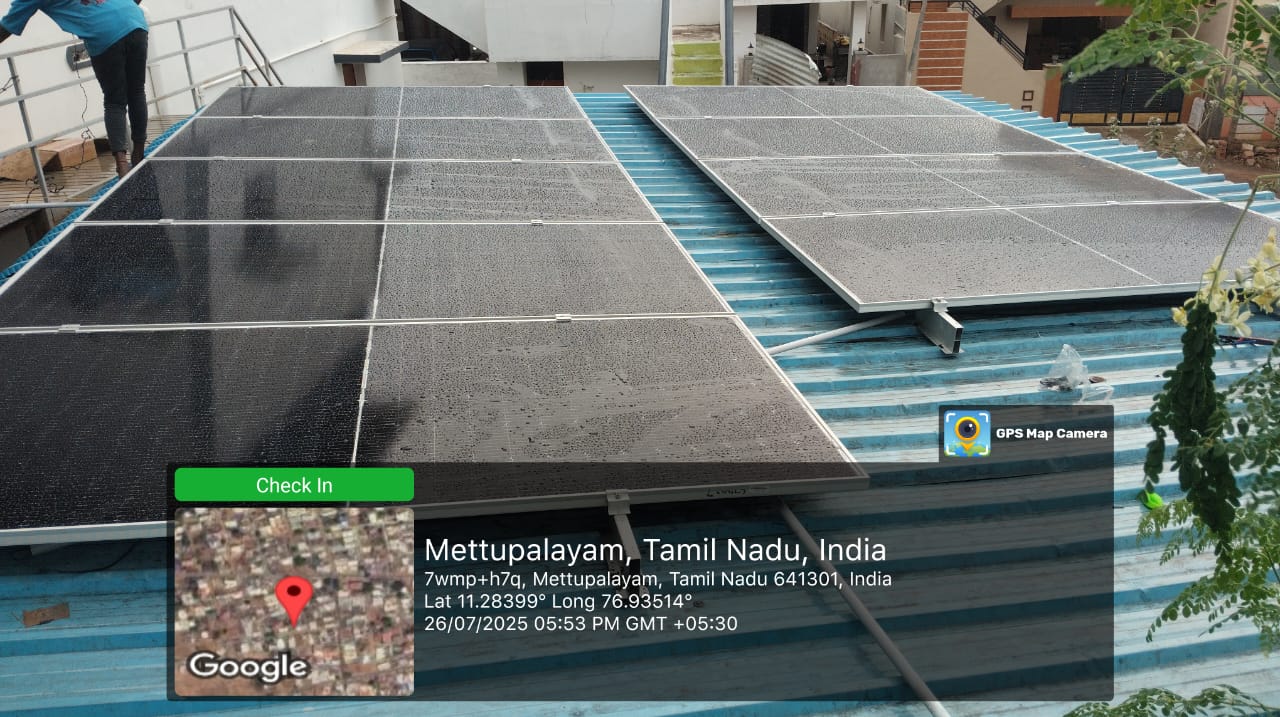
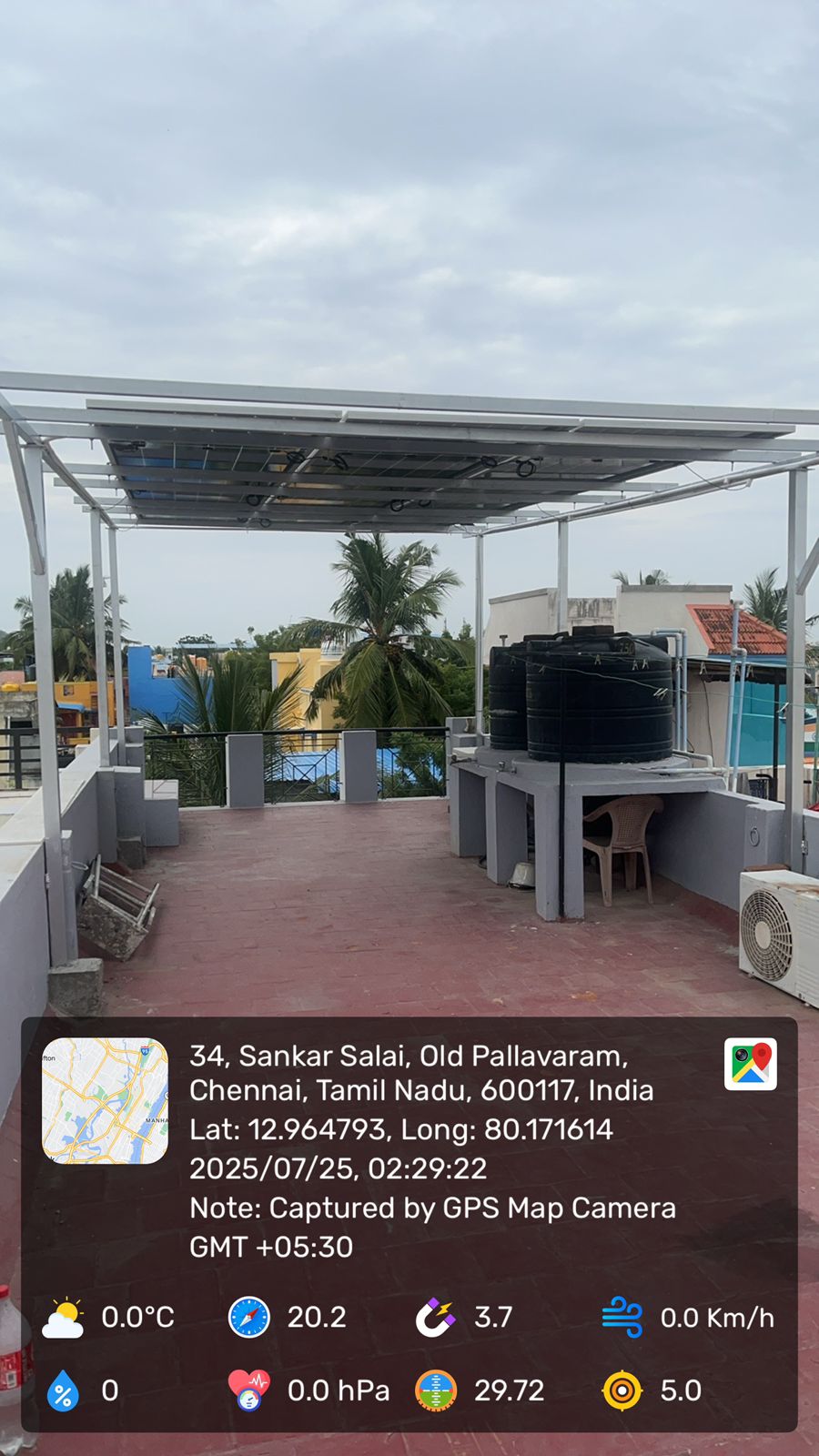
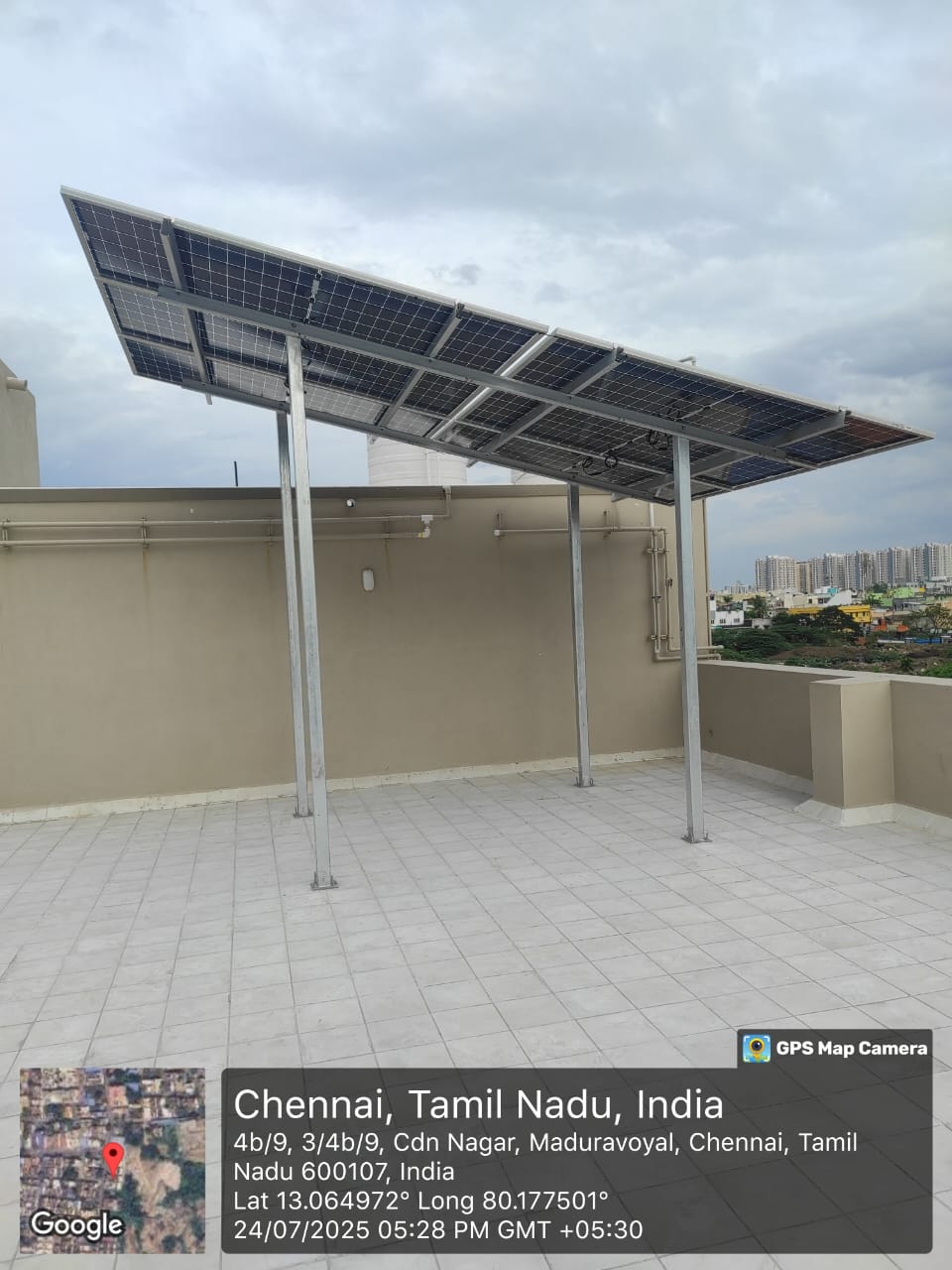
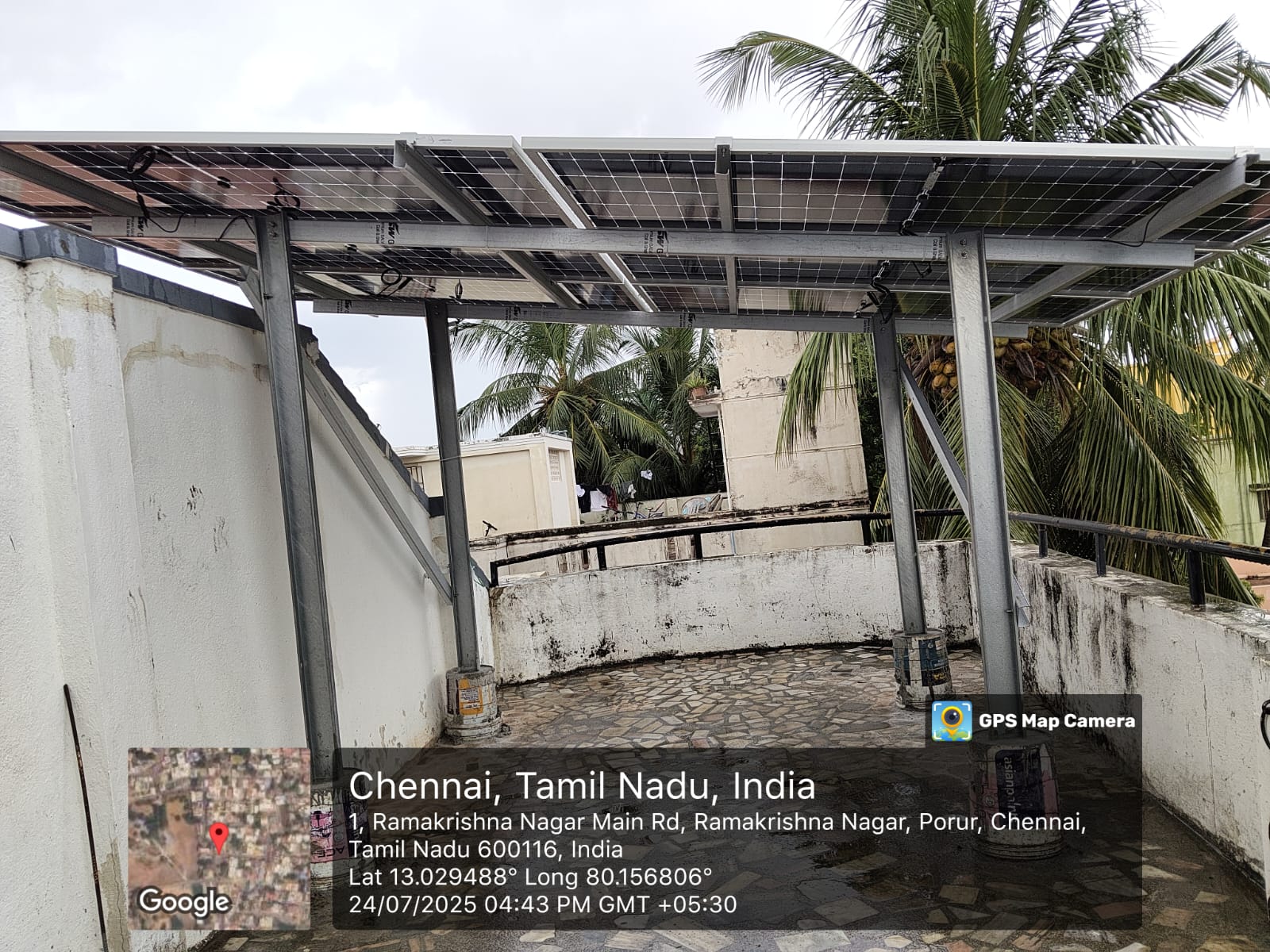
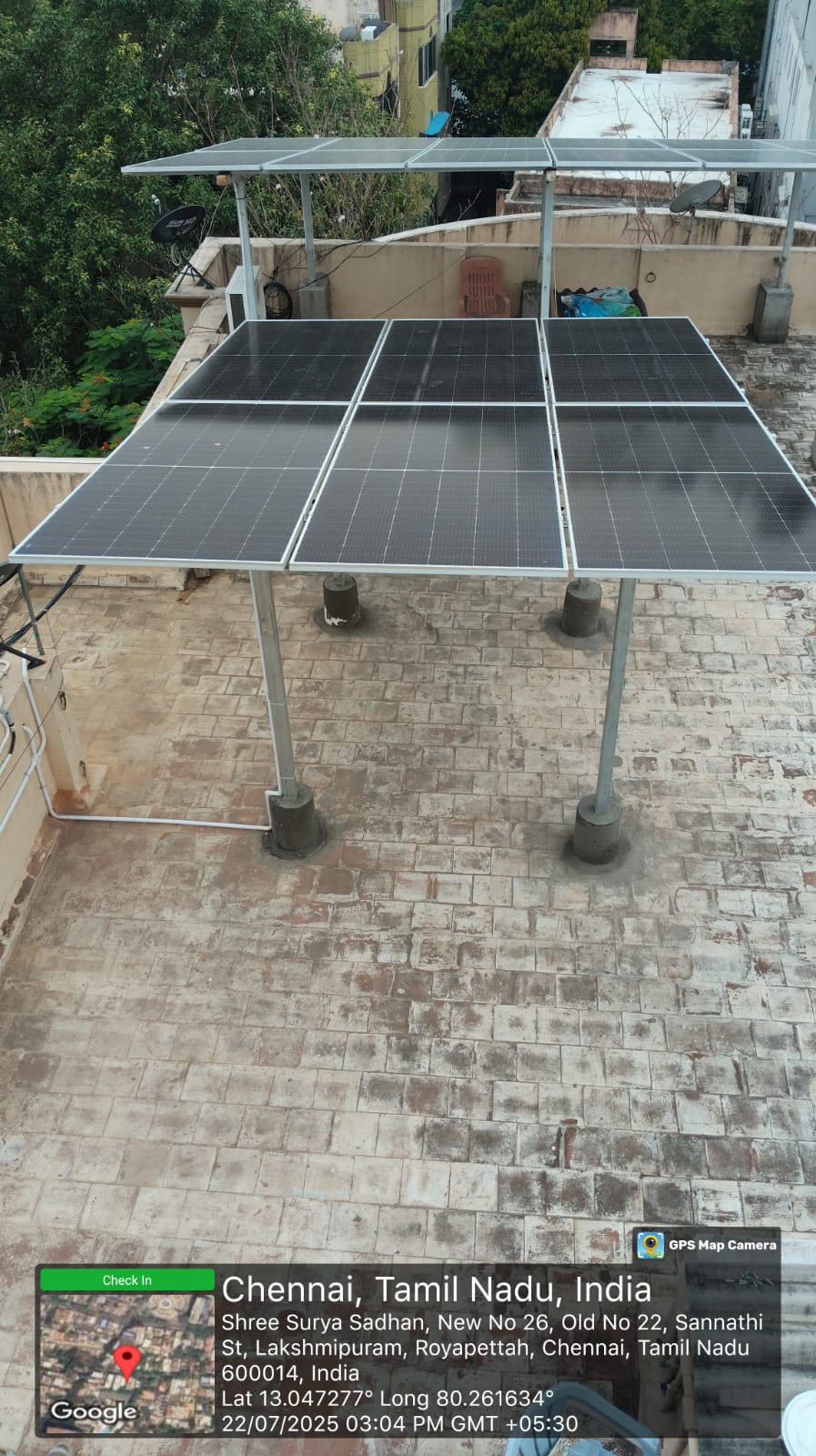
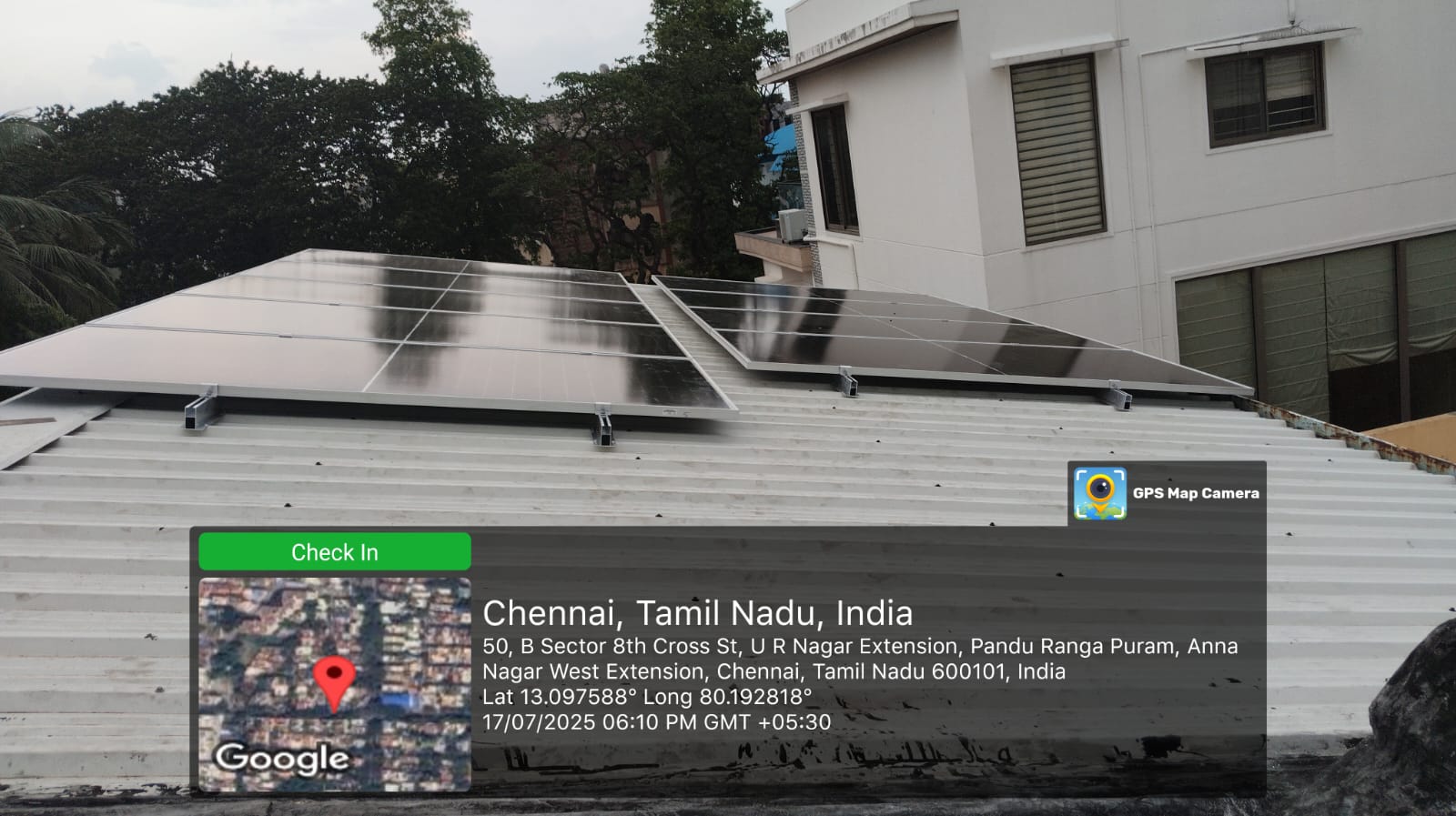
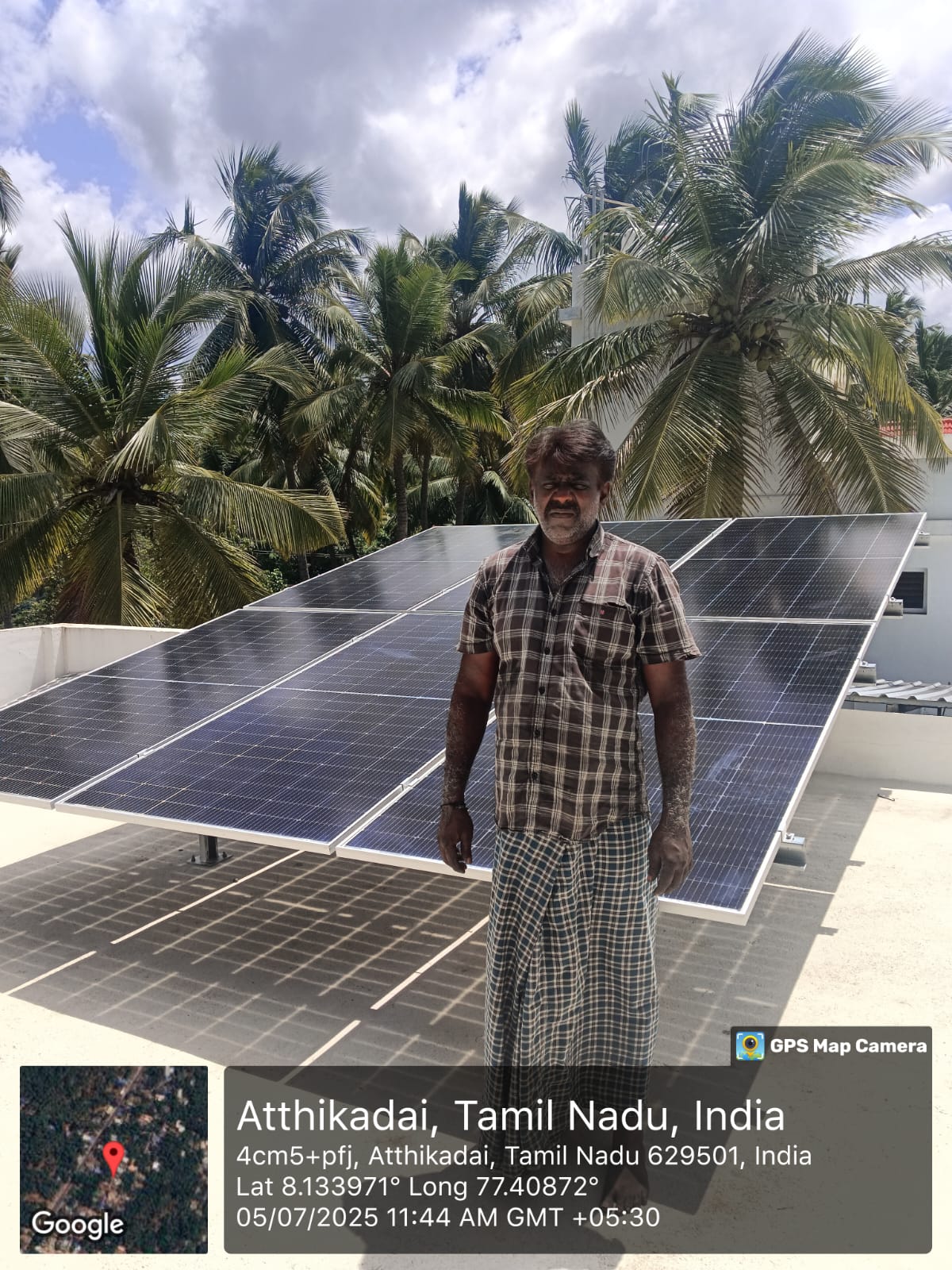
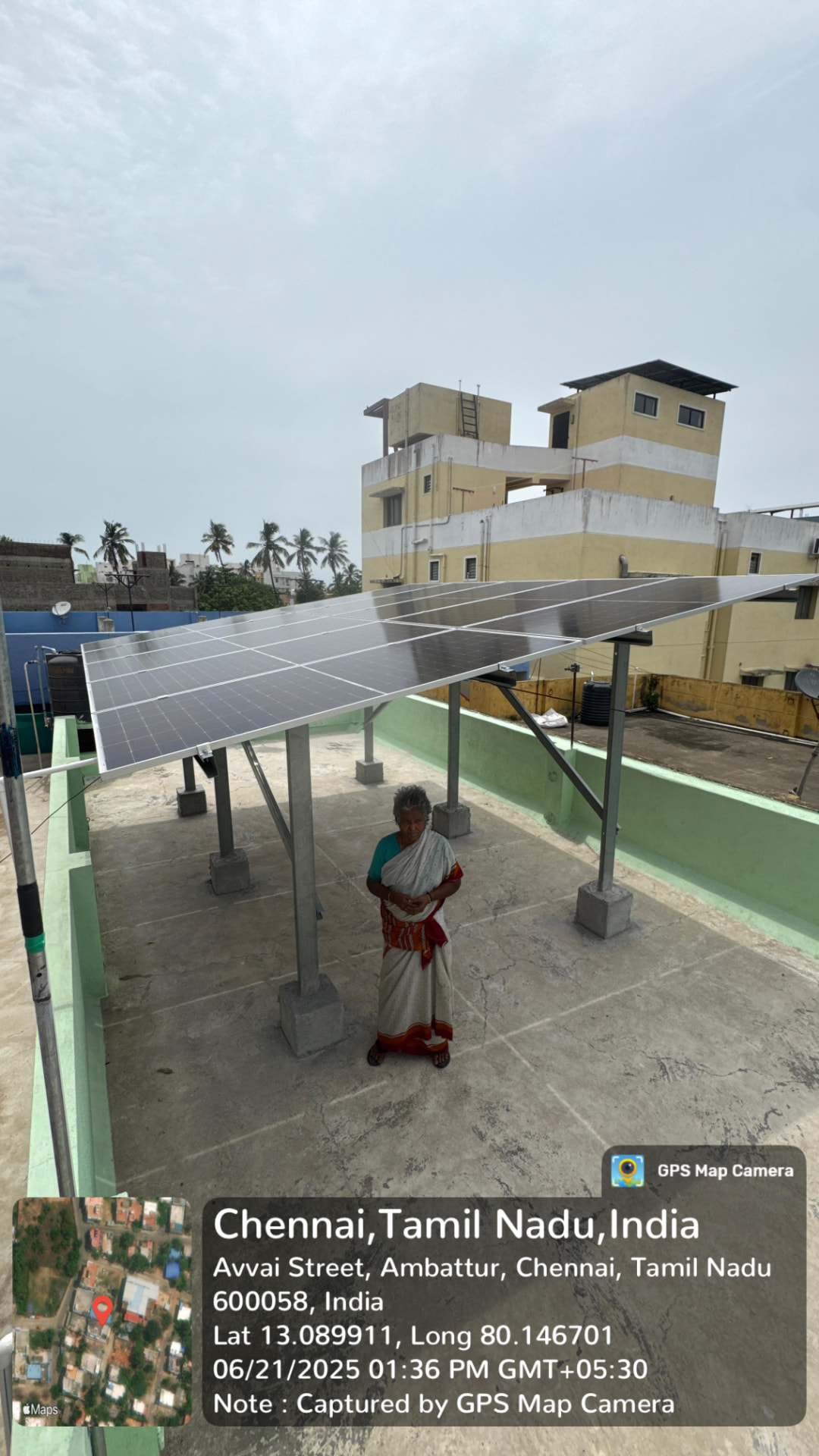
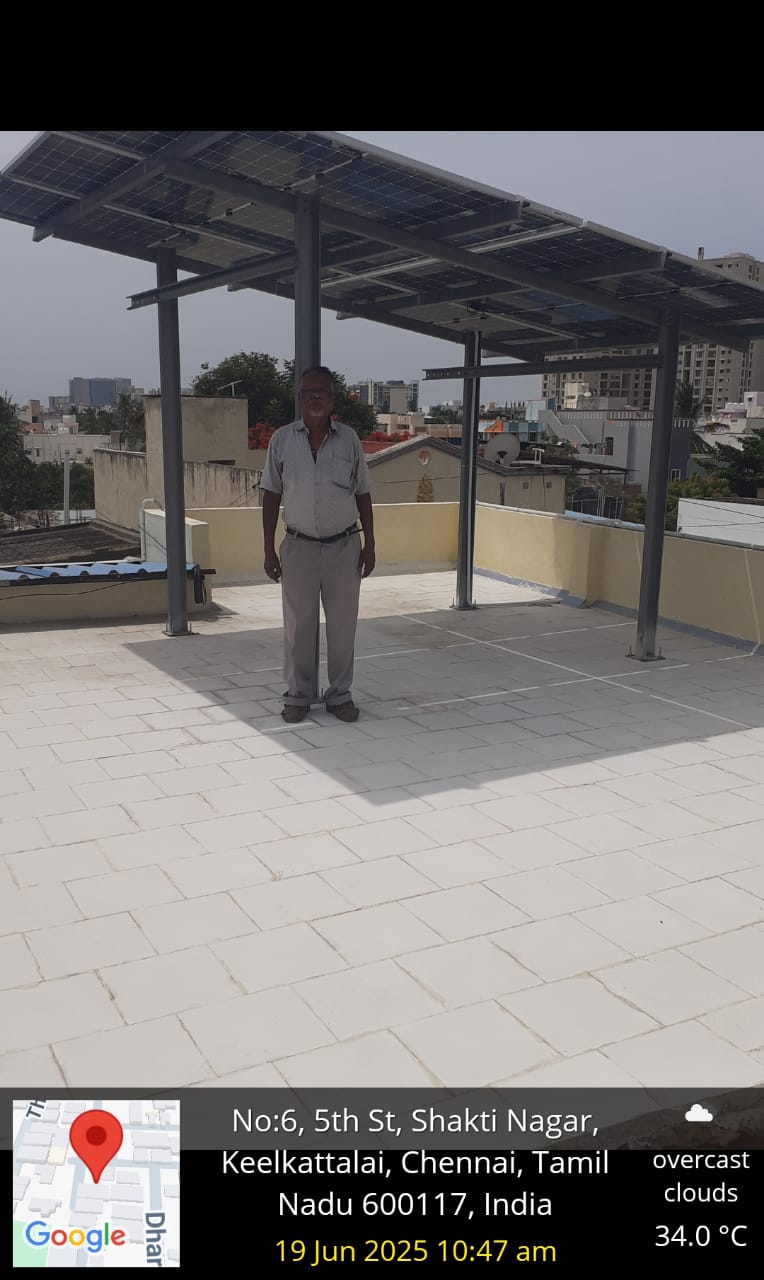
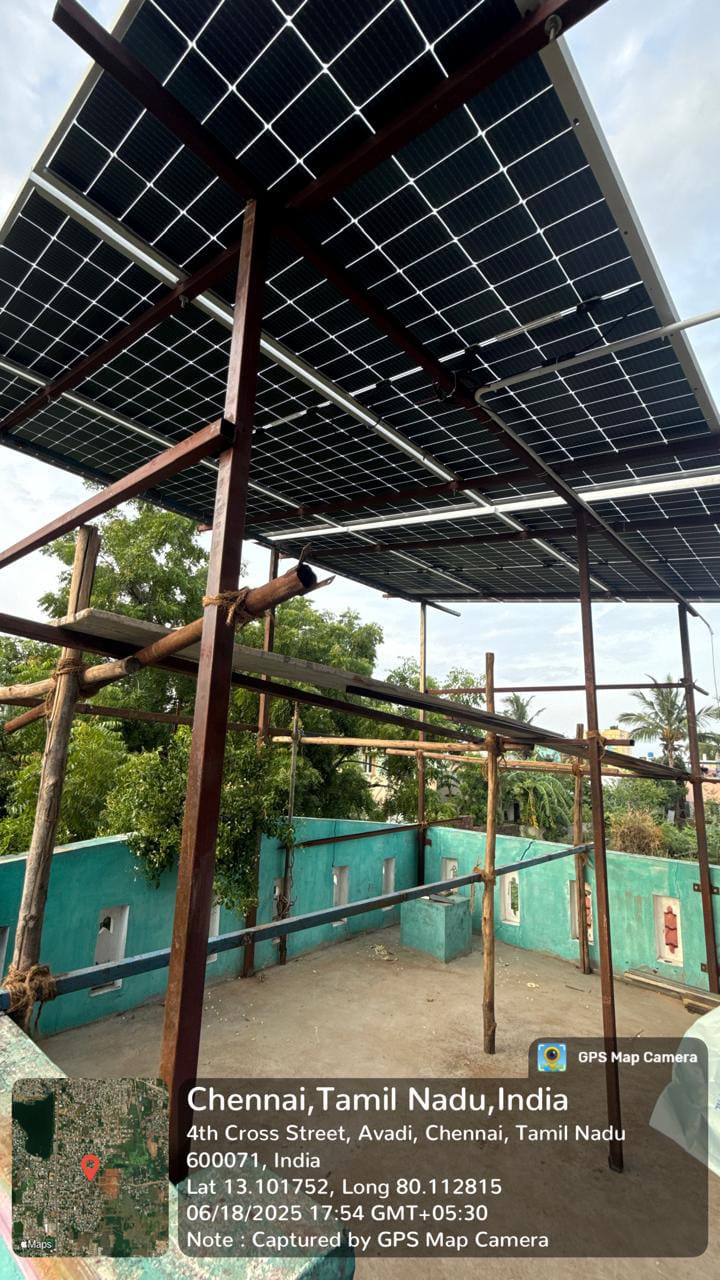
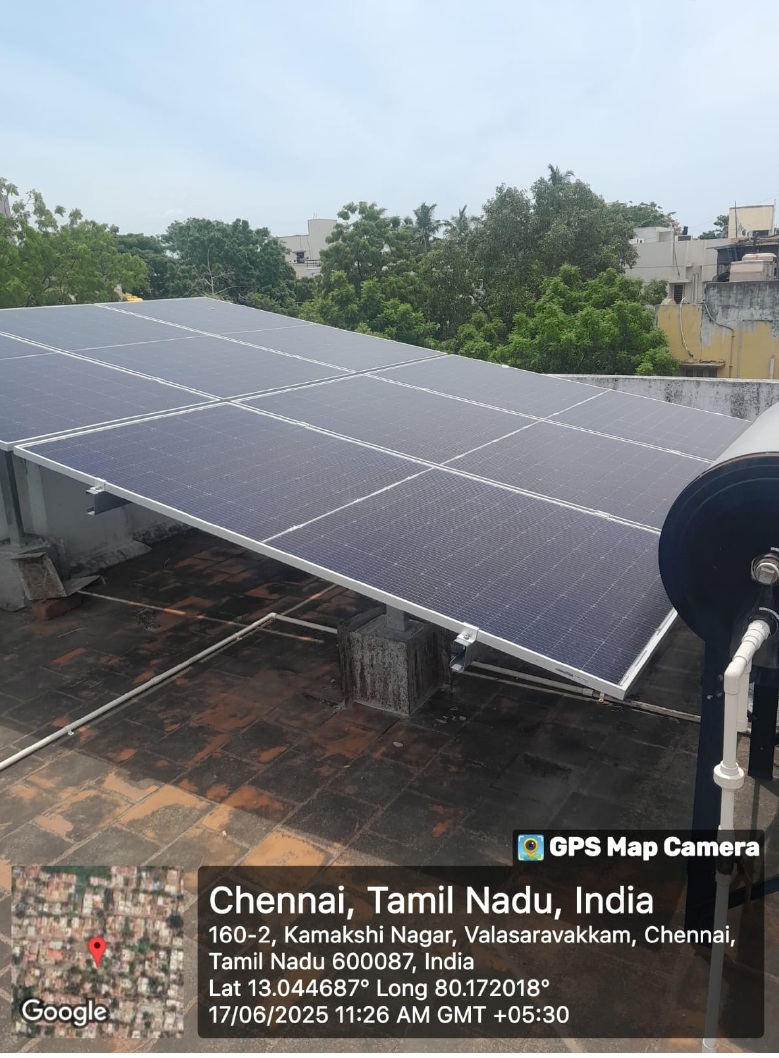
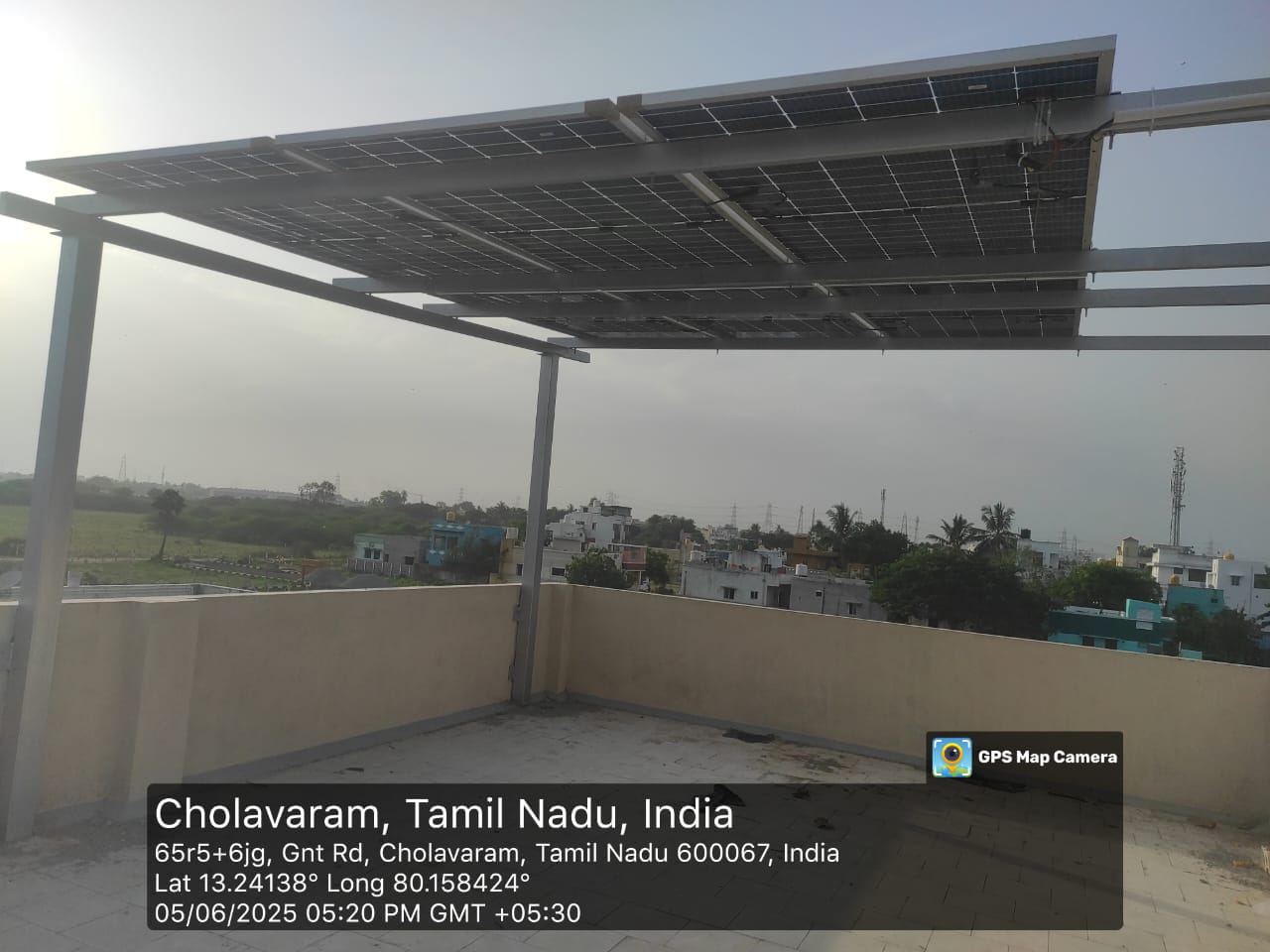
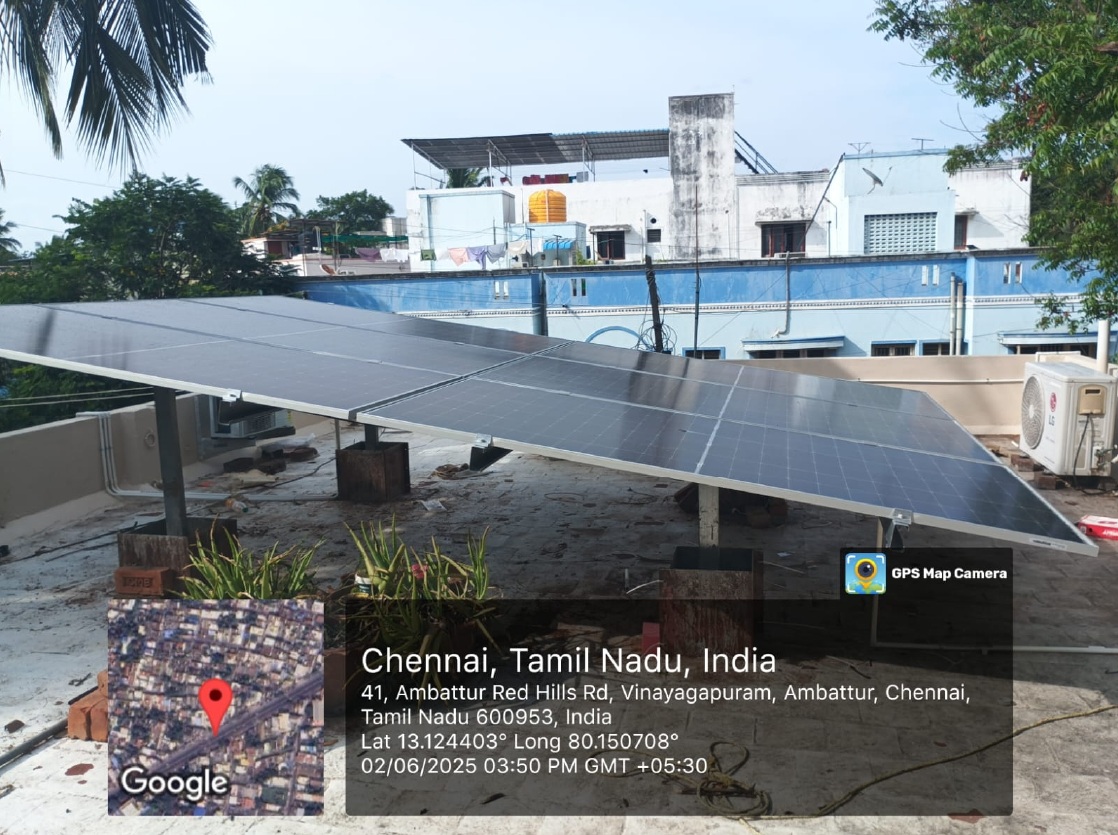
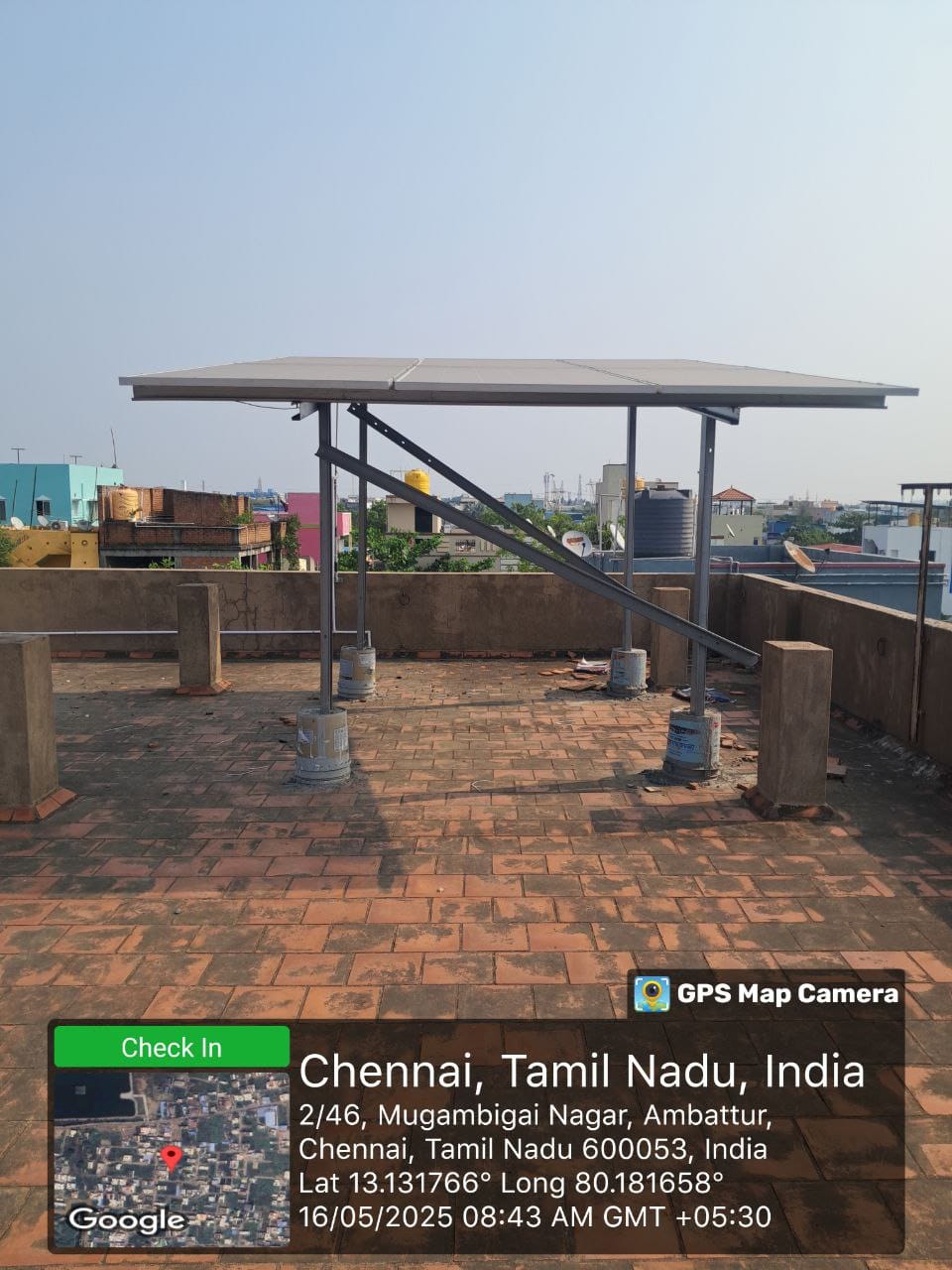
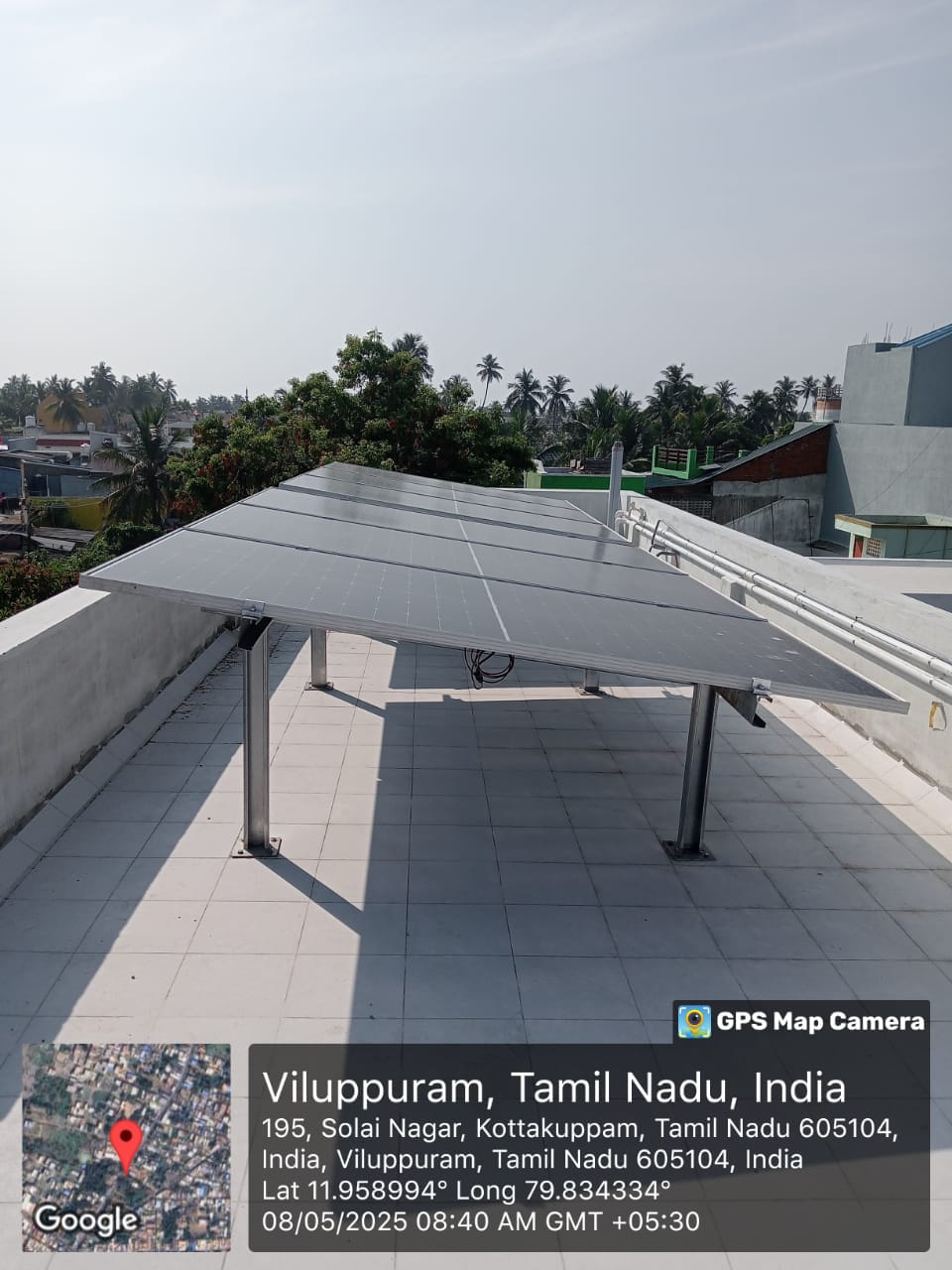
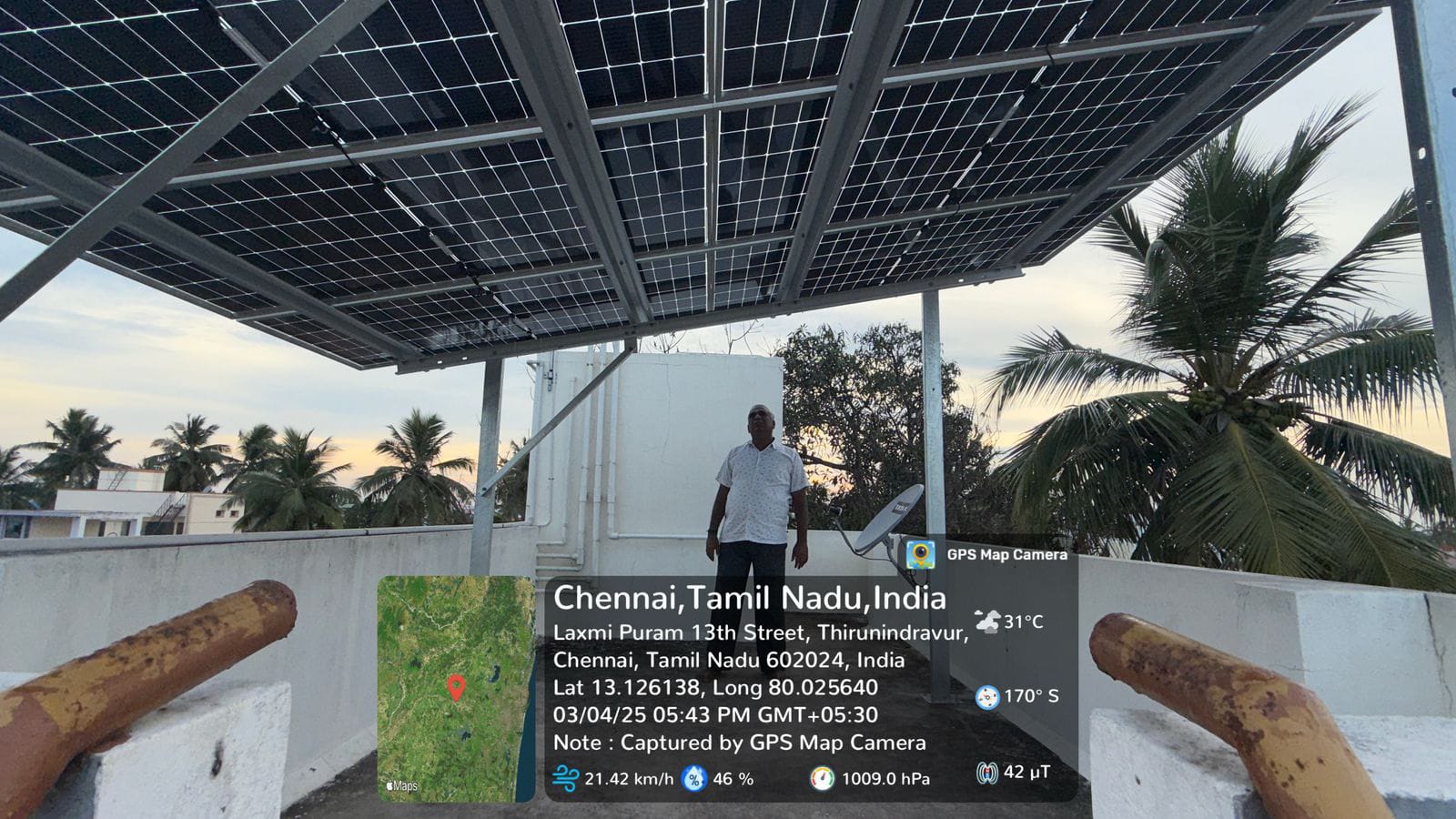
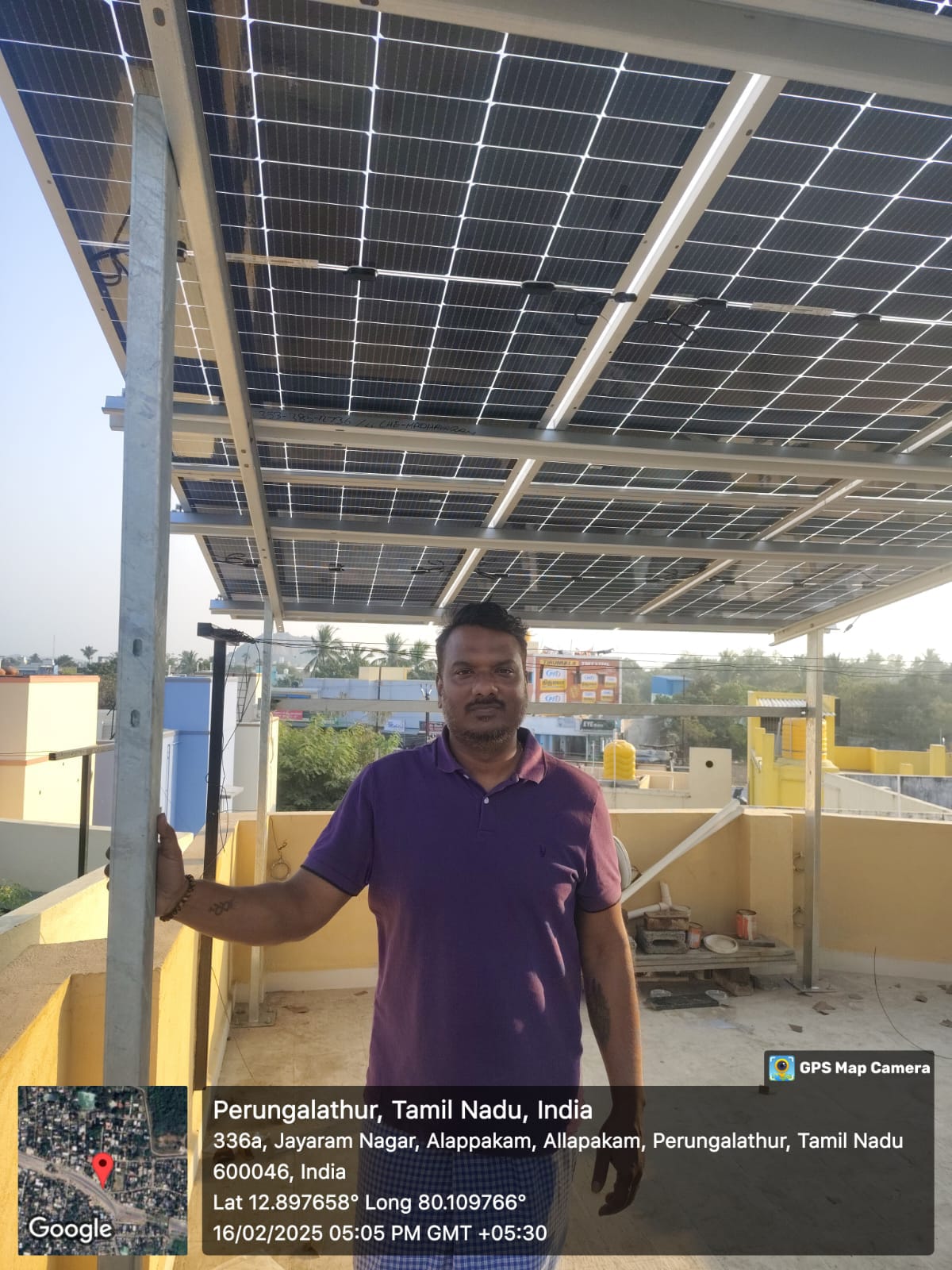
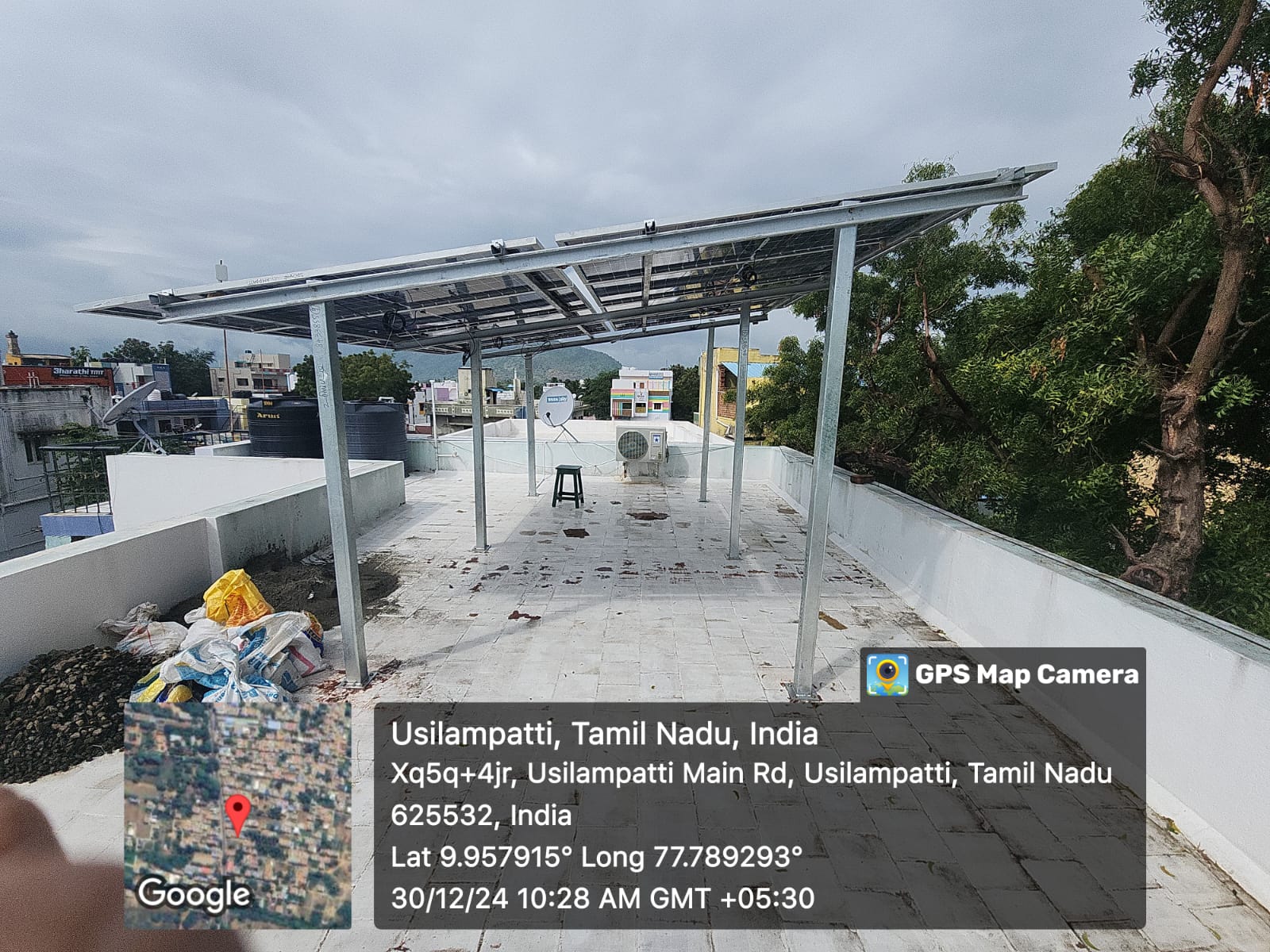
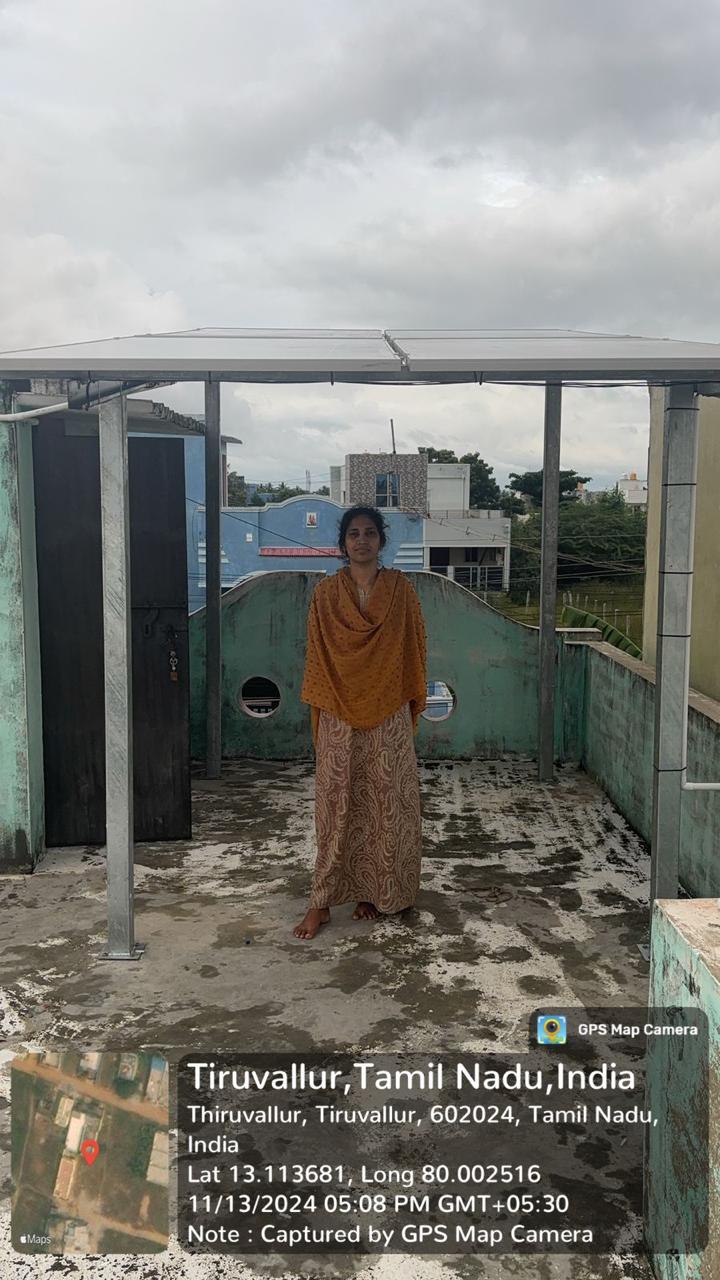
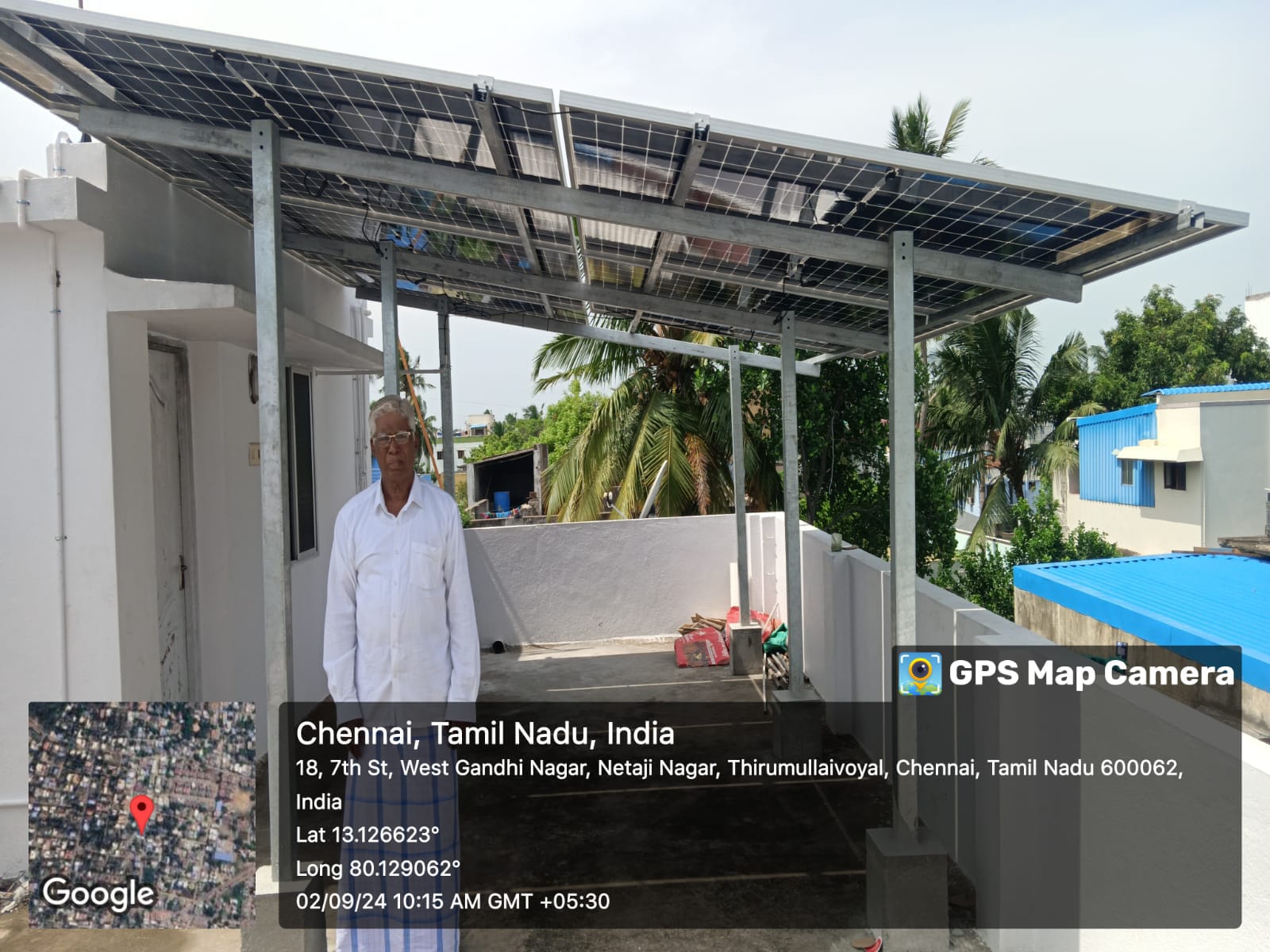
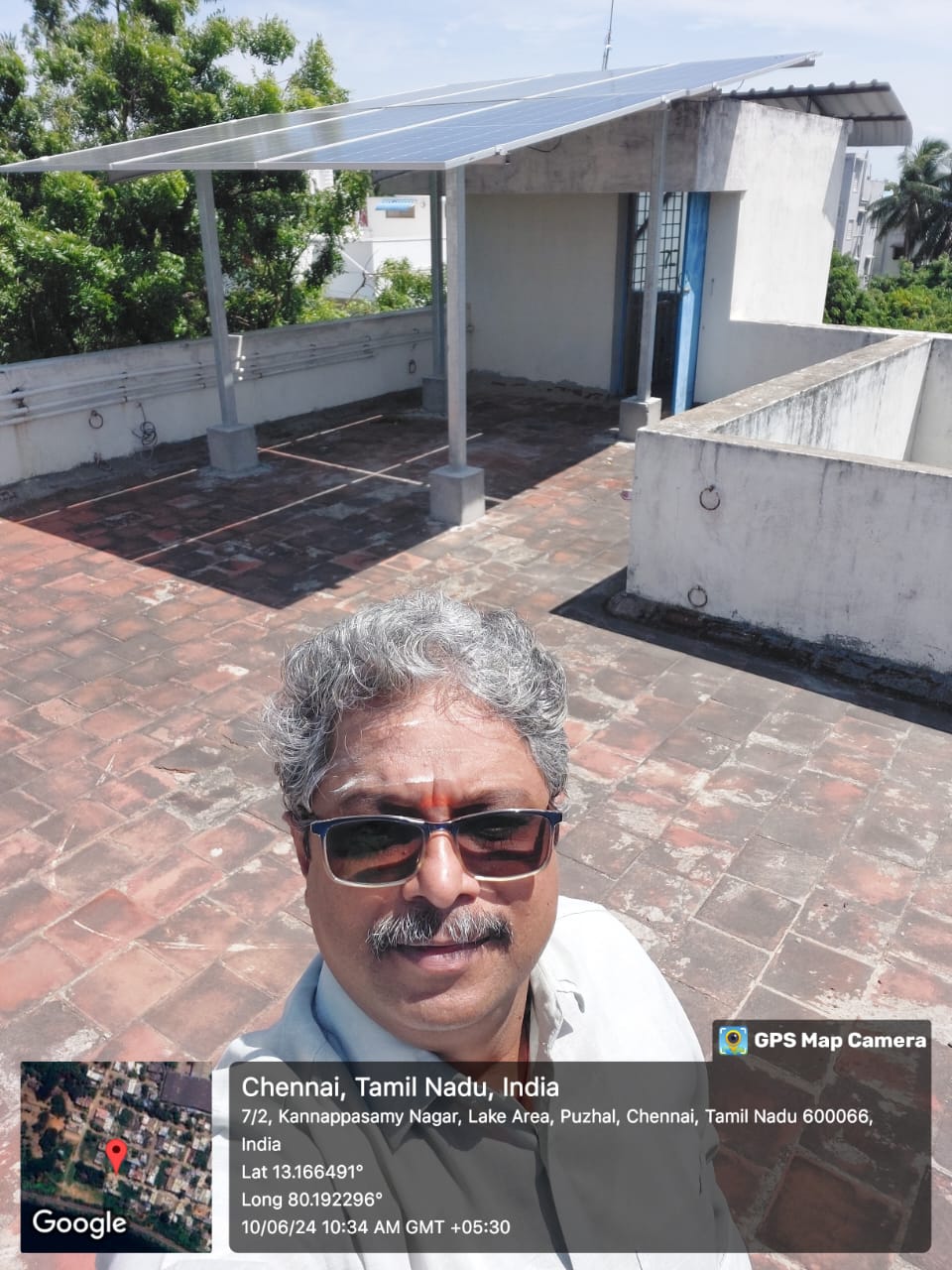
We install across Ambattur, Anna Nagar, Velachery, Tambaram, Porur, Mogappair, Adyar, Sholinganallur, Perambur, Kolathur, Madipakkam, Nanganallur, Chromepet, Poonamallee, Avadi, Madhavaram, Kilpauk, Mylapore, Chetpet, Nungambakkam, T. Nagar, Tondiarpet, Manali, Guduvanchery and Medavakkam — with geo-tagged installations you can verify in each of these localities.
- Bimonthly TNEB bill above Rs 3,000
- Independent house, villa or top-floor flat with terrace rights
- About 250 sq ft of unshaded roof for a 3 kW array
- Service connection in your own name for the subsidy application
- Planning to stay in the property for at least 4 to 5 years
Frequently asked questions
How is my TNEB bimonthly bill calculated?
TNEB uses a telescopic slab tariff over a two-month cycle. The first 100 units are free for eligible domestic consumers, 101 to 400 units are charged at a custom quote, 401 to 500 at a custom quote, 501 to 600 at a custom quote, 601 to 800 at a custom quote, 801 to 1000 at a custom quote and anything above 1000 units at a custom quote per unit. Each block is charged at its own rate, plus fixed charges, so the last units you consume are the most expensive.
How much can rooftop solar reduce my TNEB bill?
Most Chennai homes with a correctly sized on-grid system see an 80% to 95% reduction. Because solar offsets consumption from the top of the slab downwards, the units removed are charged at the highest rates, so the rupee saving is much larger than the percentage of units generated suggests. Many customers are left paying only the fixed charges.
Do TNEB tariff rates increase every year?
Tariffs are revised periodically rather than on a fixed annual schedule, but the long-term trend in Tamil Nadu has been upward at roughly 6% a year. Planning at 6% escalation is a conservative and realistic basis for a 25-year savings comparison.
What government subsidy is available for solar in Tamil Nadu?
Under PM Surya Ghar: Muft Bijli Yojana, residential consumers receive Rs 30,000 for 1 kW, Rs 60,000 for 2 kW and Rs 78,000 for 3 kW and above, with Rs 78,000 as the maximum. The amount is credited directly to the beneficiary's bank account after the system is commissioned and net metering is complete.
How long does a solar system last?
Solar modules carry a 25-year performance warranty and typically keep generating beyond that at gradually reduced output. Inverters usually need replacement once at around year 10 to 12. With annual cleaning and basic preventive maintenance, a rooftop system is a 25-year-plus asset.
Can I get solar installed with EMI?
Yes. Collateral-free PM Surya Ghar loans are available from nationalised banks starting at around 6% interest. A typical GenSolar customer starts with a a custom quote down payment, finances the balance, and then prepays the a custom quote subsidy into the loan once it is credited, which sharply reduces the remaining EMI.
Want this applied to your own roof?
Run your own numbers on the savings calculator, or book a free site visit — share photos and your location and we return a fixed-price quote in about two hours. Call 8939102517.