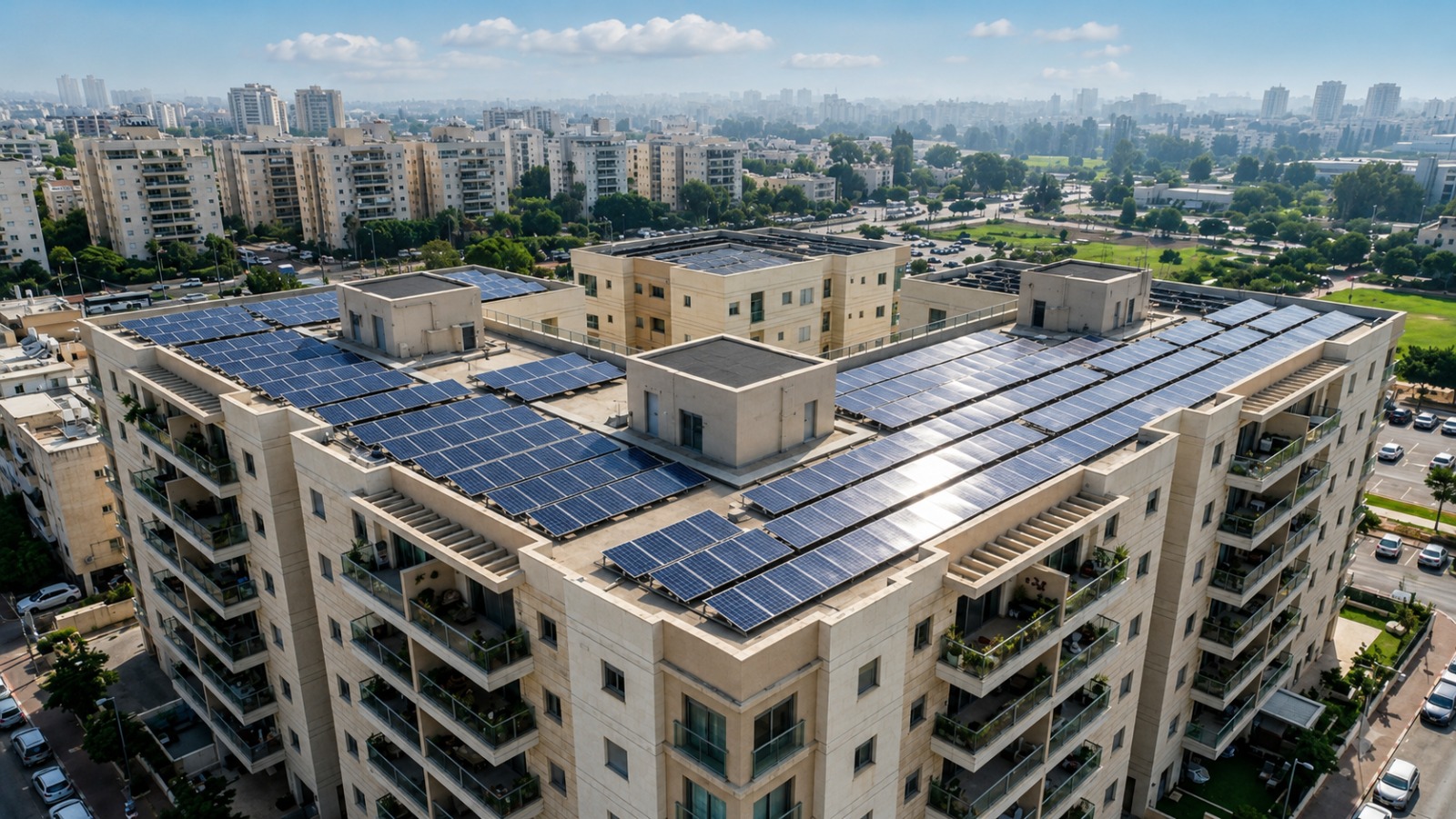
Apartment & Housing Society Solar in Chennai and Tamil Nadu
Lifts, water pumps, STP blowers, corridor lighting and the security cabin run every single day, and they are billed to the association at commercial-style rates. Common-area rooftop solar turns that fixed monthly outflow into a 25-year asset owned by the residents.
Get a fixed-price quote in 2 hours
Free site survey · No obligation
What common-area solar actually powers
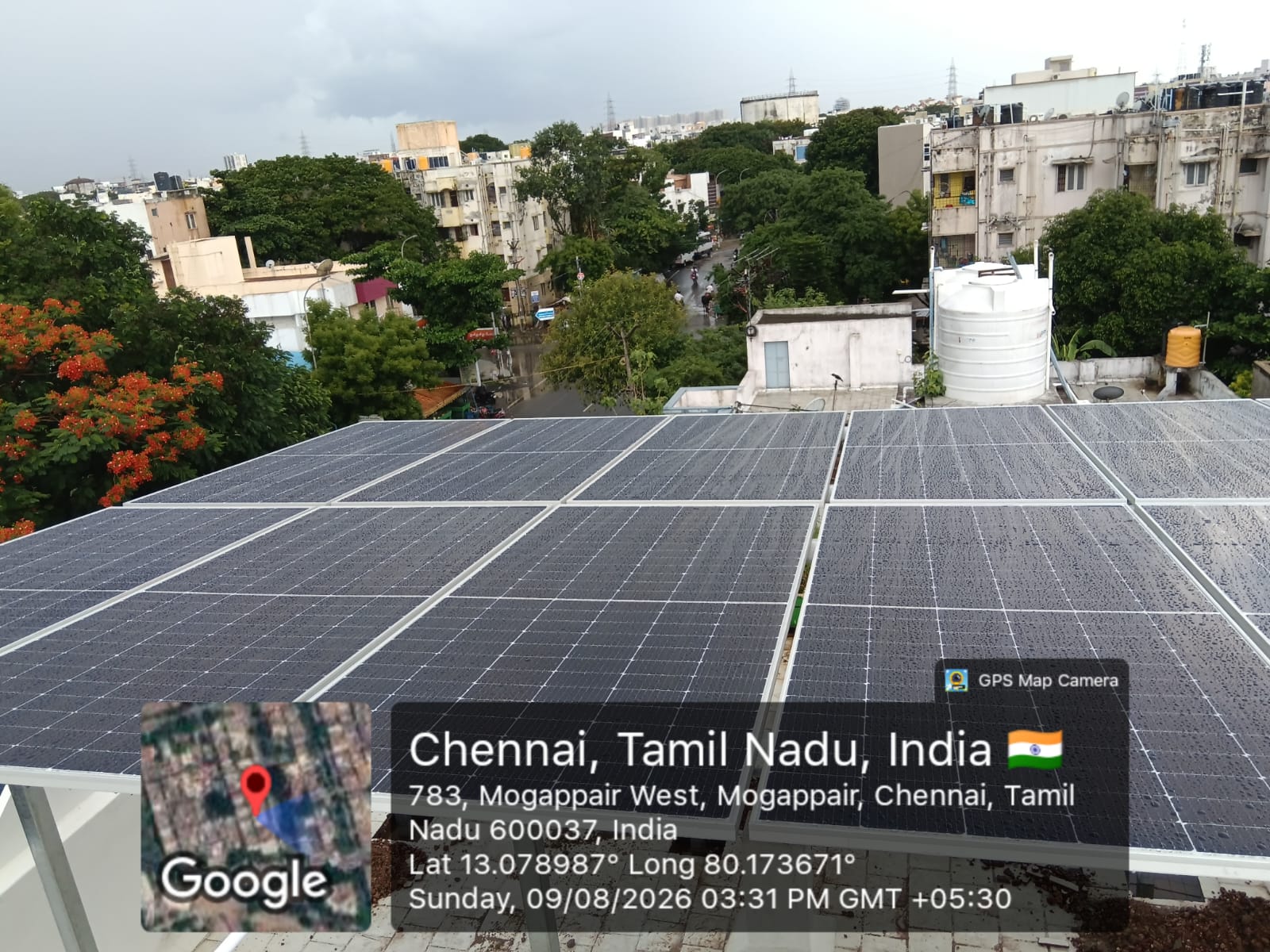
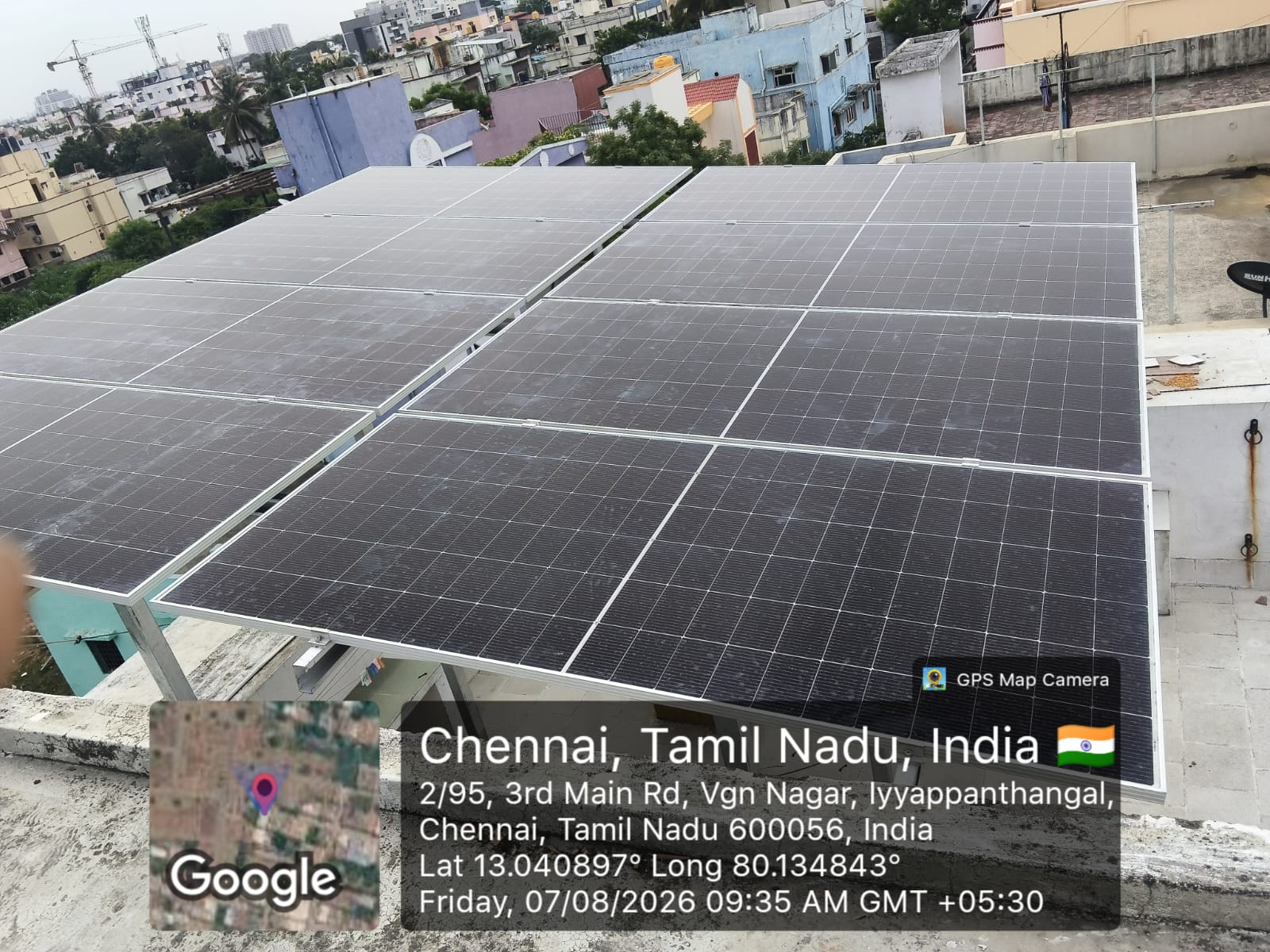
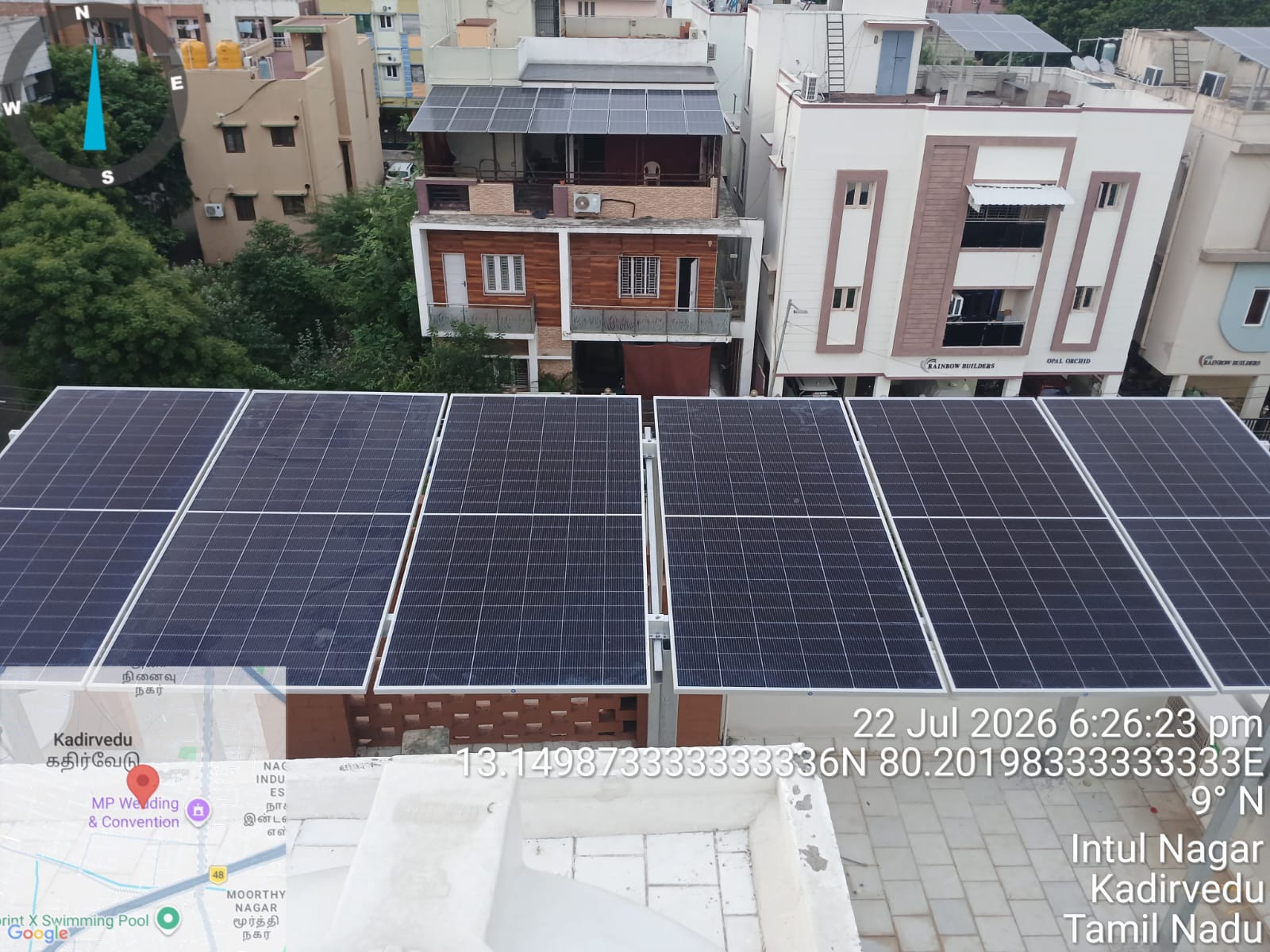
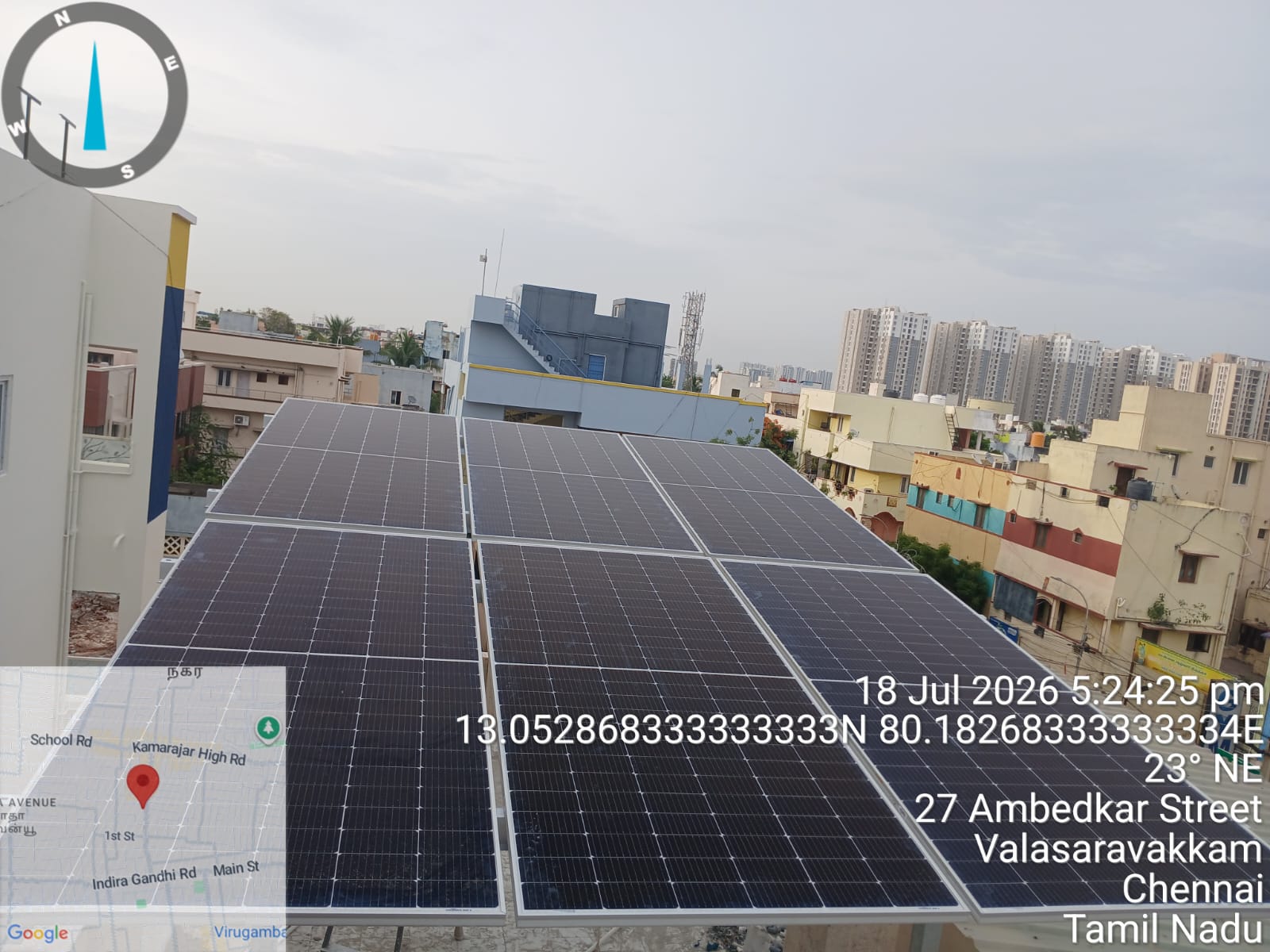
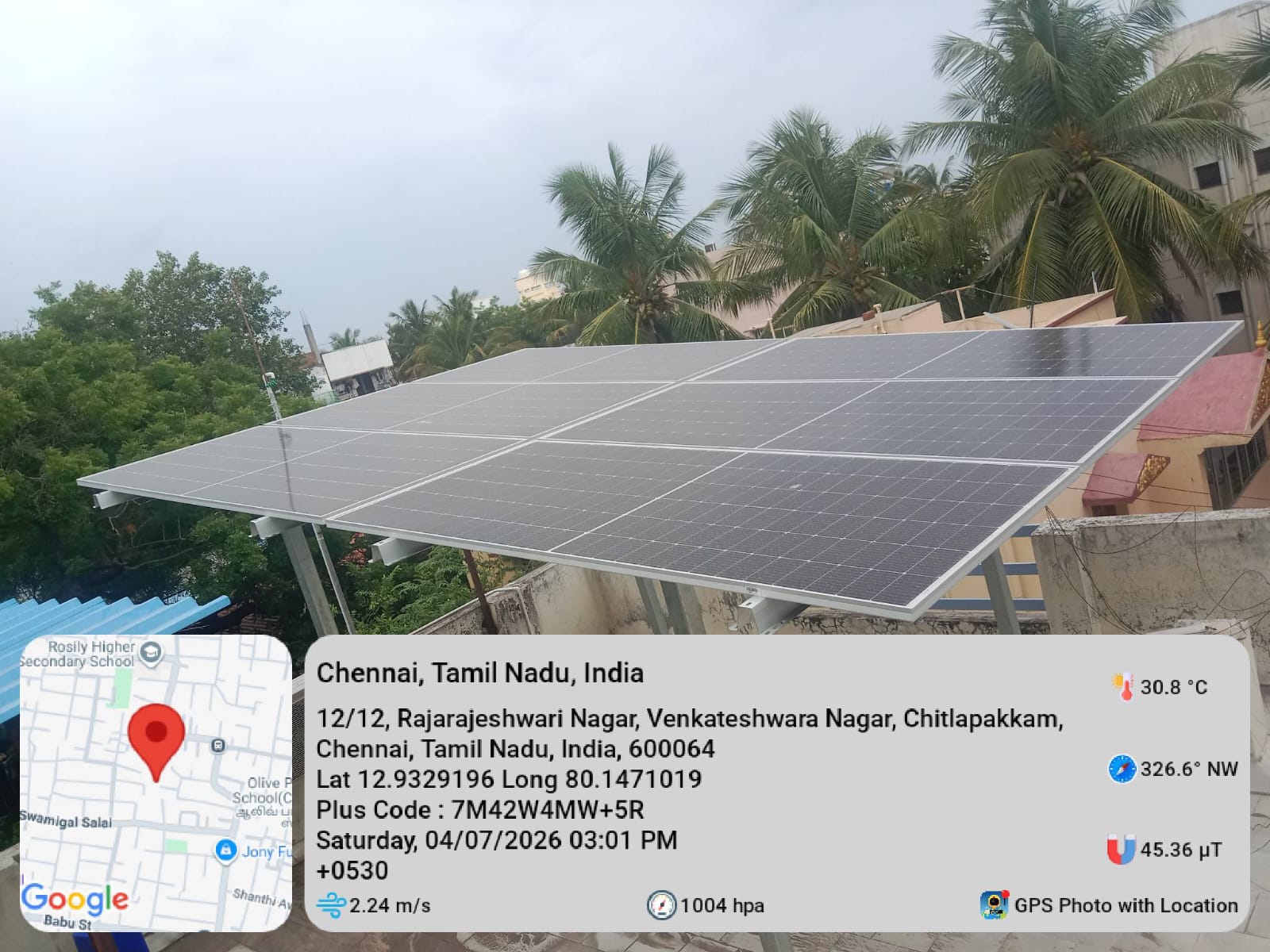
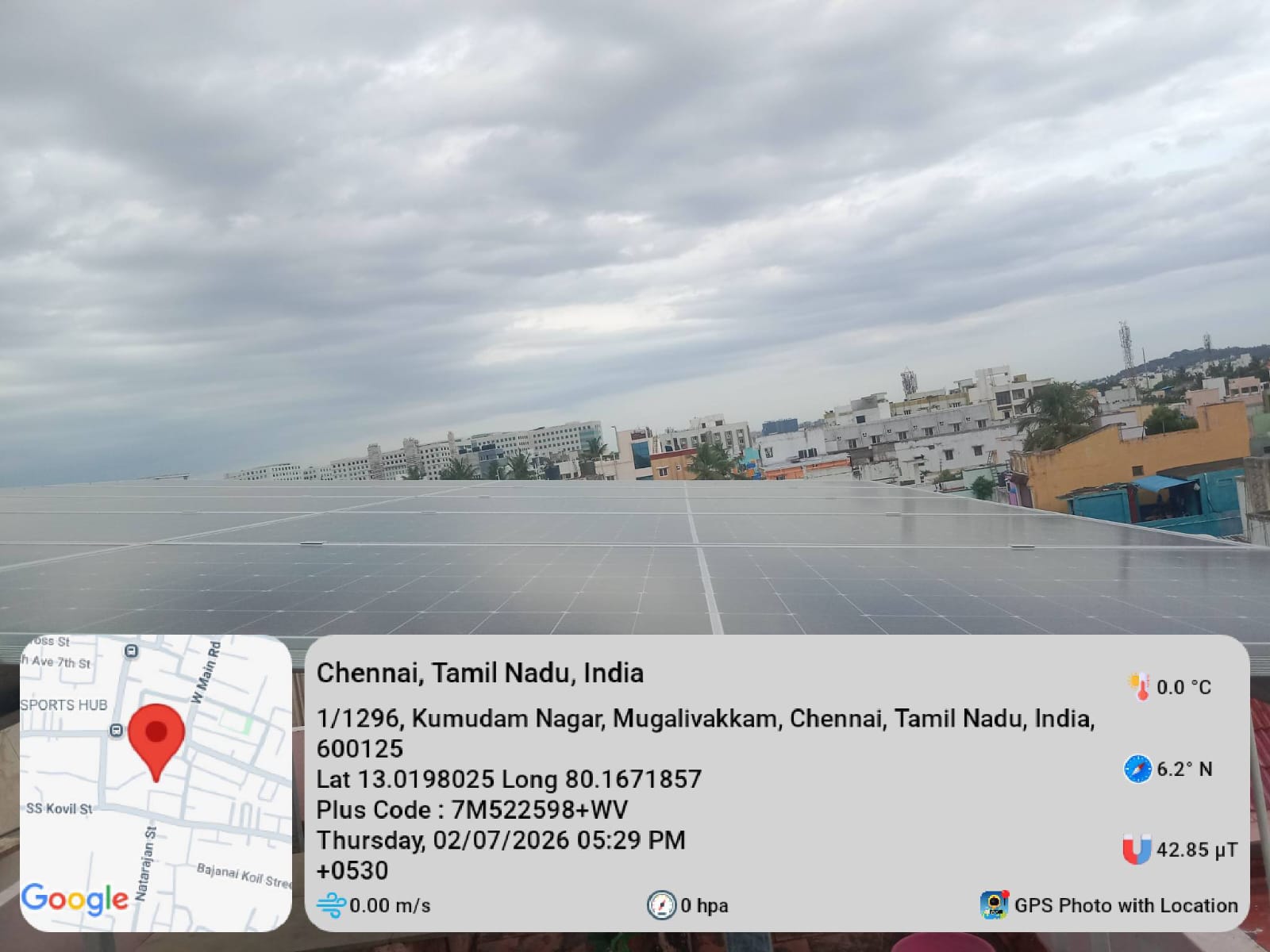
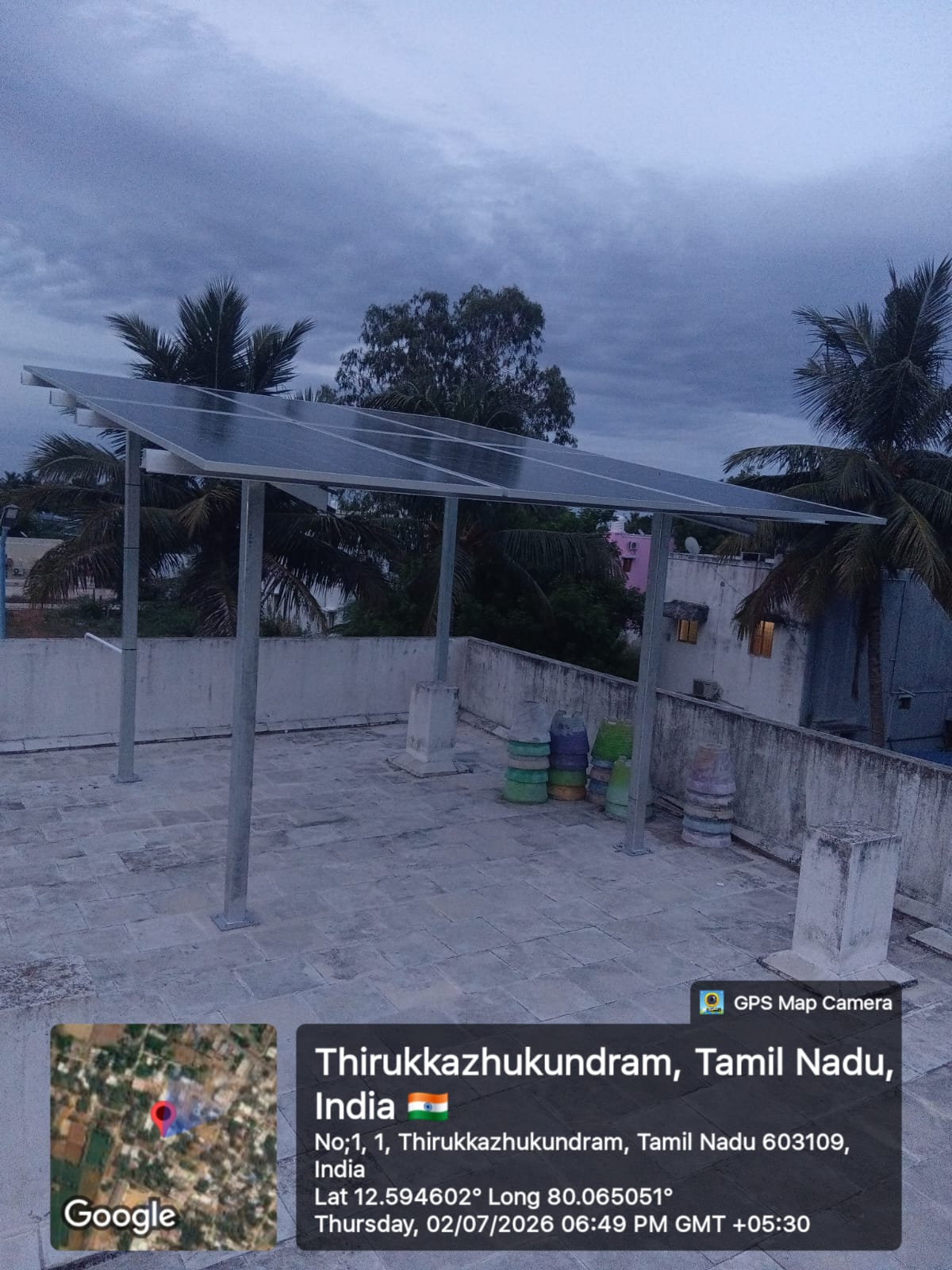
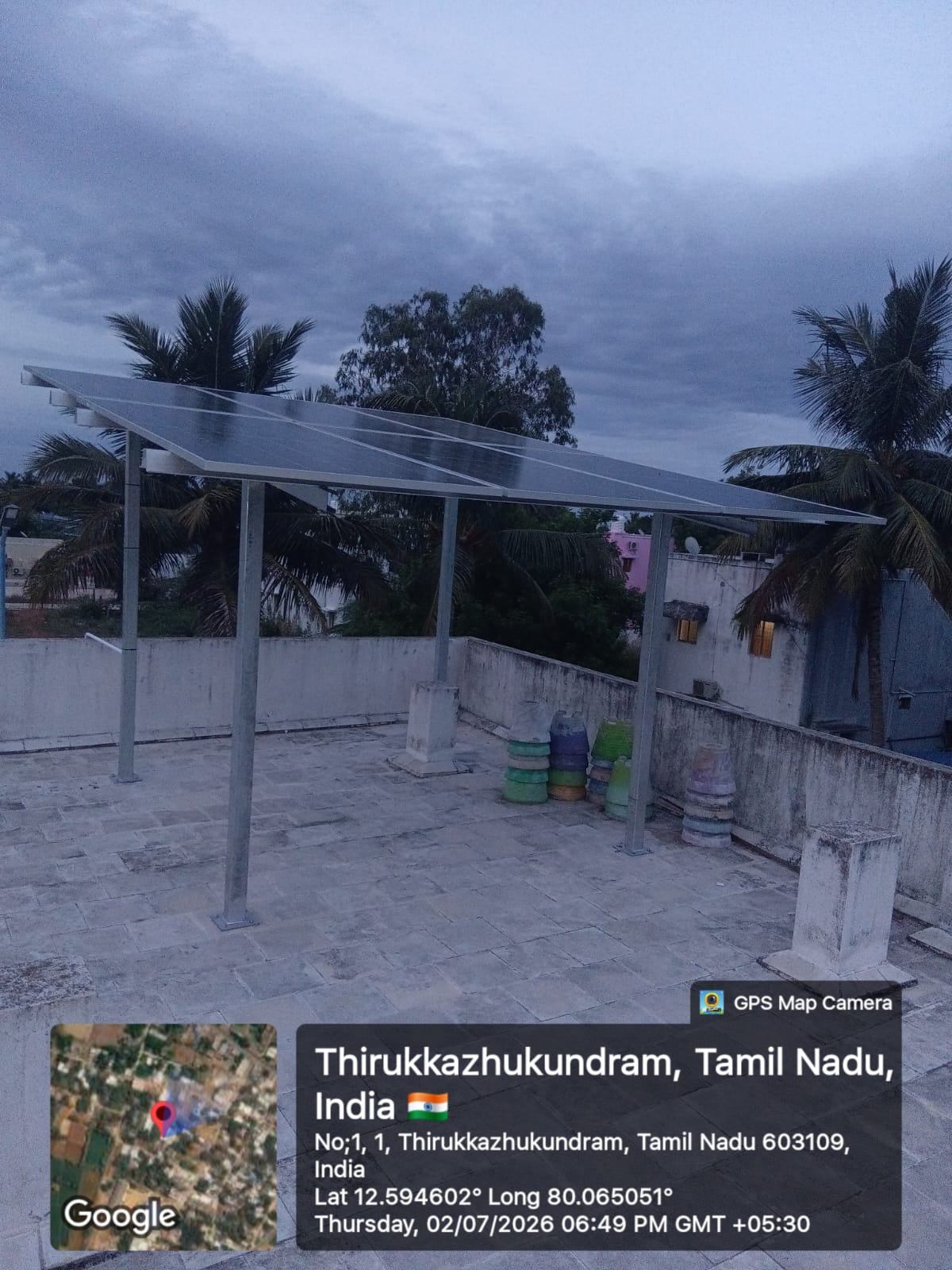
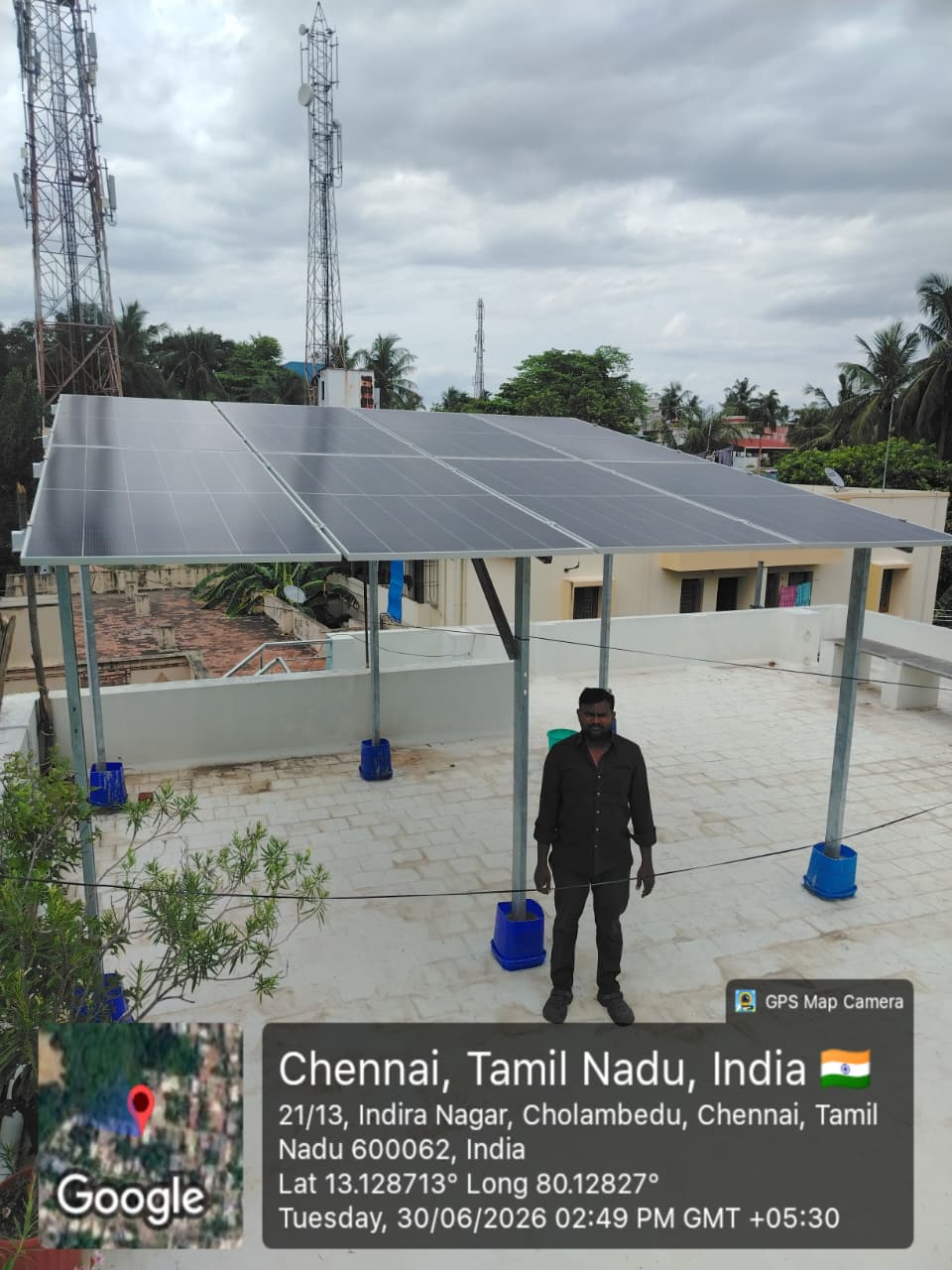
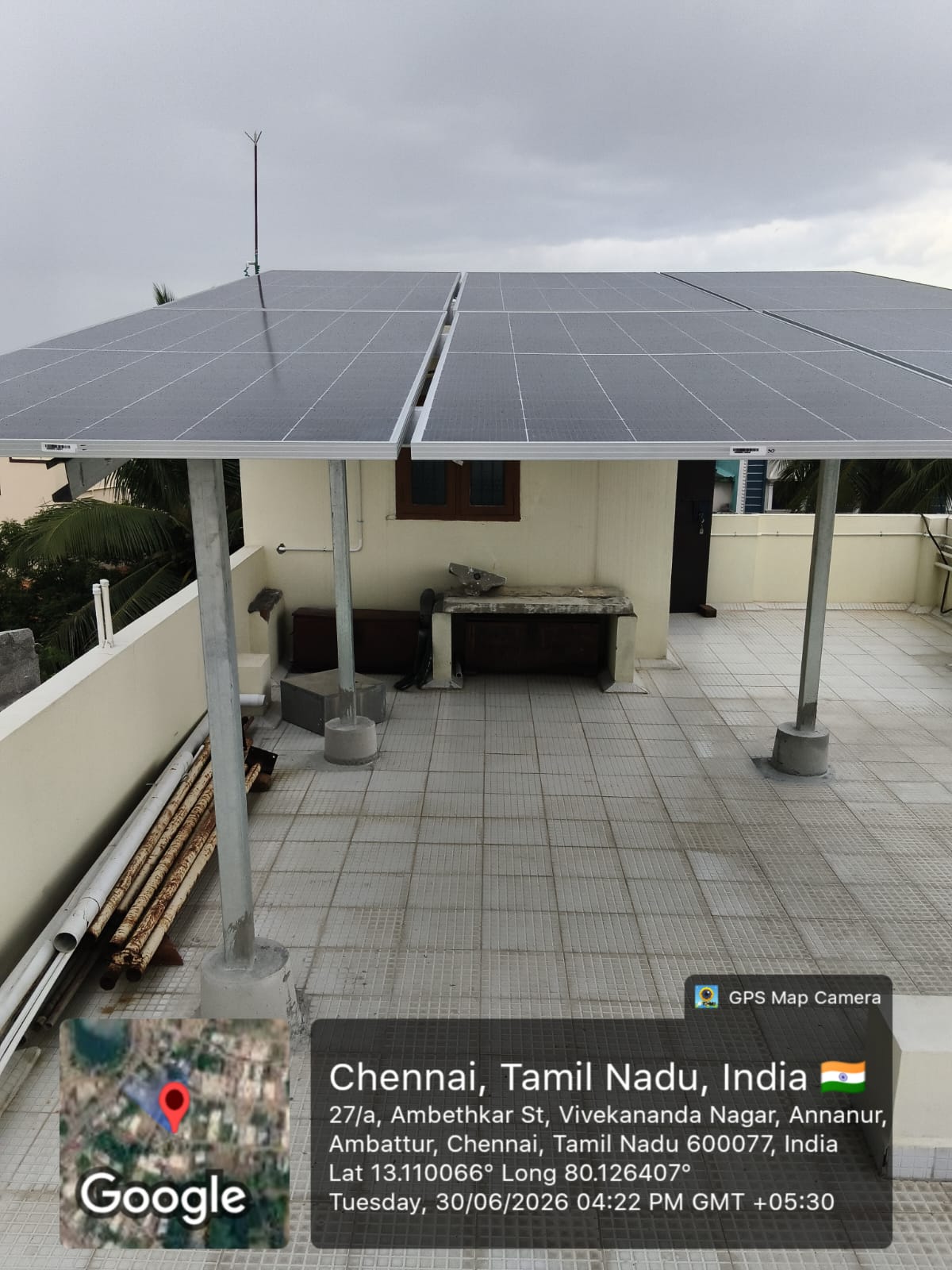
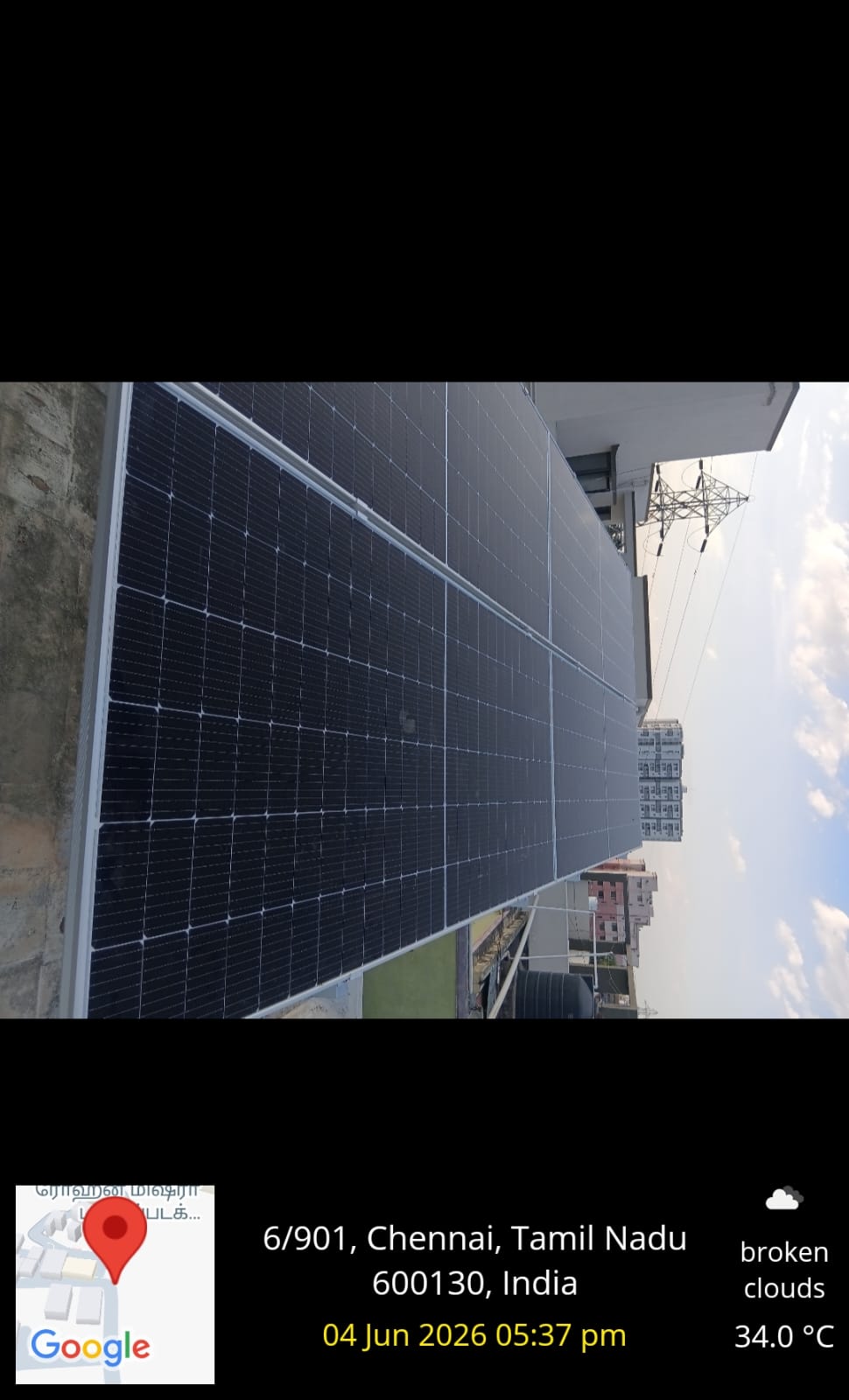
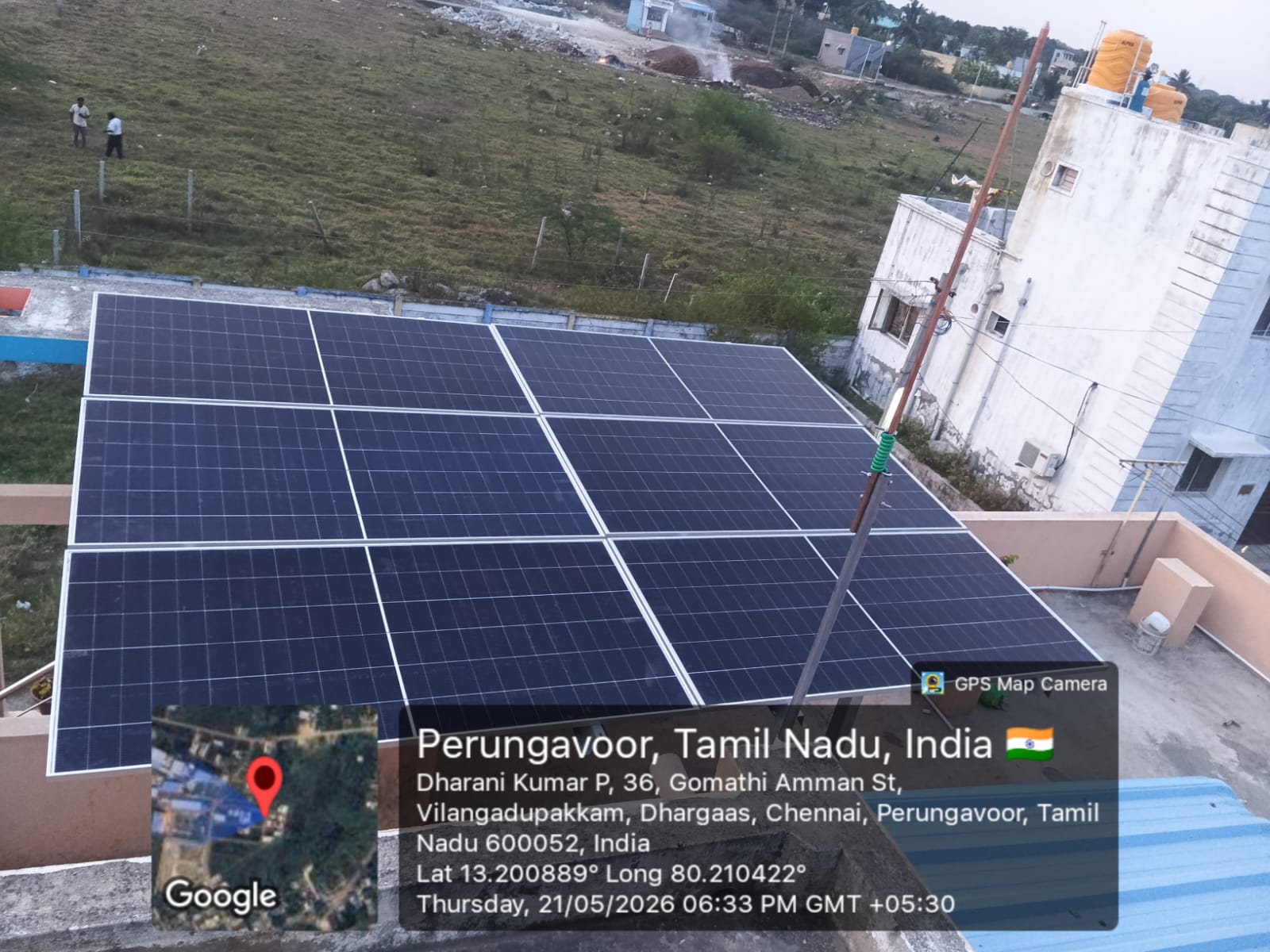
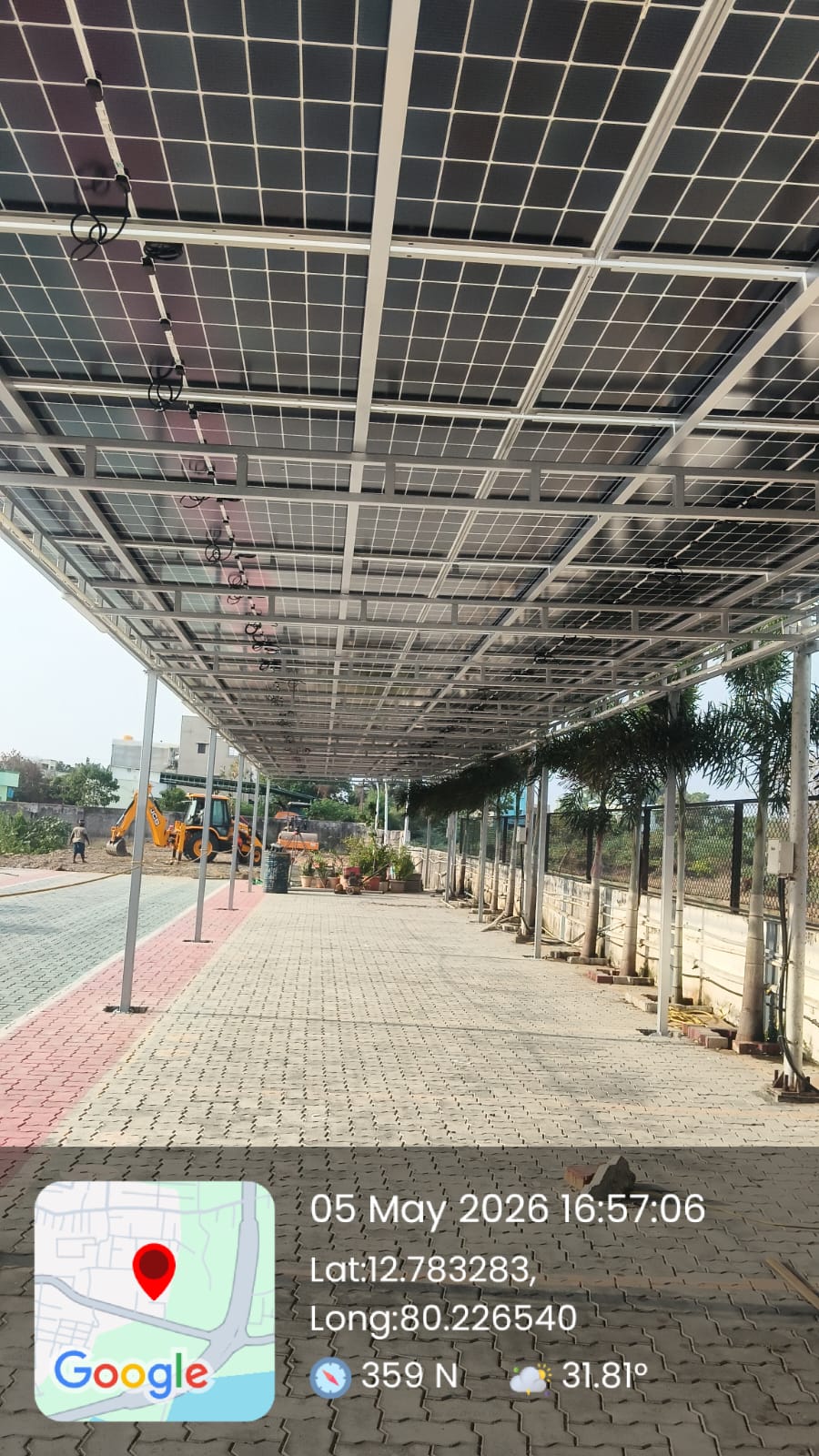
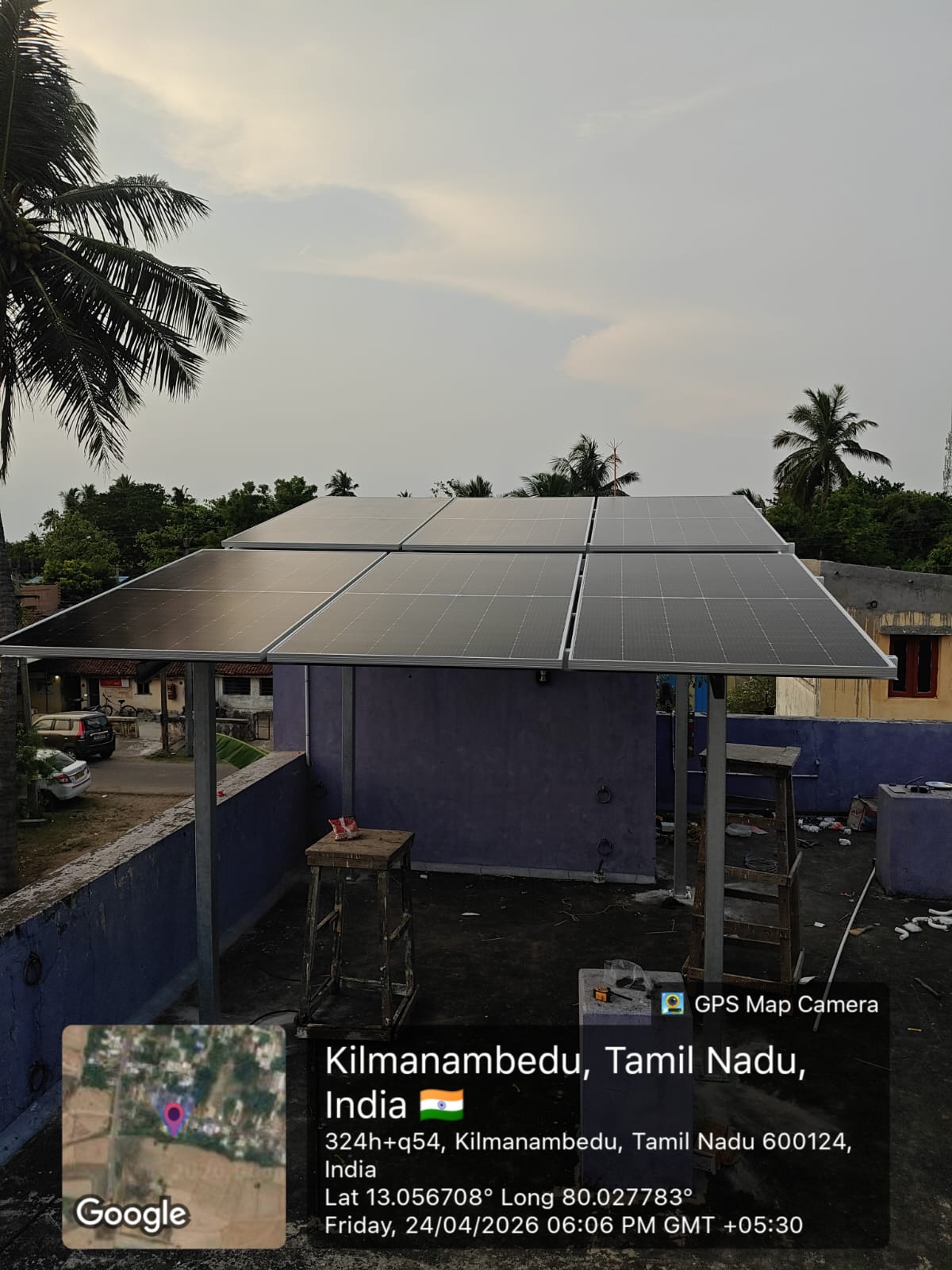
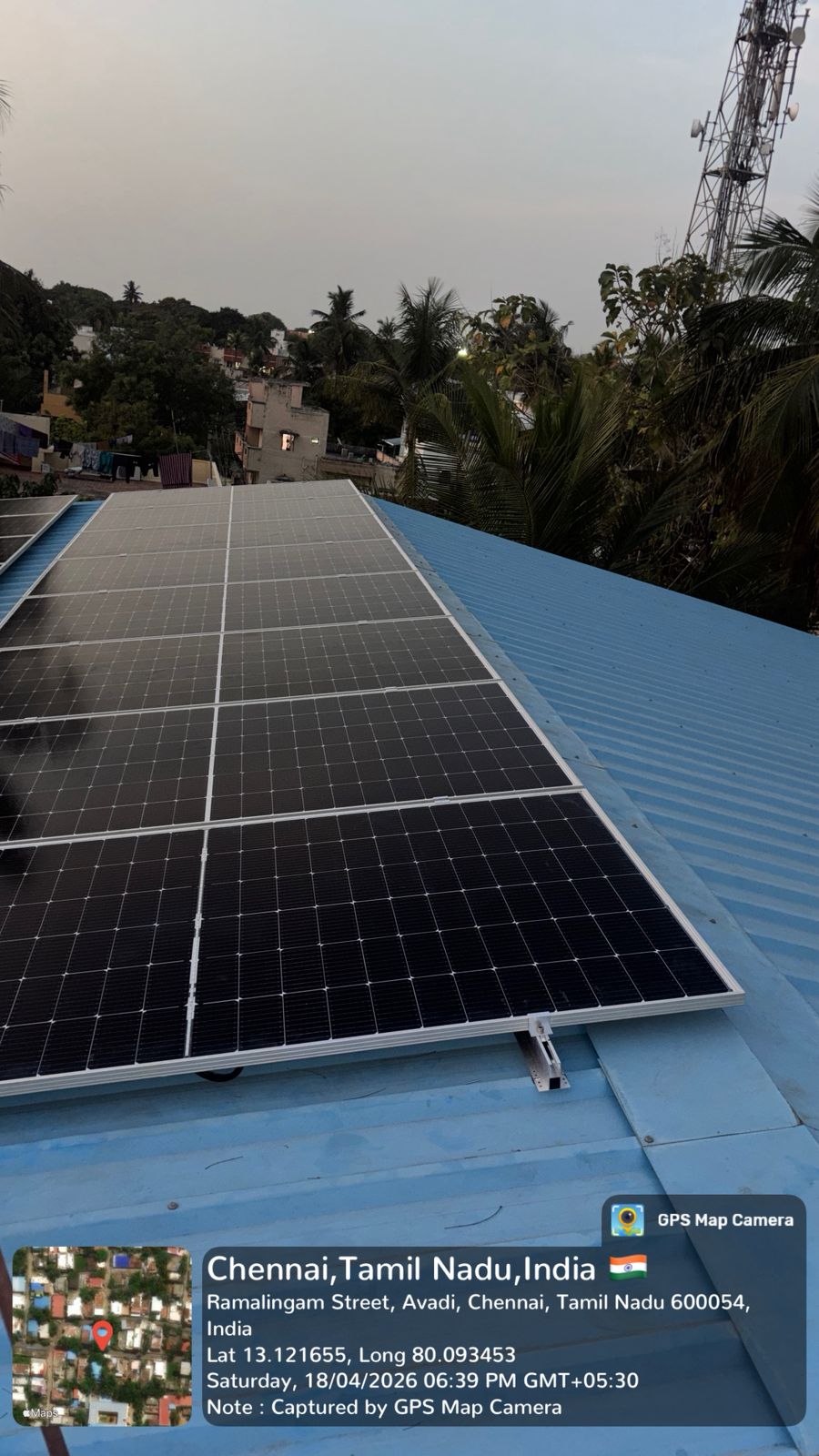
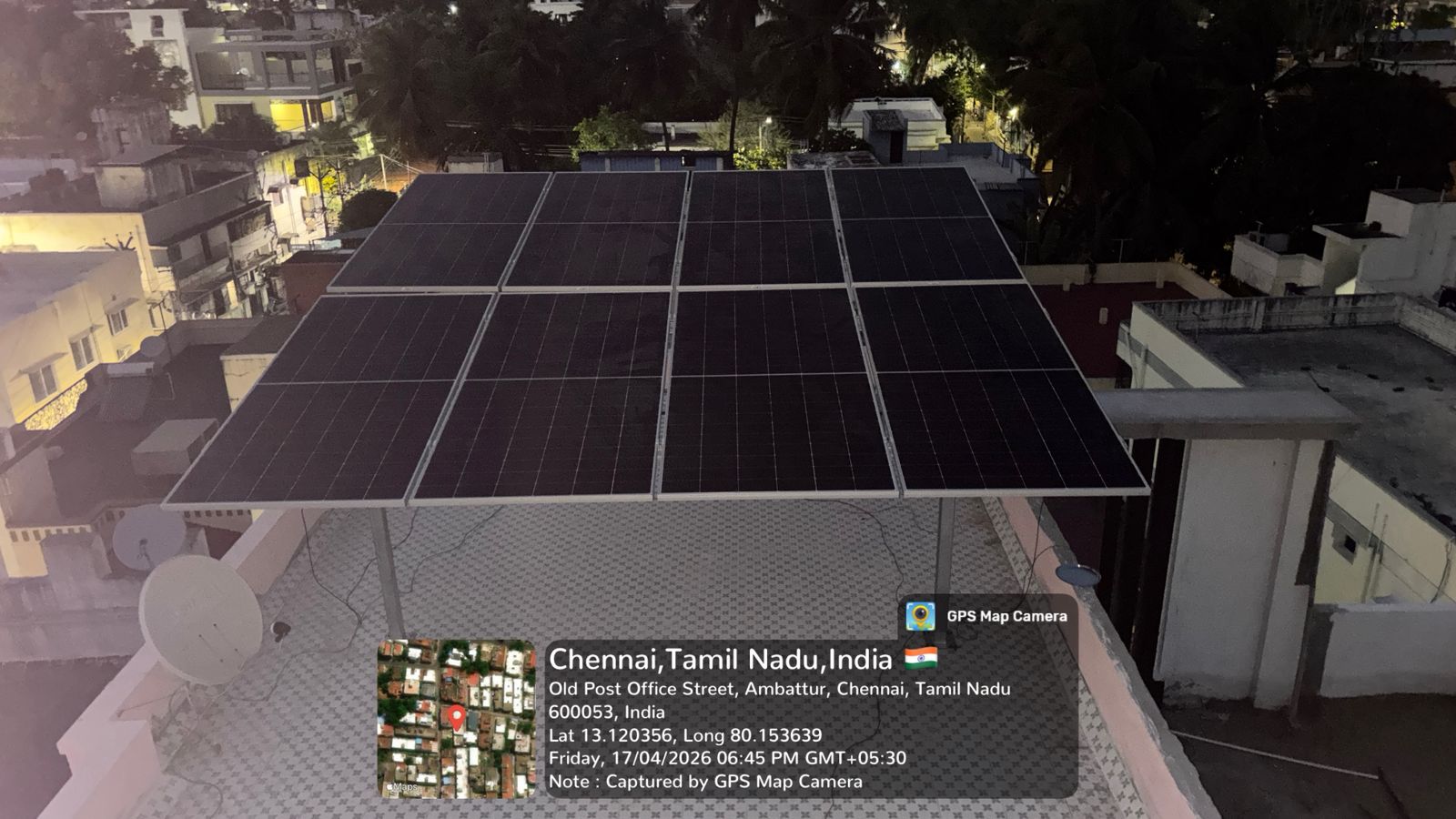
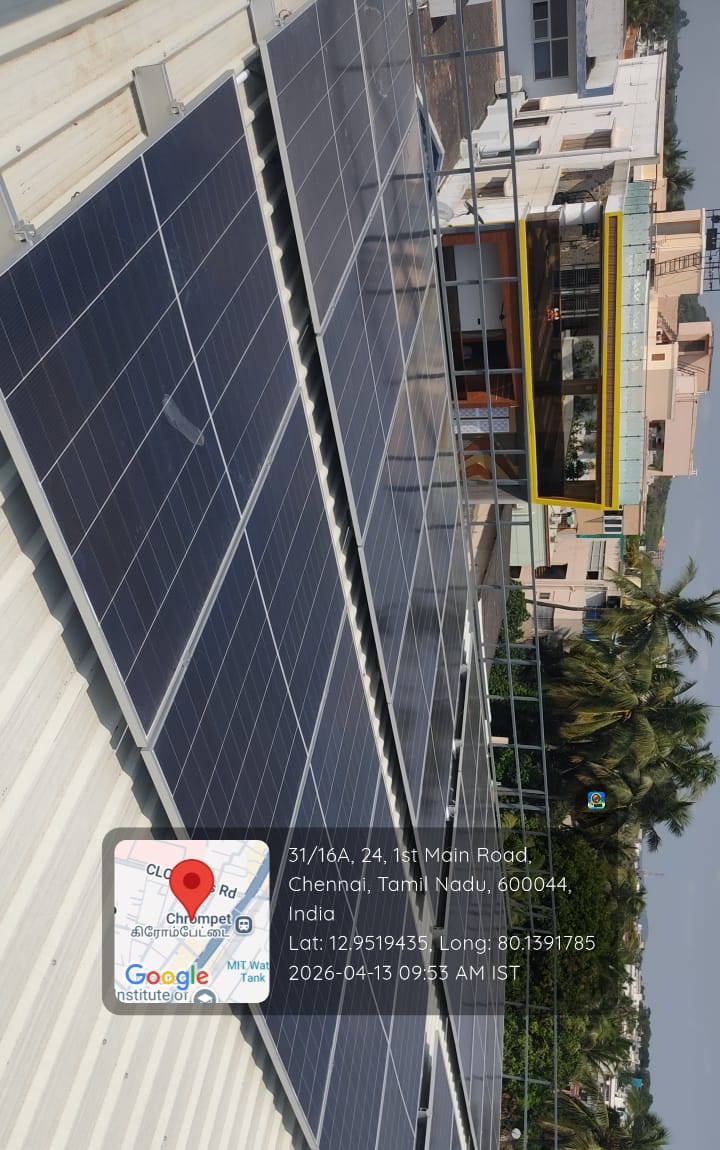
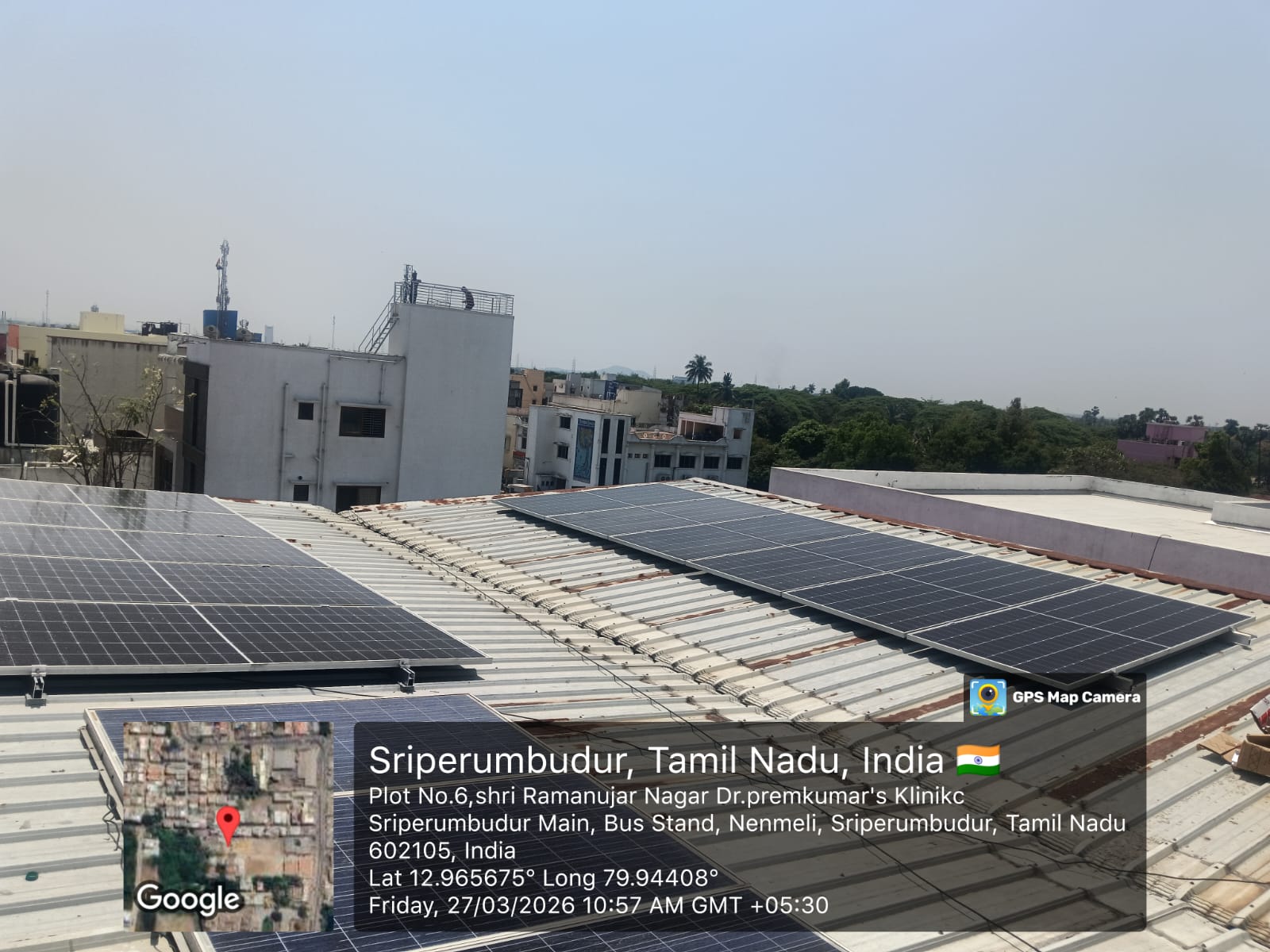
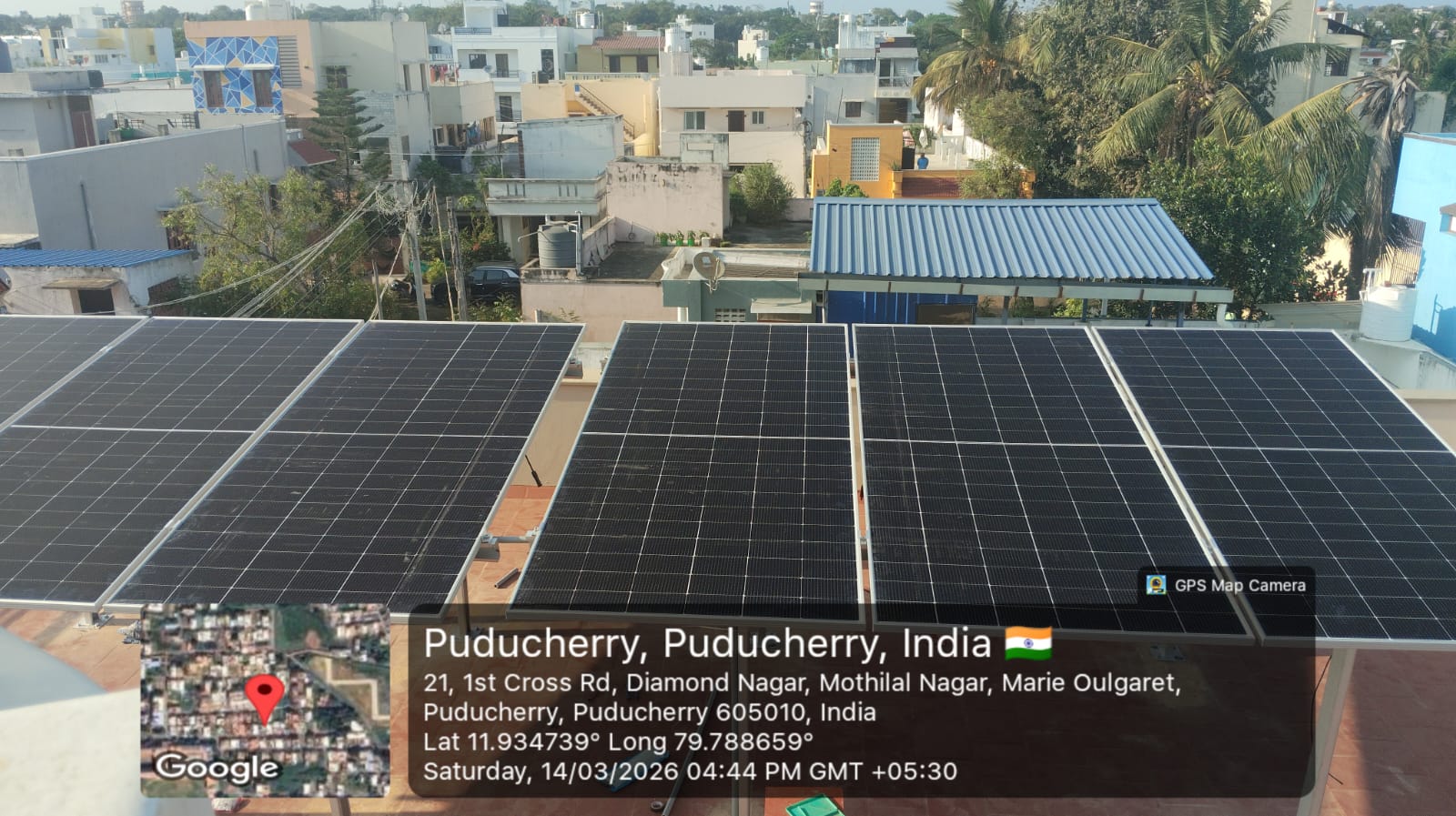
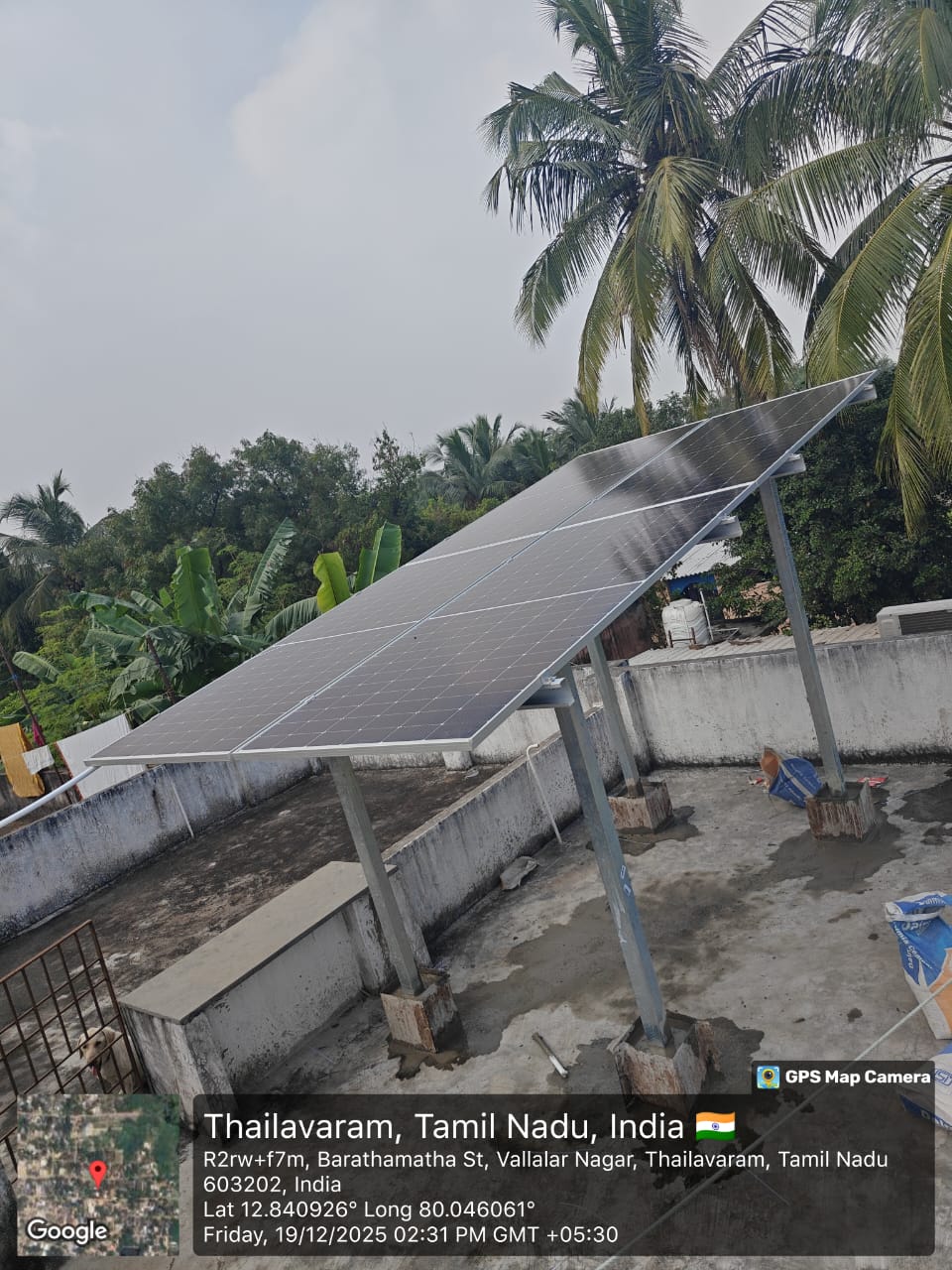
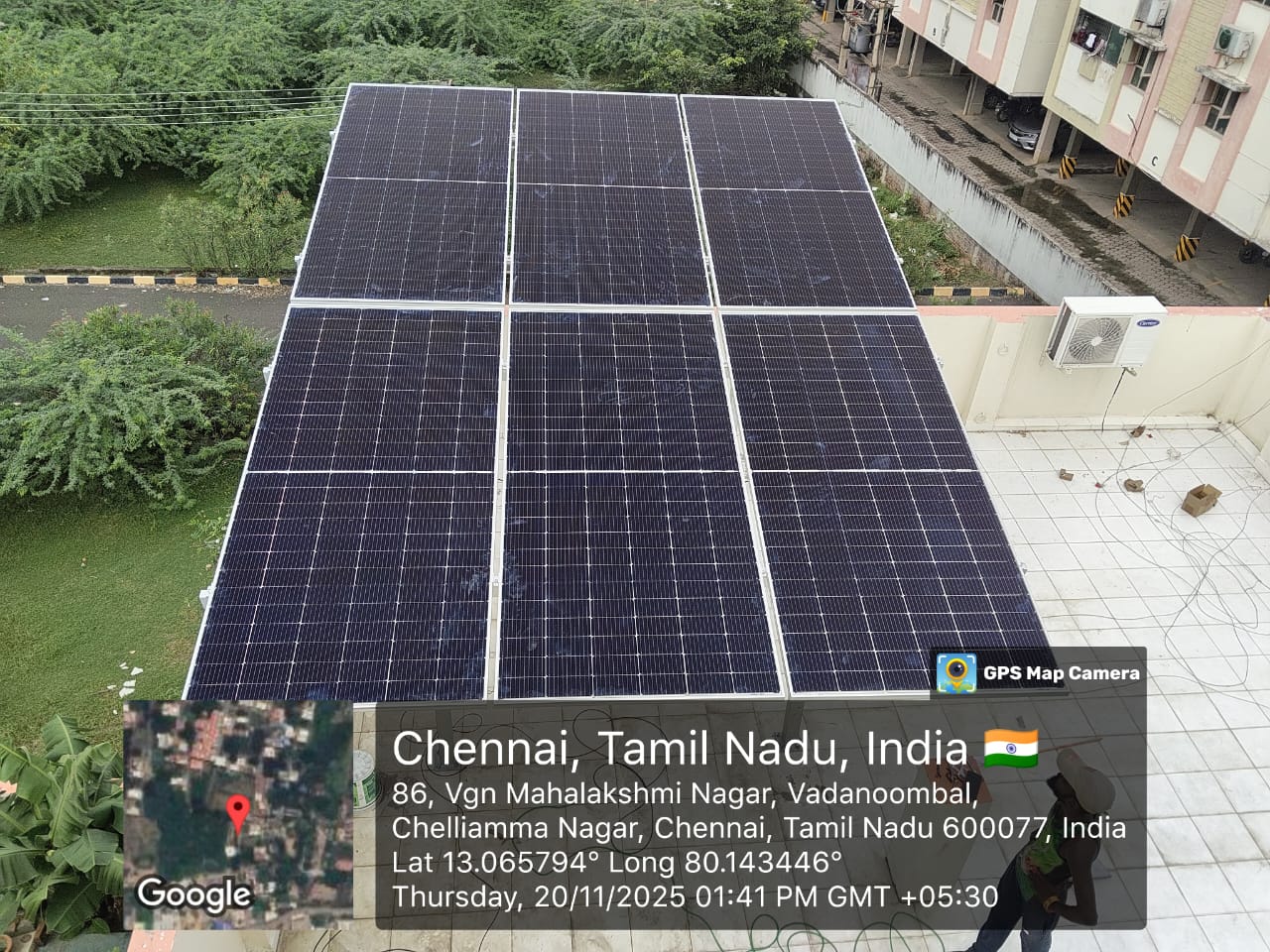
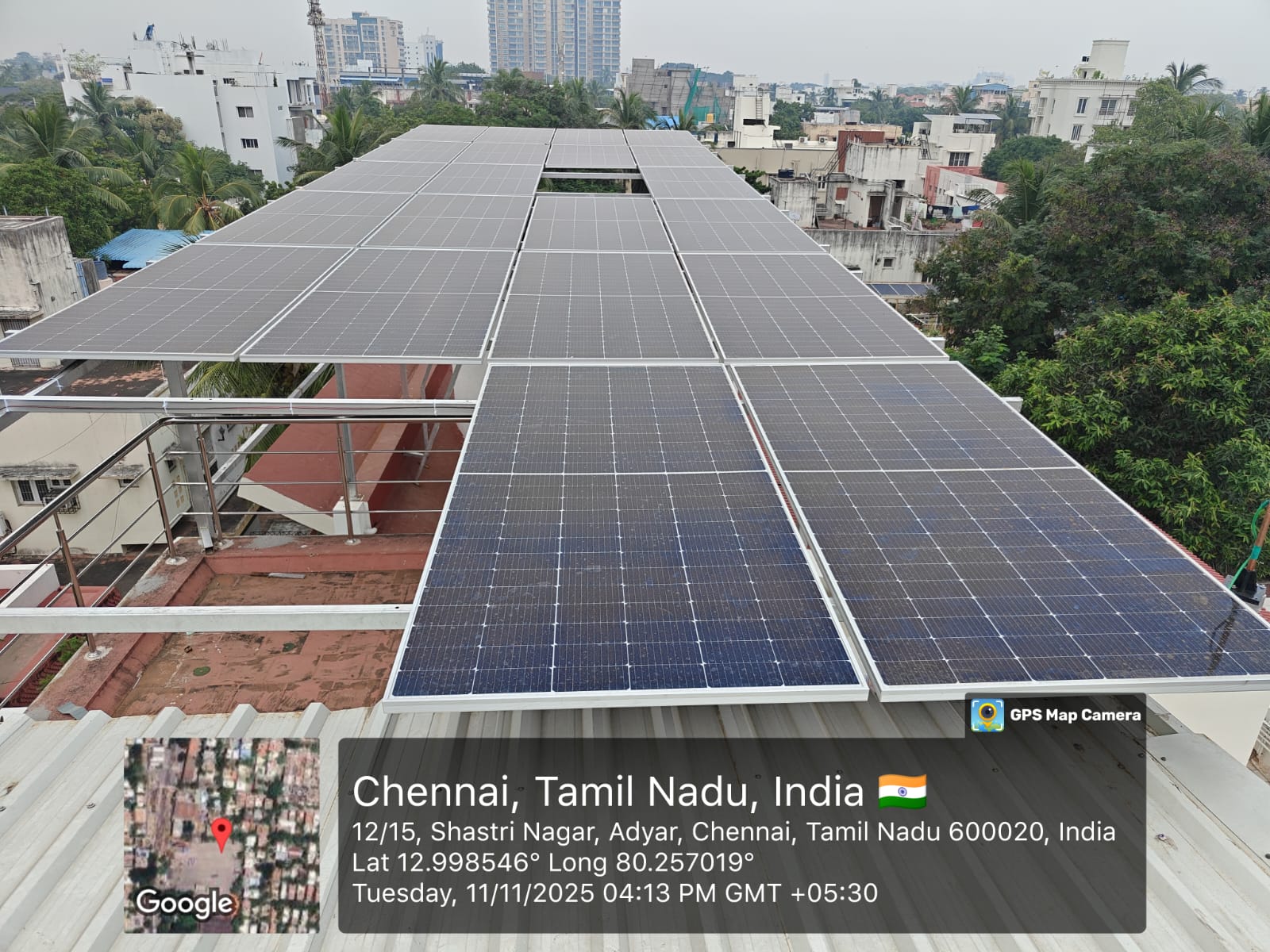
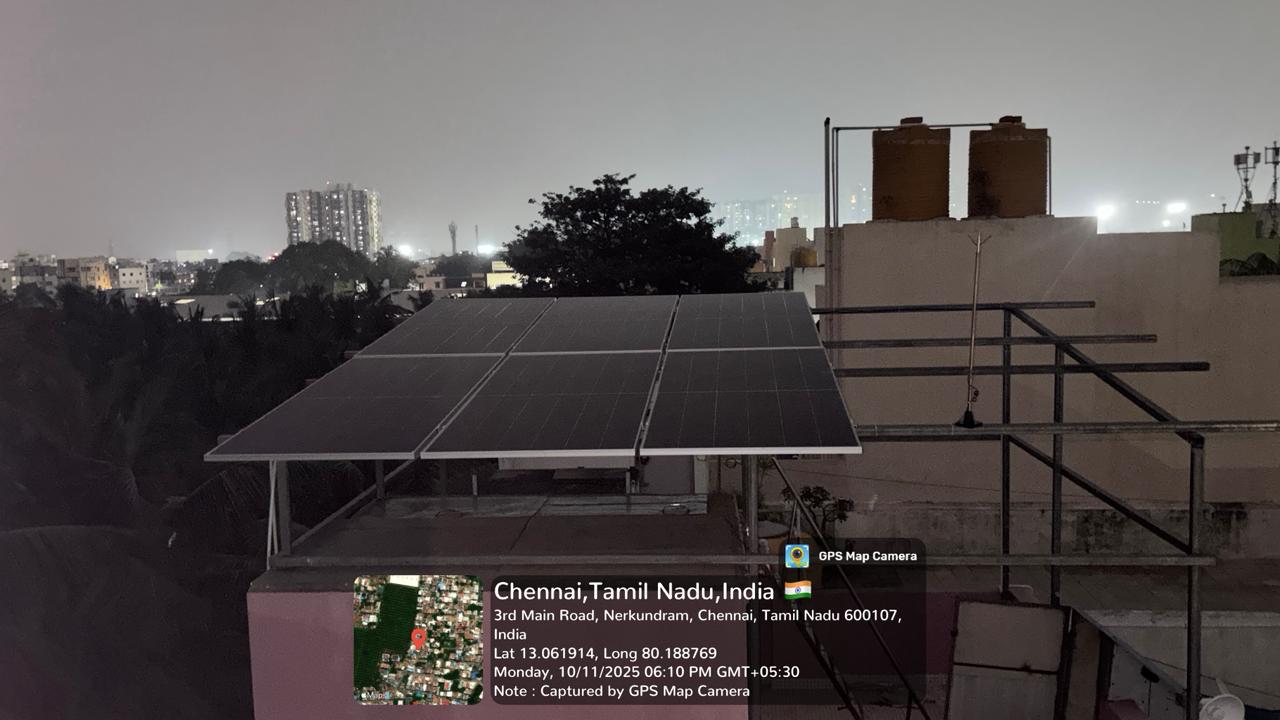
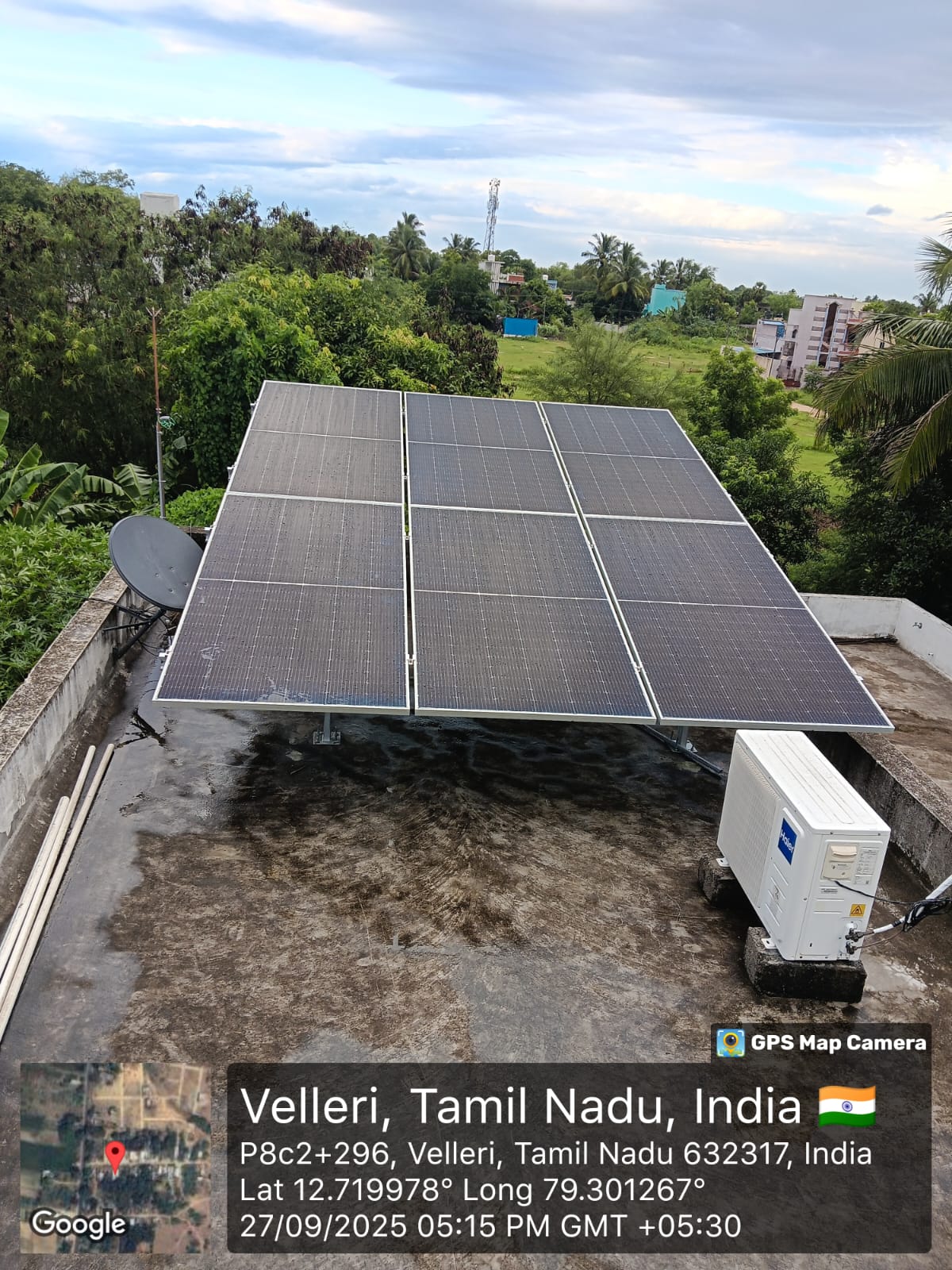
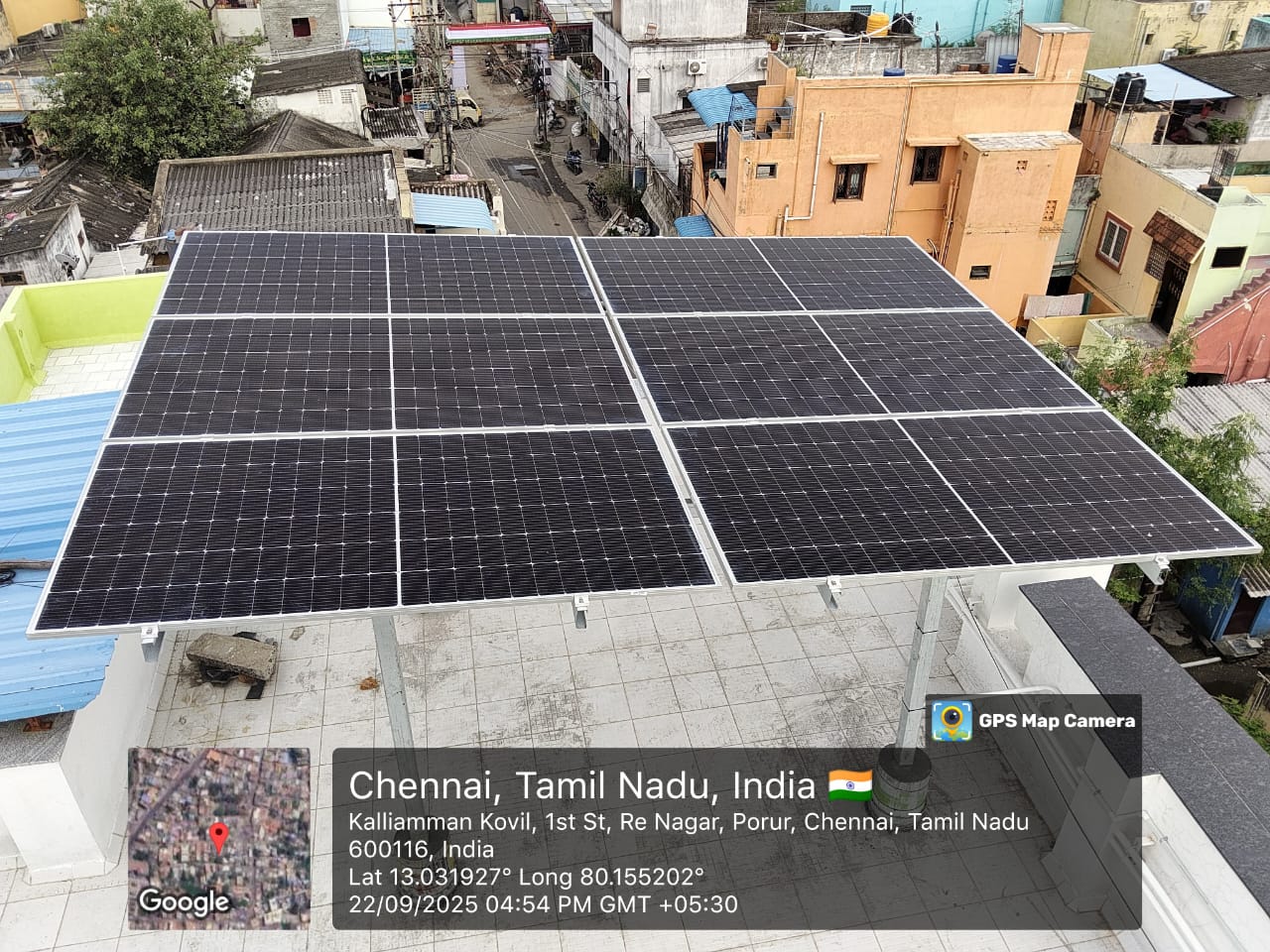
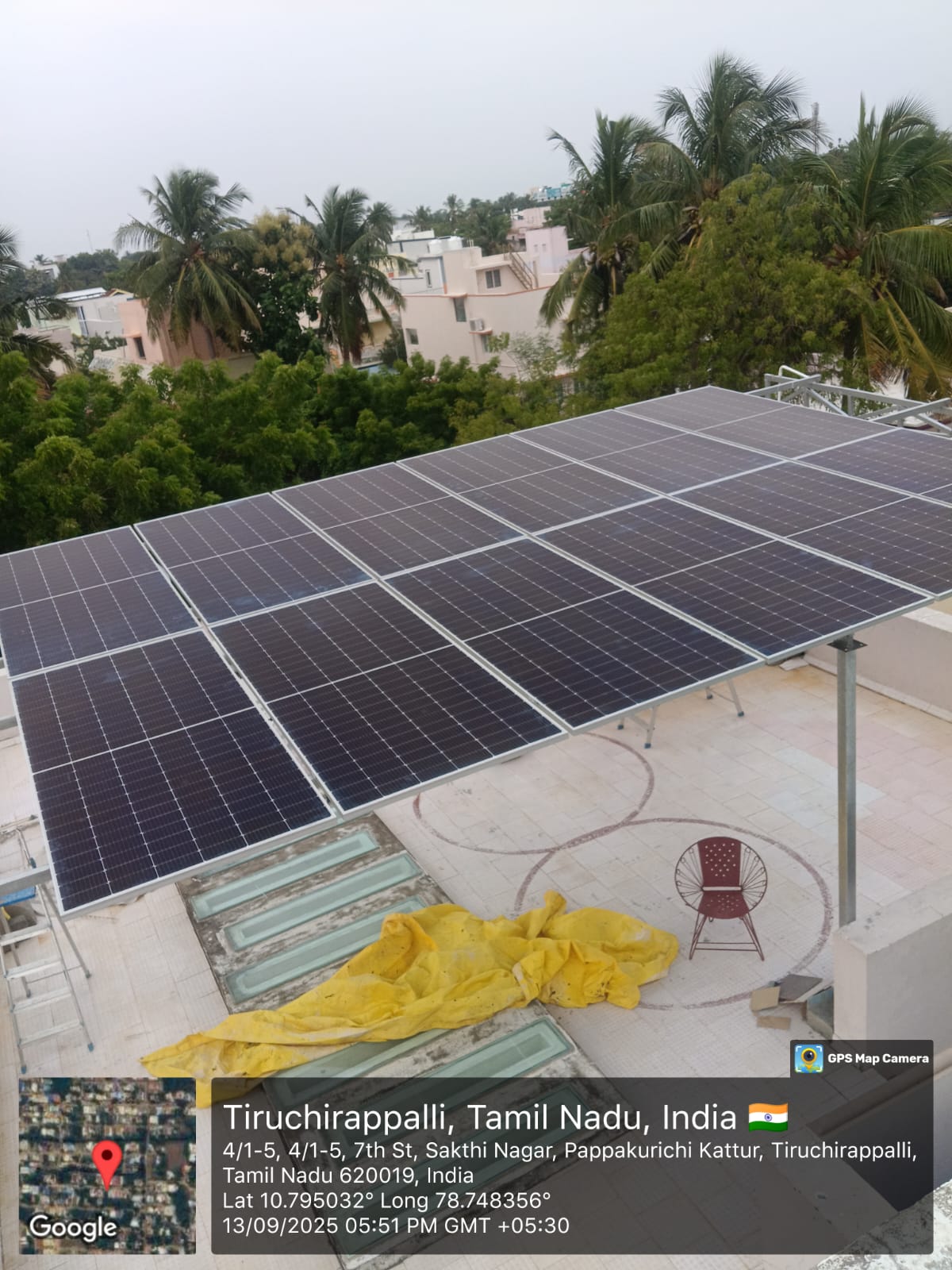
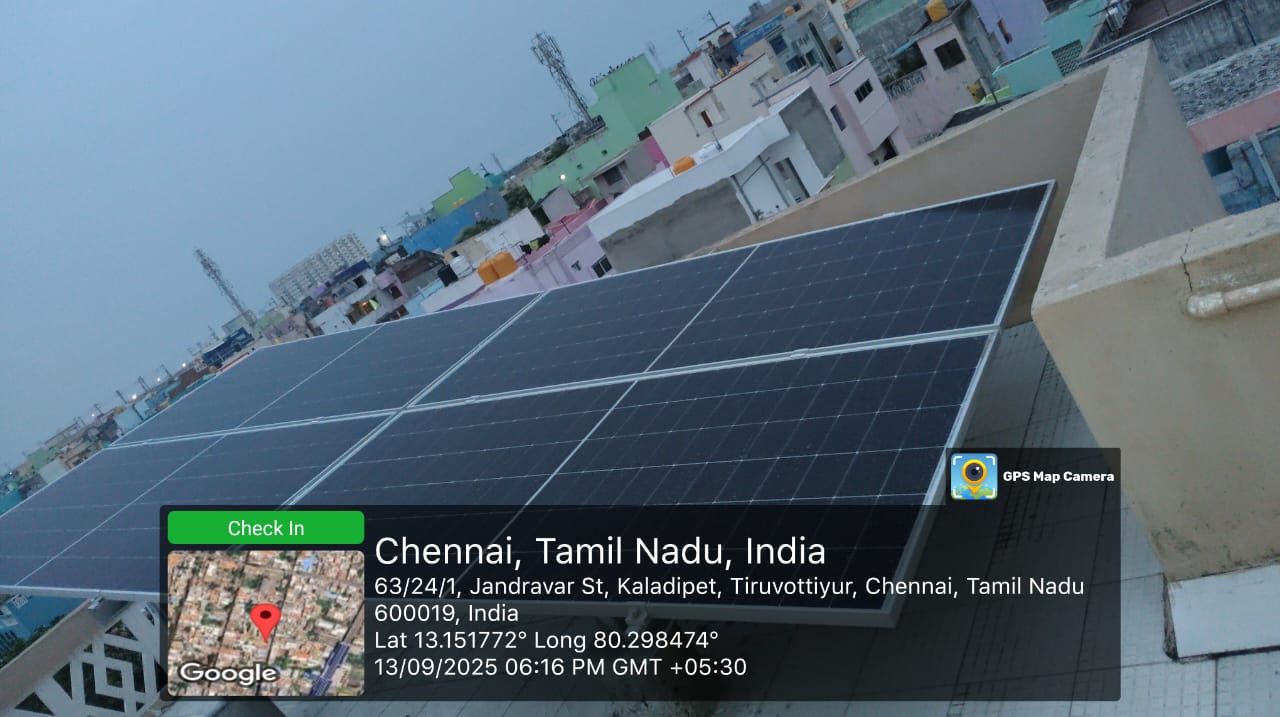
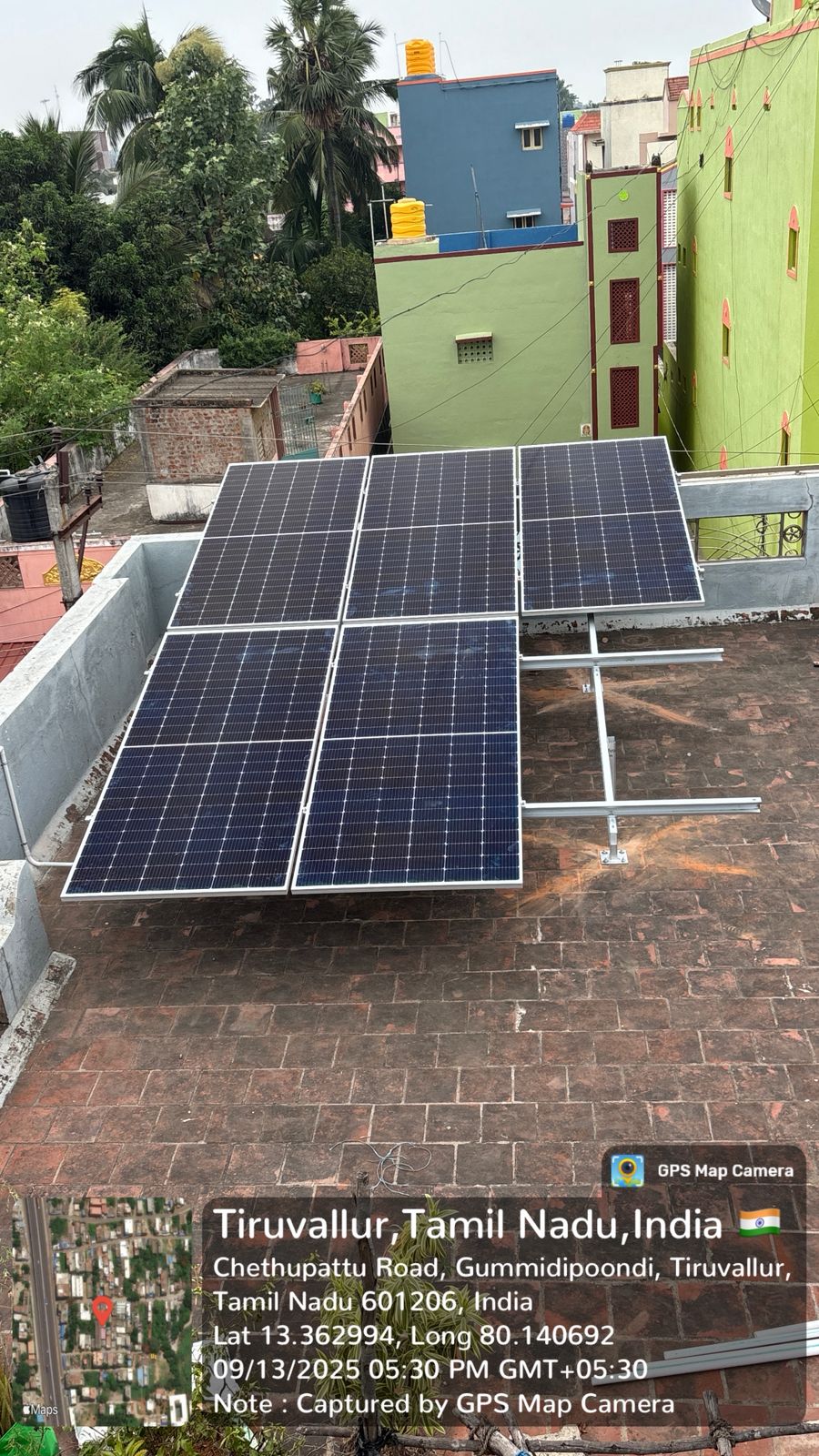
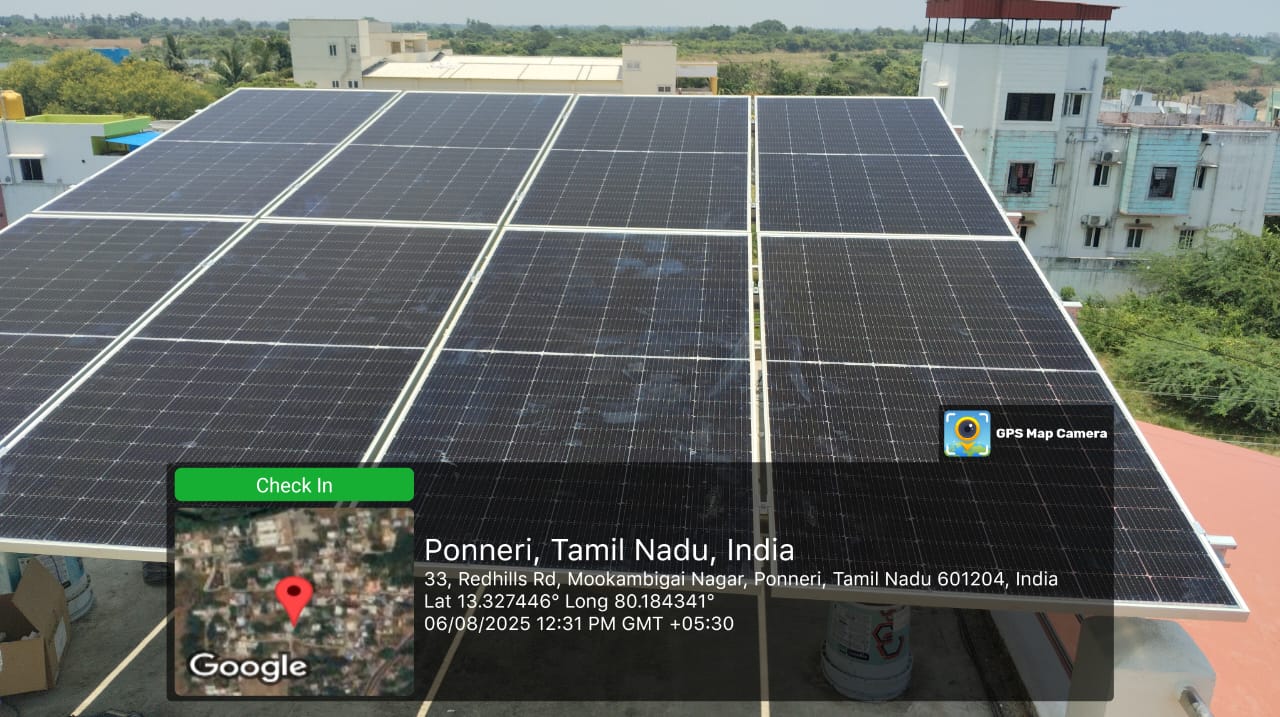
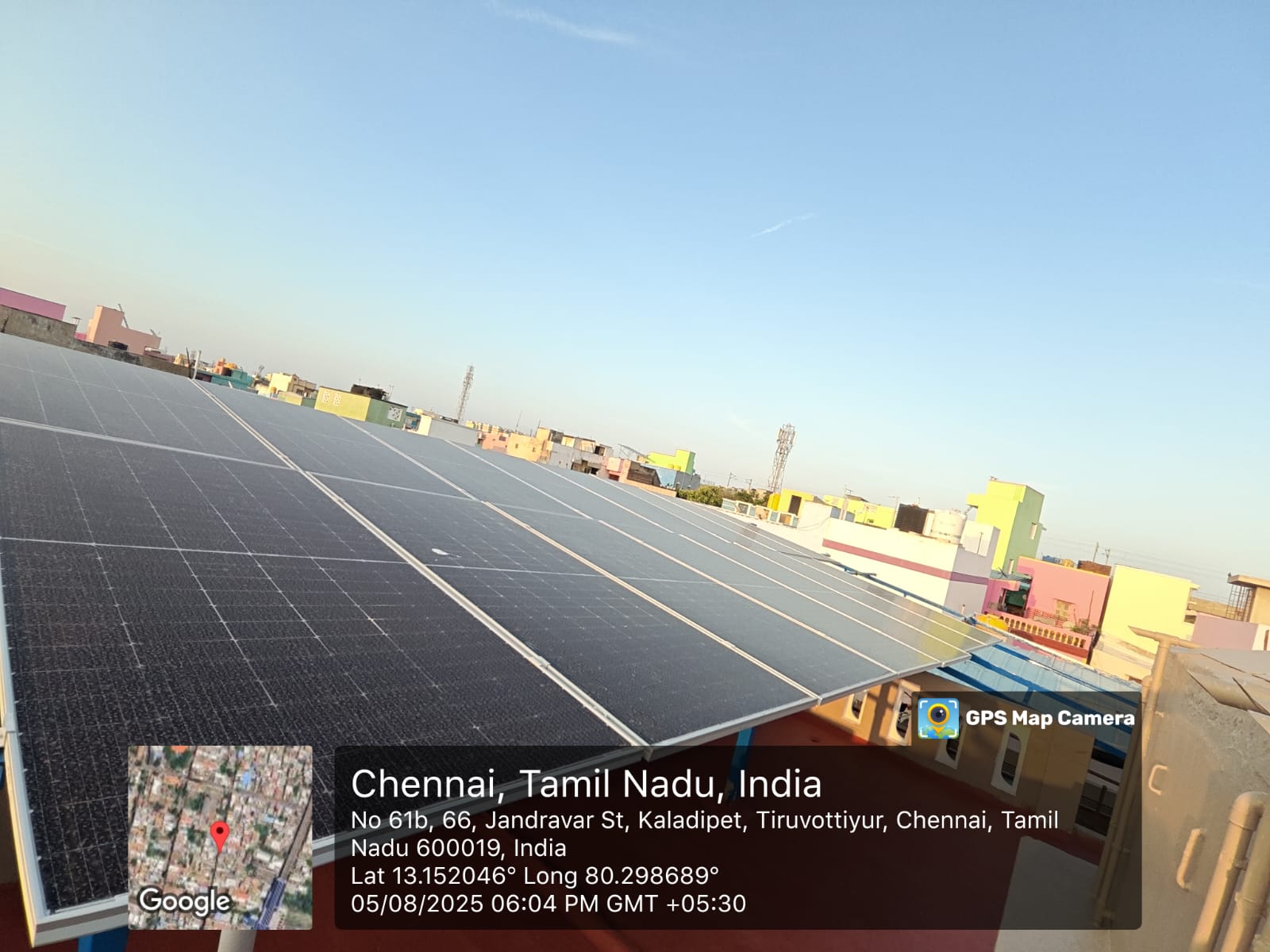
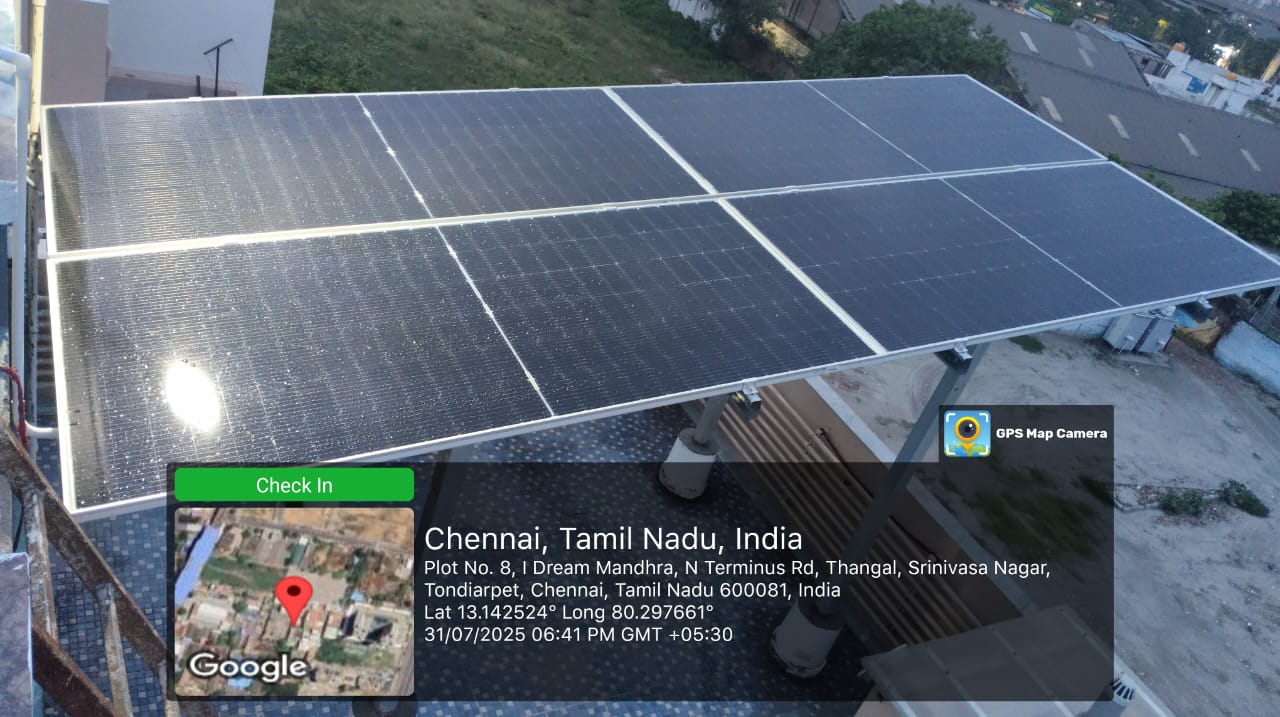
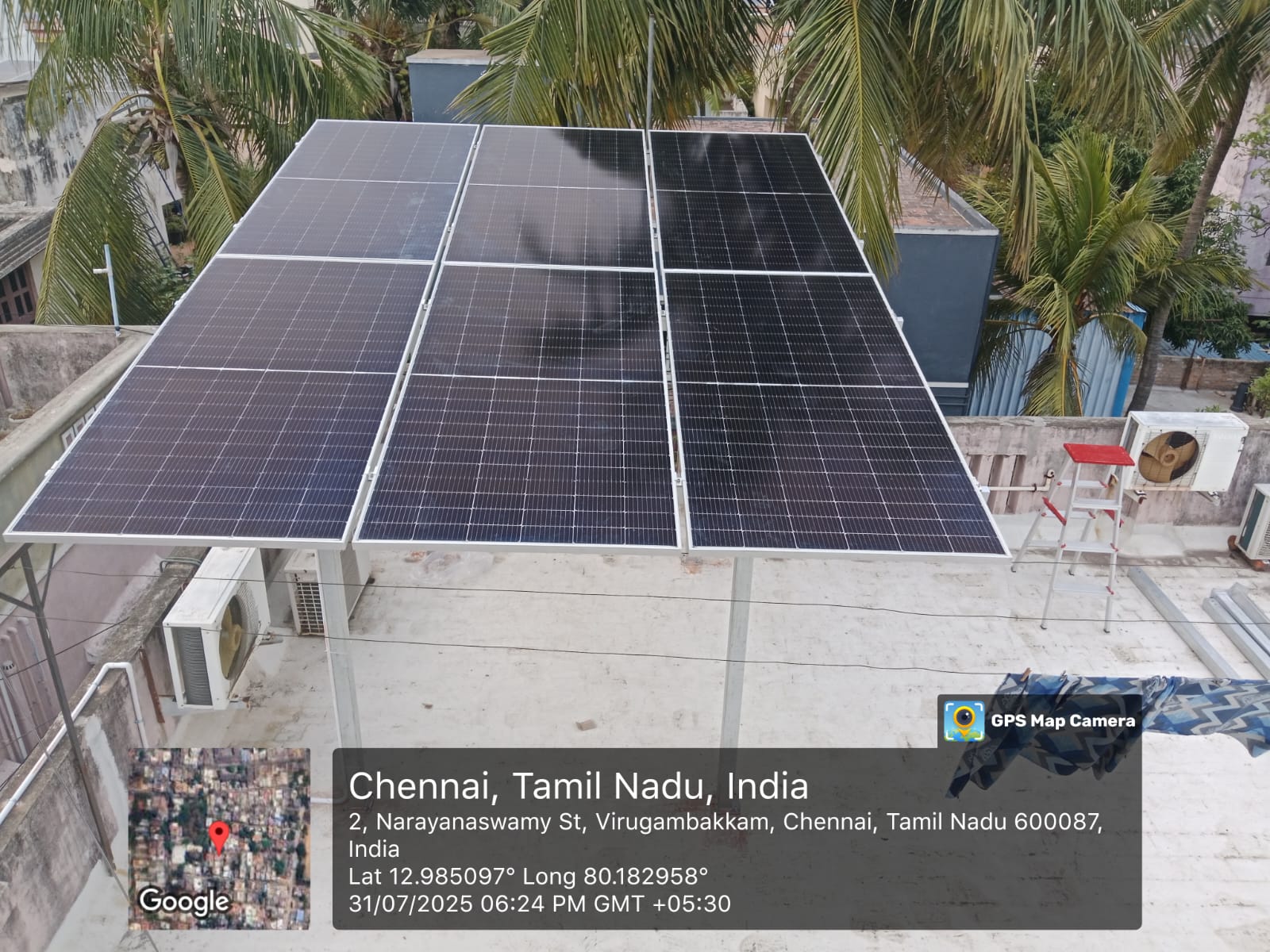
In a typical Chennai gated community the association meter carries two or three lifts, a borewell and hydro-pneumatic pump set, sewage treatment plant blowers, corridor and basement lighting, the clubhouse and the gate. Together these draw a steady daytime load, which makes them an almost perfect match for a rooftop array installed on the terrace and over open car parking.
Because generation and consumption happen at the same time and on the same meter, savings appear immediately in the association's next TANGEDCO bill, without waiting on export credits. A 30-flat block usually installs 10 kW to 20 kW; a 200-flat community with an STP often justifies 50 kW to 100 kW.
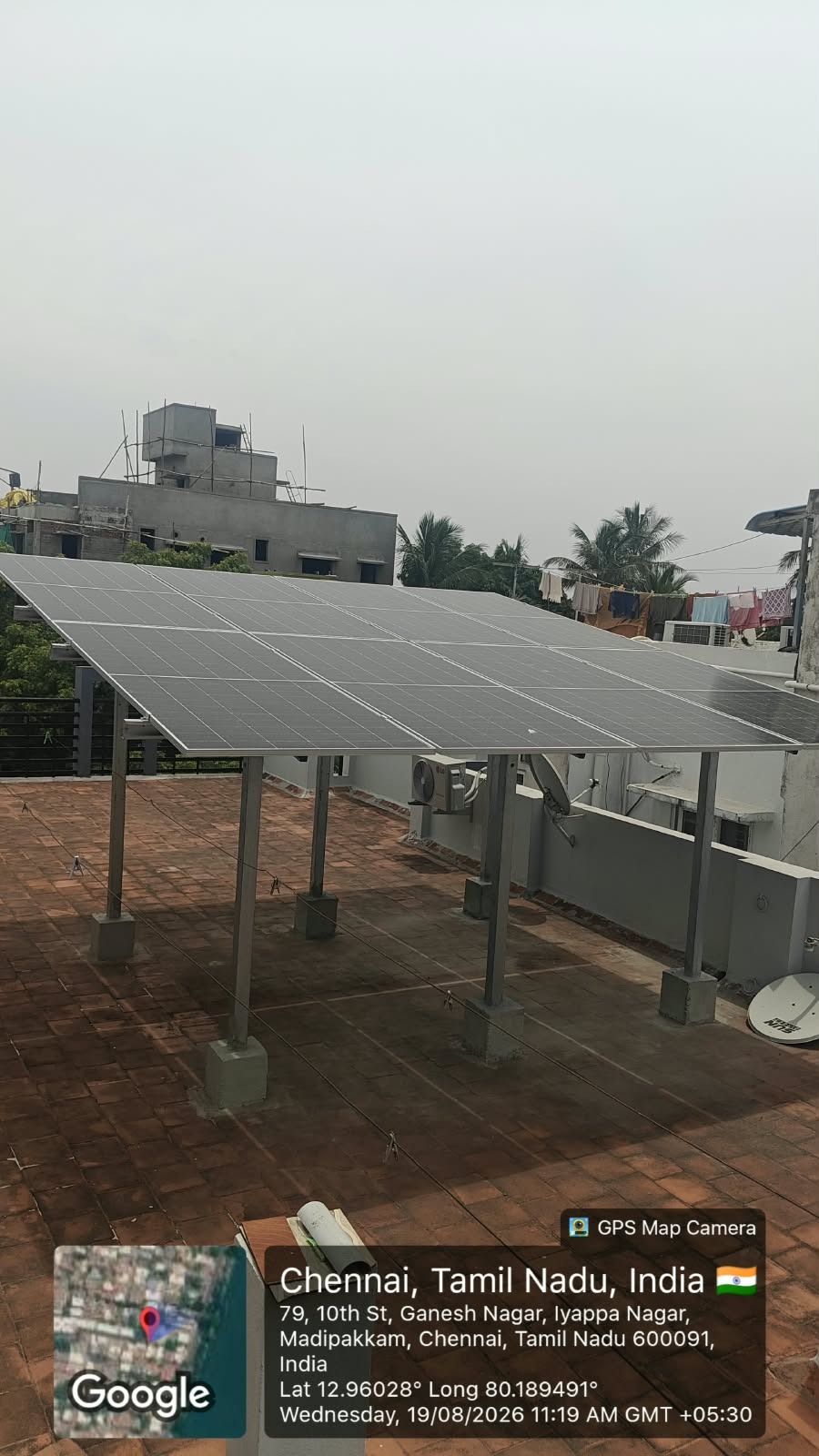
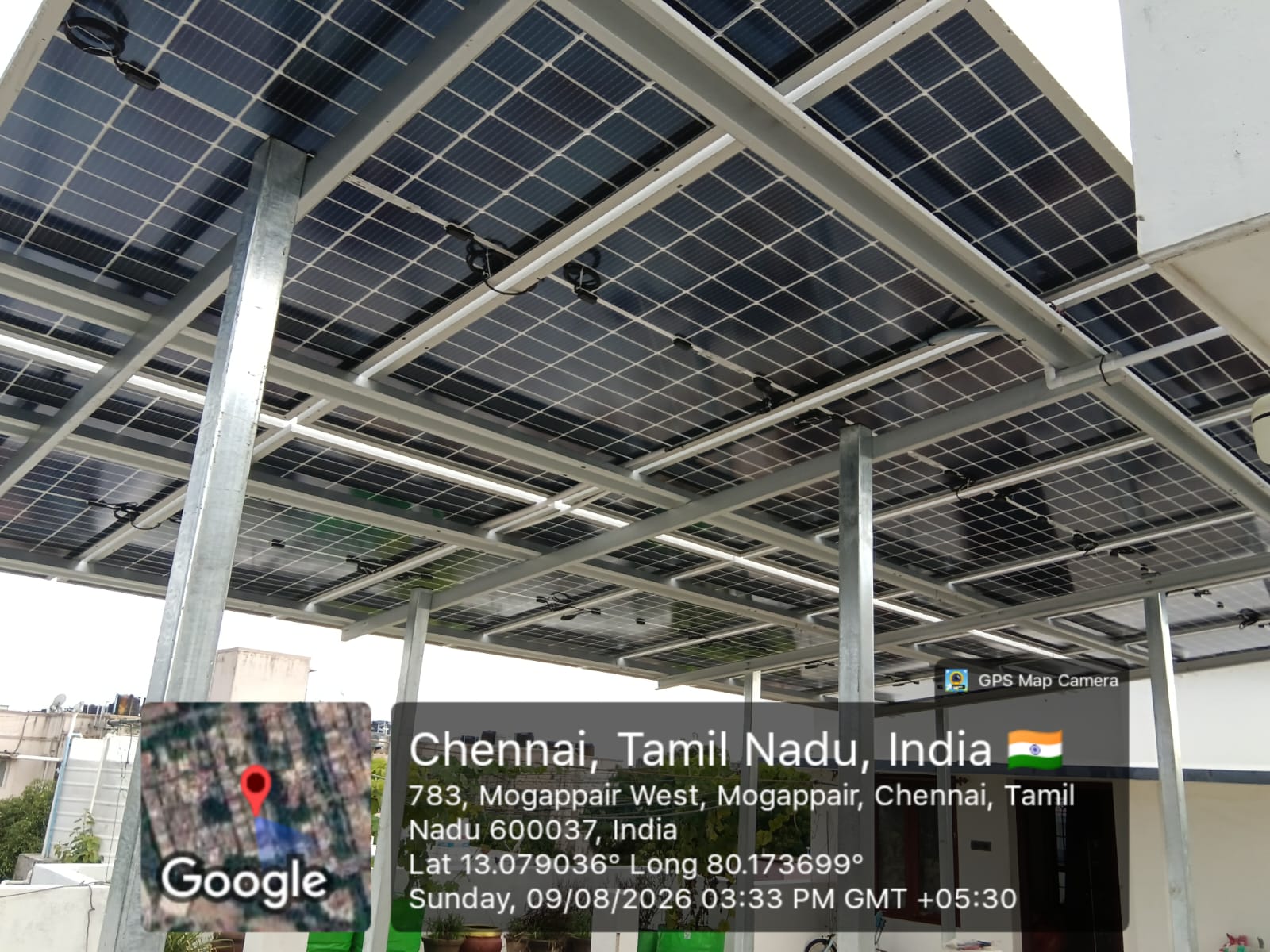
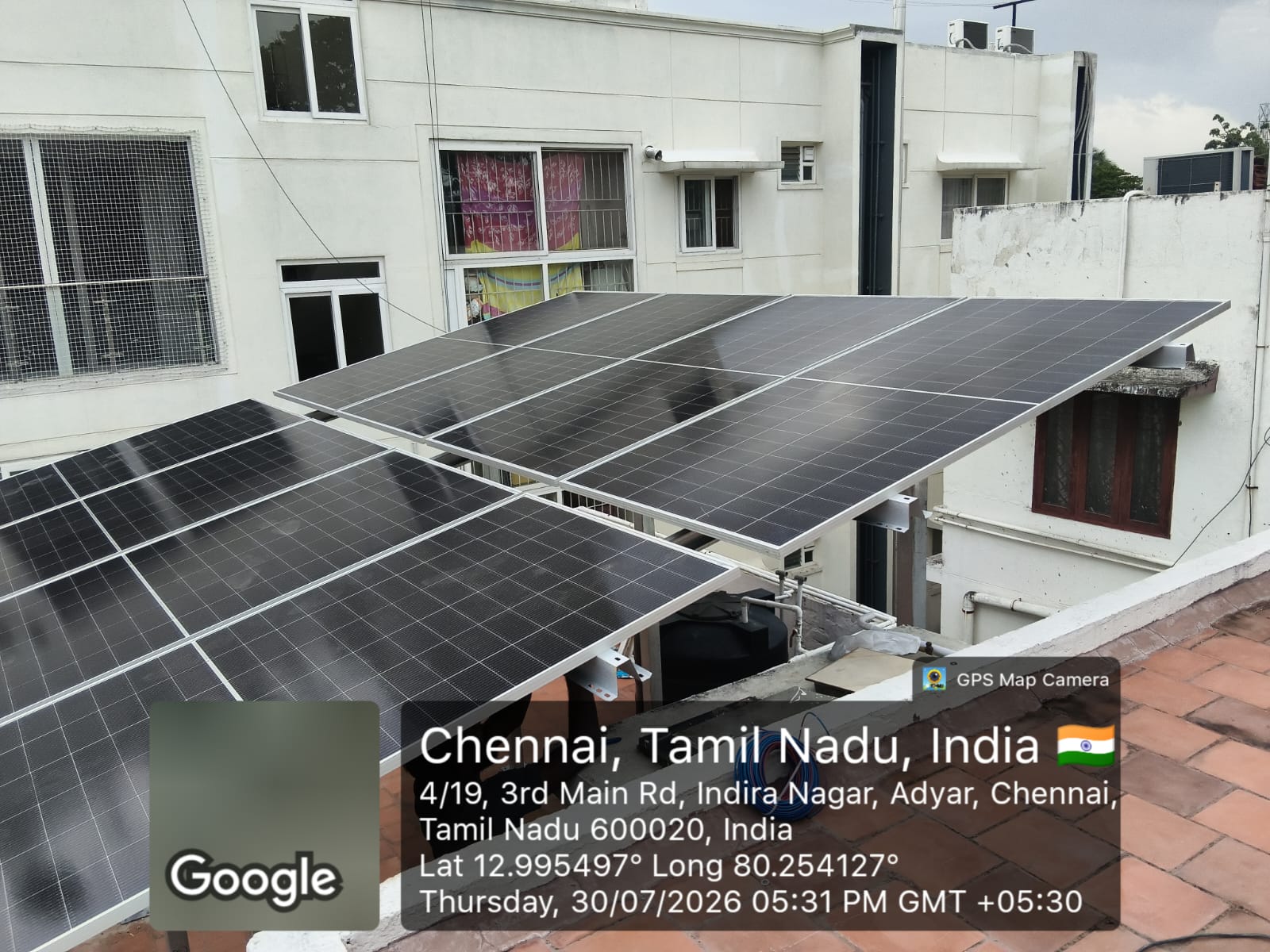
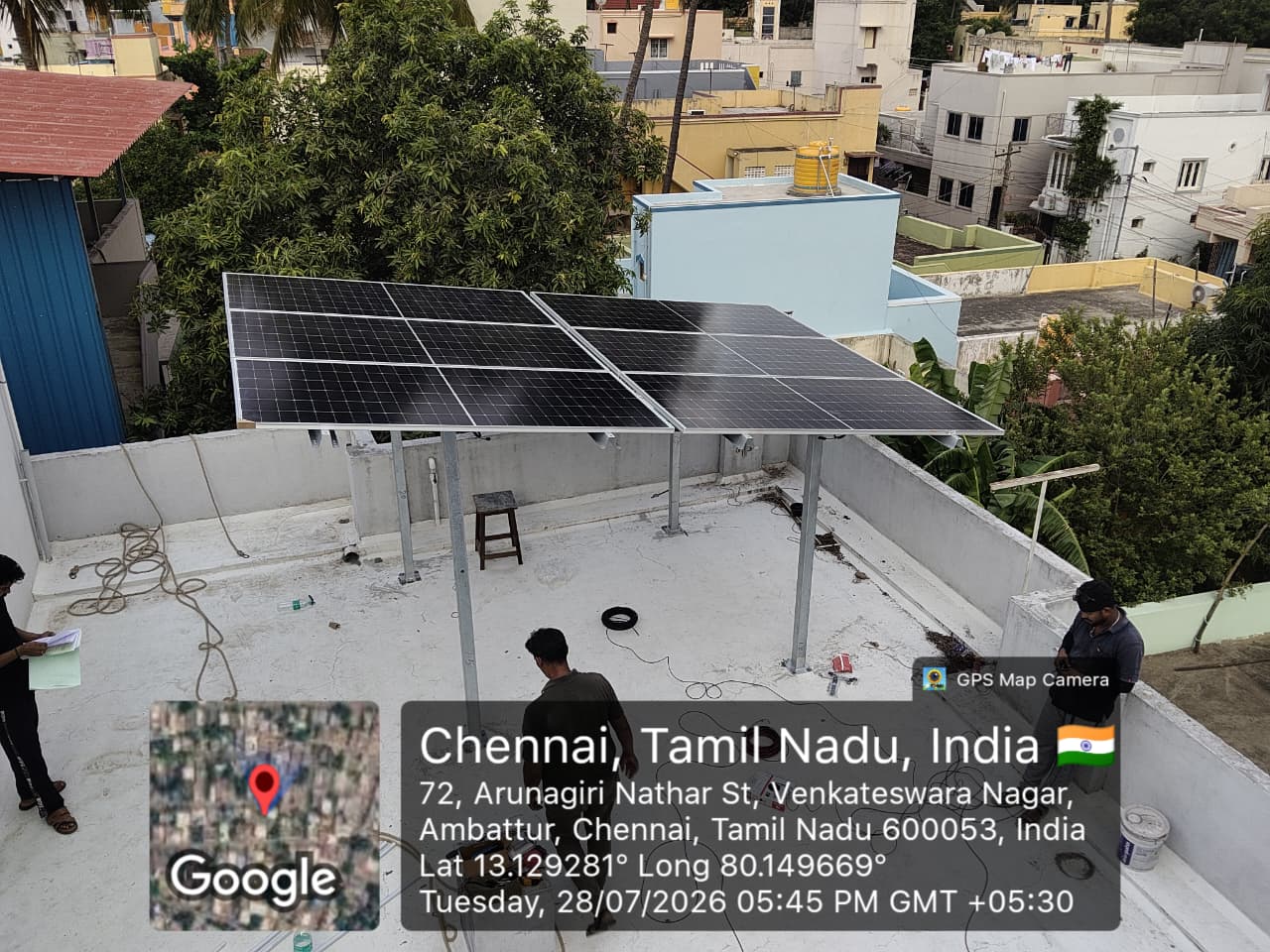
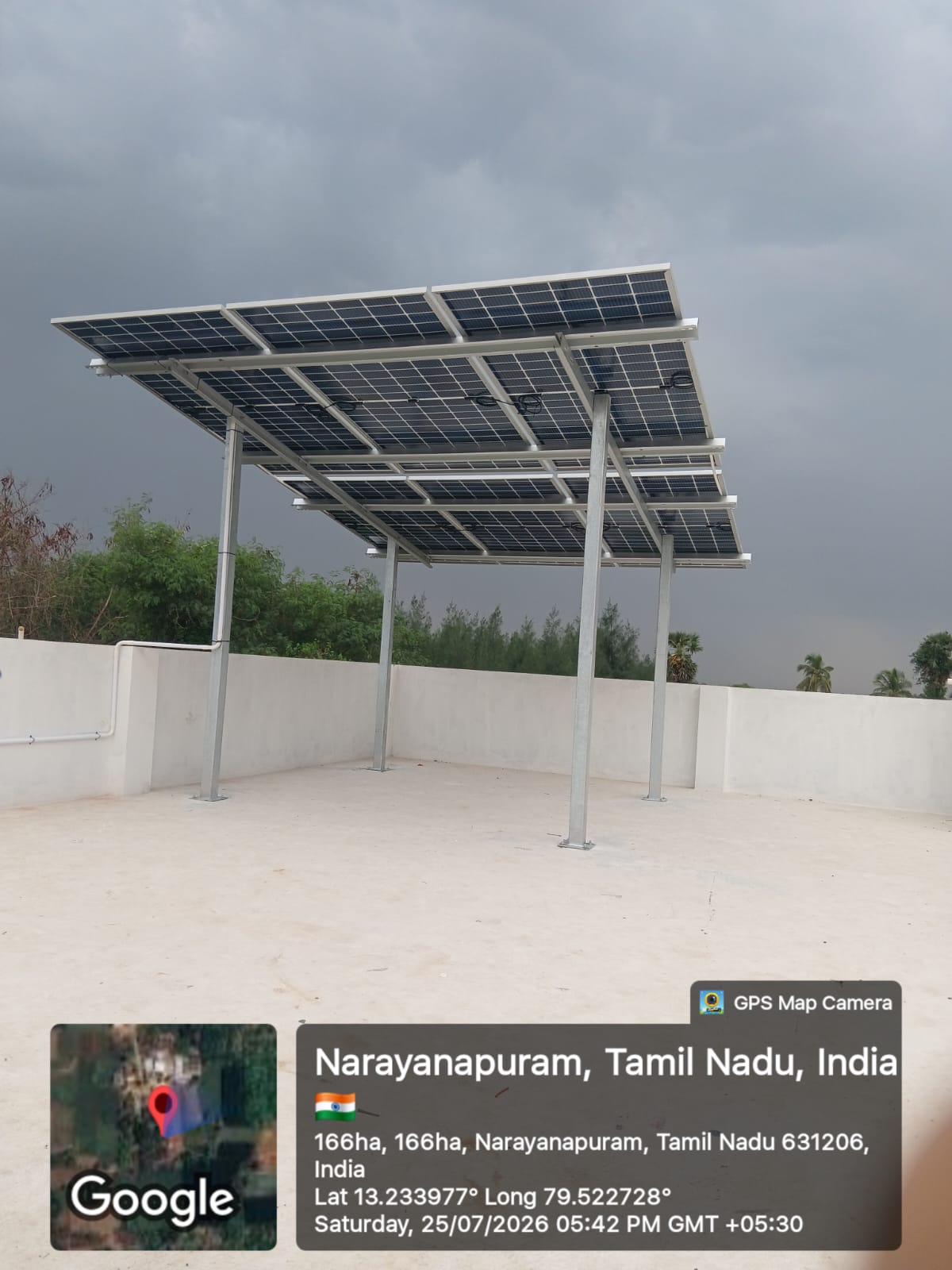
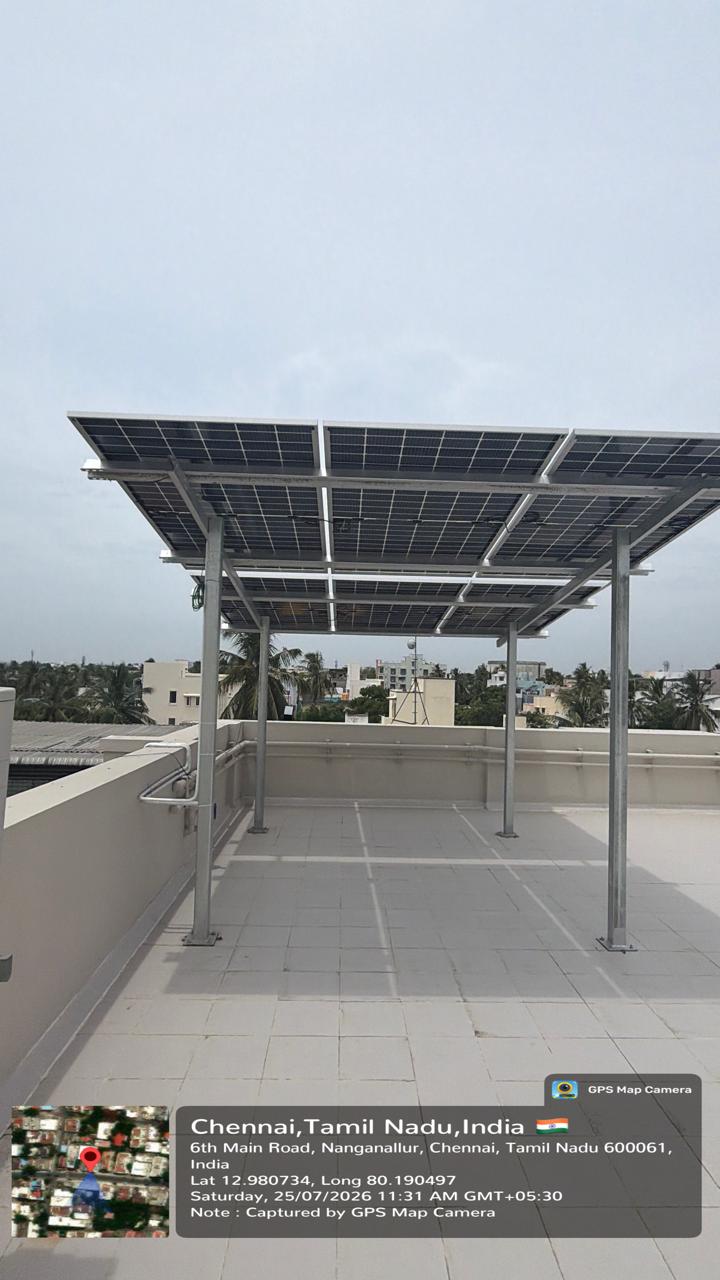
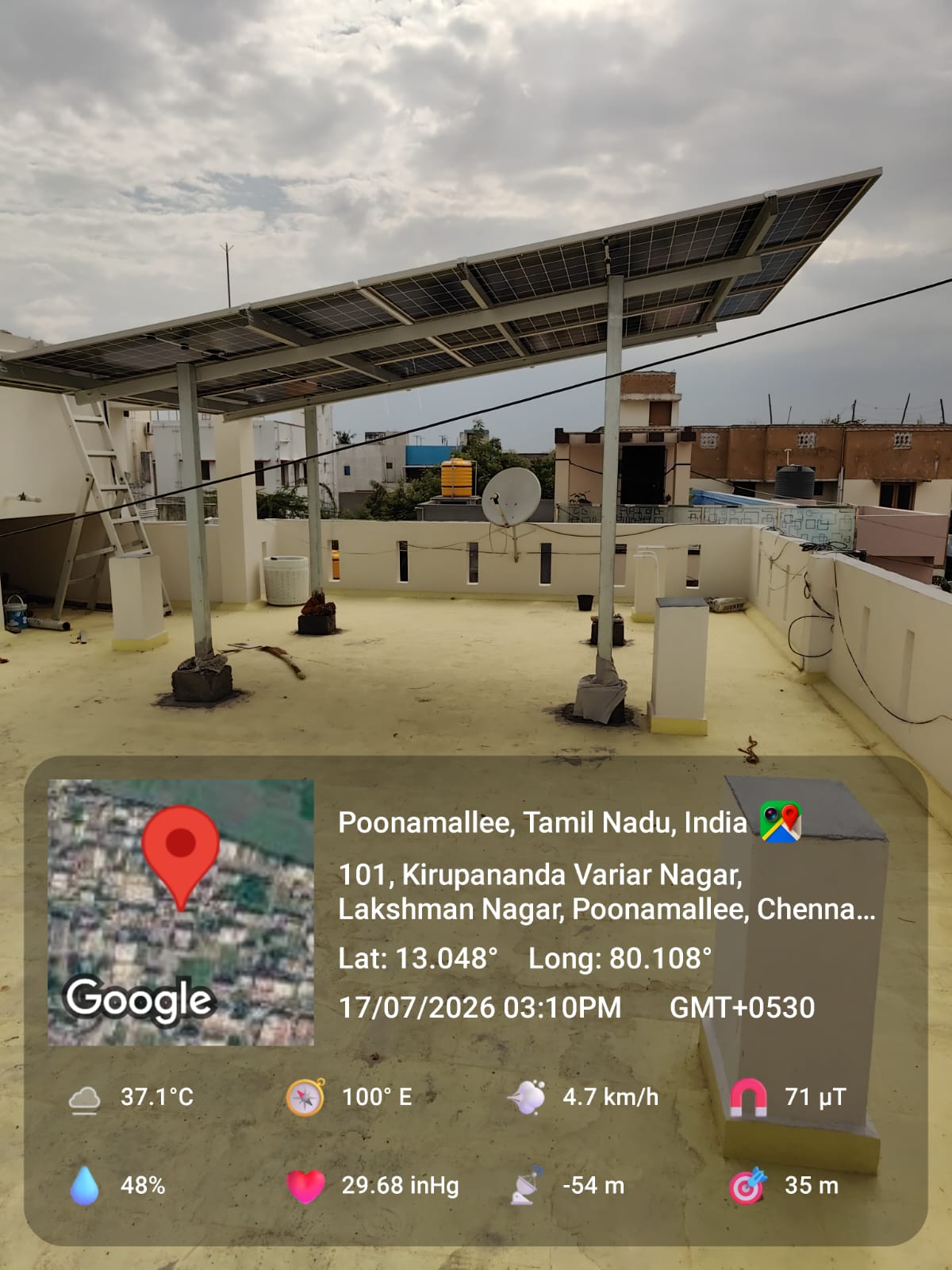
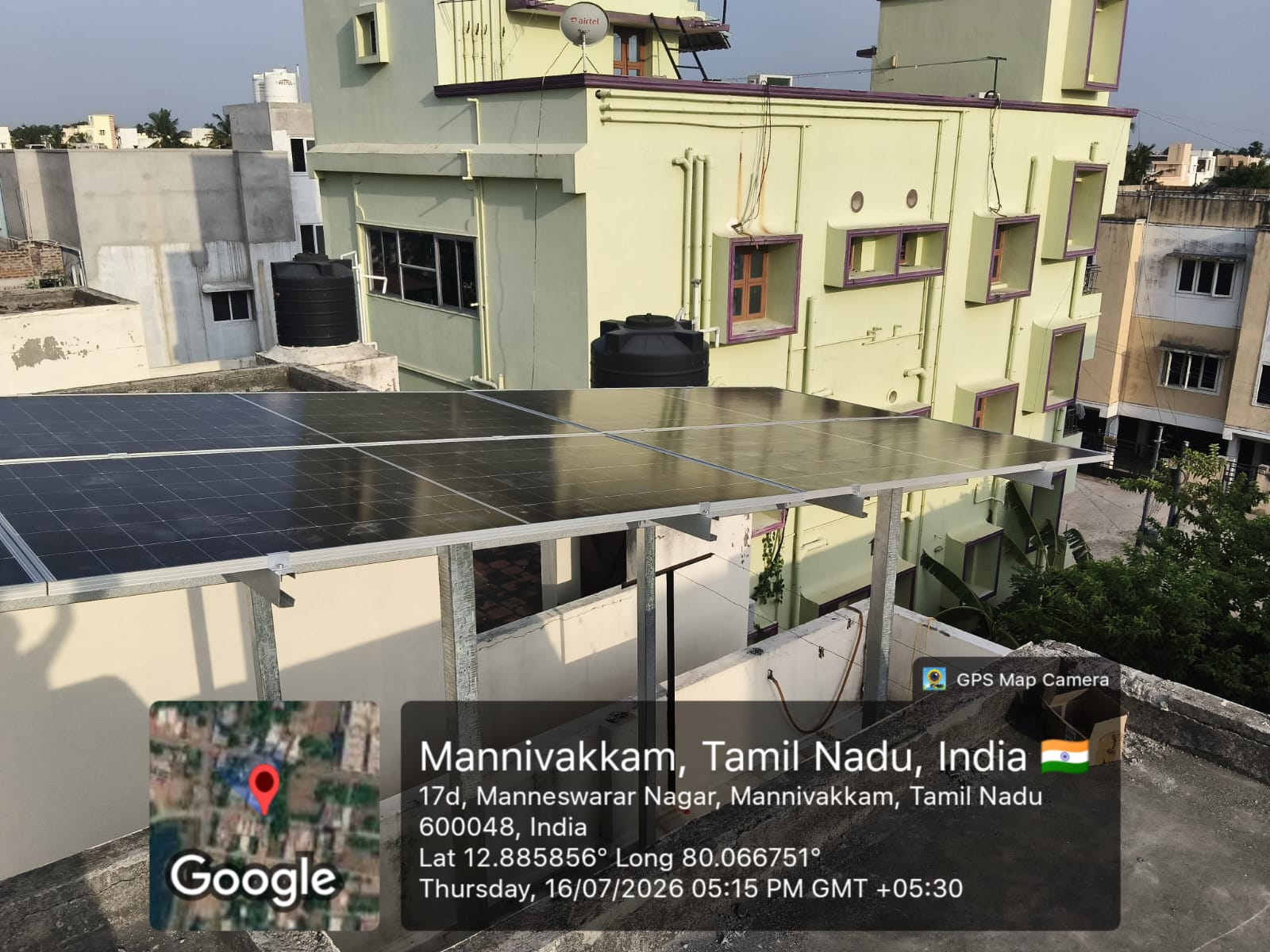
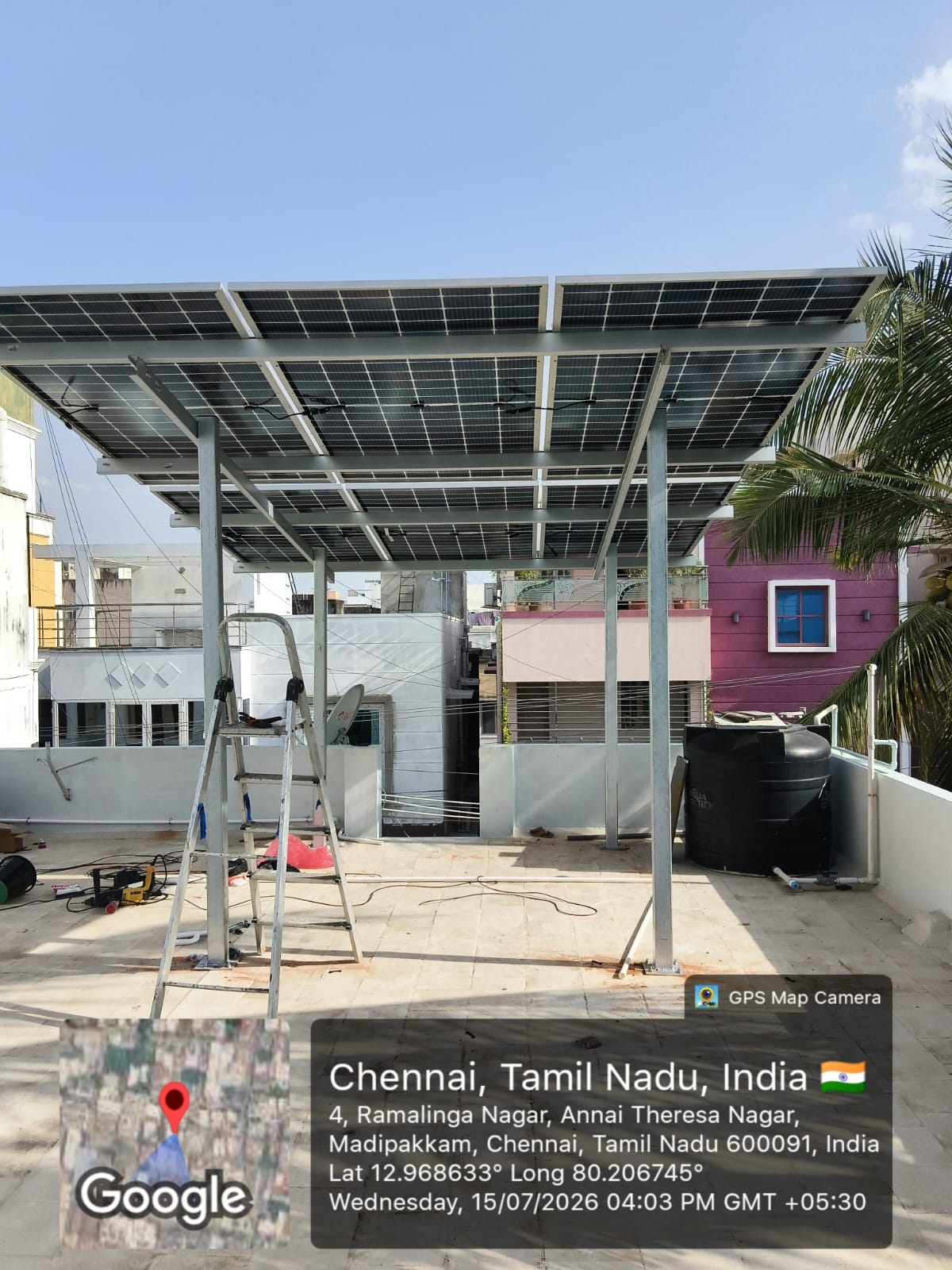
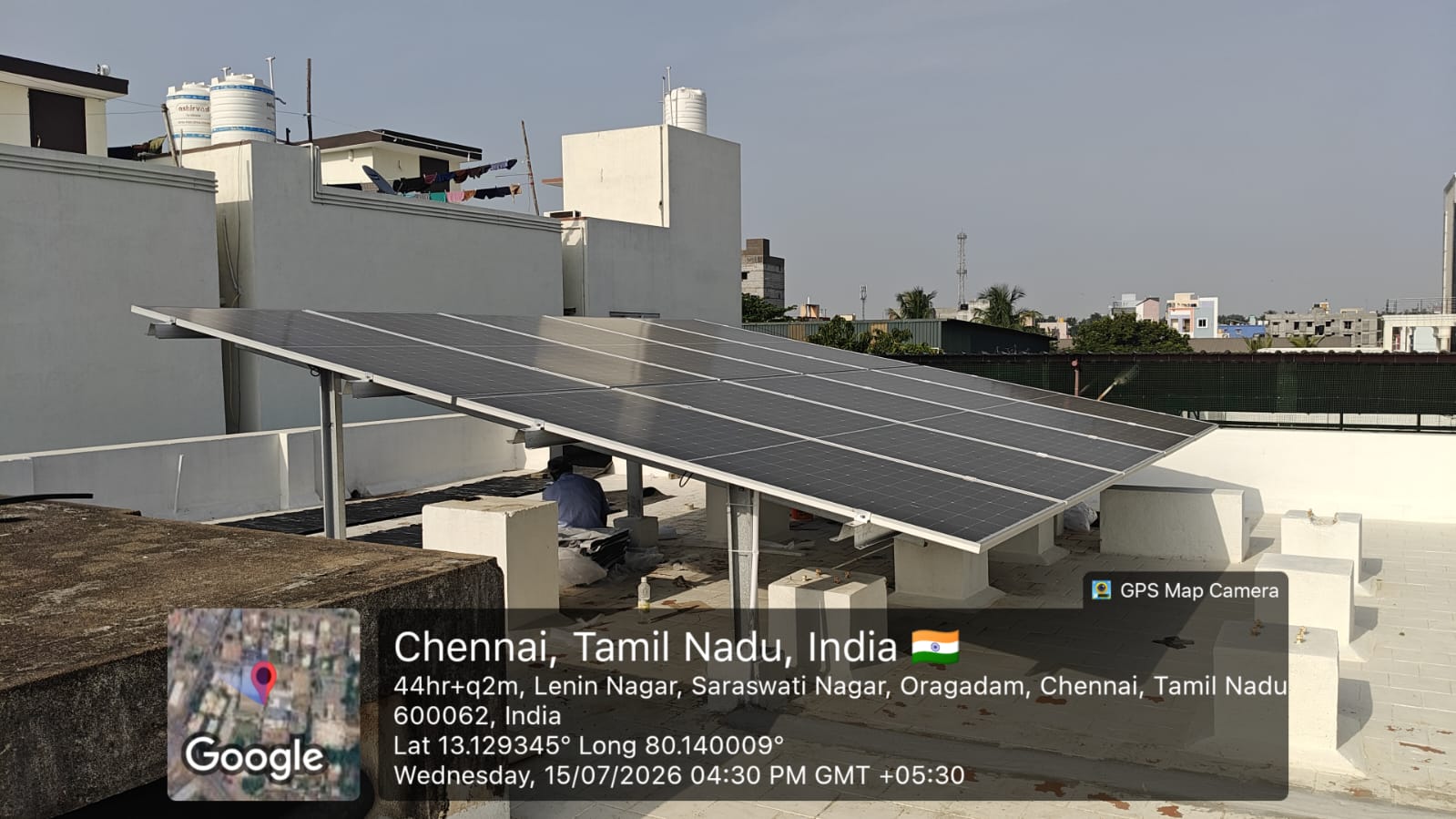
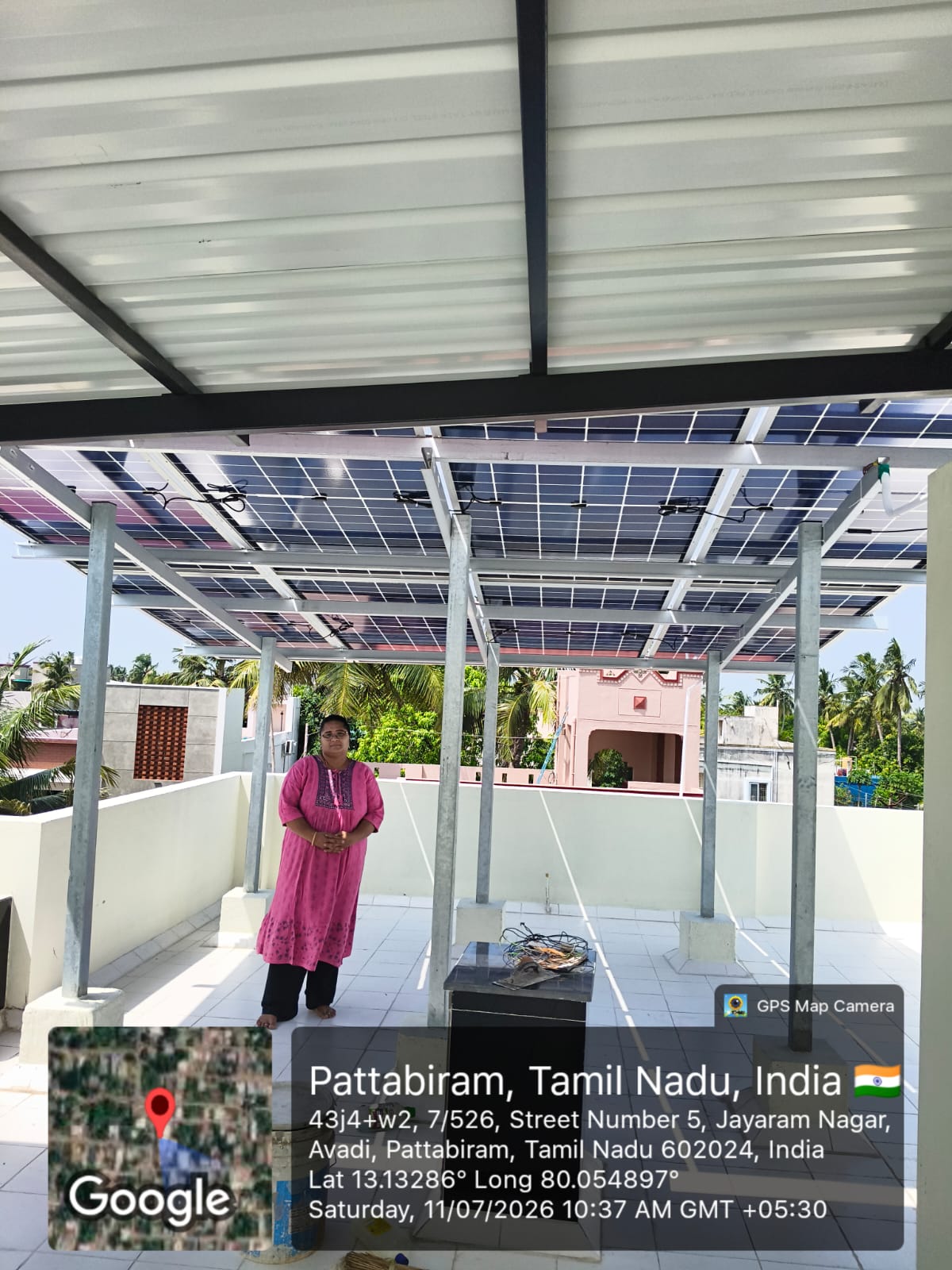
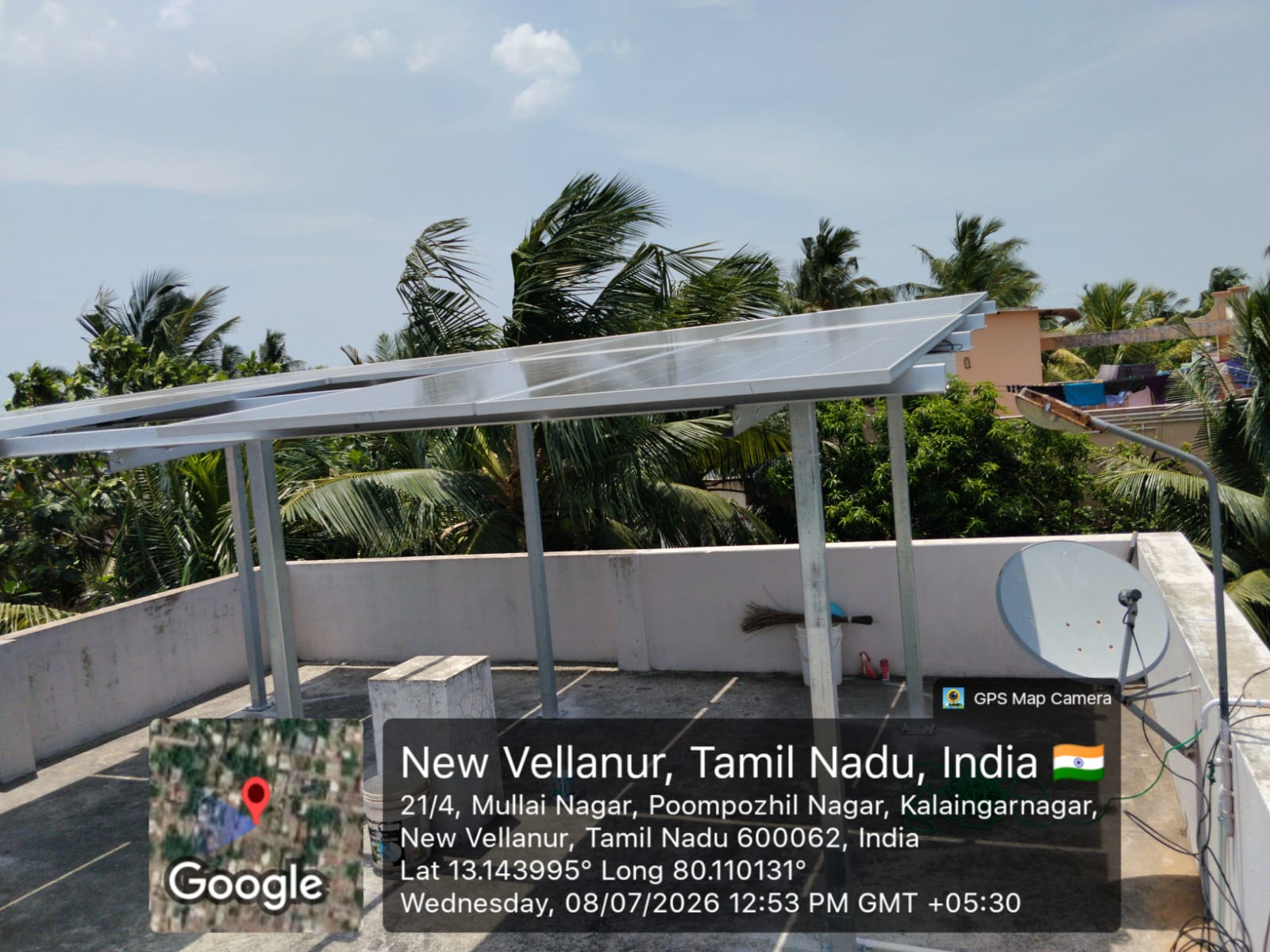
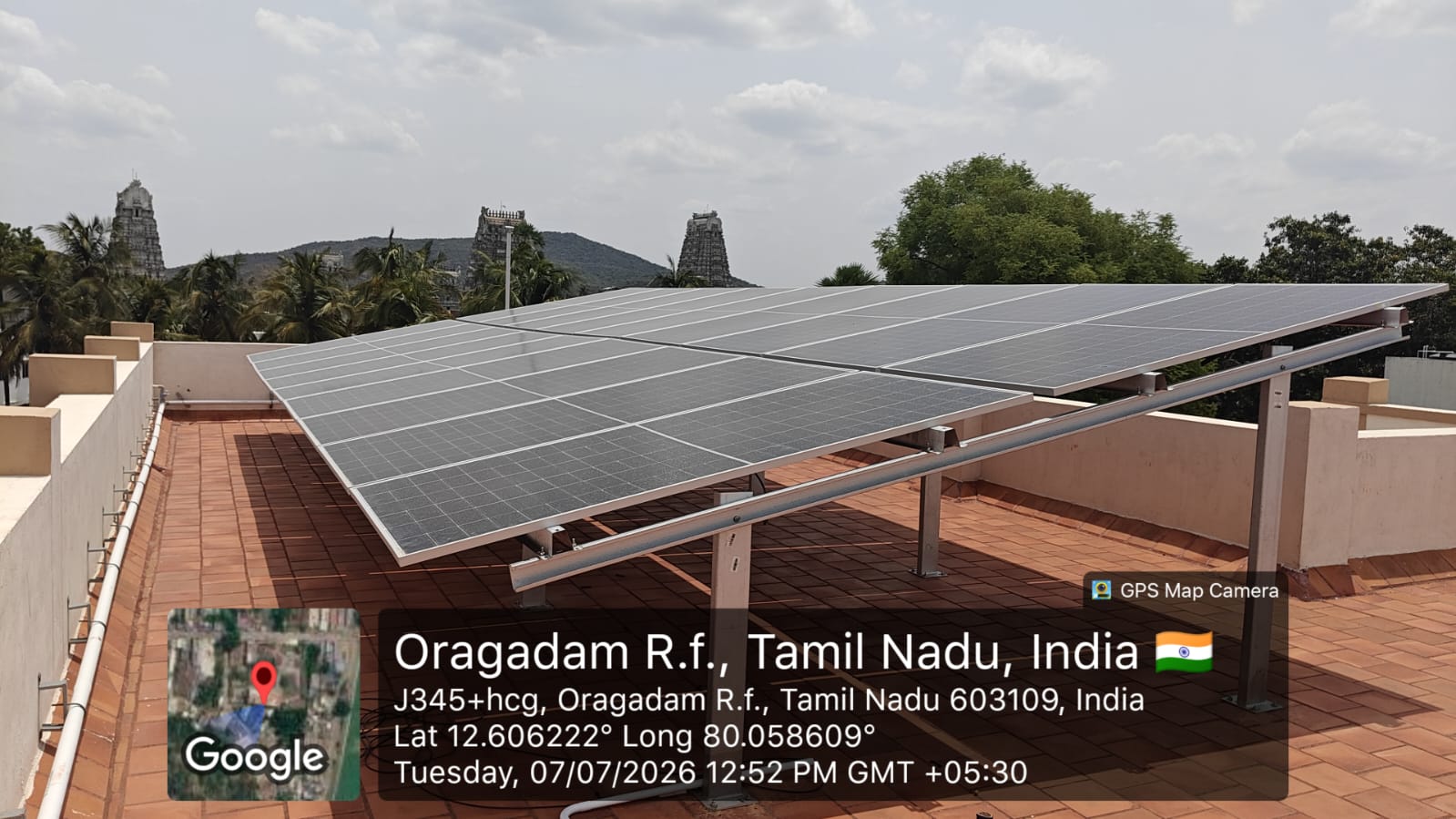
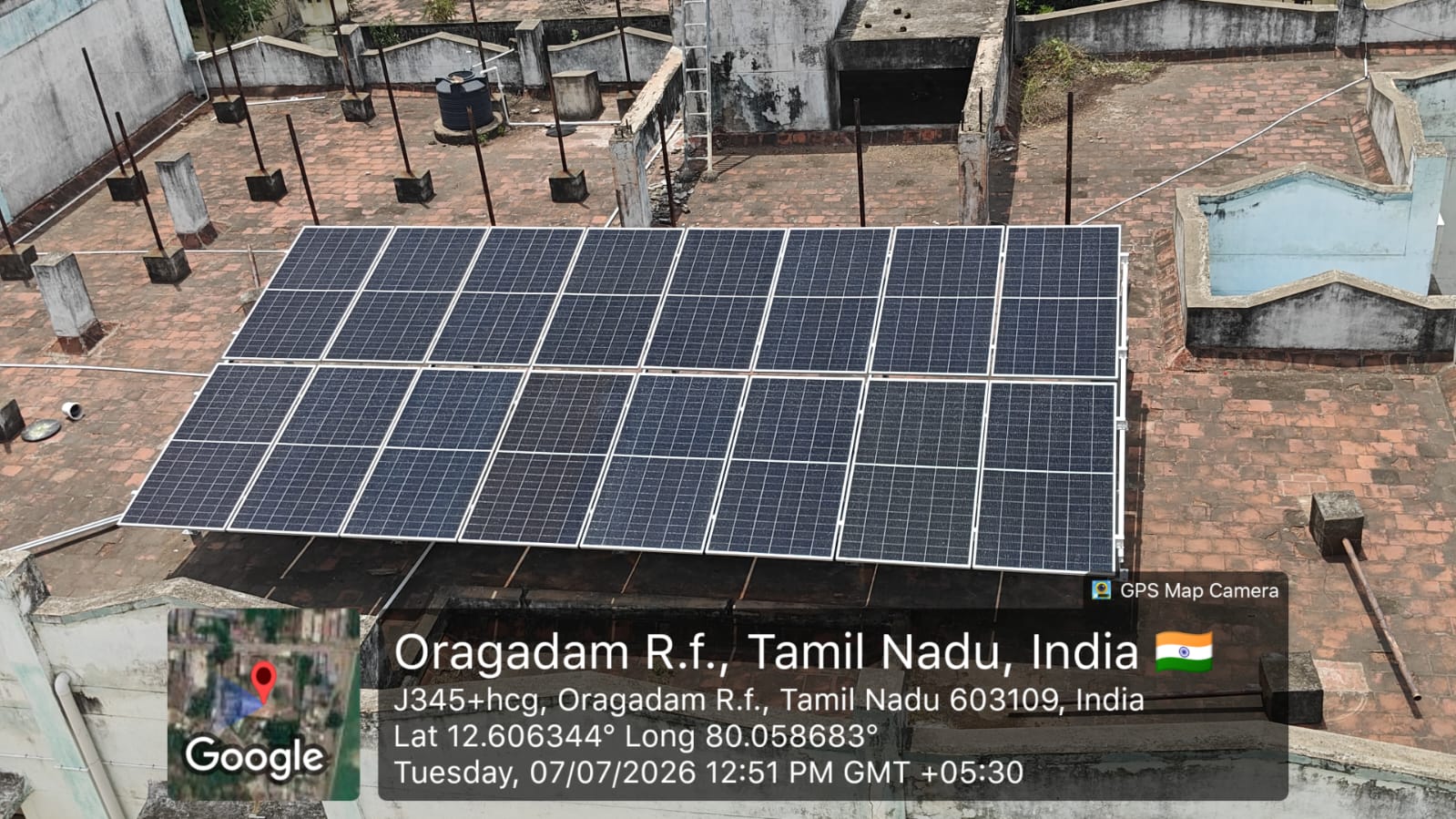
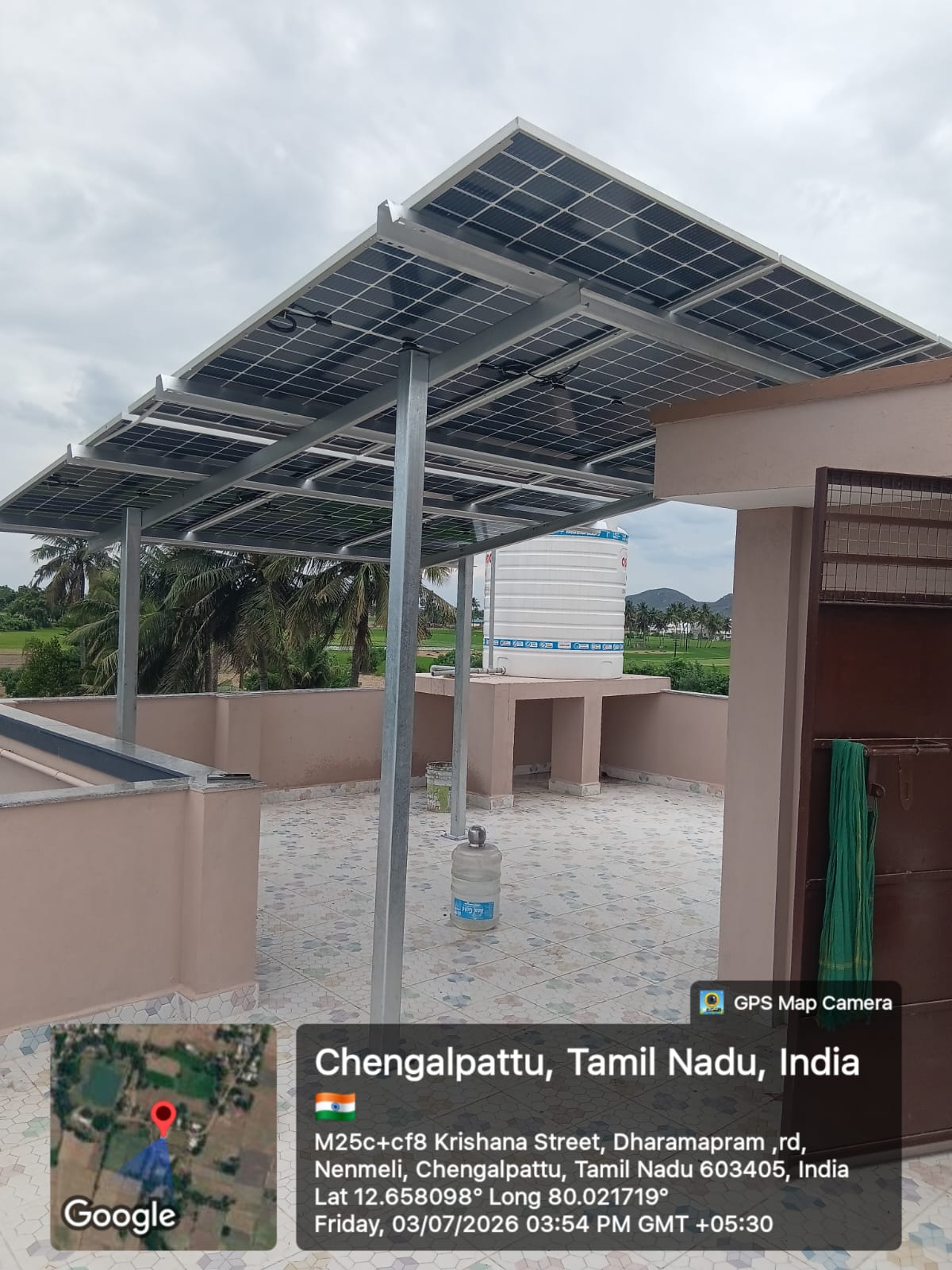
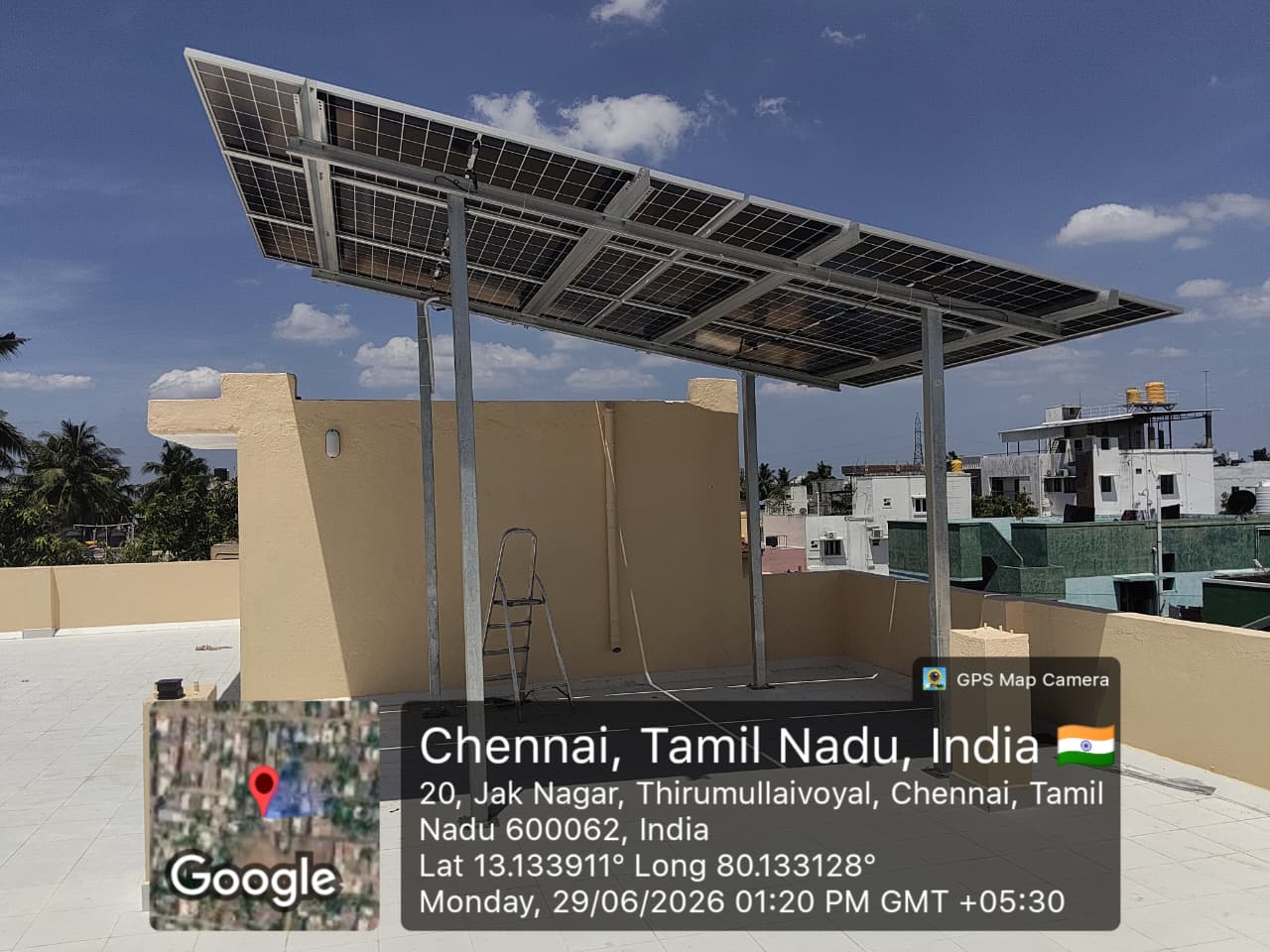
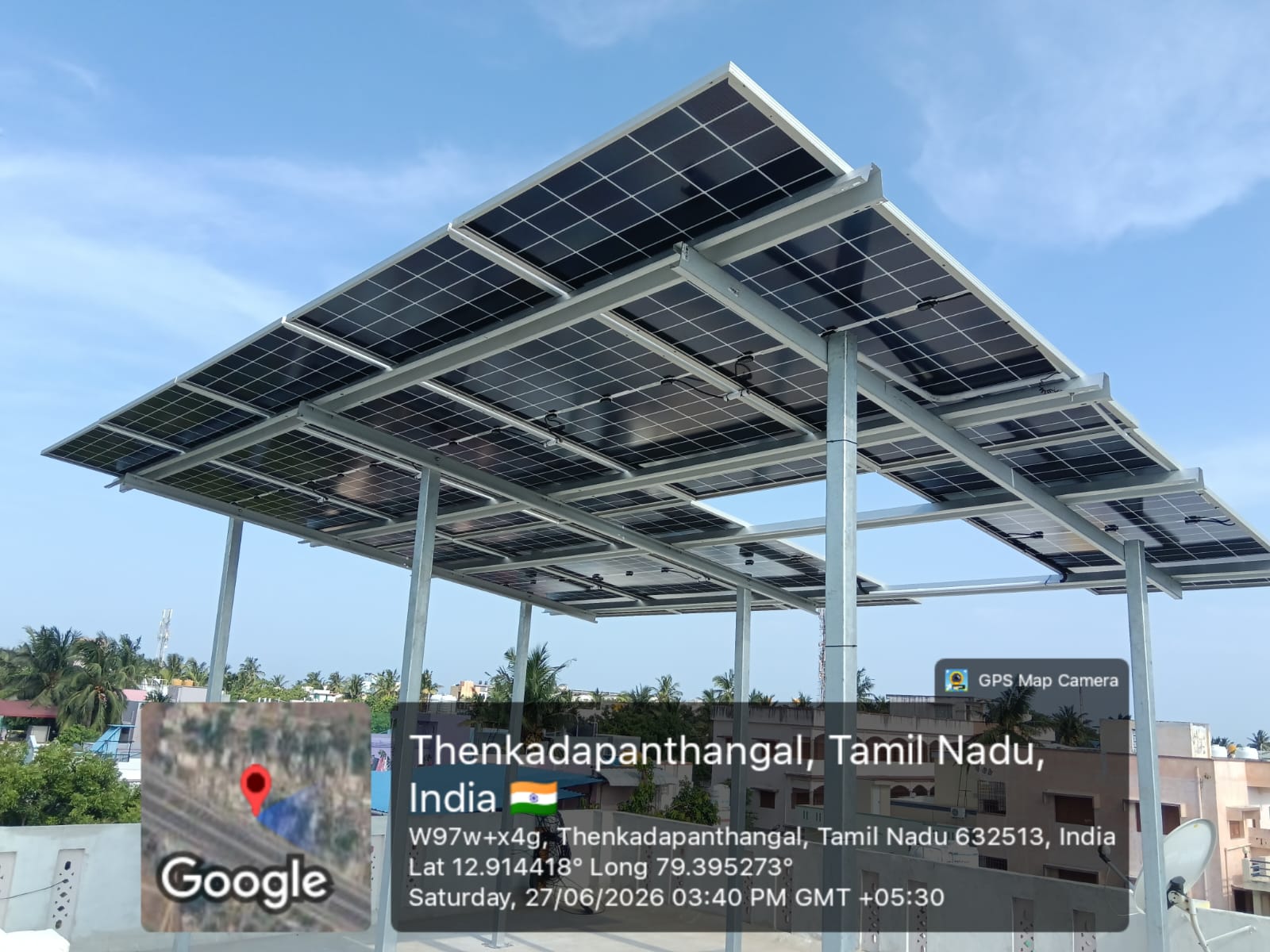
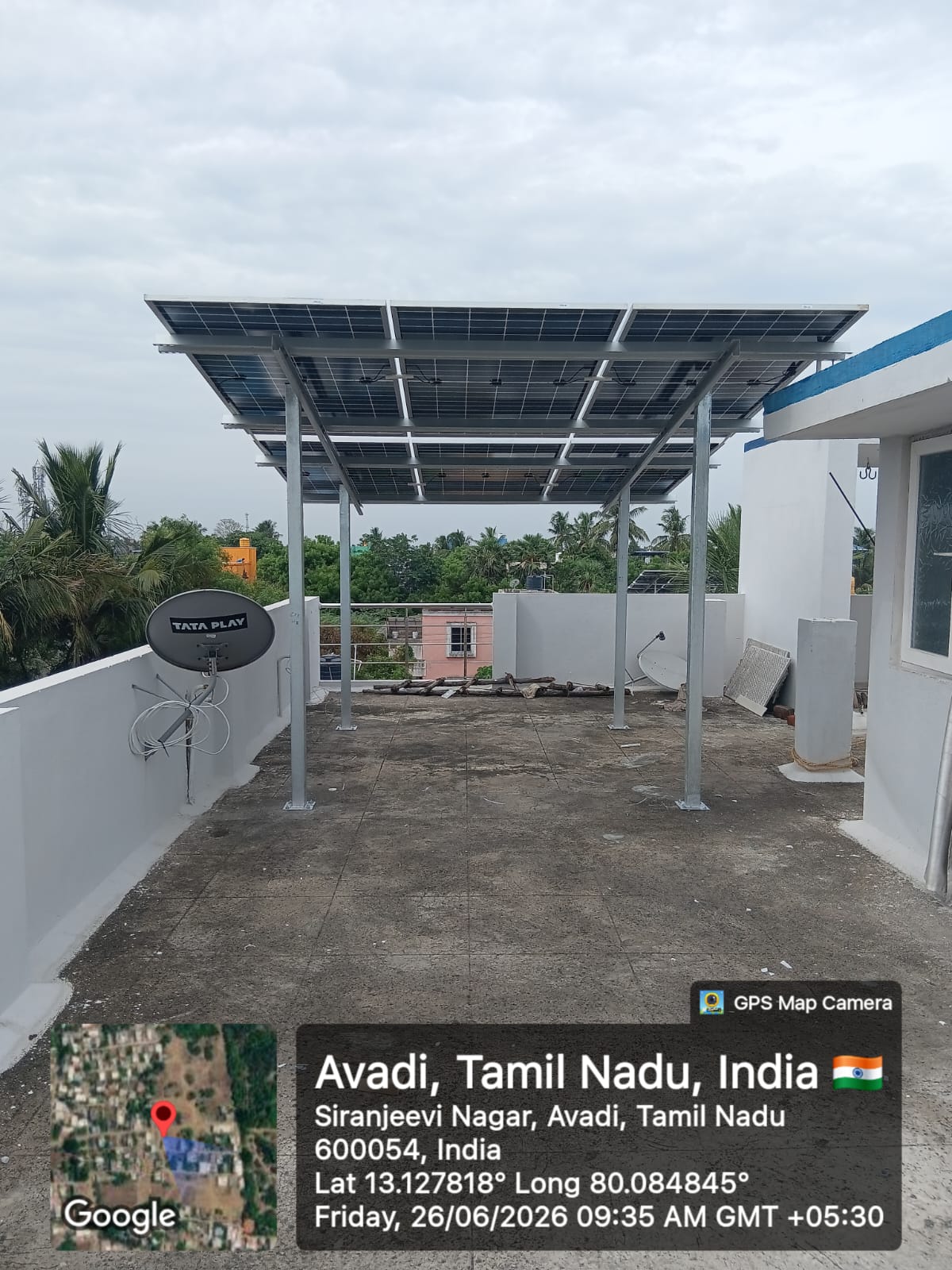
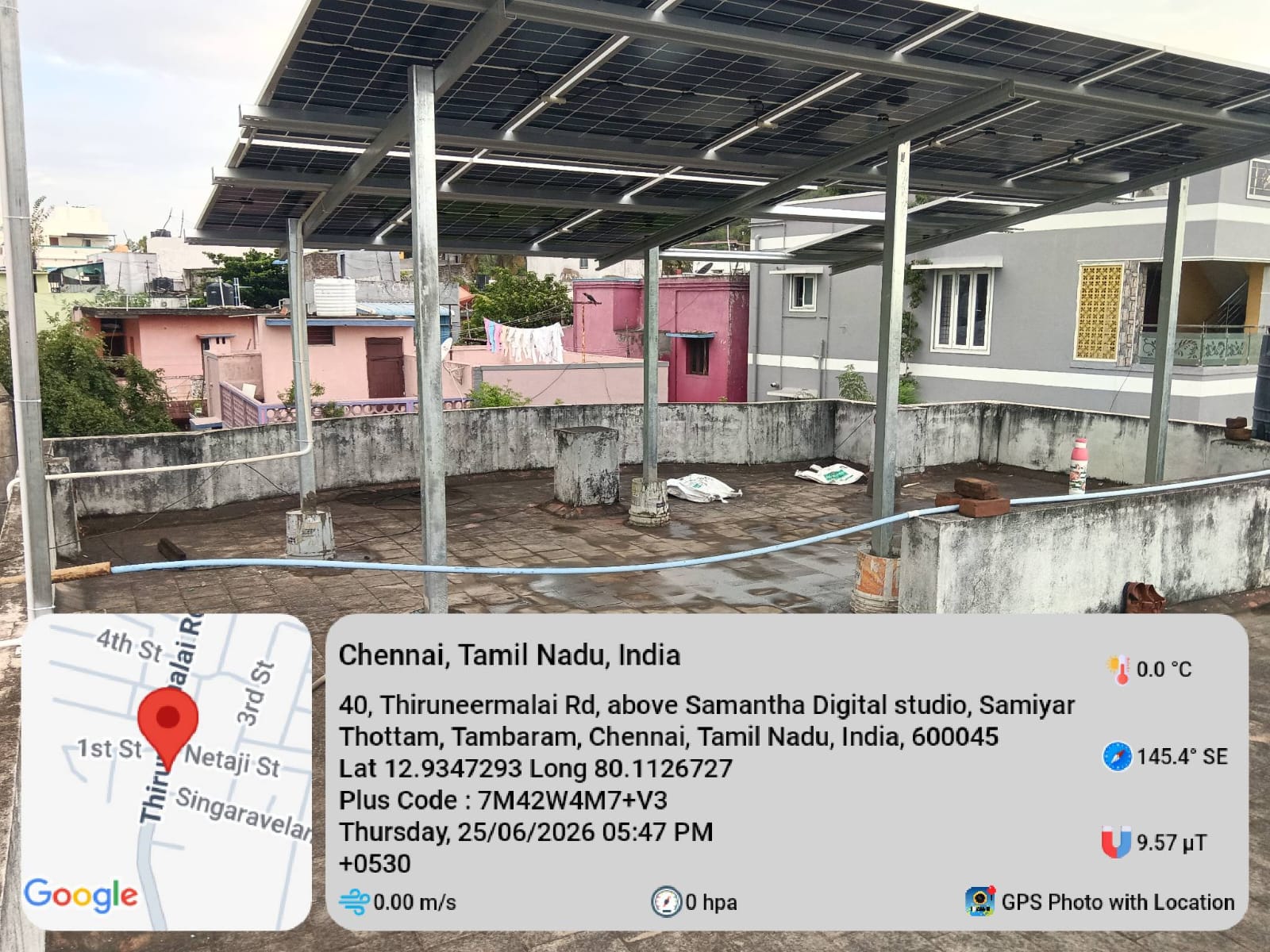
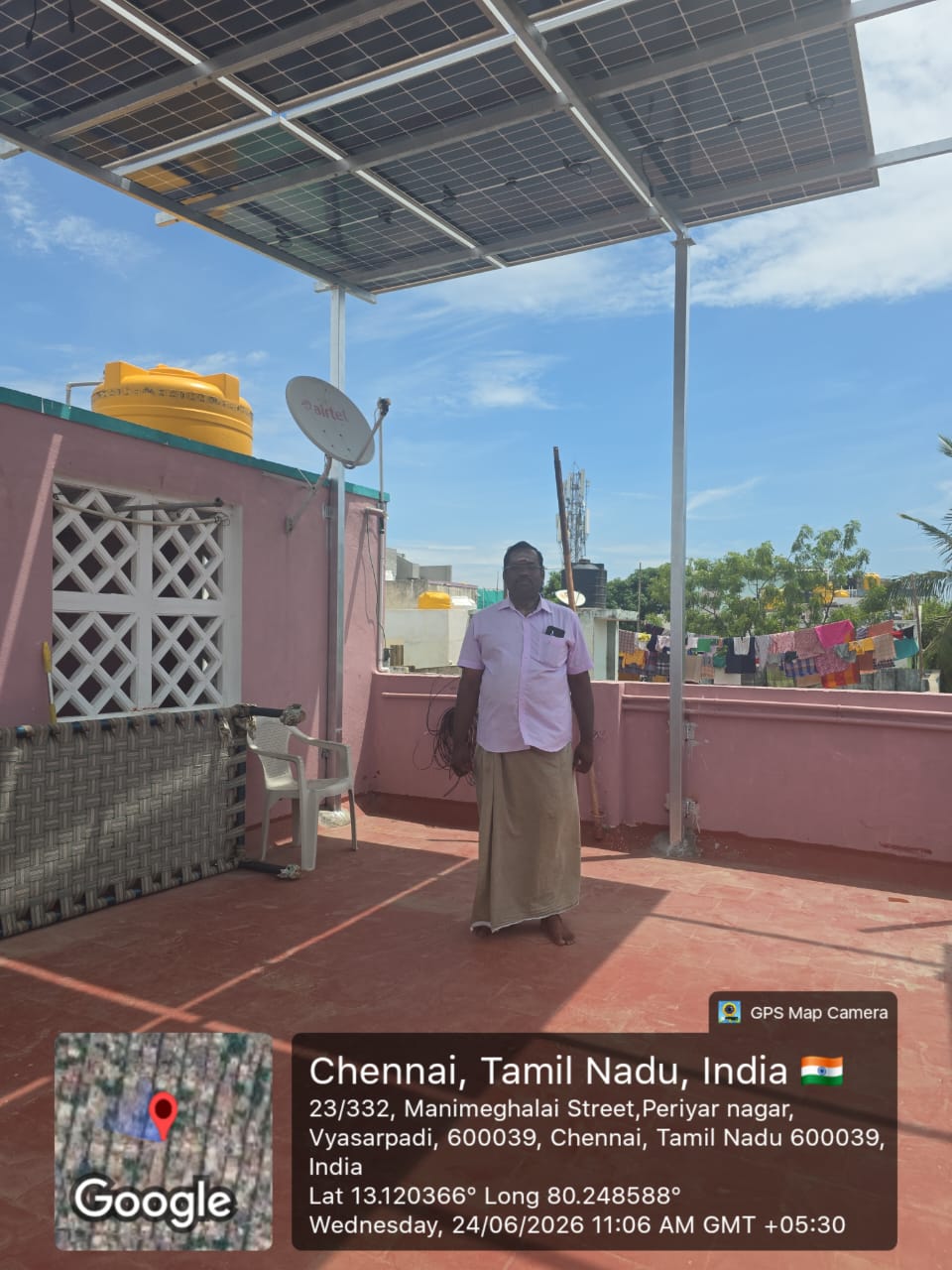
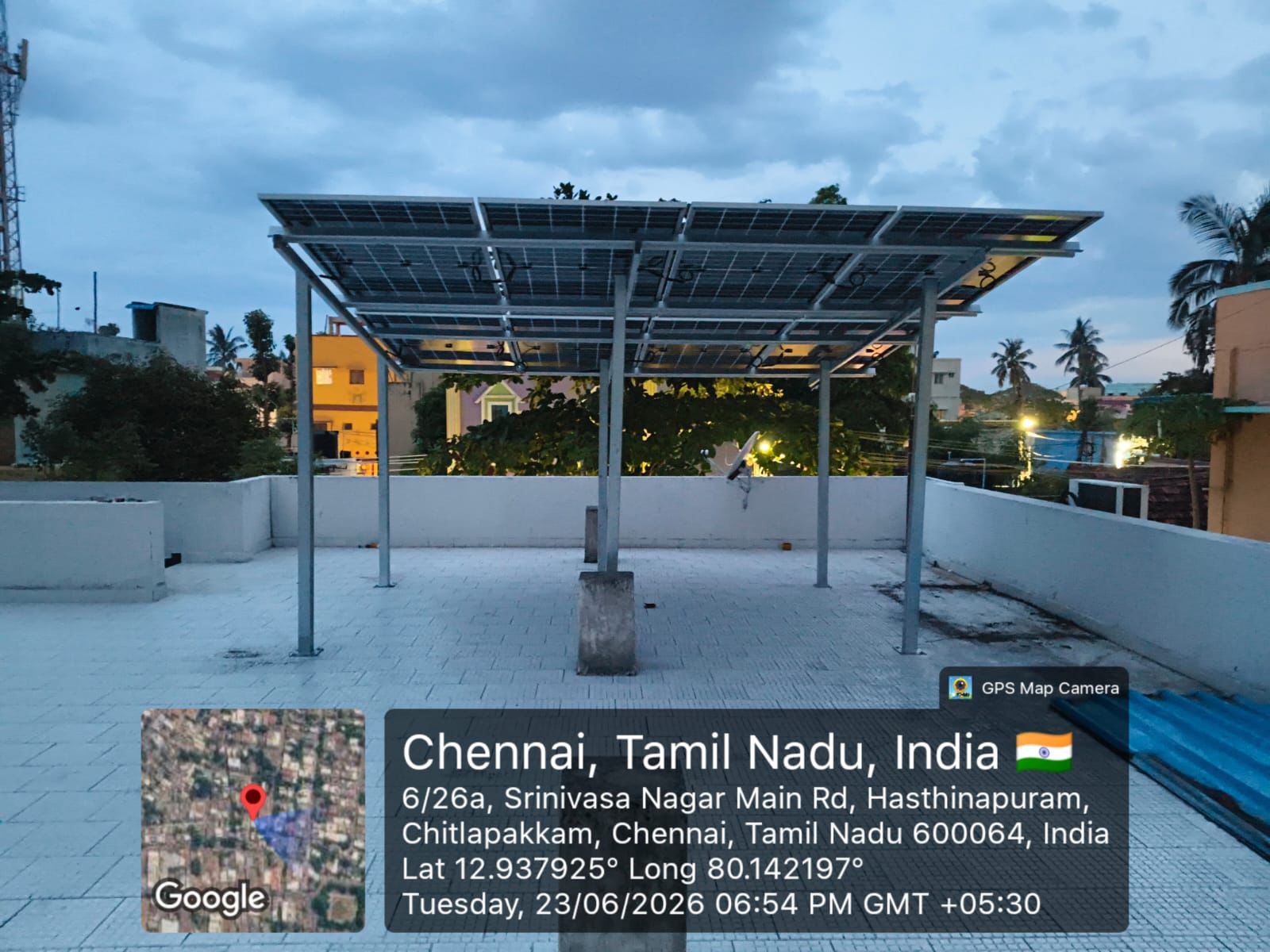
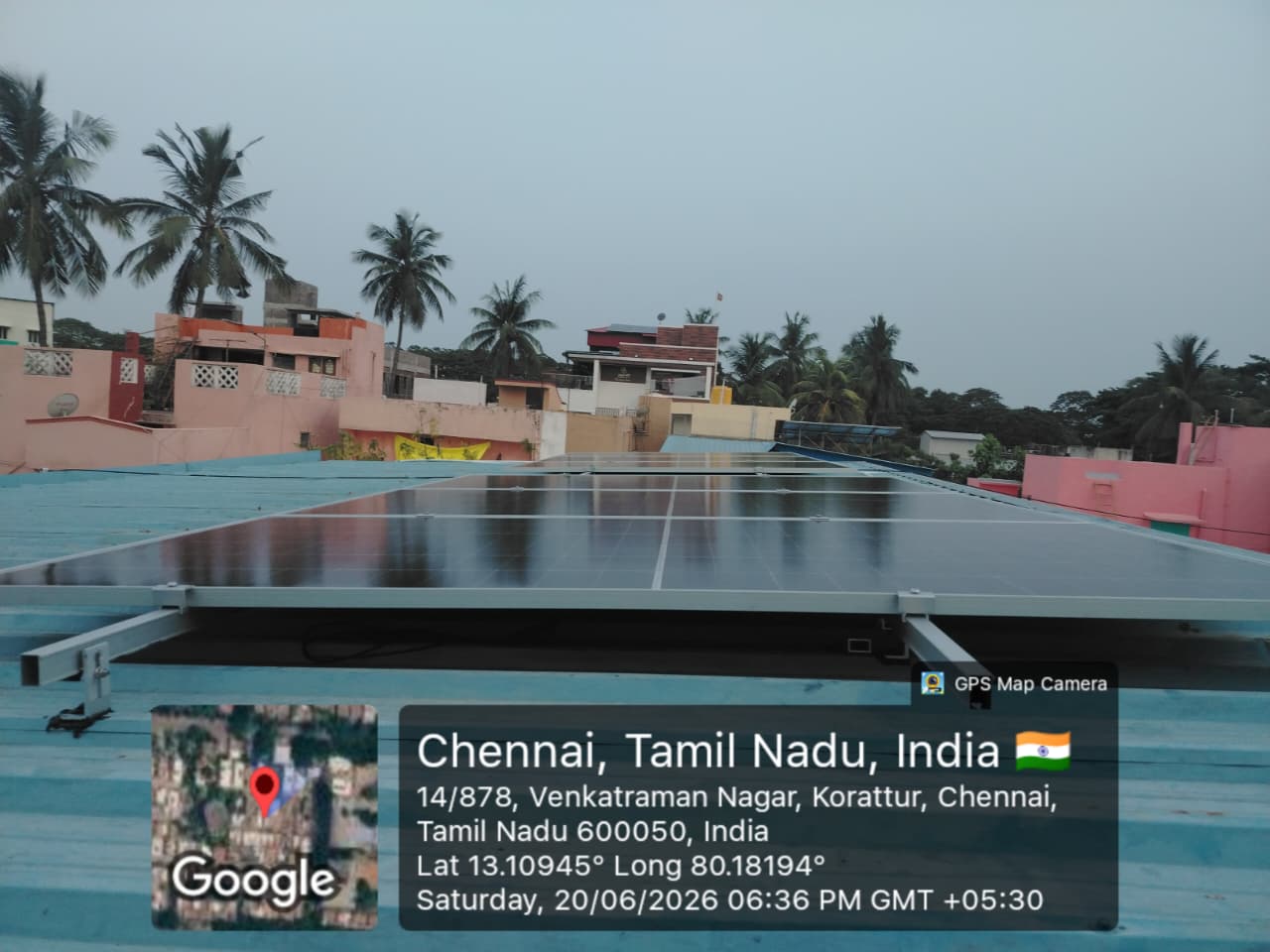
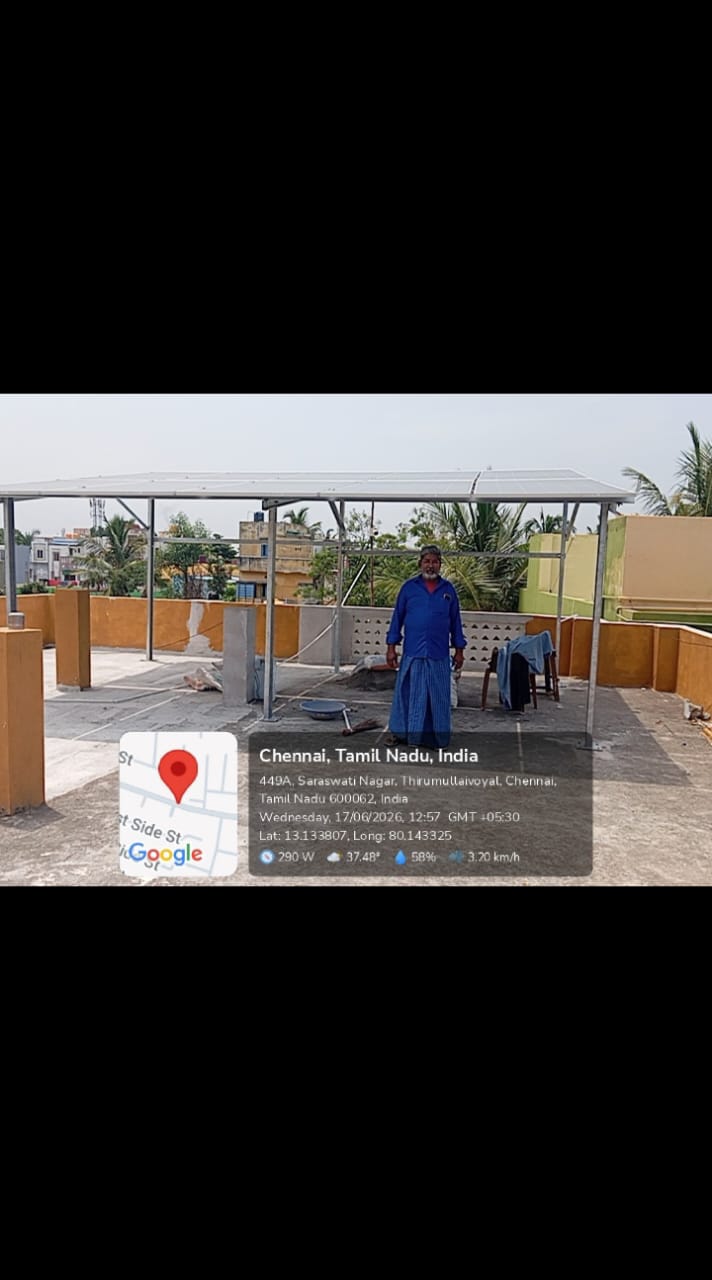
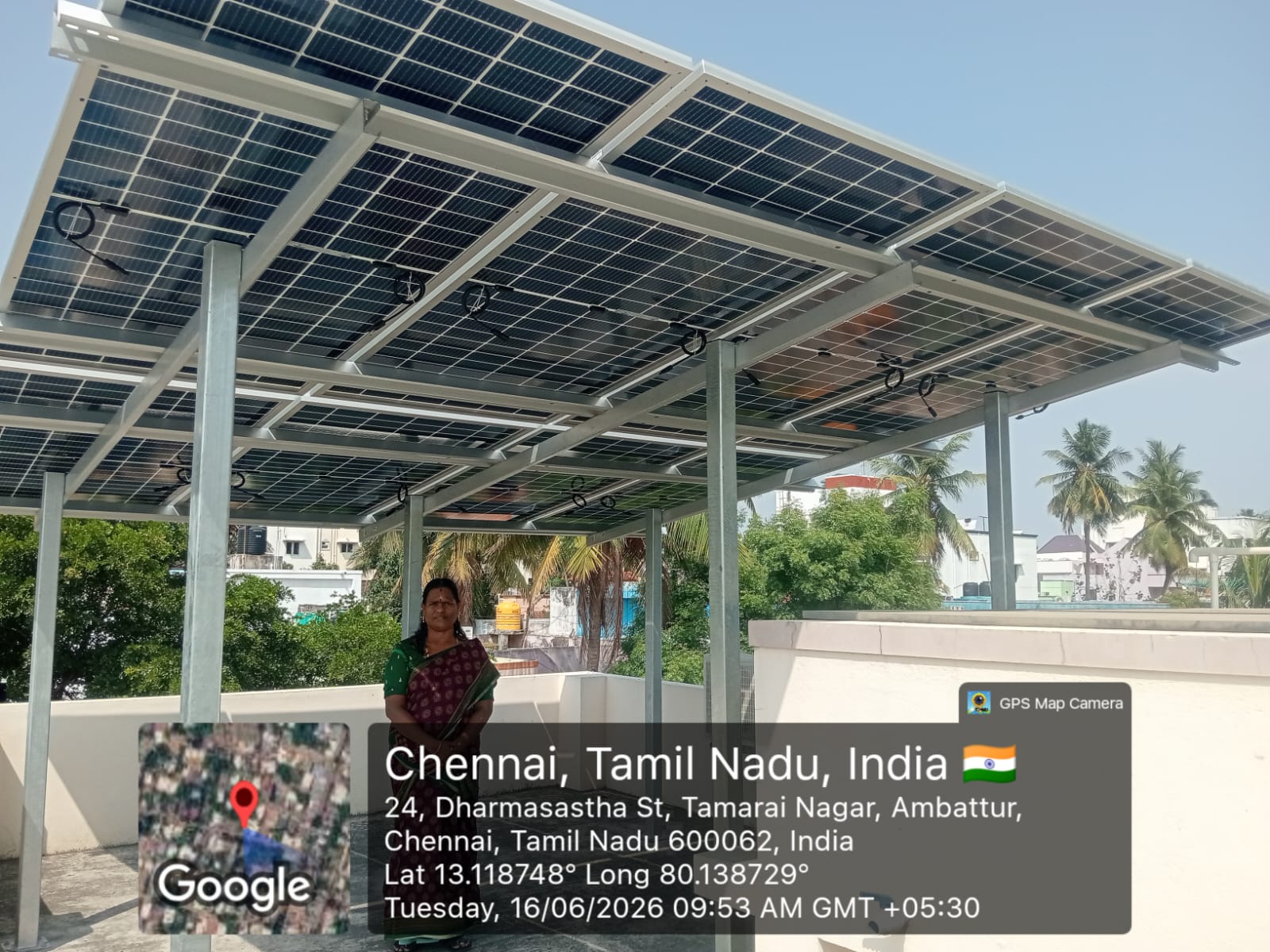
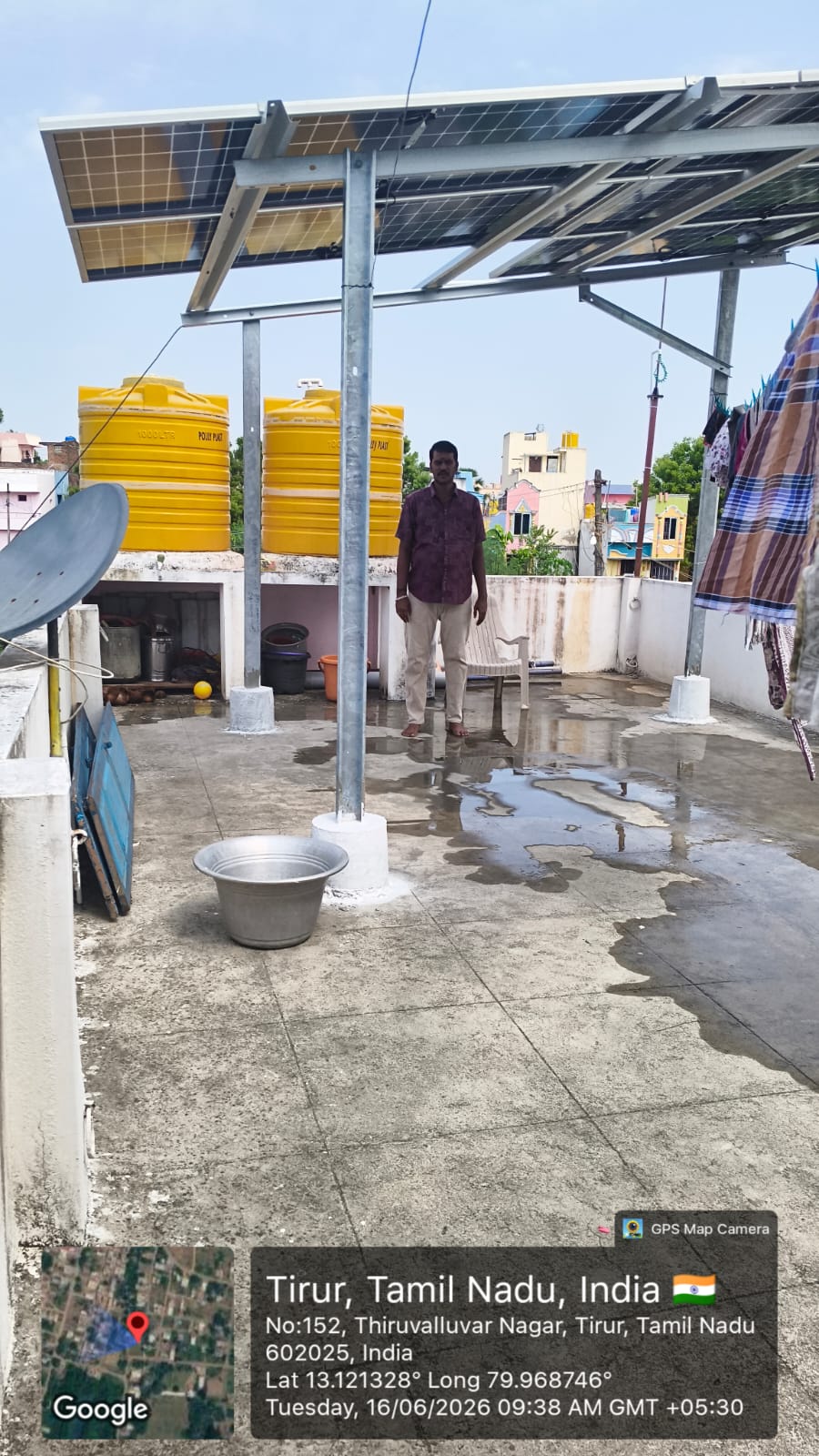
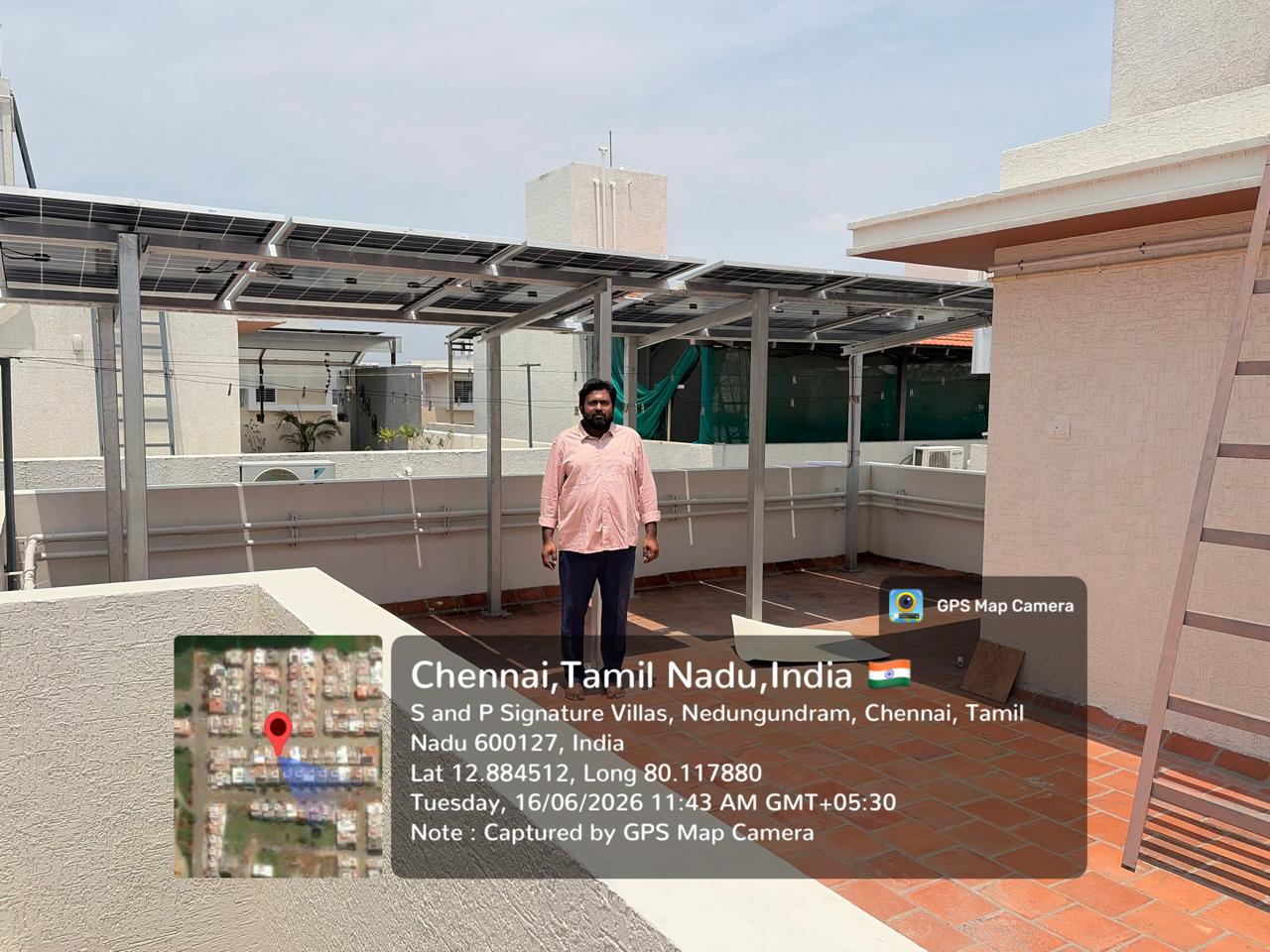
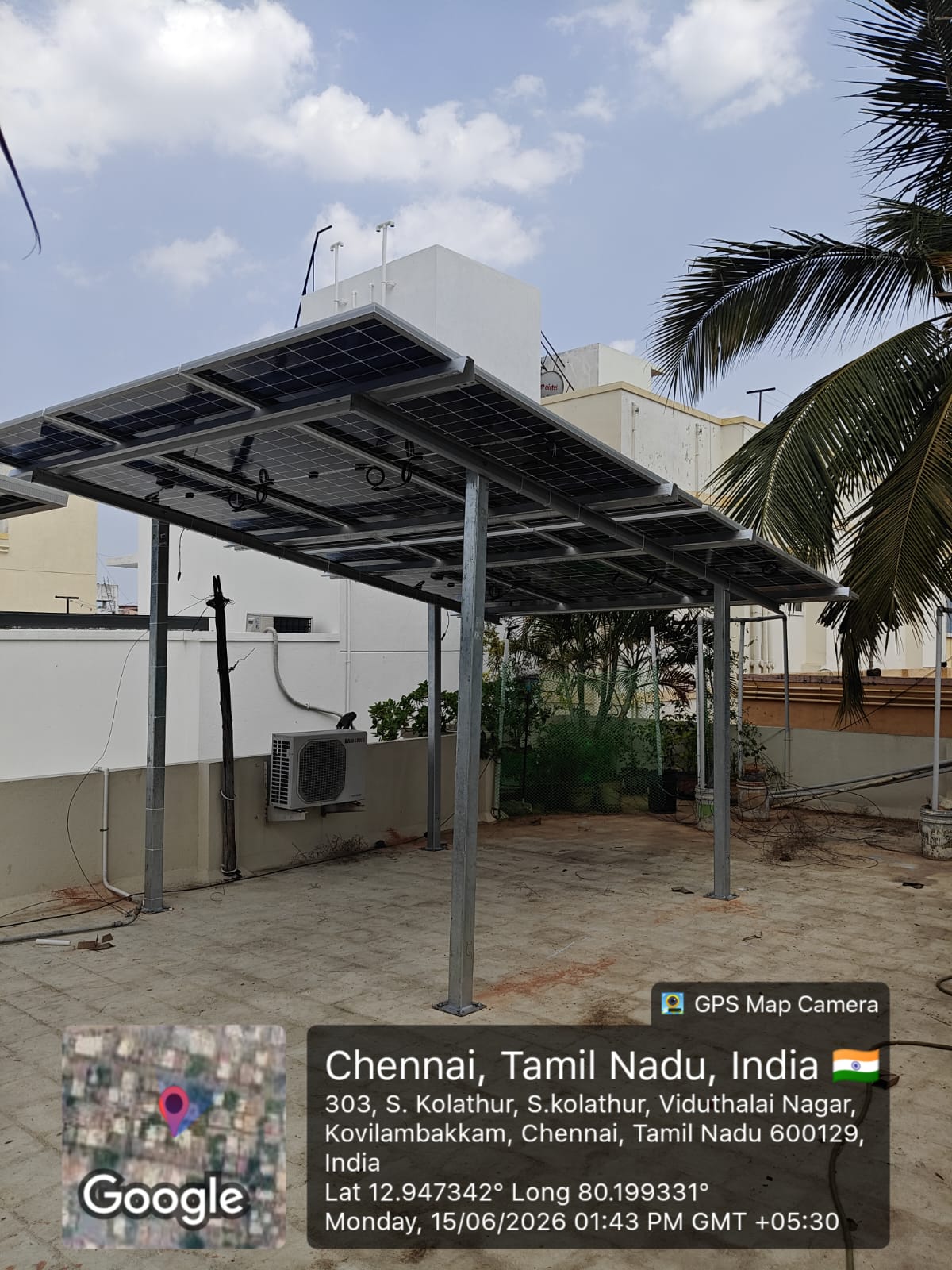
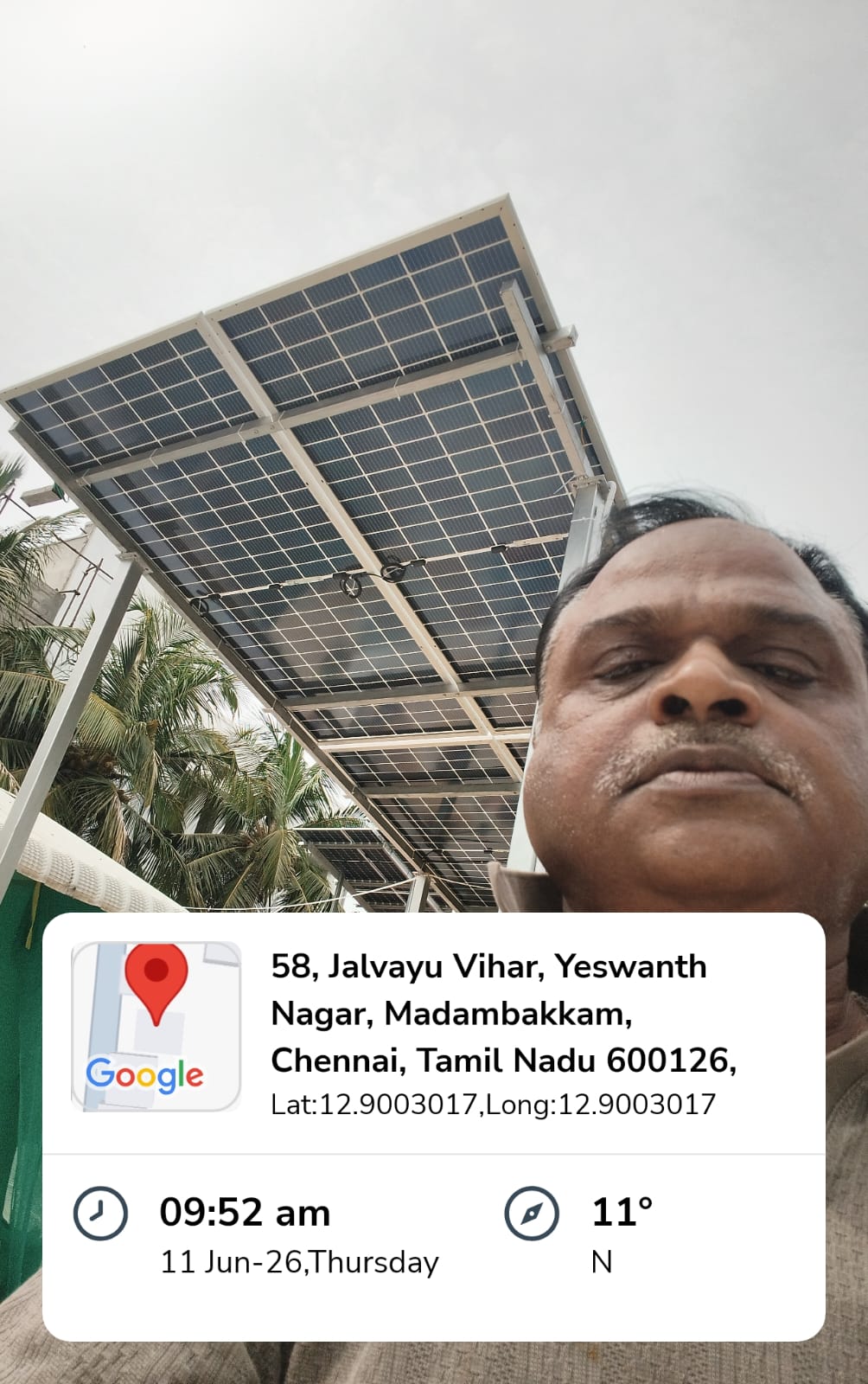
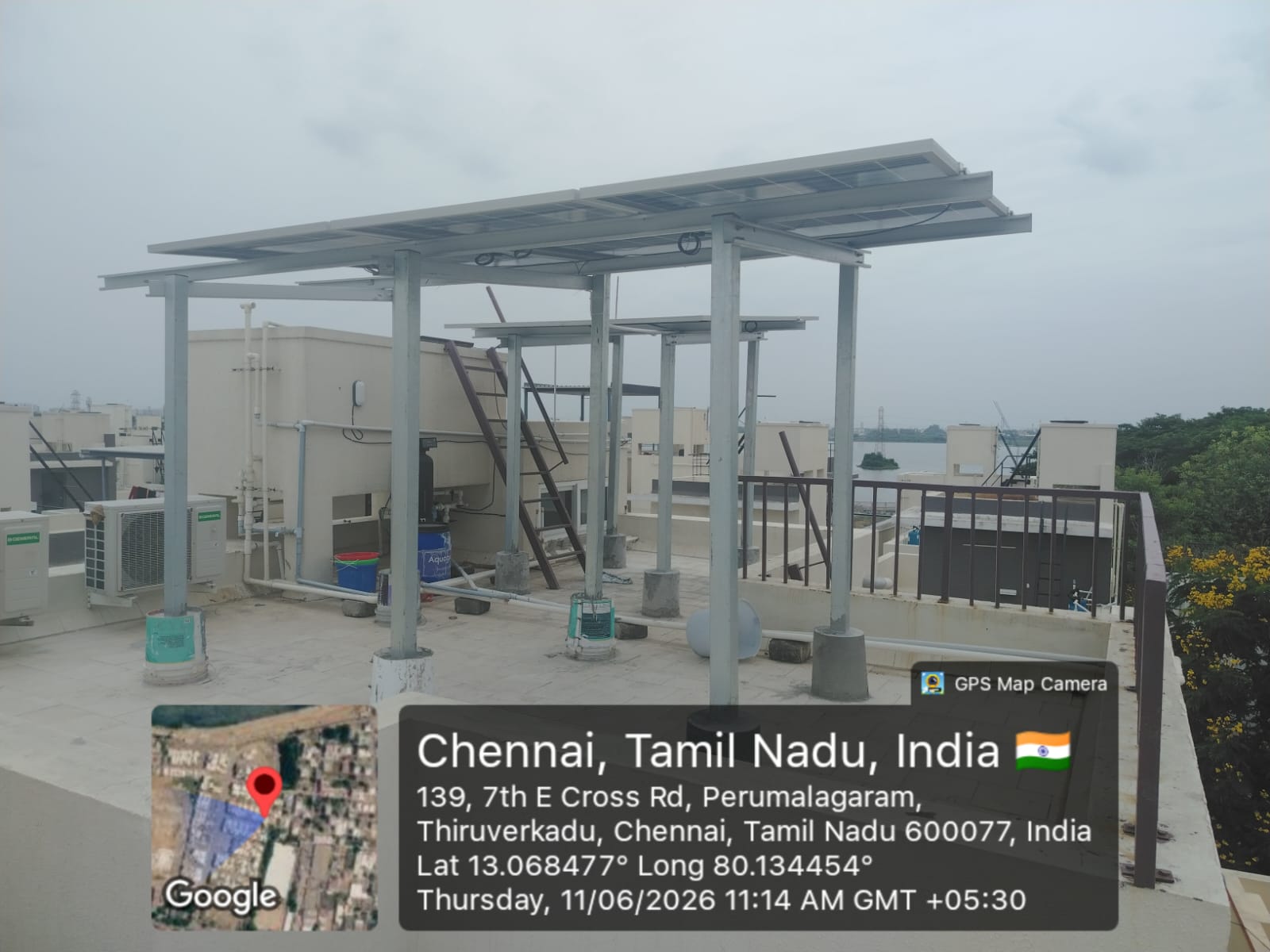
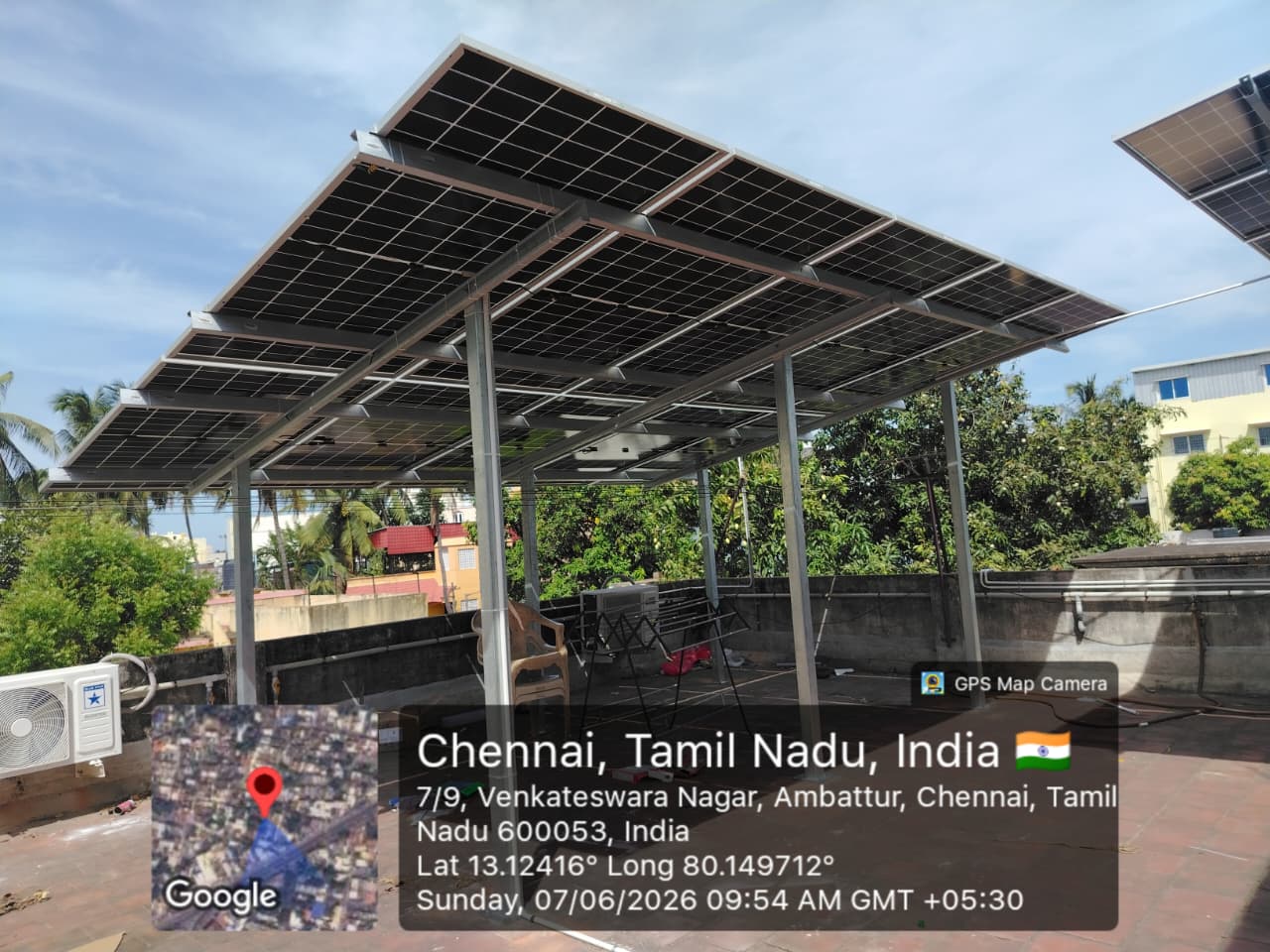
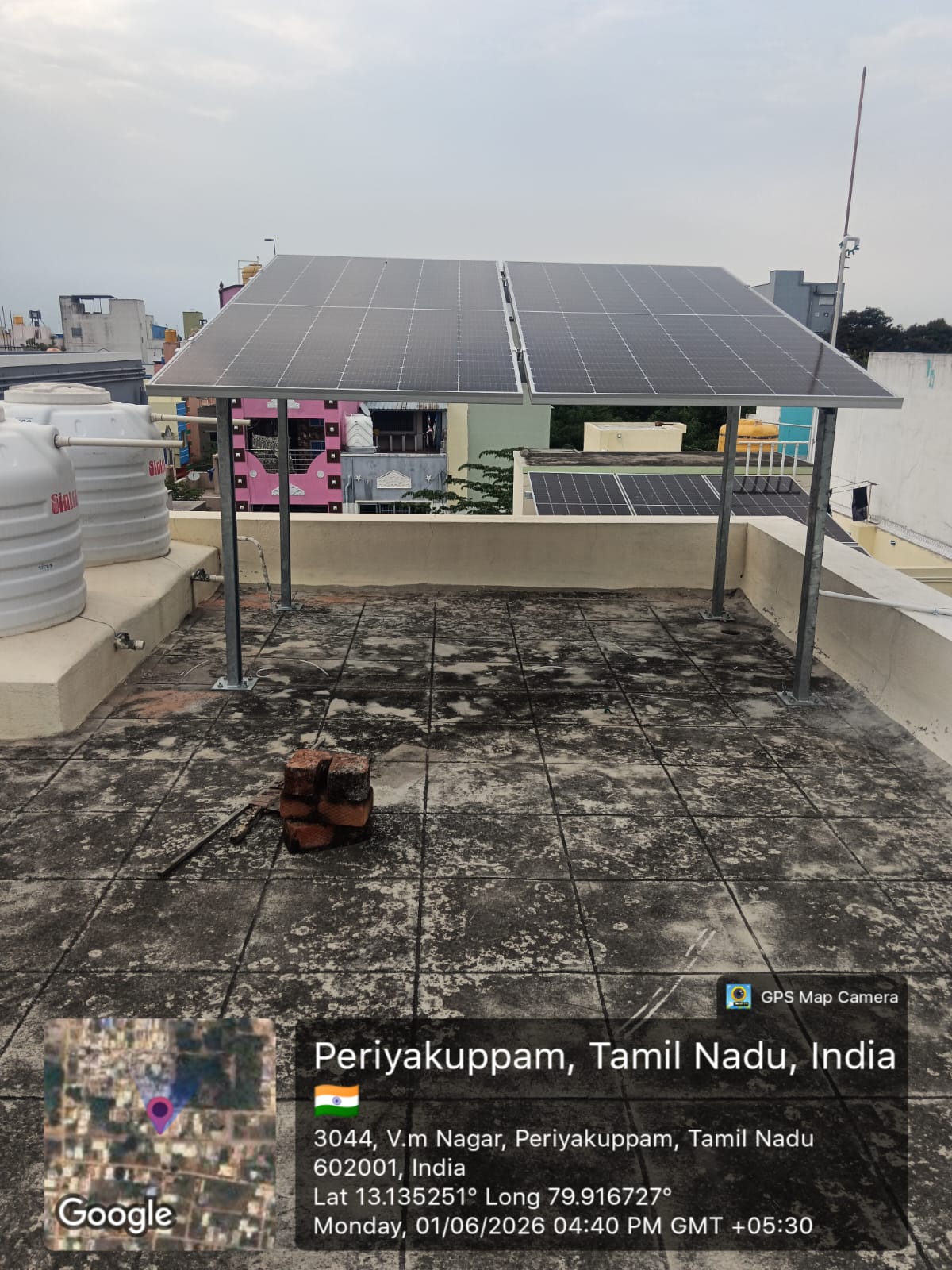
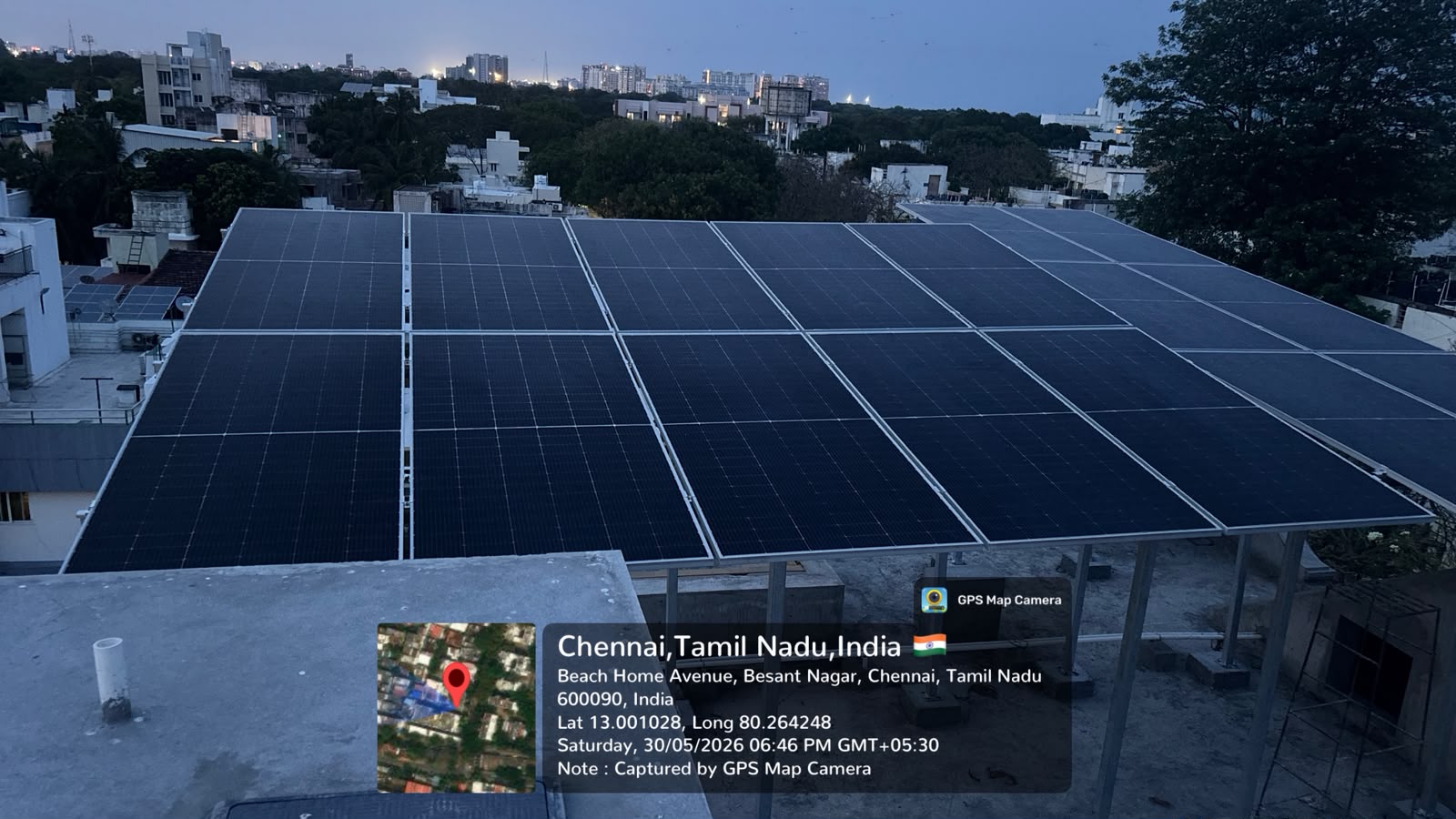
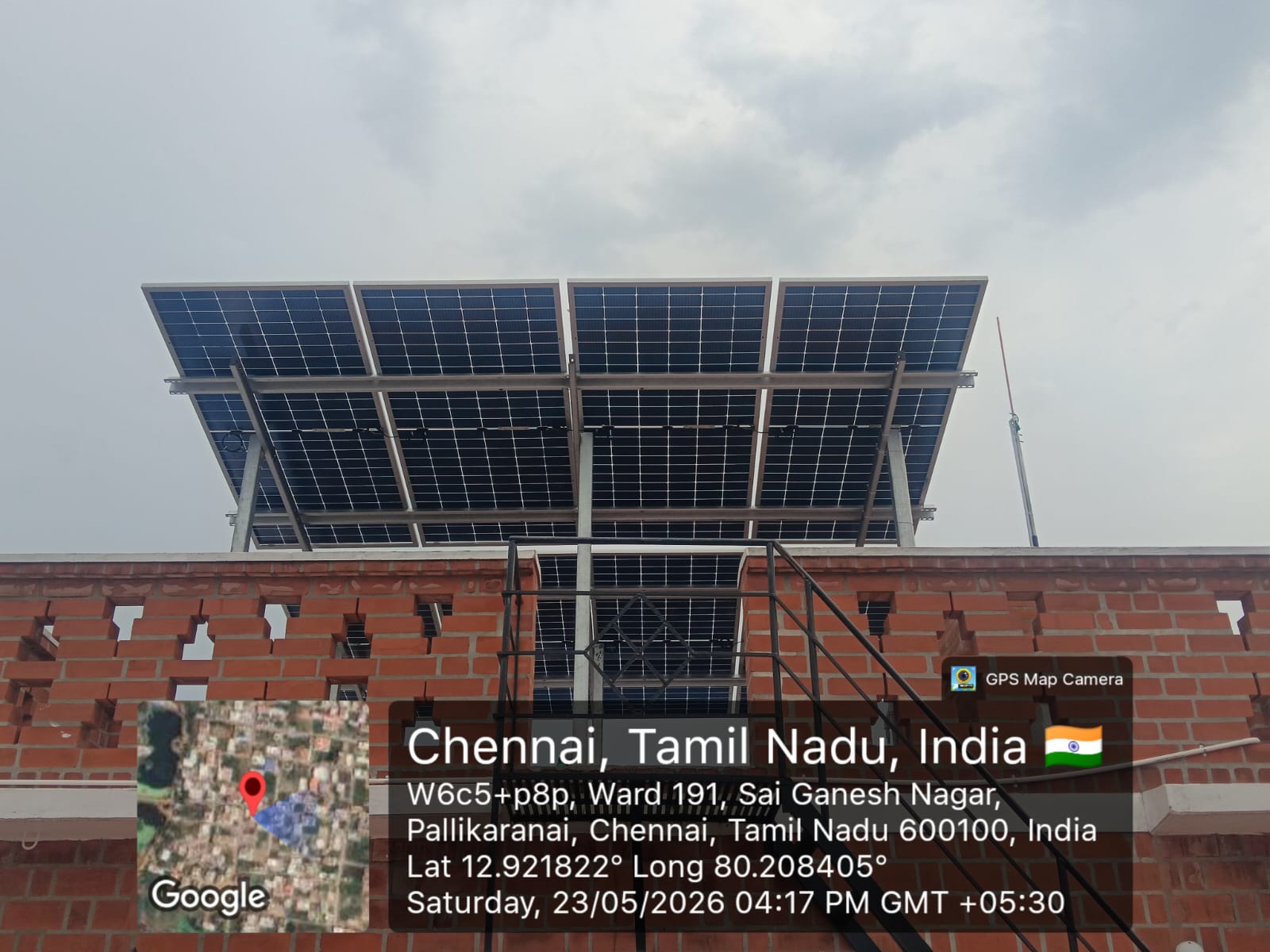
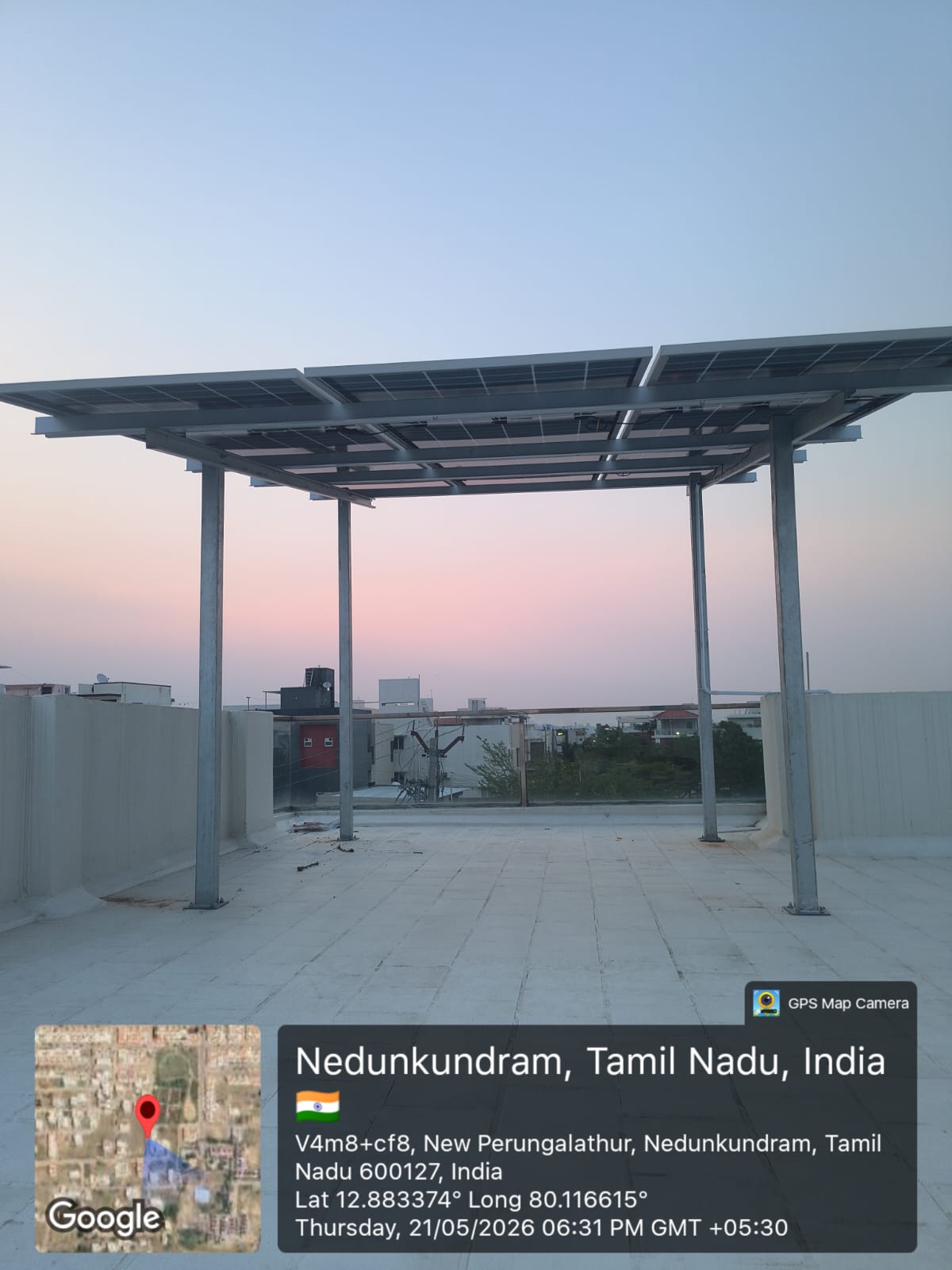
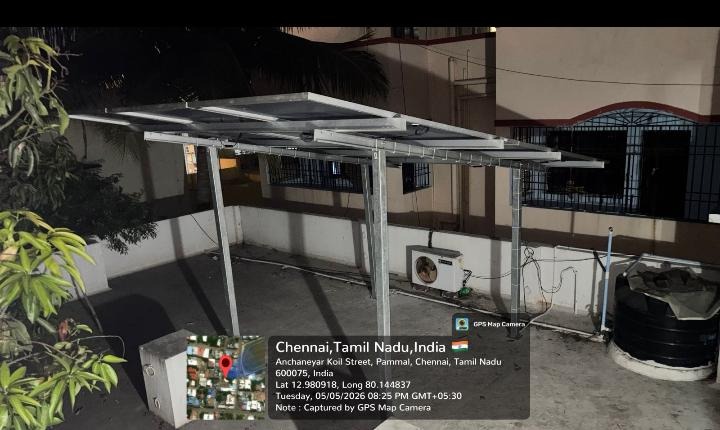
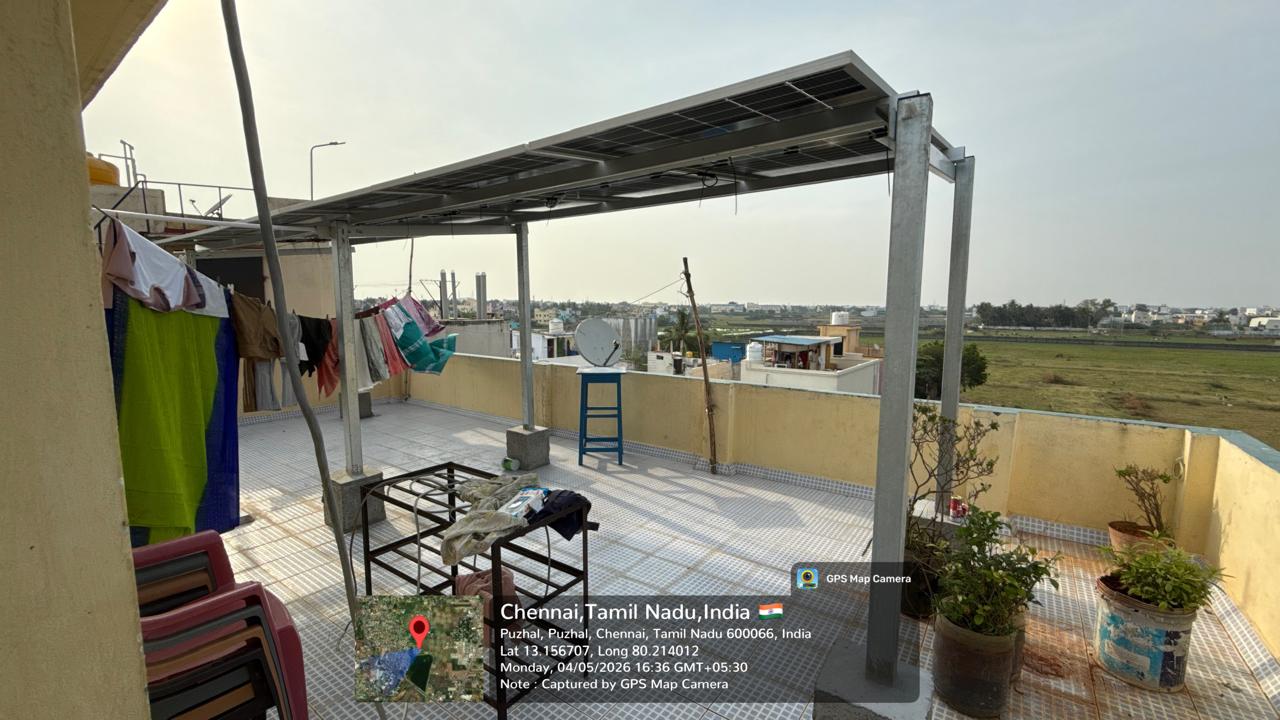
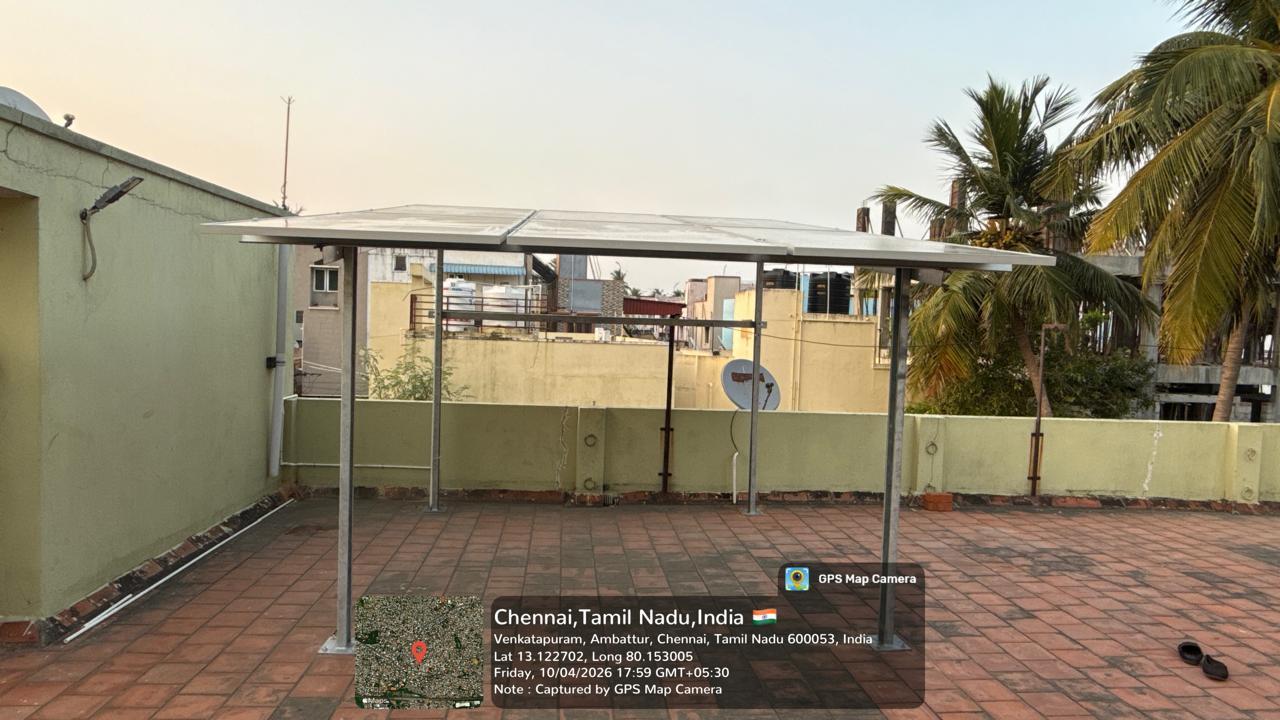
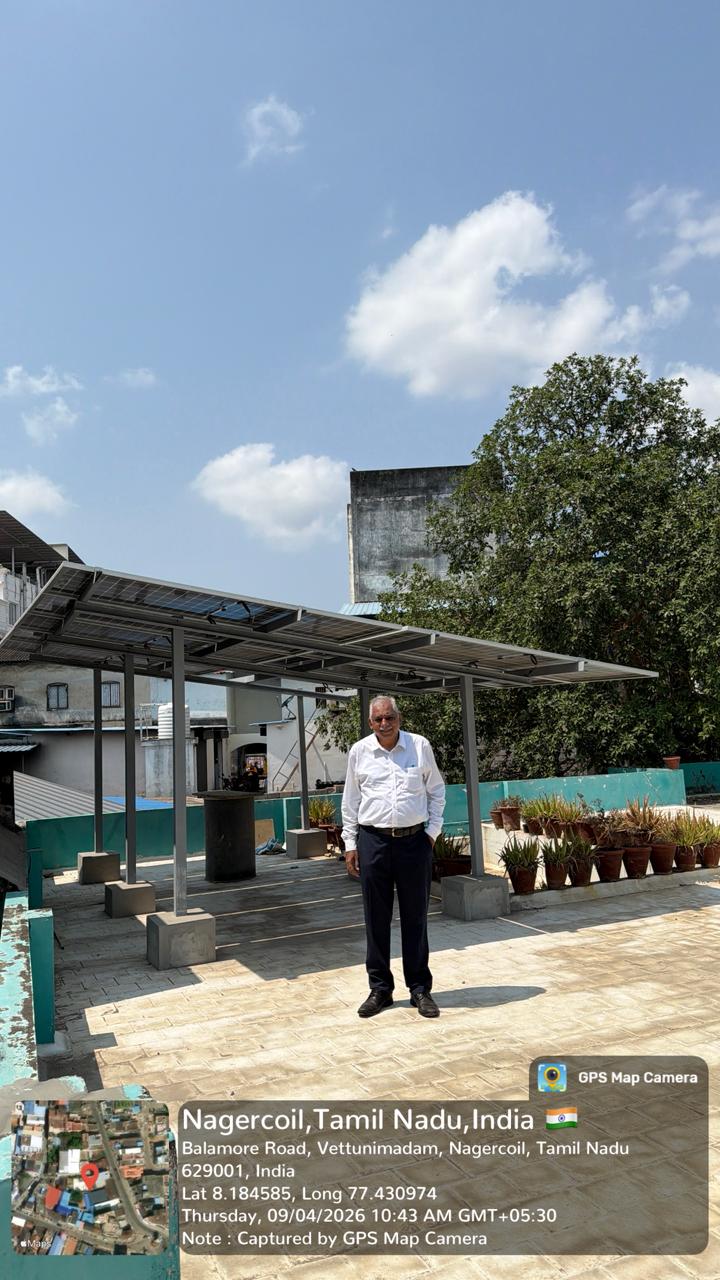
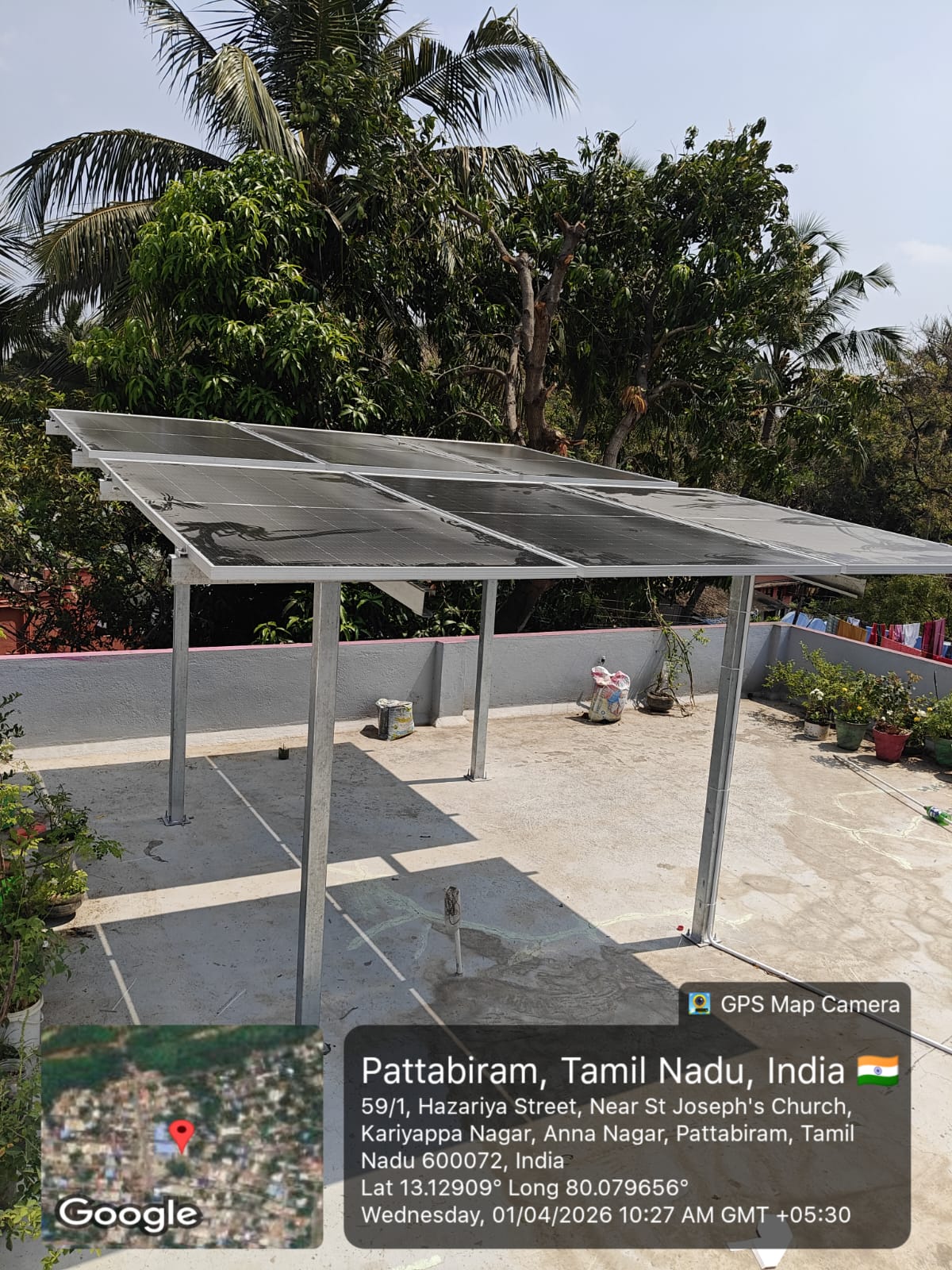
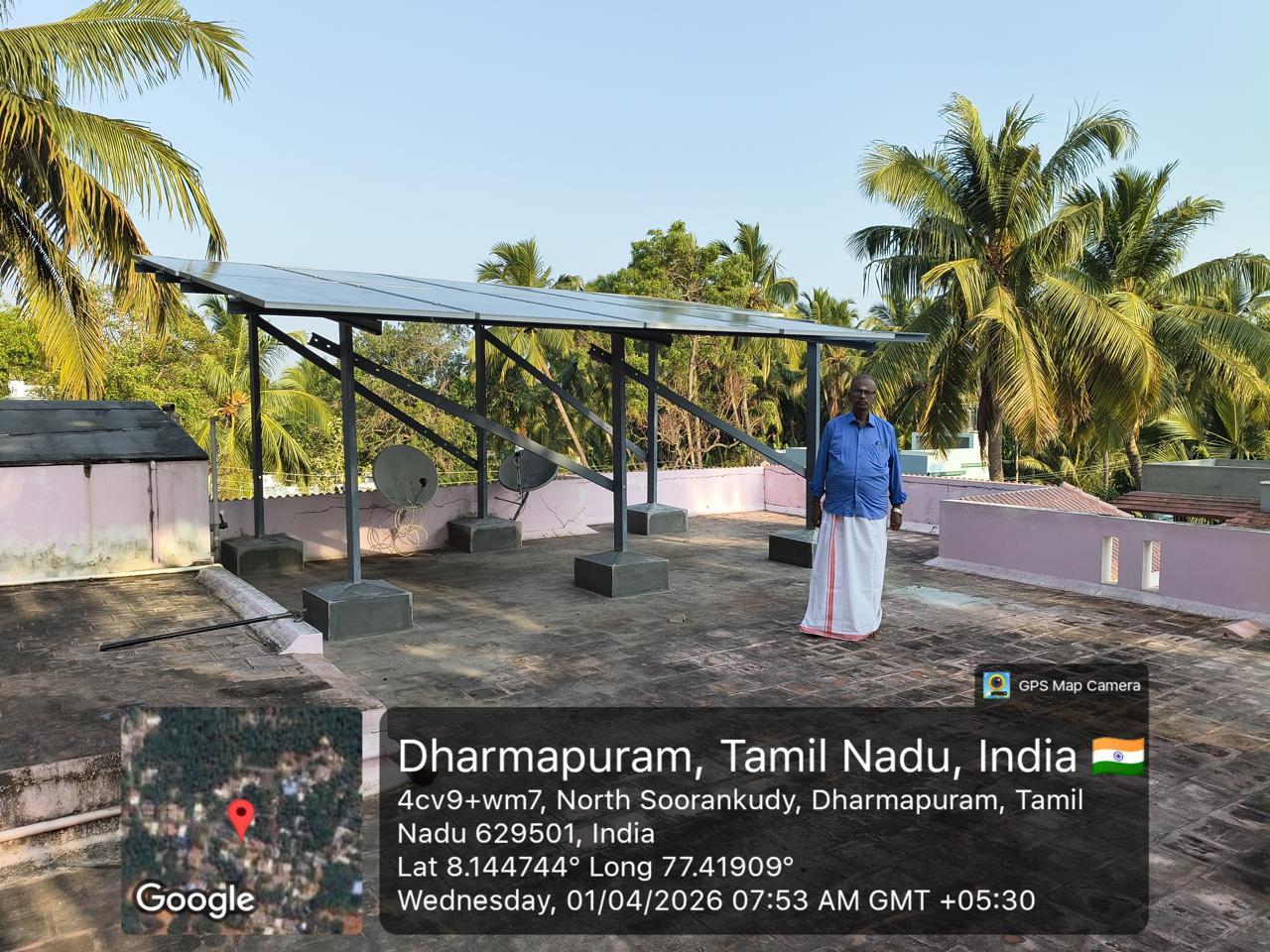
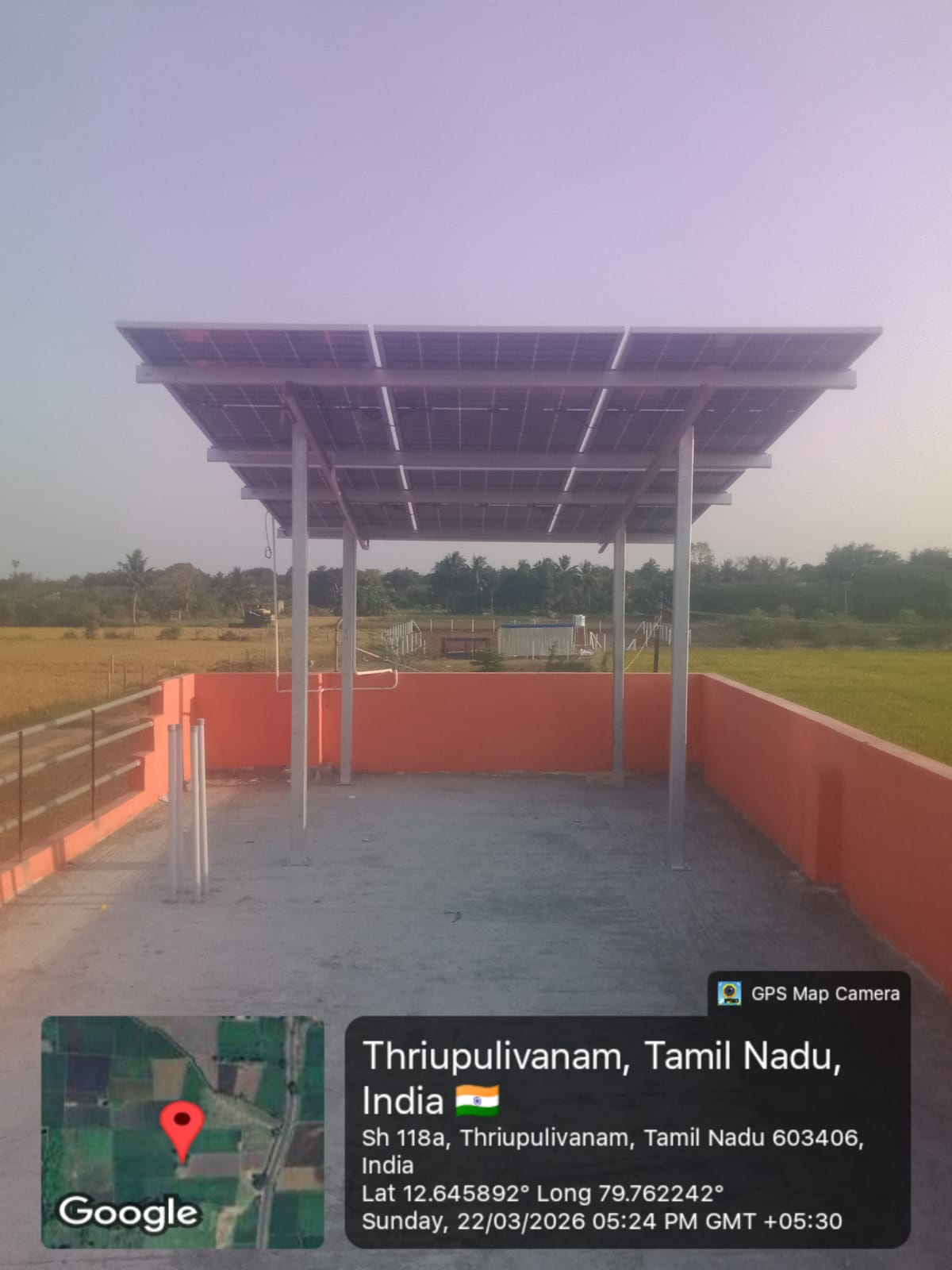
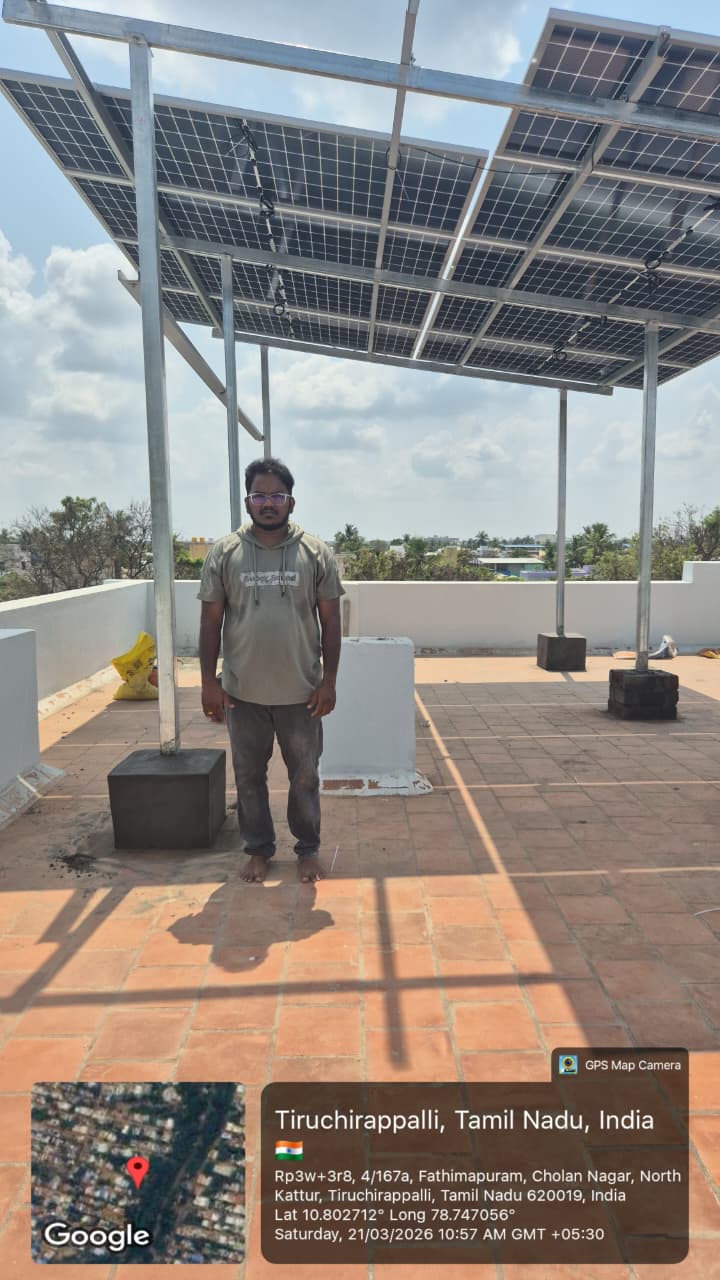
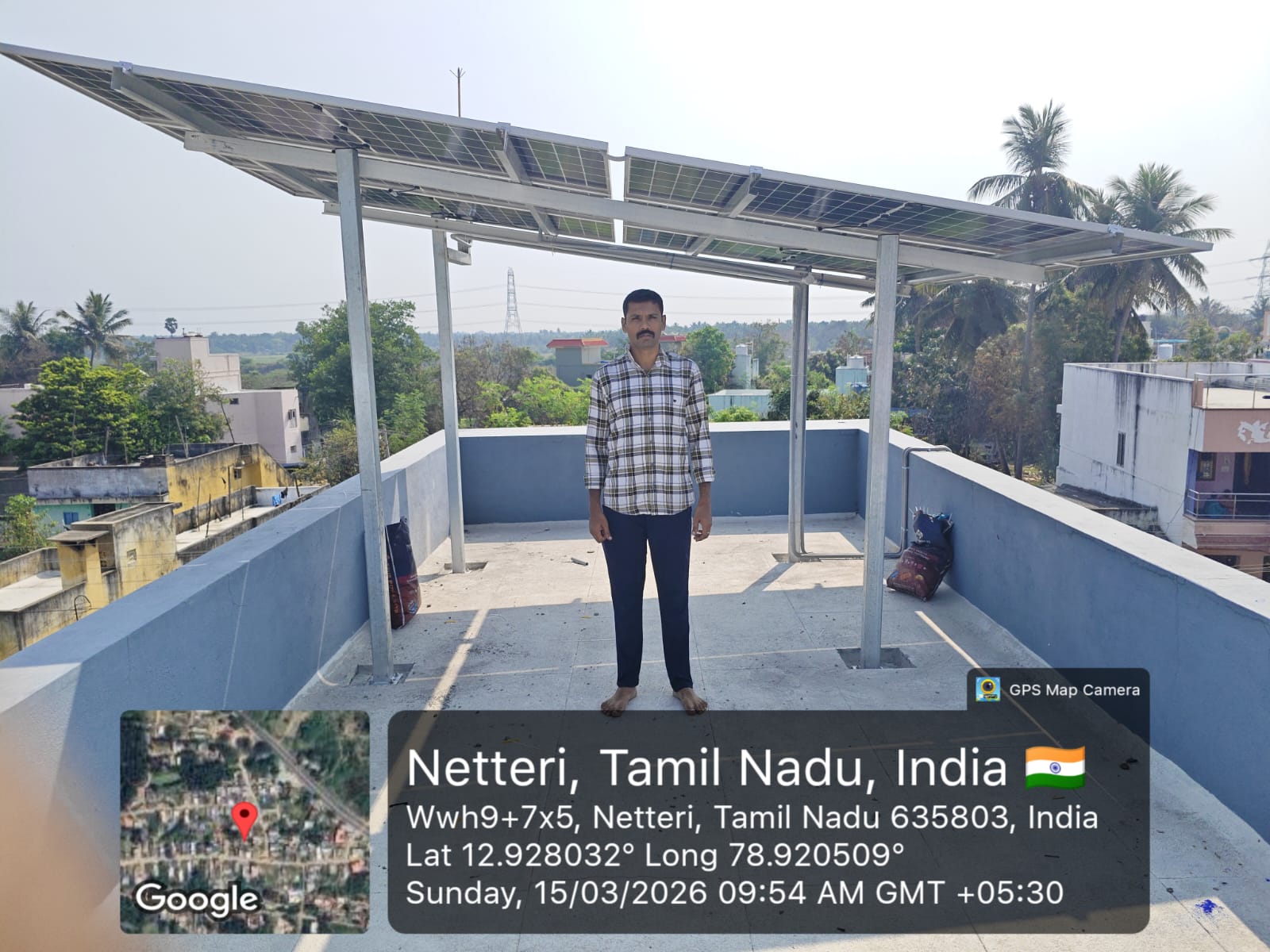
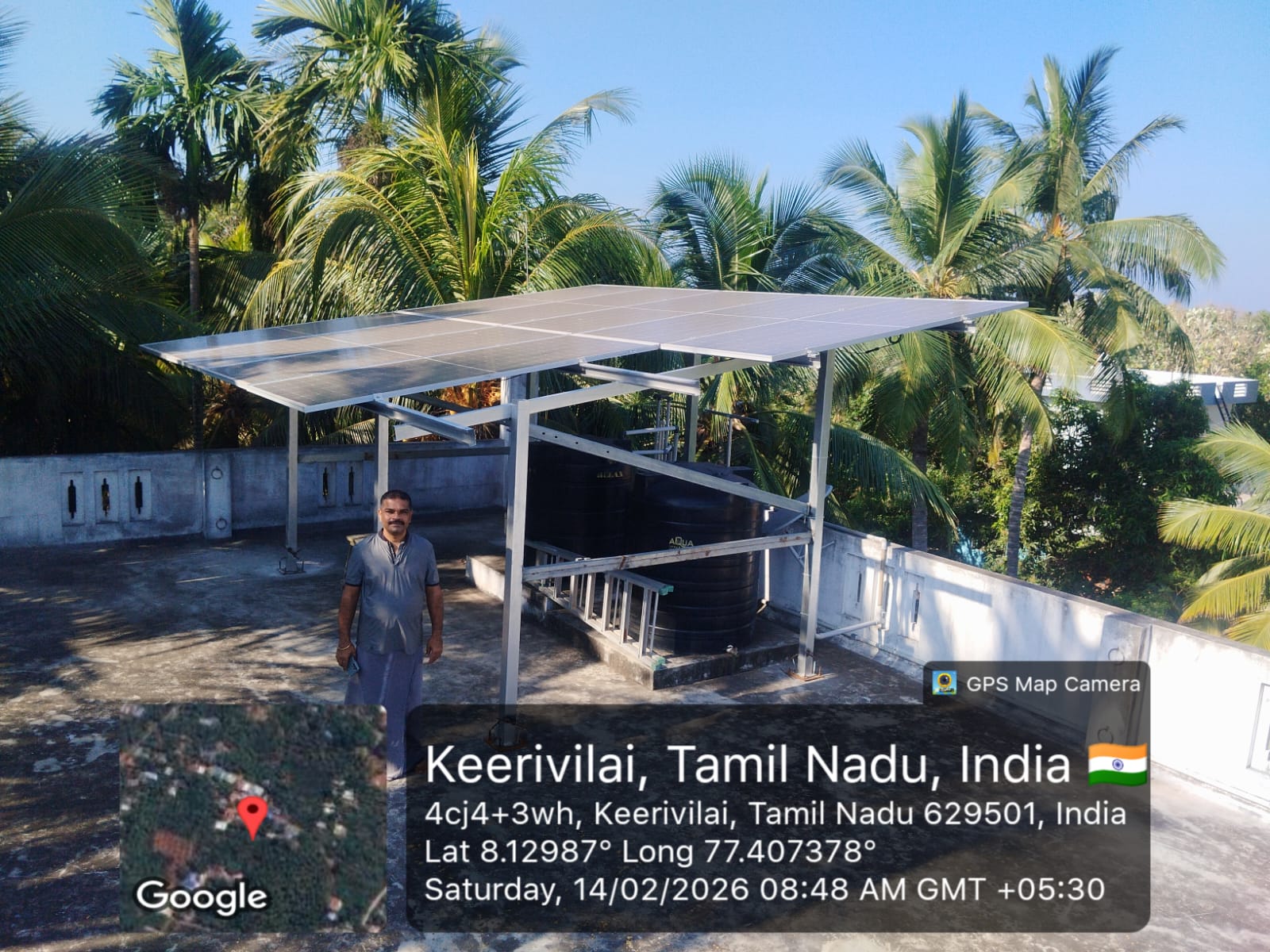
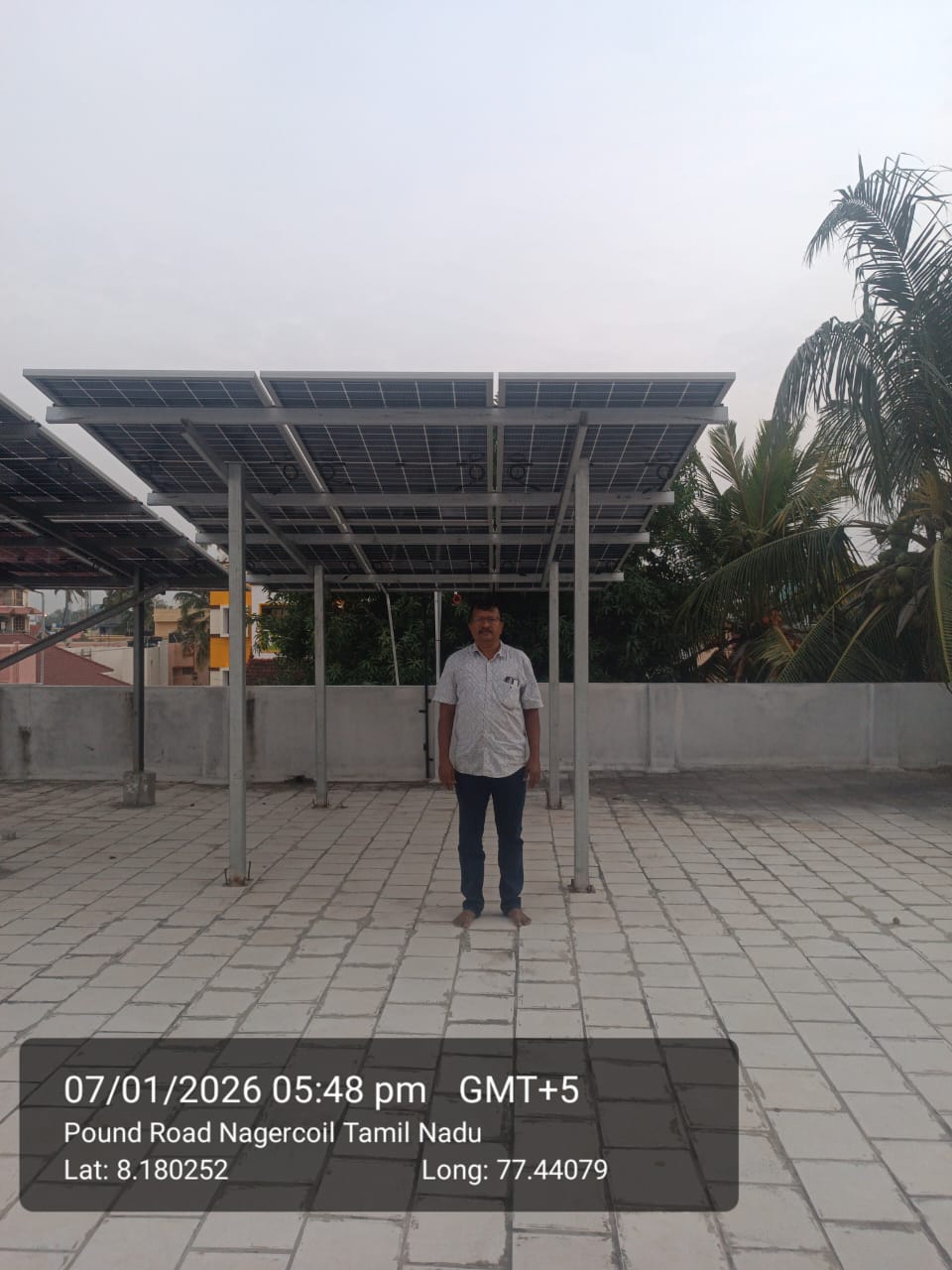
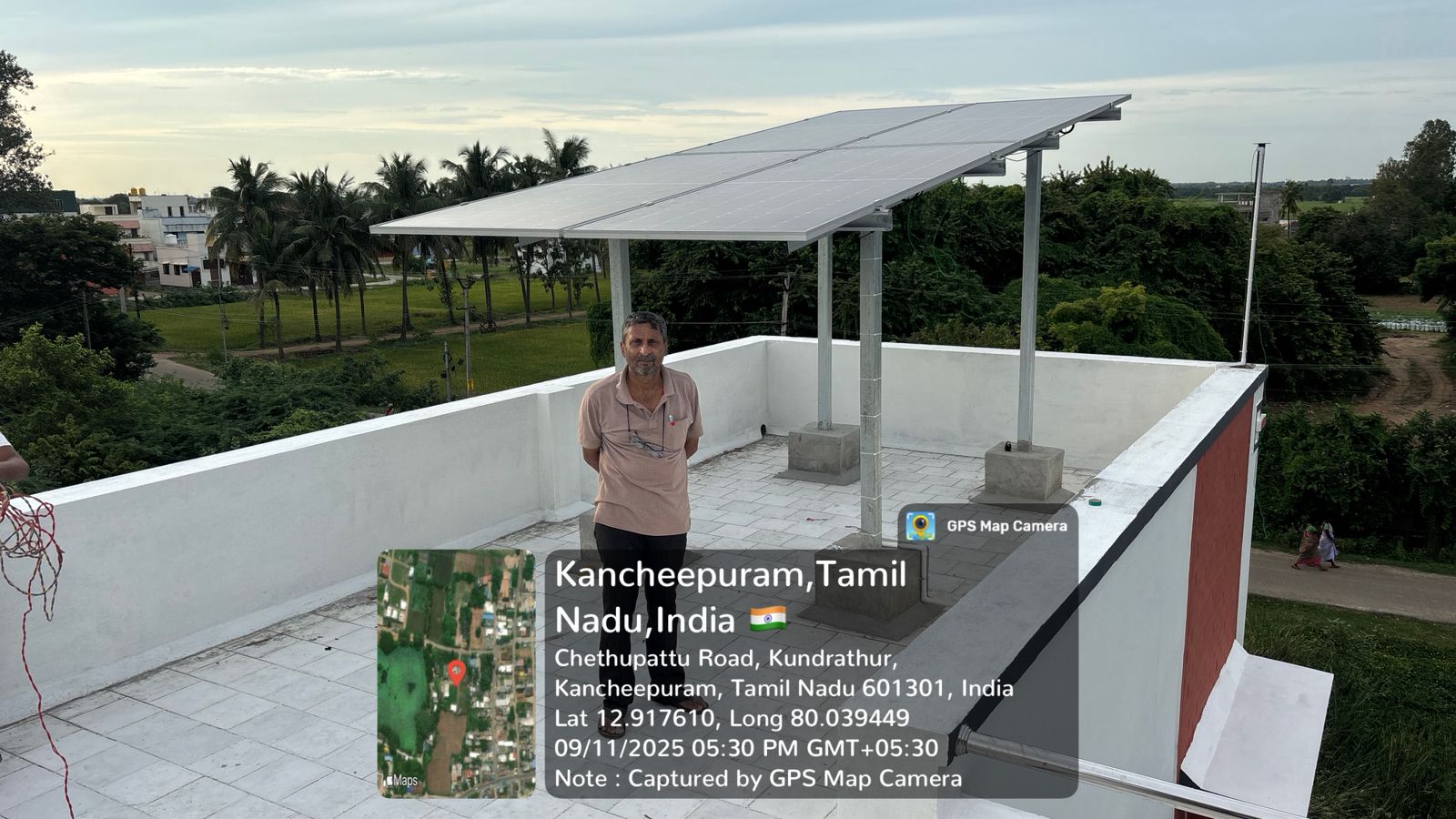
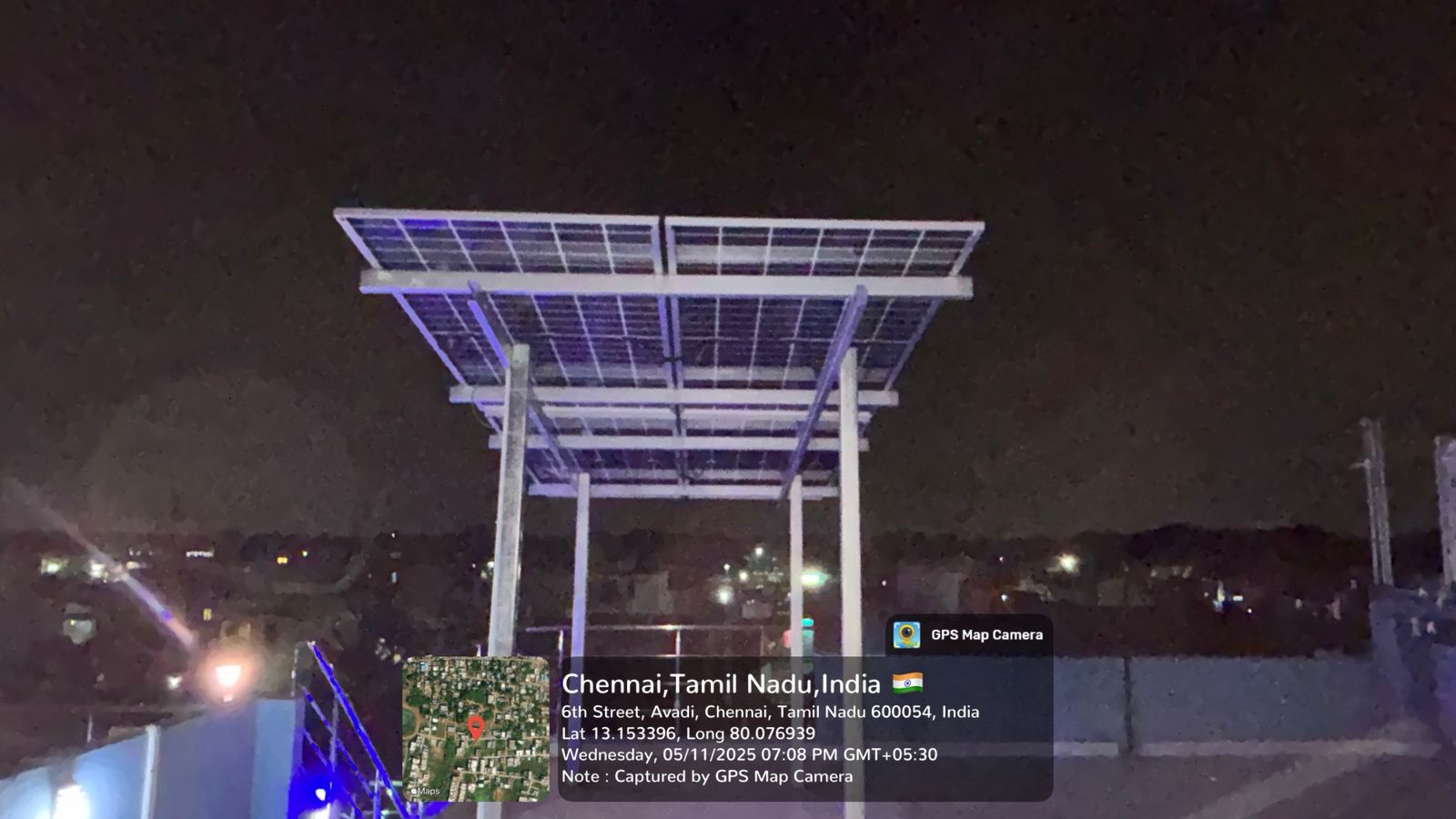
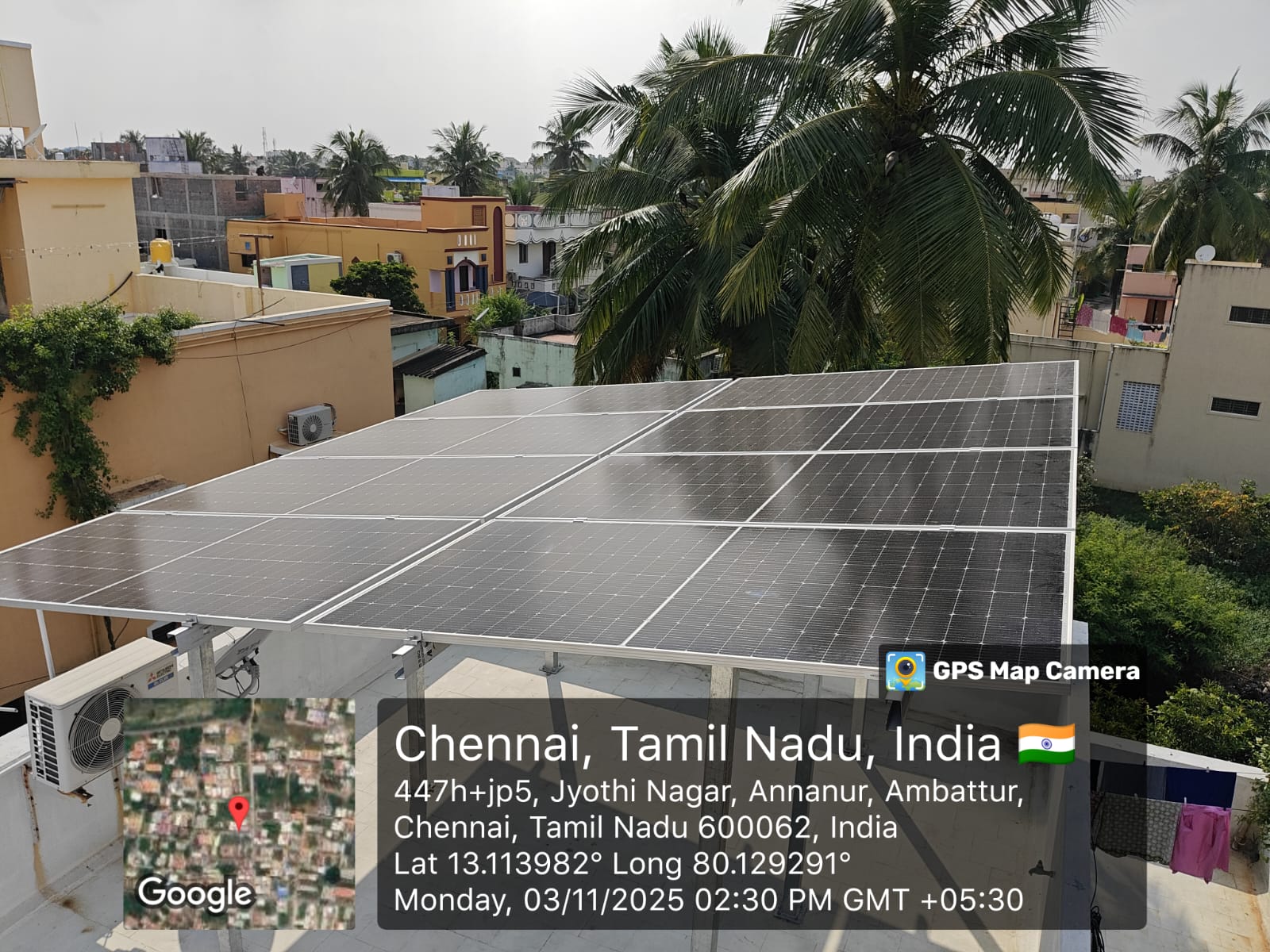
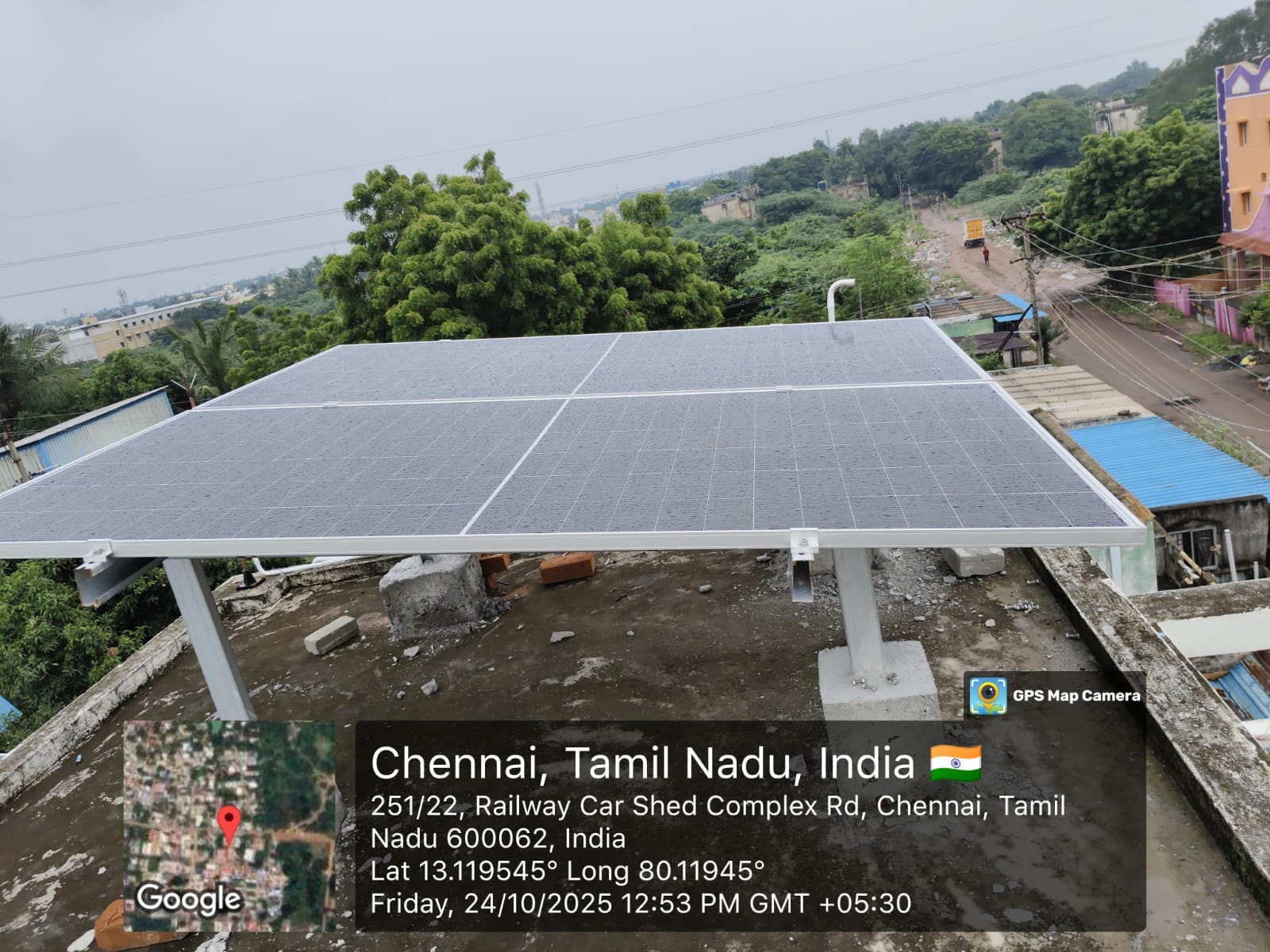
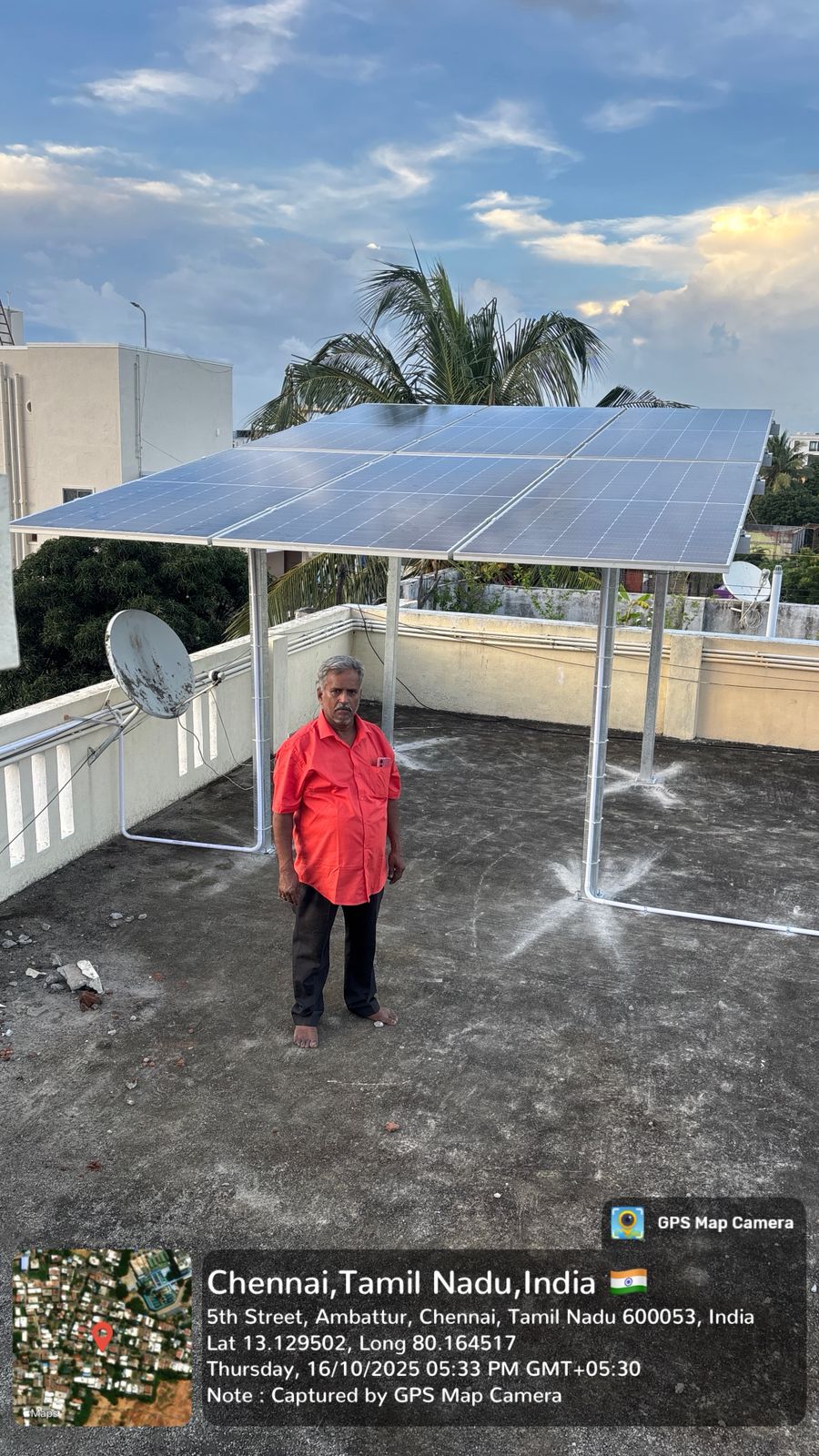
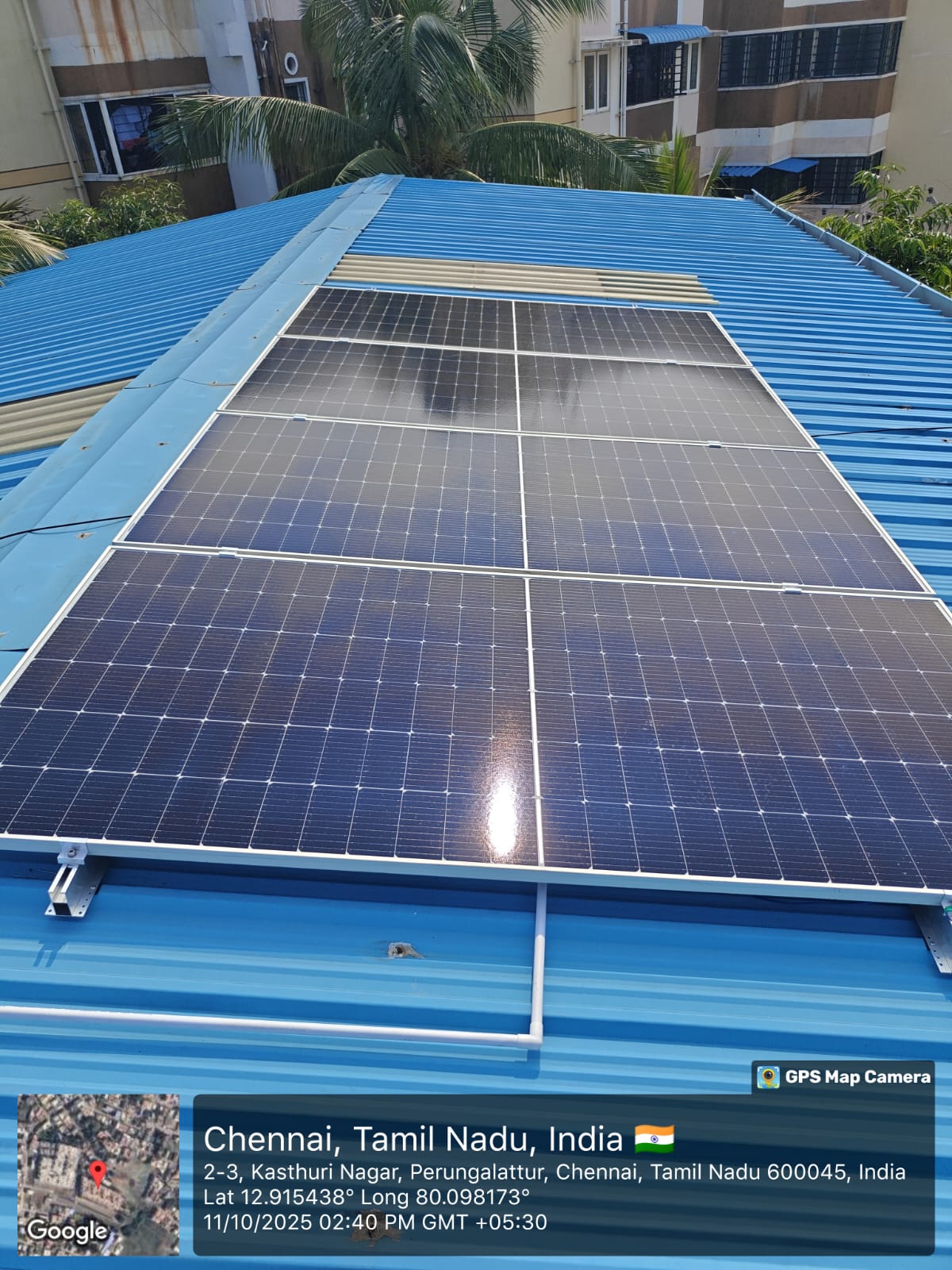
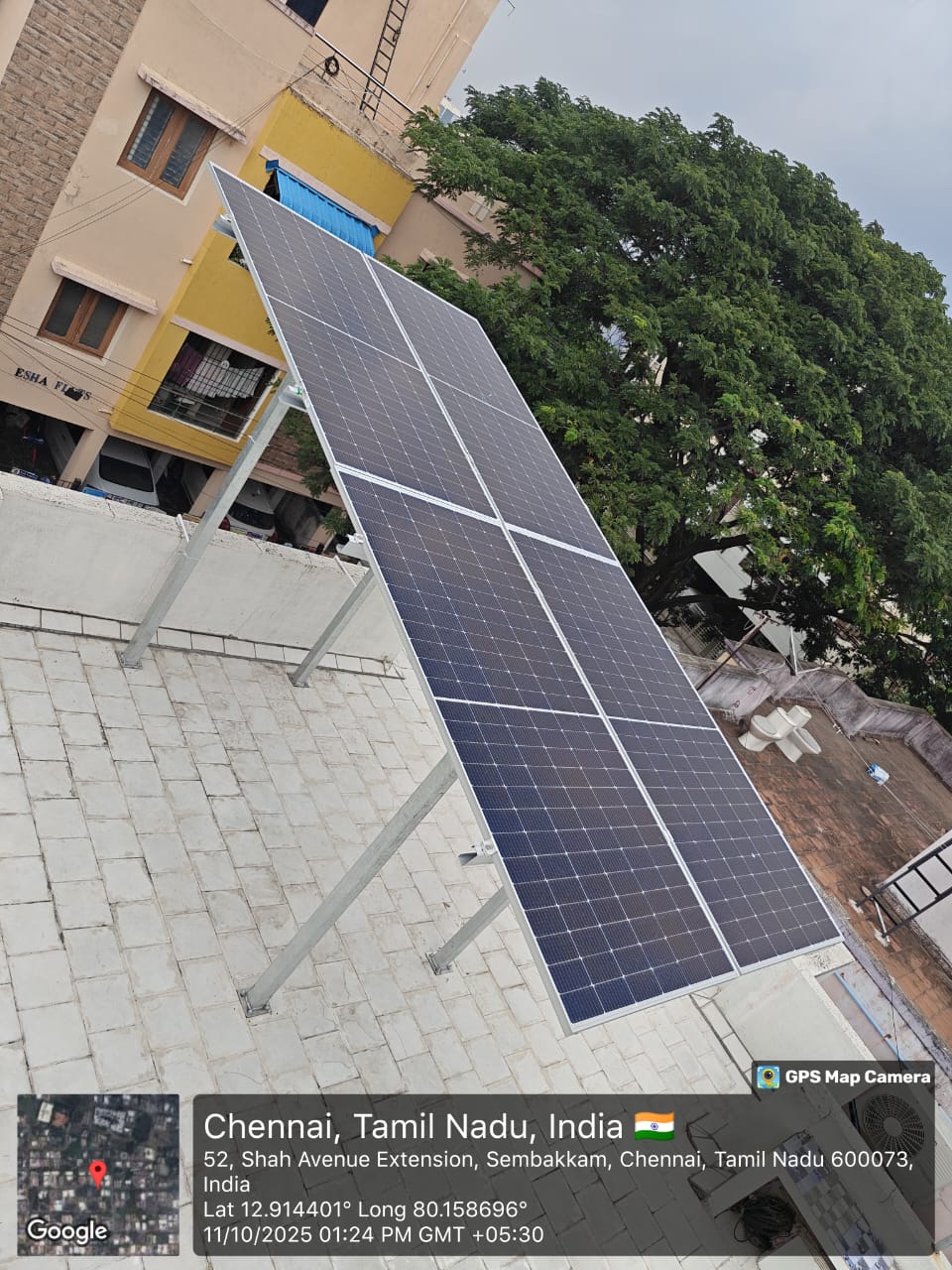
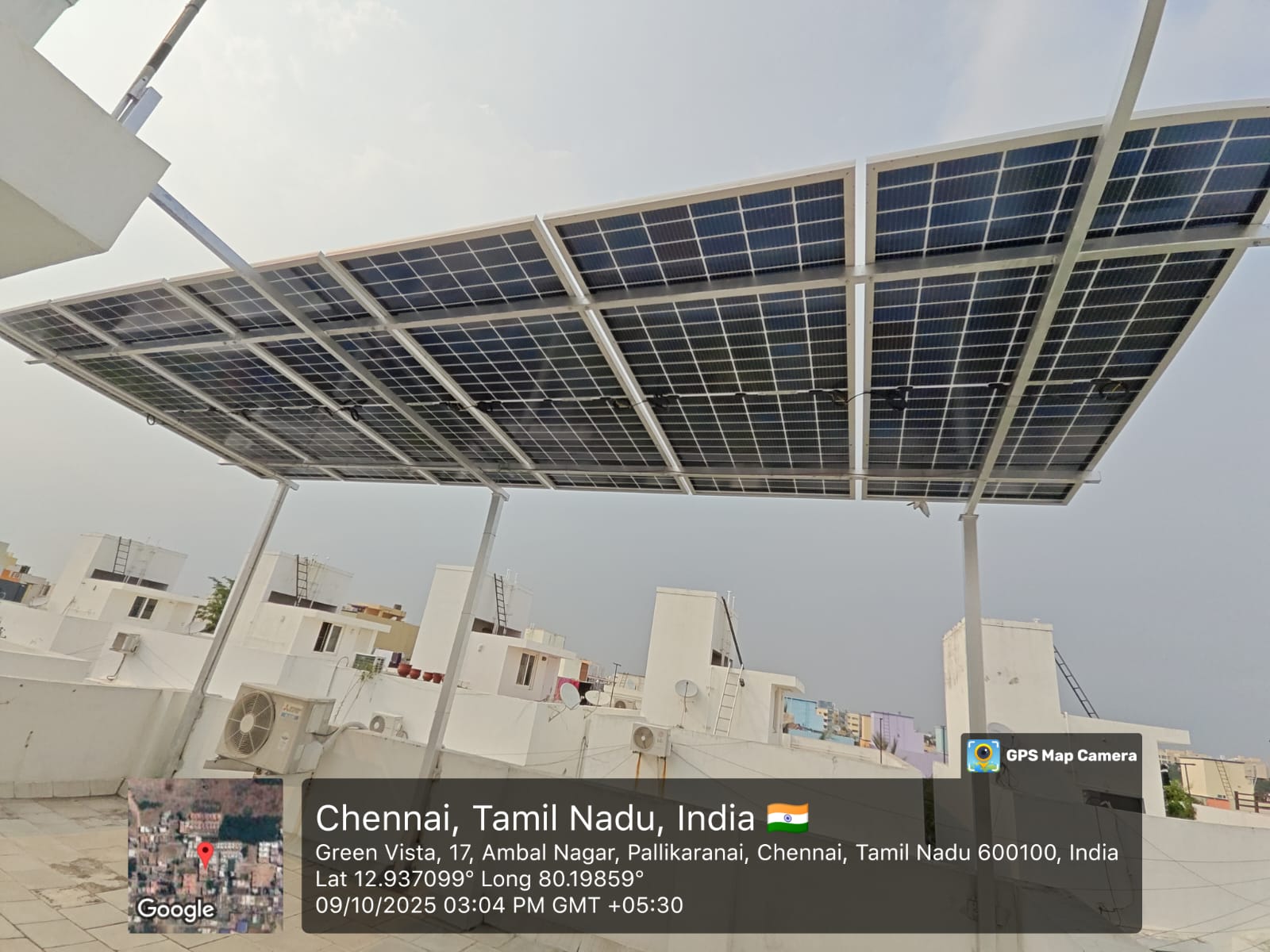
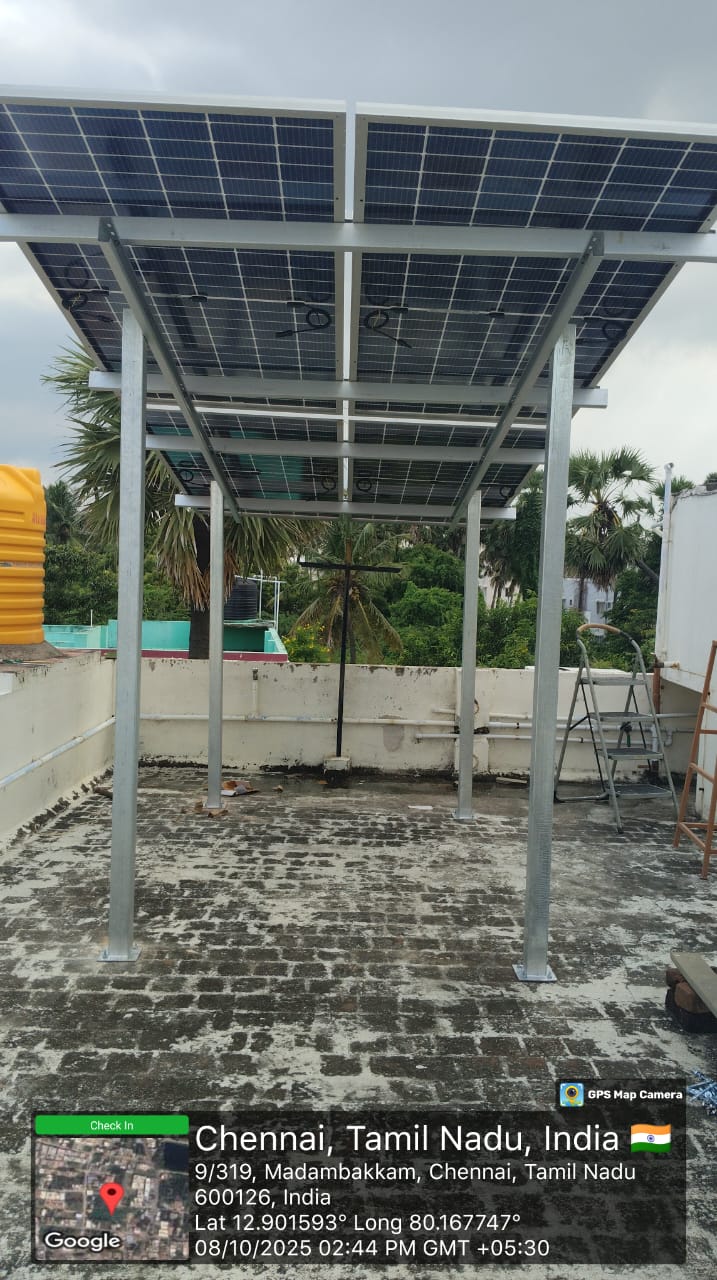
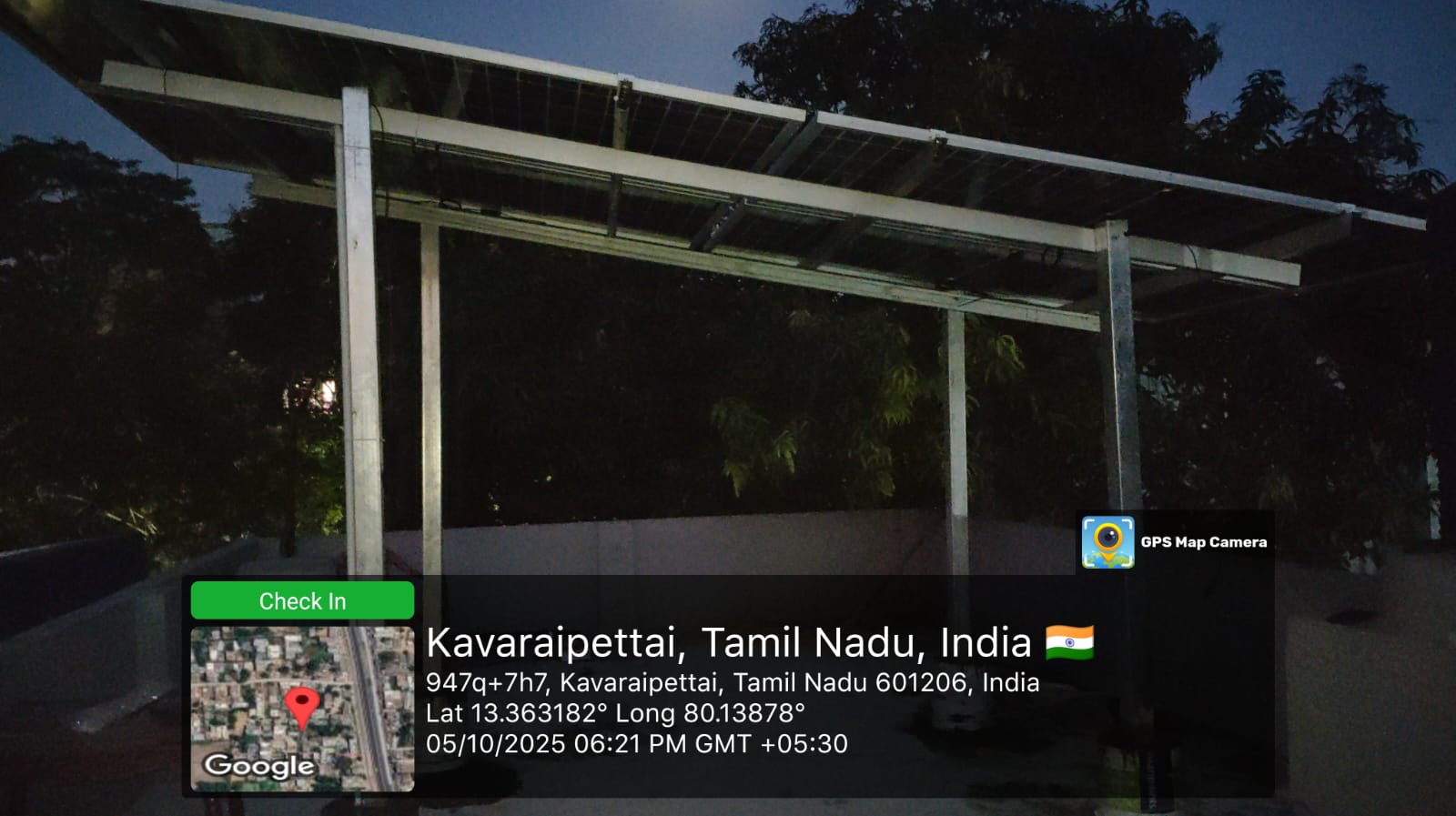
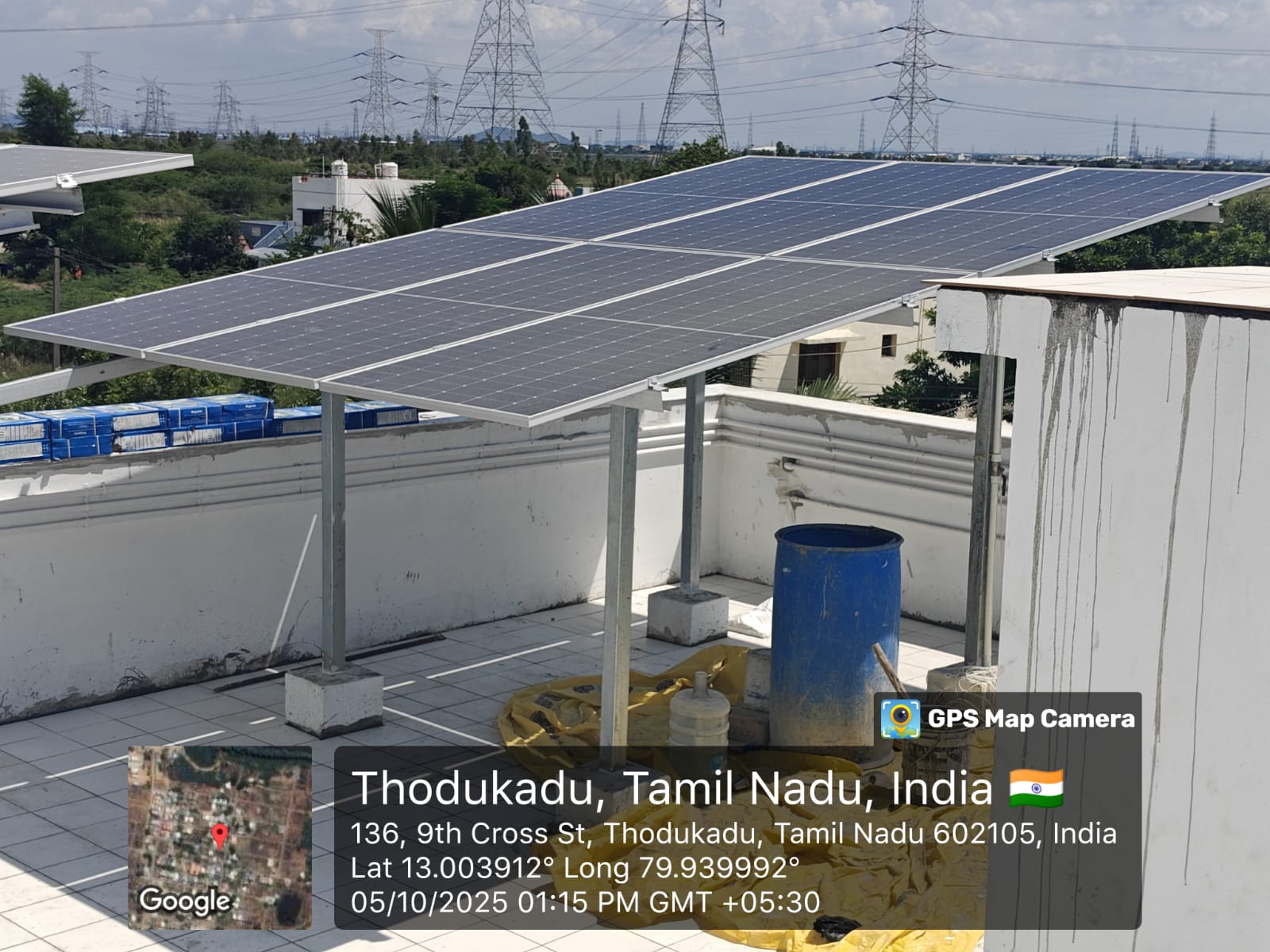
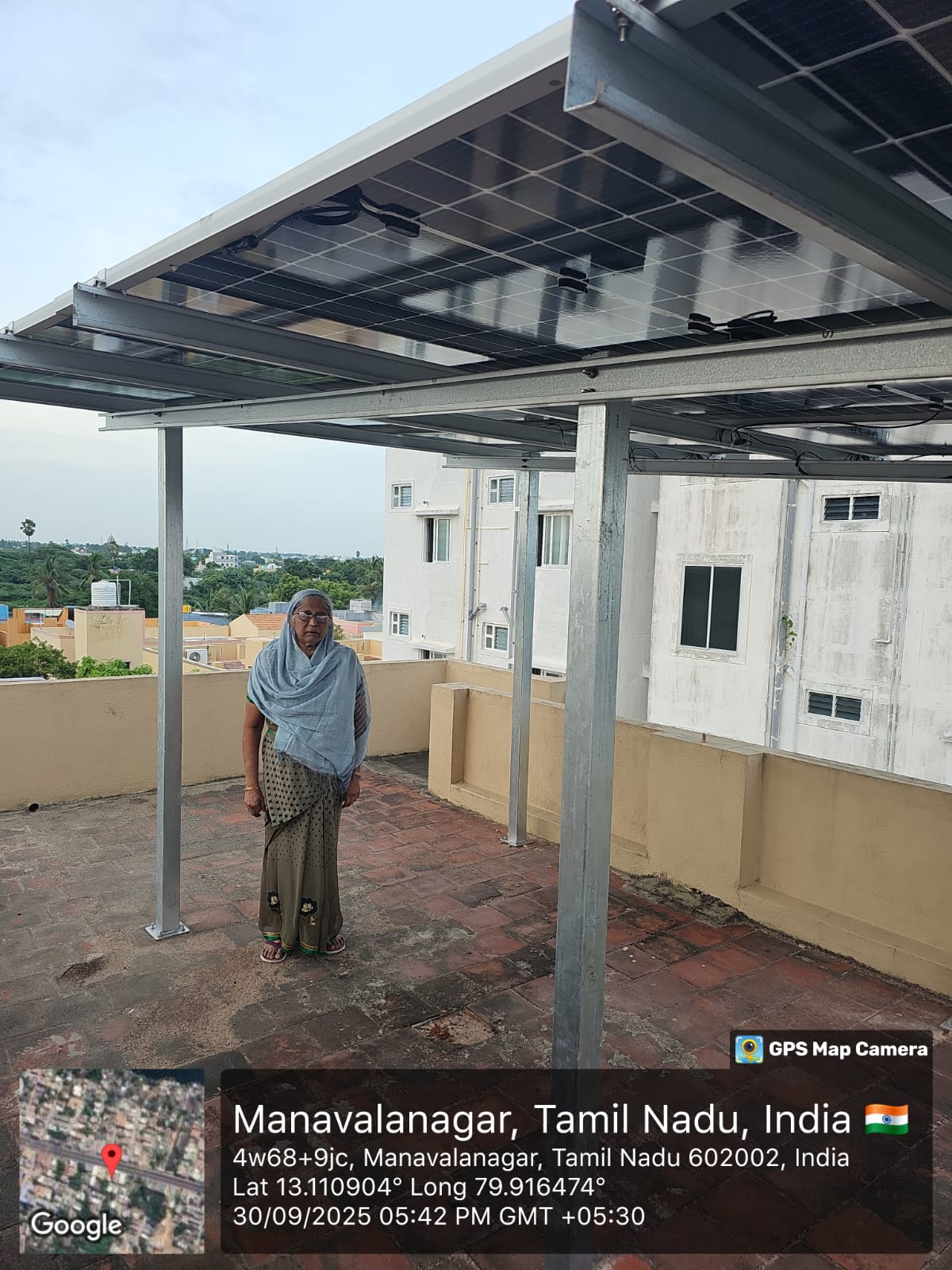
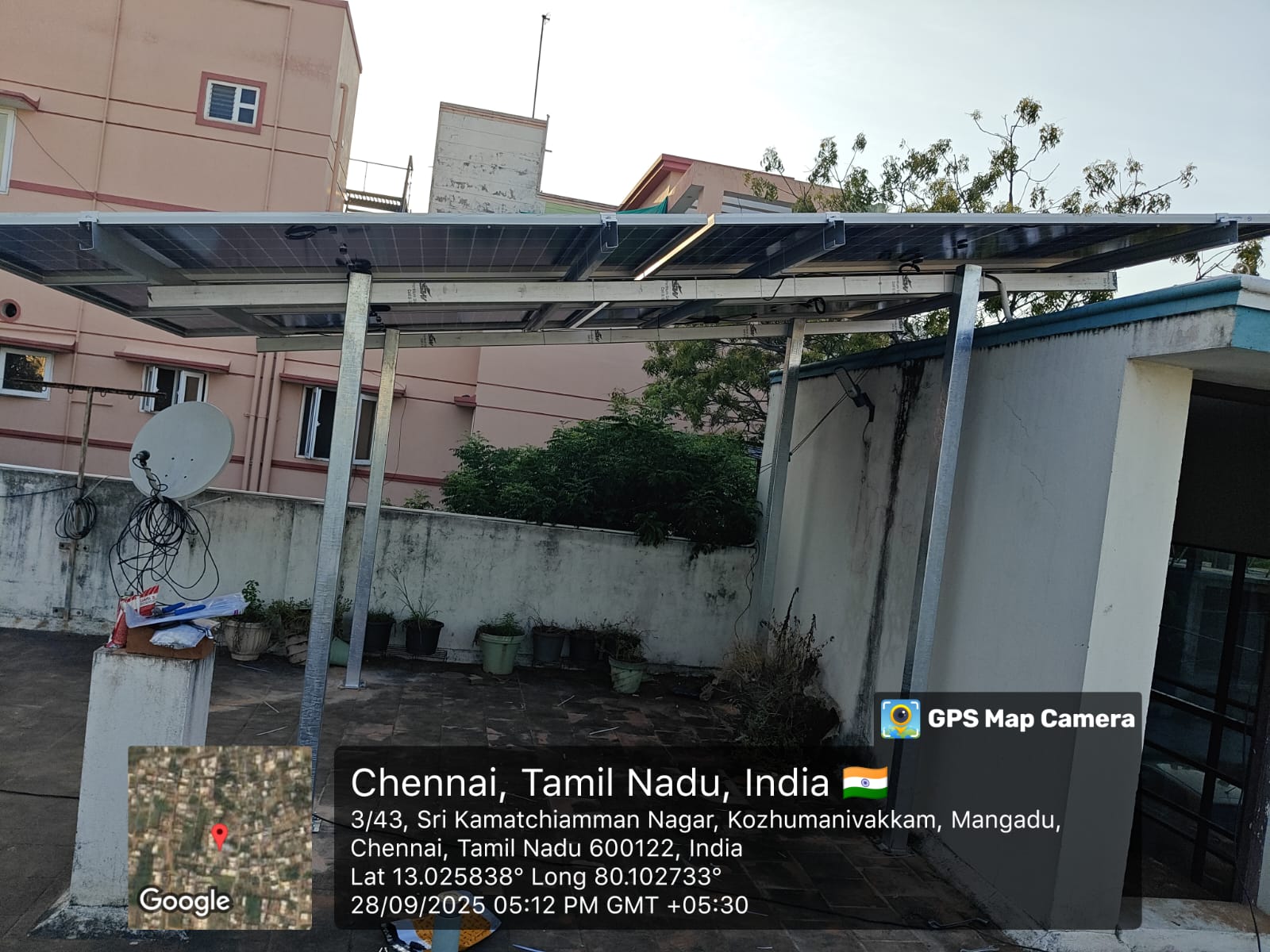
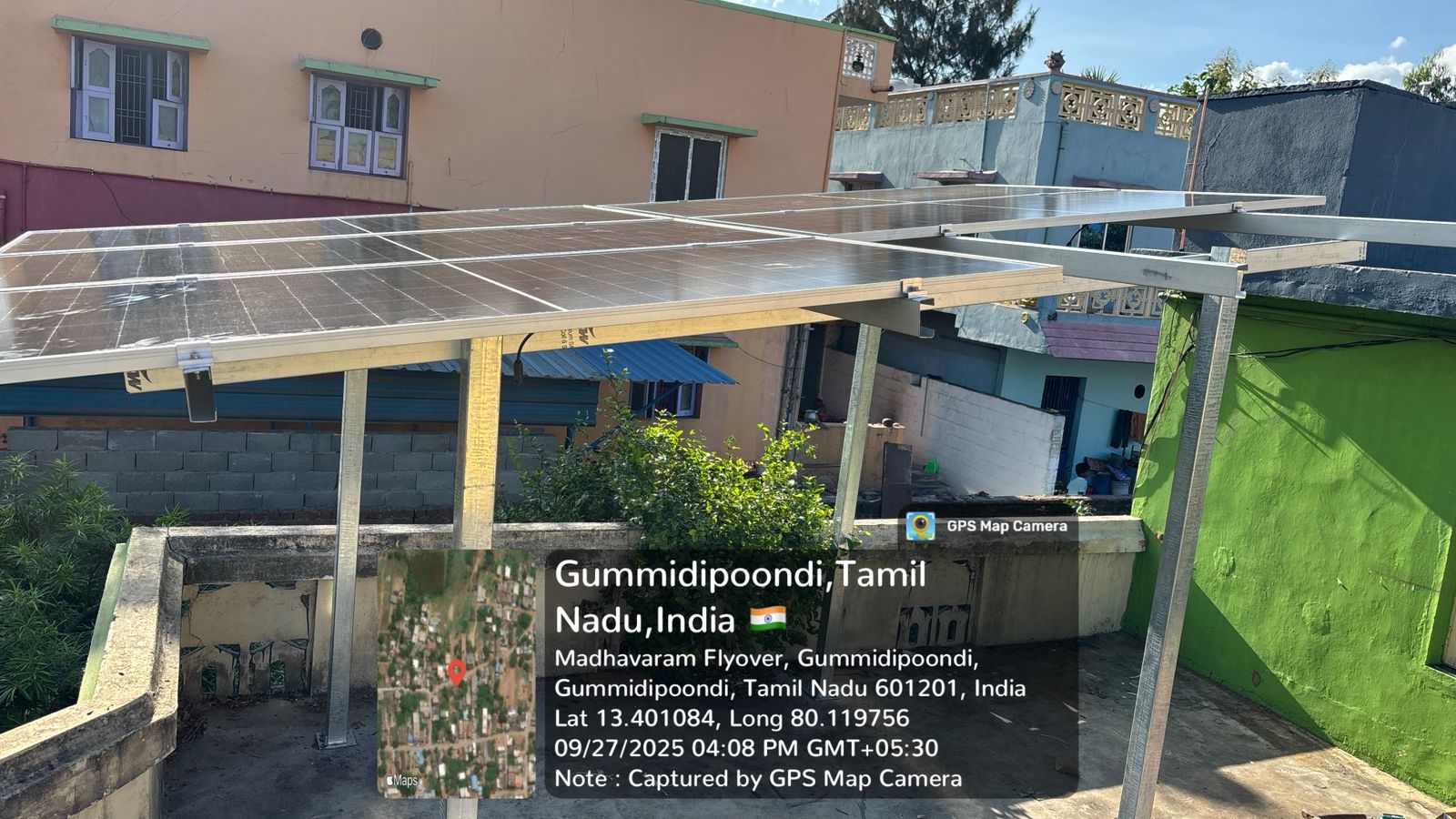
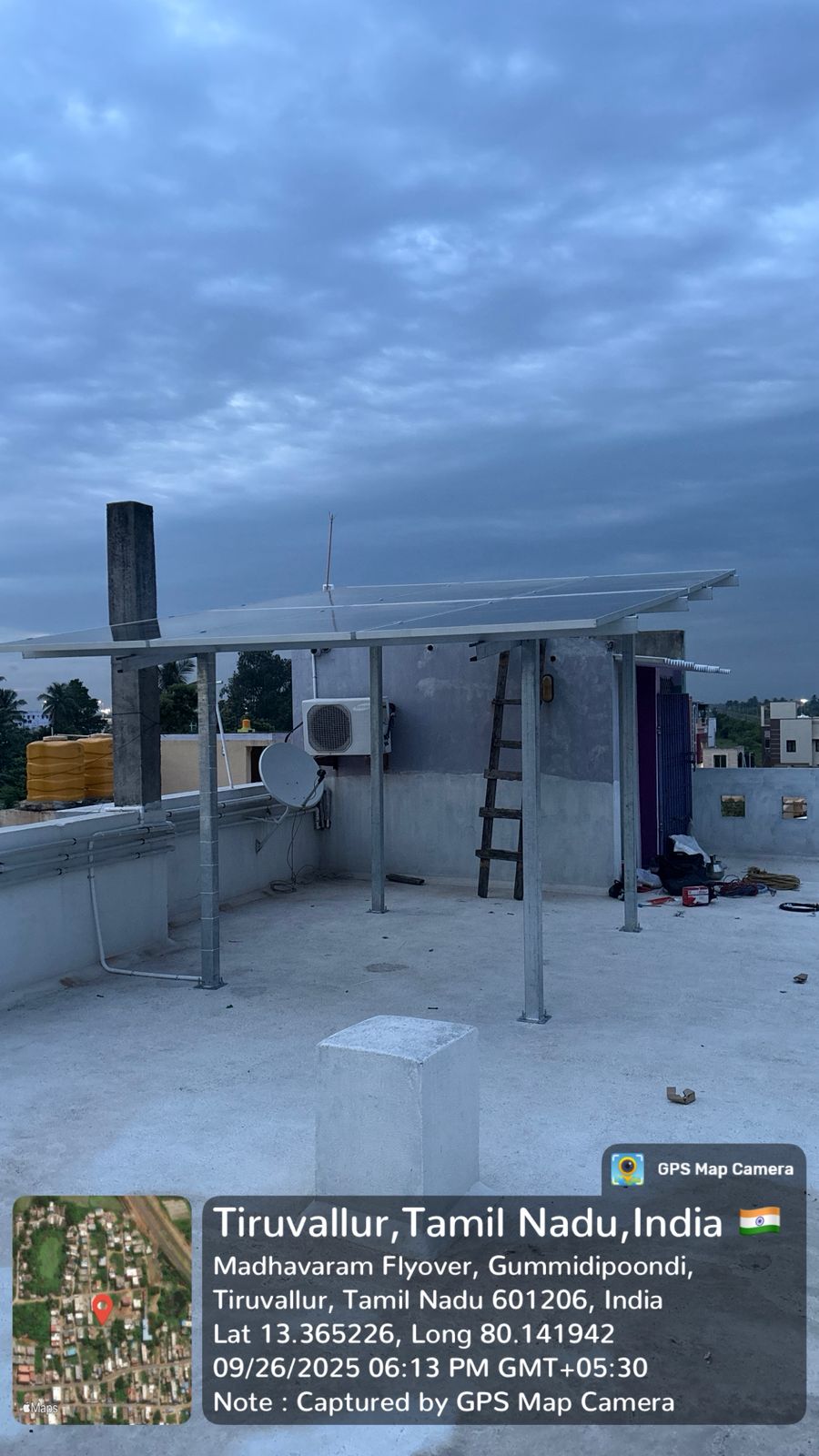
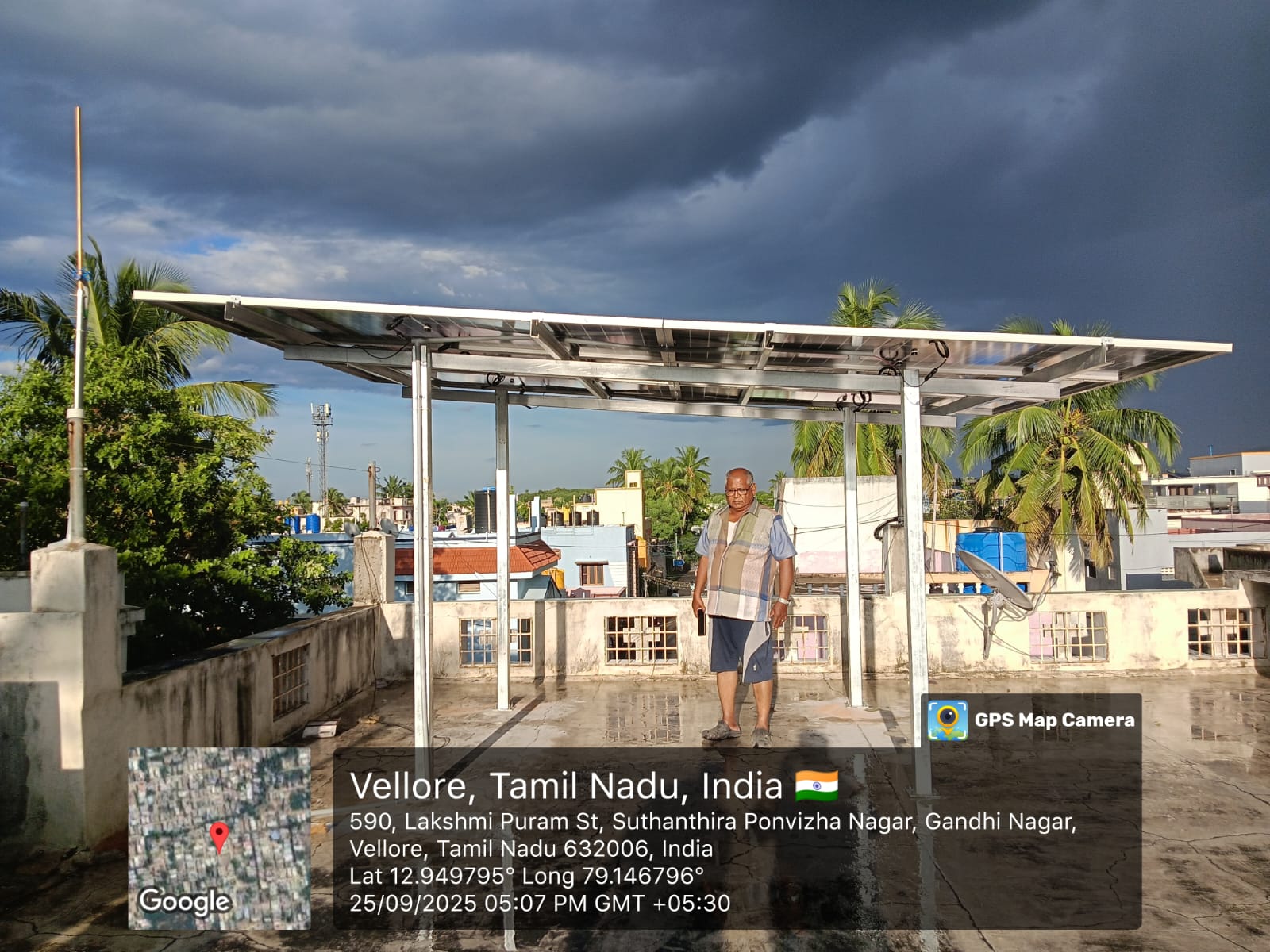
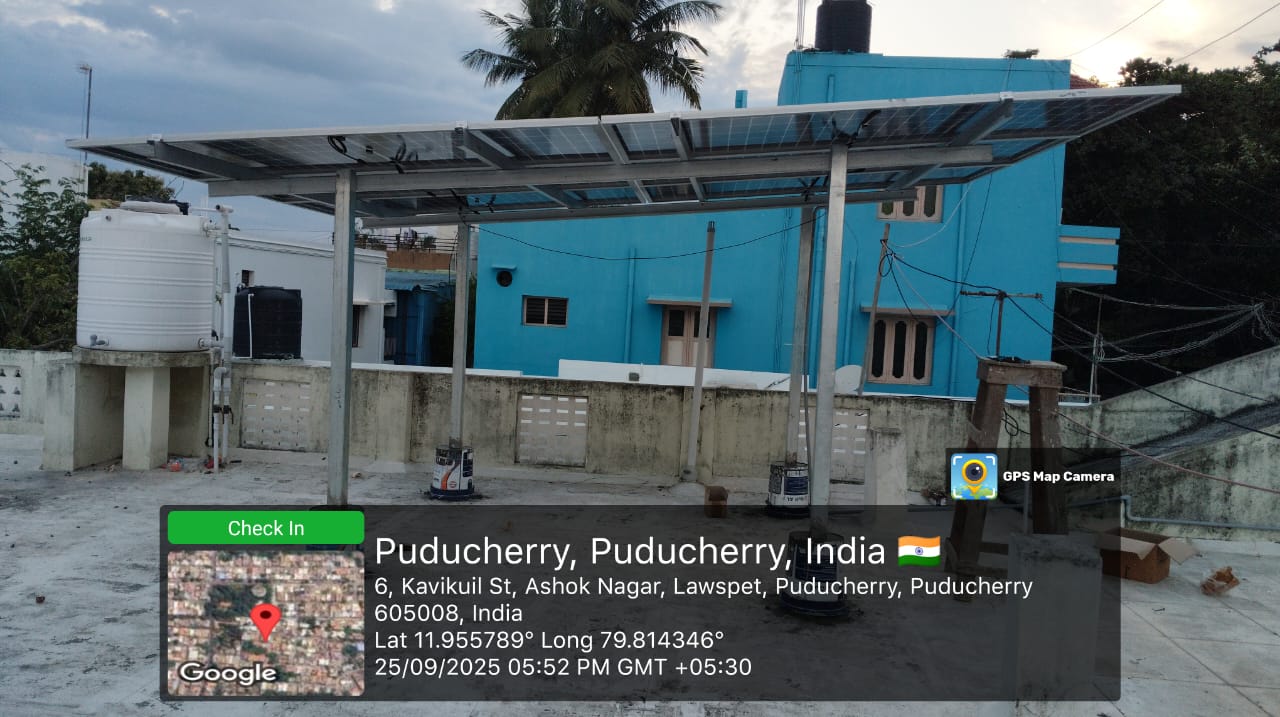
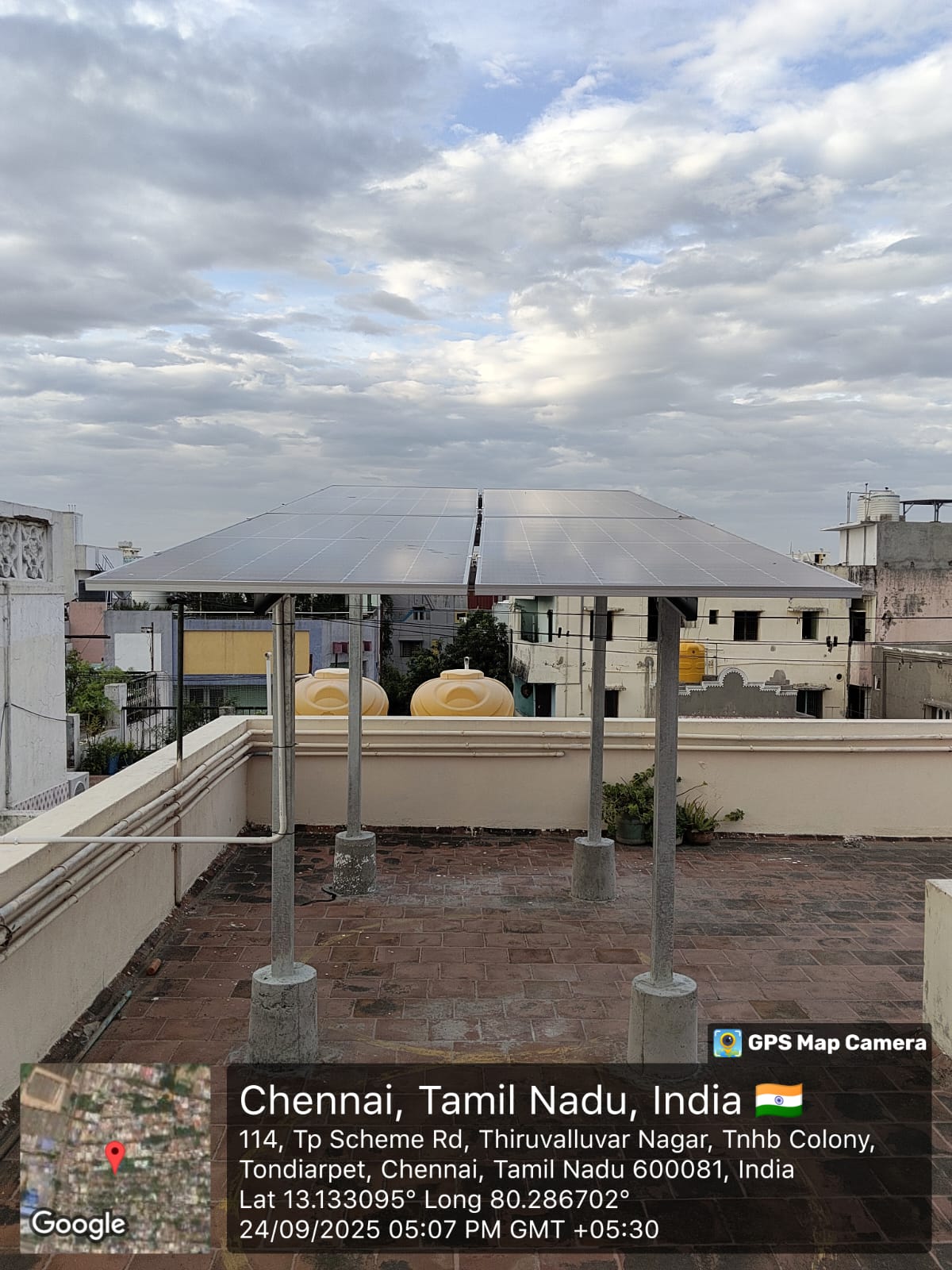
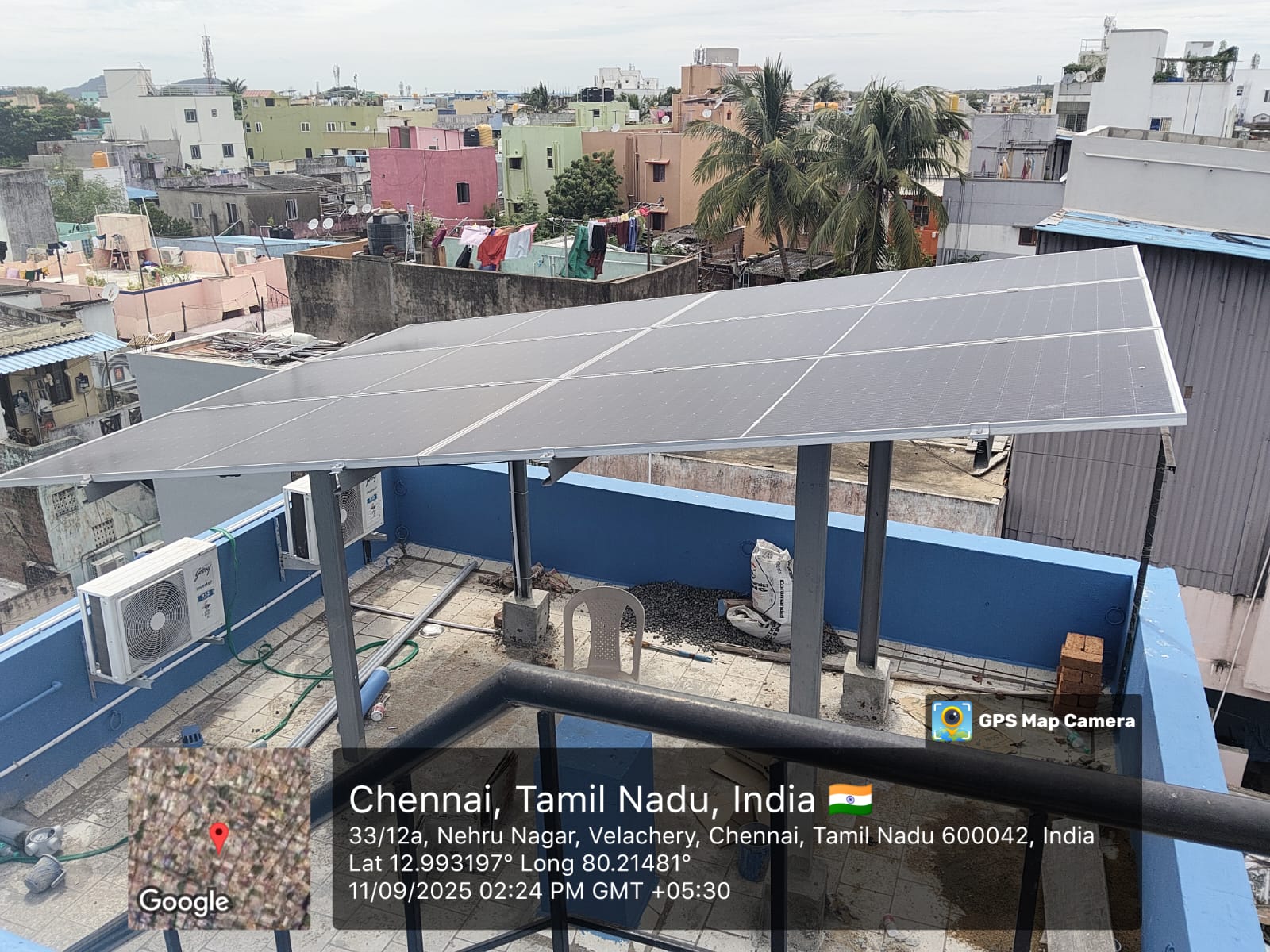
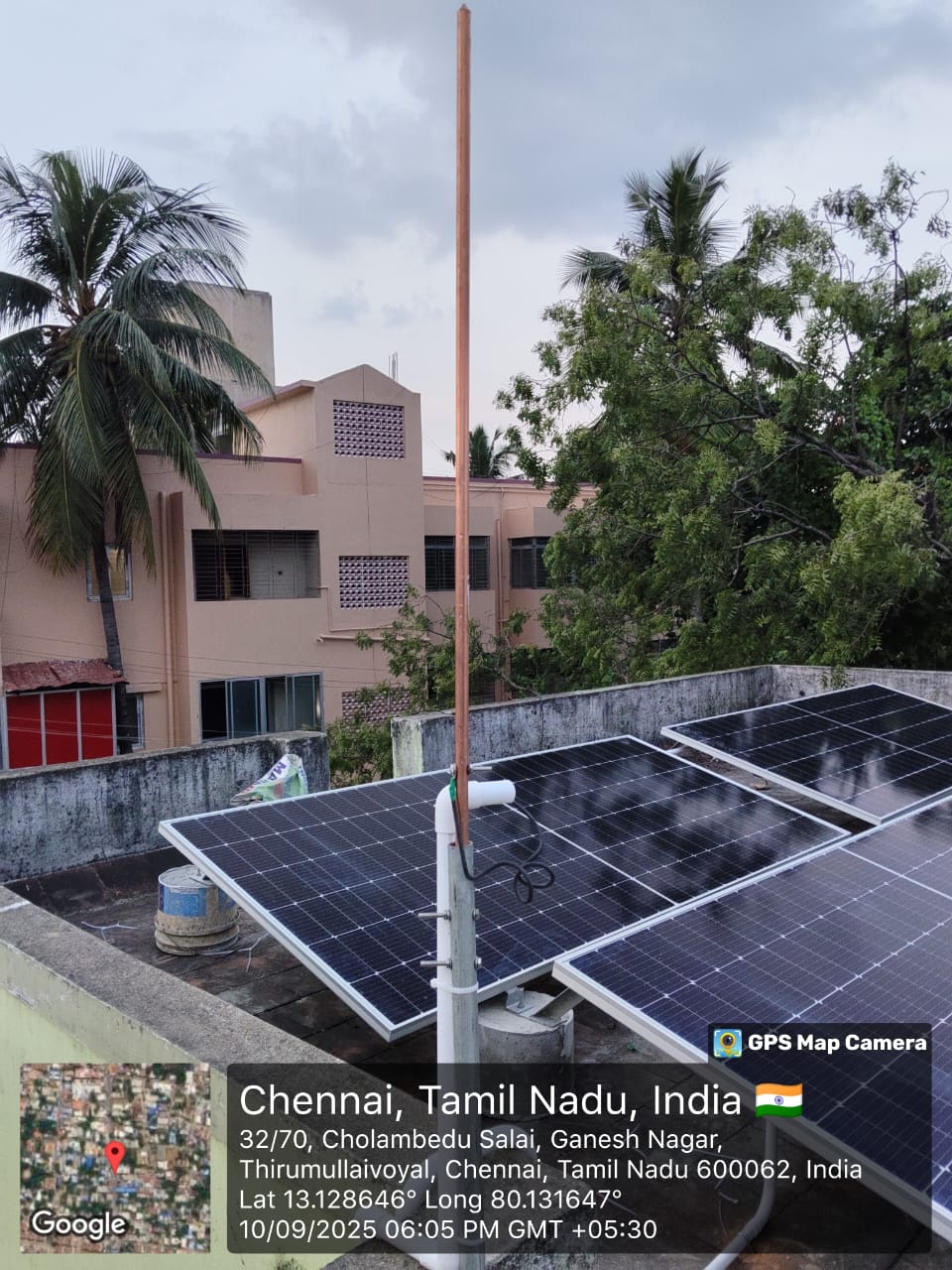
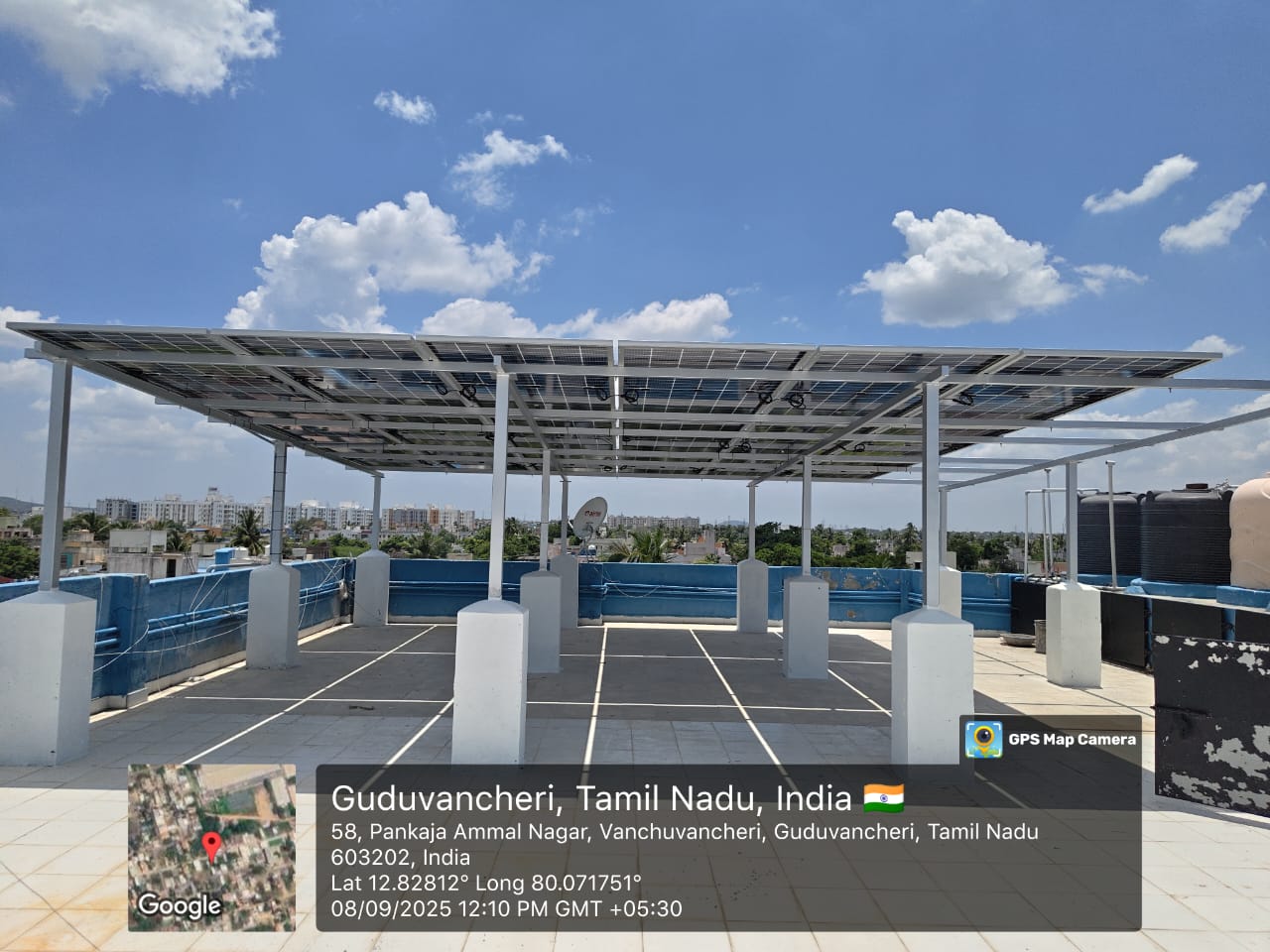
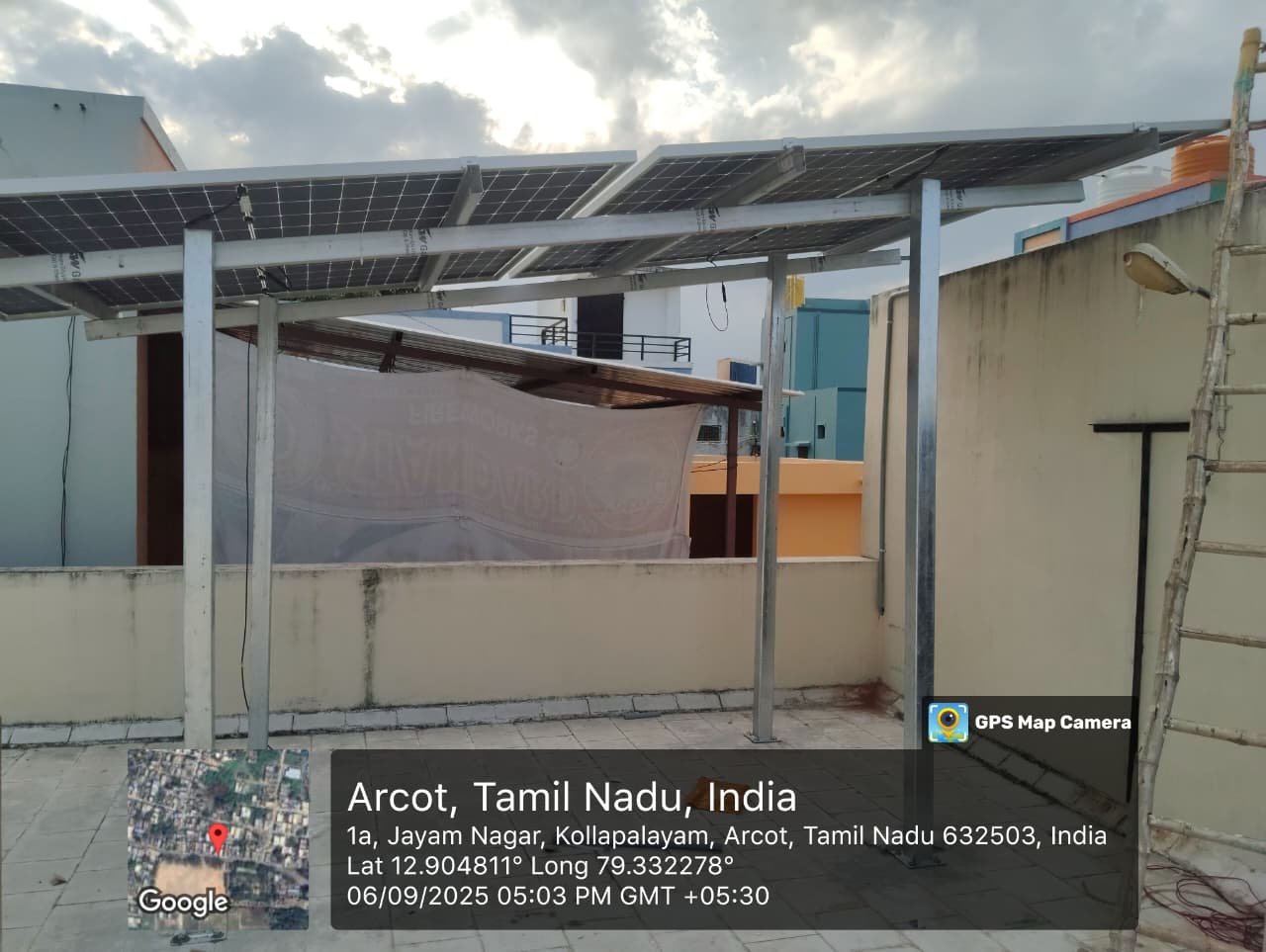
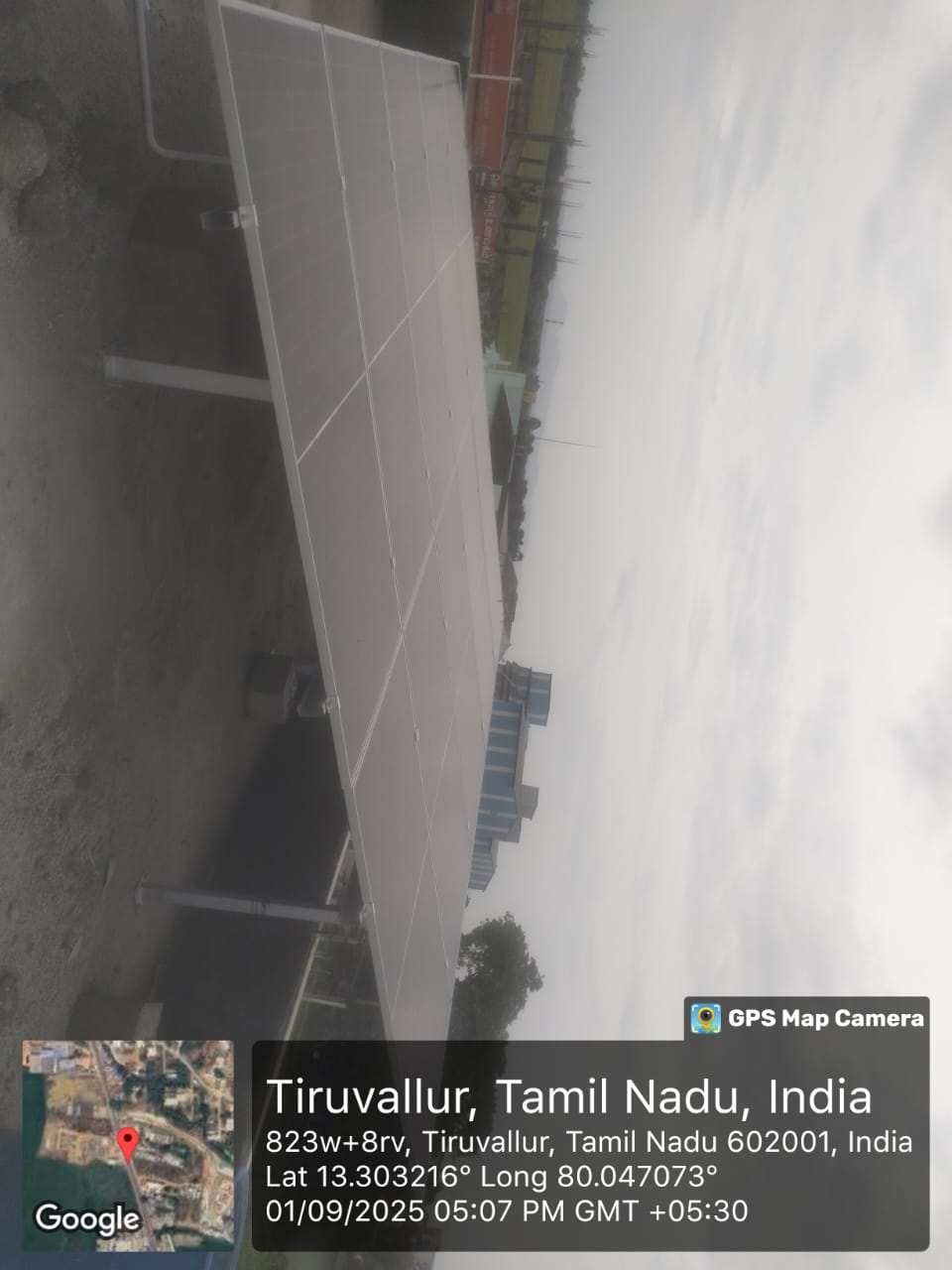
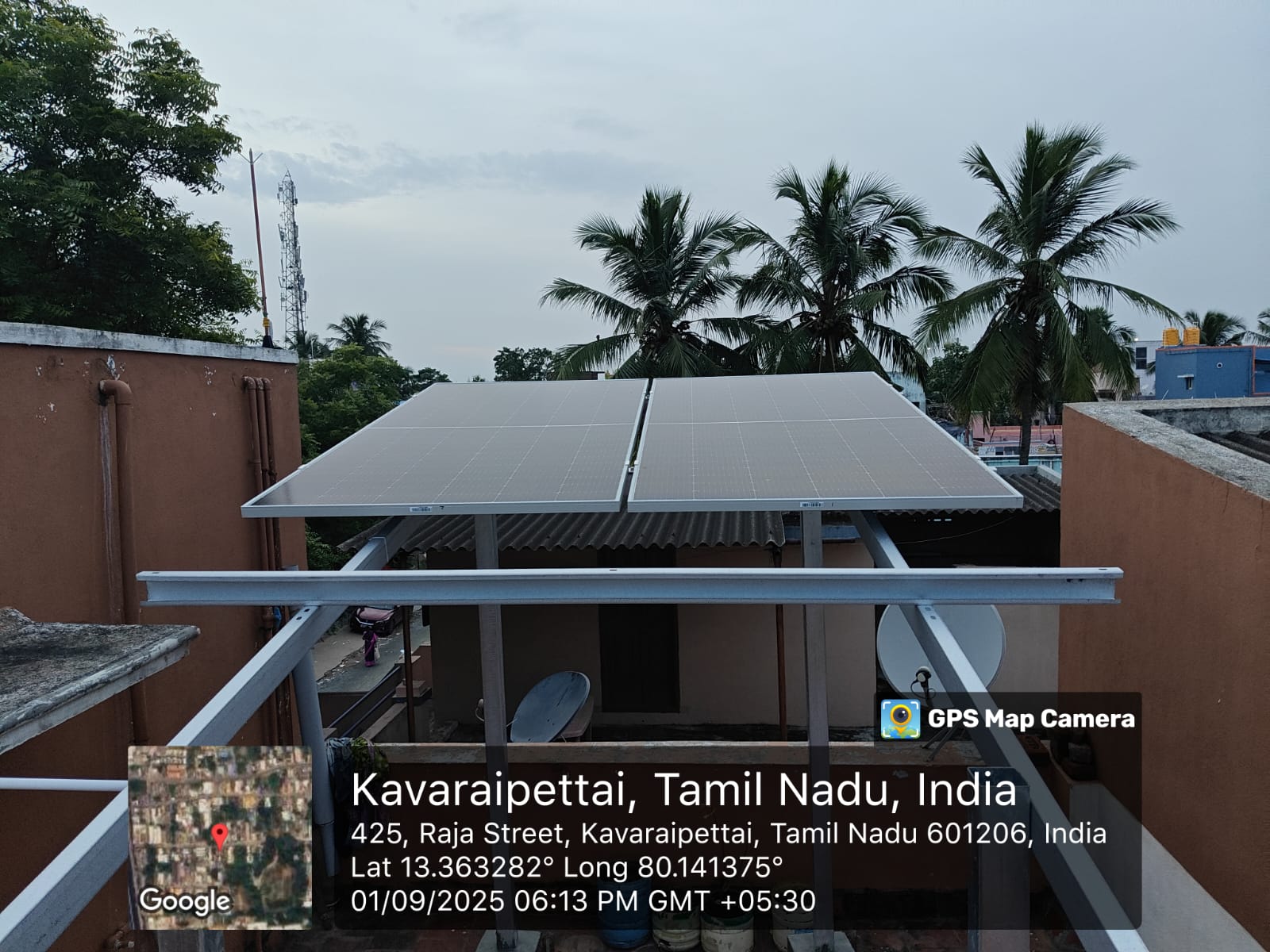
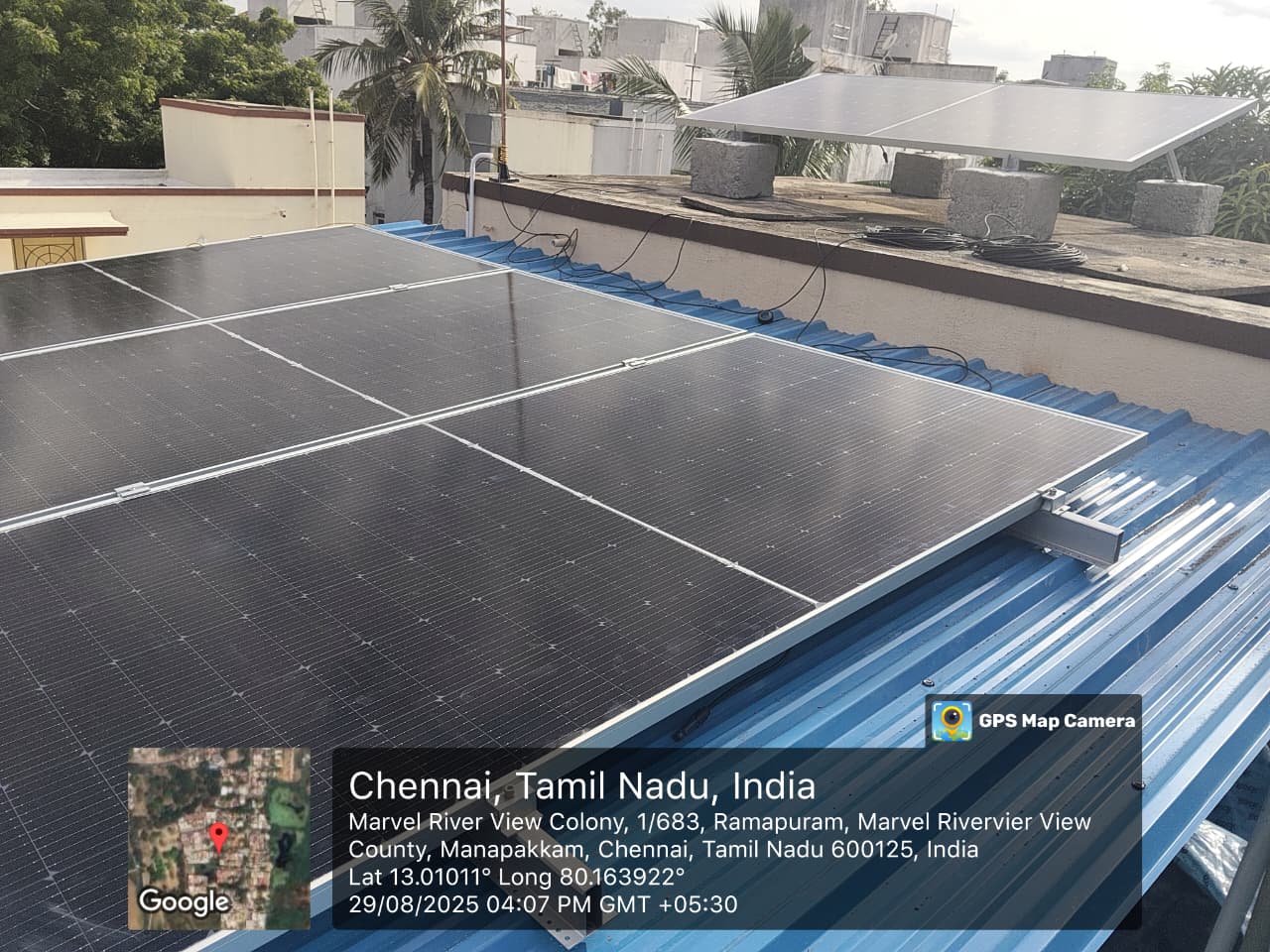
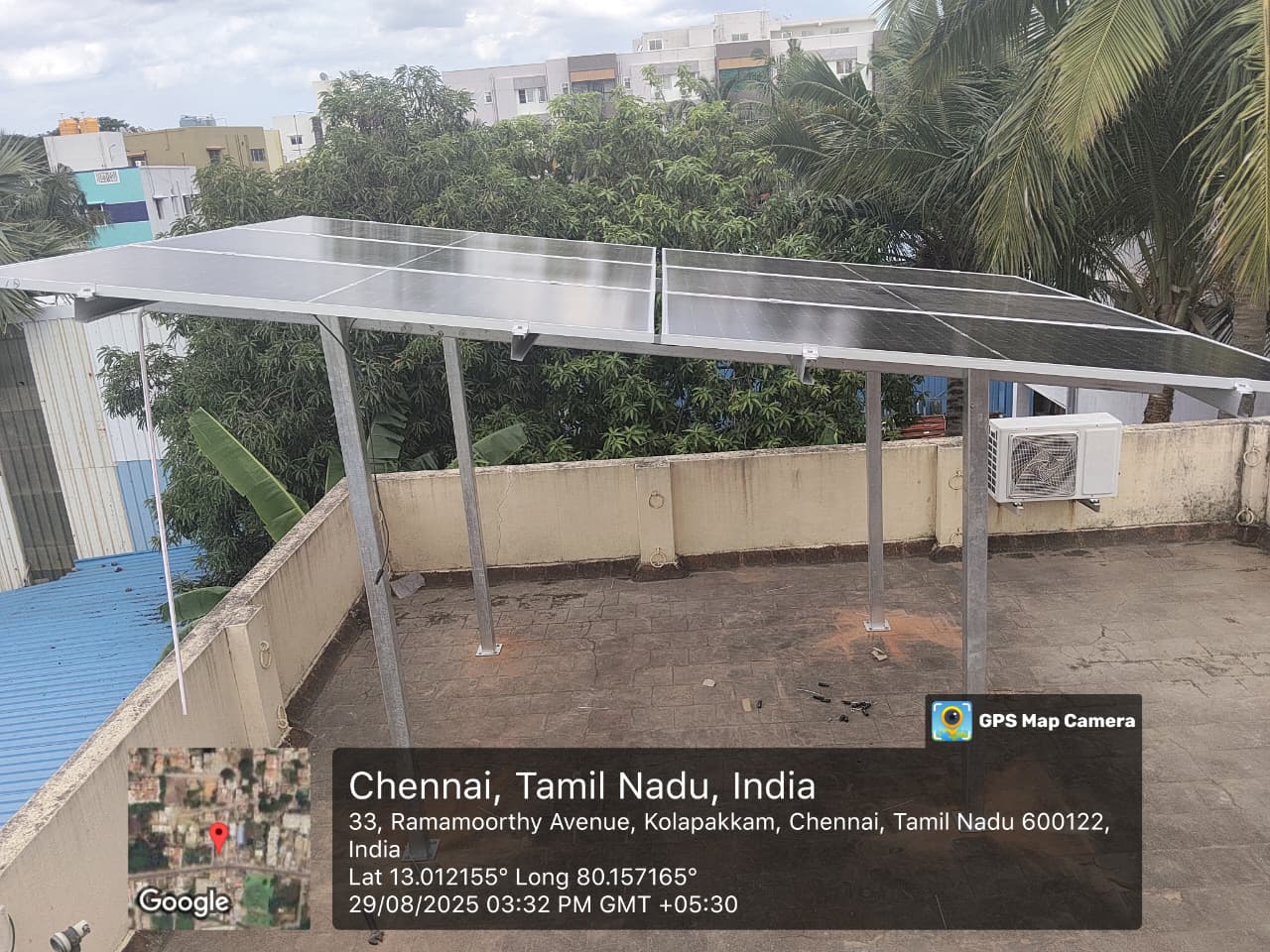
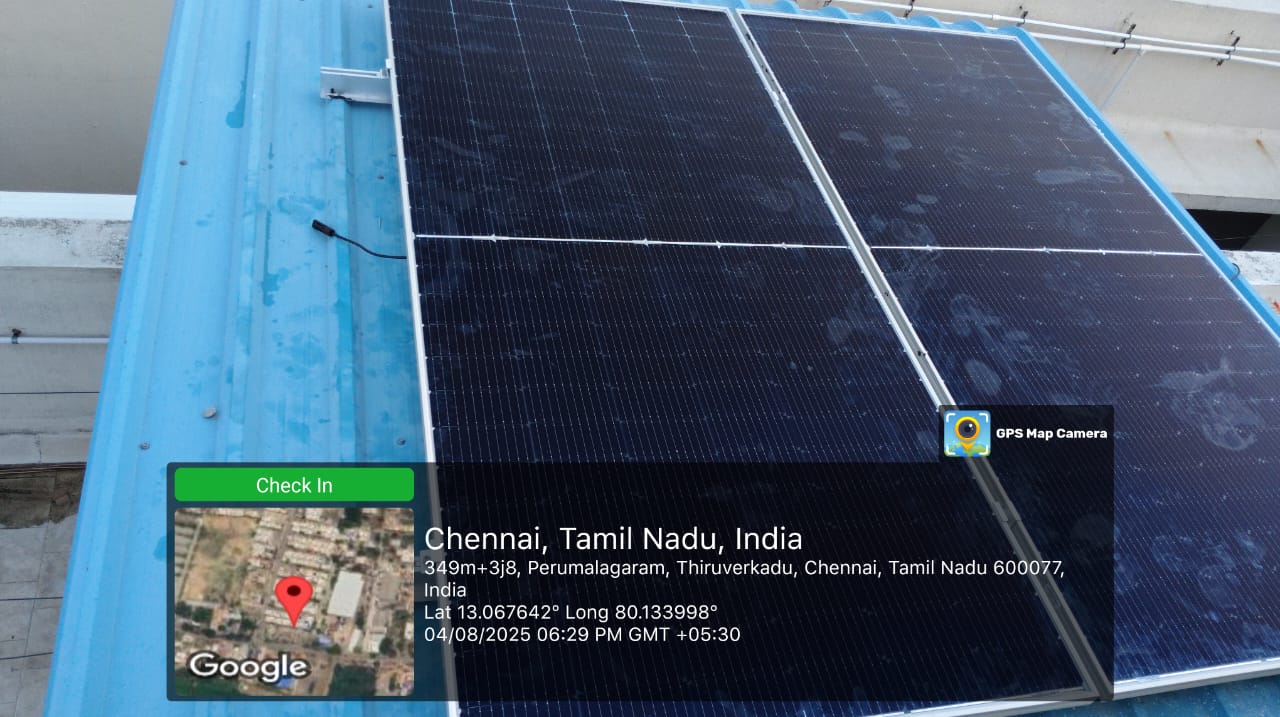
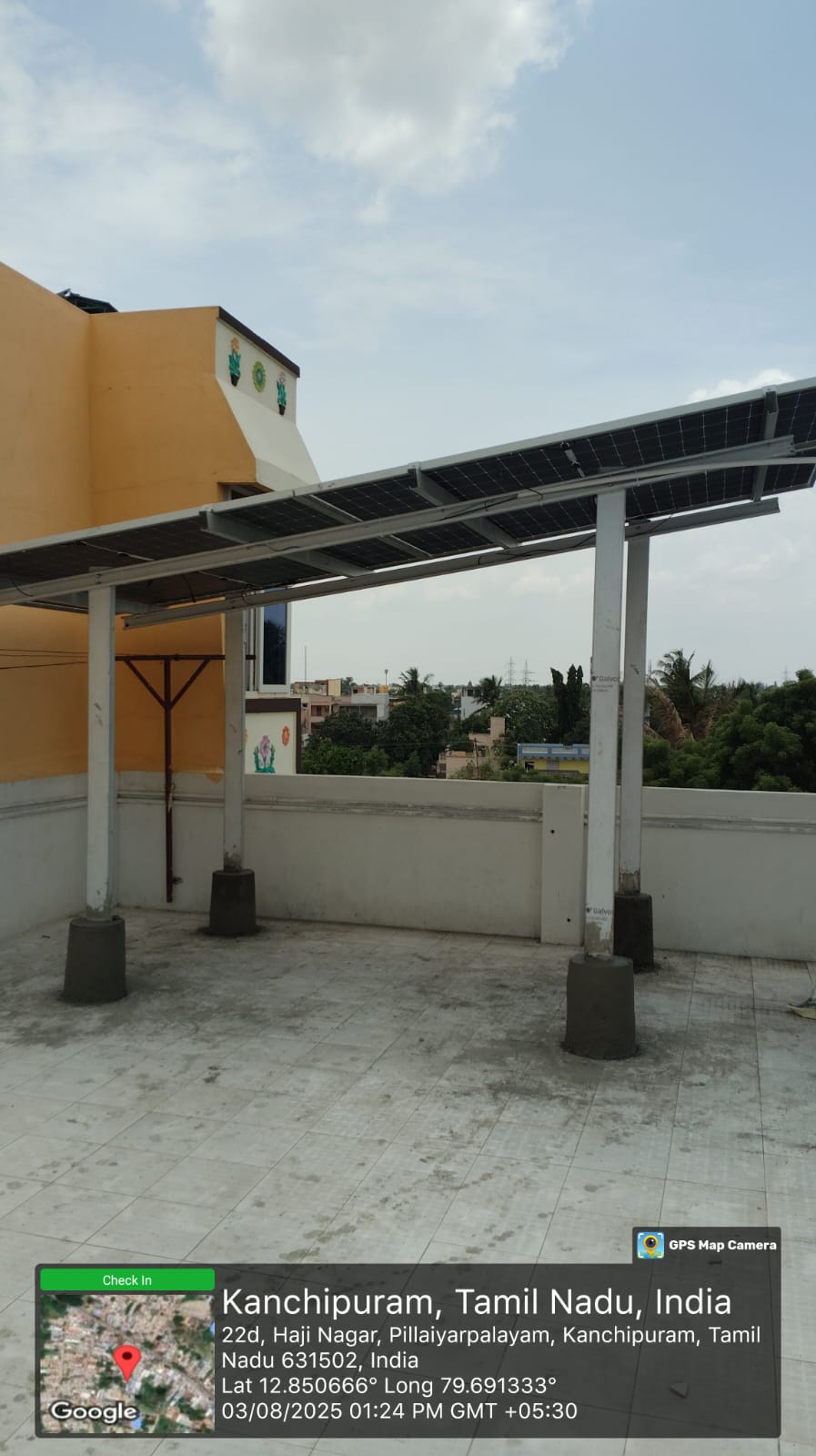
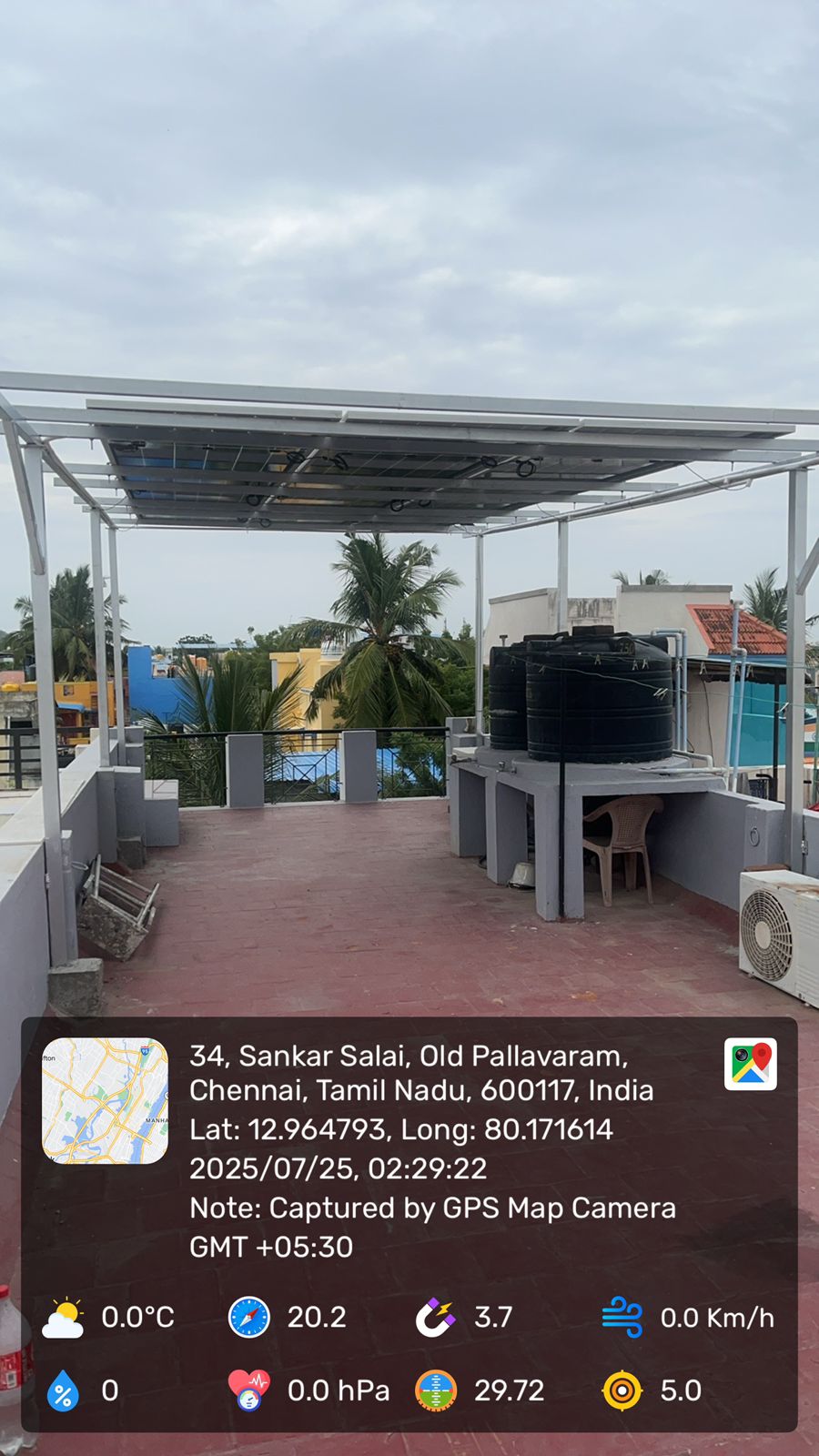
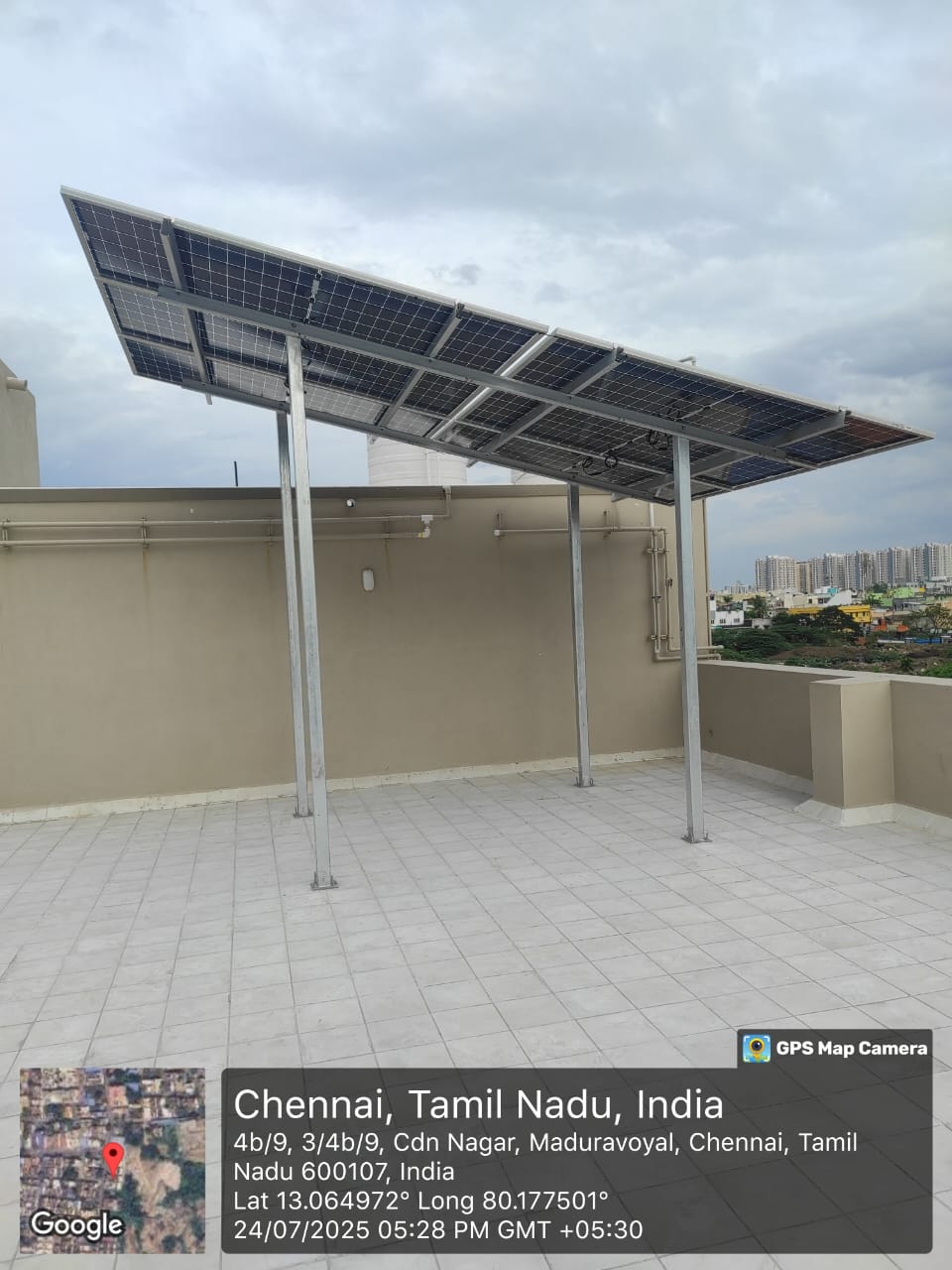
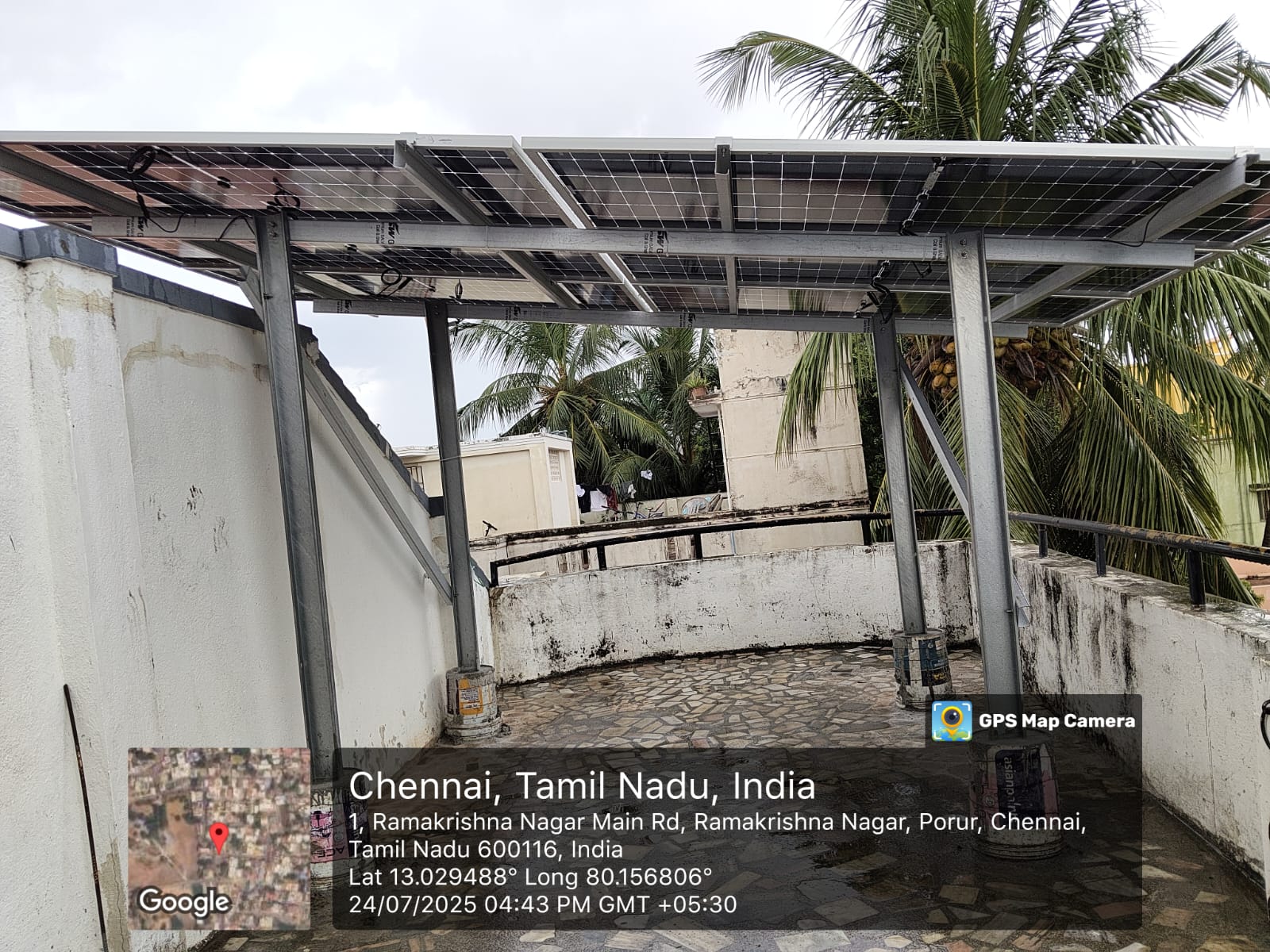
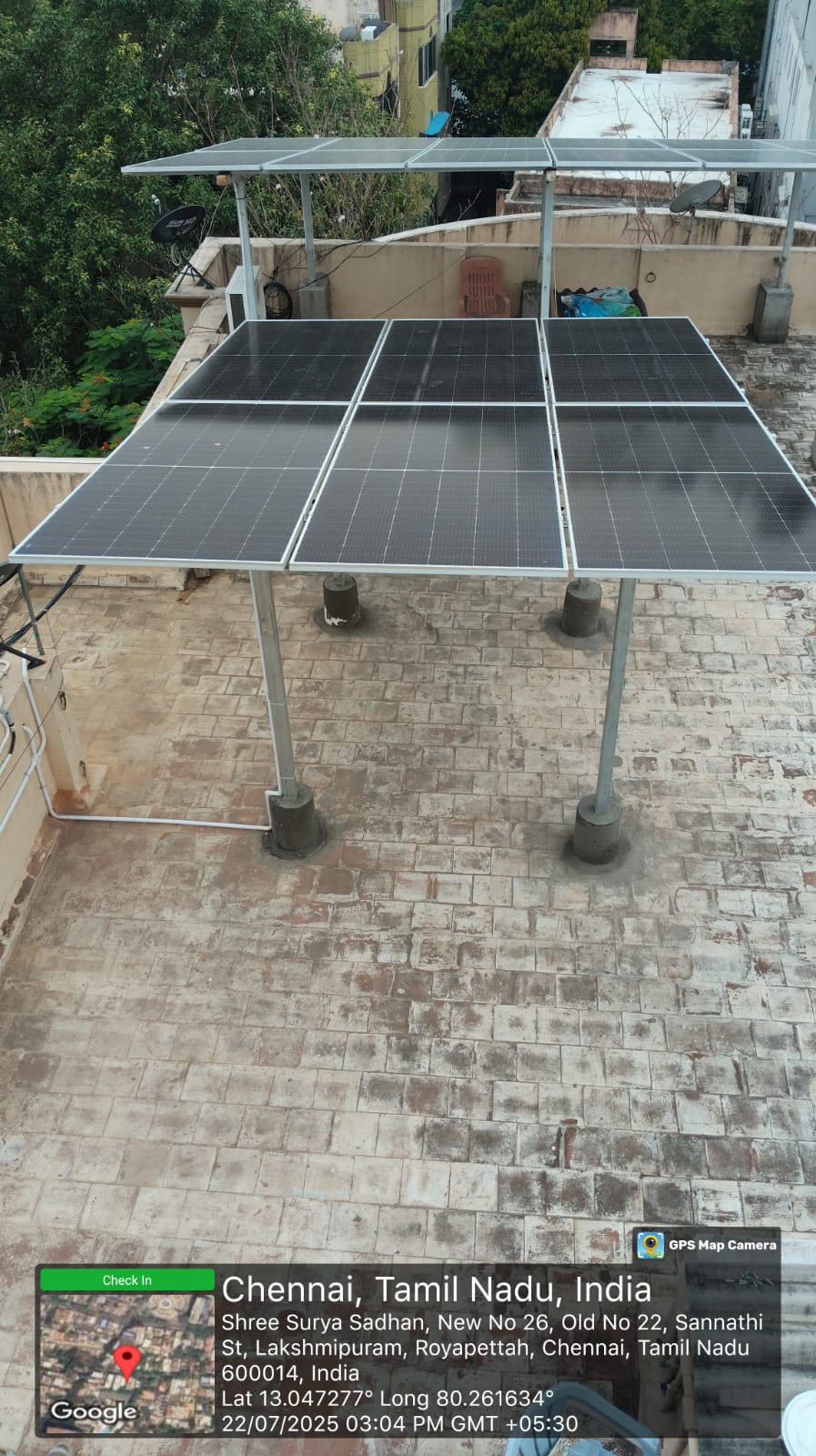
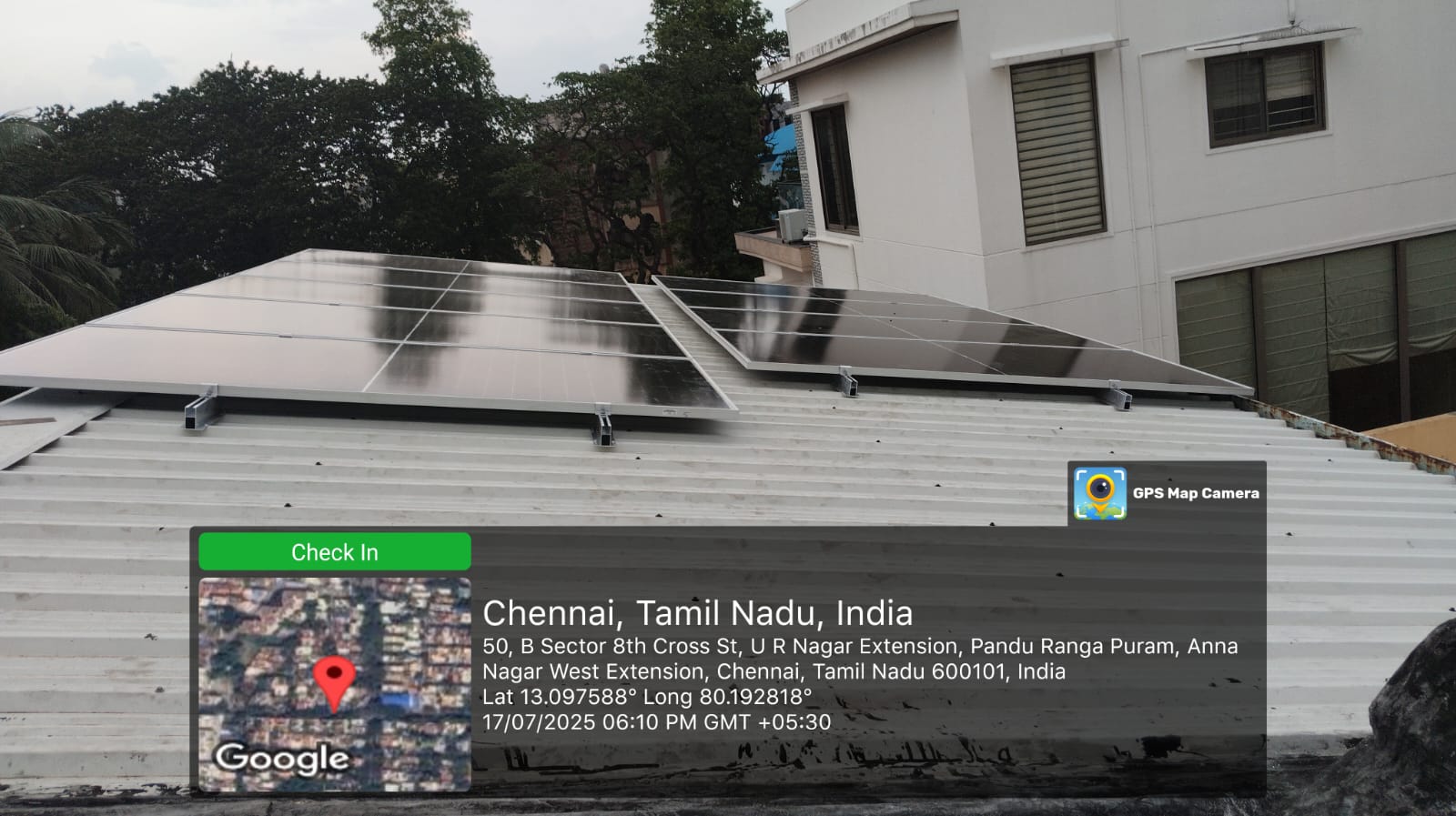
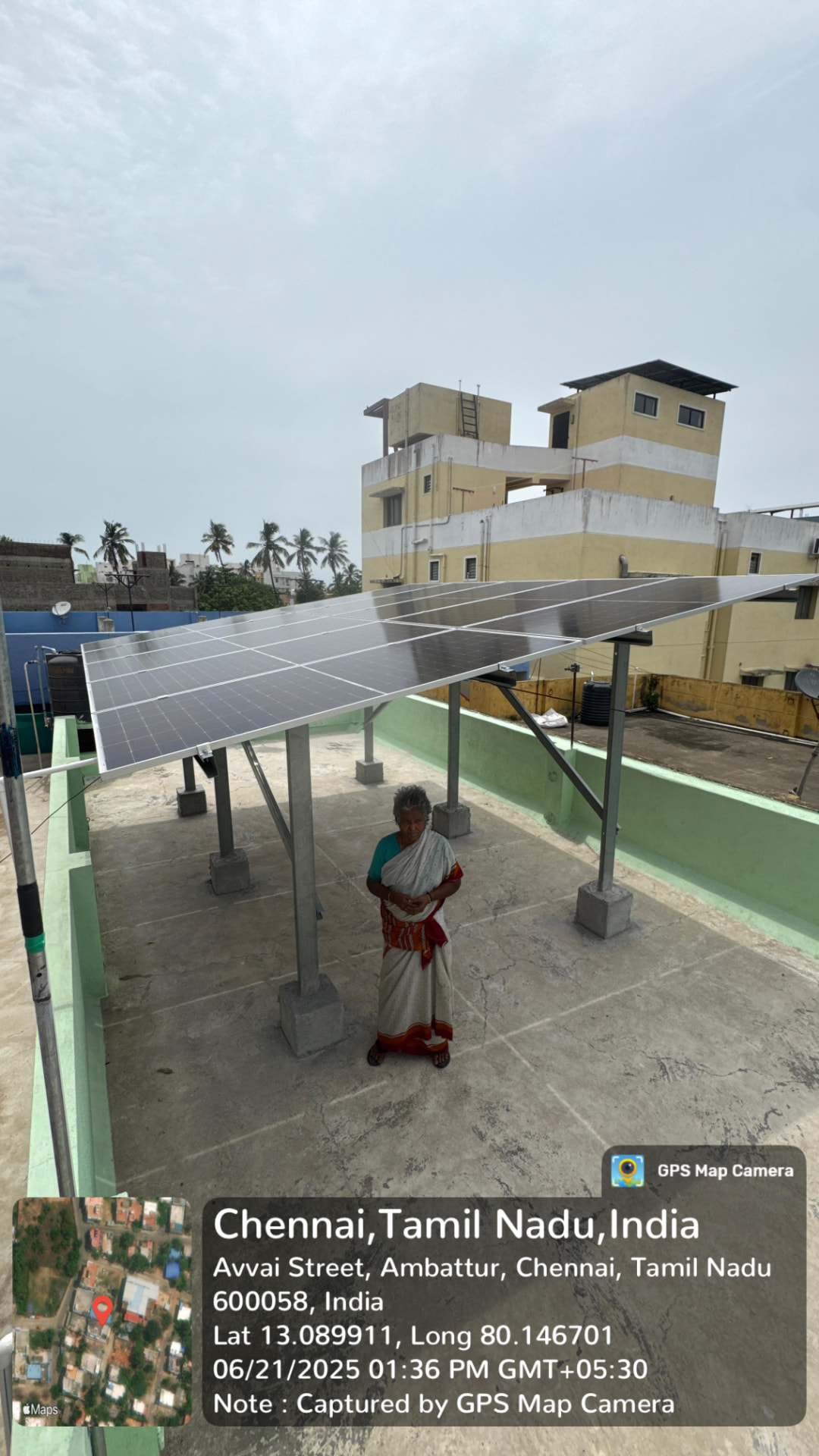
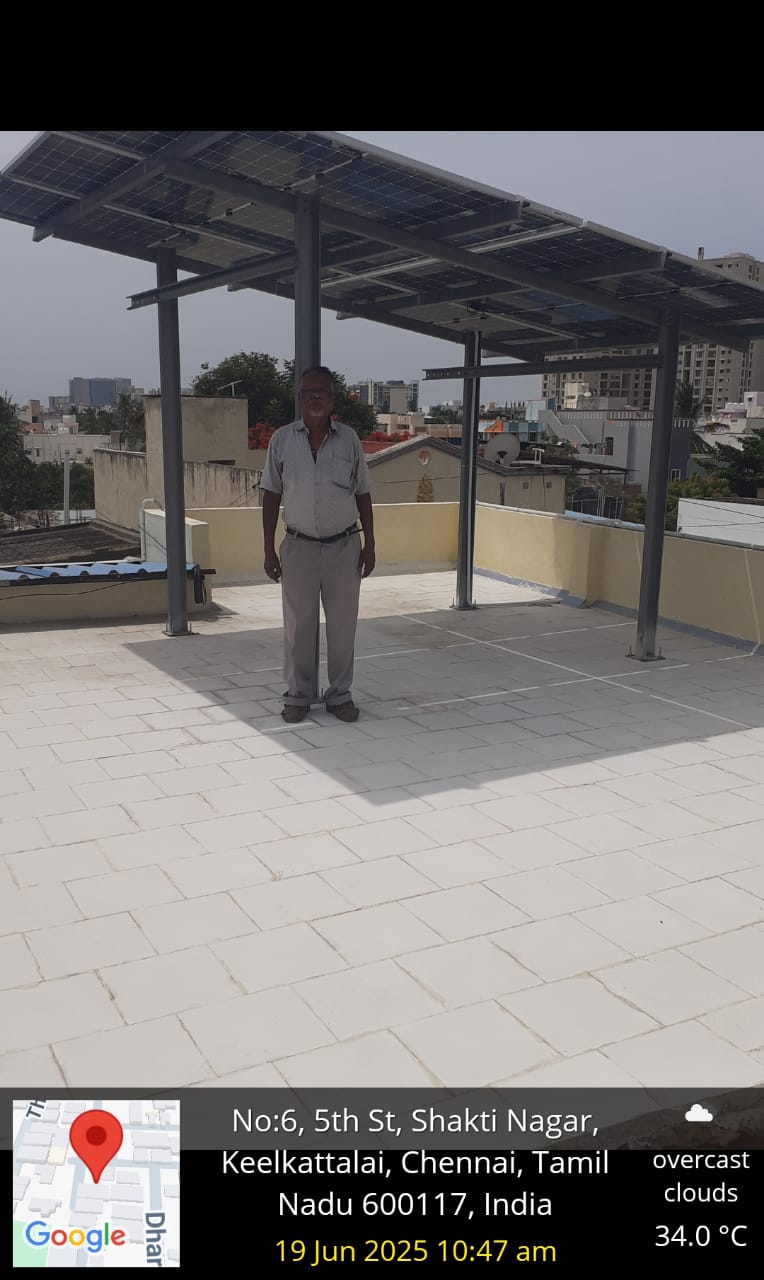
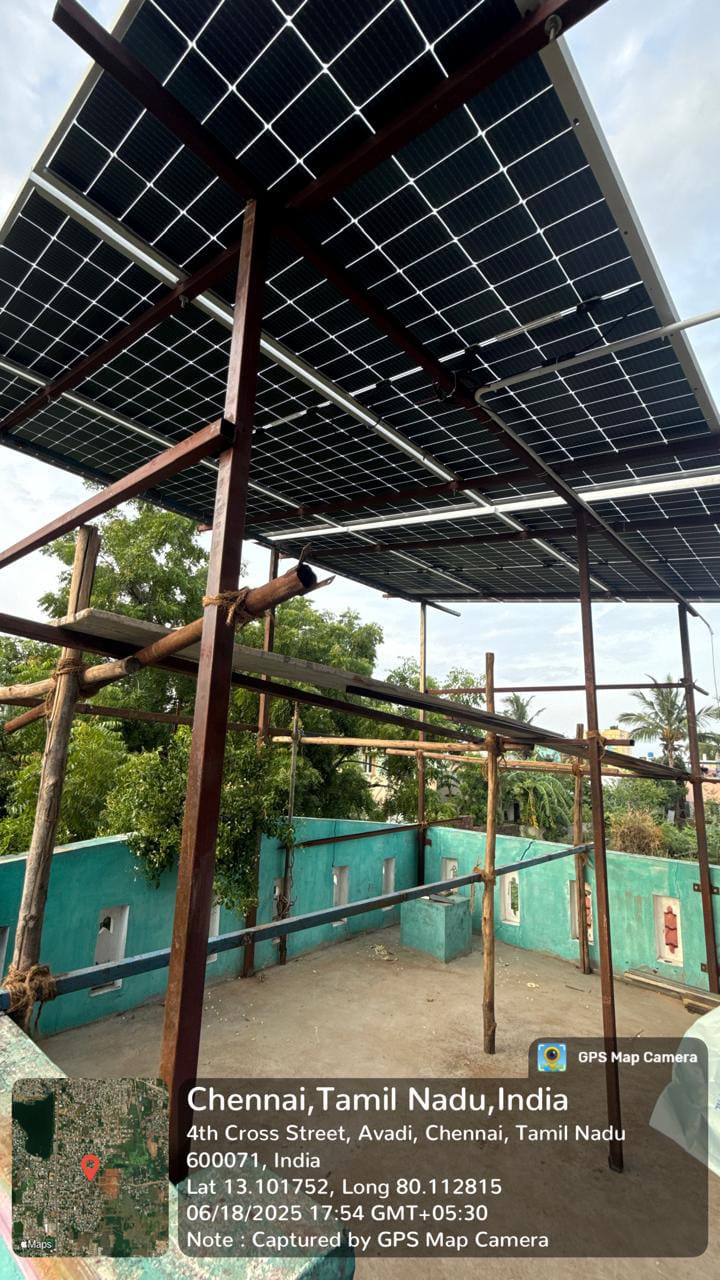
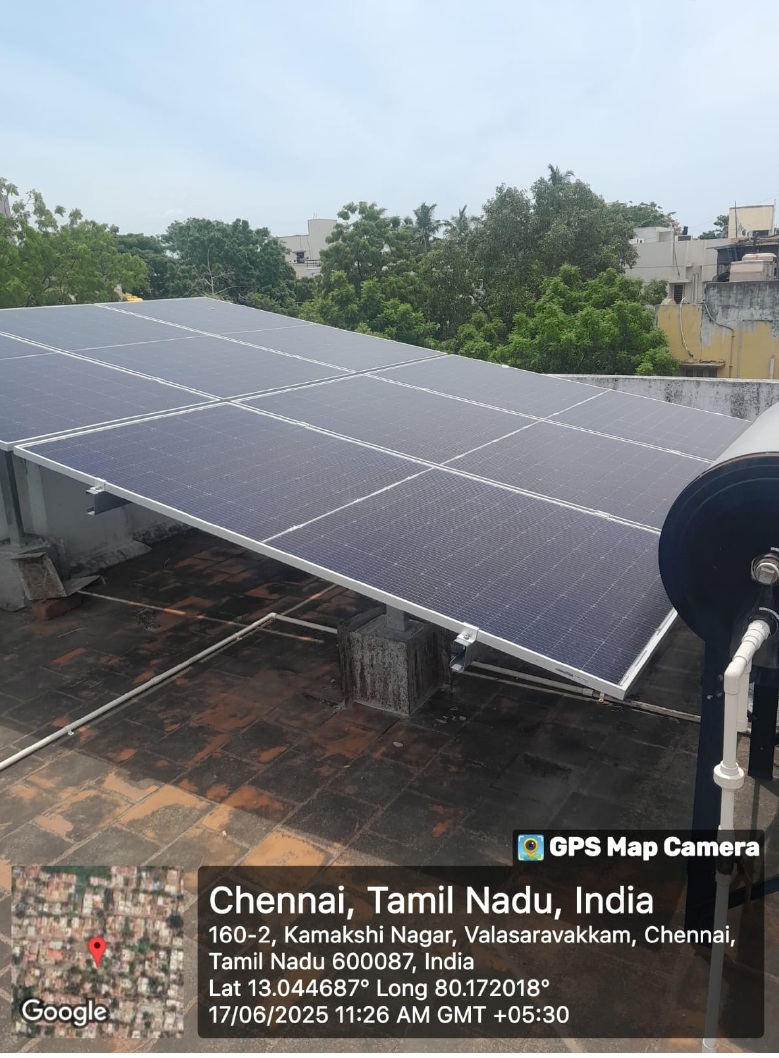
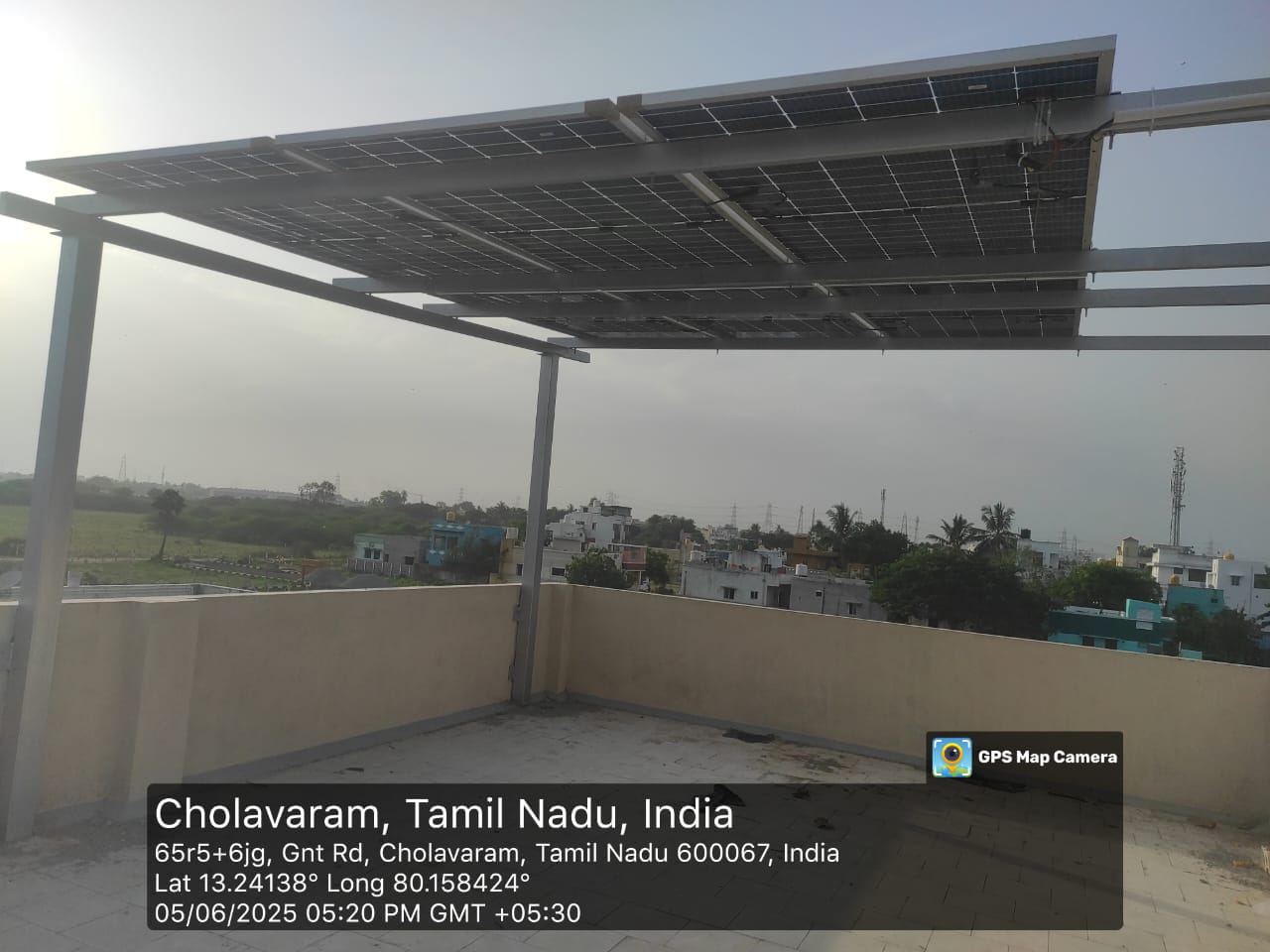
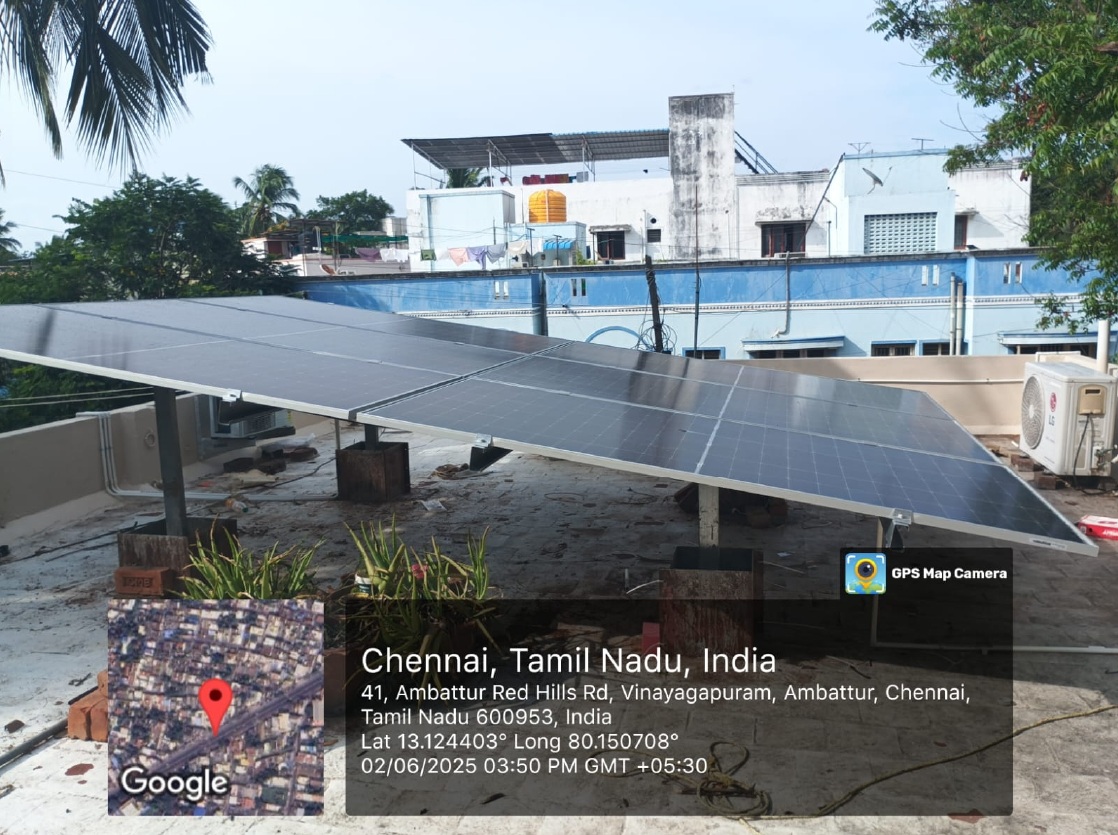
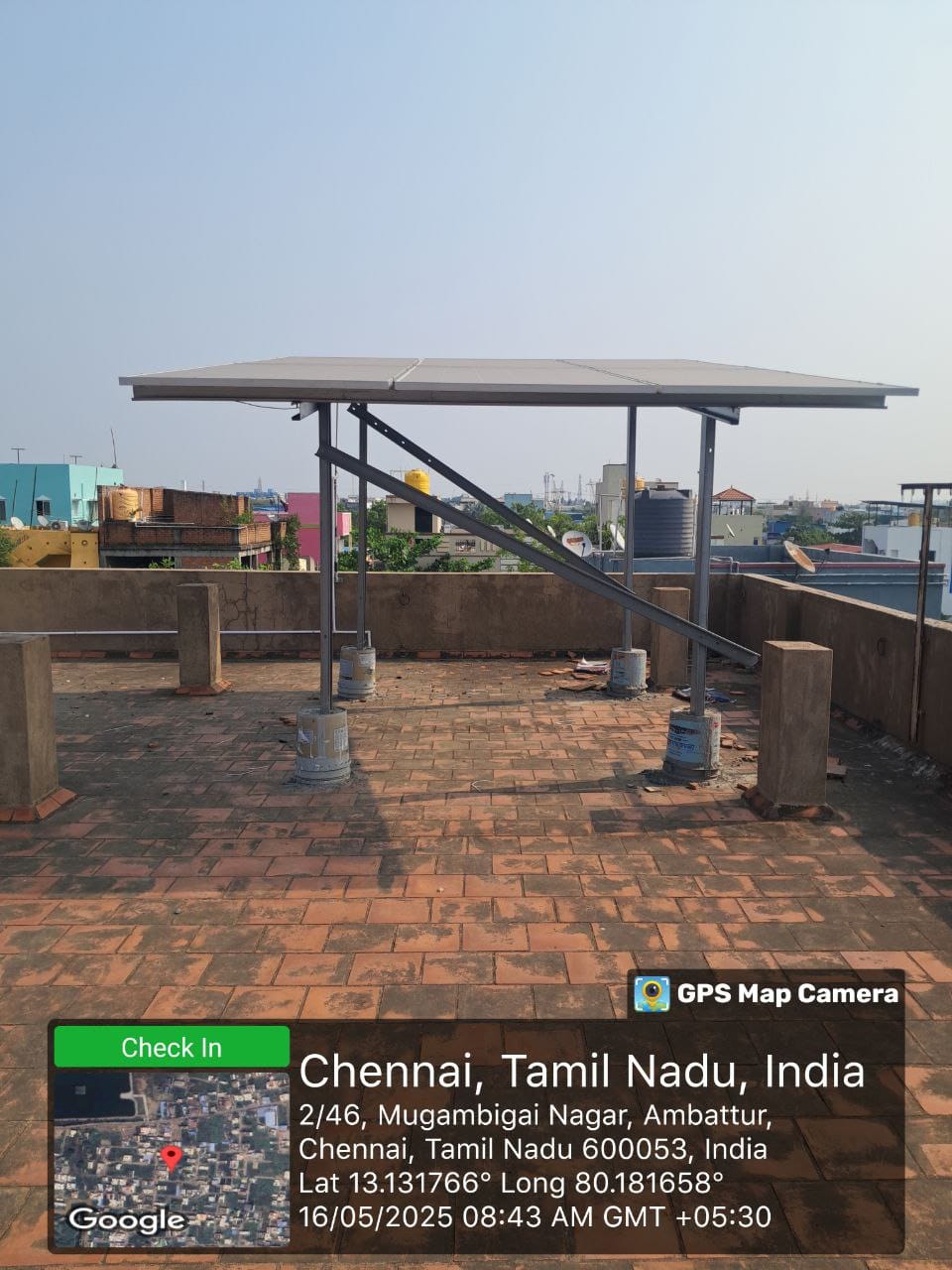
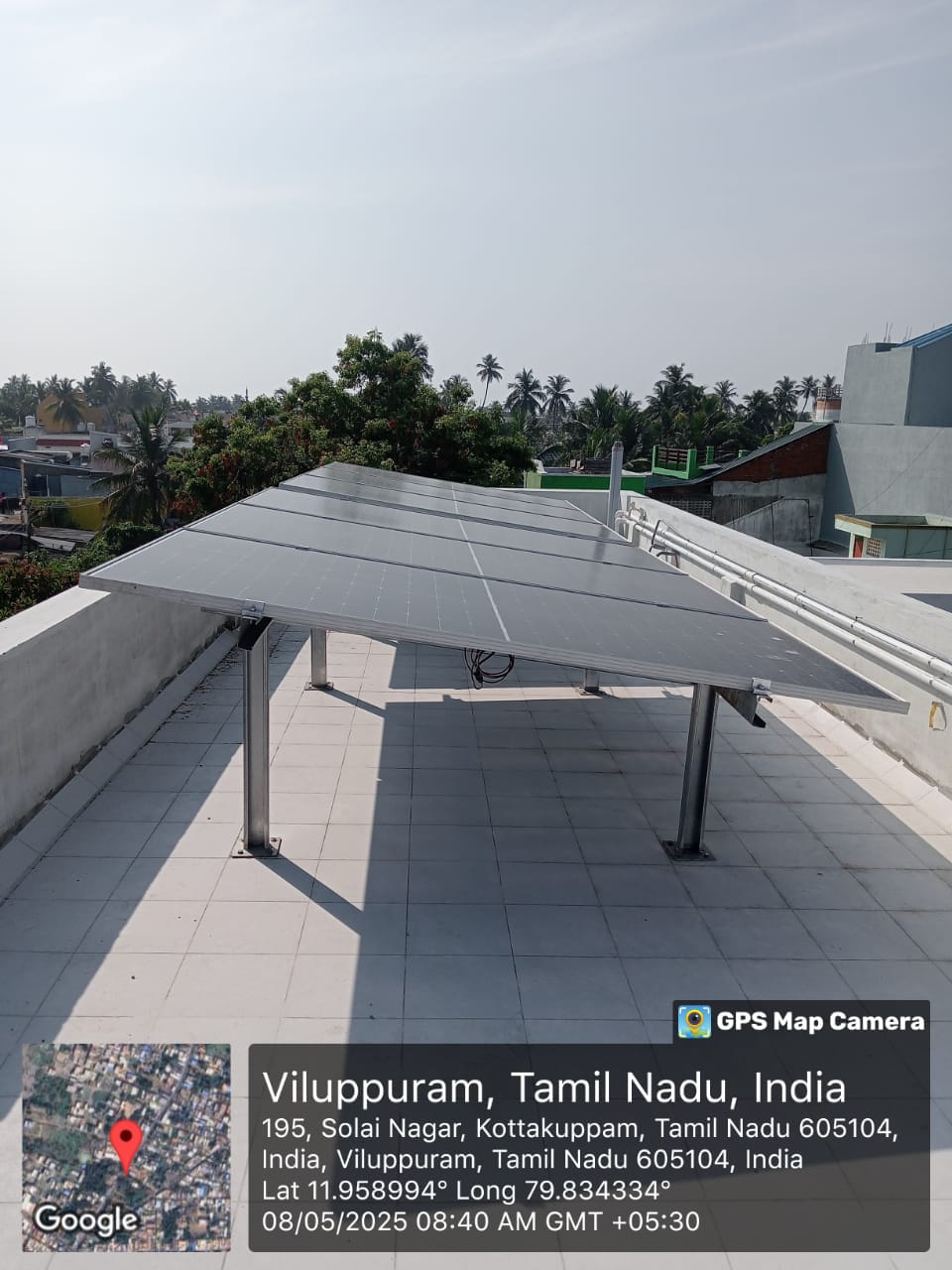
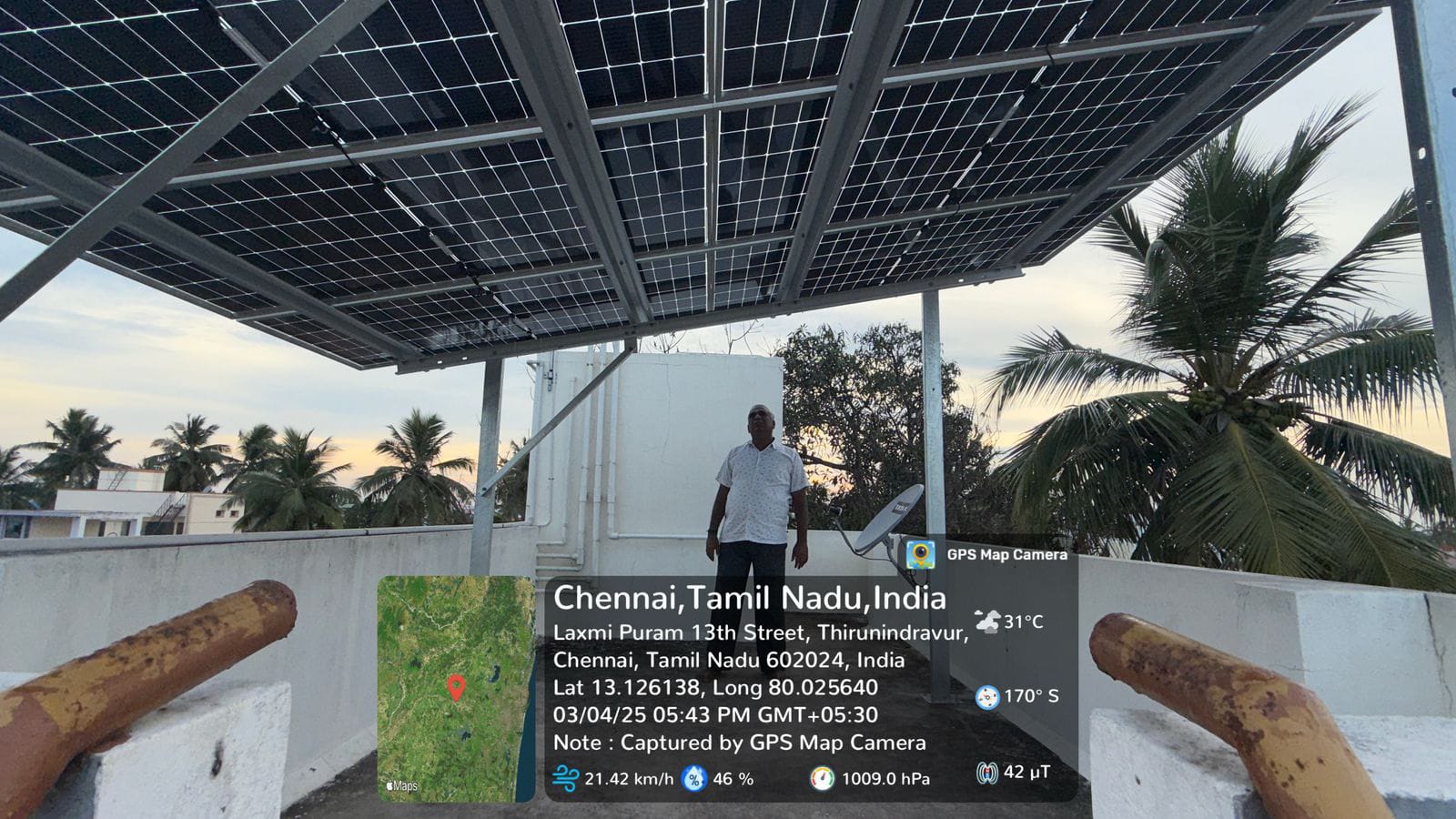
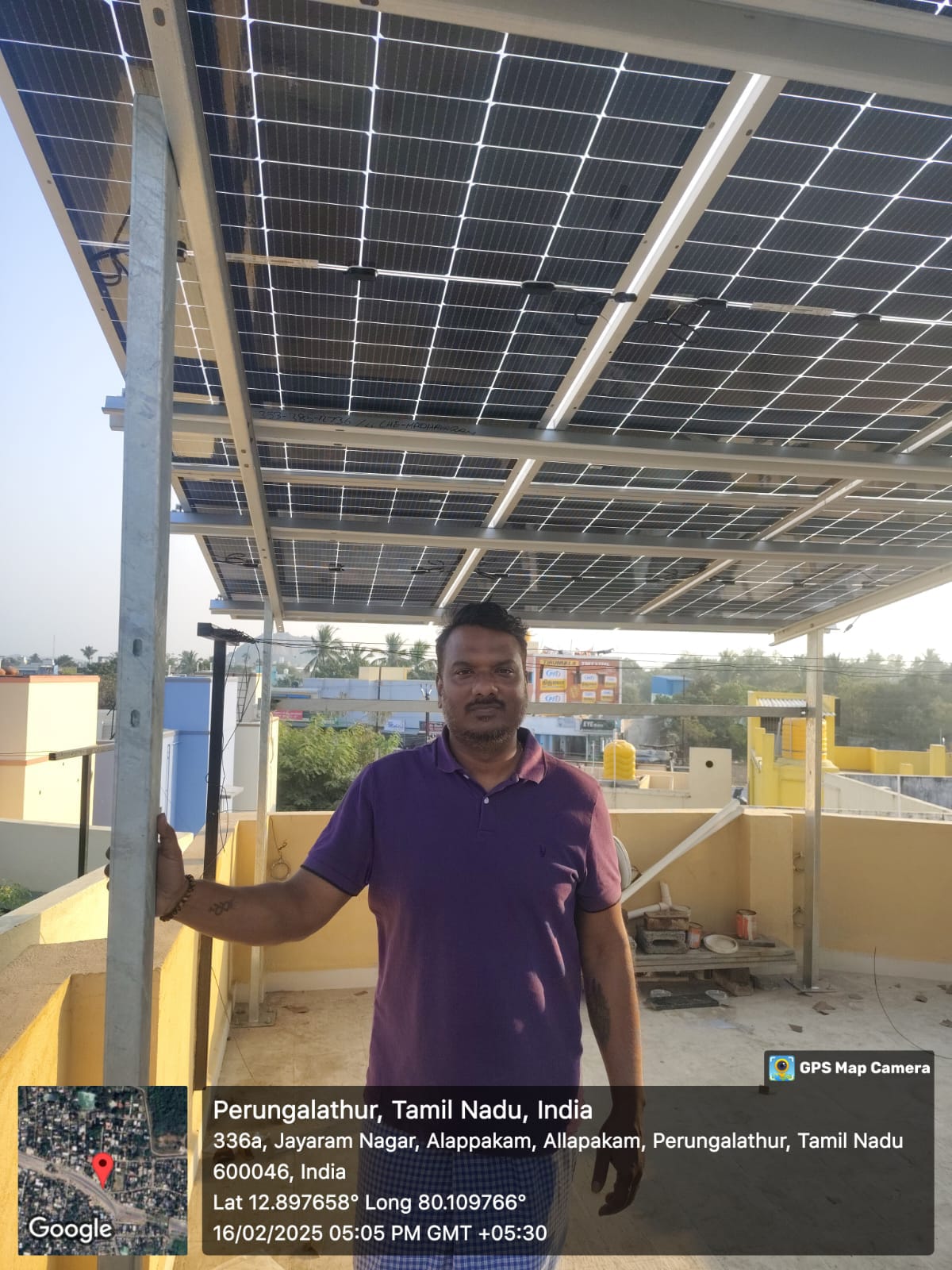
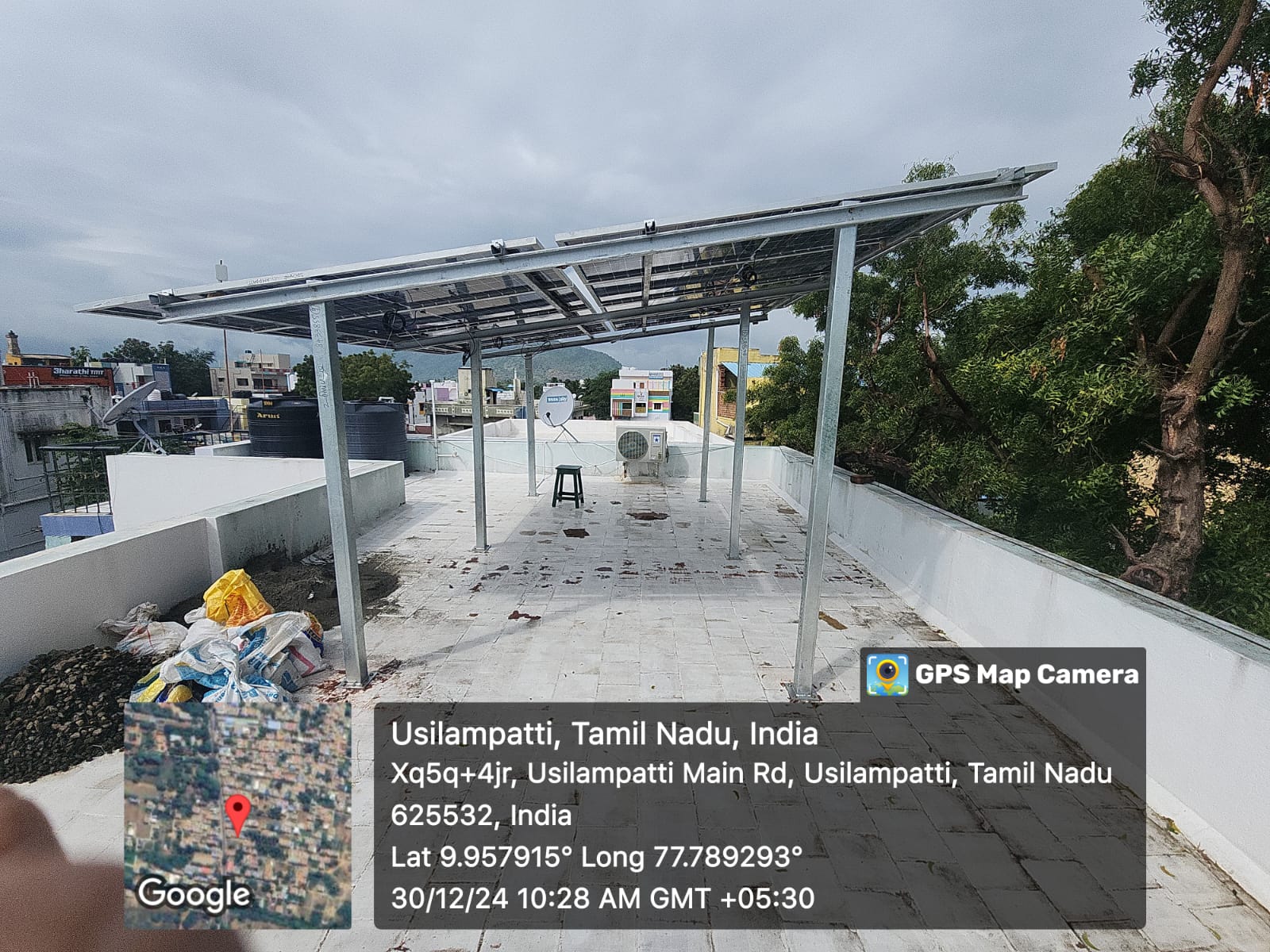
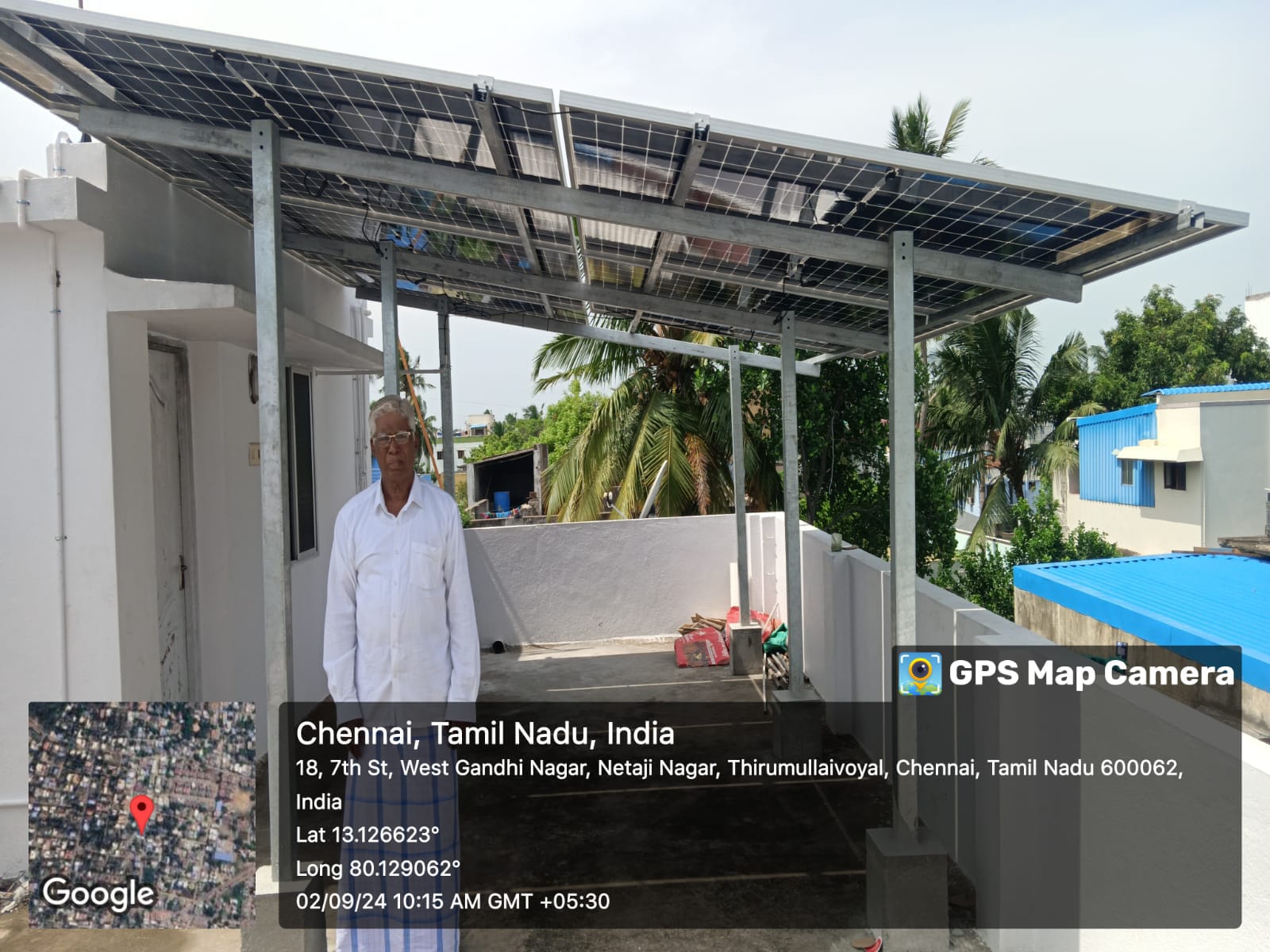
- Terrace, stilt roof and car-park canopy mounting options
- Zero disruption to individual flat meters
- Shade for parked vehicles as a side benefit
Ownership models: CAPEX versus RESCO
Under CAPEX the association funds the plant from the sinking fund or a one-time resident contribution and owns every unit generated from day one. Payback typically lands between four and six years and the asset then produces free power for two more decades. Under the RESCO or OPEX model, a renewable energy service company invests the capital, owns and maintains the plant, and the association signs a long-term power purchase agreement to buy generated units at a tariff fixed below the current grid rate.
RESCO suits associations that cannot get a capital resolution passed but can approve a monthly bill that is lower than today's. We help draft the roof-lease and PPA framework, escalation clause and the buy-out schedule so the association can take ownership later.
Approvals, metering and association paperwork
The common-area service connection is what gets solarised, so the net-metering application is filed in the association's name against that service number. We prepare the general body resolution draft, the roof-usage undertaking, the single-line diagram and the TANGEDCO feasibility file. Where the state permits group or virtual net metering, surplus generation can be apportioned across designated service connections - we assess whether your community qualifies before proposing it.
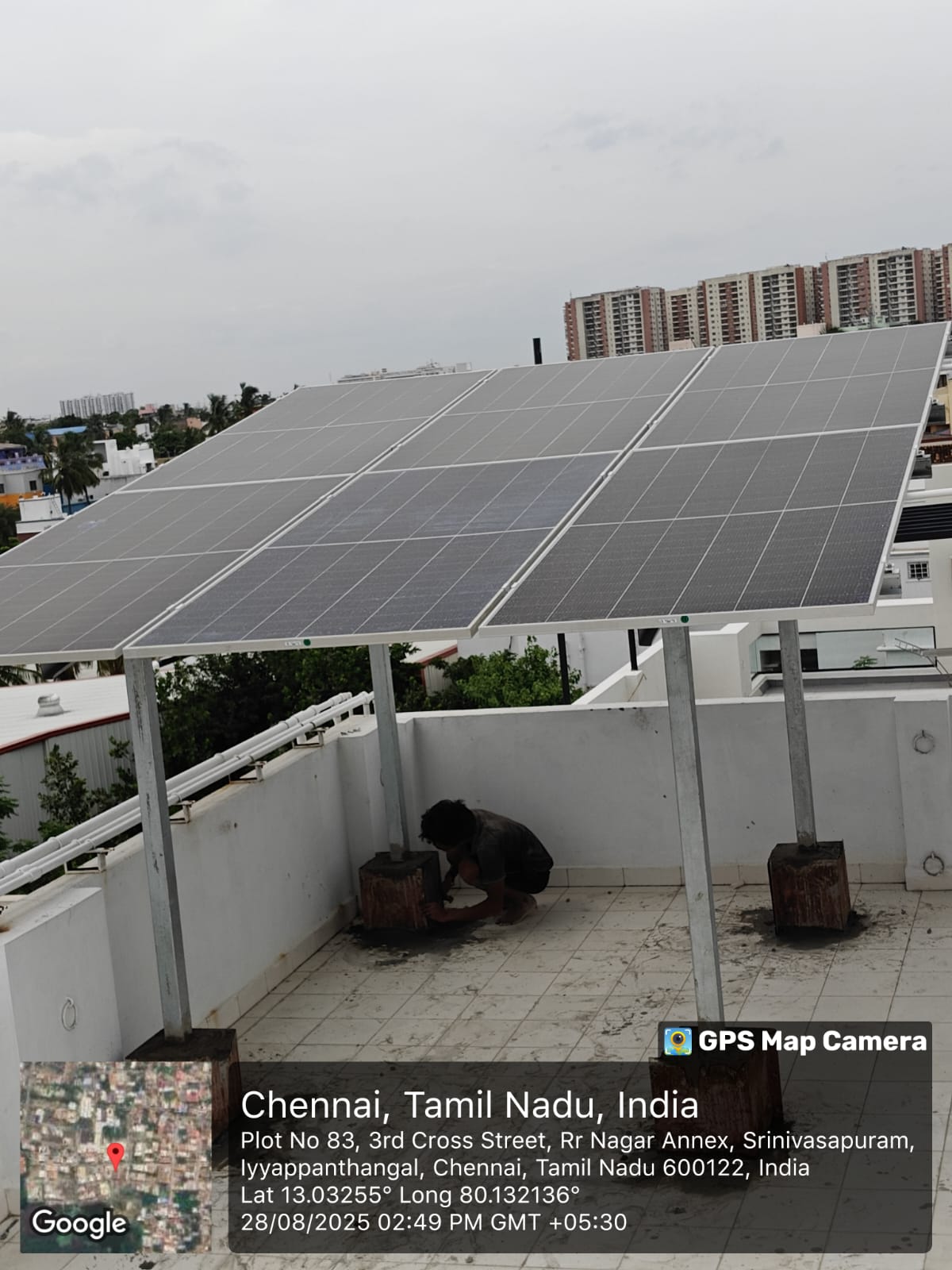
Structural safety matters in tall blocks: we carry out a terrace load and wind assessment, use ballasted or chemically anchored foundations that preserve waterproofing, and keep walkways, water tanks and lift machine rooms fully accessible.
Individual flats, EV charging and monitoring
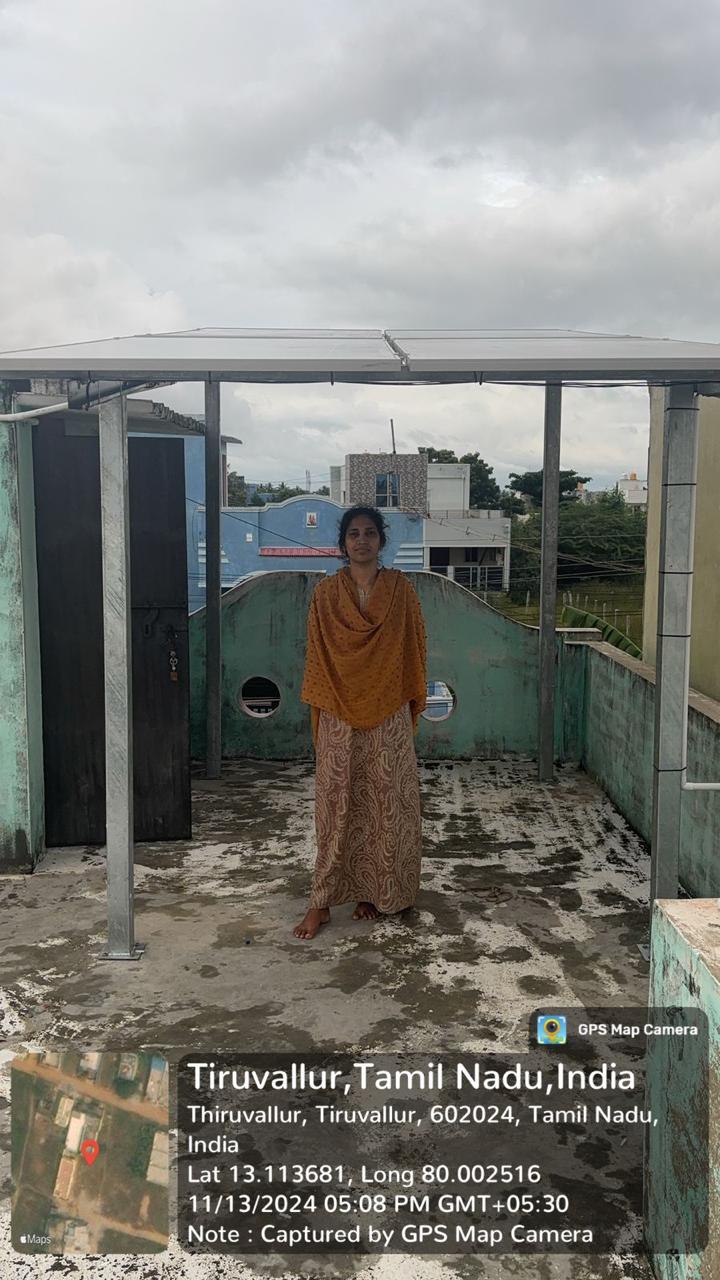
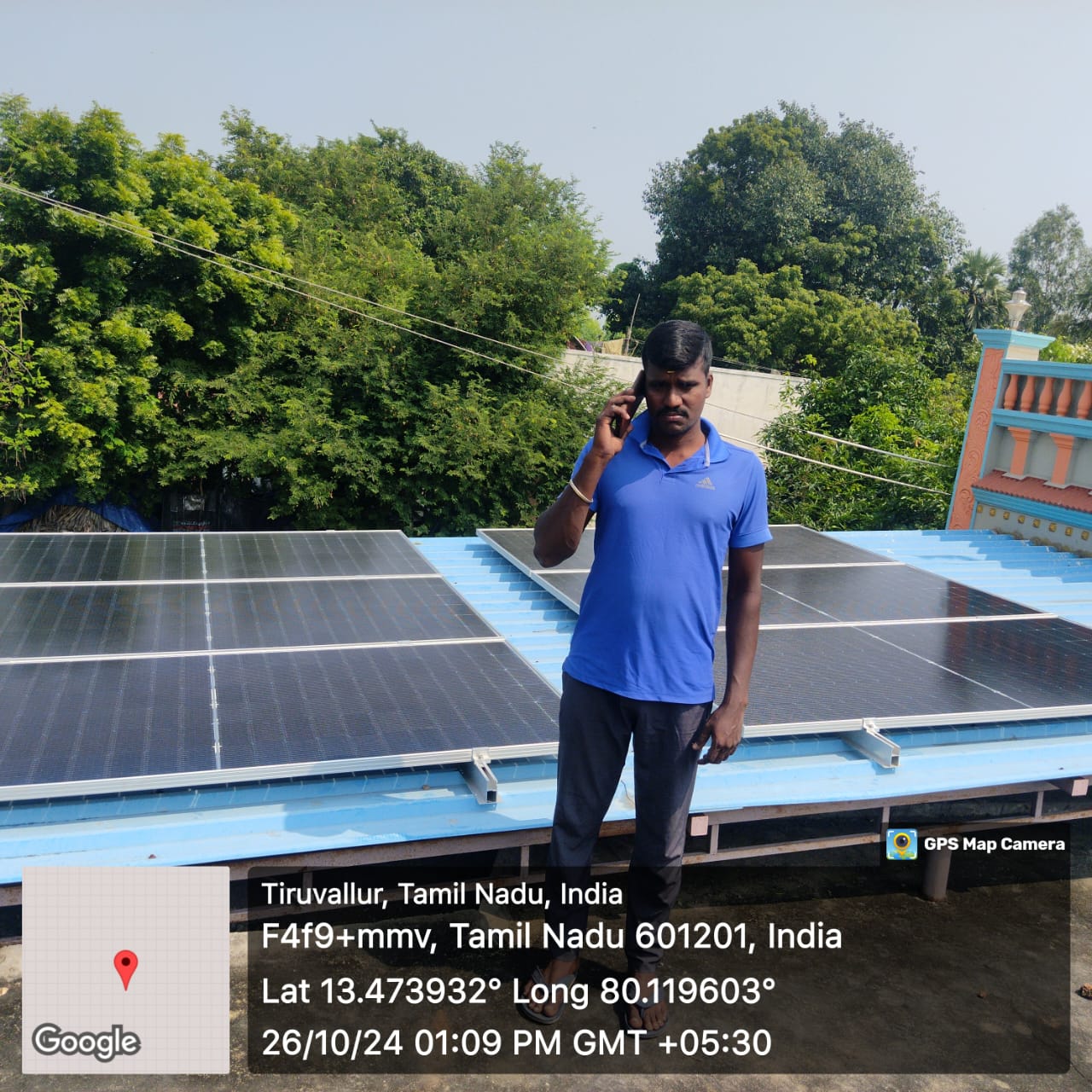
Individual flat owners with an exclusive terrace right can install their own small system under PM Surya Ghar, and we handle those alongside the association plant. Many communities also pair solar with EV charging points so daytime charging draws from the array rather than the grid. Each installation includes a monitoring dashboard the managing committee can open on a phone, plus a monthly generation report suitable for circulating to residents at the AGM.
How GenSolar delivers your project
Survey to switch-on — a simple four-step process handled end to end by our own team.
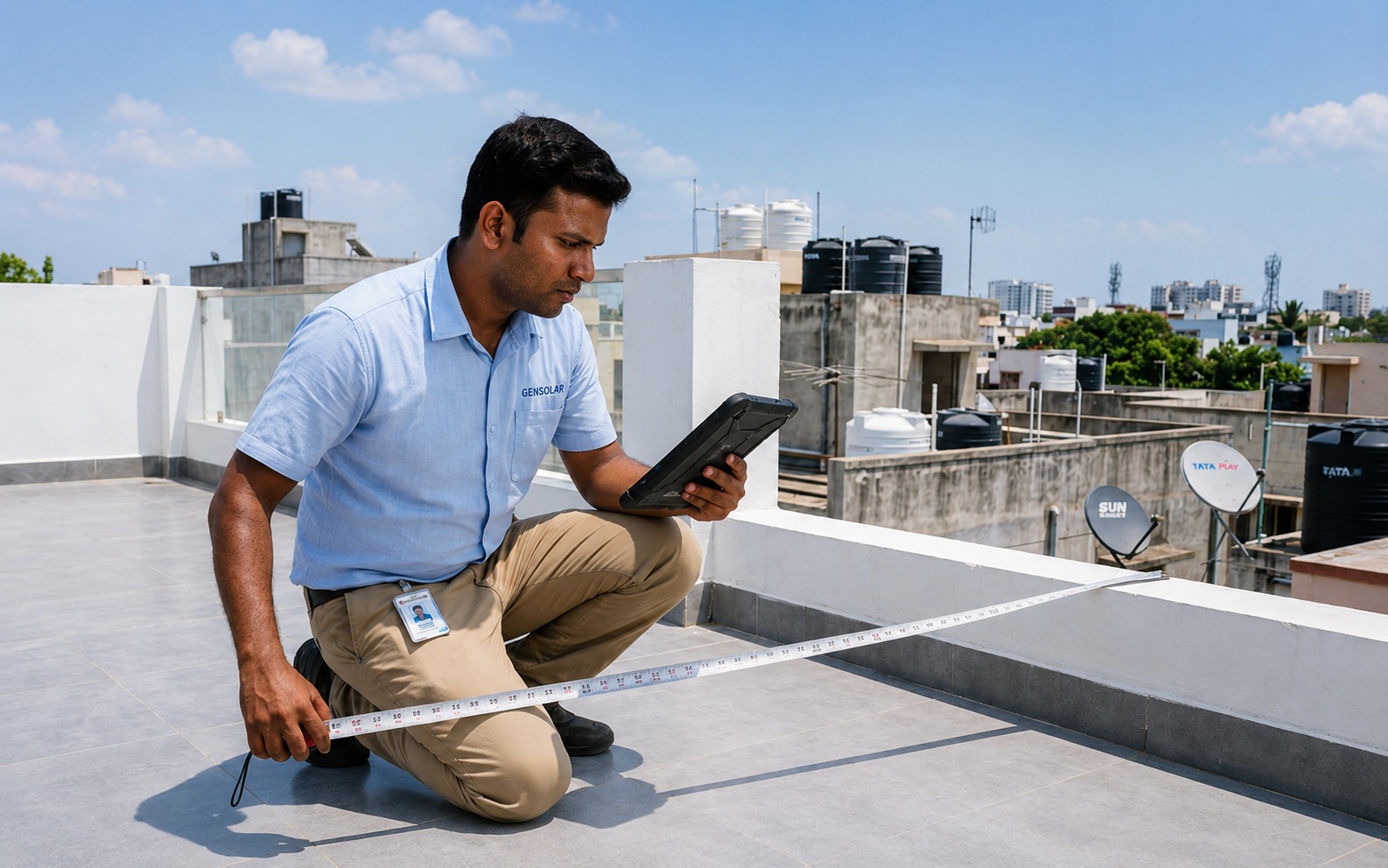
Free Site Survey
Our engineer measures your roof, checks shadow-free area and your sanctioned load — at no cost.
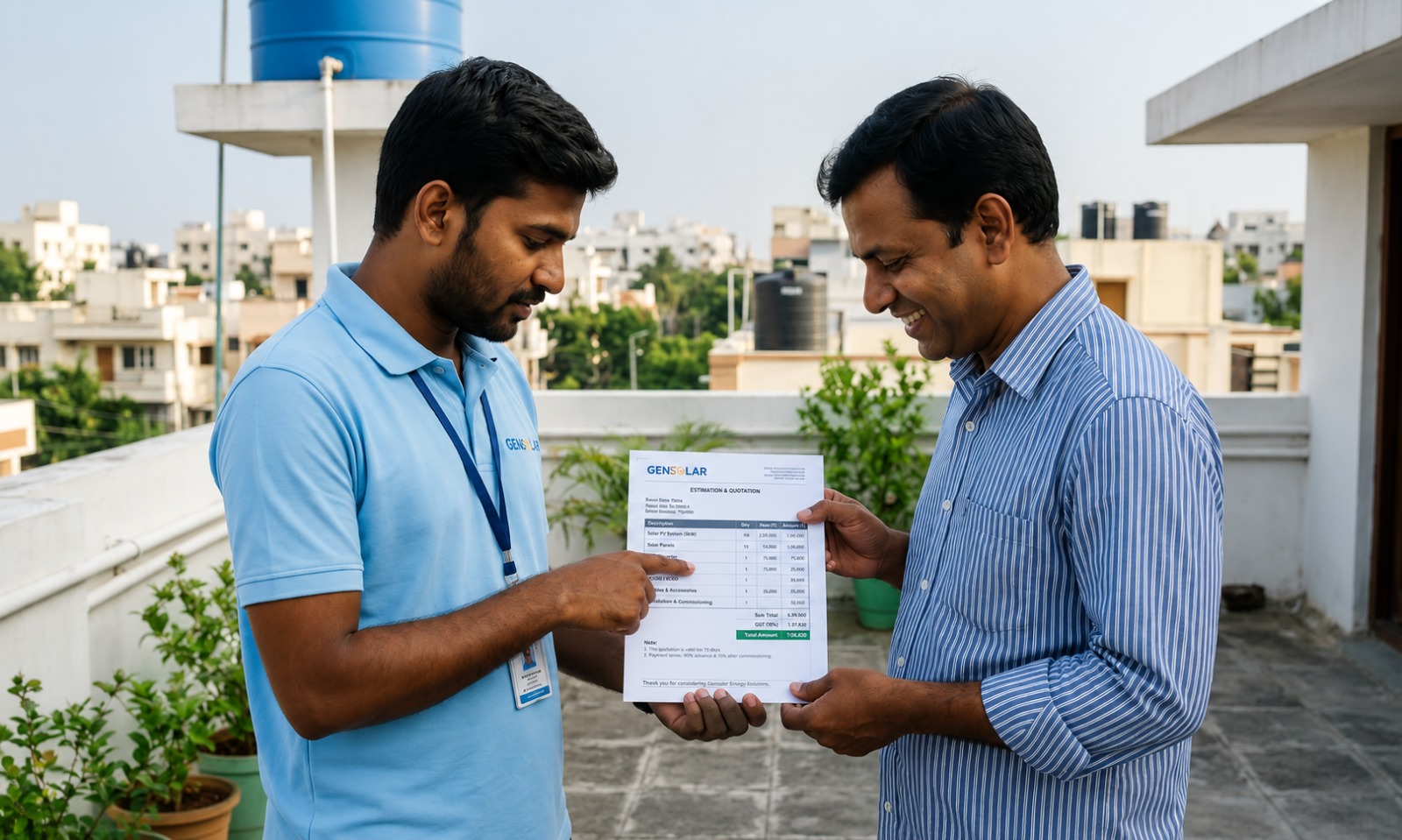
Fixed-Price Quote
A clear, itemised quotation with panel brand, inverter, subsidy and EMI — usually within 2 hours.
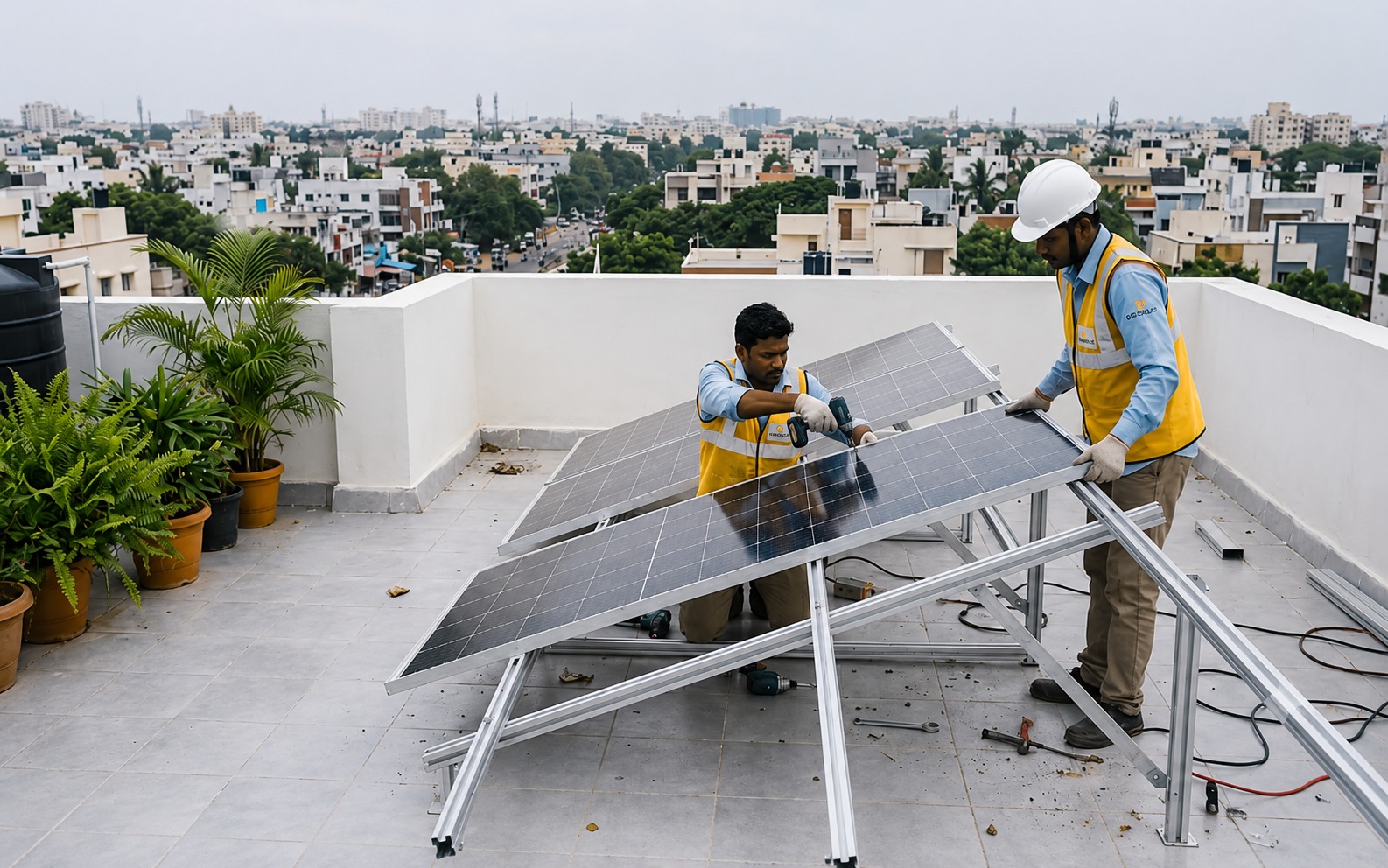
Installation in 8–10 Hours
Certified crews complete the physical rooftop installation in a single working day.
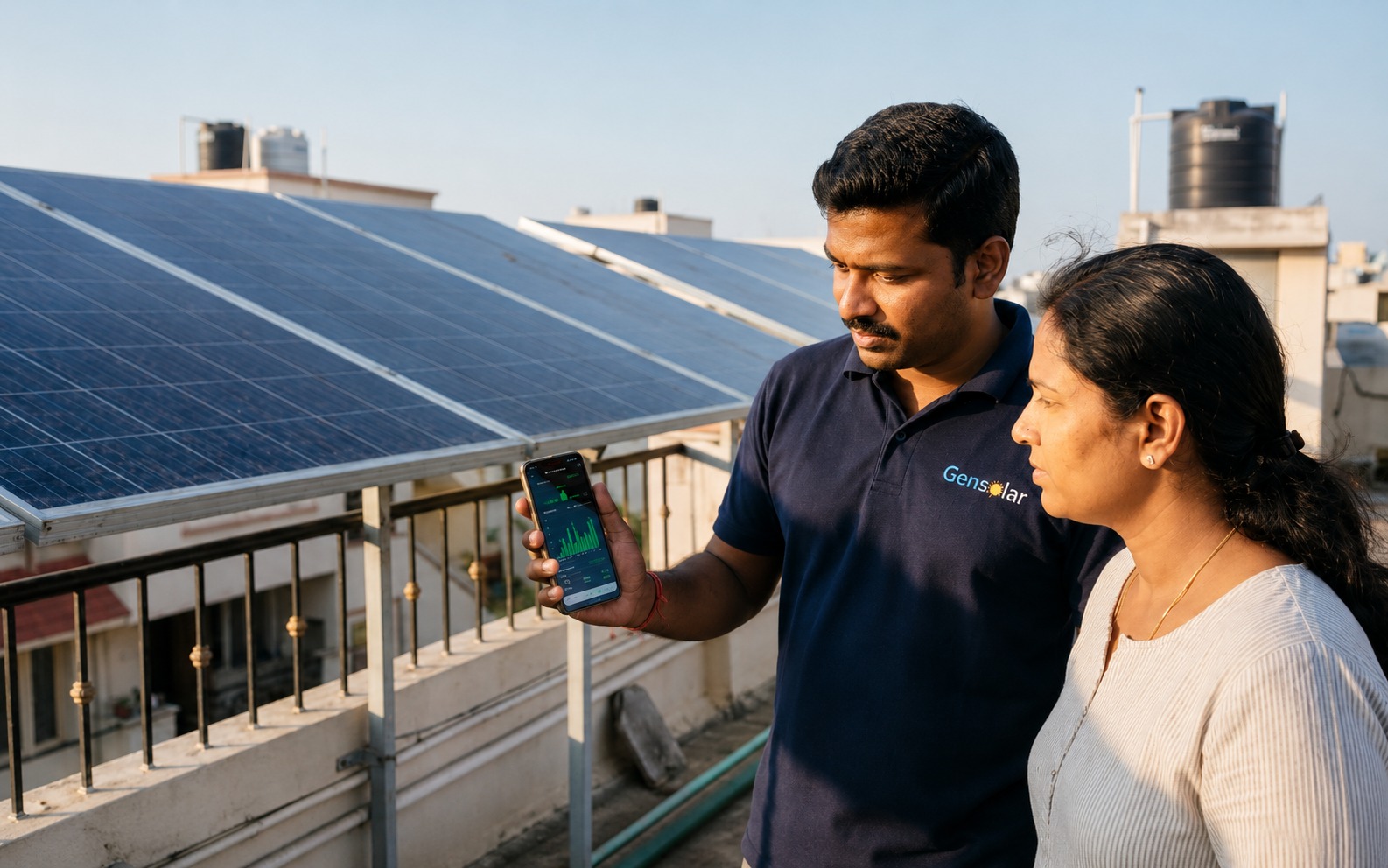
Monitoring & Support
Track daily generation on your phone, with AMC and warranty support from our local team.
Apartment & Housing Society Solar — FAQs
Explore next
On Gensolar
Official Government Sources
- PM Surya Ghar: Muft Bijli YojanaCentral rooftop solar subsidy scheme — apply & track subsidy.
- Ministry of New & Renewable Energy (MNRE)Government of India nodal ministry for solar policy.
- TANGEDCO (TNEB)Tamil Nadu Generation & Distribution Corp — net metering & tariffs.
- PM-KUSUM SchemeSolar pump subsidy scheme for farmers (up to 60%).
- National Portal for Rooftop SolarCentral registration & DISCOM coordination portal.
- Bureau of Energy Efficiency (BEE)Energy efficiency standards and labelling authority.
Ready to see your numbers?
Share your last electricity bill and roof photos — we send a fixed-price quote within two hours.