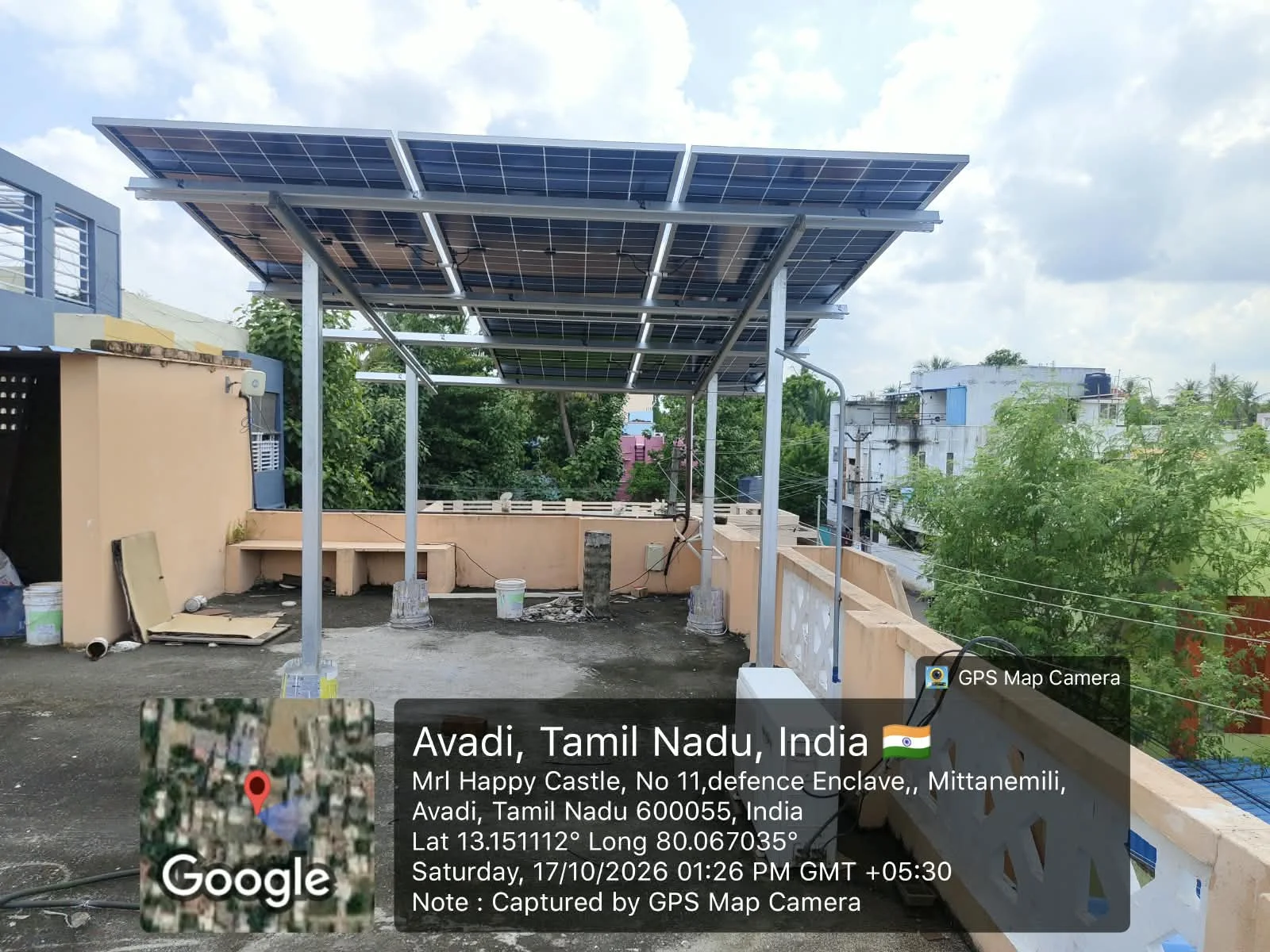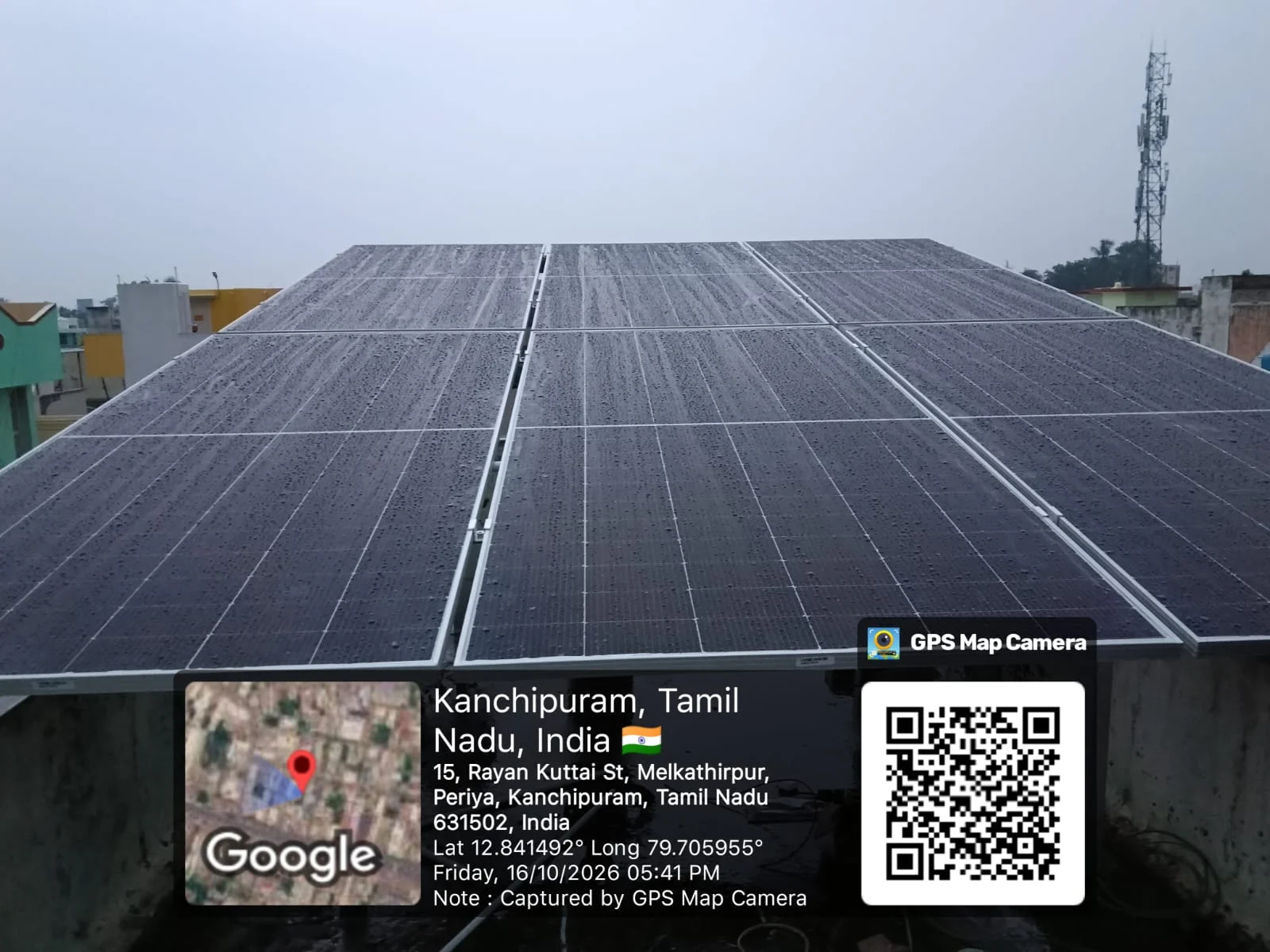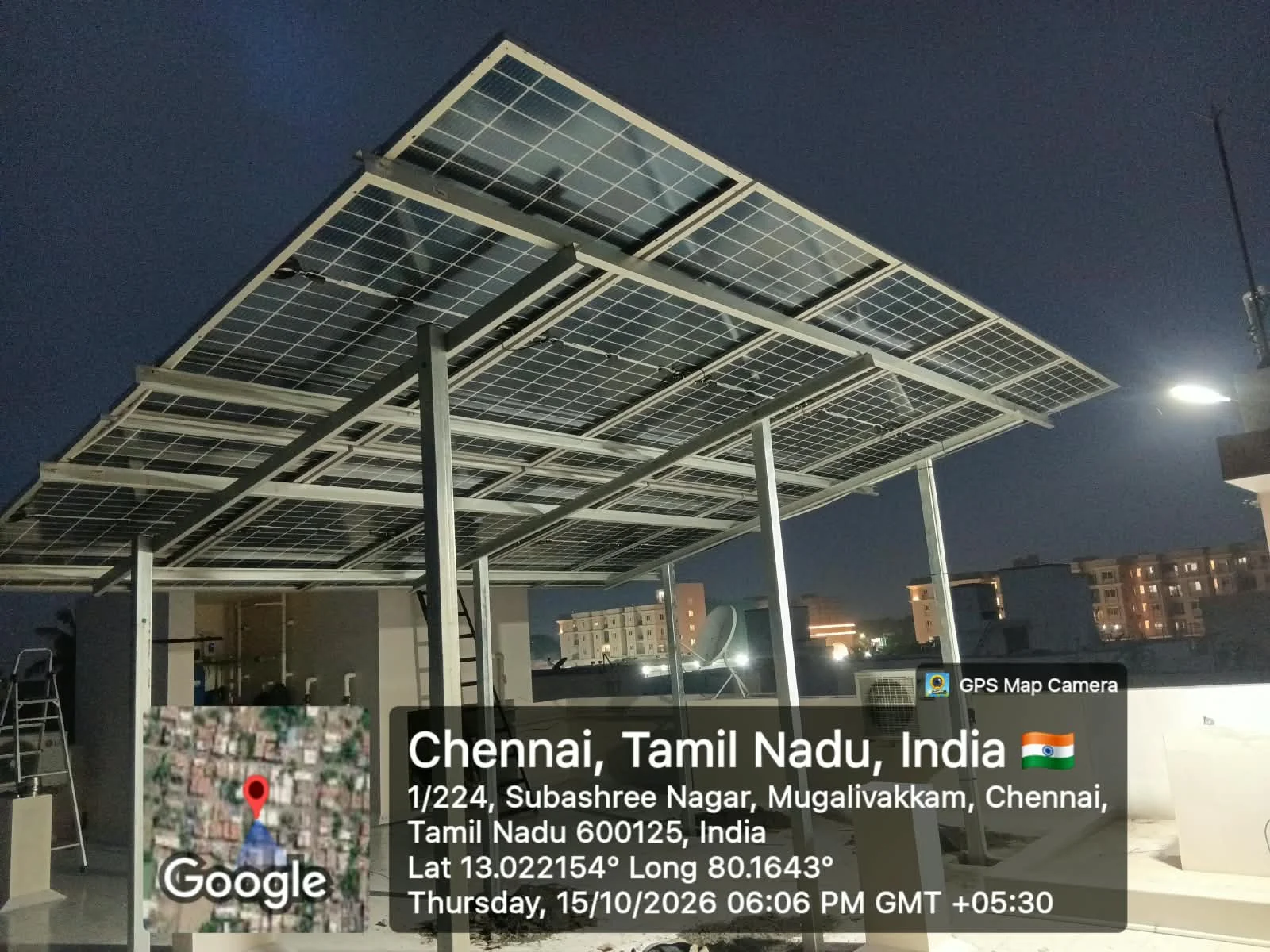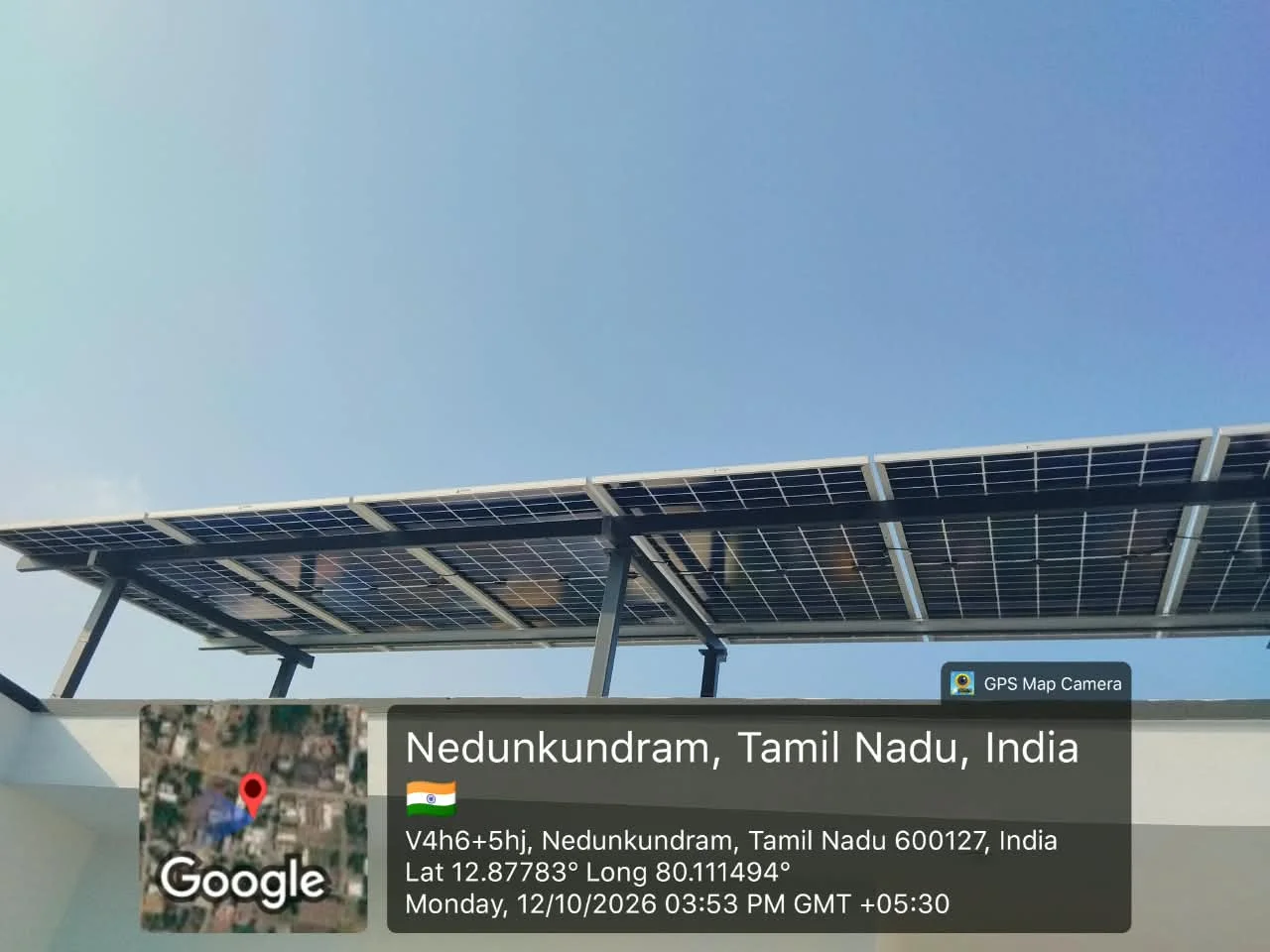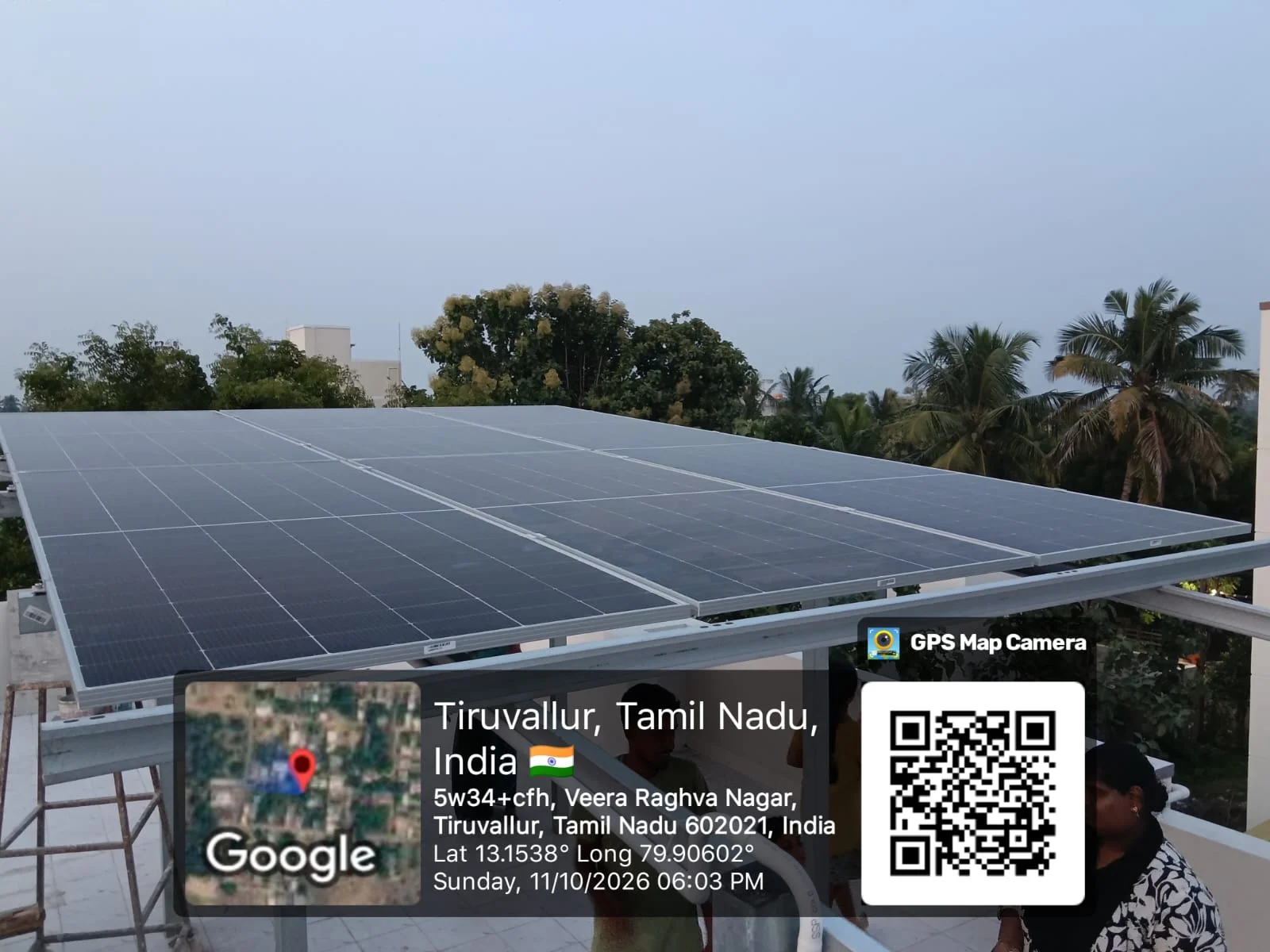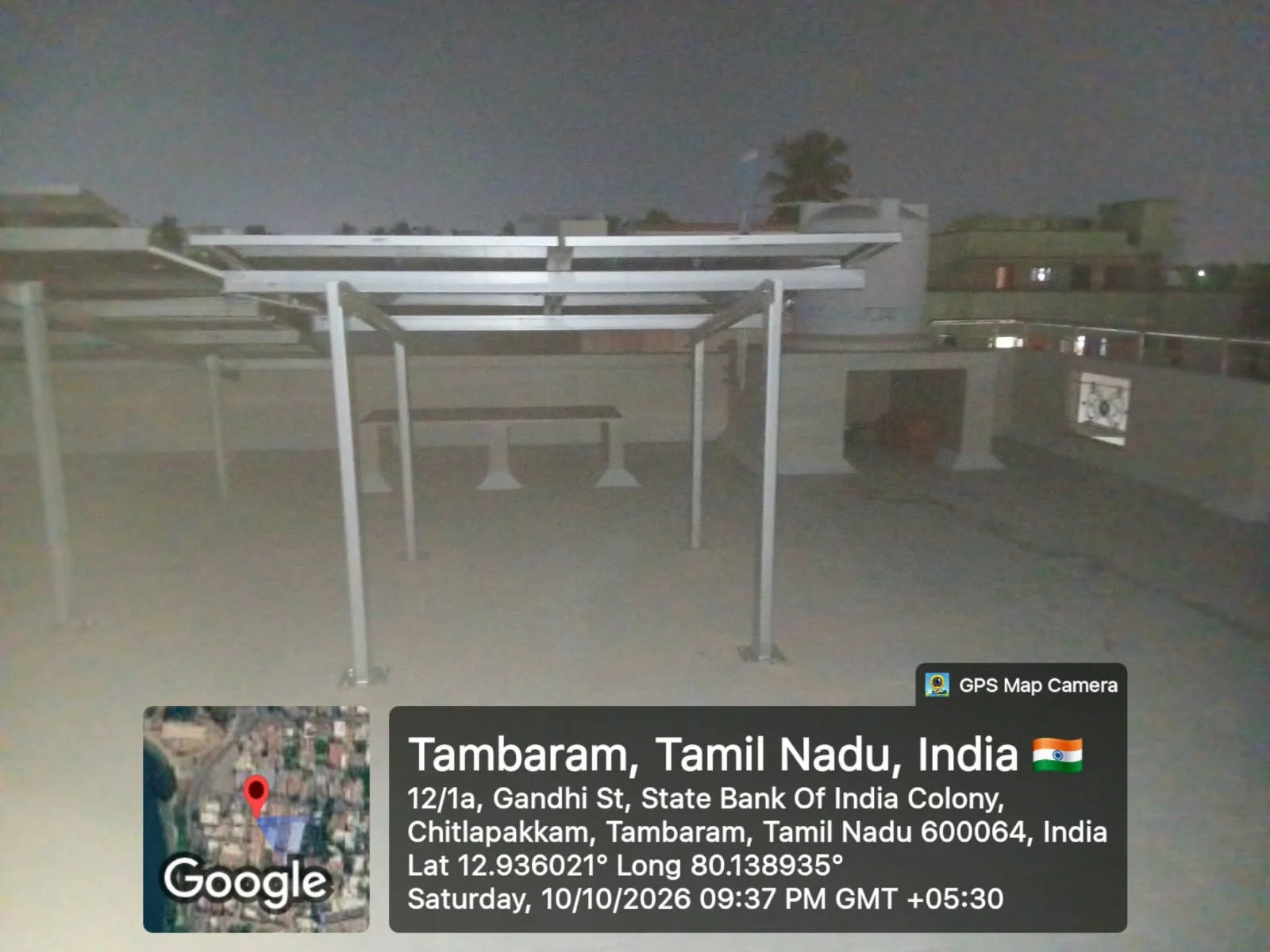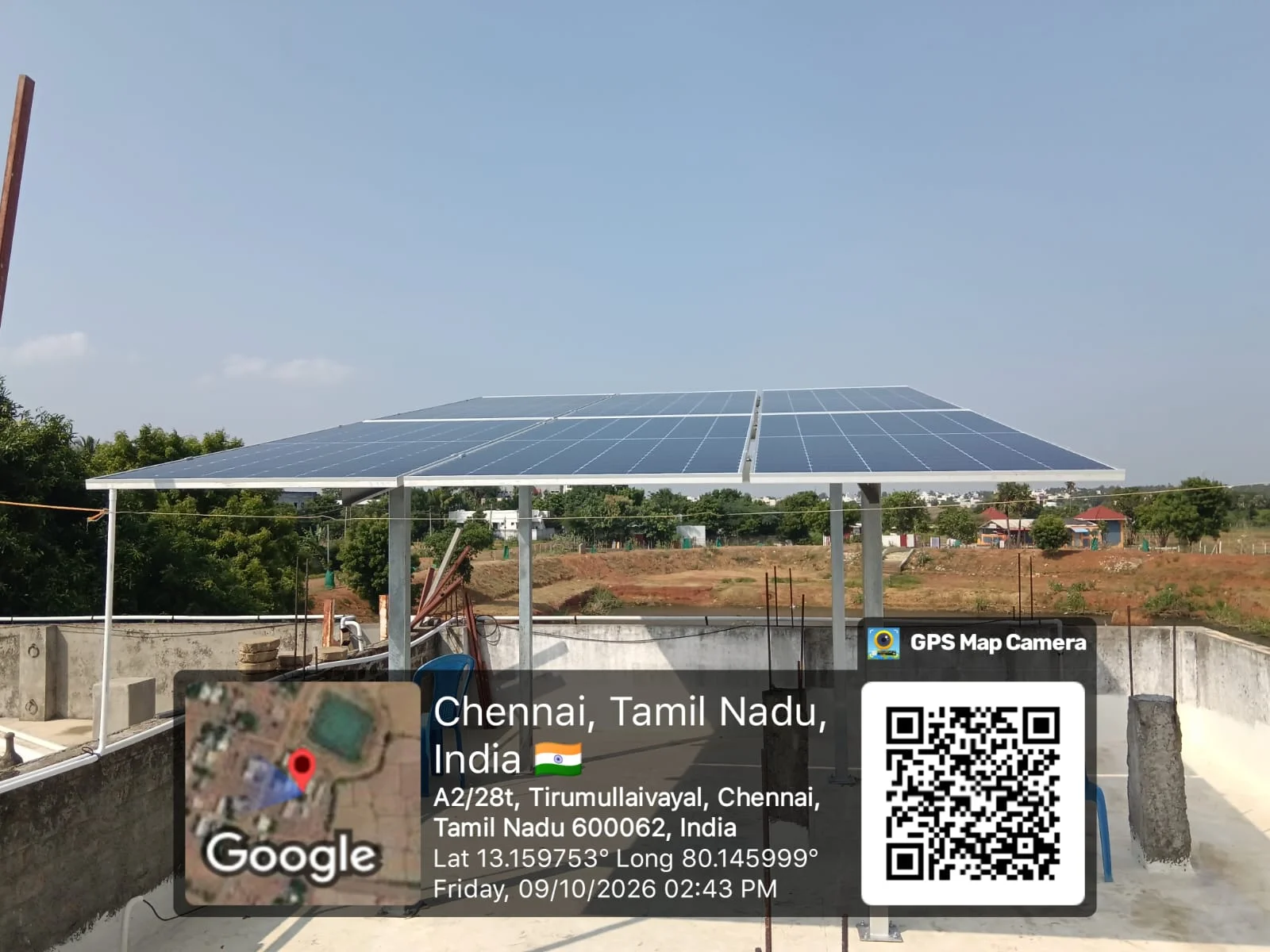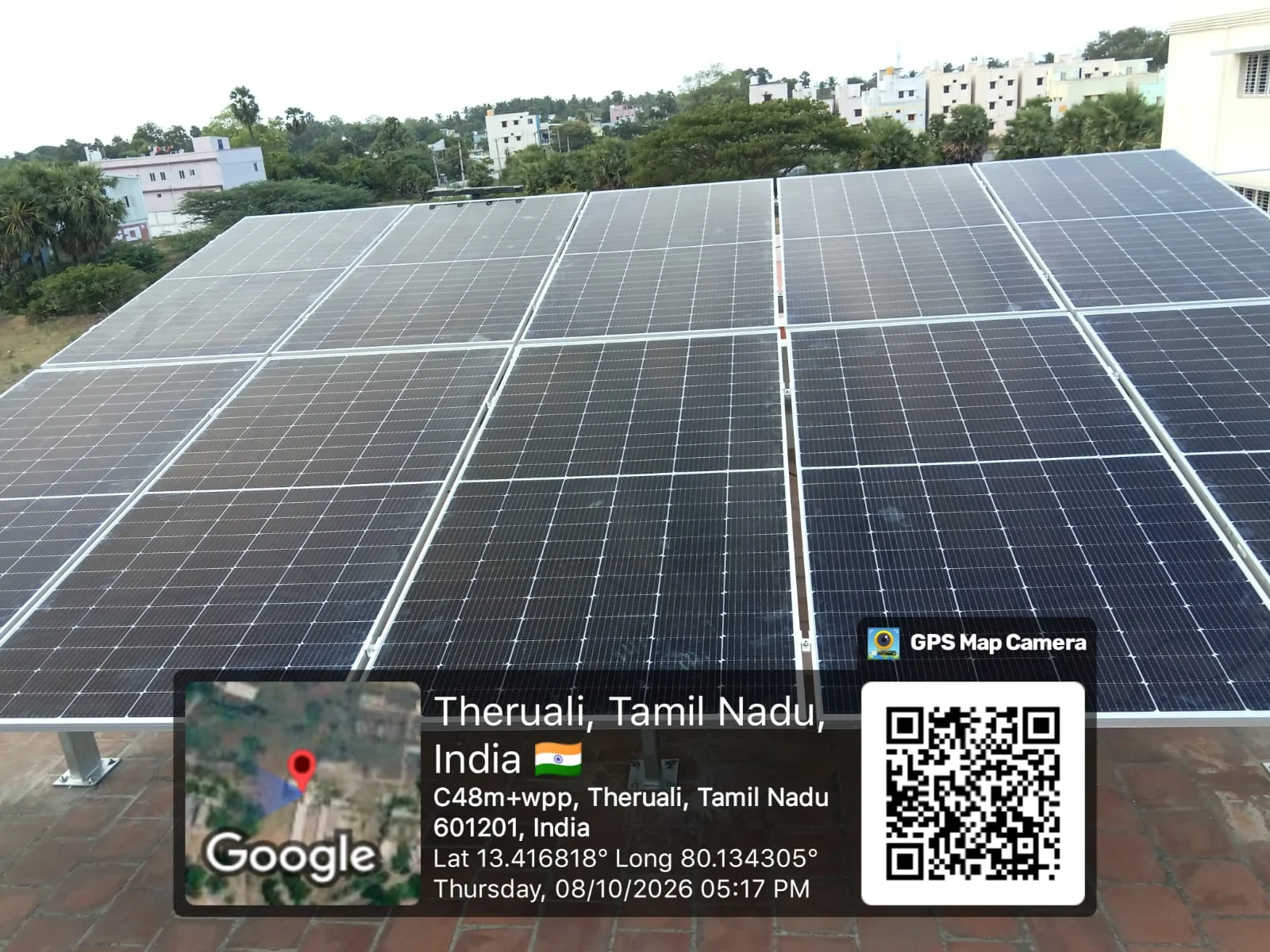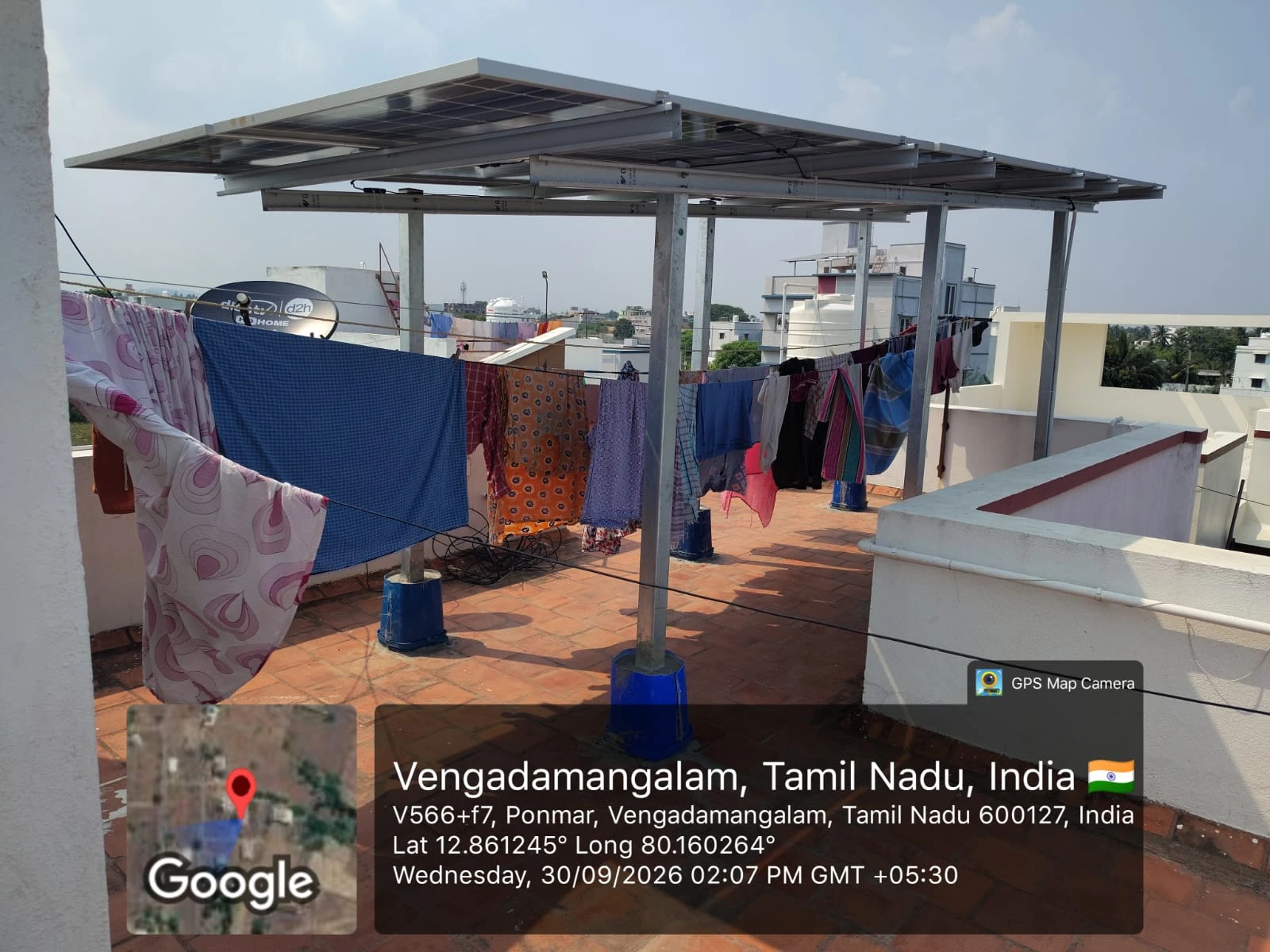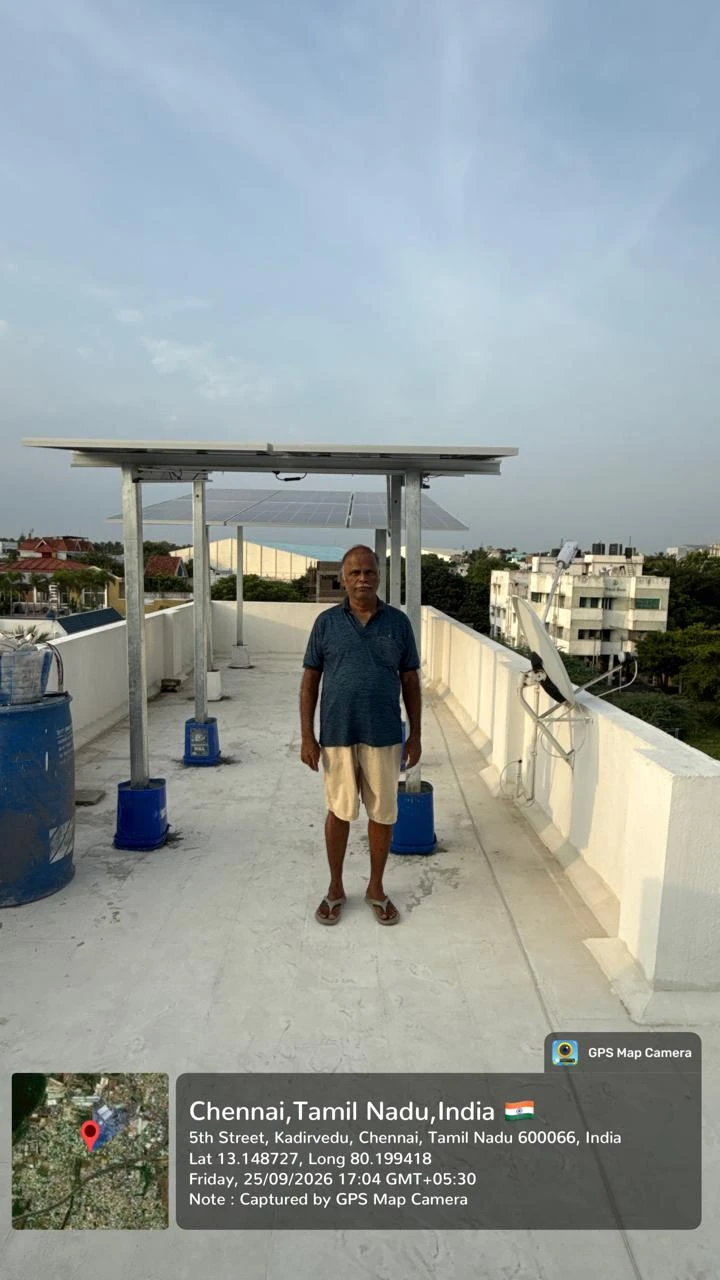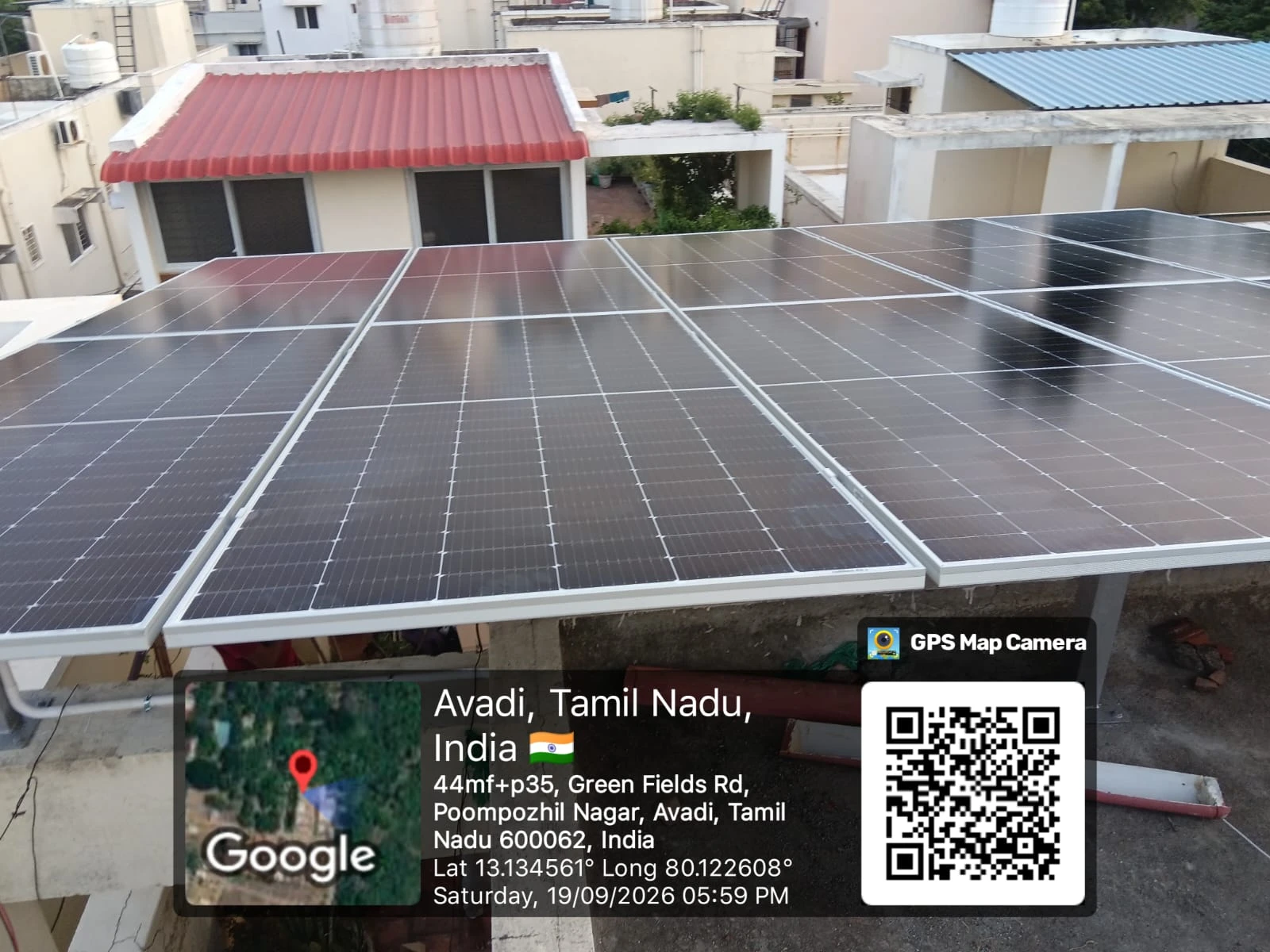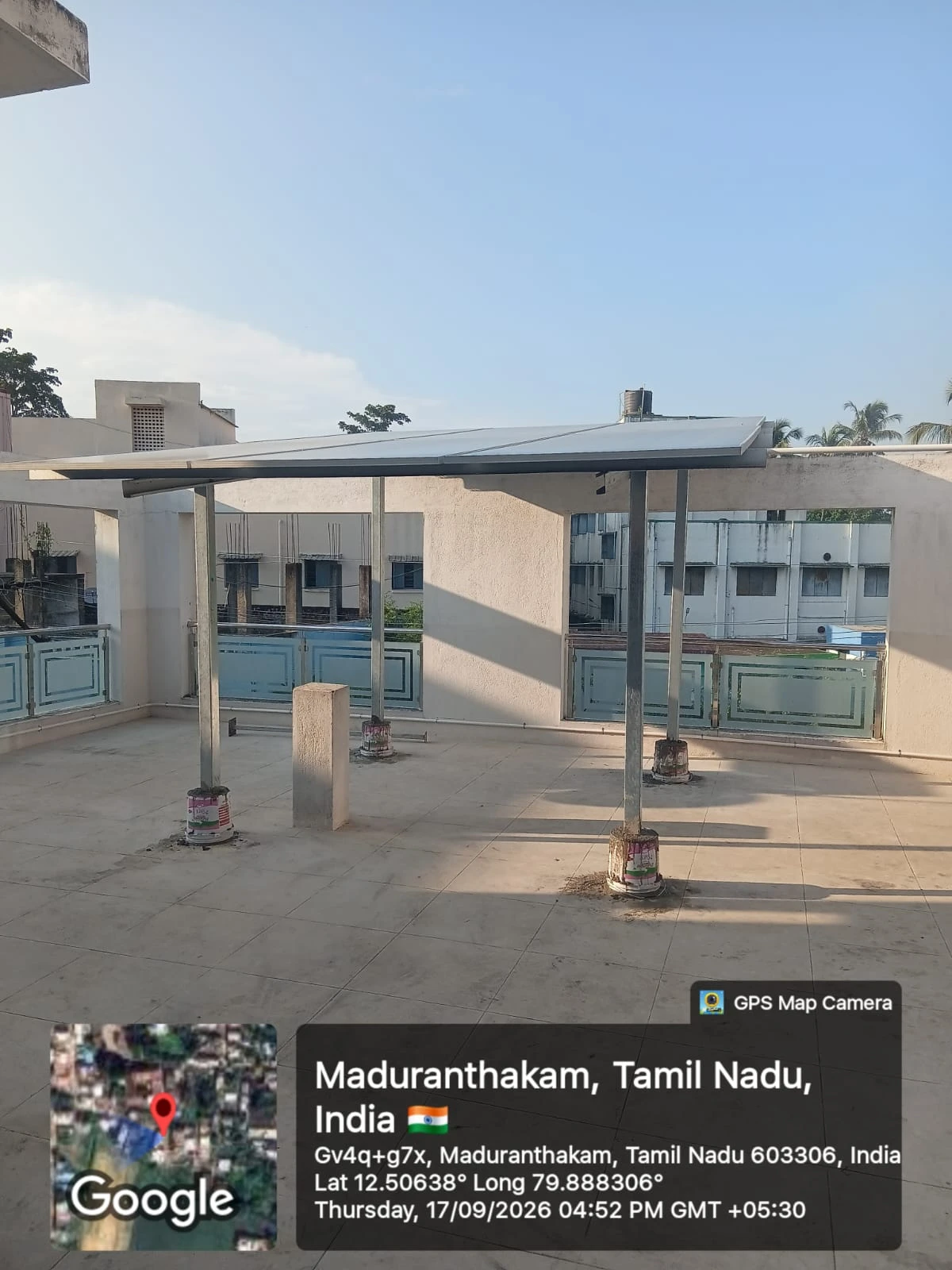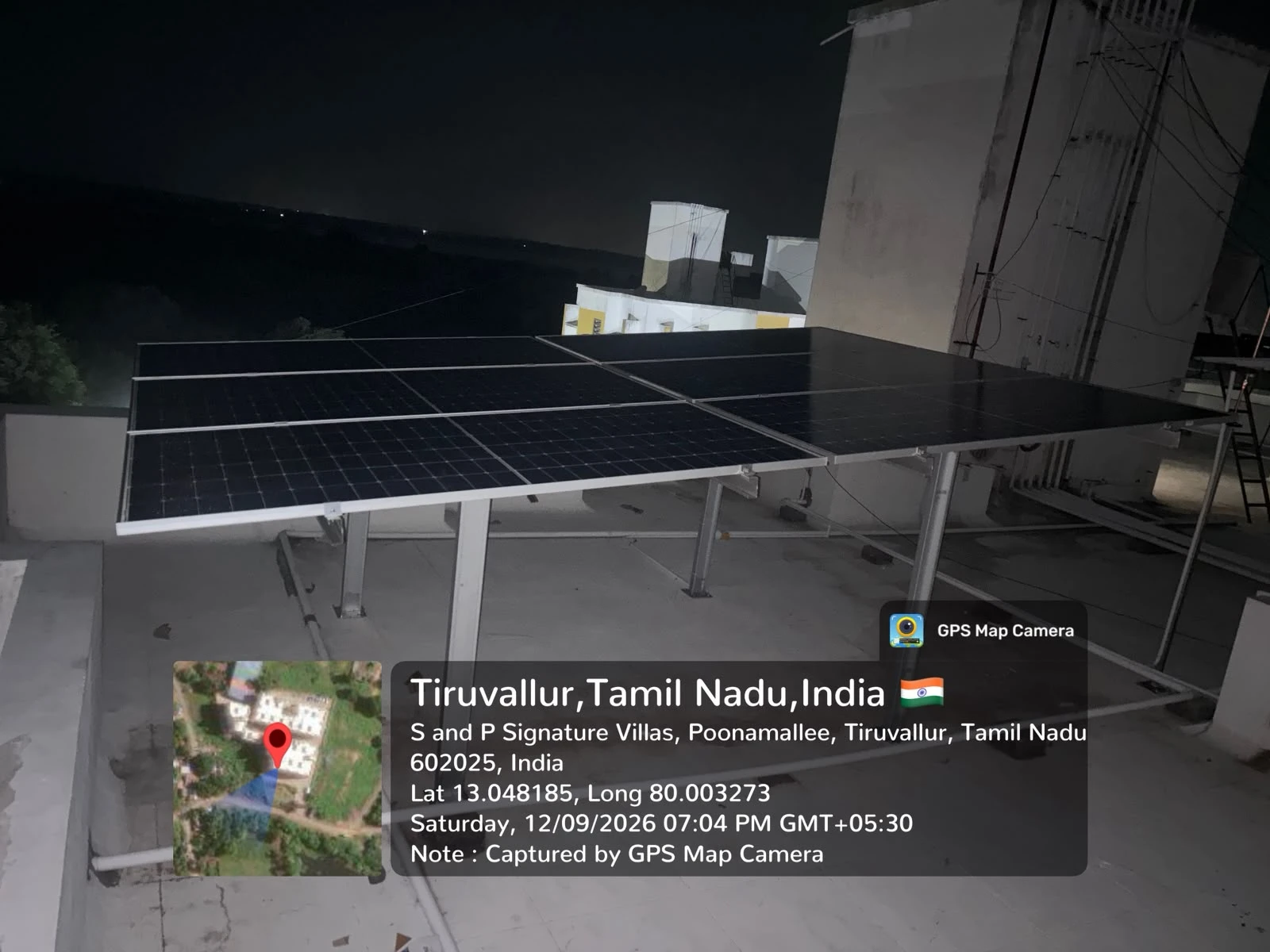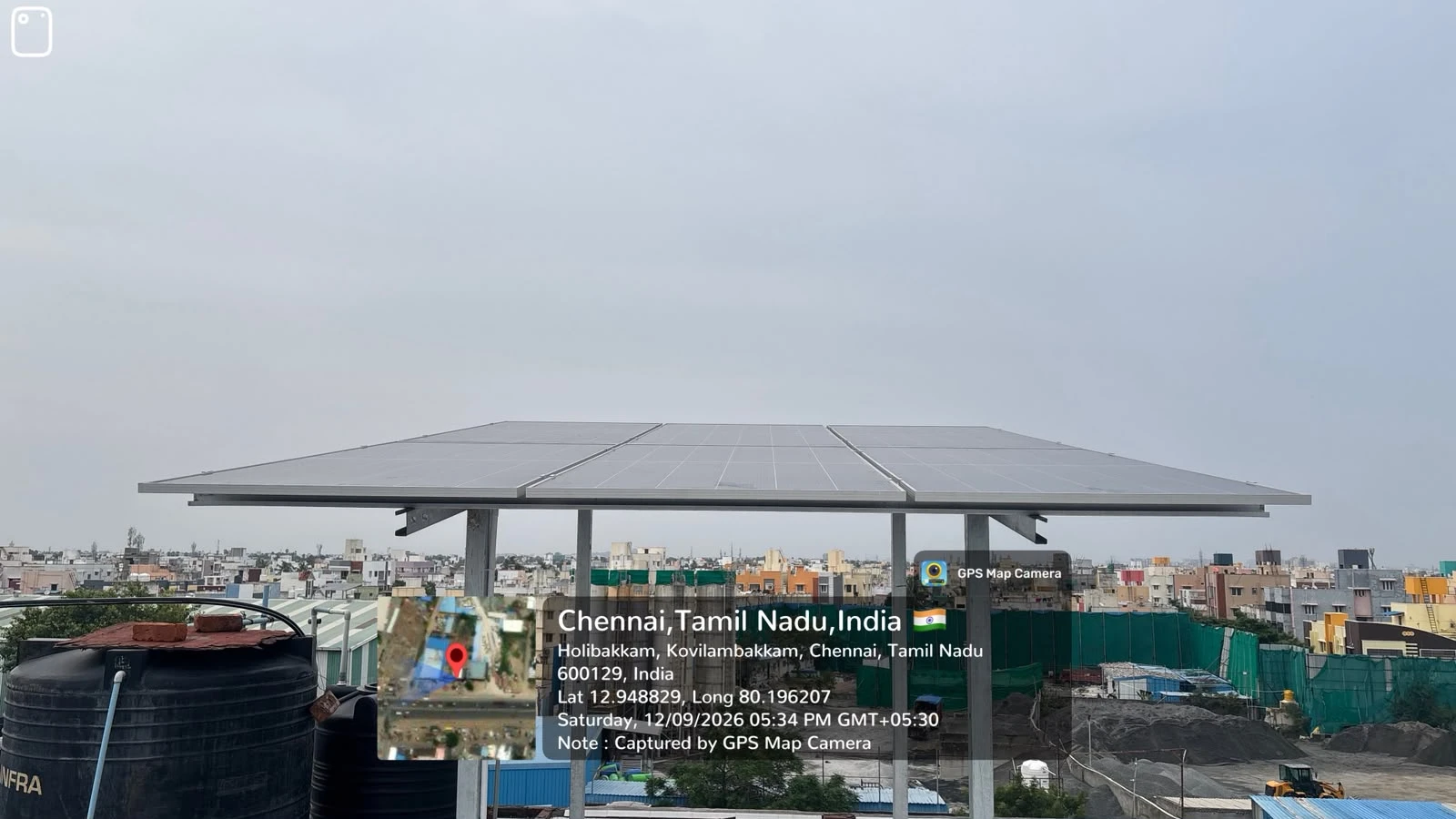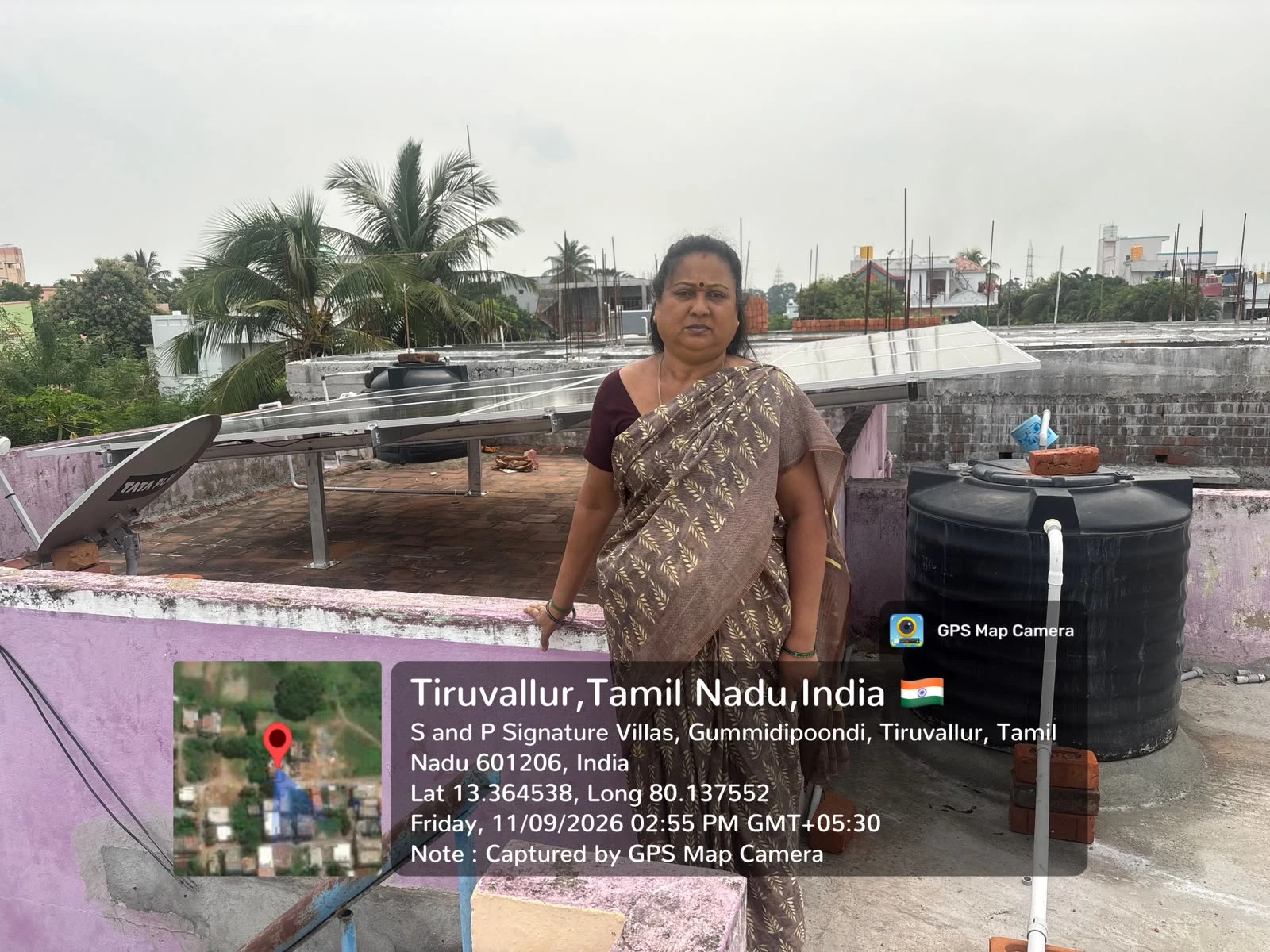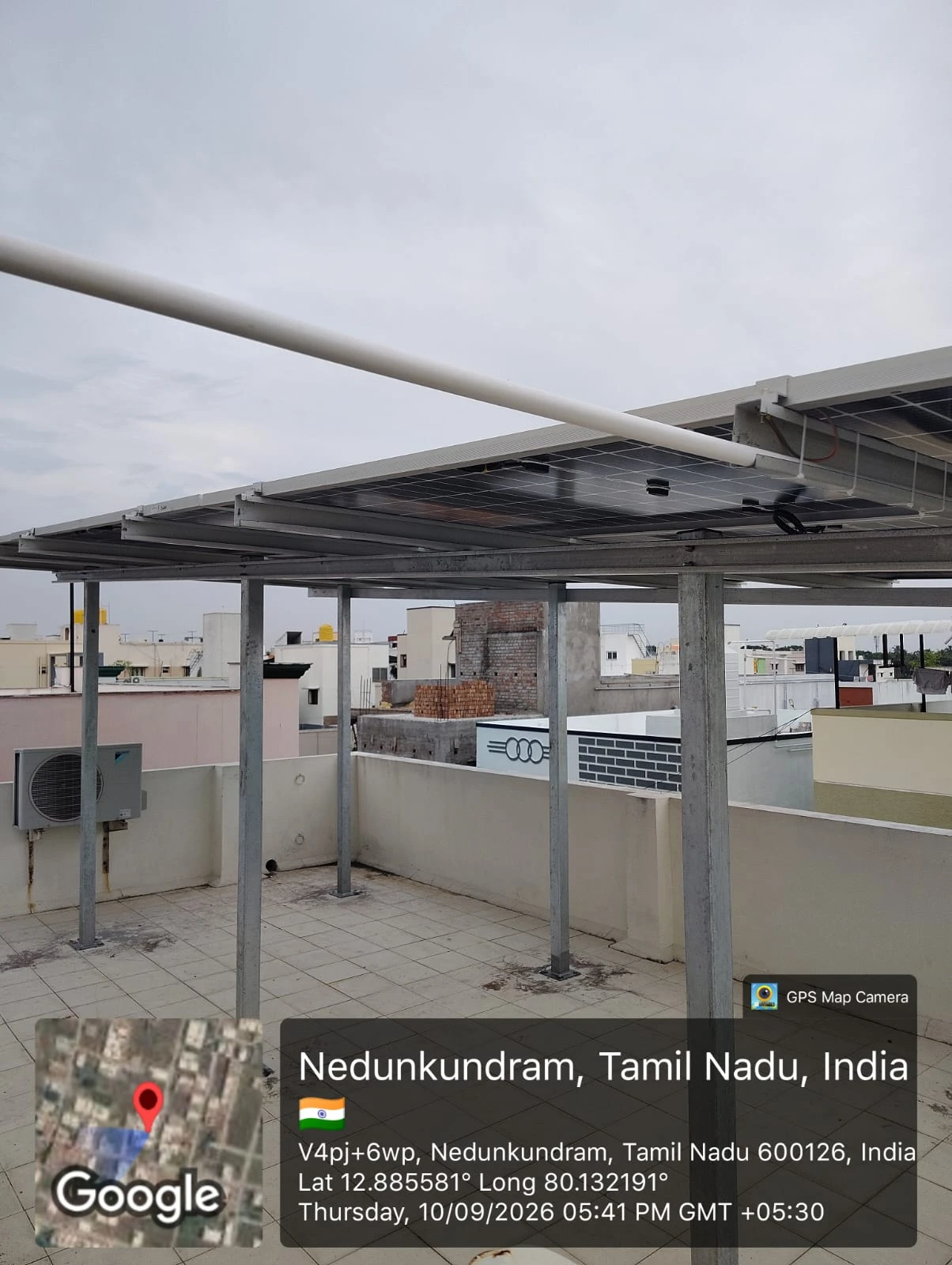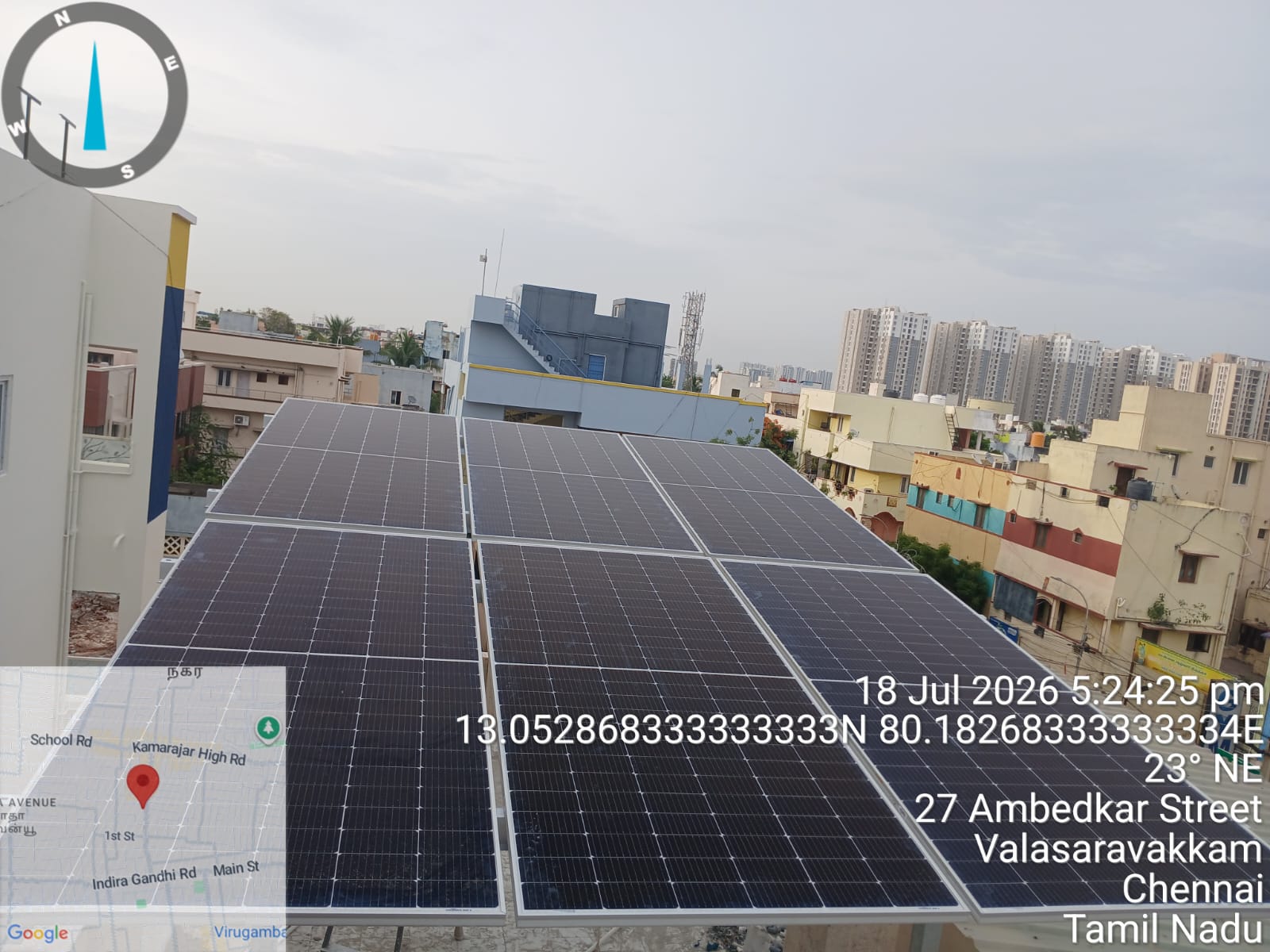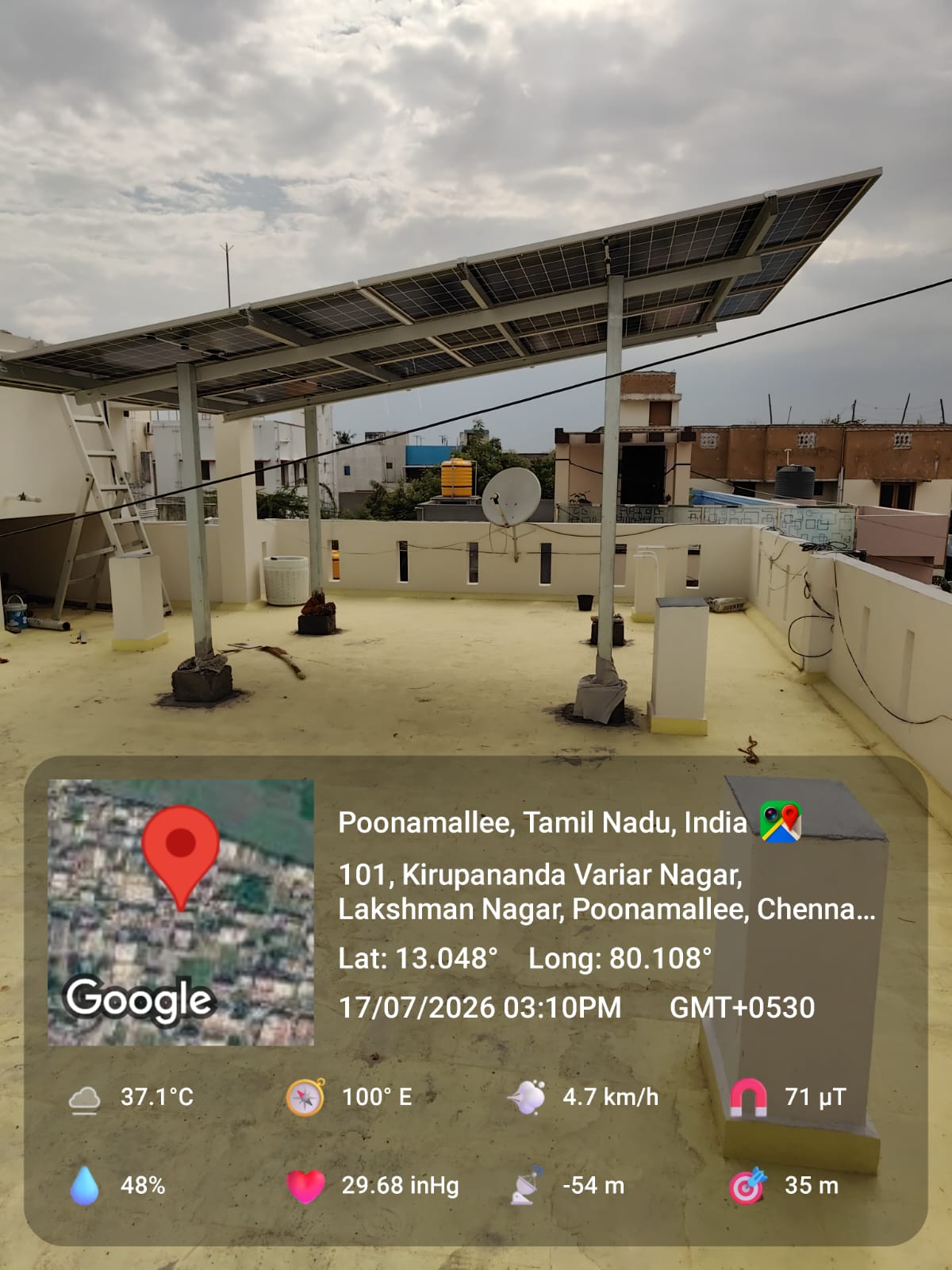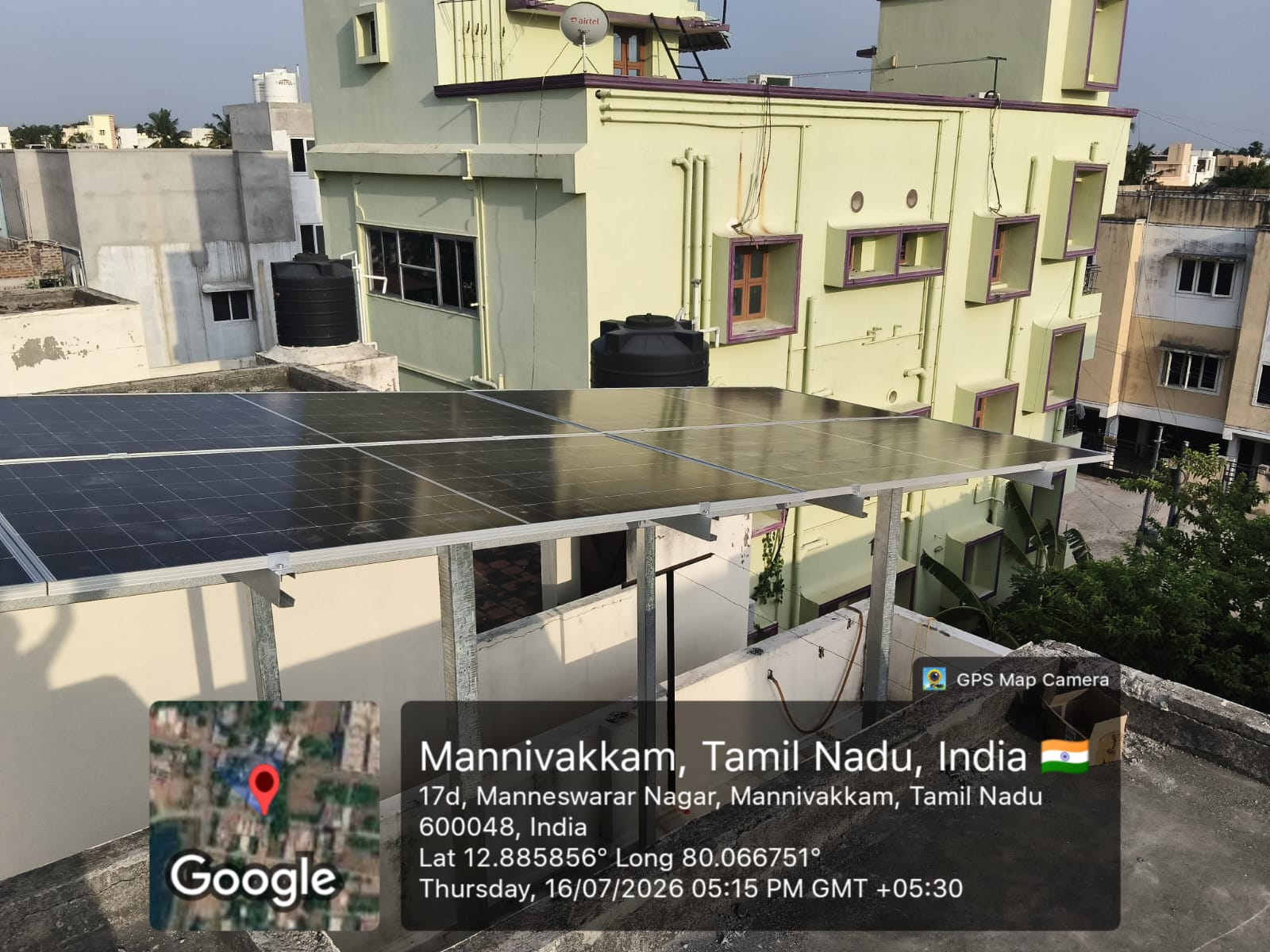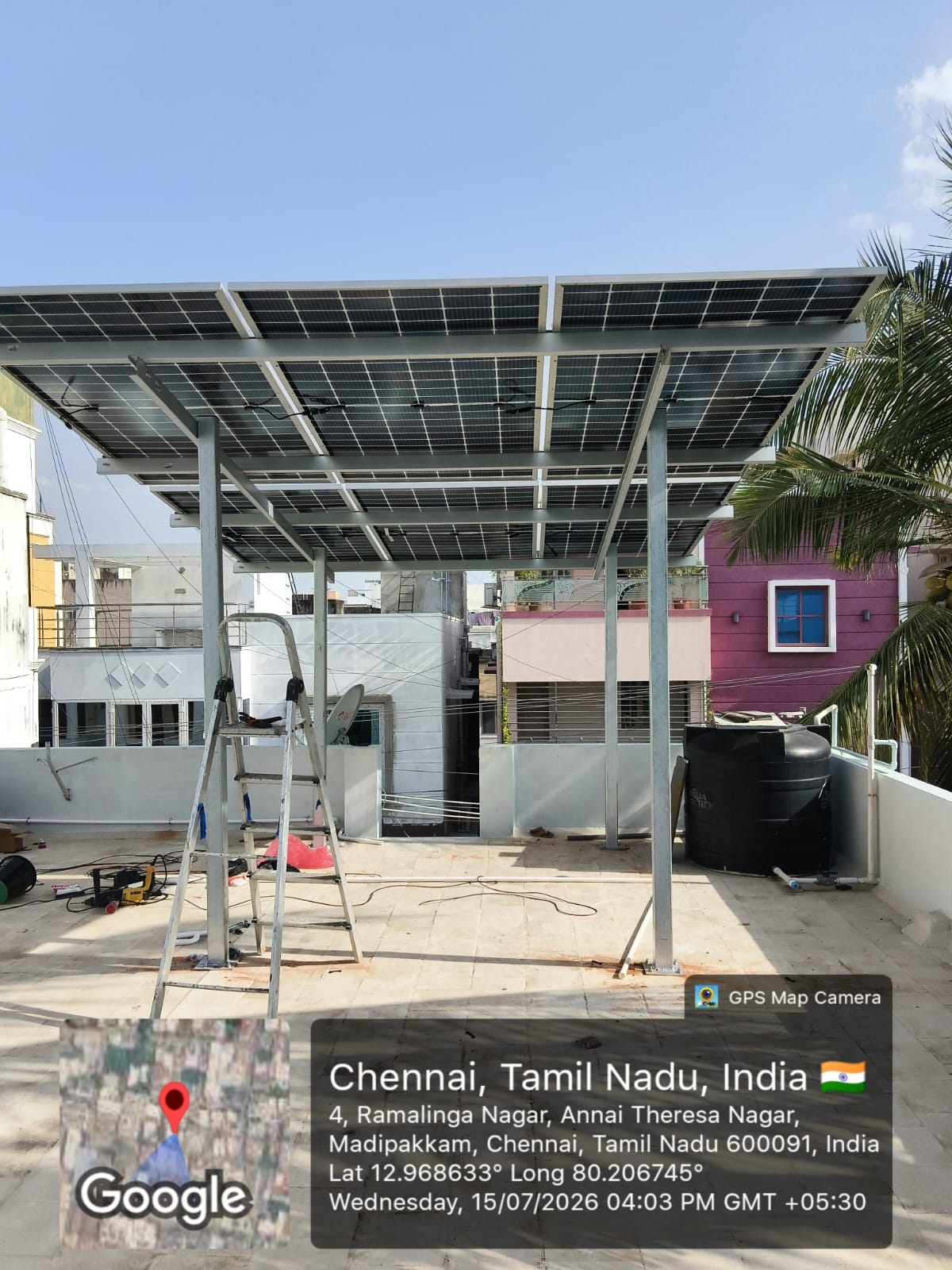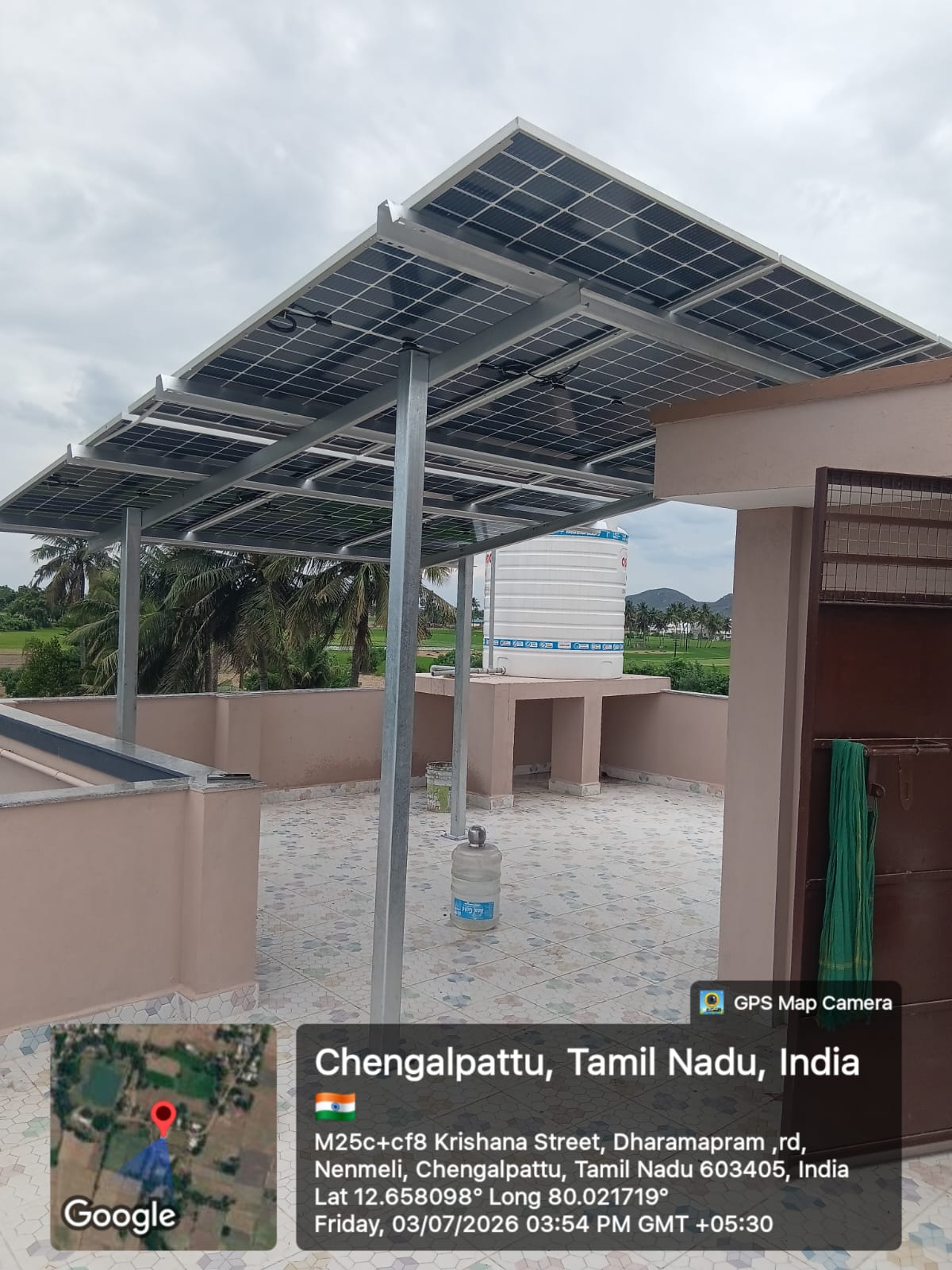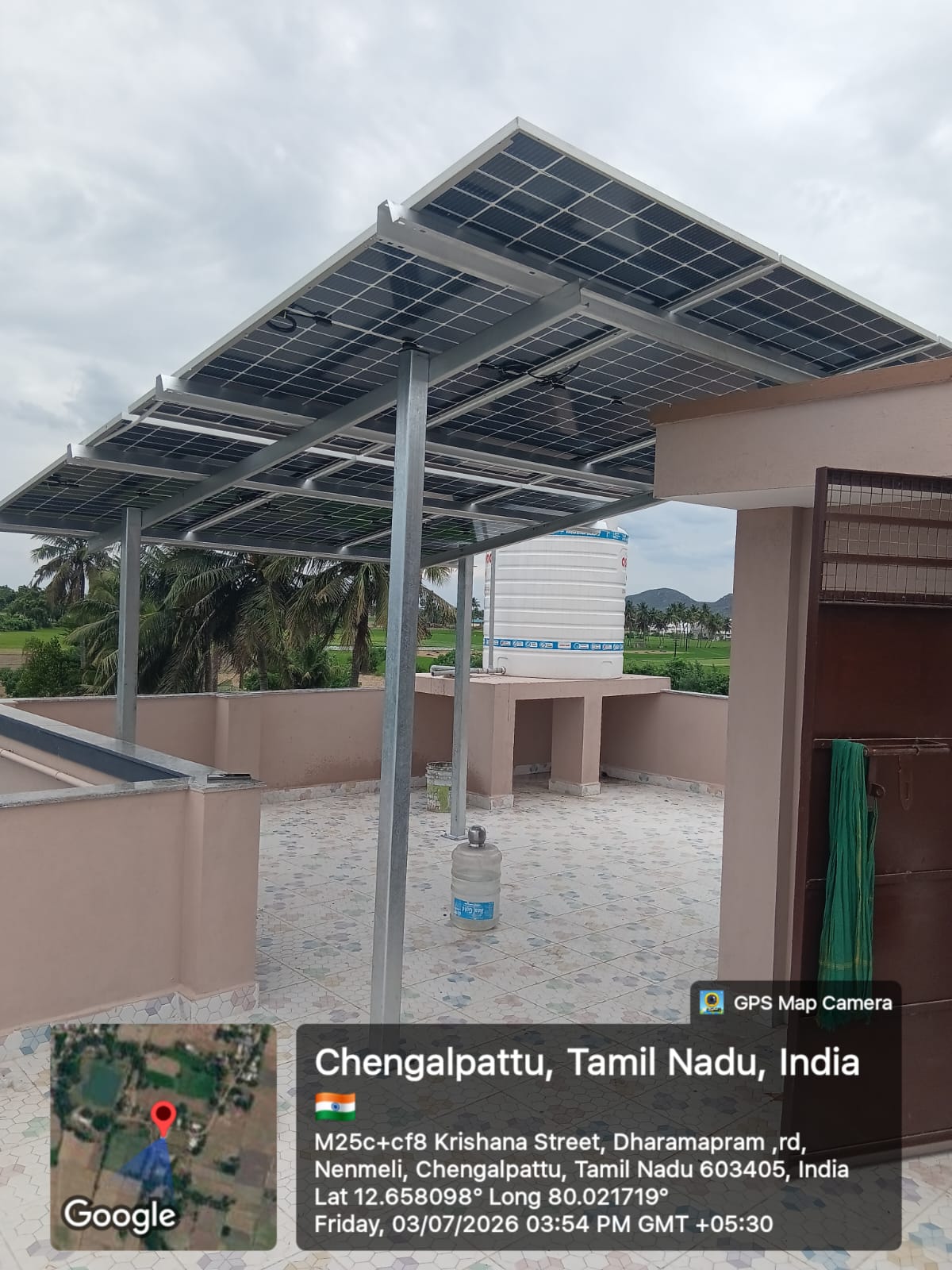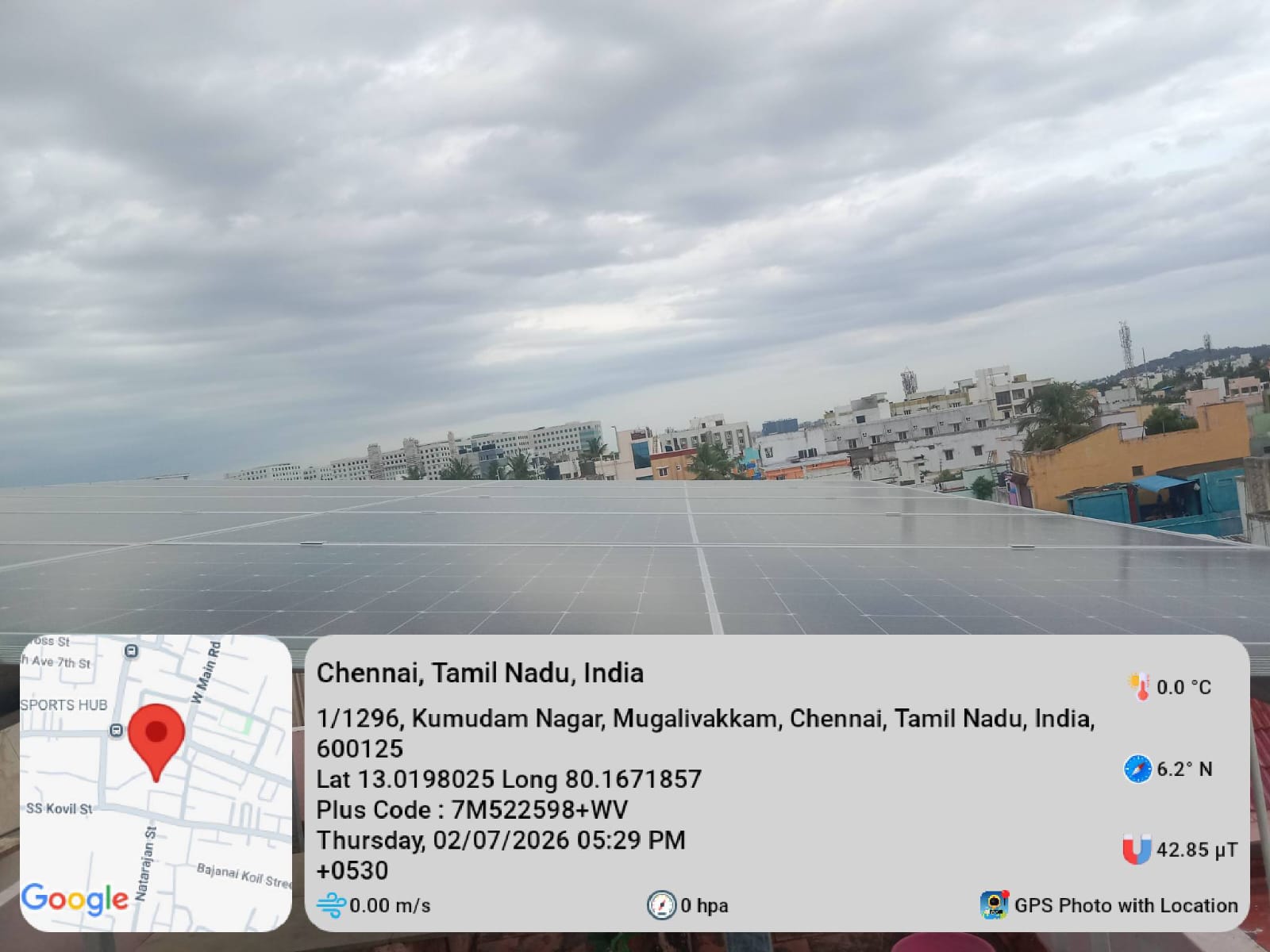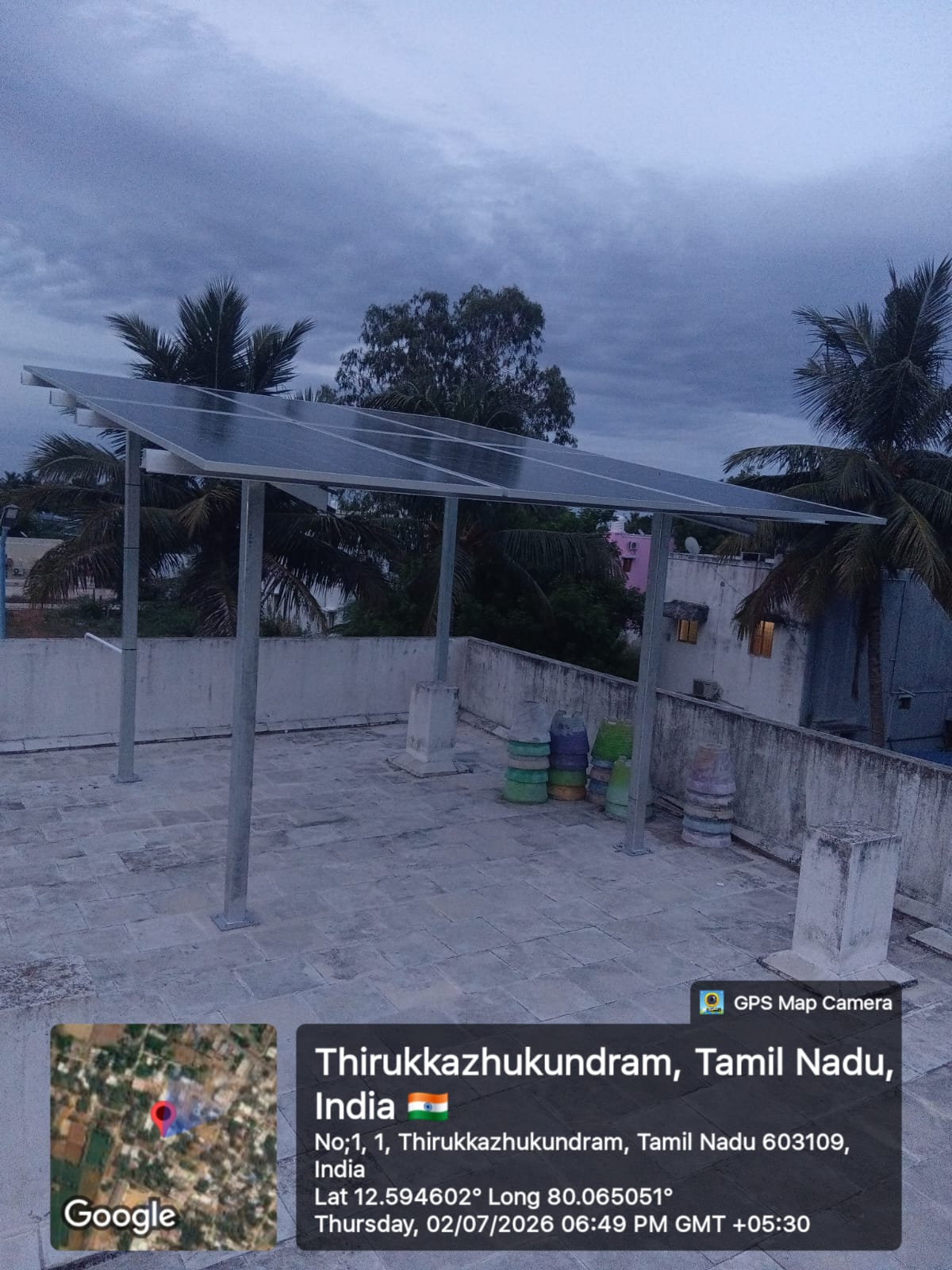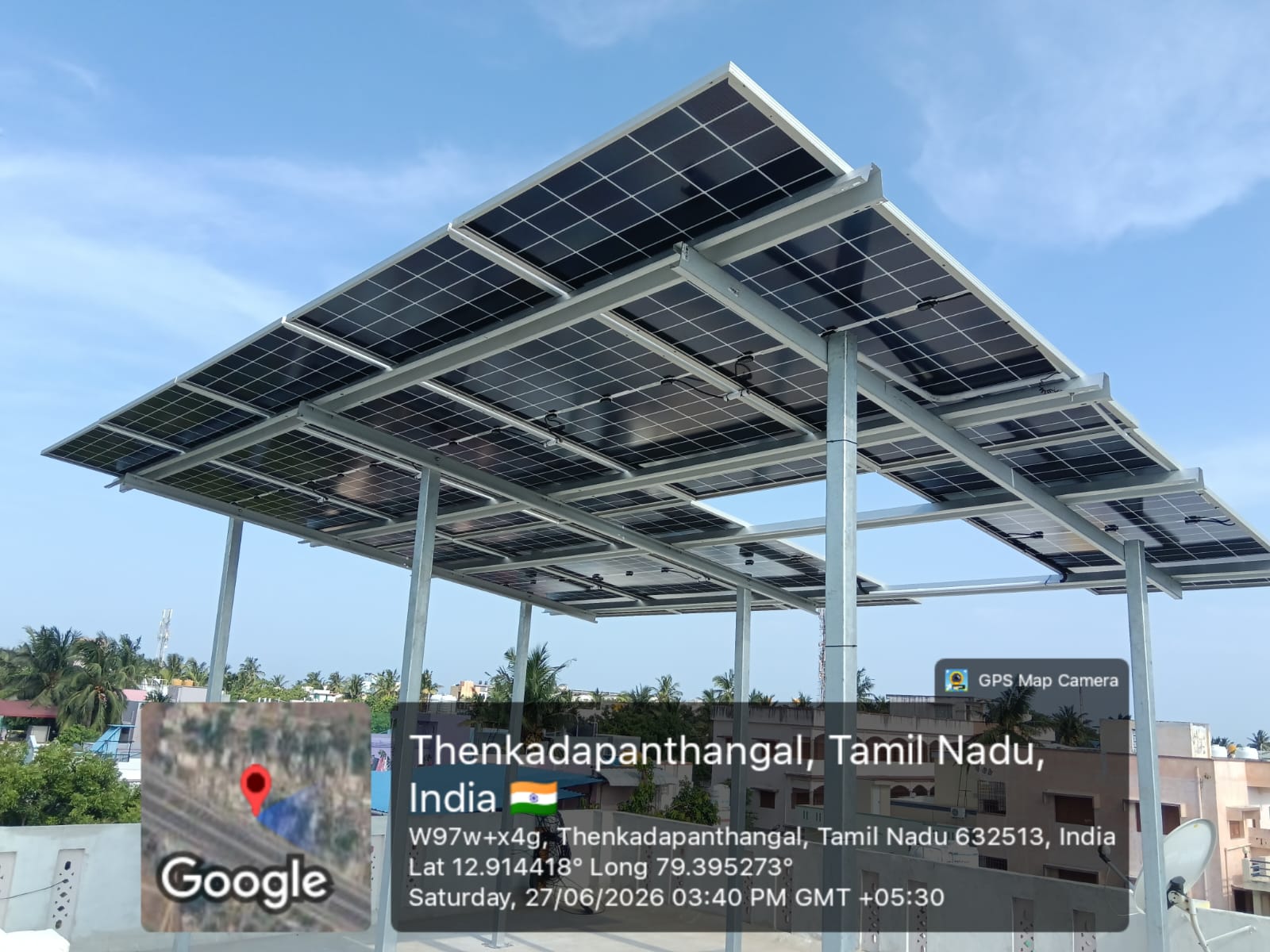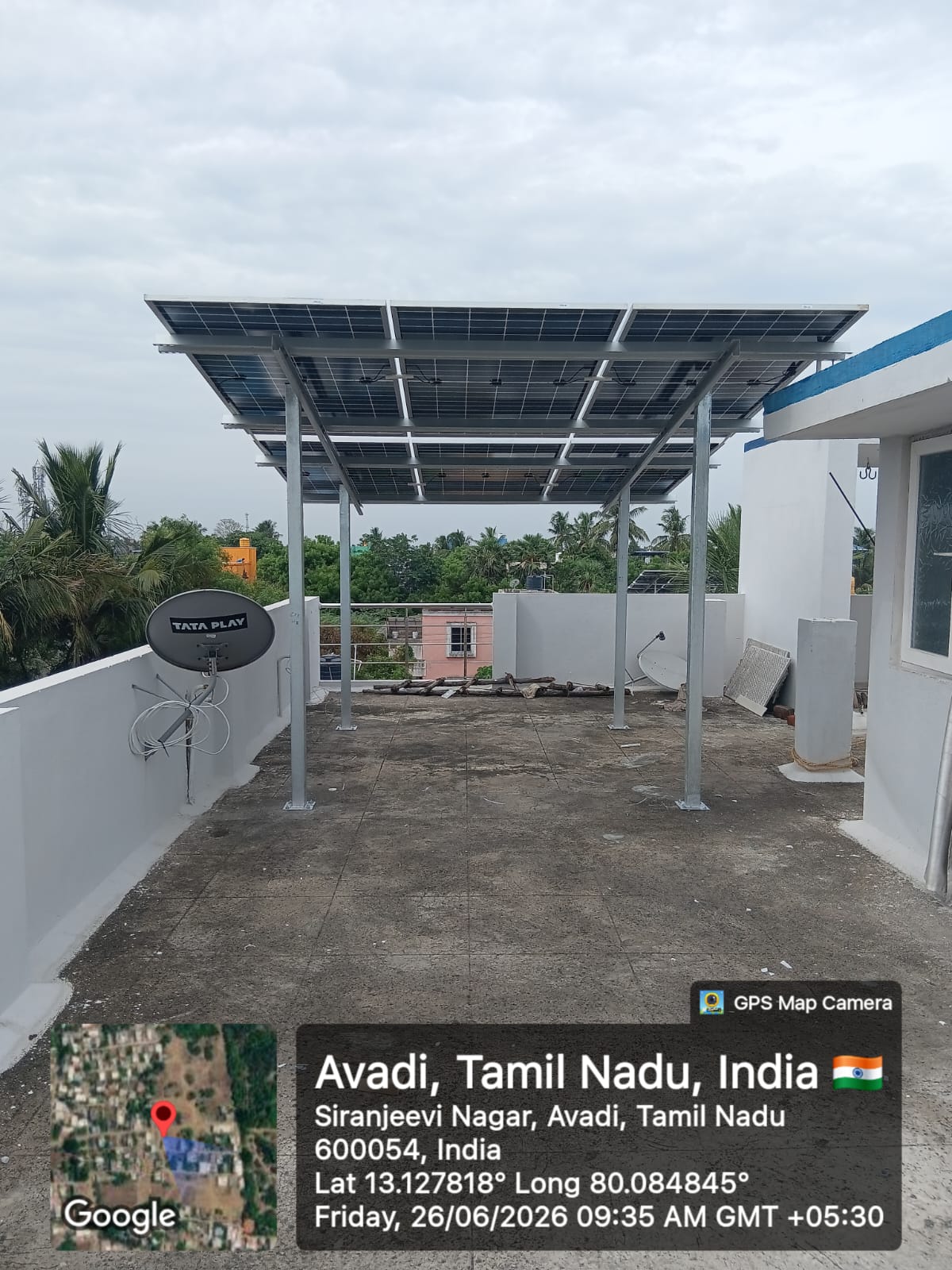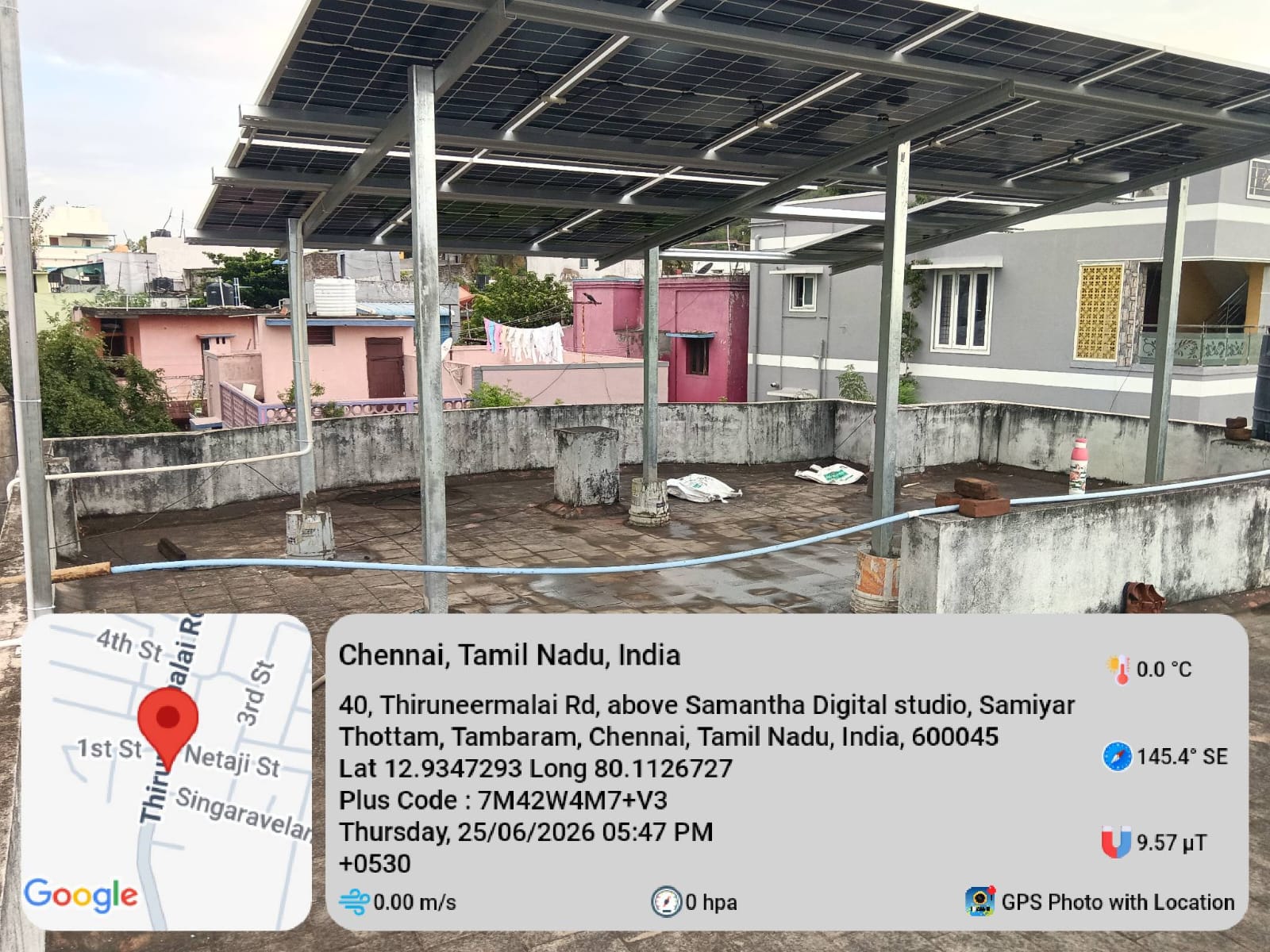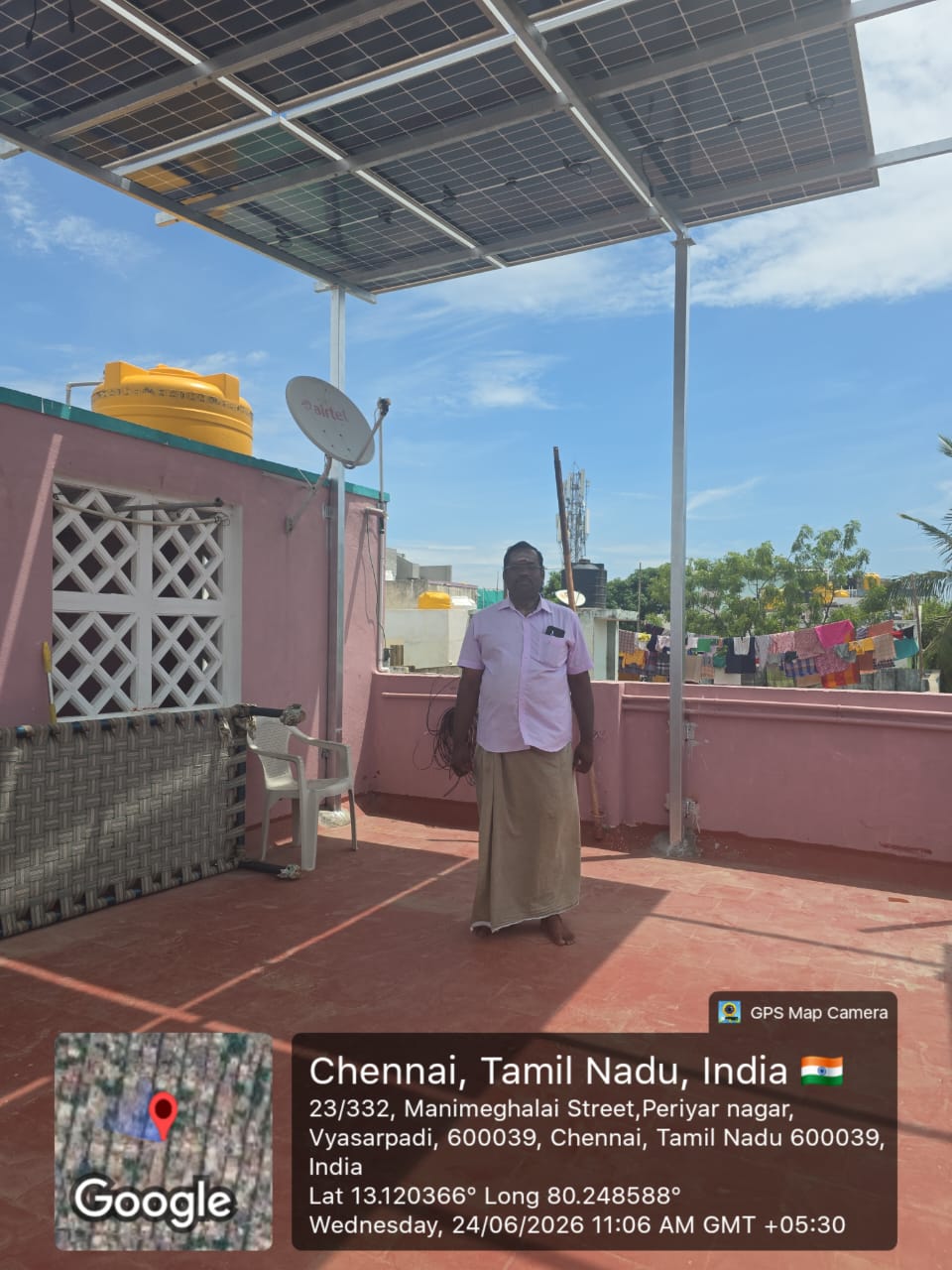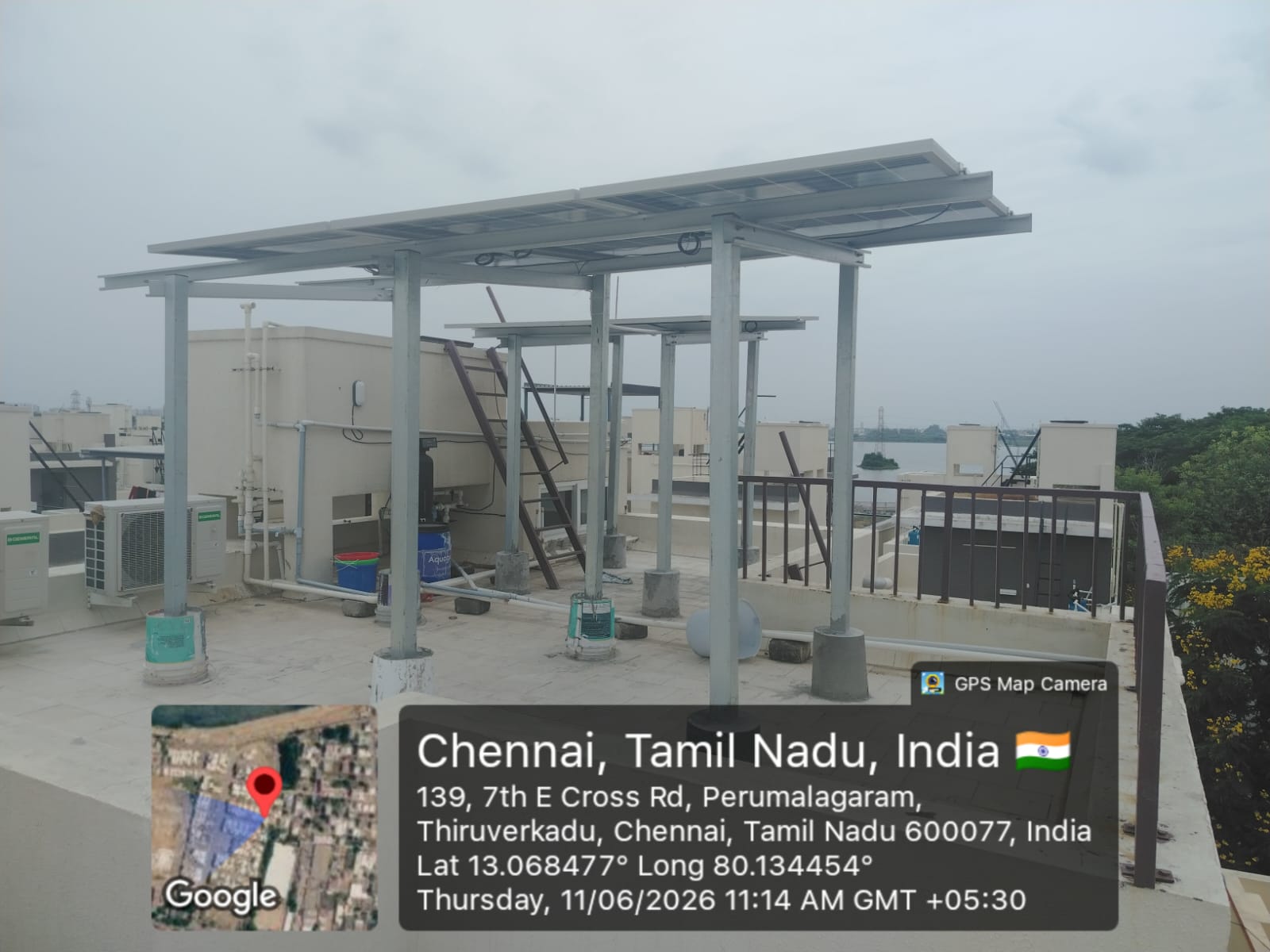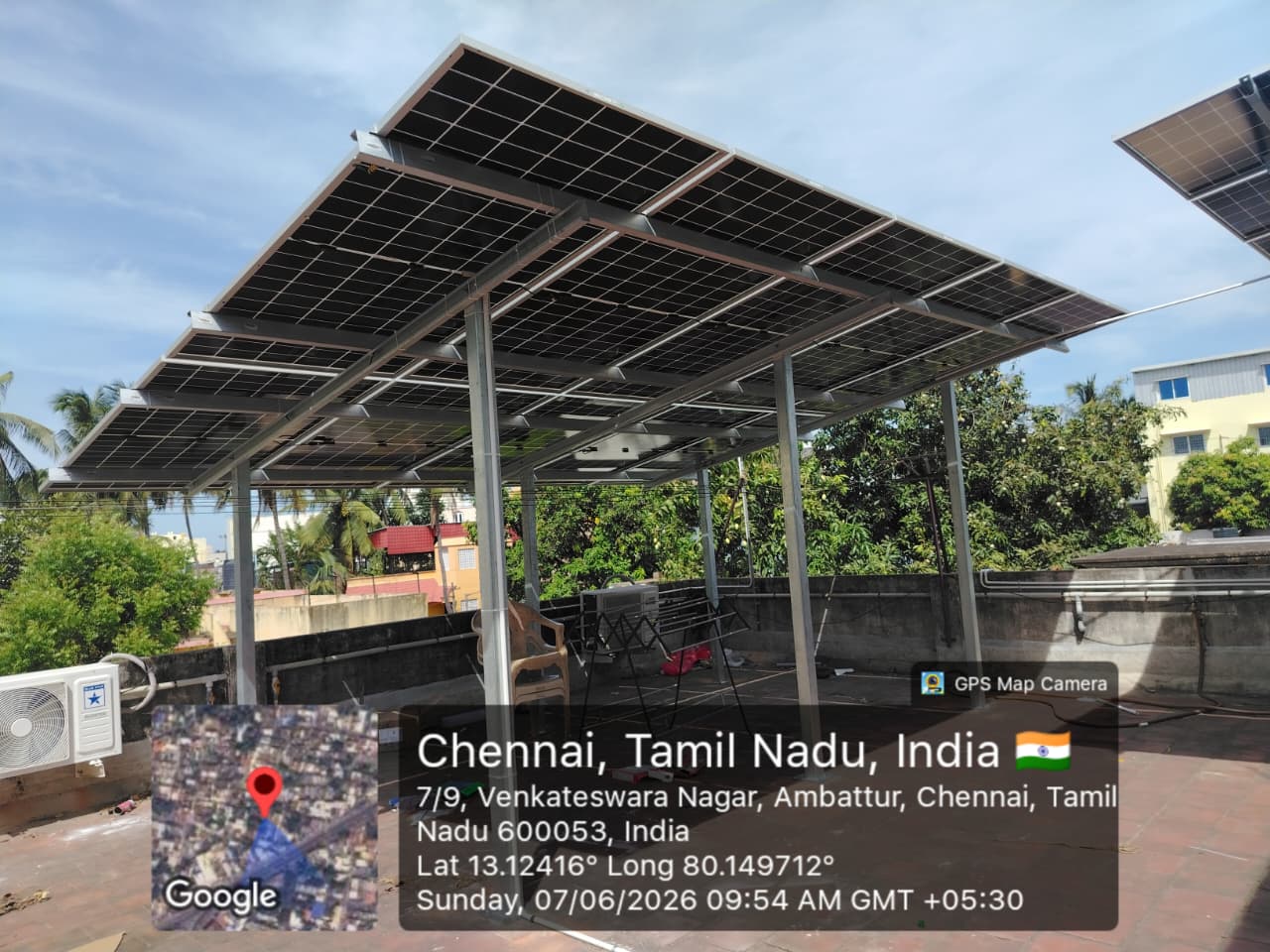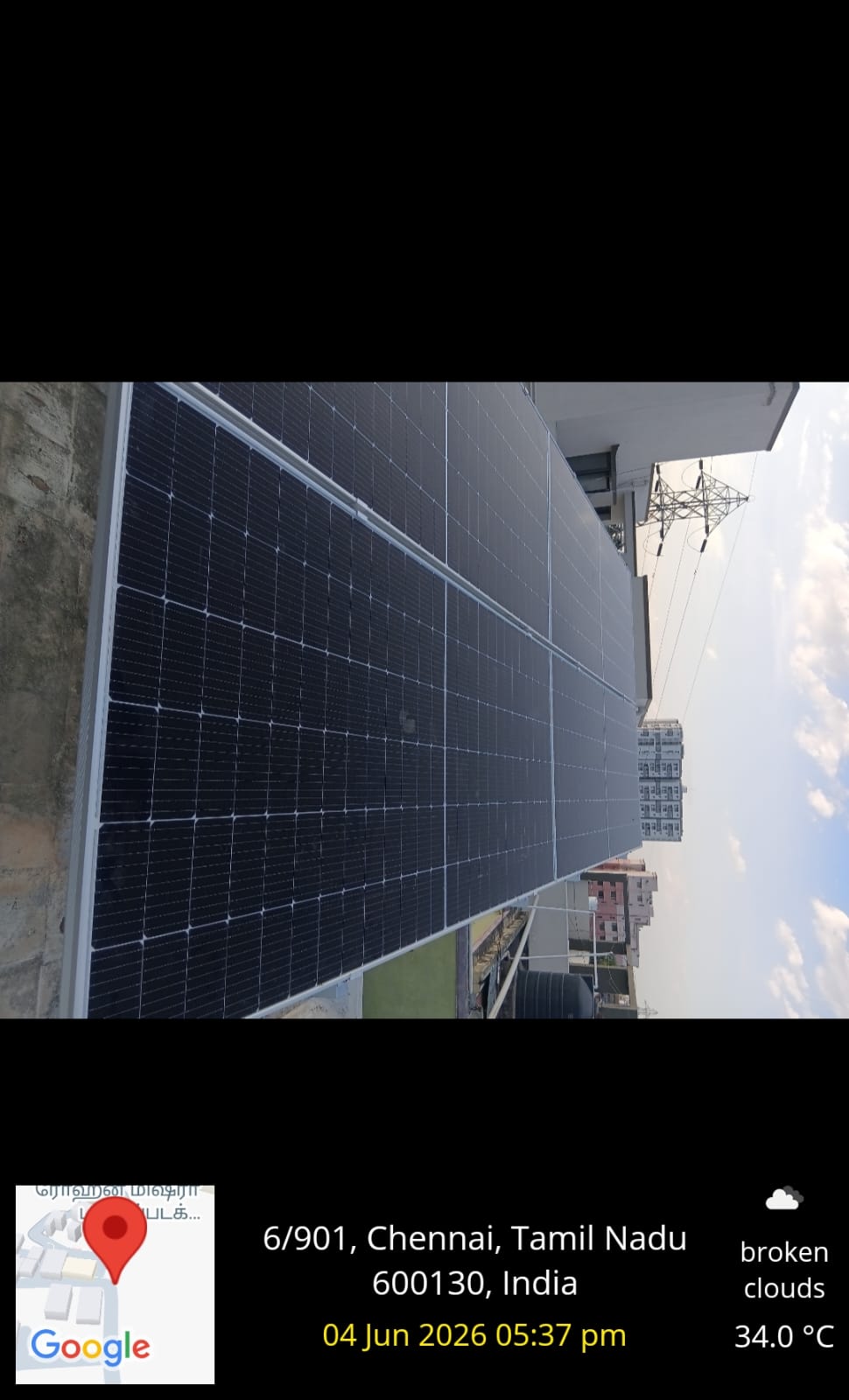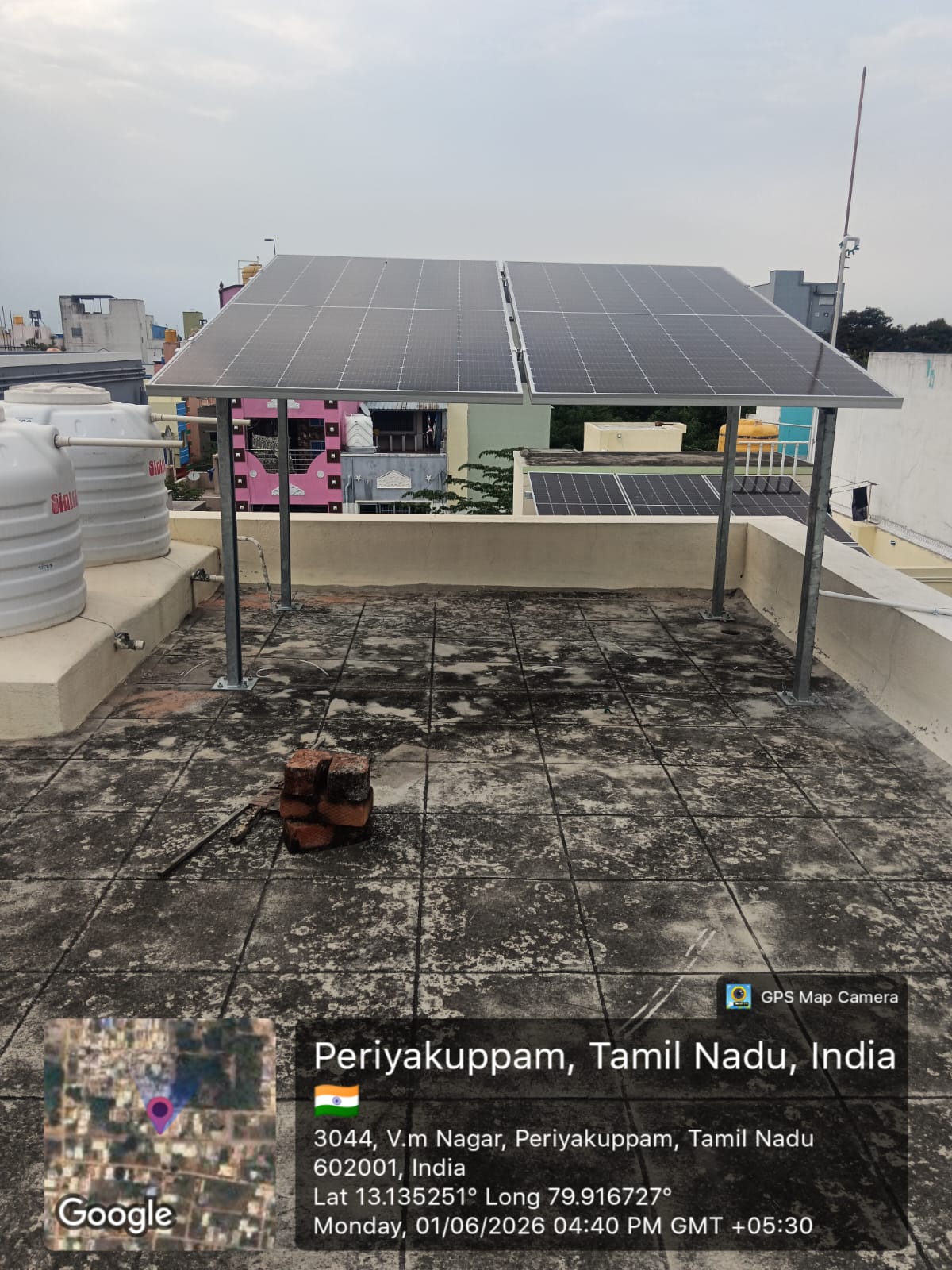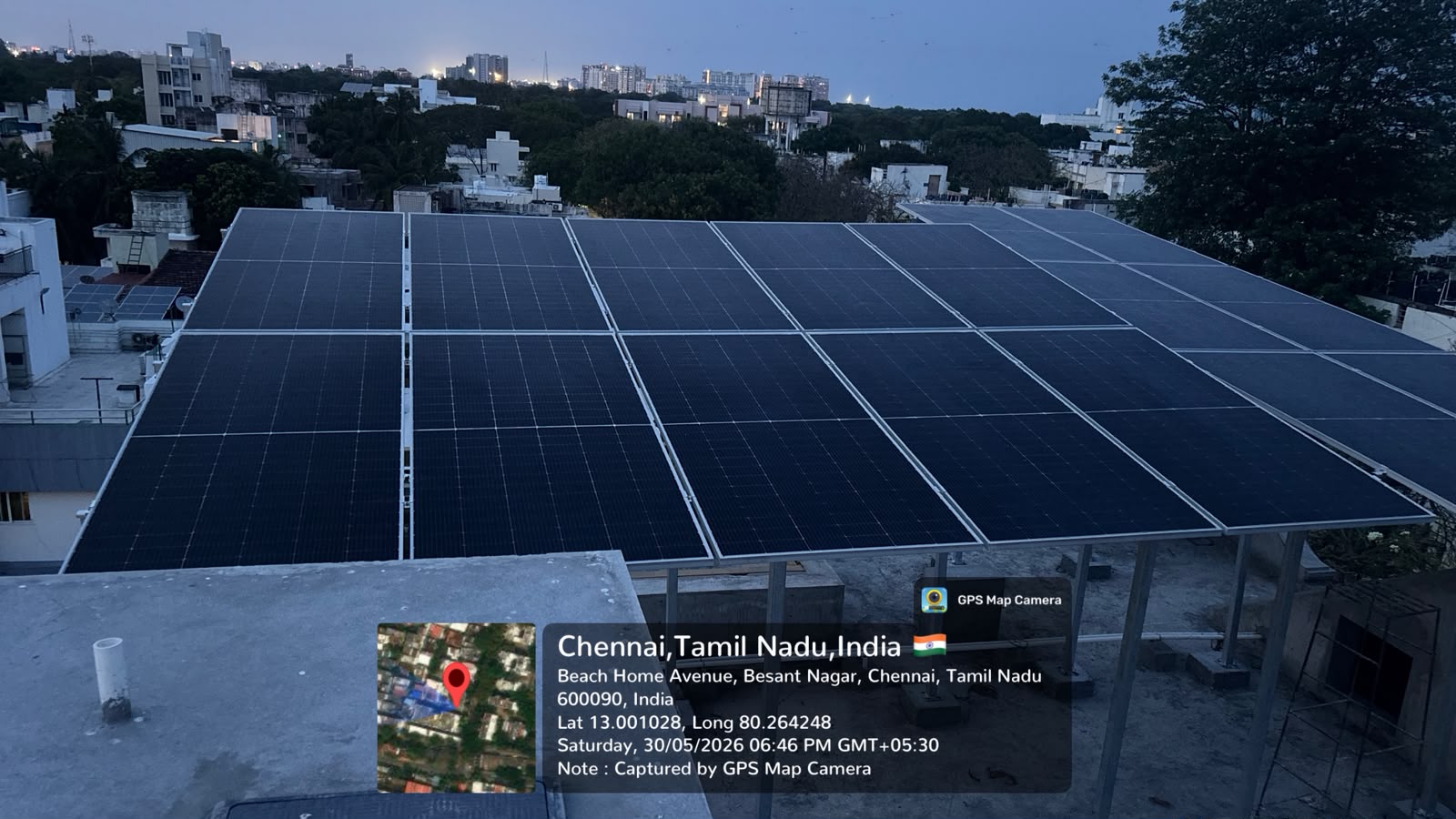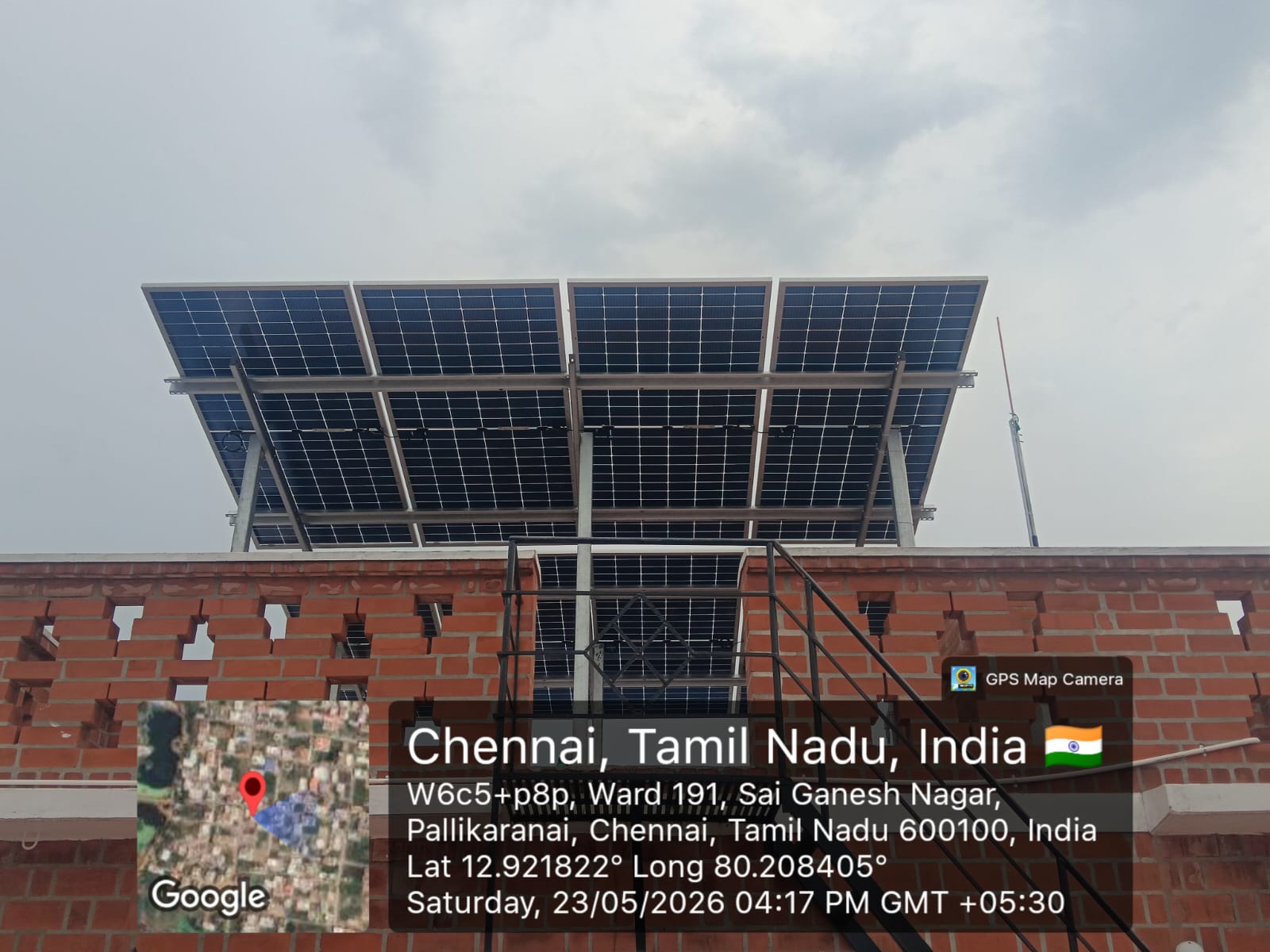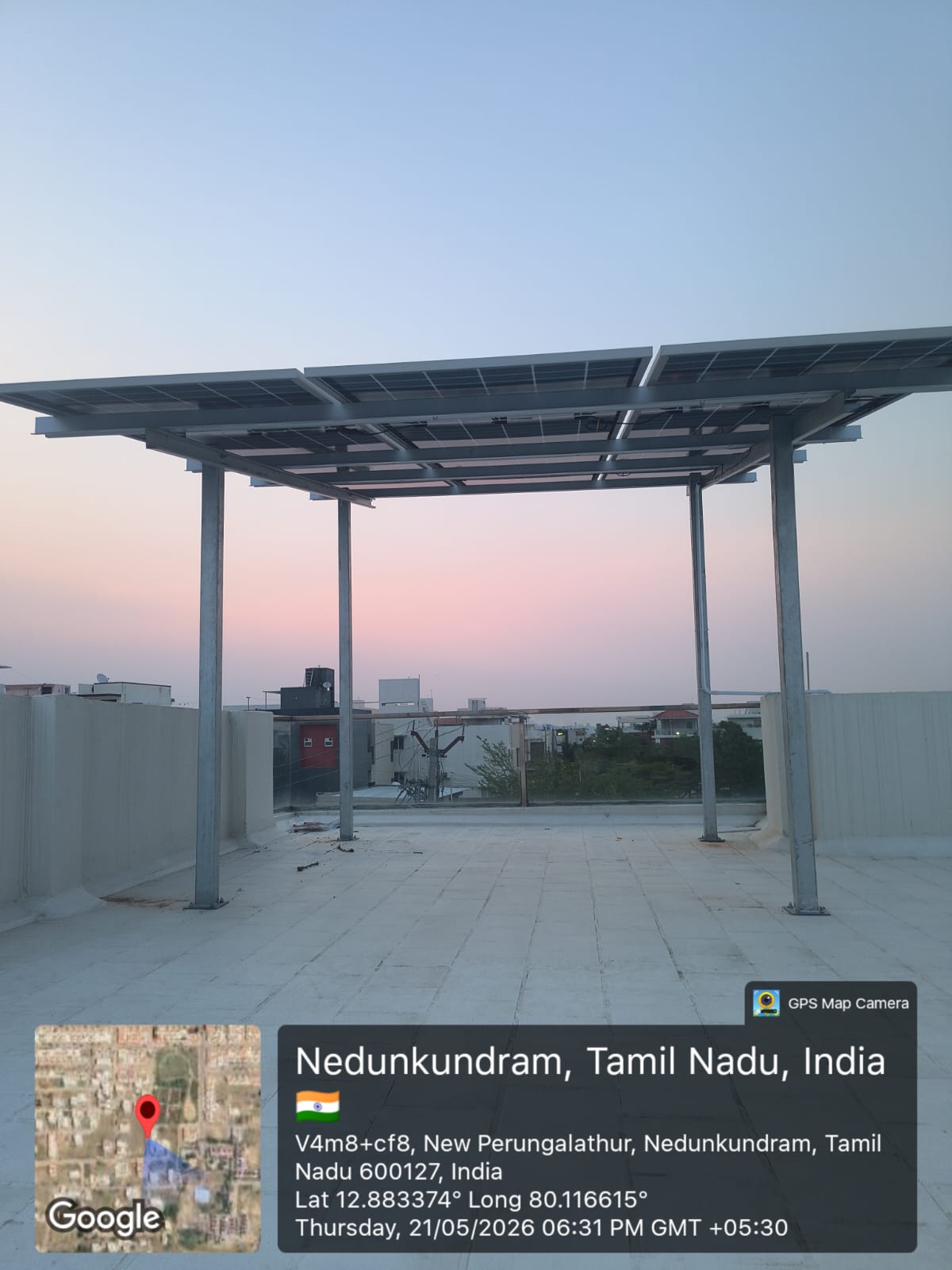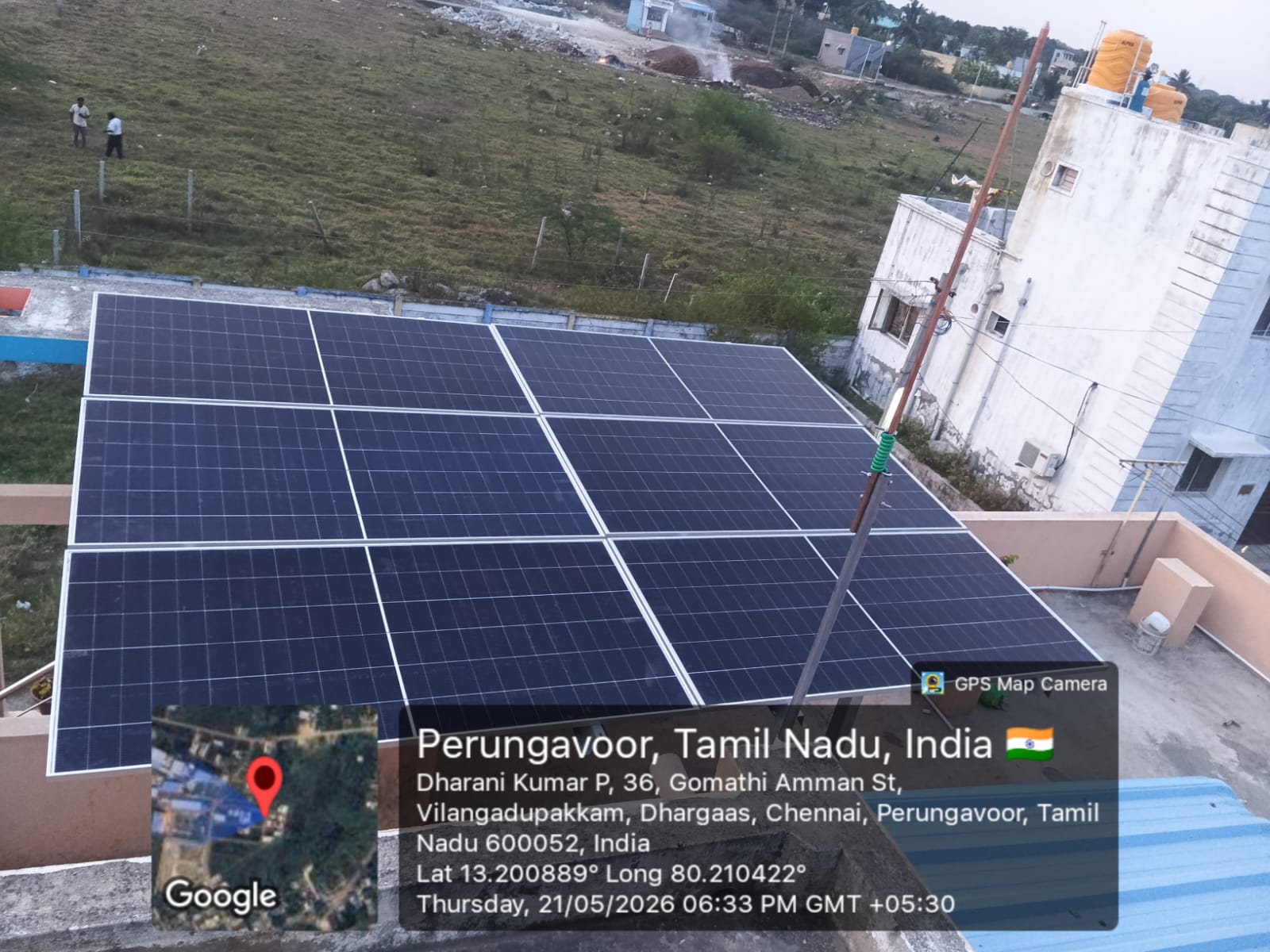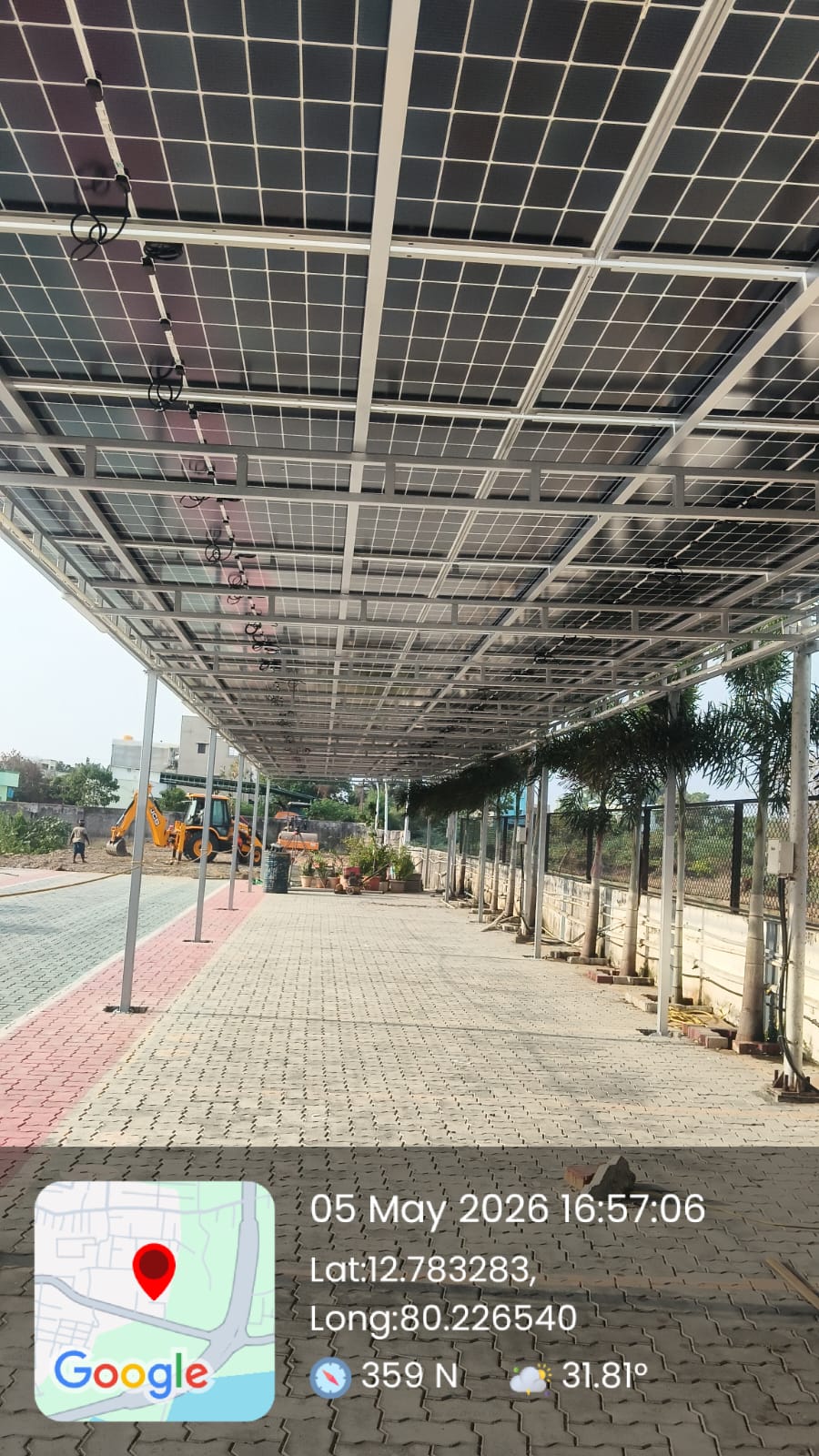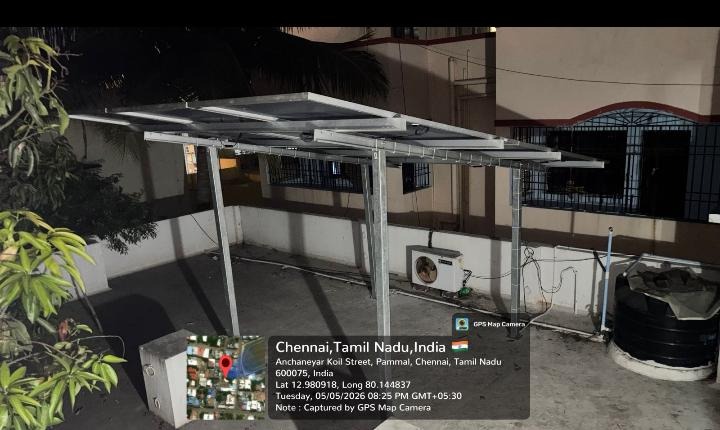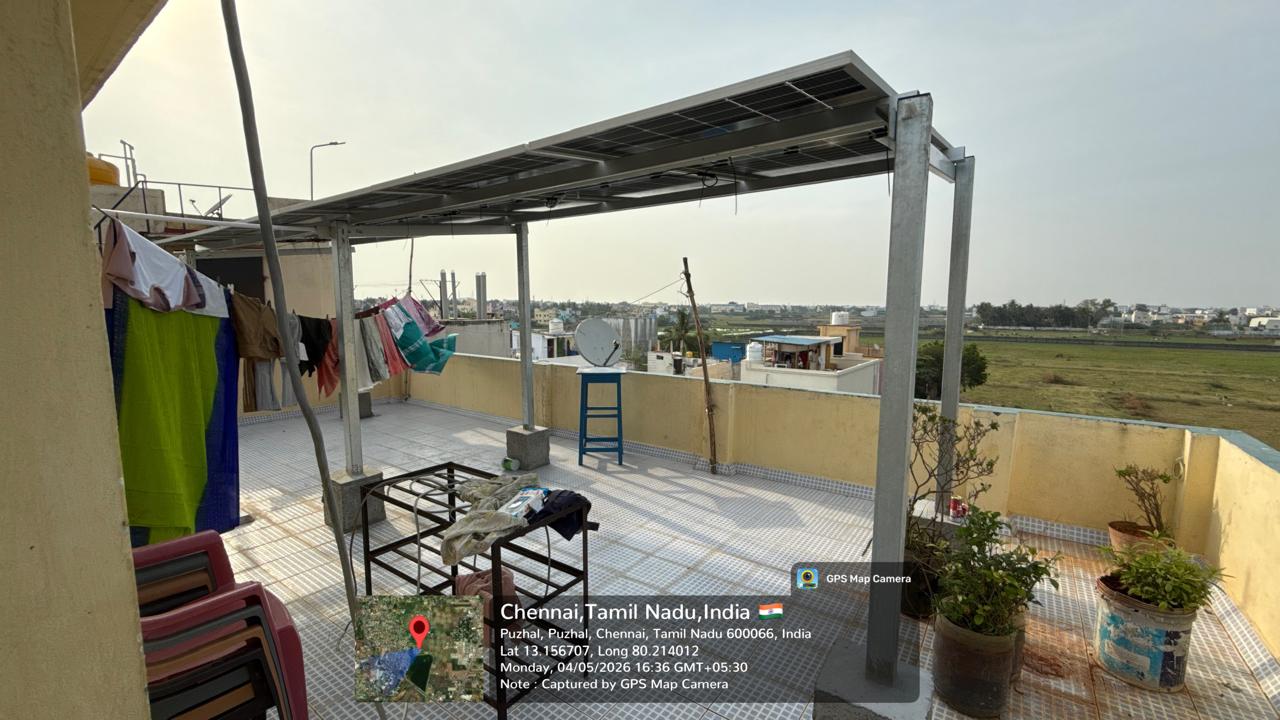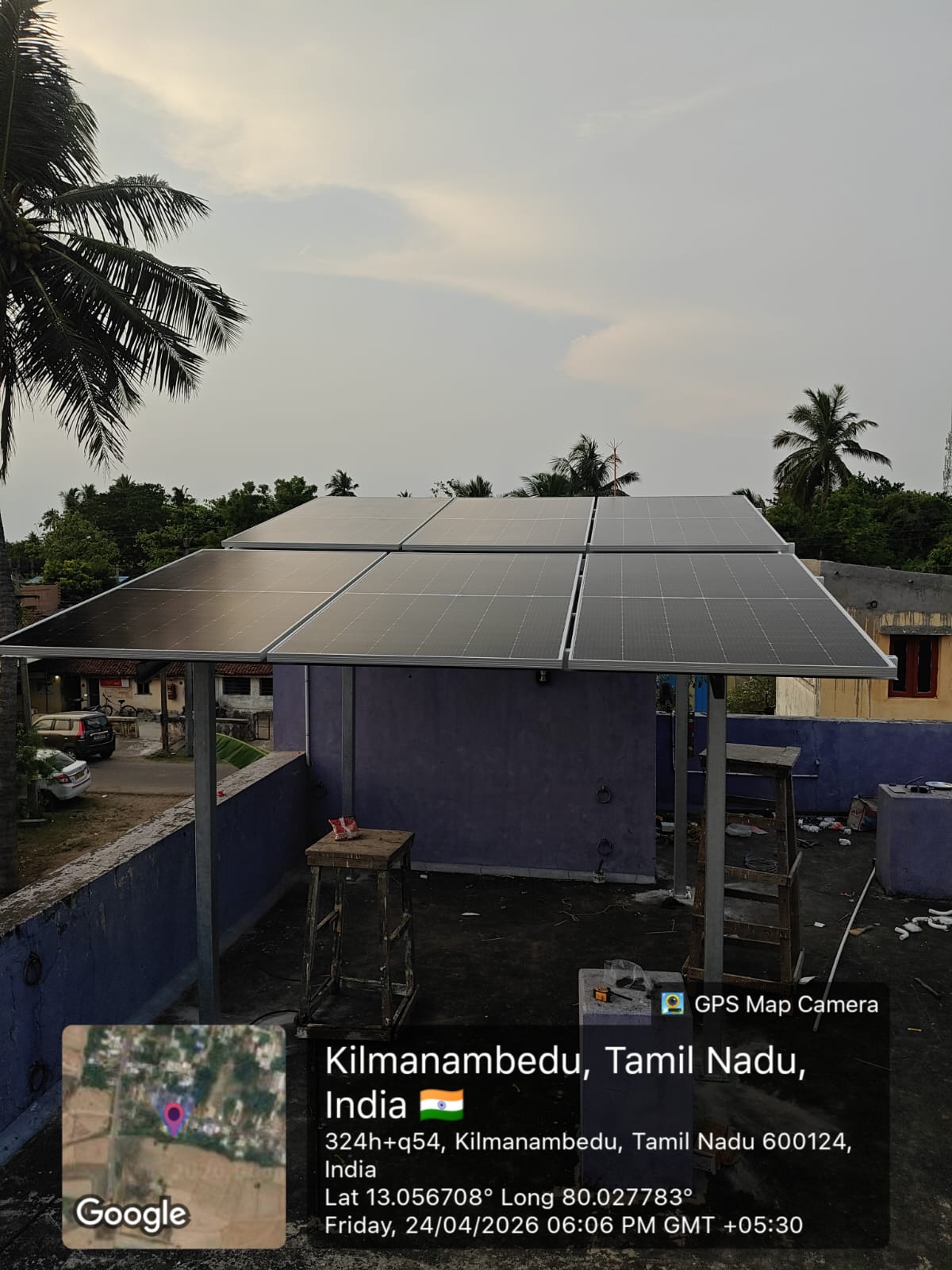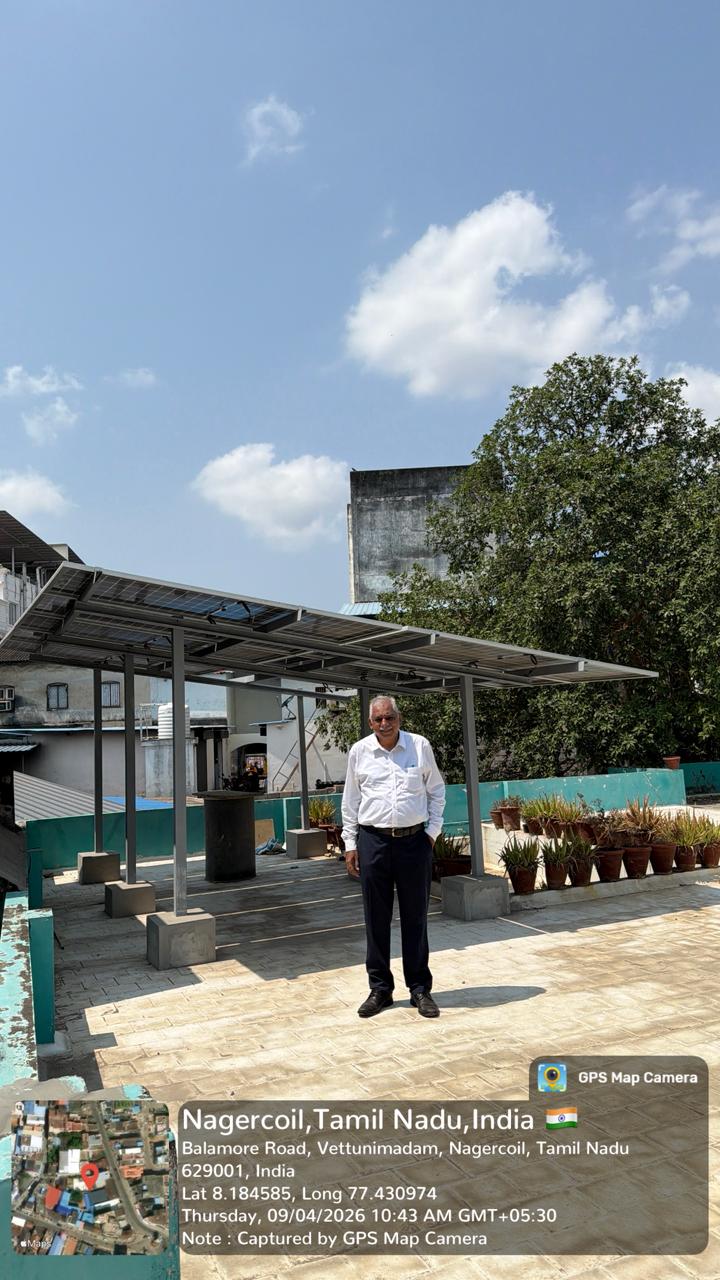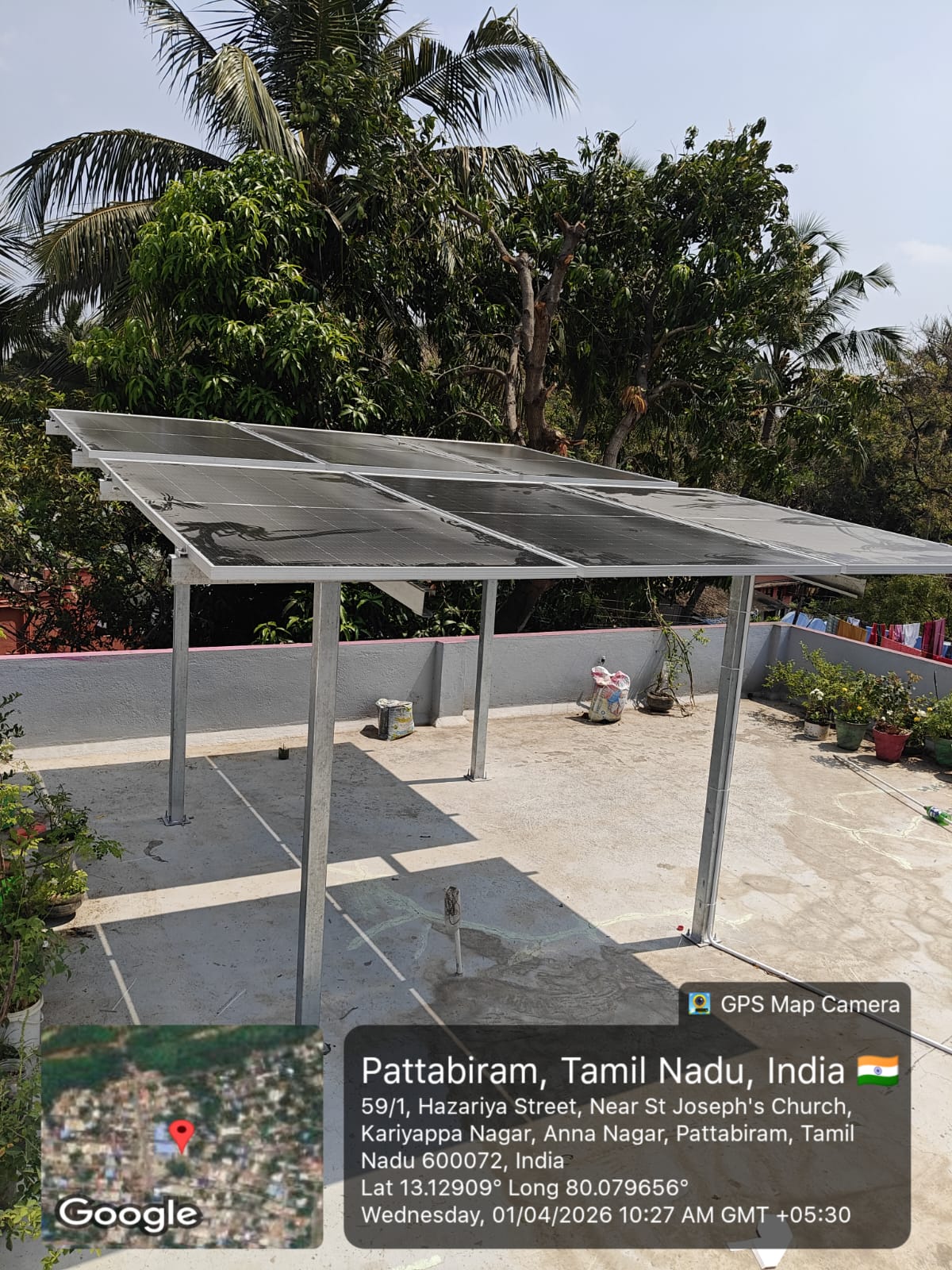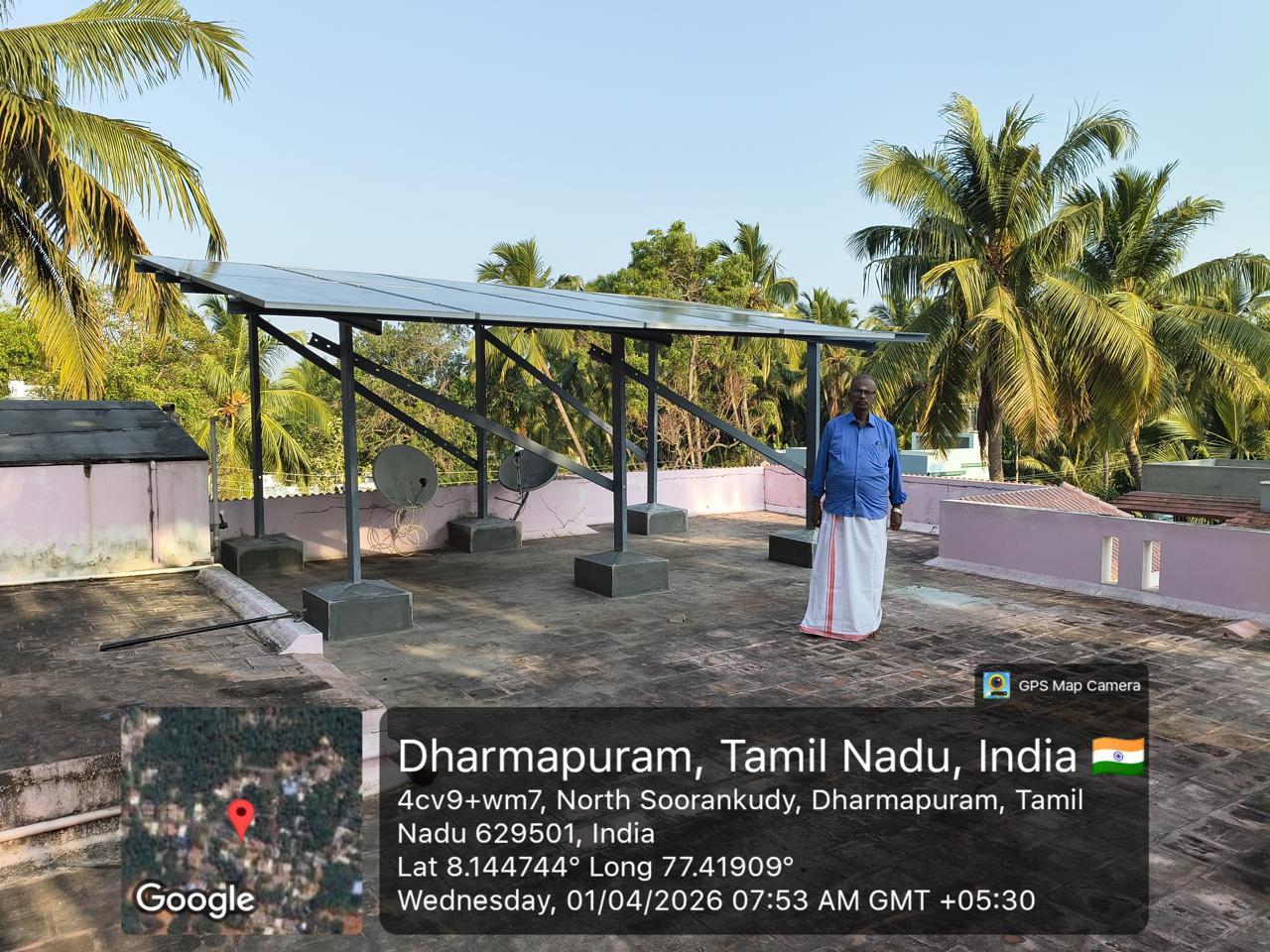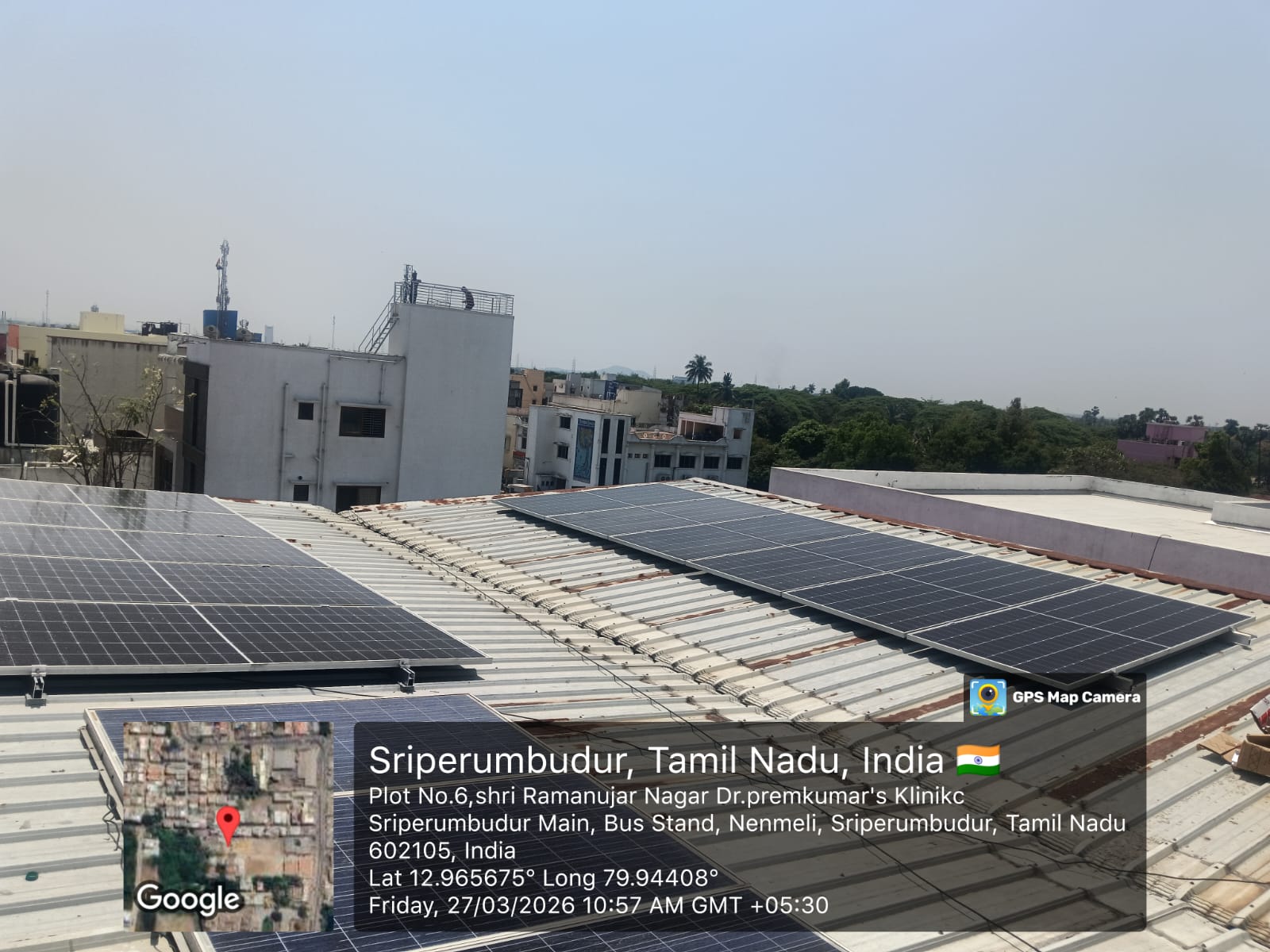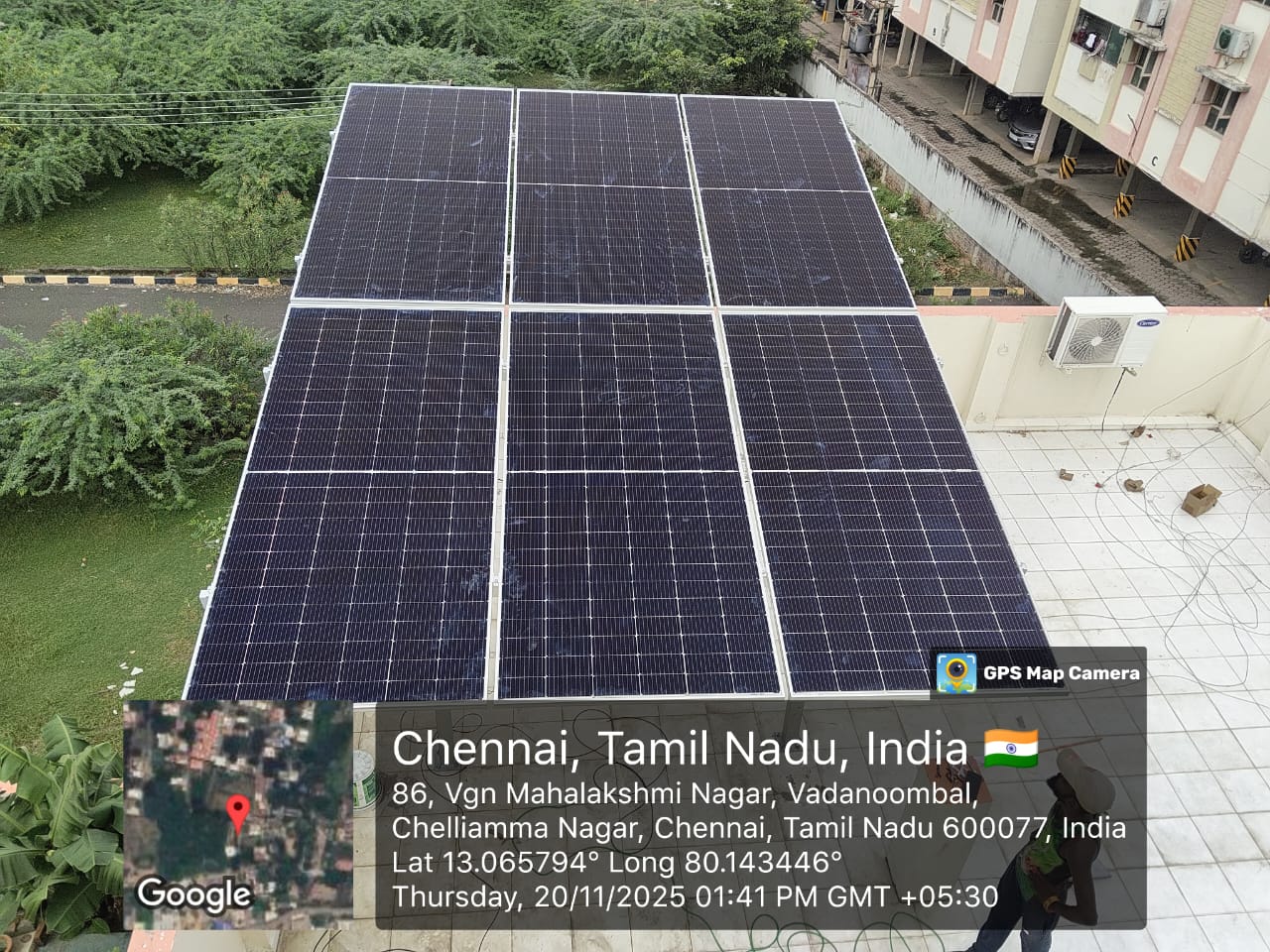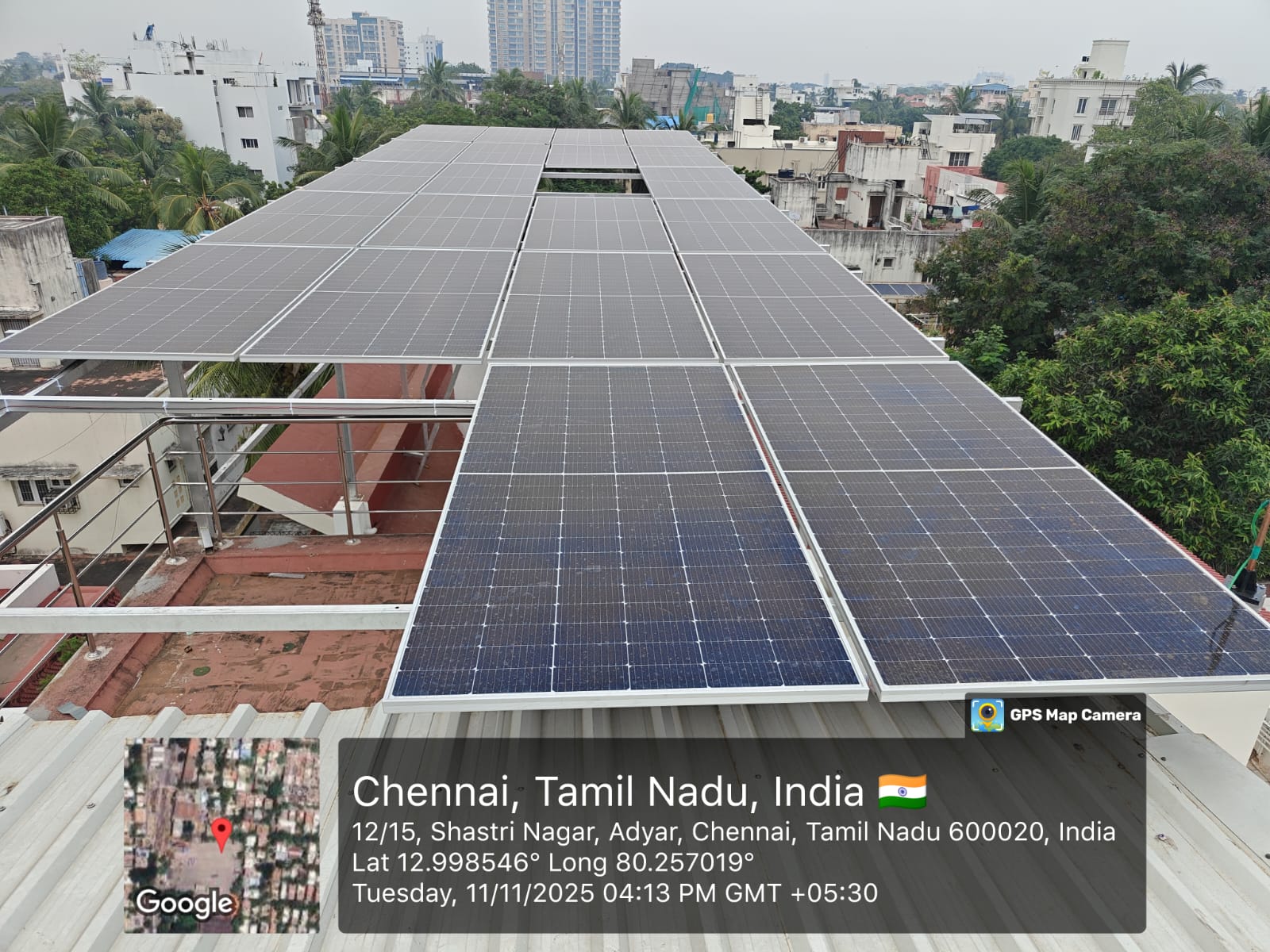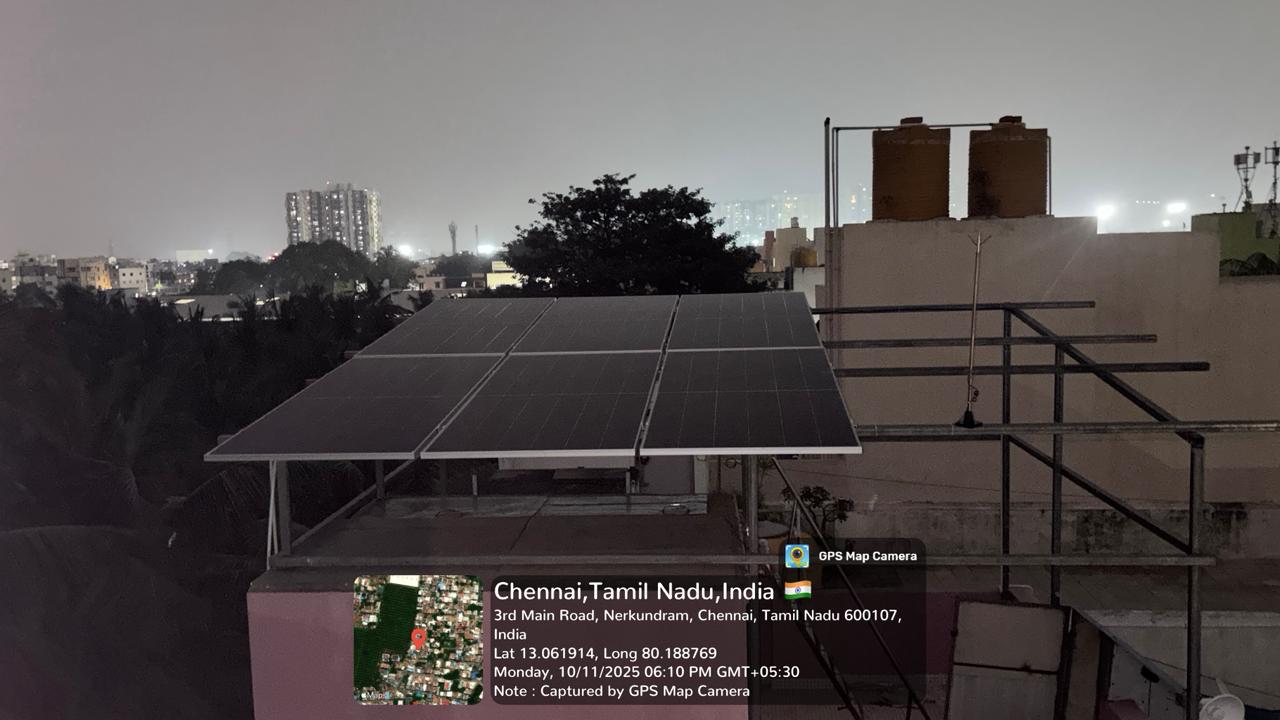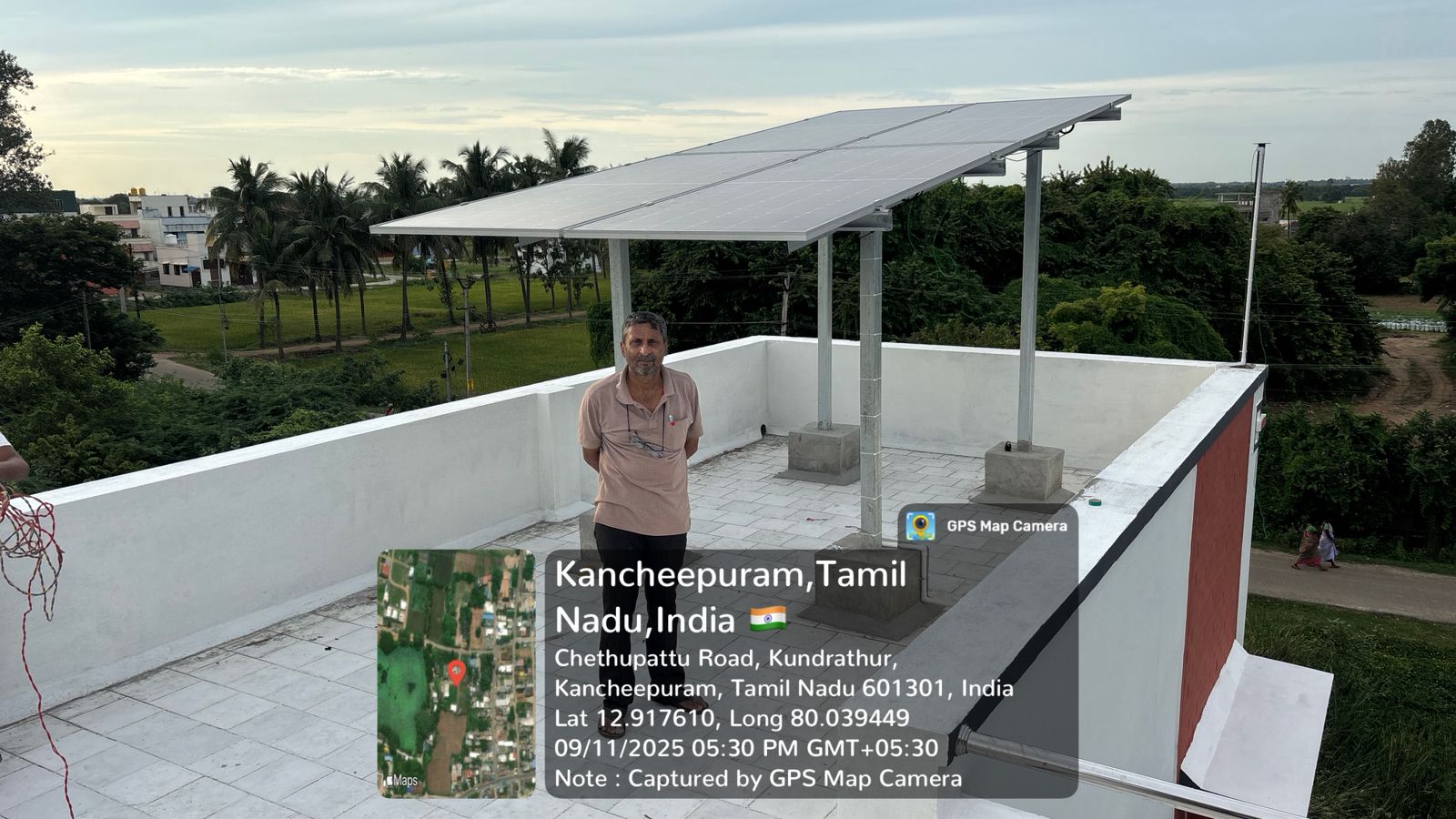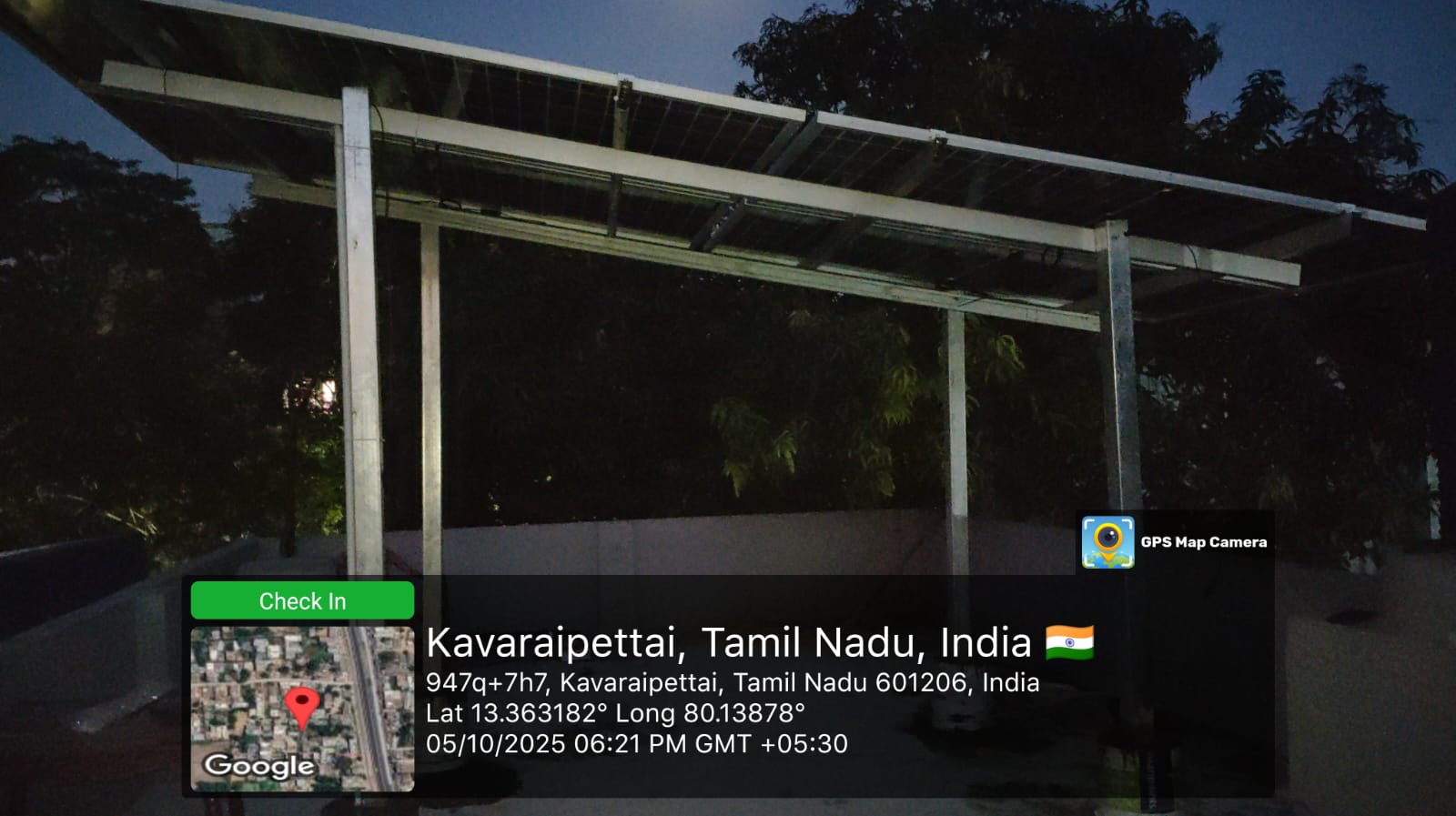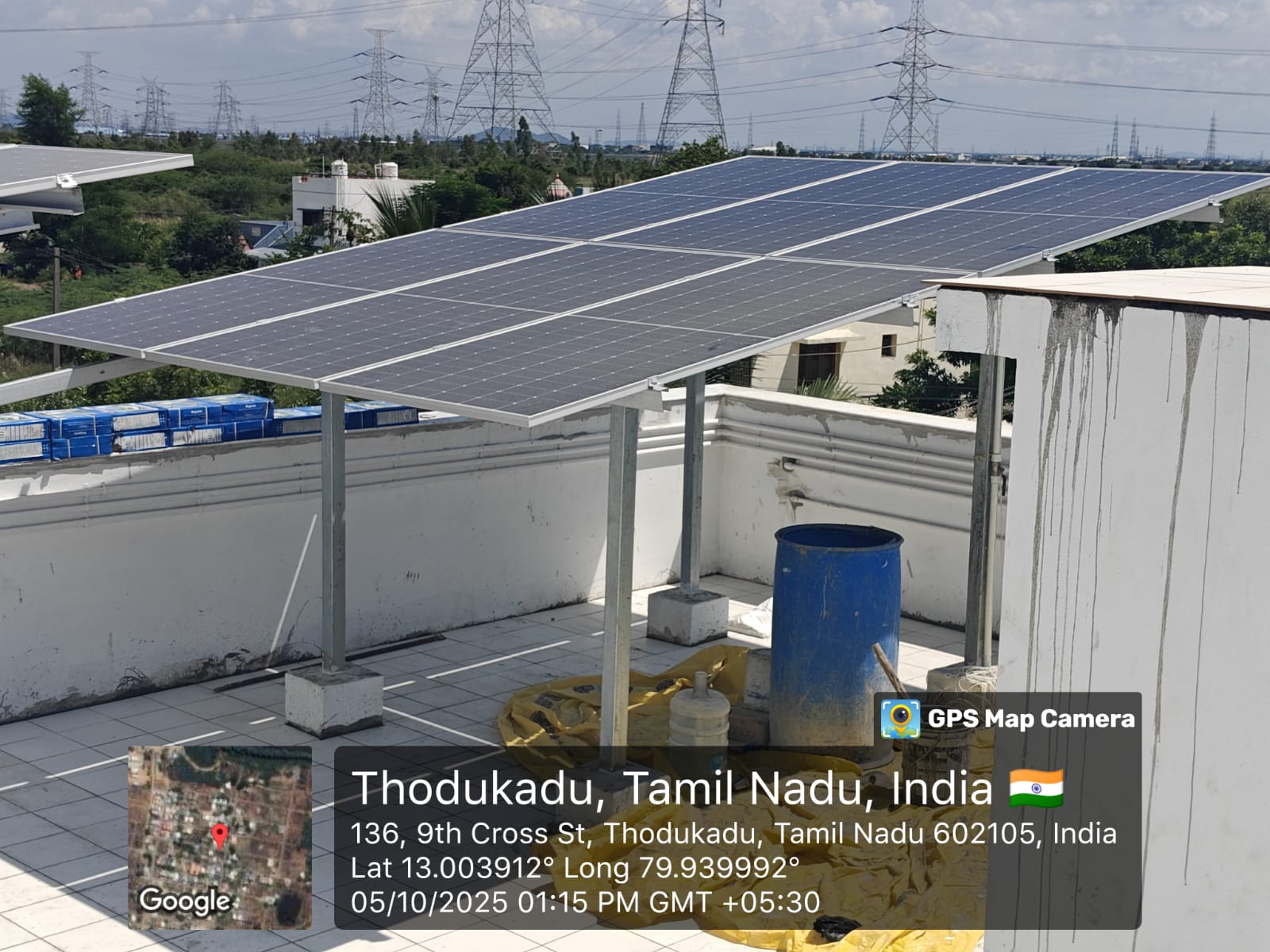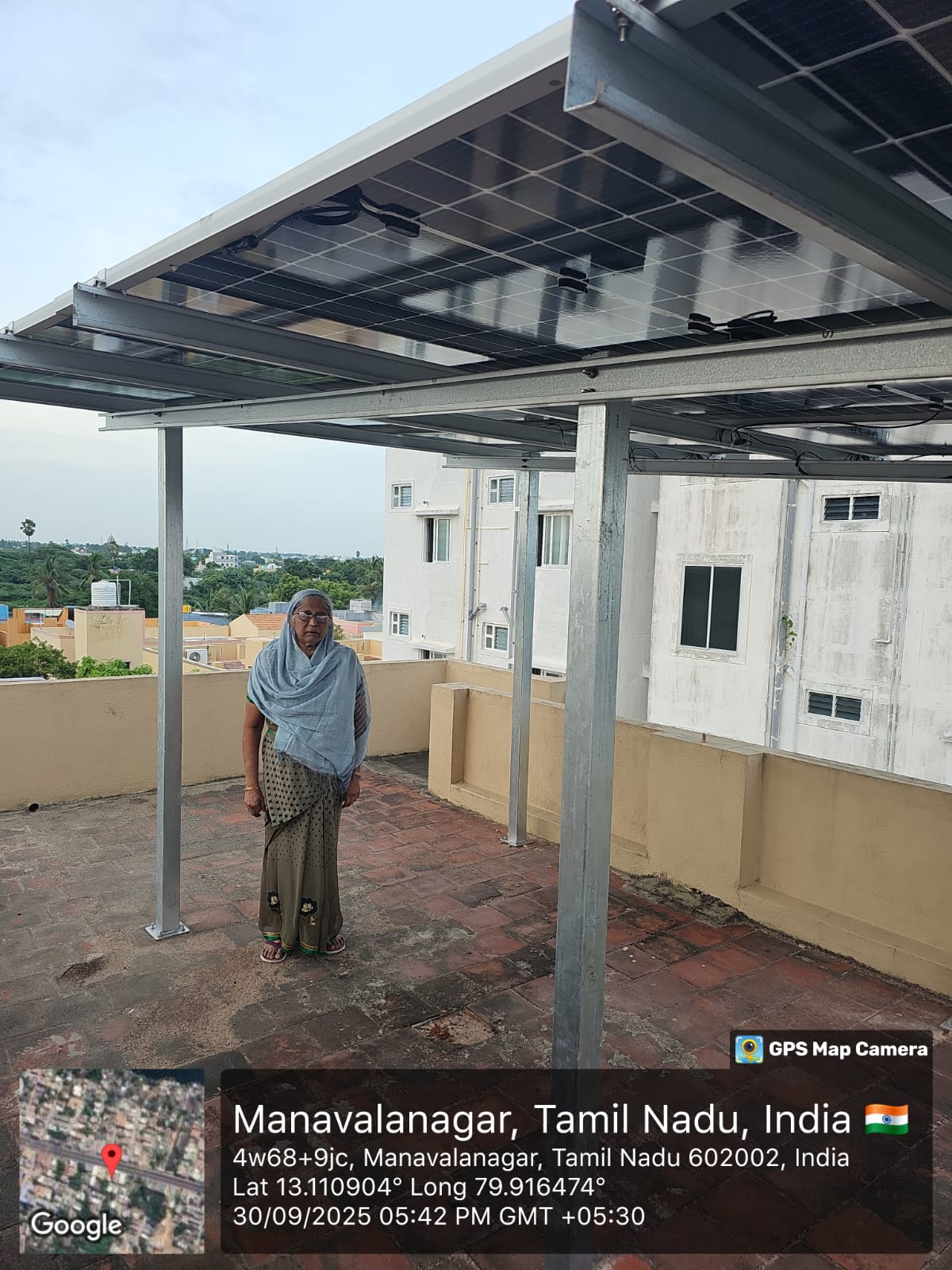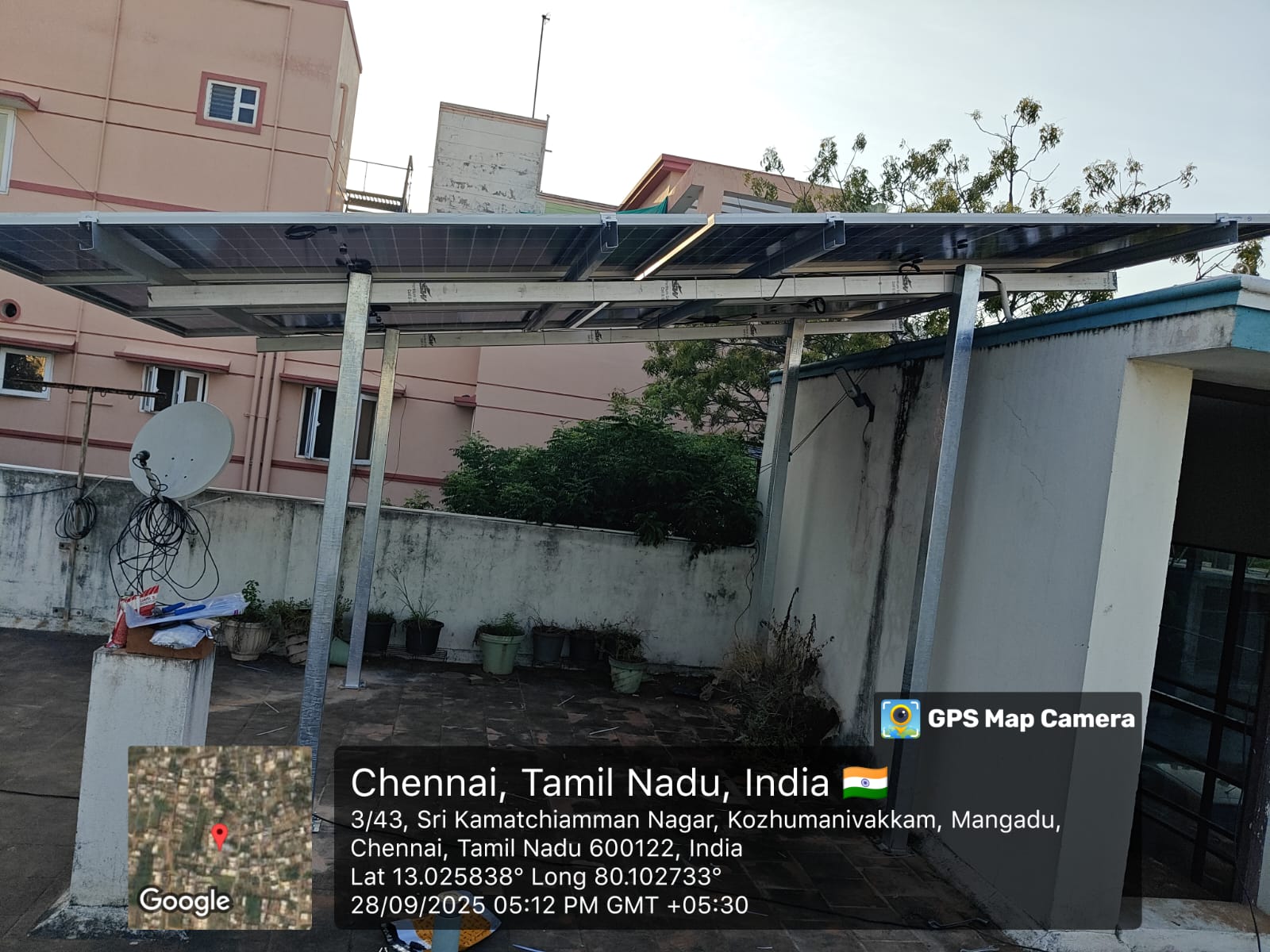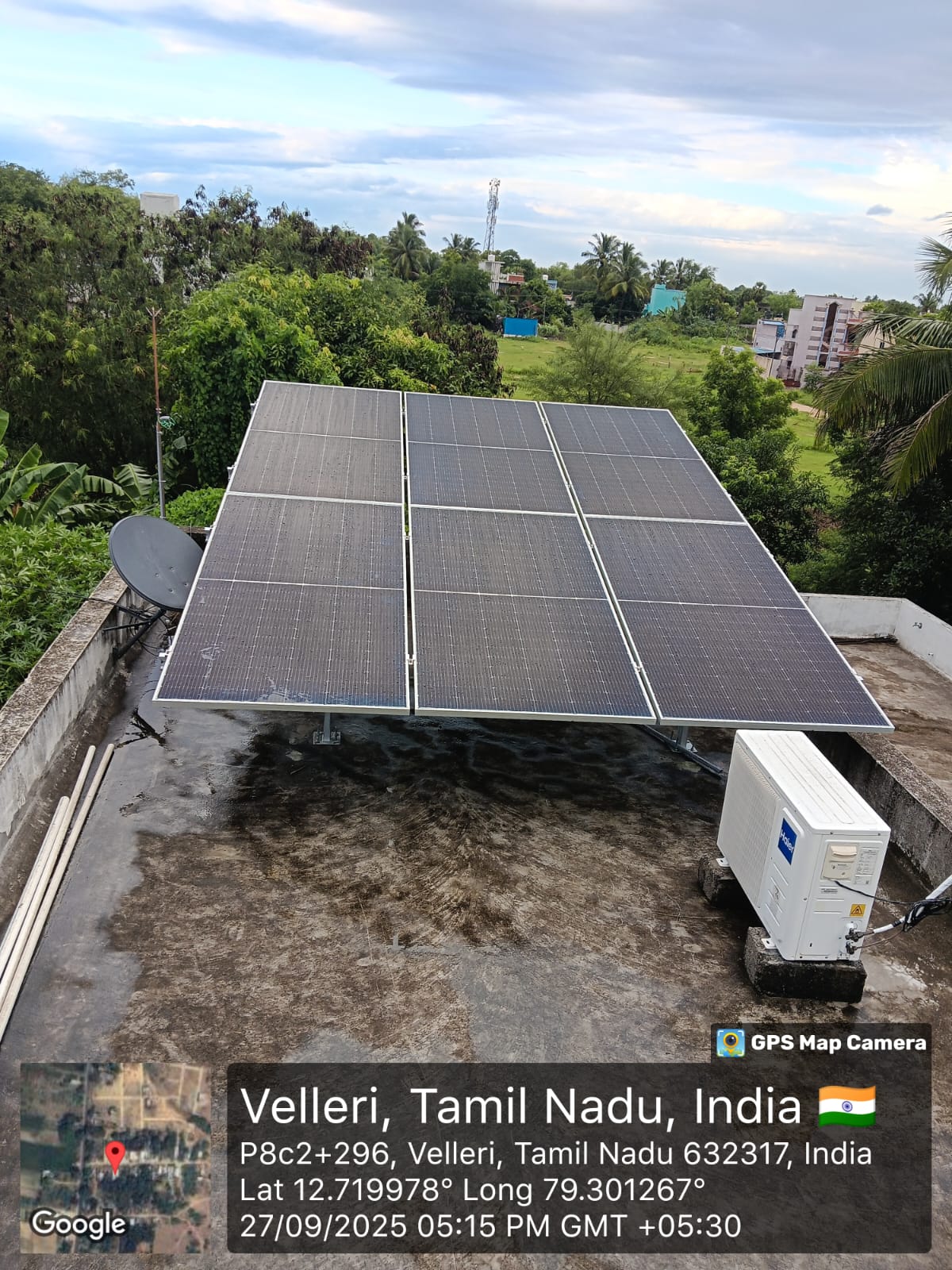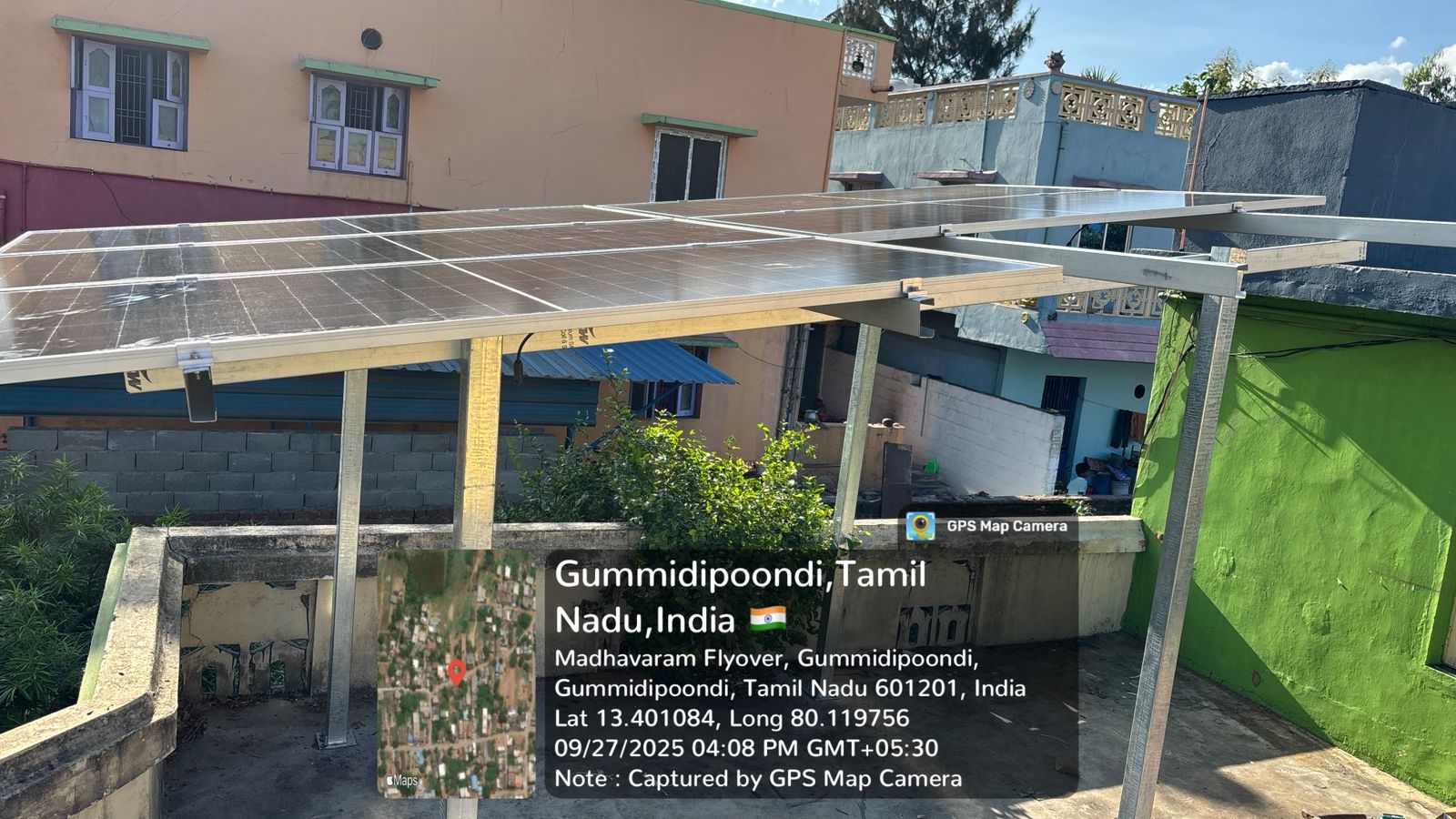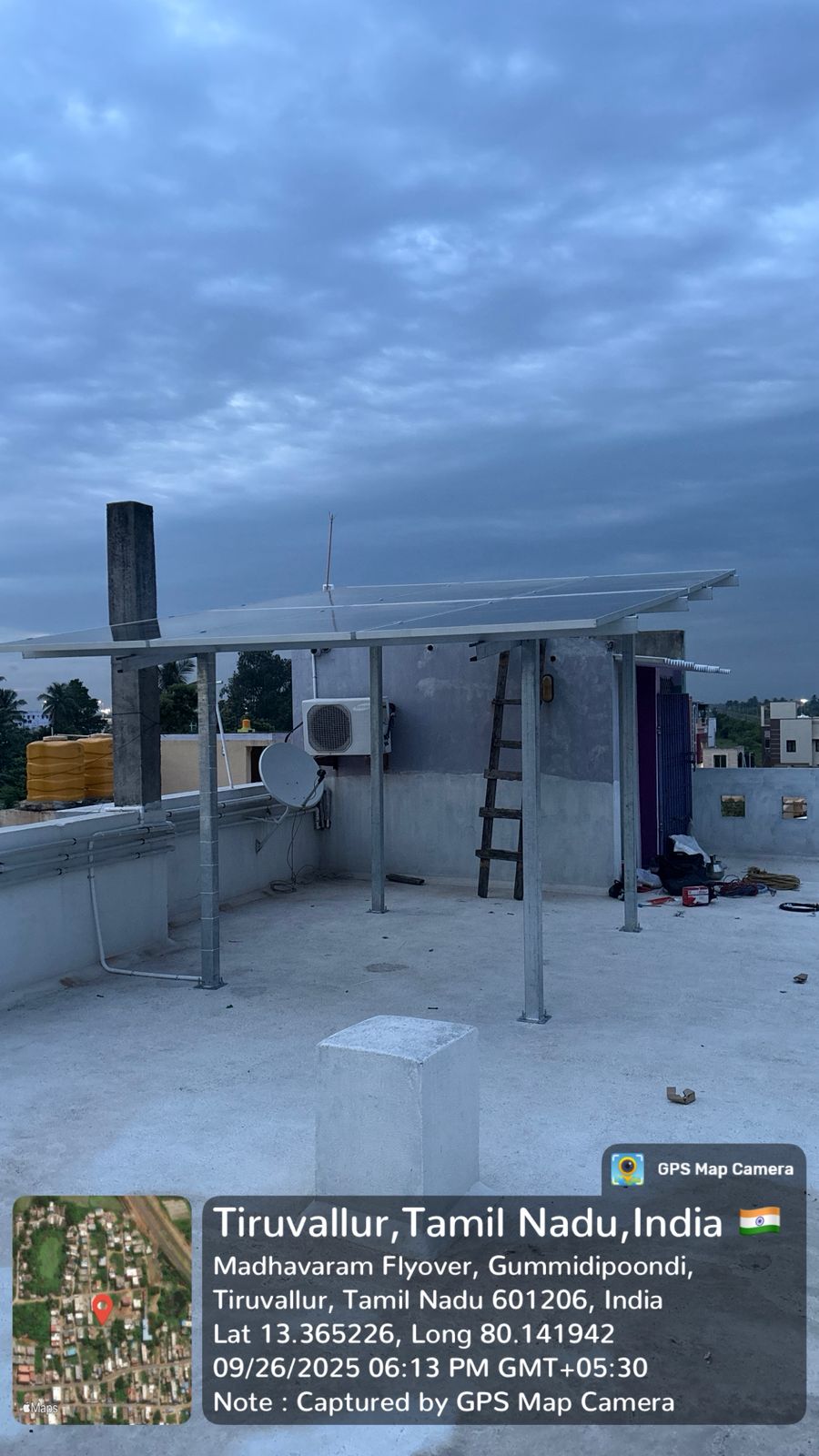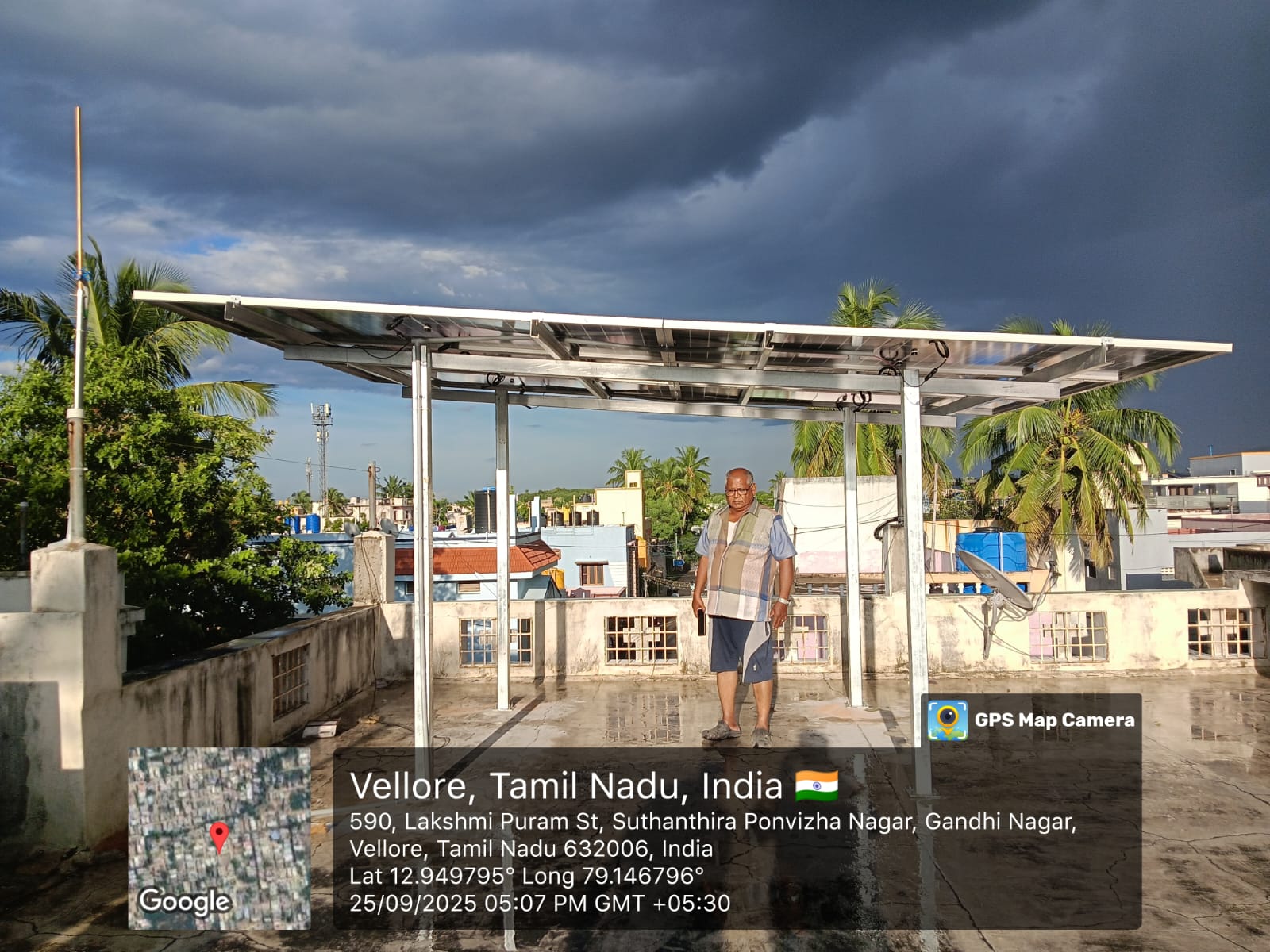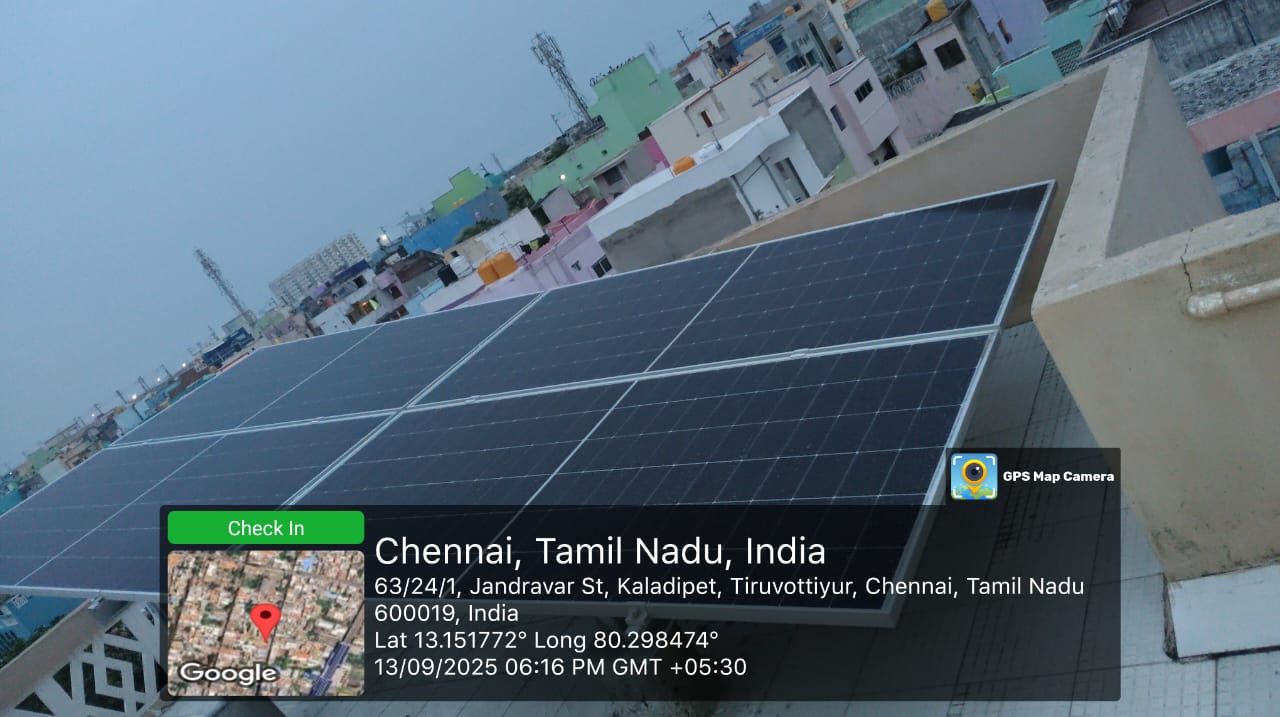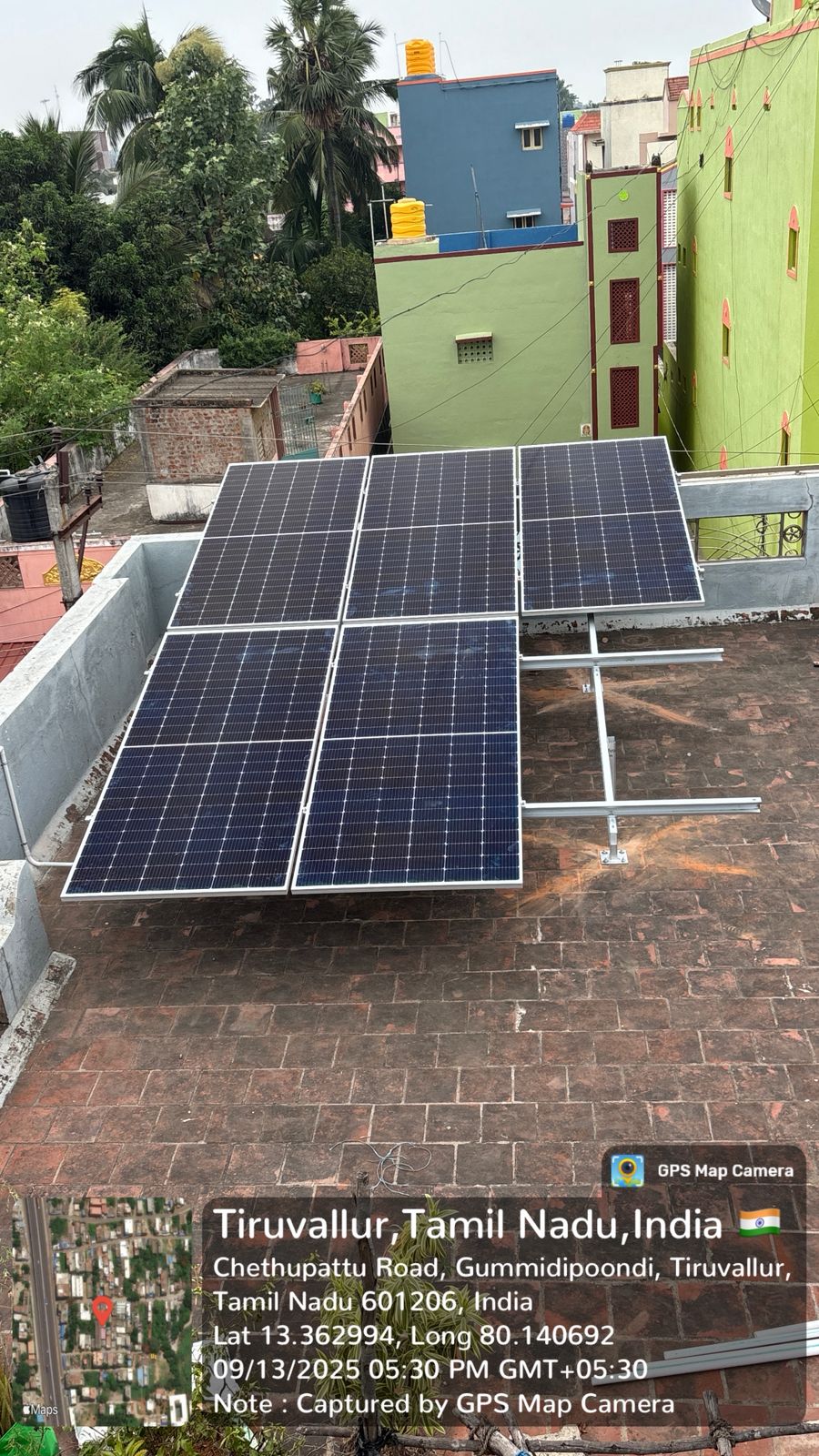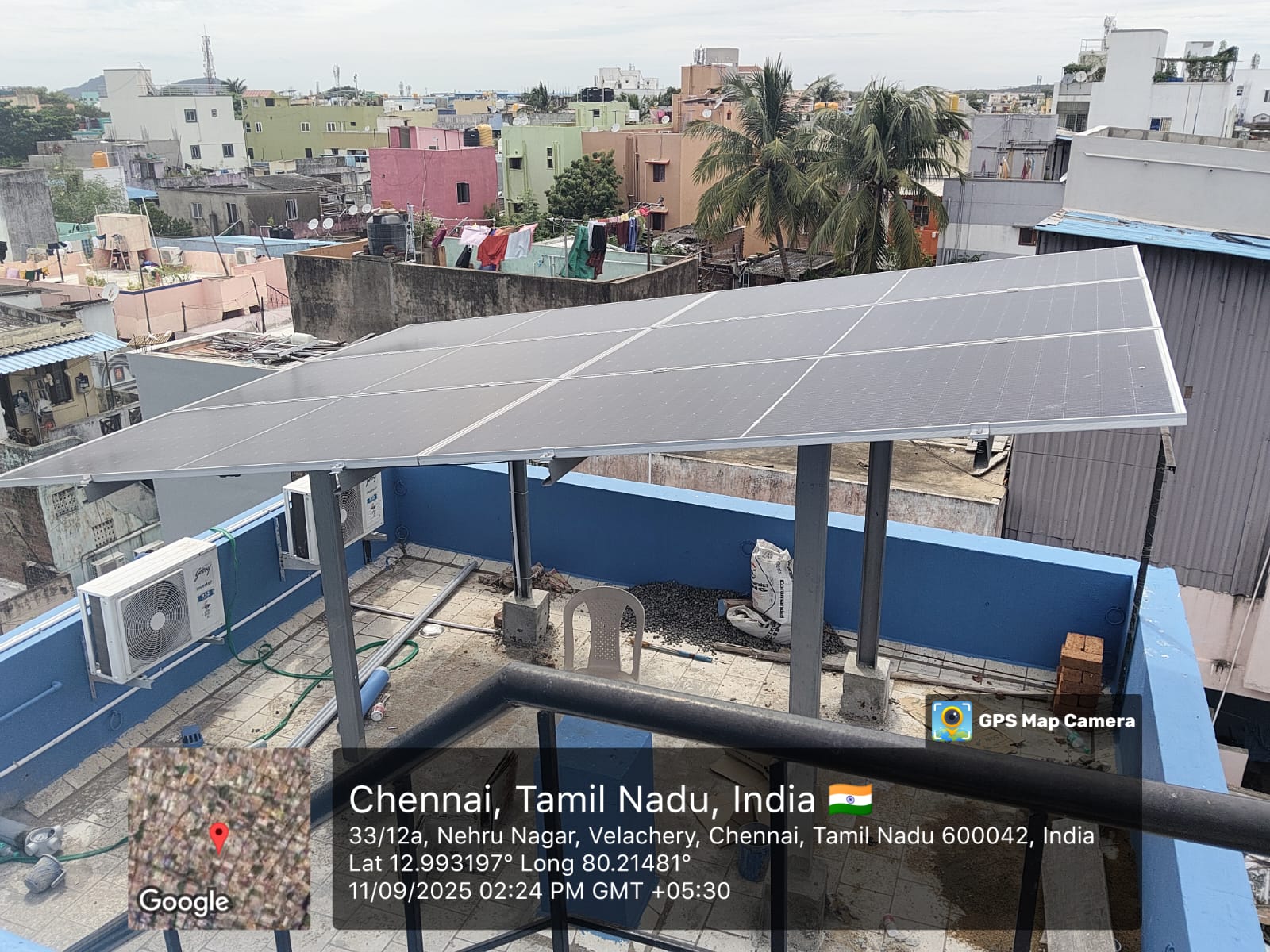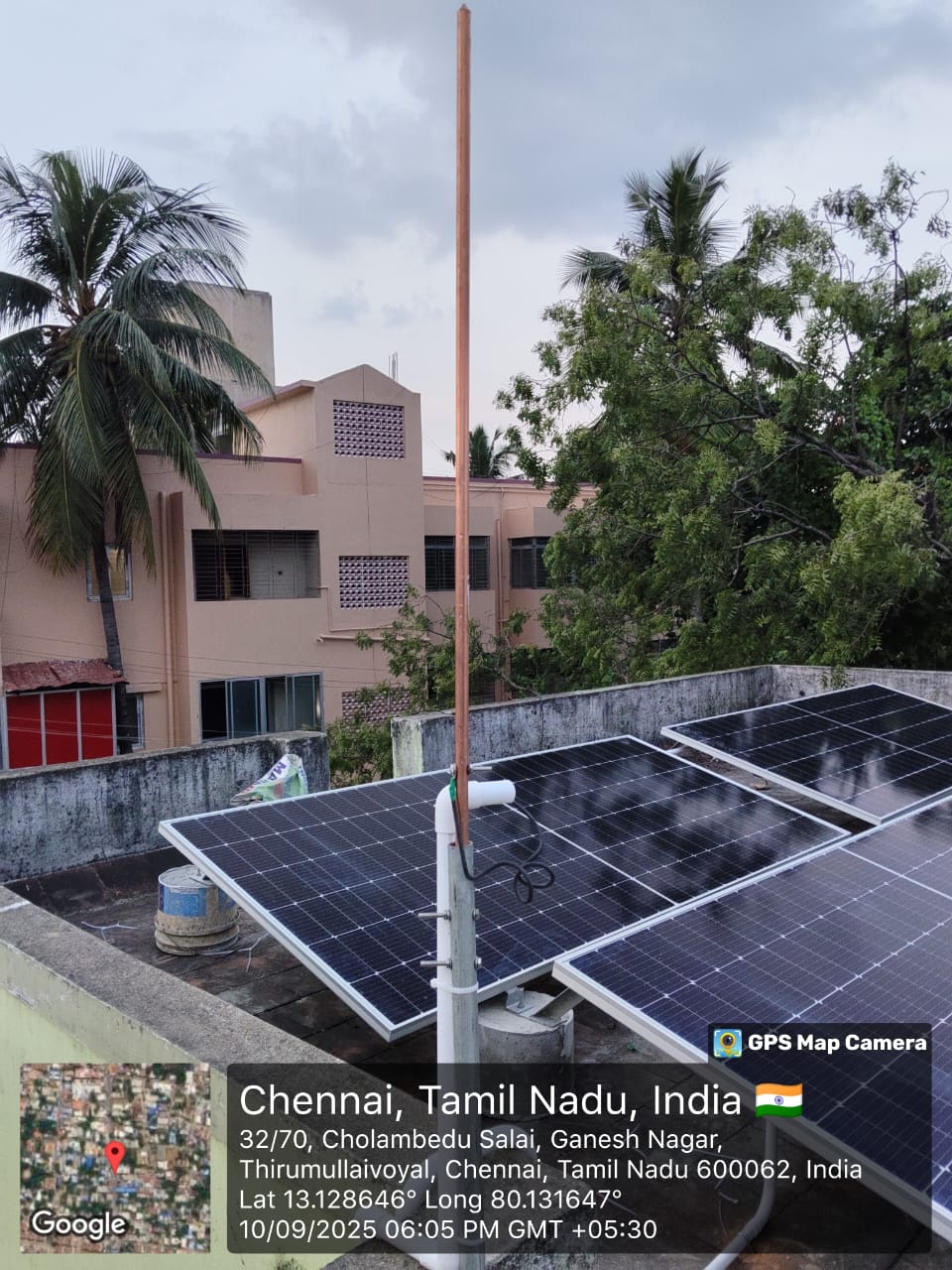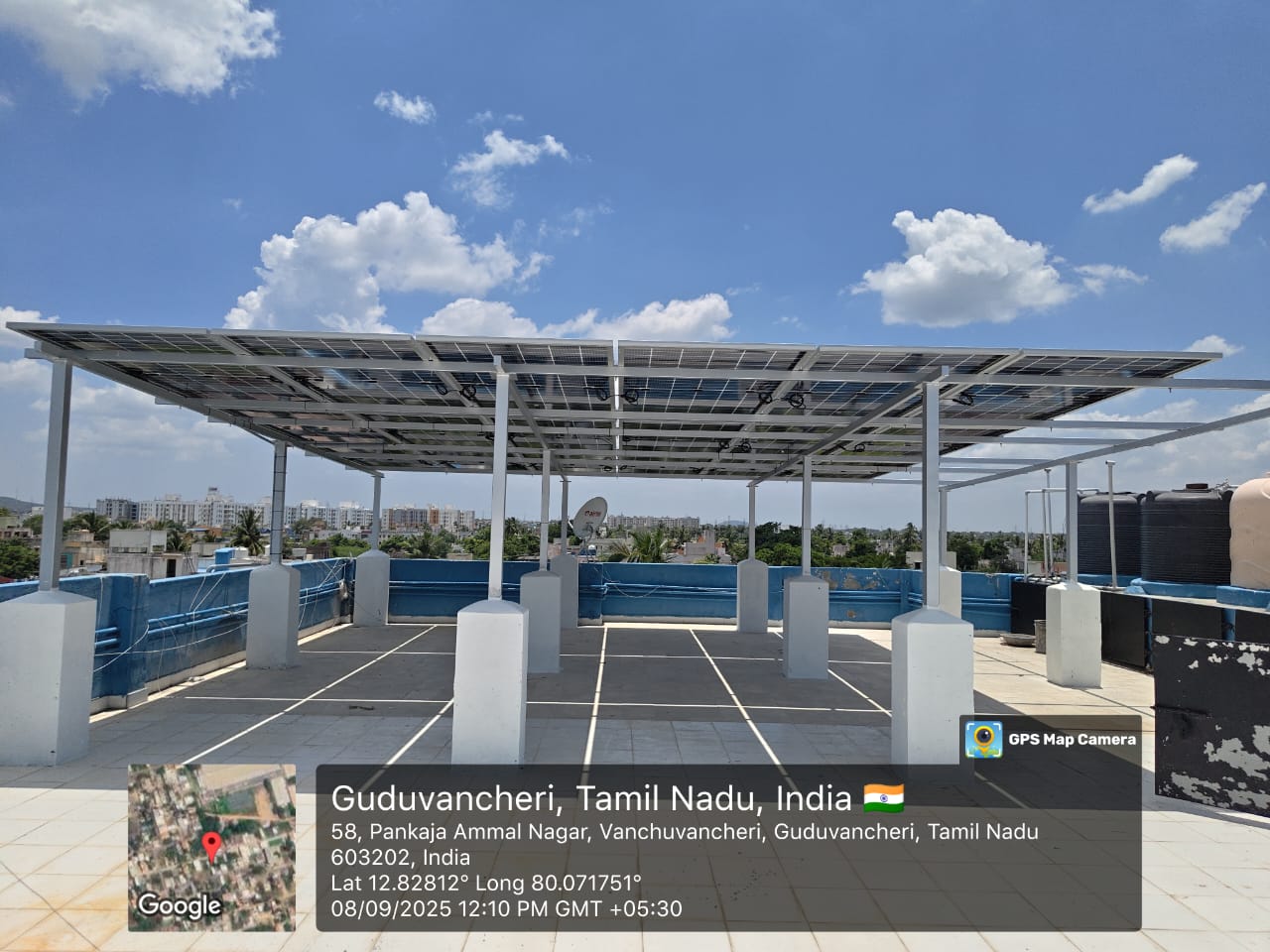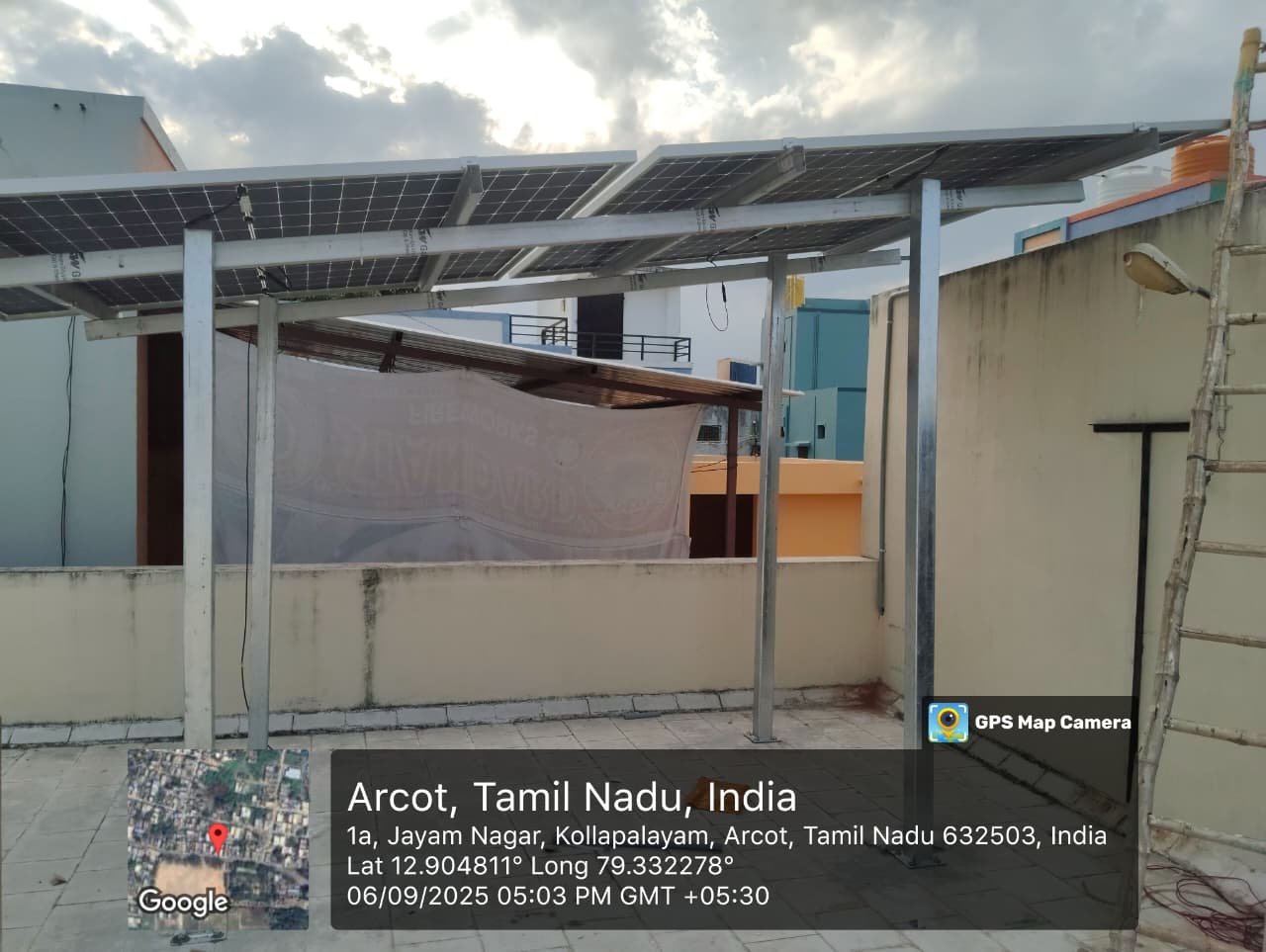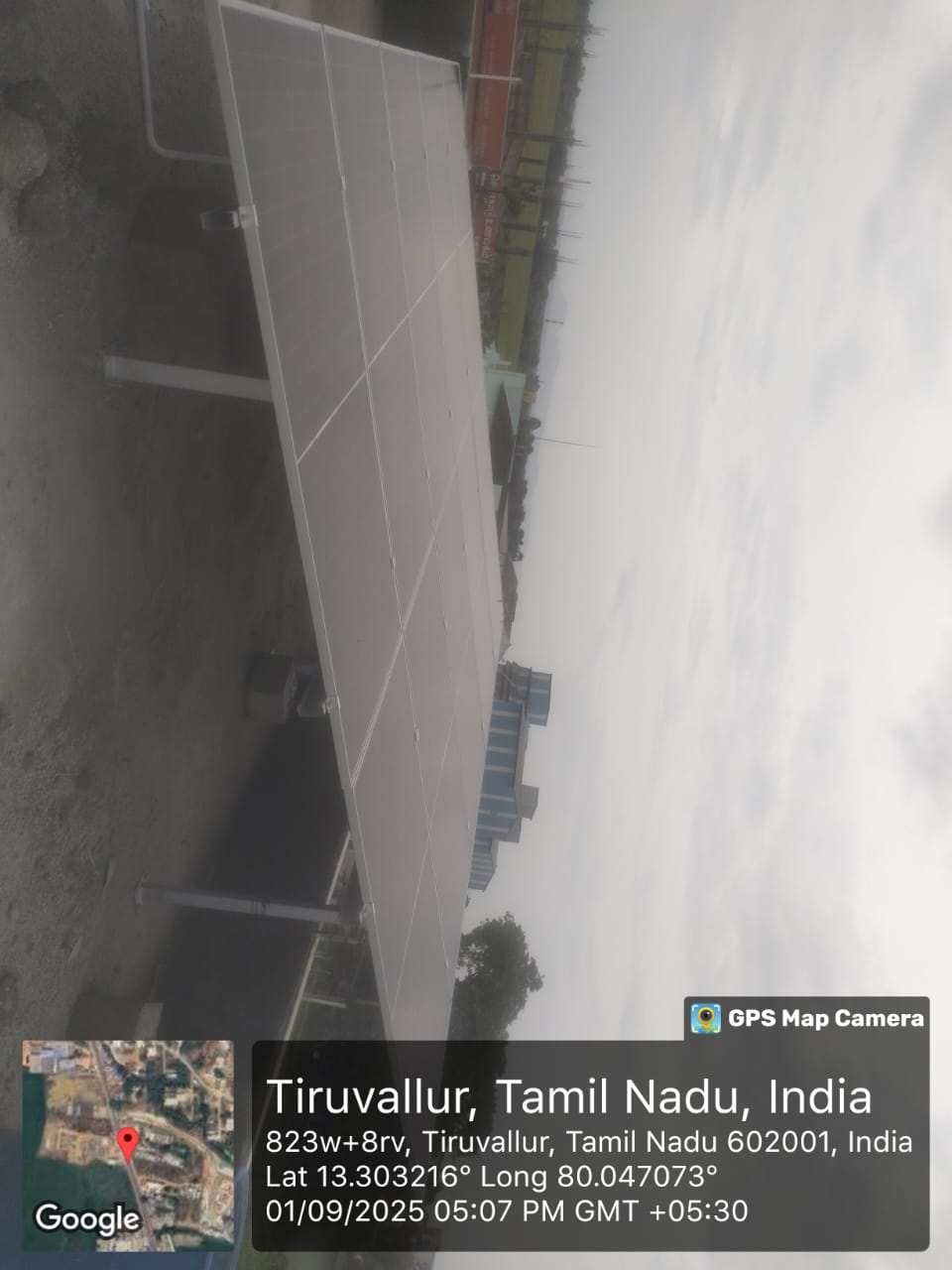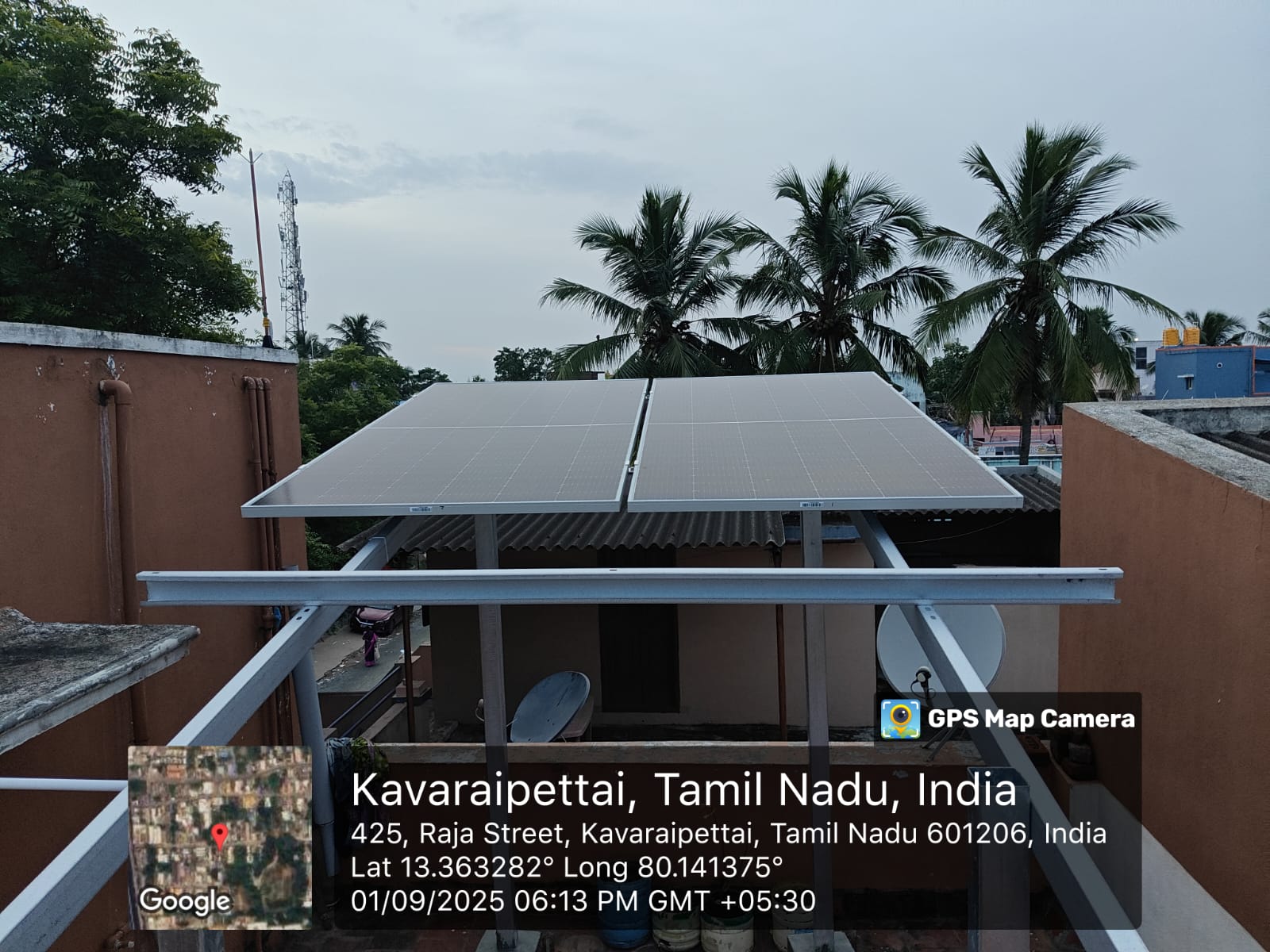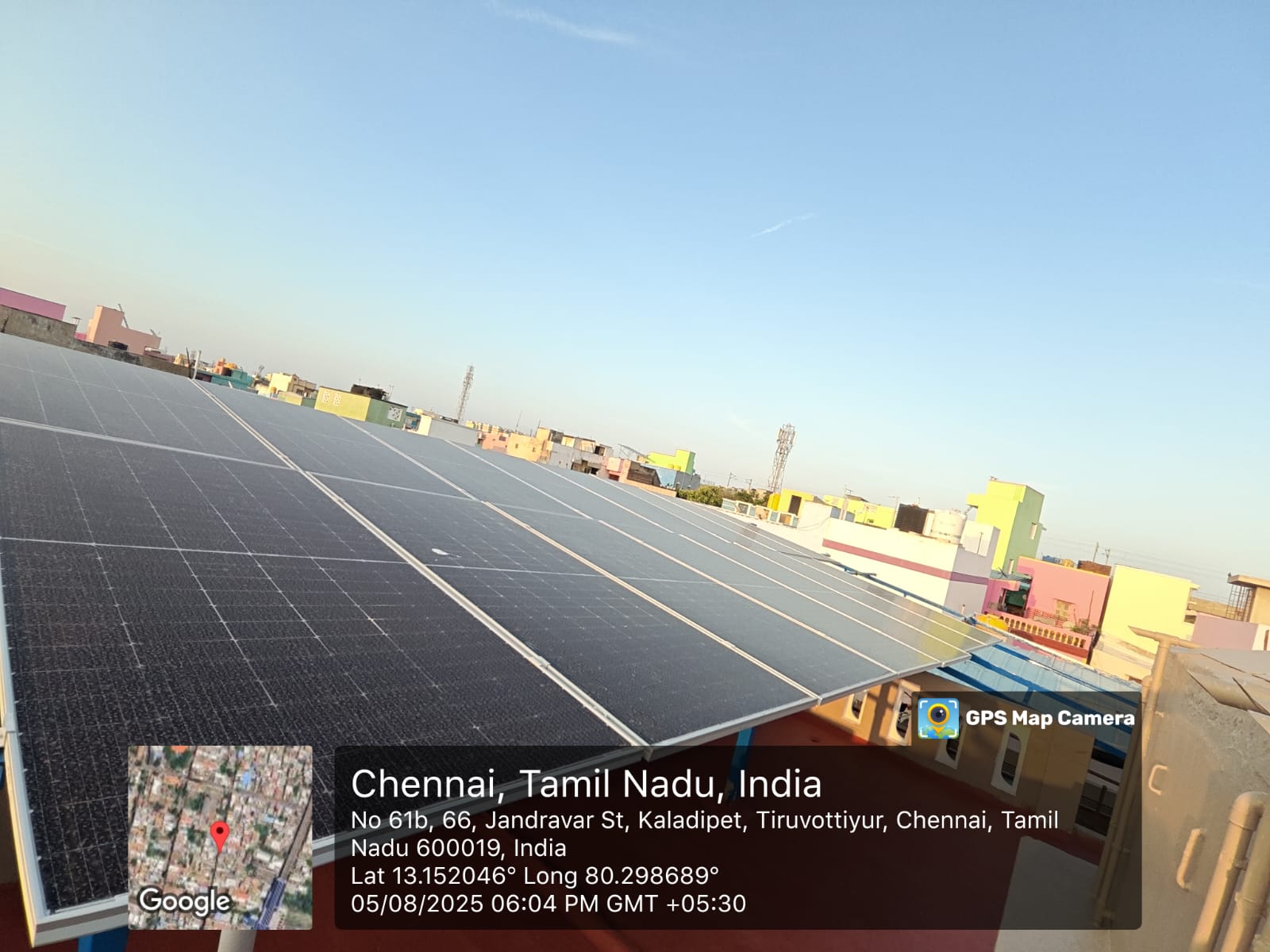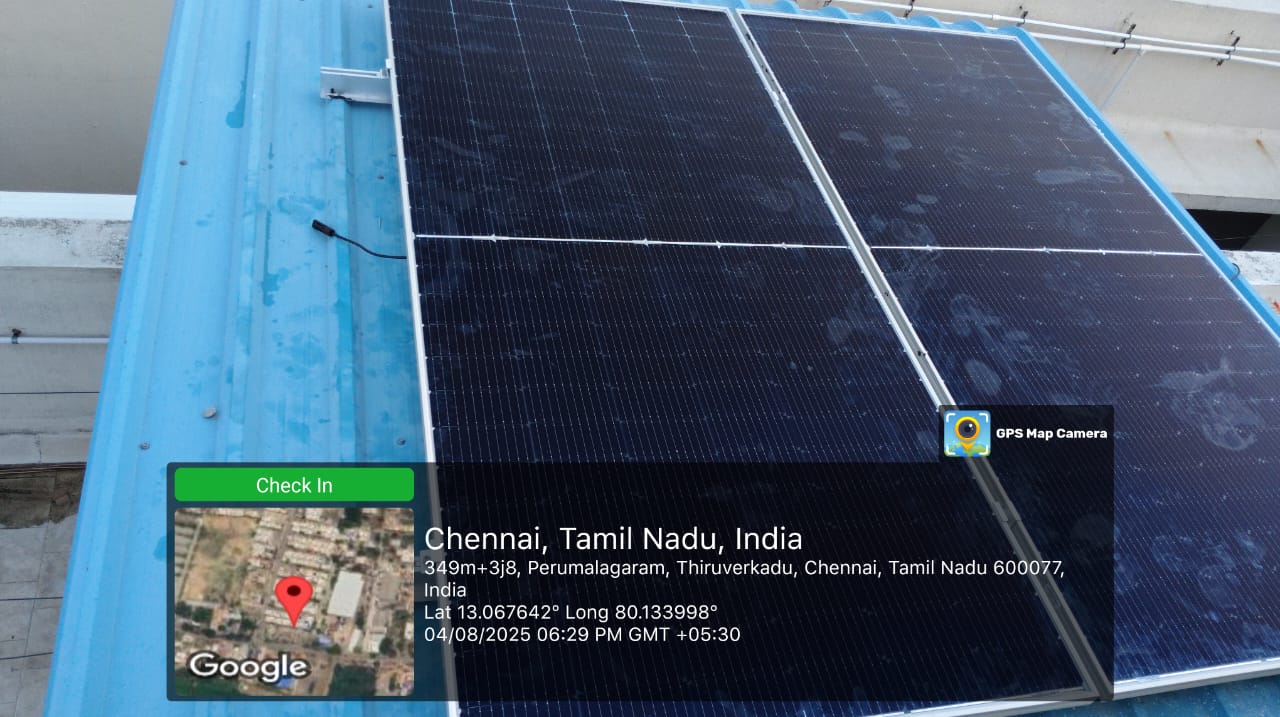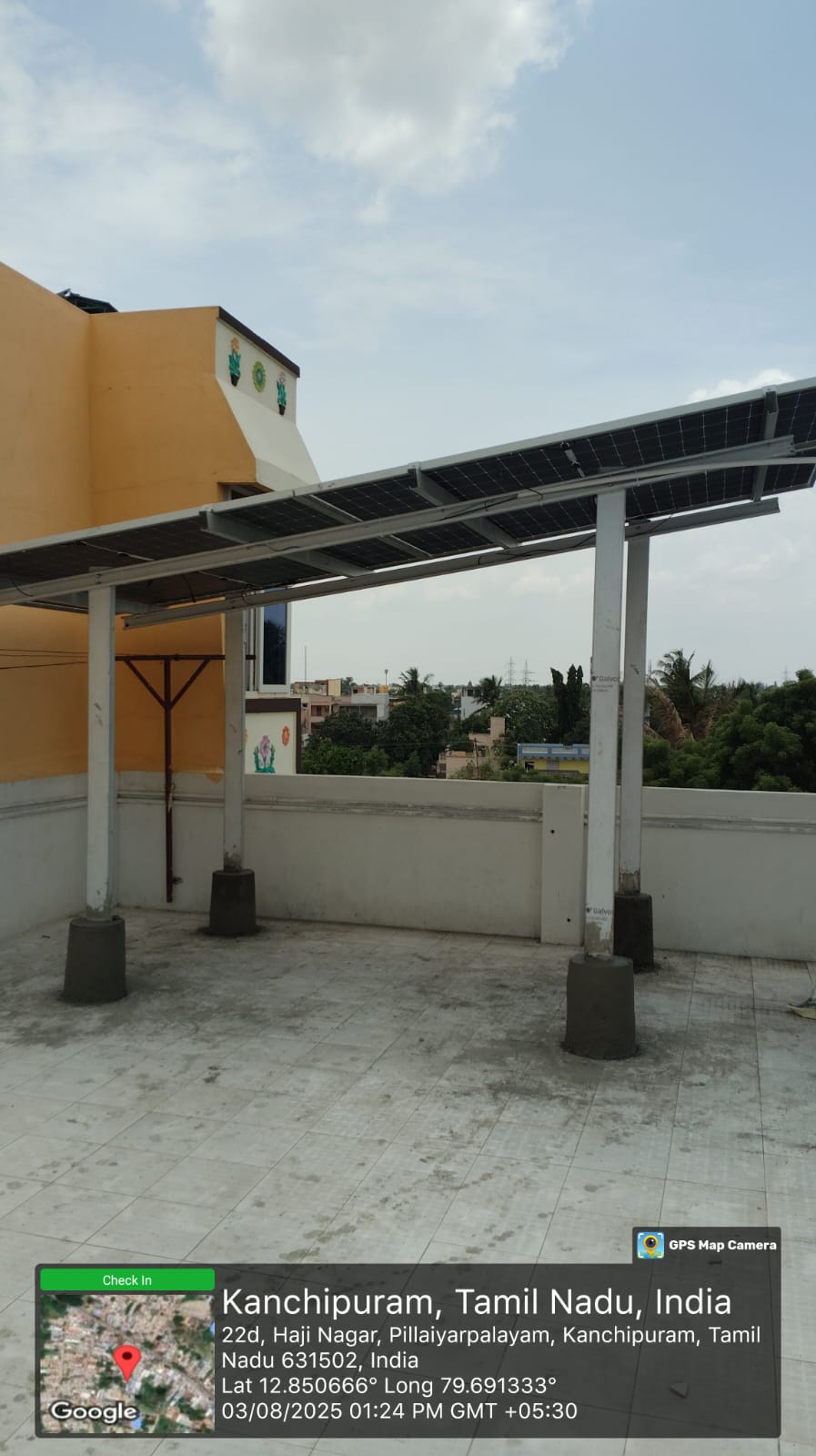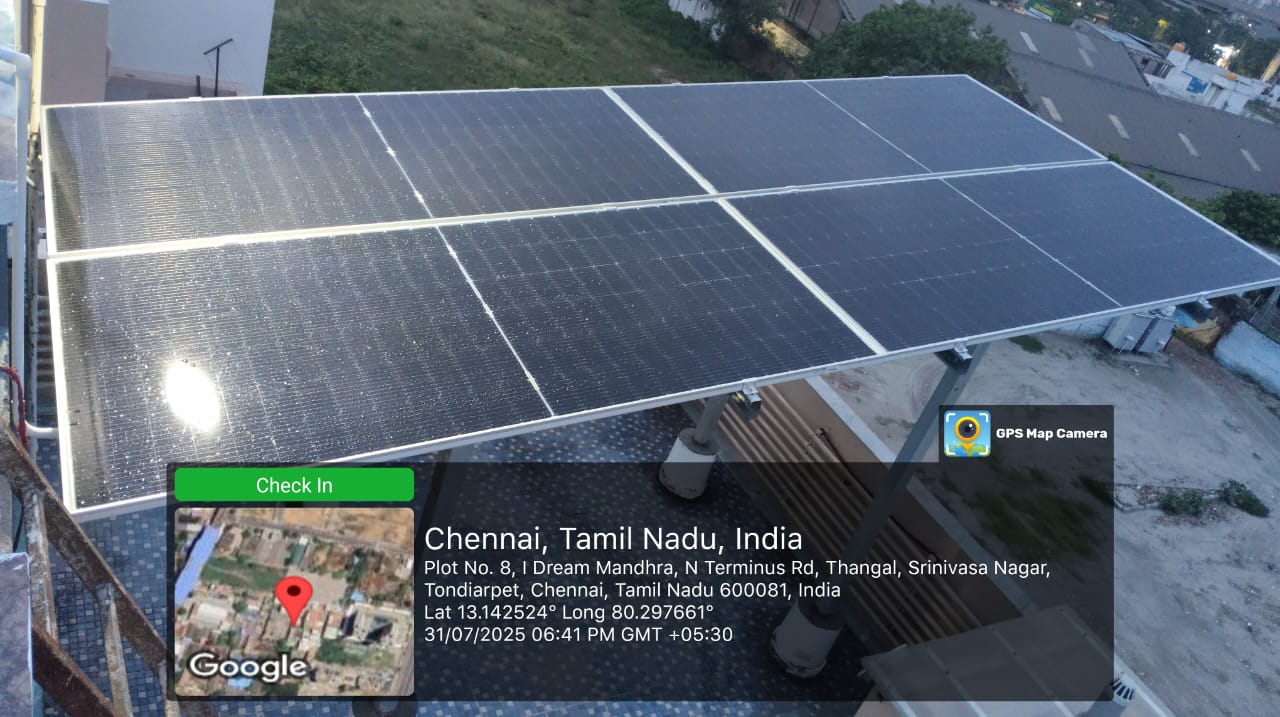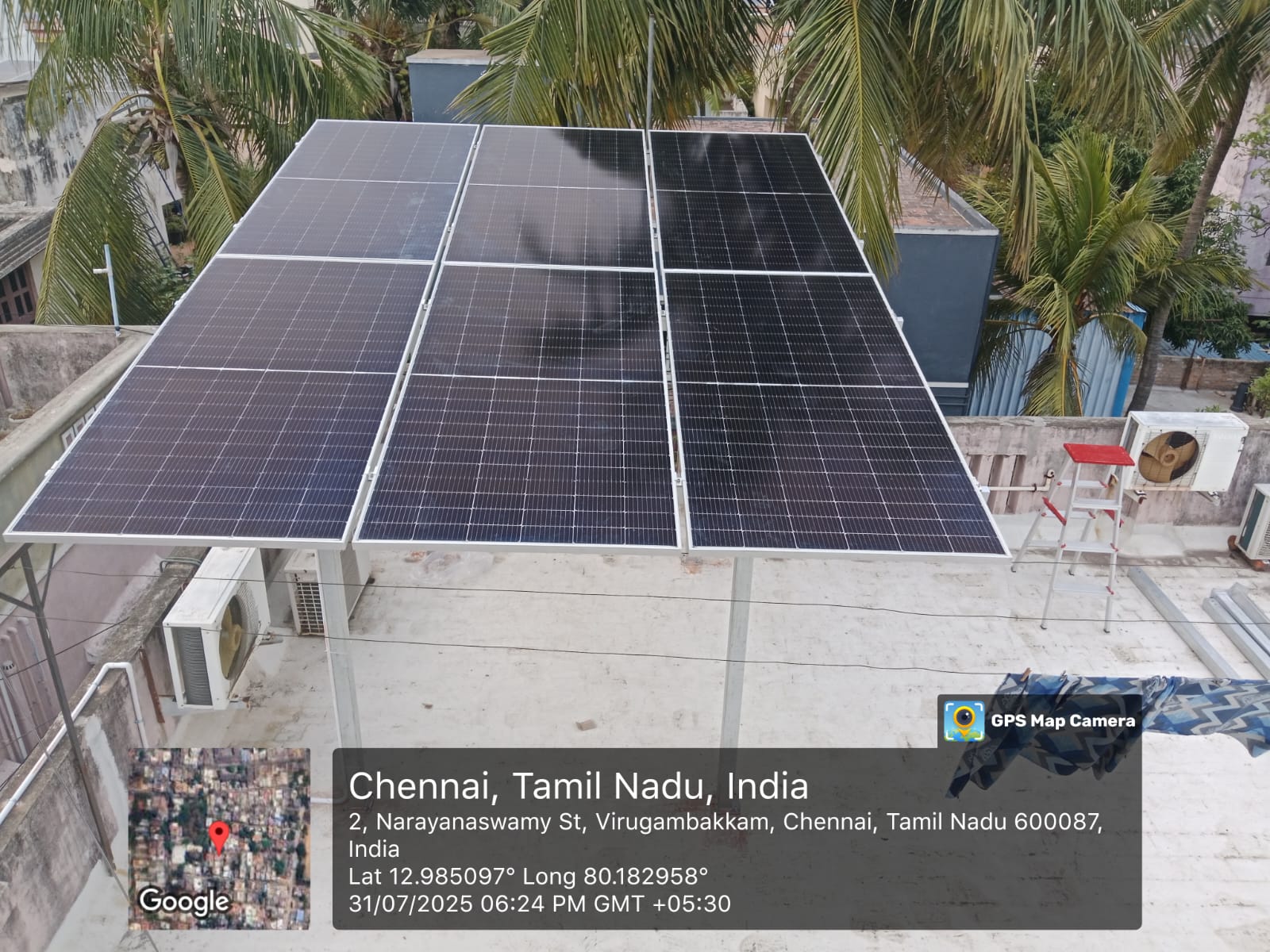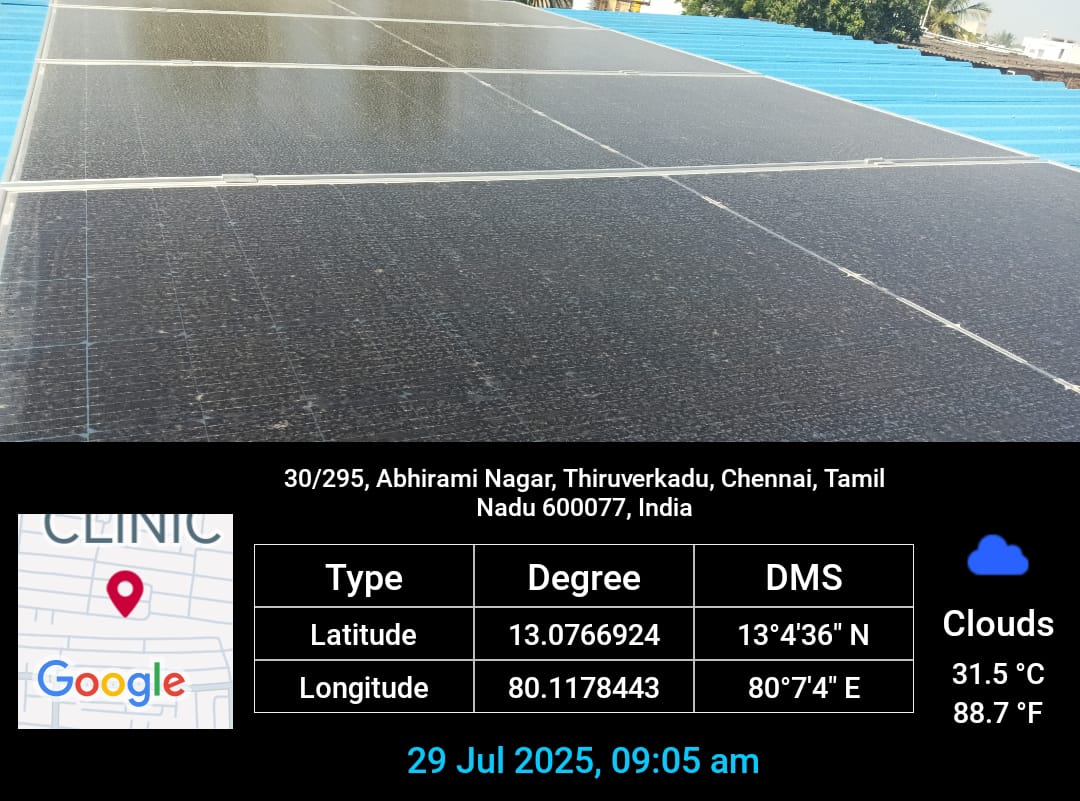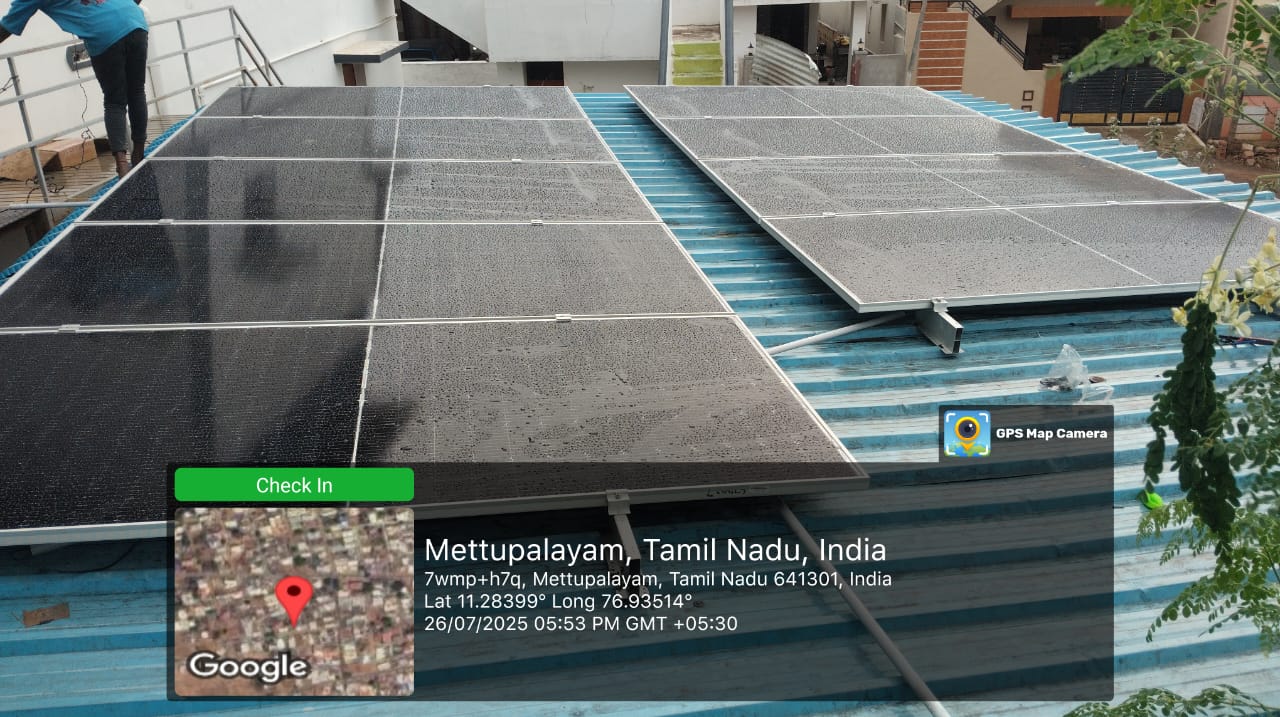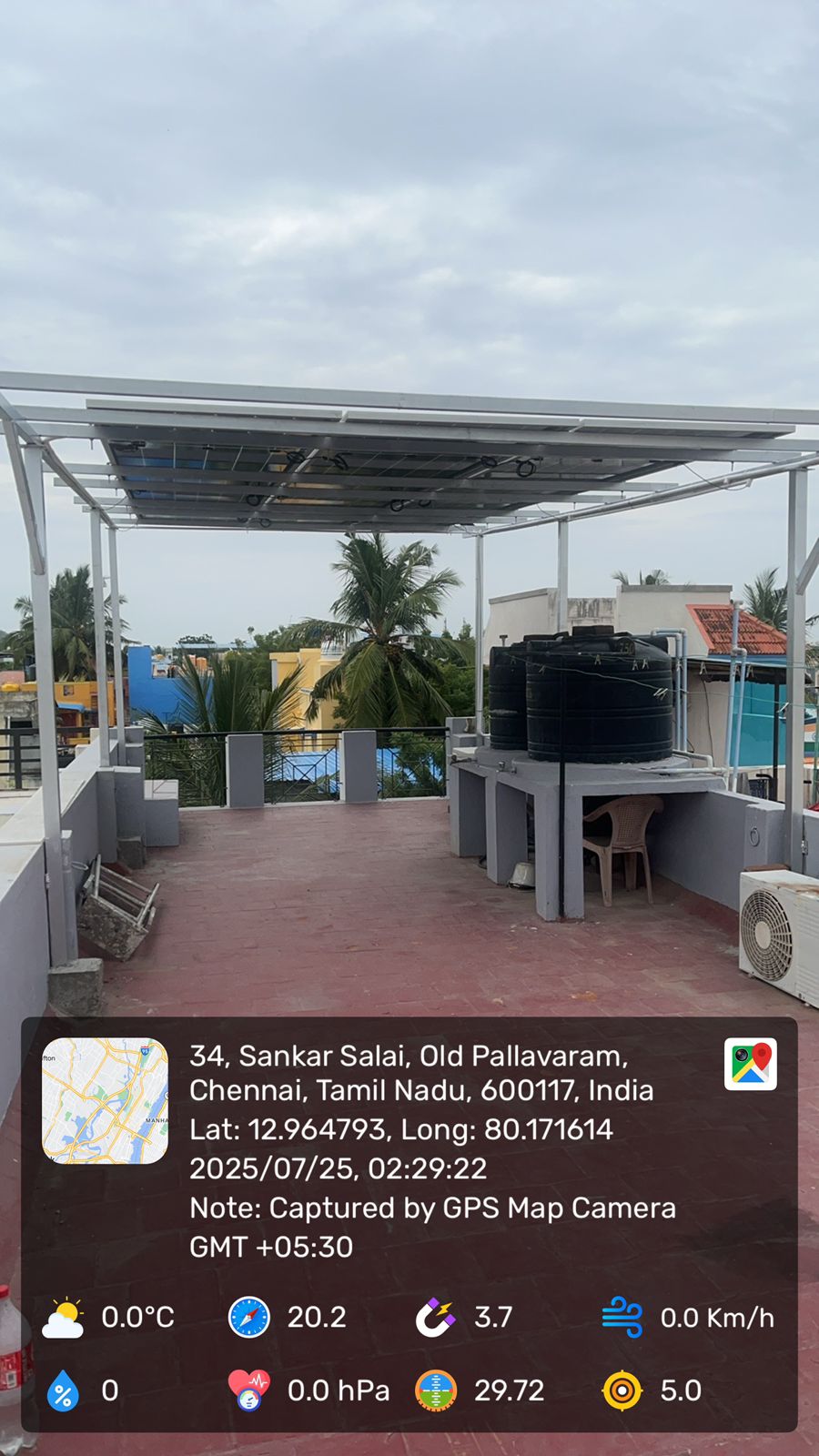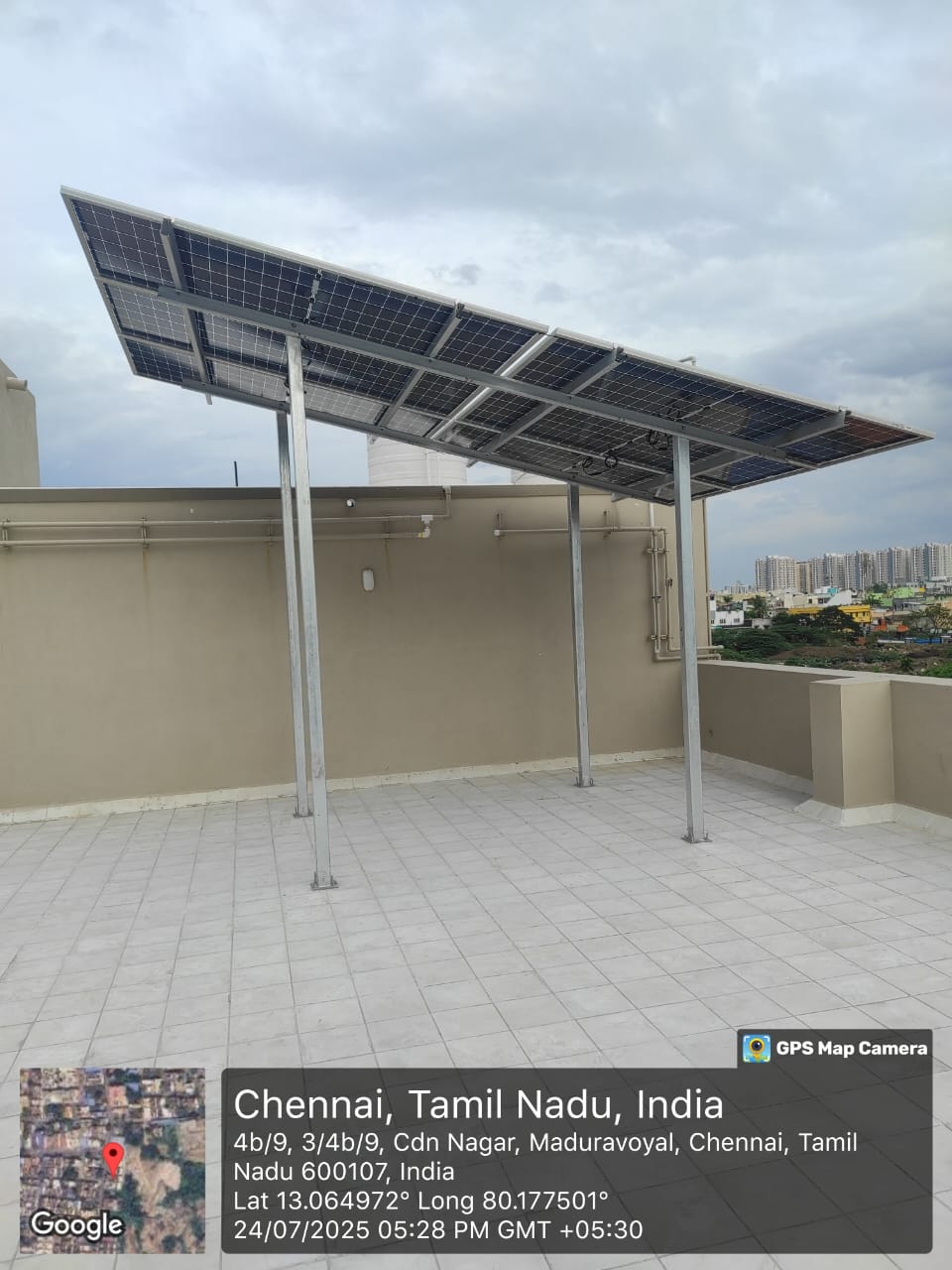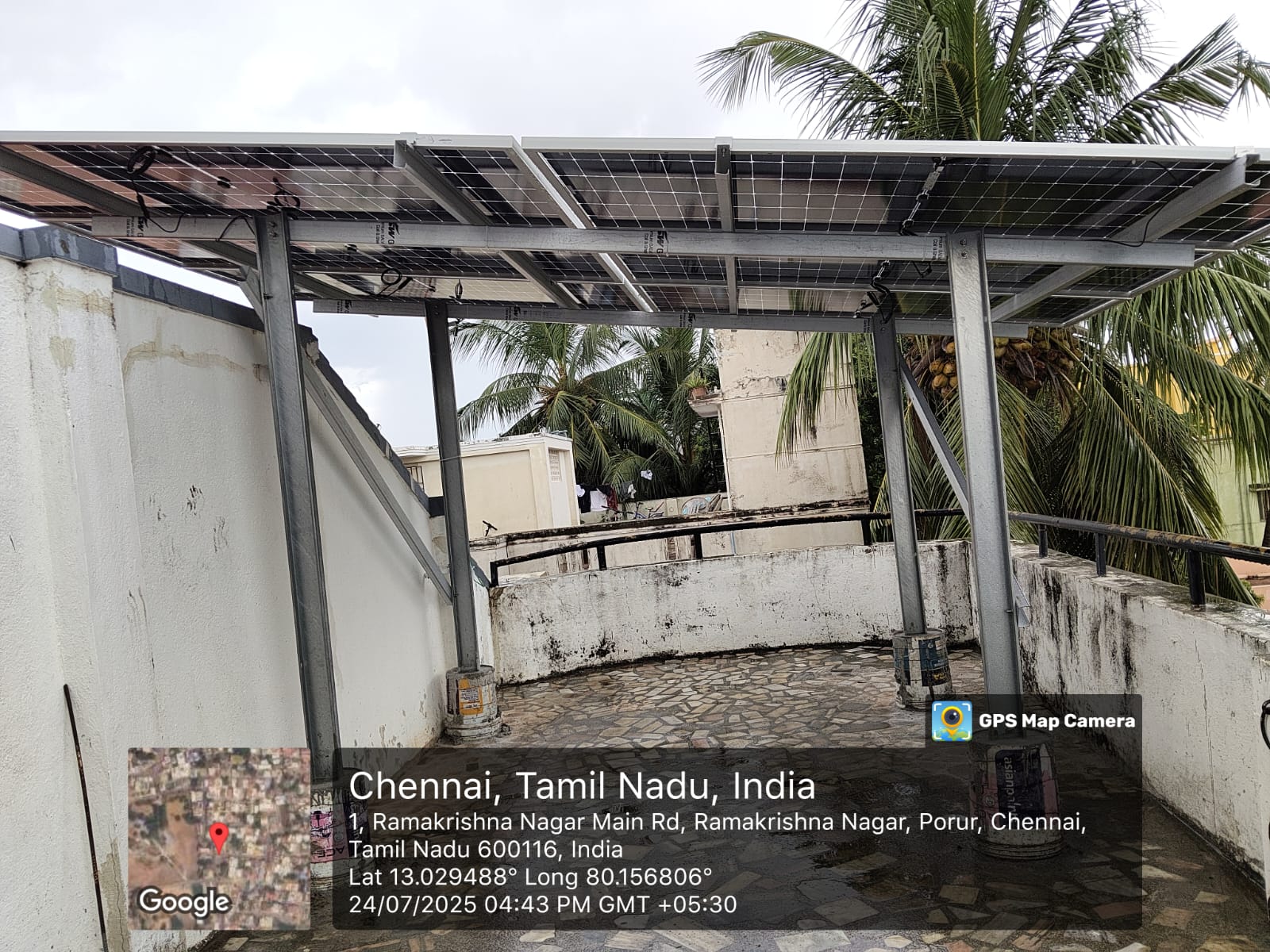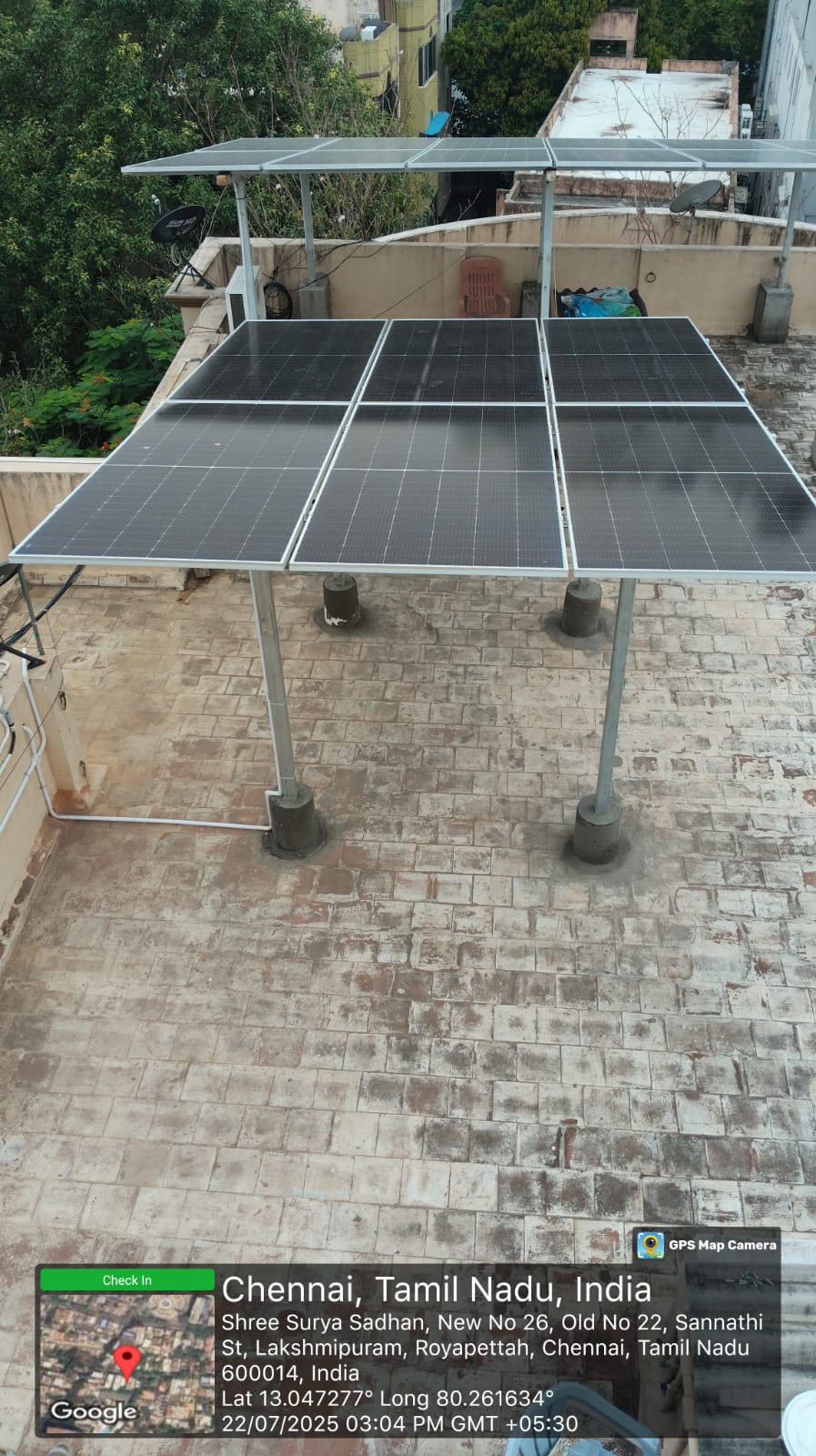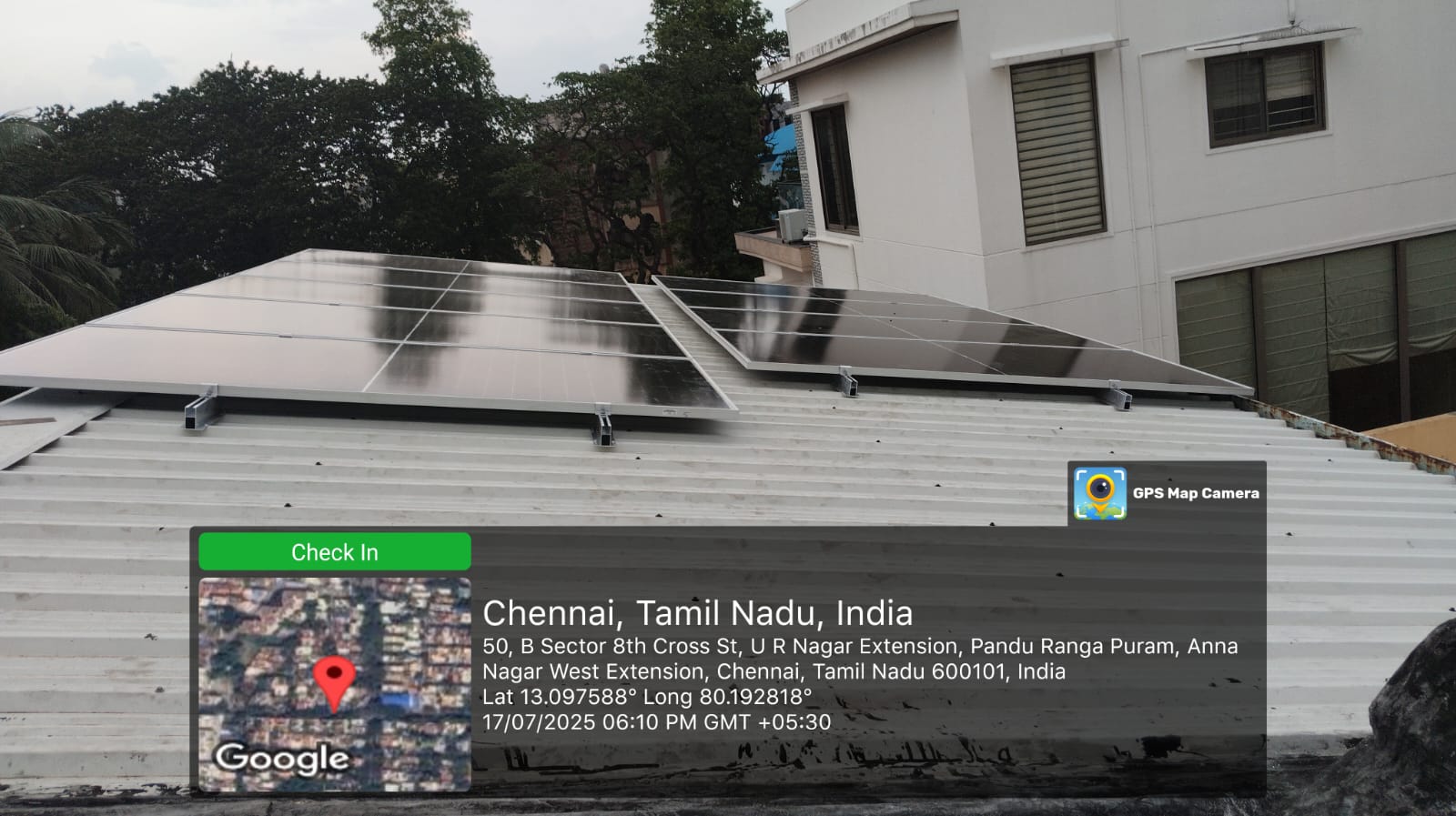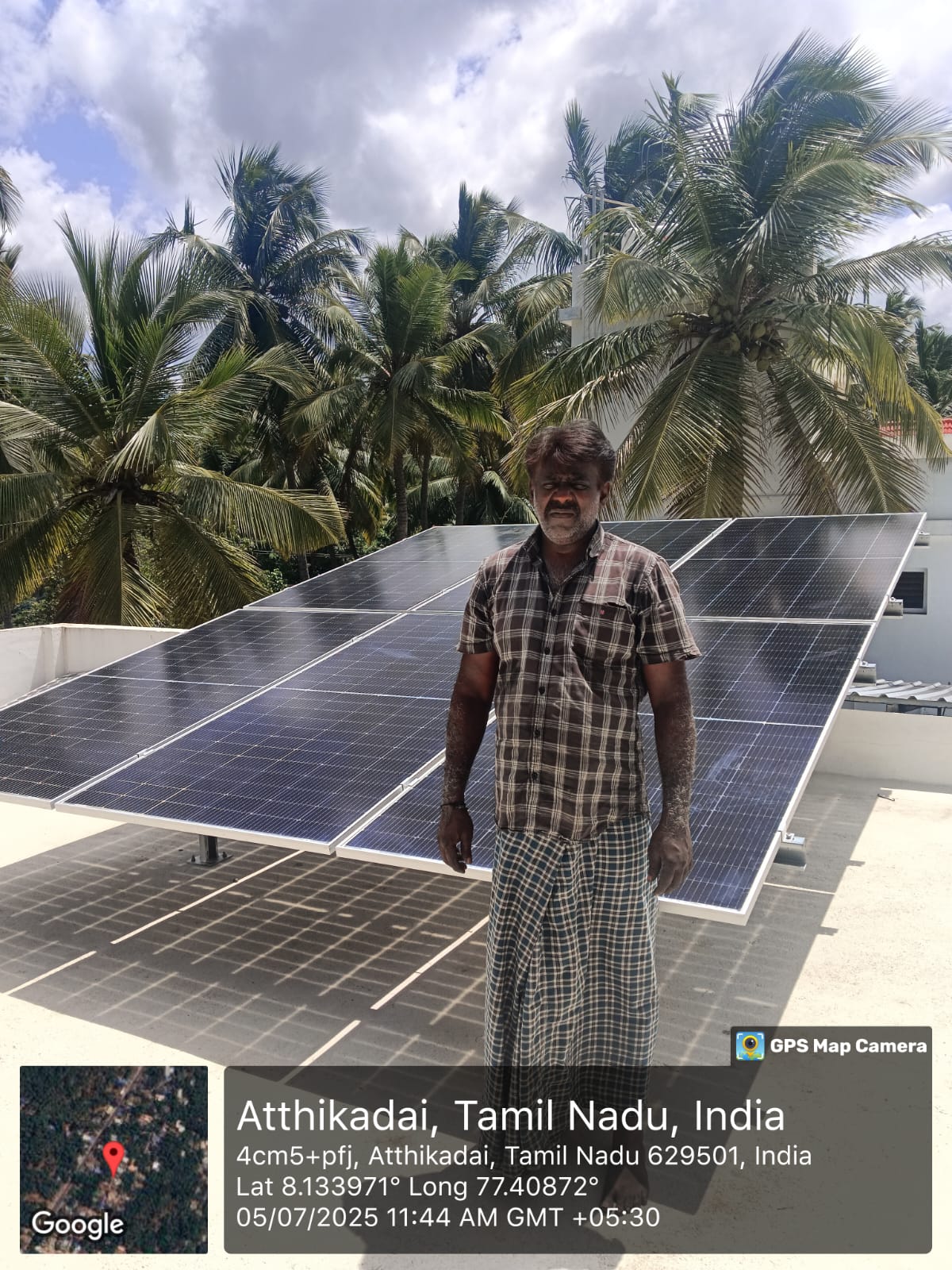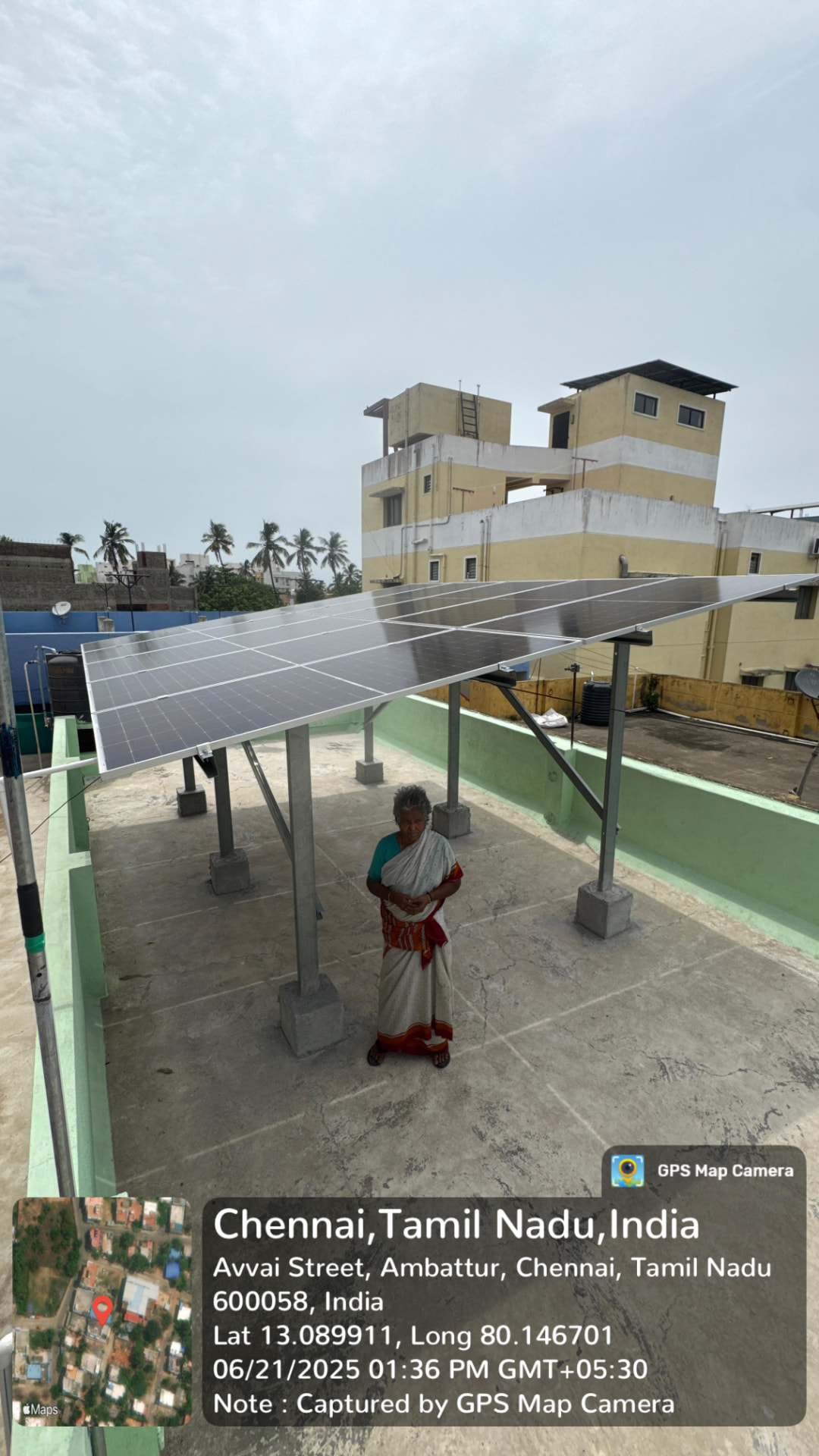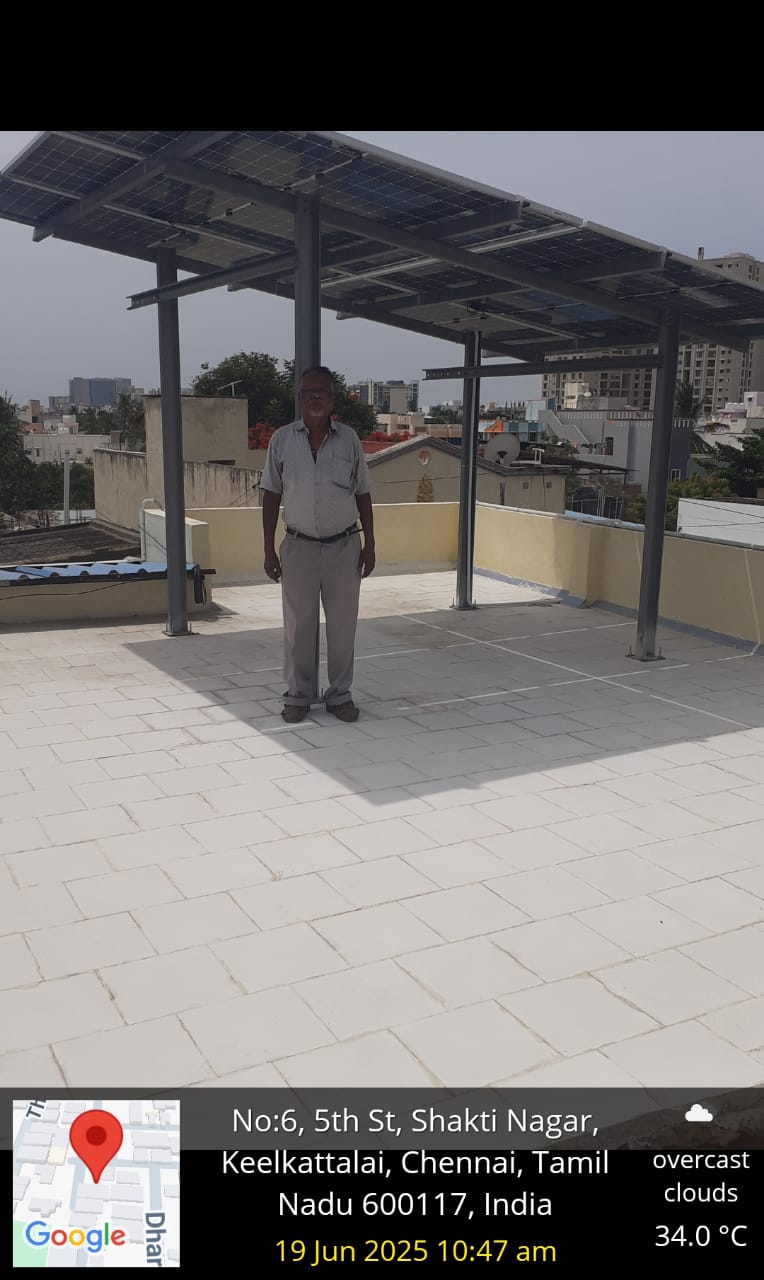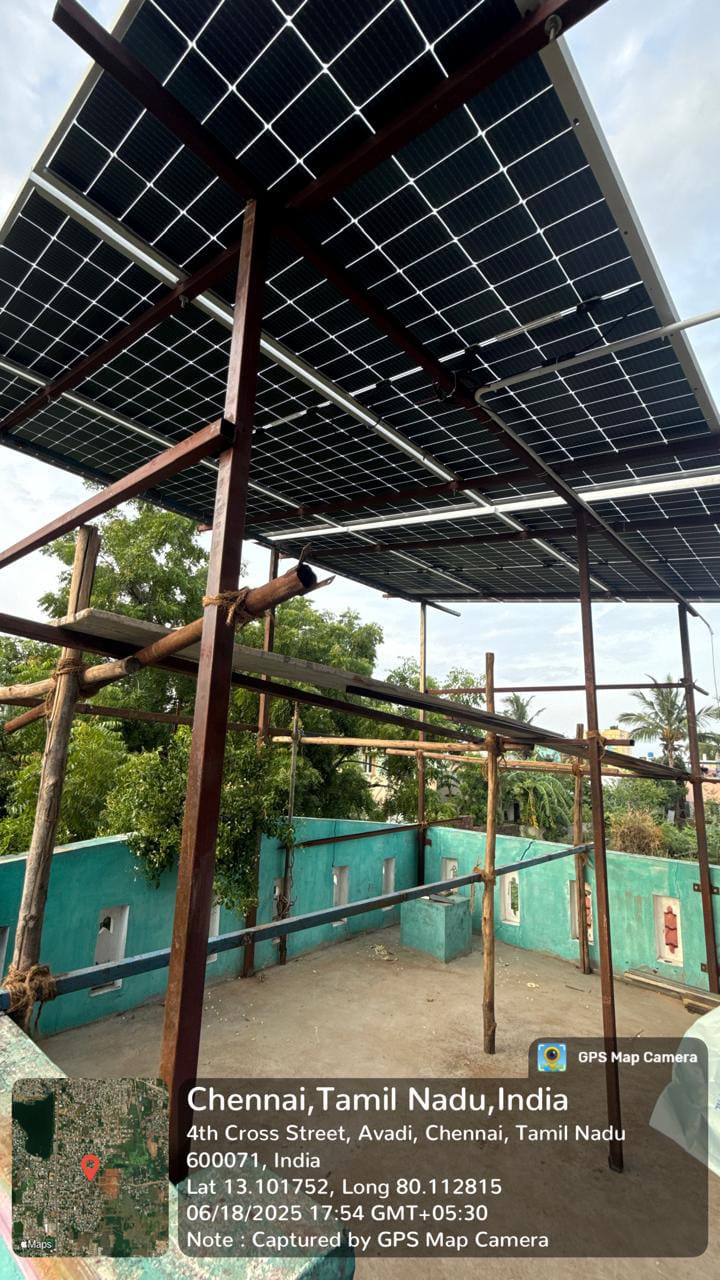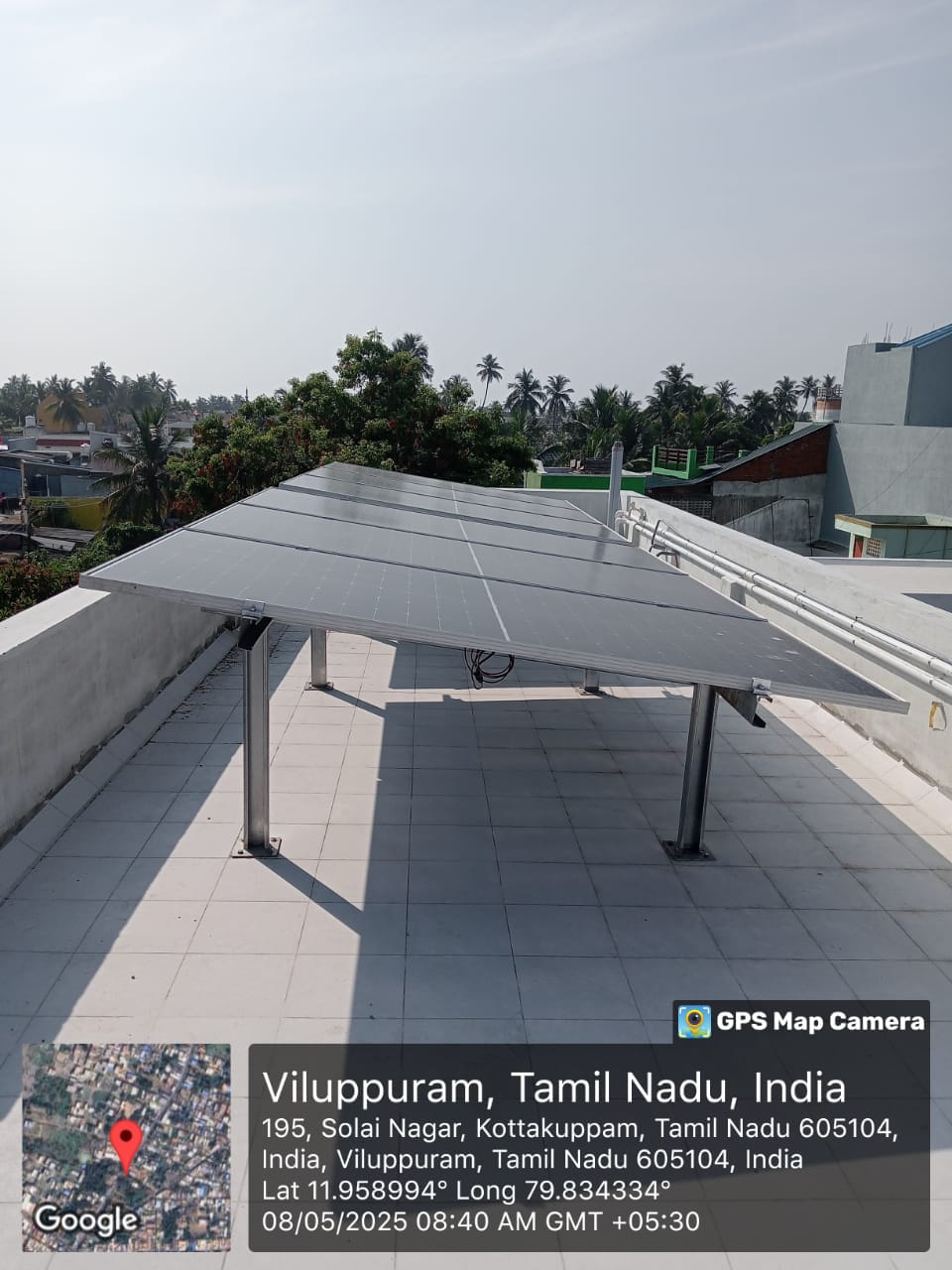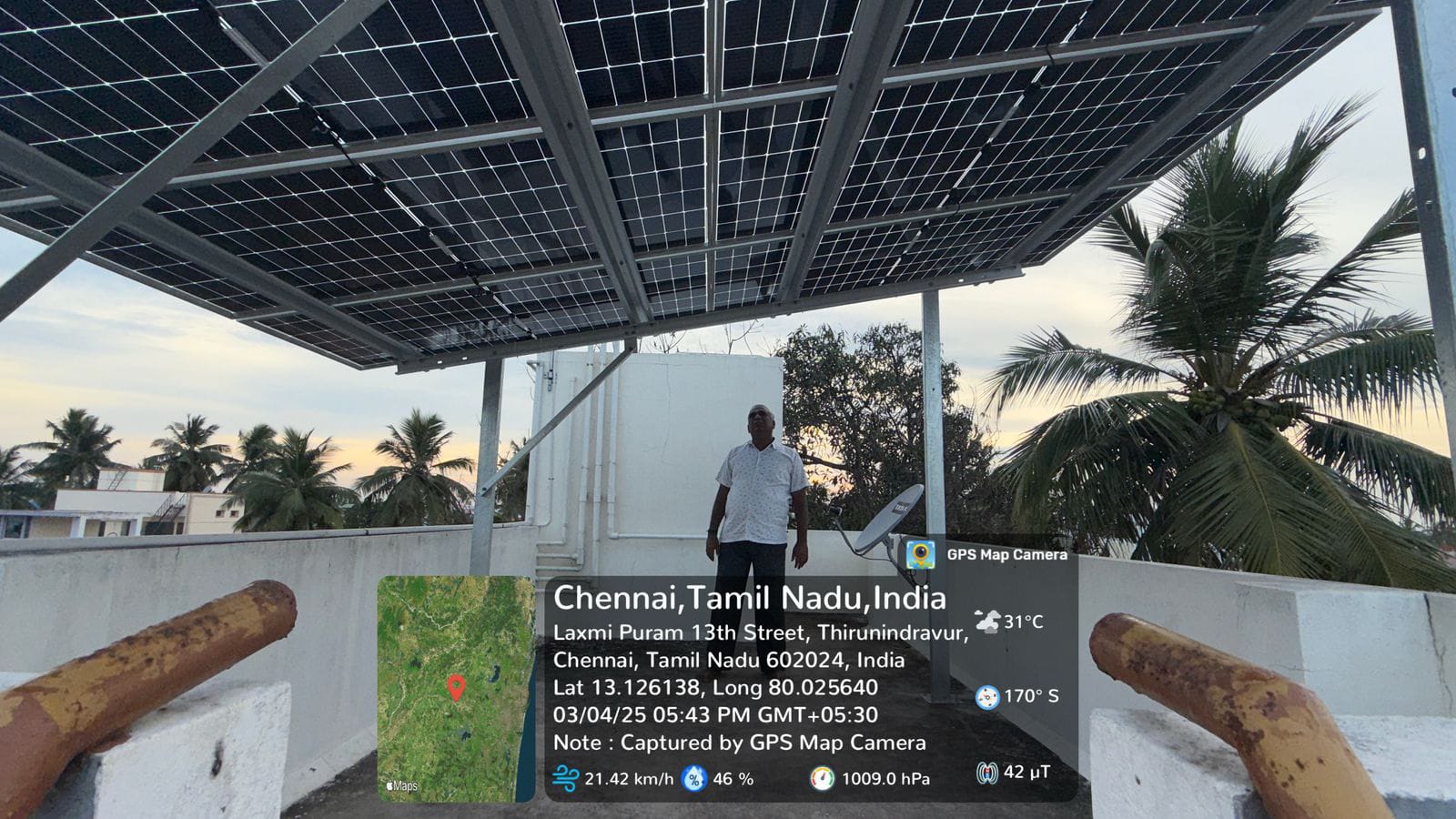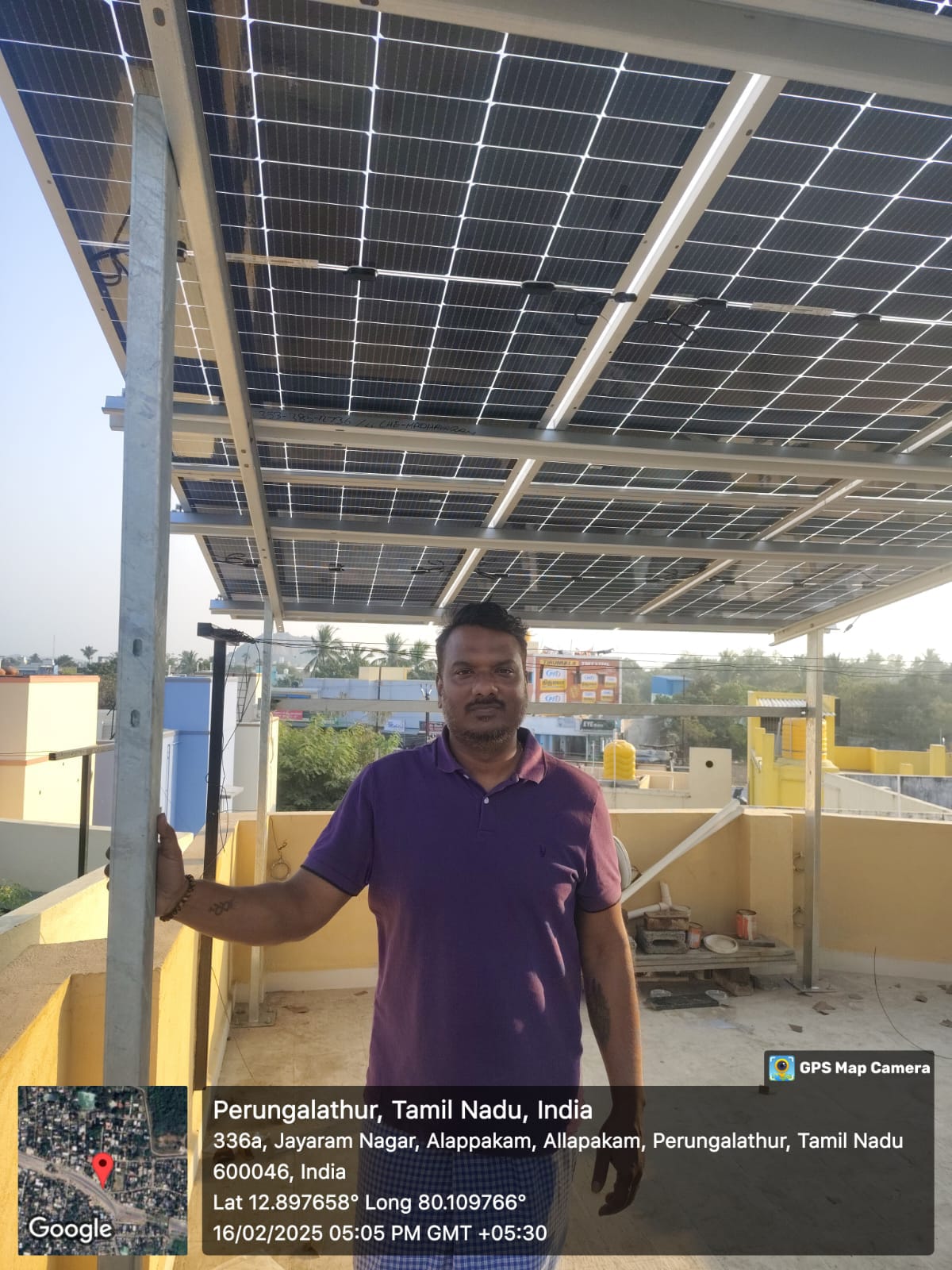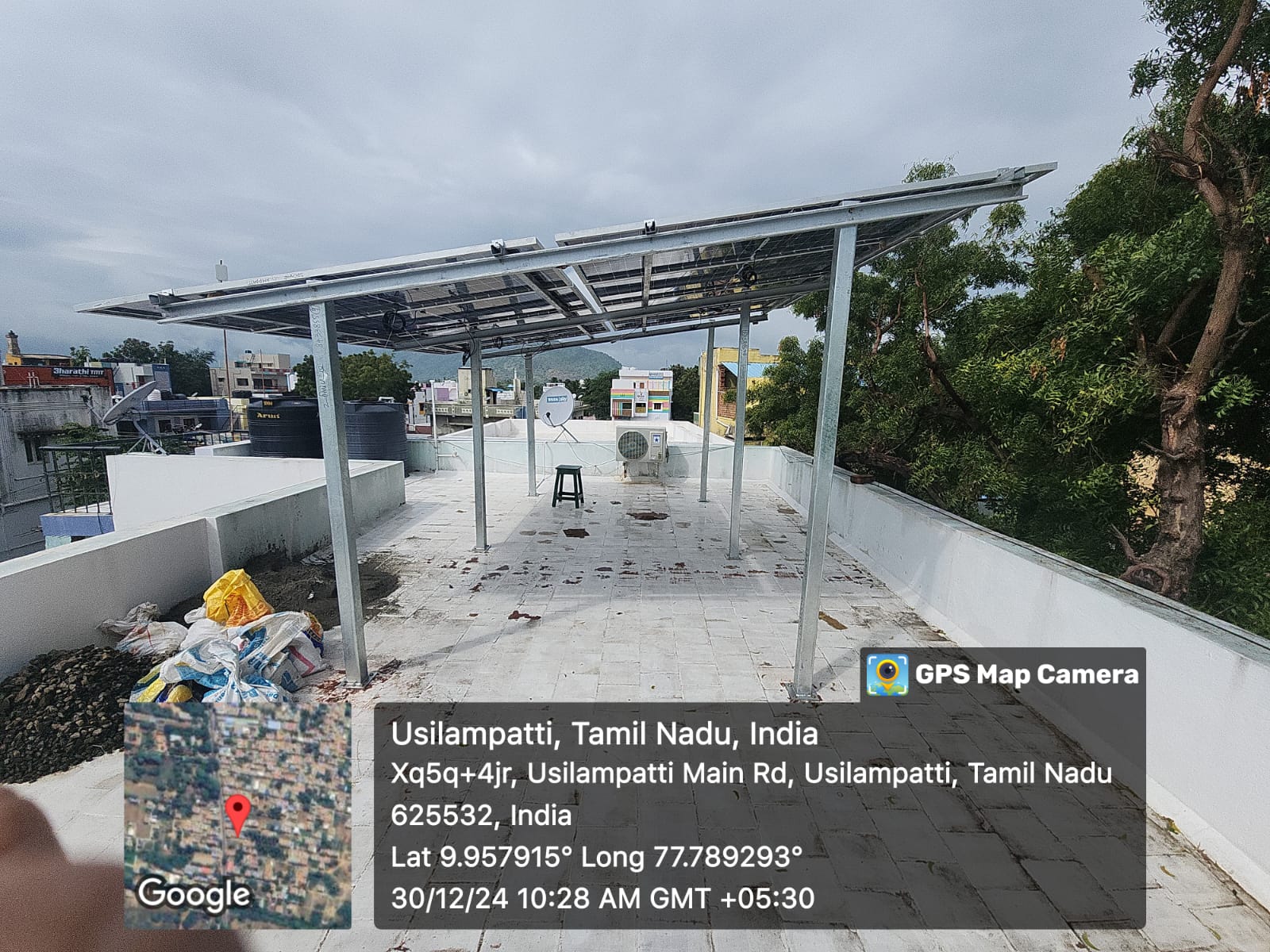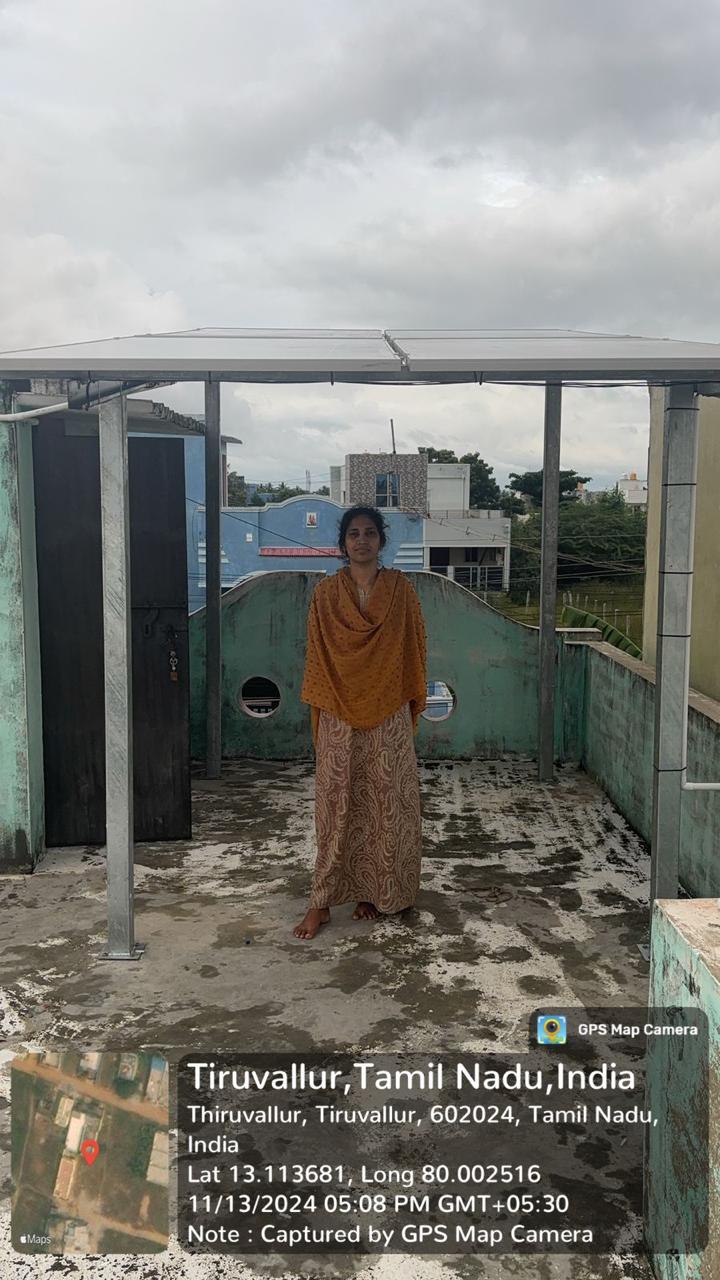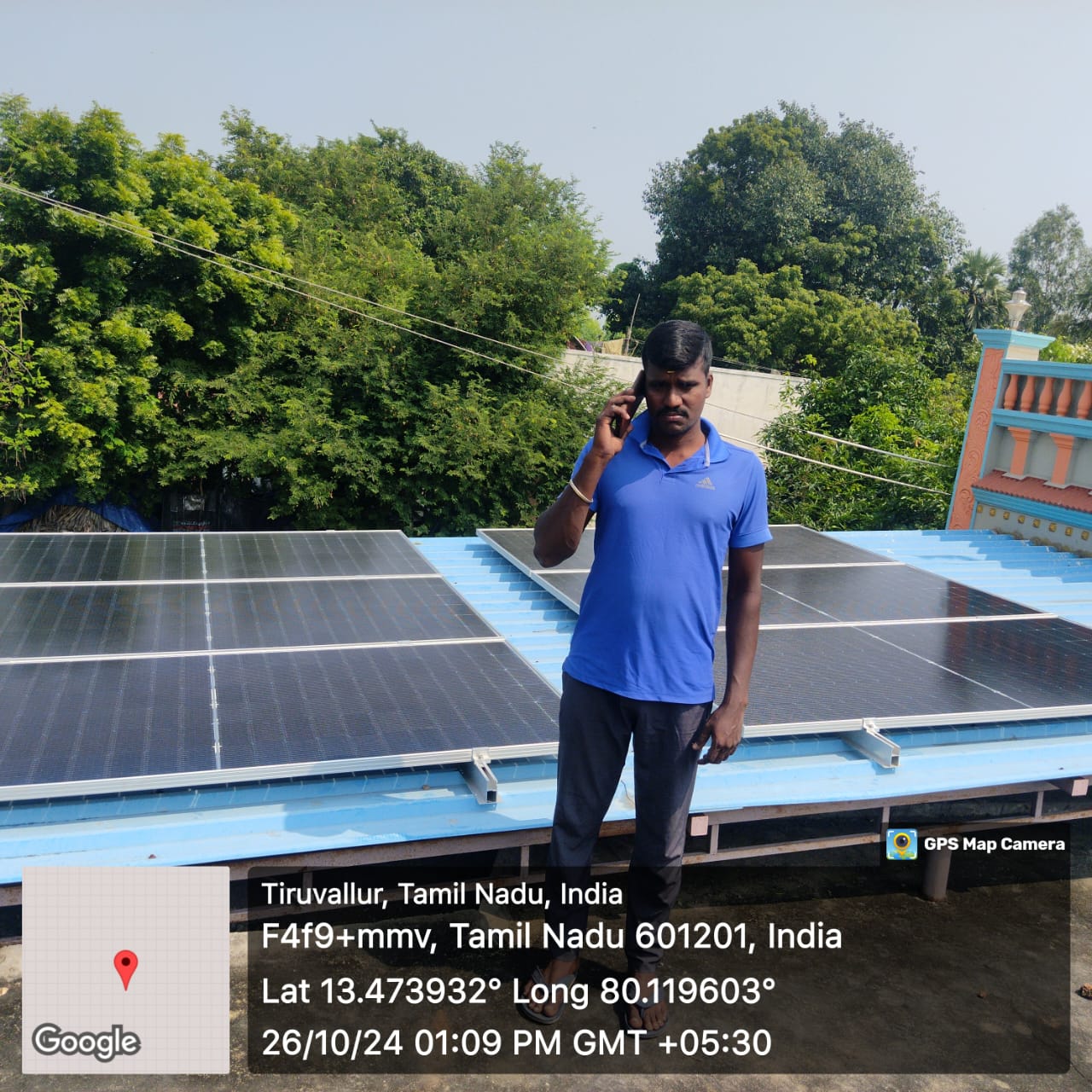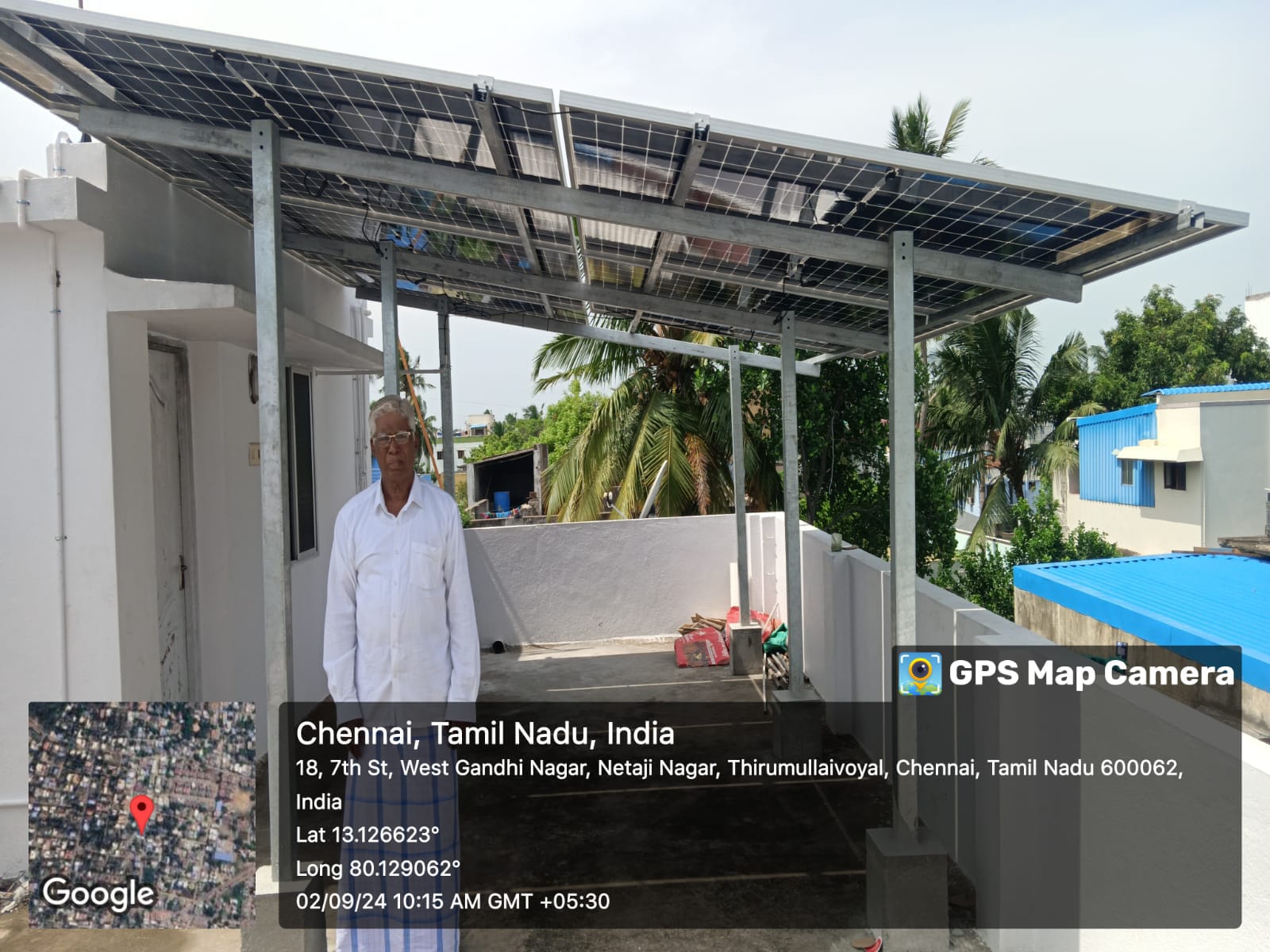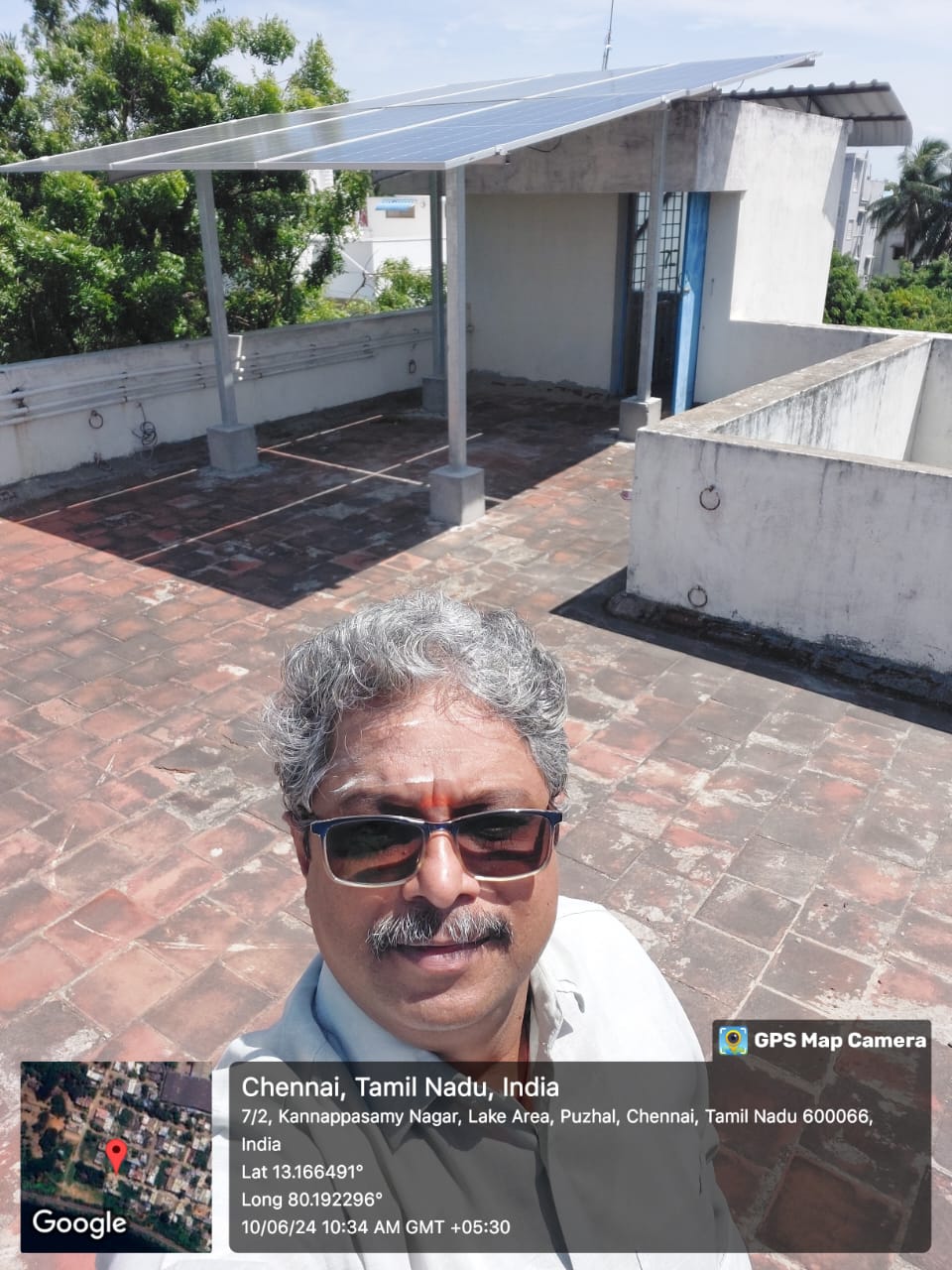

Key highlights at a glance
The Tamil Nadu state top-up announced in September 2026 now sits above PM Surya Ghar. Together they provide ₹35,000 for 1 kW, ₹70,000 for 2 kW and ₹1,00,000 for eligible systems of 3 kW and above. The table below is the short version; the rest of this guide explains eligibility and the application order.
| Item | Detail |
|---|---|
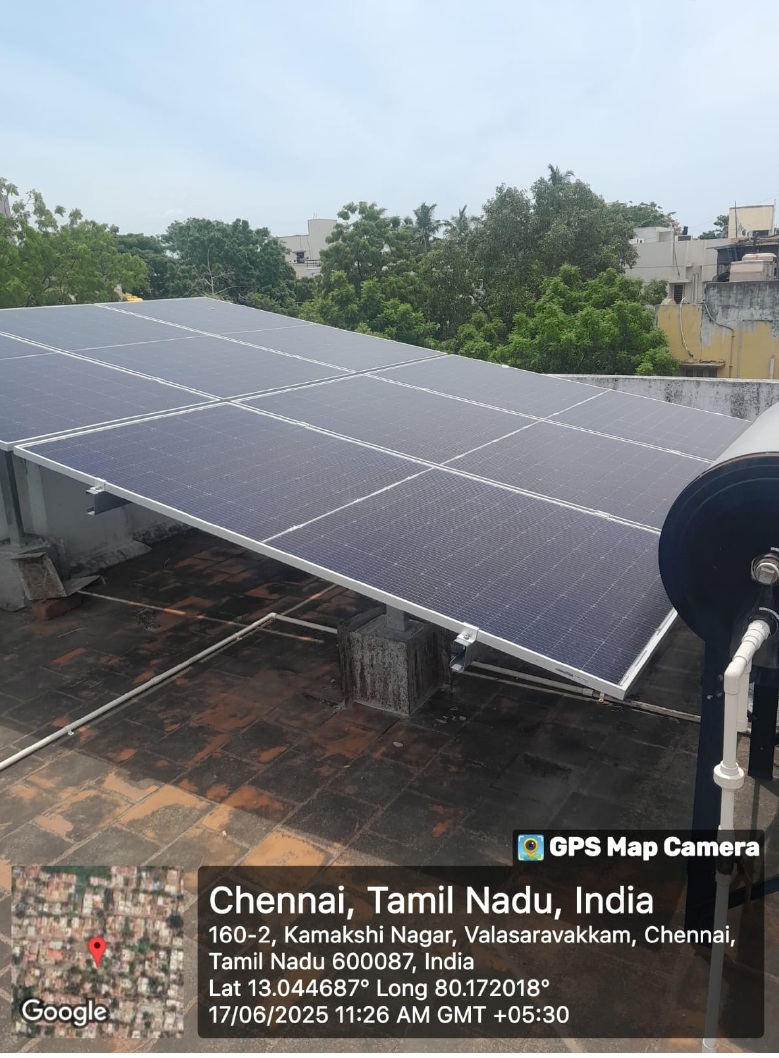
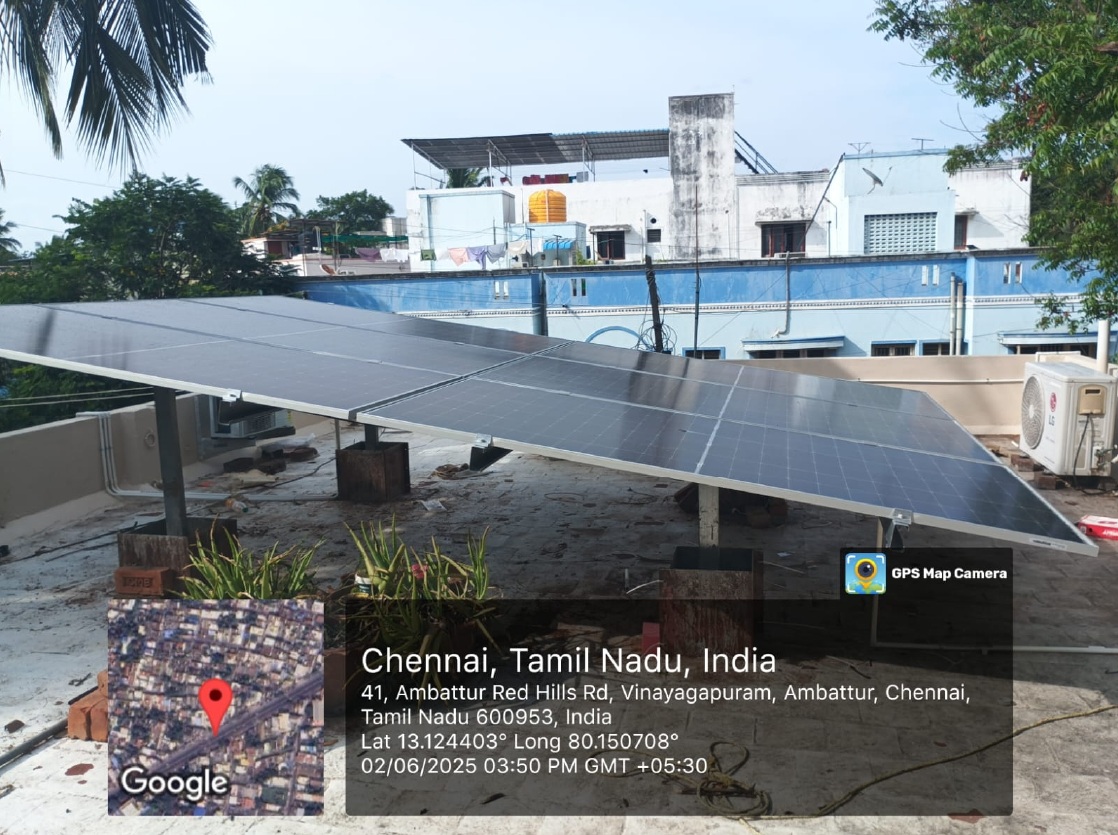
| Central subsidy (PM Surya Ghar) | ₹30,000 / ₹60,000 / ₹78,000 by size, capped at ₹78,000 |
| Tamil Nadu state top-up | ₹5,000 / ₹10,000 / ₹22,000 by size |
| Combined maximum | ₹1,00,000 for 3 kW and above |
| Most common home system | 3 kW — about 360 to 400 units a month |
| Typical 3 kW installed cost | a custom quote |
| Typical down payment | a custom quote to start the order |
| Bank finance | Collateral-free PM Surya Ghar loans from around 6% |
| Subsidy paid to | The beneficiary's bank account, after commissioning |
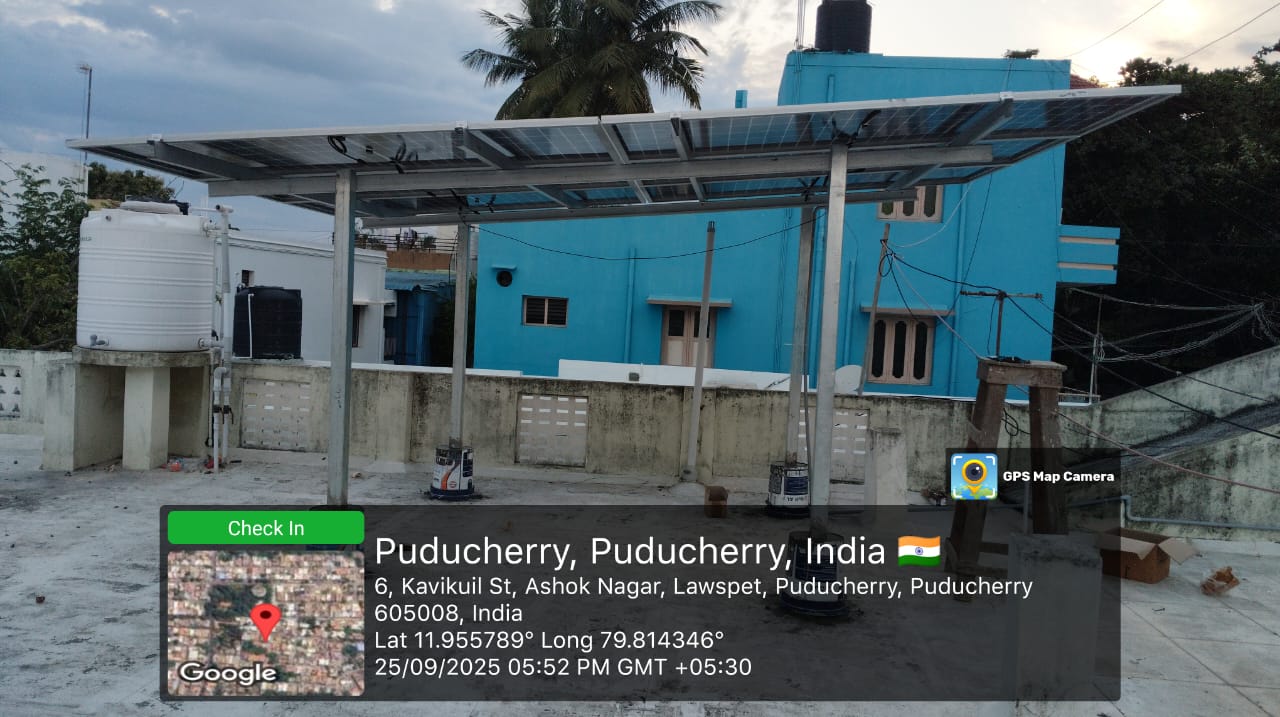
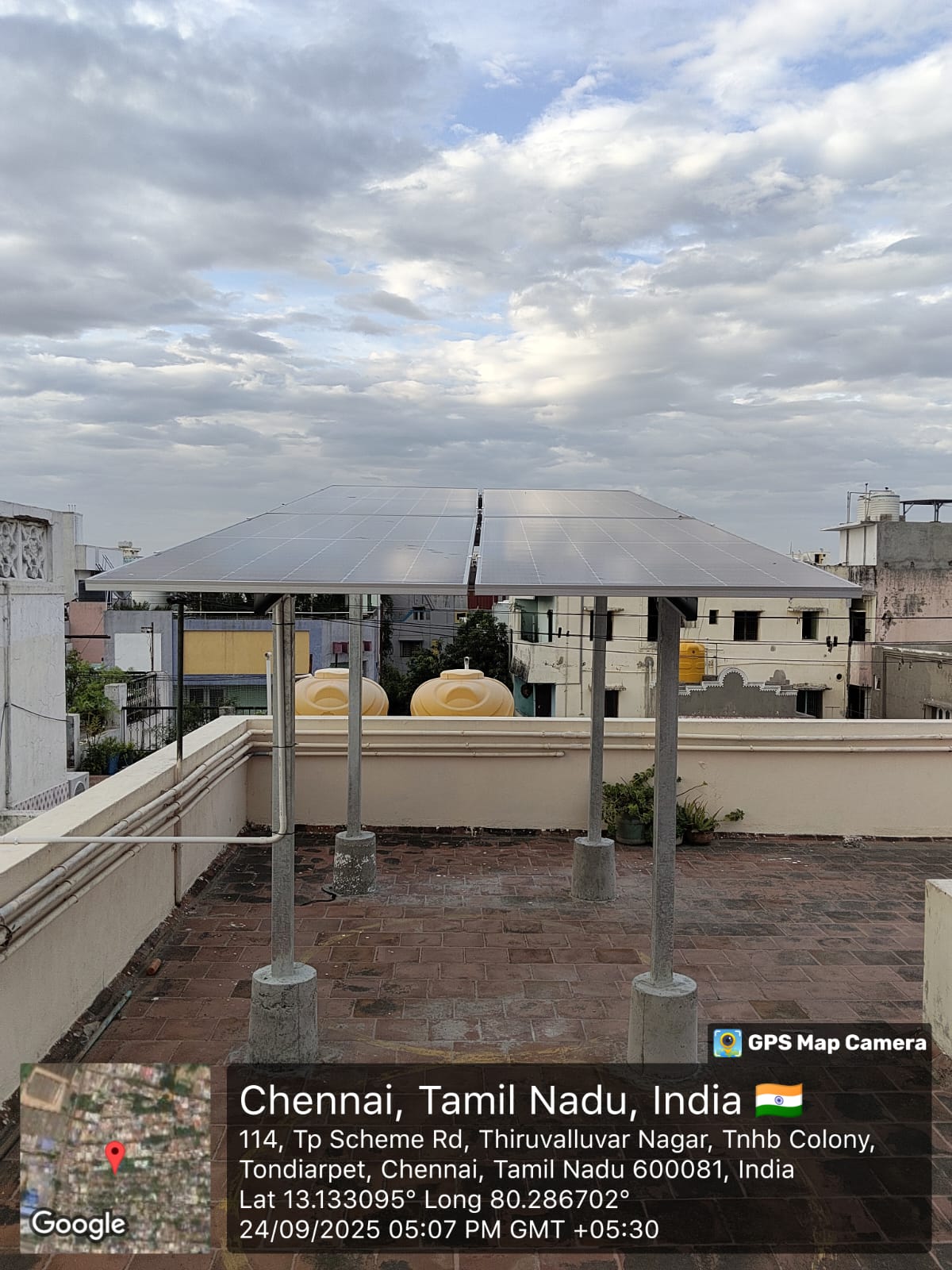
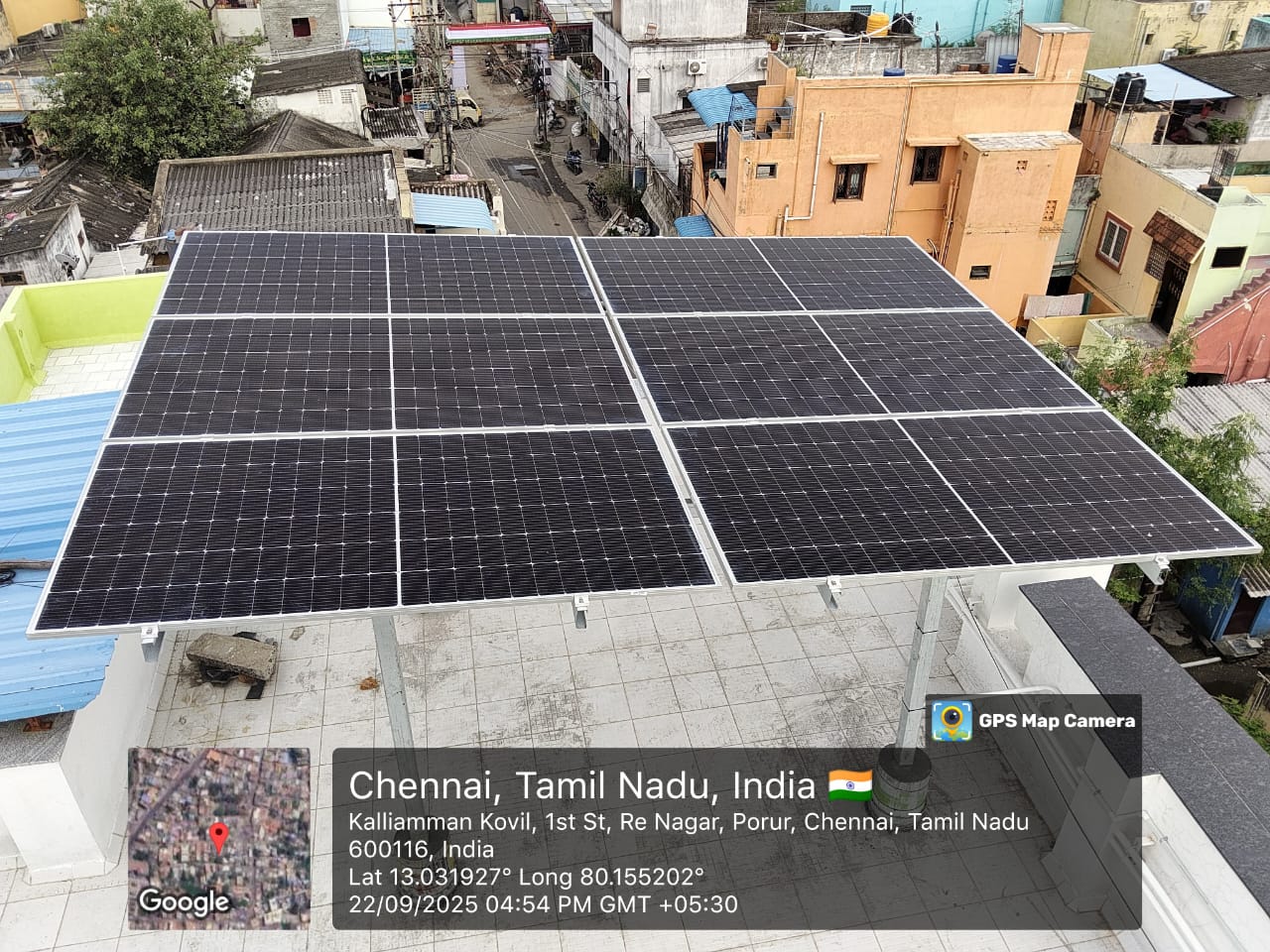
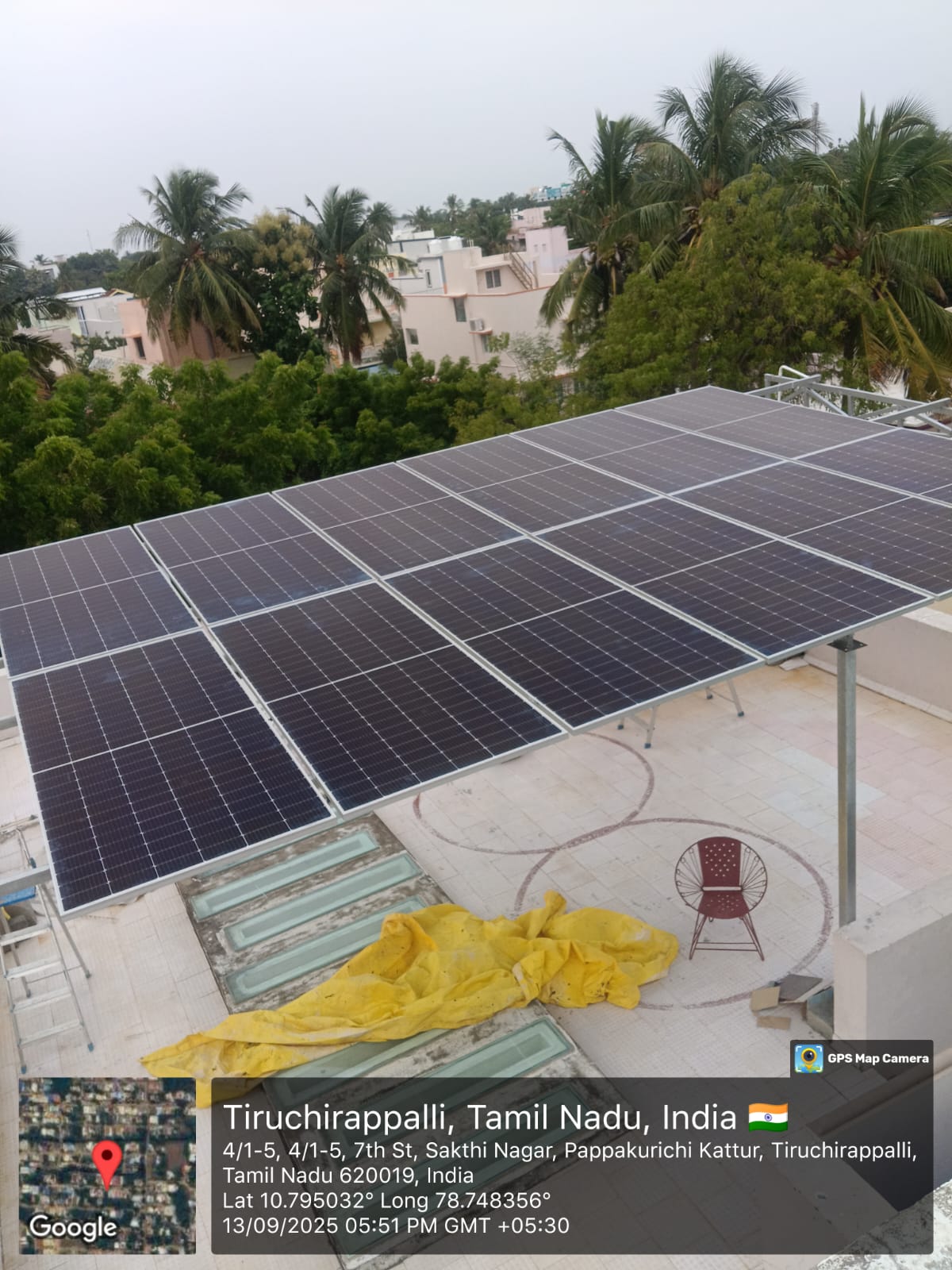
| Physical installation time | 8 to 10 hours |
| TANGEDCO net metering | Usually 2 to 10 days after installation |
| Panel performance warranty | 25 years |
What the central subsidy actually pays
PM Surya Ghar: Muft Bijli Yojana is a Government of India scheme administered by the Ministry of New and Renewable Energy. The critical thing to understand is that the amount is fixed by installed capacity, not by what you paid. The slabs are ₹30,000 for 1 kW, ₹60,000 for 2 kW and ₹78,000 for 3 kW and above — and ₹78,000 is a hard cap, so a 5 kW or 10 kW home system receives exactly the same amount as a 3 kW one.
Because the amount is fixed and the cost is not, the cheaper your quote, the larger the share of it the government covers. That is also why 3 kW is the sweet spot for most Tamil Nadu households: it earns the maximum central assistance, generates roughly 360 to 400 units a month, and clears the most expensive slabs of a domestic TANGEDCO bill. You can model your own numbers with the GenSolar Solar Calculator.
| System size | Central subsidy | Best suited for |
|---|---|---|
| 1 kW | ₹30,000 | Small flats, low-consumption homes |
| 2 kW | ₹60,000 | Typical 2BHK households |
| 3 kW and above | ₹78,000 (capped) | Independent houses, villas, higher-slab bills |
How state assistance stacks on top
Tamil Nadu's state assistance is additional to the central amount rather than a replacement. It contributes ₹5,000 for 1 kW, ₹10,000 for 2 kW and ₹22,000 for 3 kW and above. That brings the maximum combined support to ₹1,00,000 for an eligible residential installation.
Applications begin through the dedicated Tamil Nadu online portal on 21 September 2026. The combined amount is credited to the beneficiary's bank account 7 to 30 days after installation and completion of the required checks. GenSolar states central and state benefits separately in writing and files both applications using consistent consumer and installation records.
- Central assistance is fixed and reliable — ₹78,000 for 3 kW and above
- Tamil Nadu state assistance is additional, not a replacement
- Both are paid to the beneficiary, never to the installer
- Applications start on the dedicated Tamil Nadu portal on 21 September 2026
Who is eligible
The scheme is for residential electricity consumers. You need a domestic TANGEDCO service connection, ownership of the roof or exclusive rights over it, an Aadhaar, and a bank account for direct benefit transfer. The modules must be ALMM-listed and the work must be done through a registered vendor — non-ALMM panels disqualify the whole application, which is the hidden cost inside an unusually cheap quote.
The single most common reason Tamil Nadu applications get returned is a mismatch between the portal applicant and the name on the electricity service connection. If the connection is still in a parent's or a previous owner's name, either file the application in that name or complete a name transfer at the TANGEDCO section office before you start.
- Residential TANGEDCO service connection
- Roof owned or exclusively assigned to you
- Applicant name matching the service connection
- ALMM-listed modules through a registered vendor
- No prior central subsidy claimed on the same connection
The application sequence that gets cleared first time
Order matters more than paperwork volume. Register on the national portal with your DISCOM and service number, submit the feasibility application with a recent bill, and wait for approval — usually 2 to 5 business days. Only then install, through a registered vendor. Upload the installation record, let TANGEDCO fix the bidirectional meter and complete the inspection, and finally submit your bank details for the direct benefit transfer.
Installing before feasibility approval is the classic mistake. It does not speed anything up, and it can invalidate the claim entirely. Once net metering is complete, the subsidy is typically credited to the beneficiary's account within a few weeks.
- Step 1 — Register on the national portal with your TANGEDCO service number
- Step 2 — Submit feasibility application with a recent electricity bill
- Step 3 — Wait for approval (usually 2 to 5 business days)
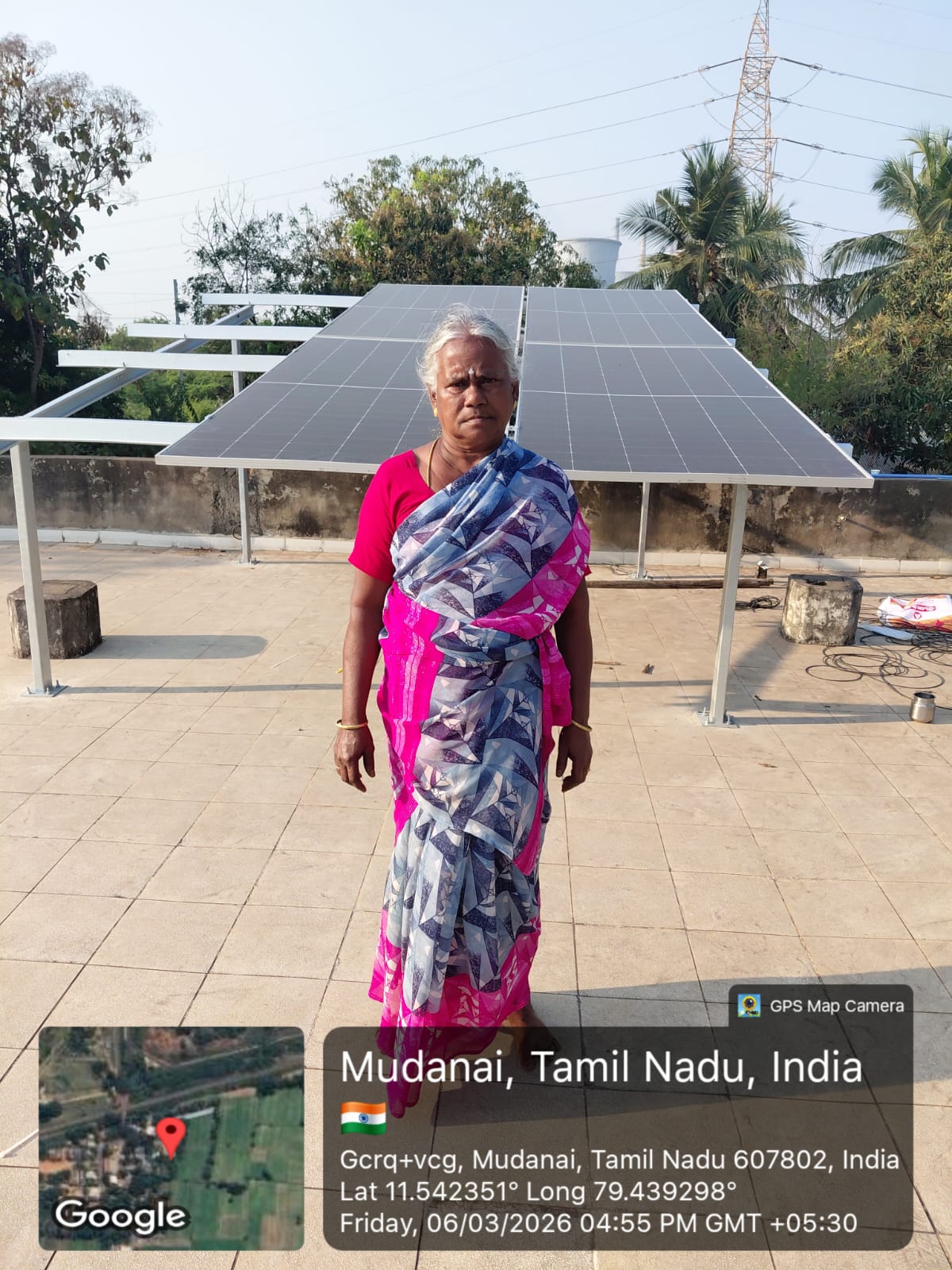
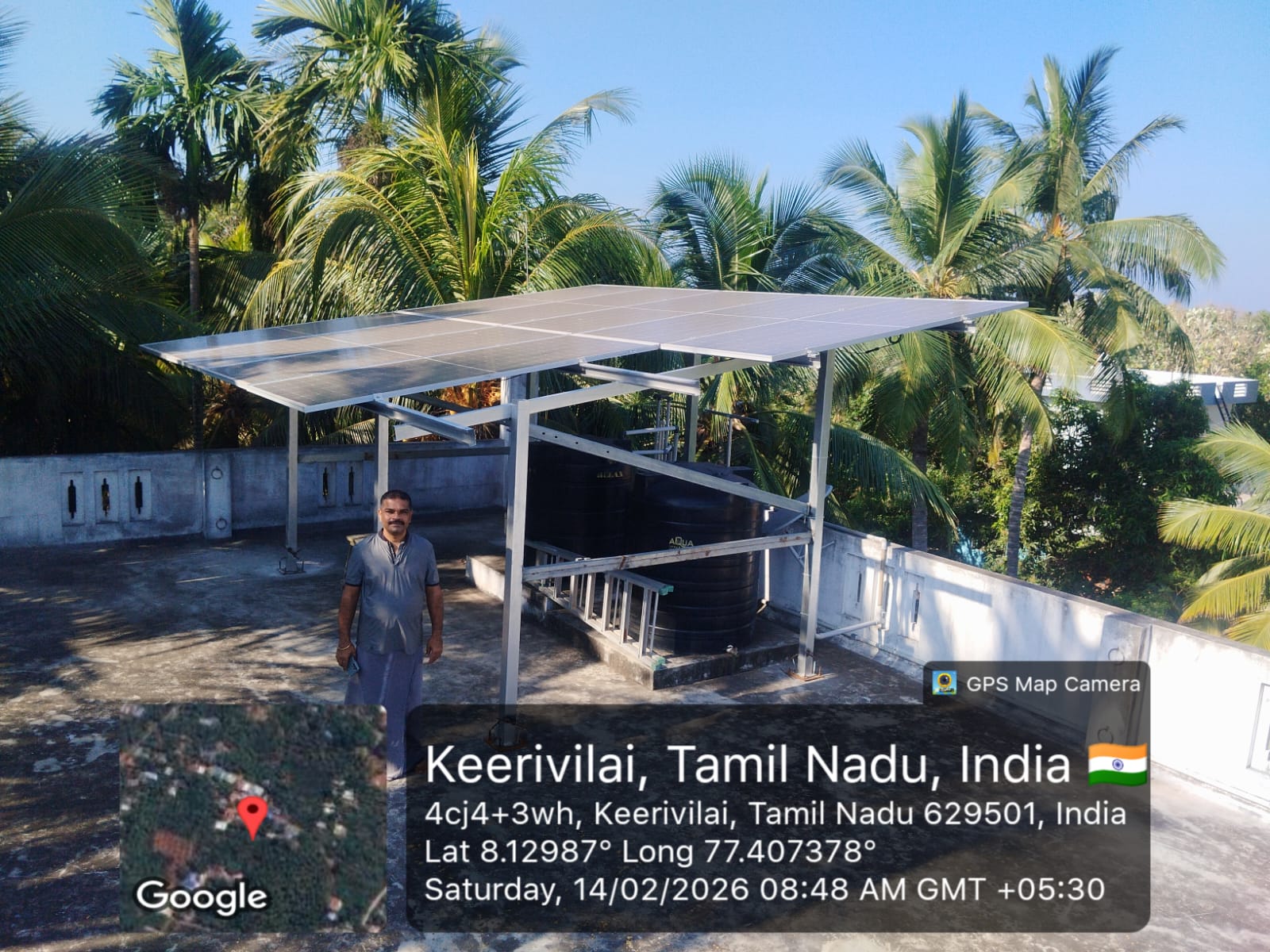
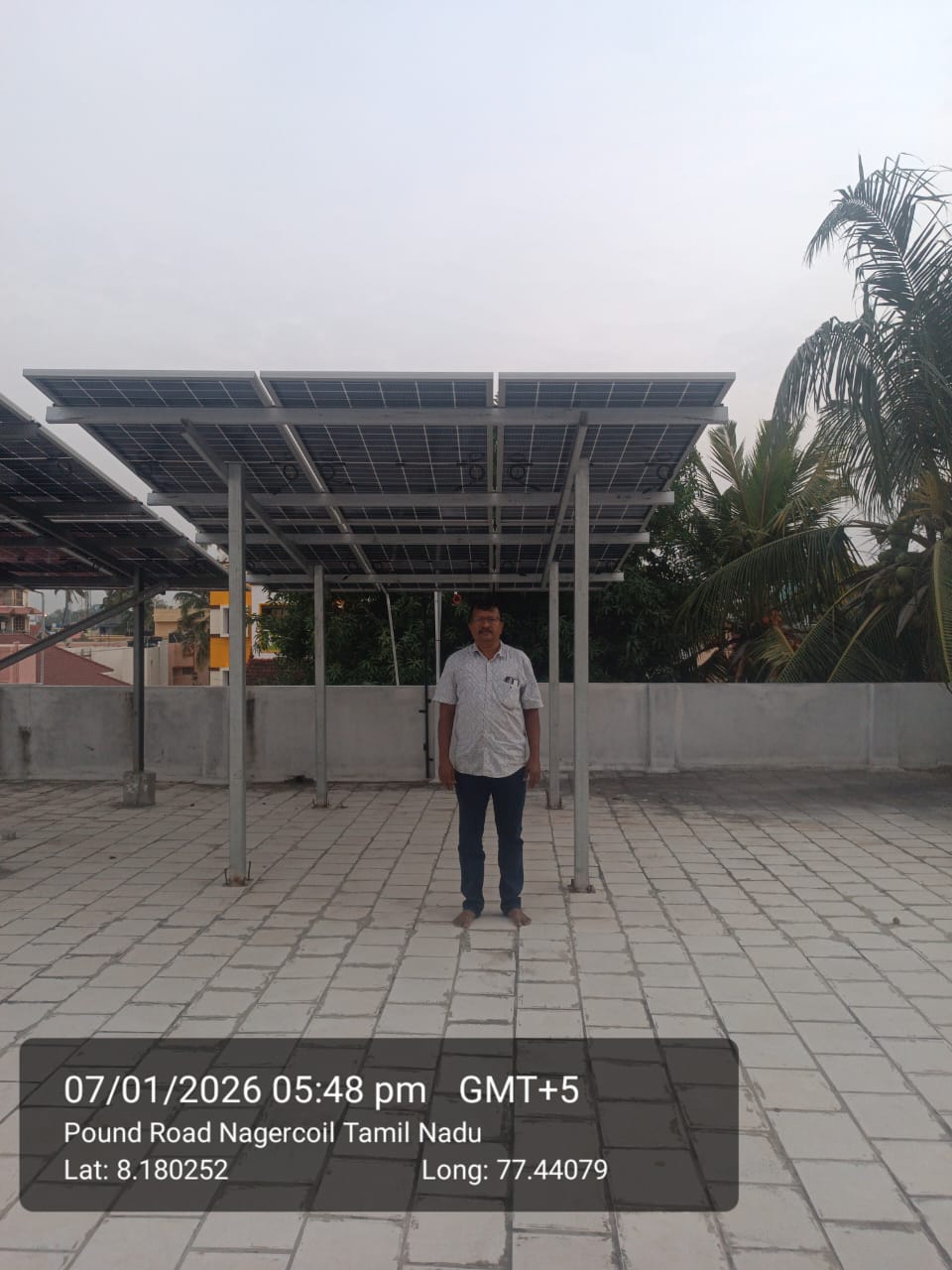
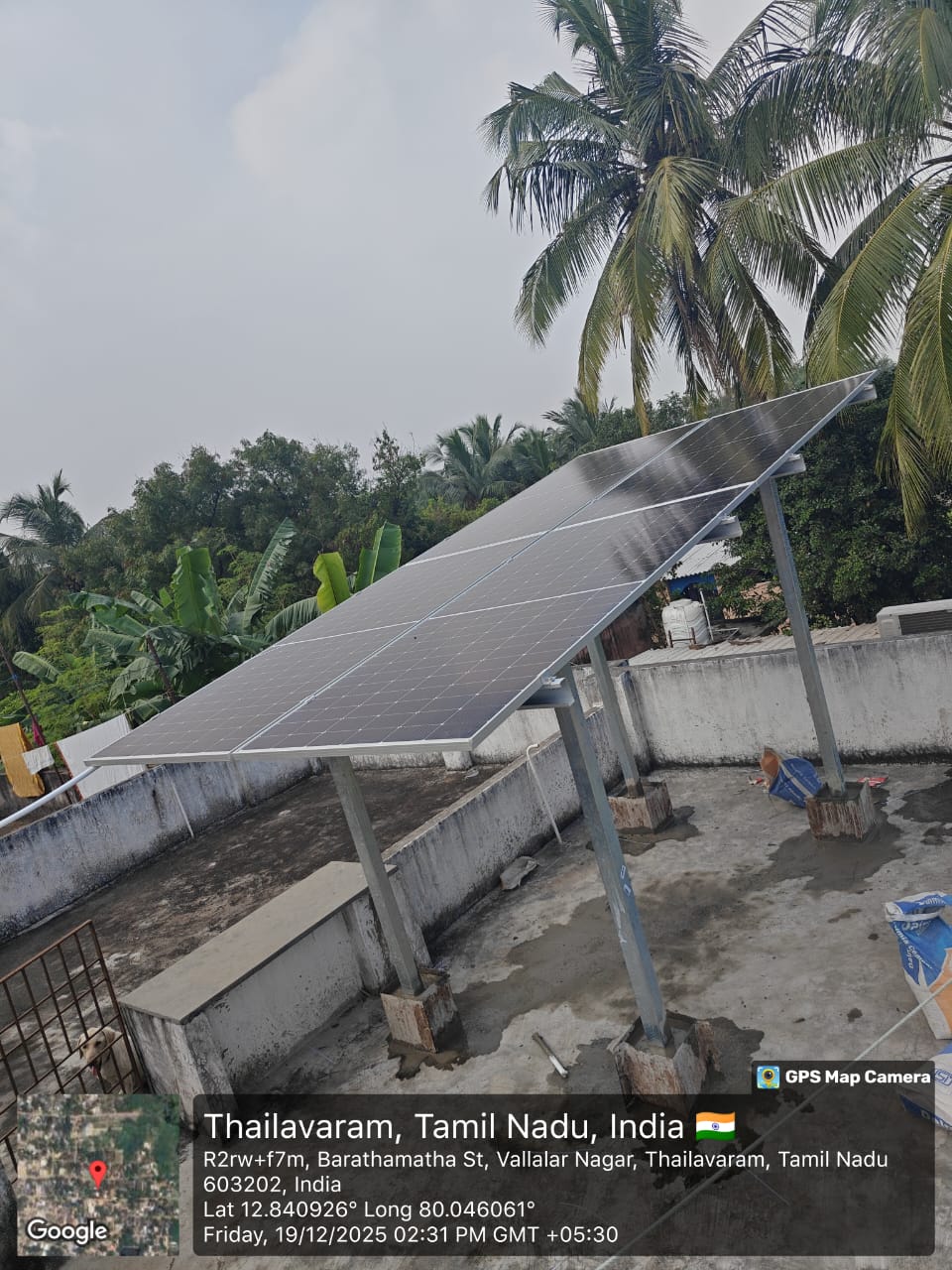
- Step 4 — Install through a registered vendor (8 to 10 hours on site)
- Step 5 — Upload the installation record on the portal
- Step 6 — TANGEDCO inspection and bidirectional meter fixing (2 to 10 days)
- Step 7 — Submit bank details; subsidy credited directly to you
Documents to keep ready
Have these scanned before you begin and the portal stage takes an afternoon rather than a fortnight: a recent TANGEDCO bill showing the service number and consumer name, Aadhaar of the applicant, a cancelled cheque or bank passbook page for the DBT account, and proof of roof ownership such as a property tax receipt or sale deed. After installation you will also need the vendor's installation certificate and the module and inverter invoices.
What it actually costs you out of pocket
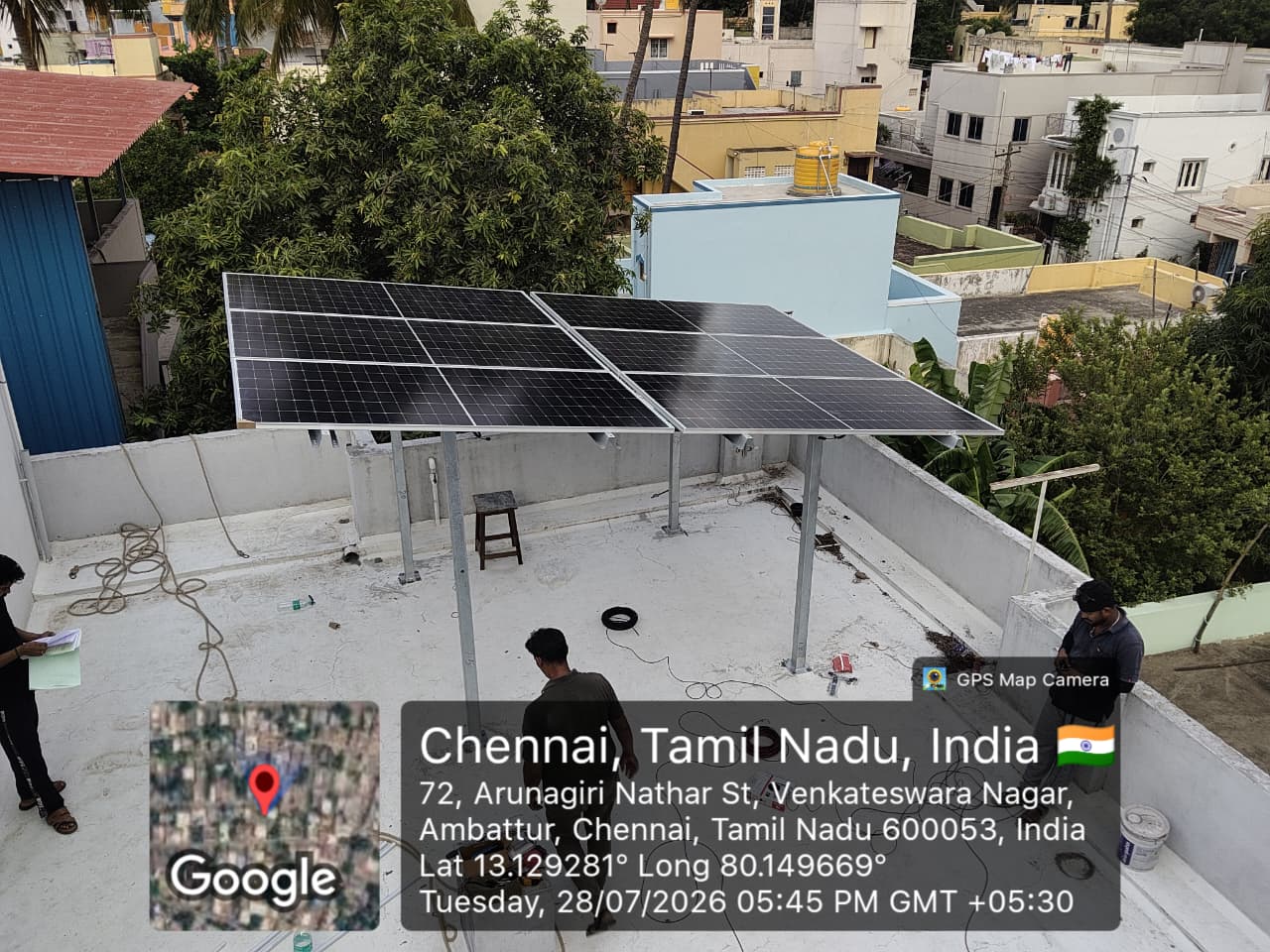
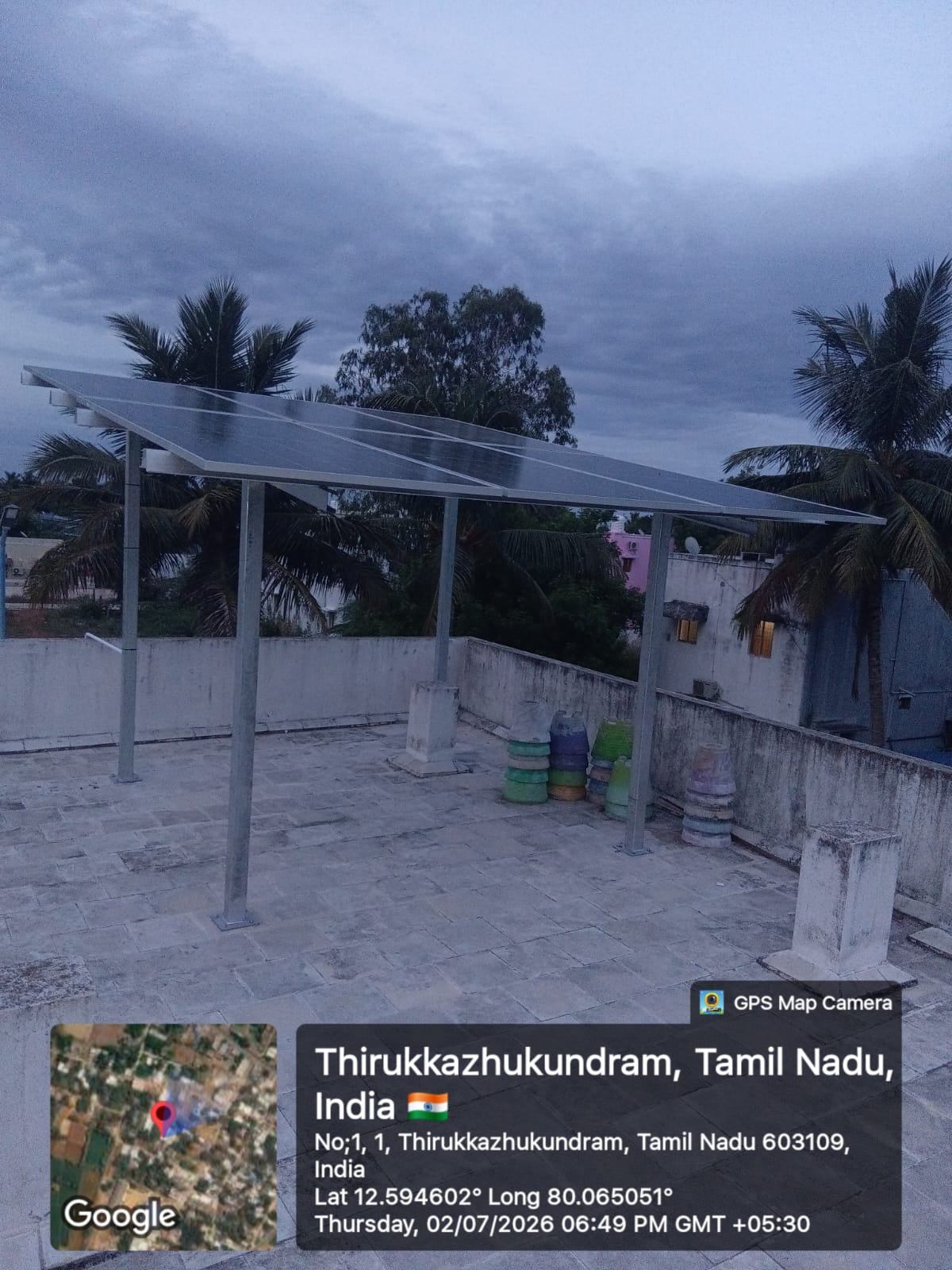
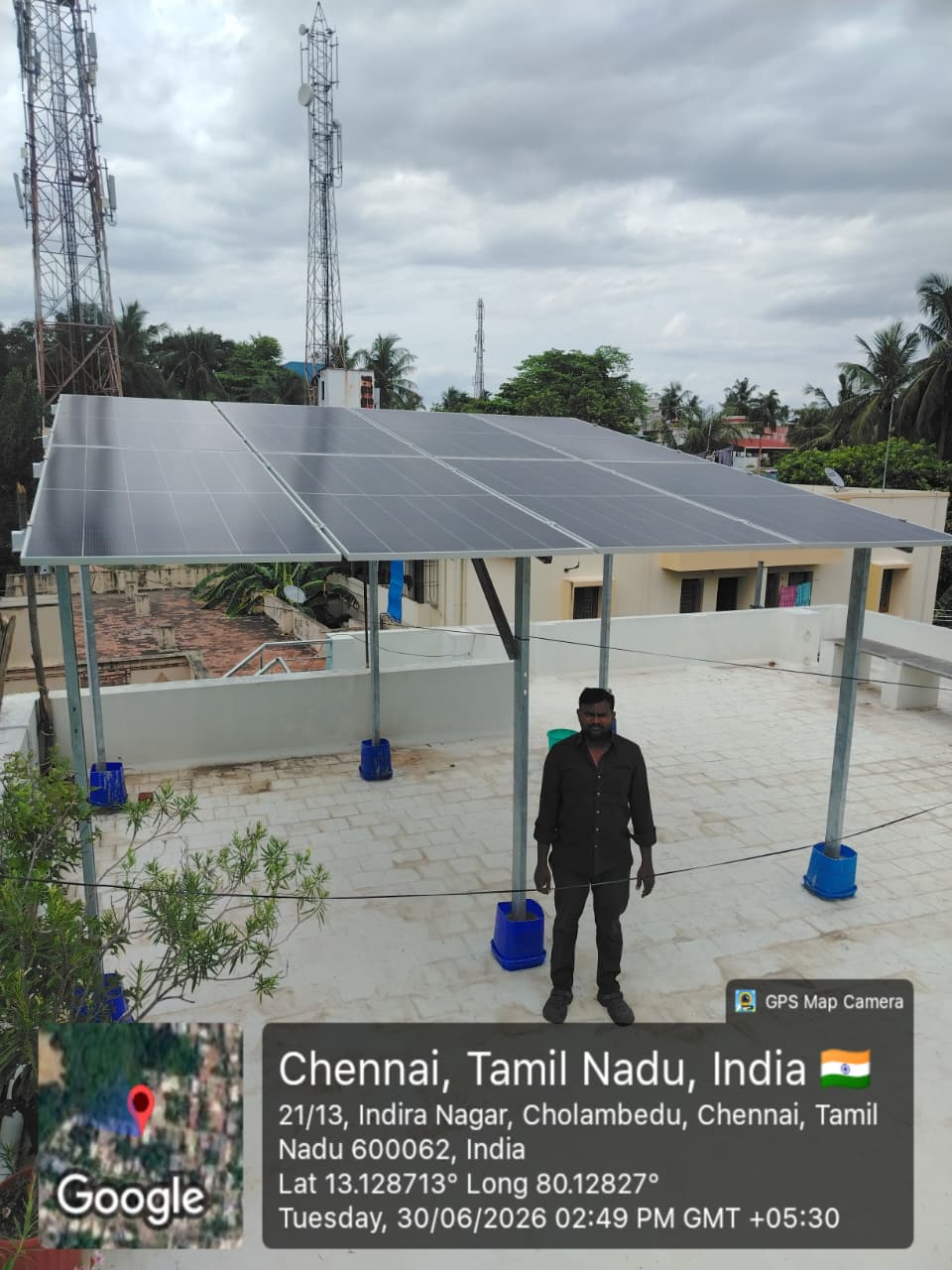
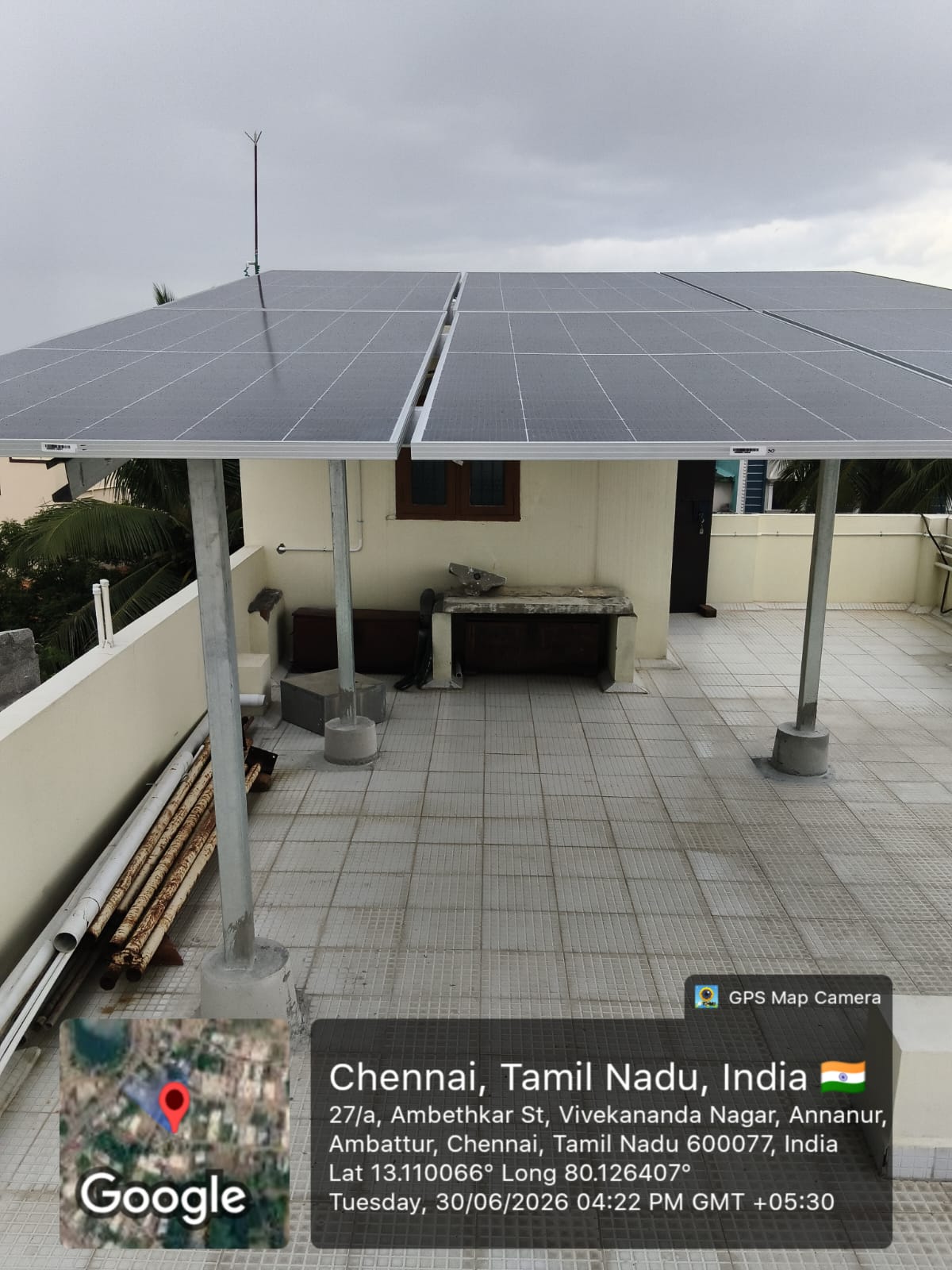
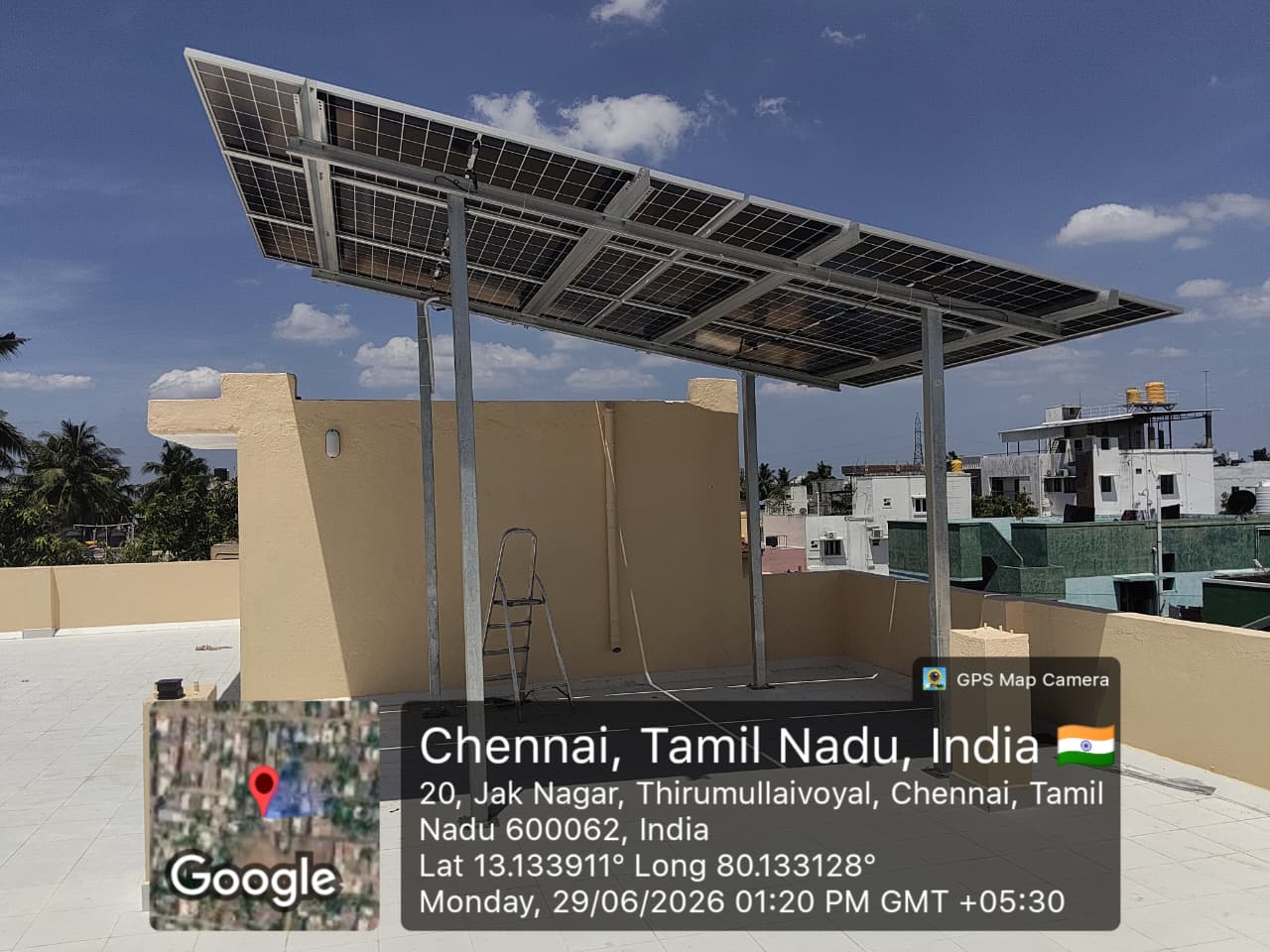
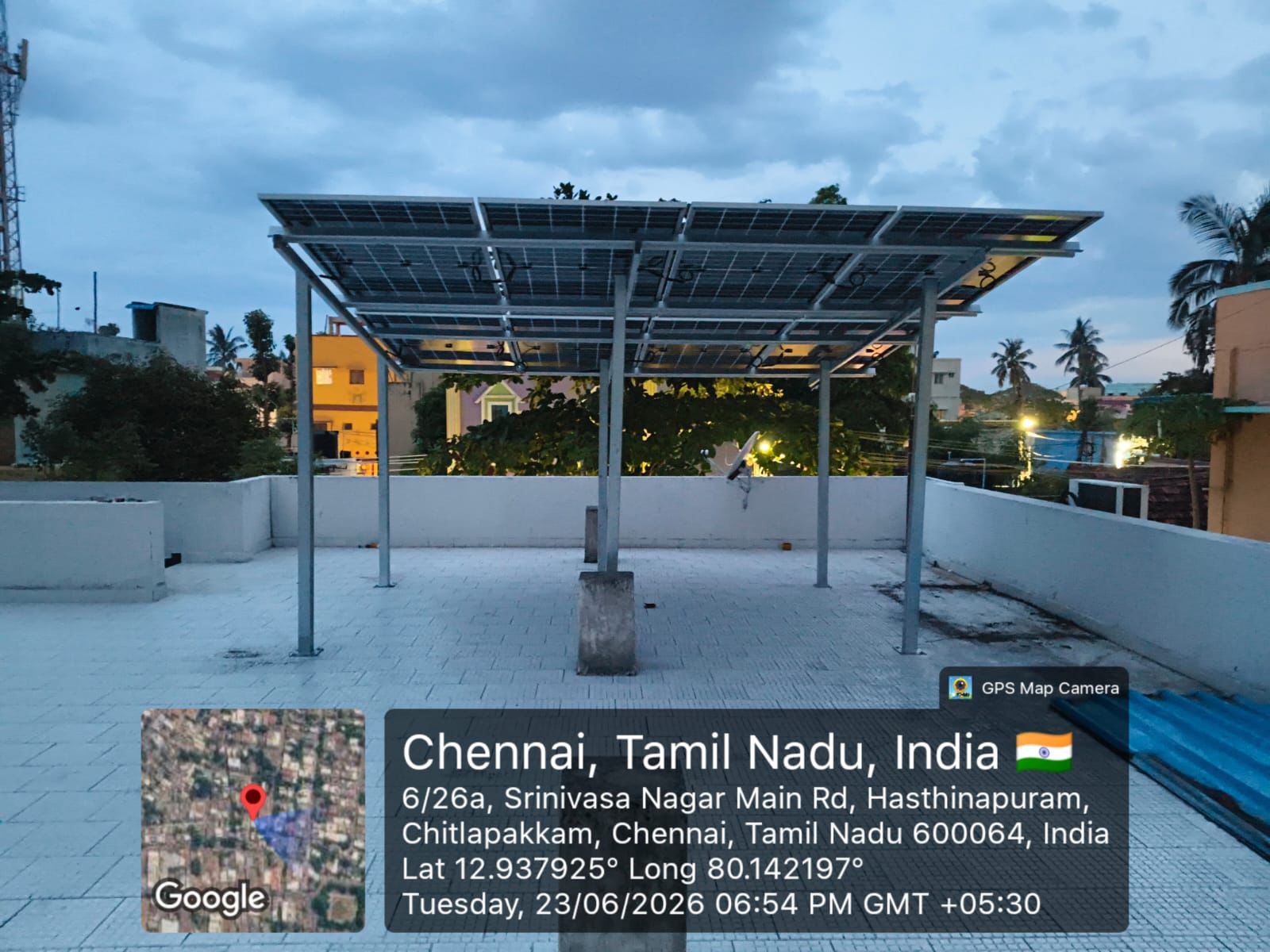
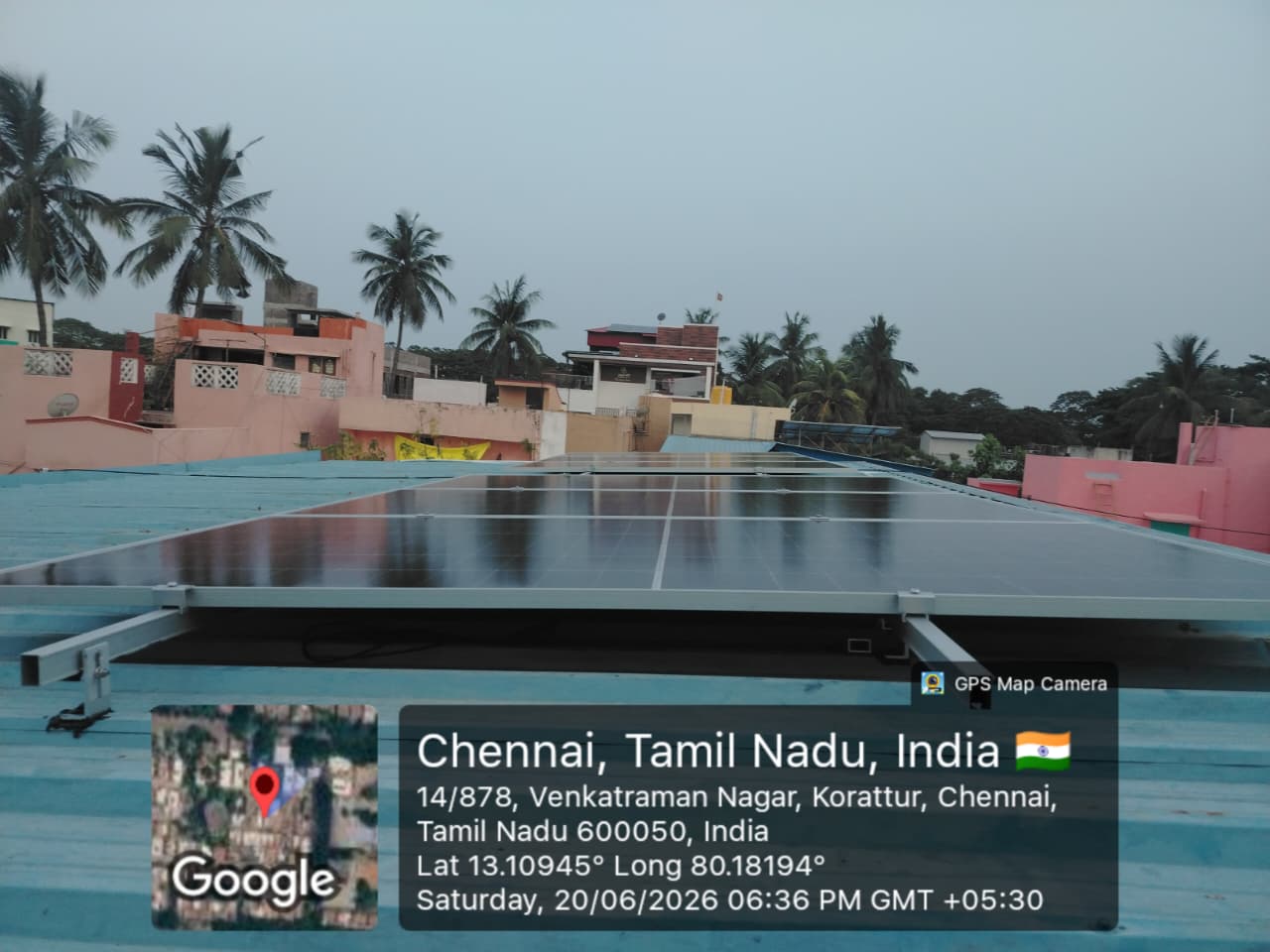
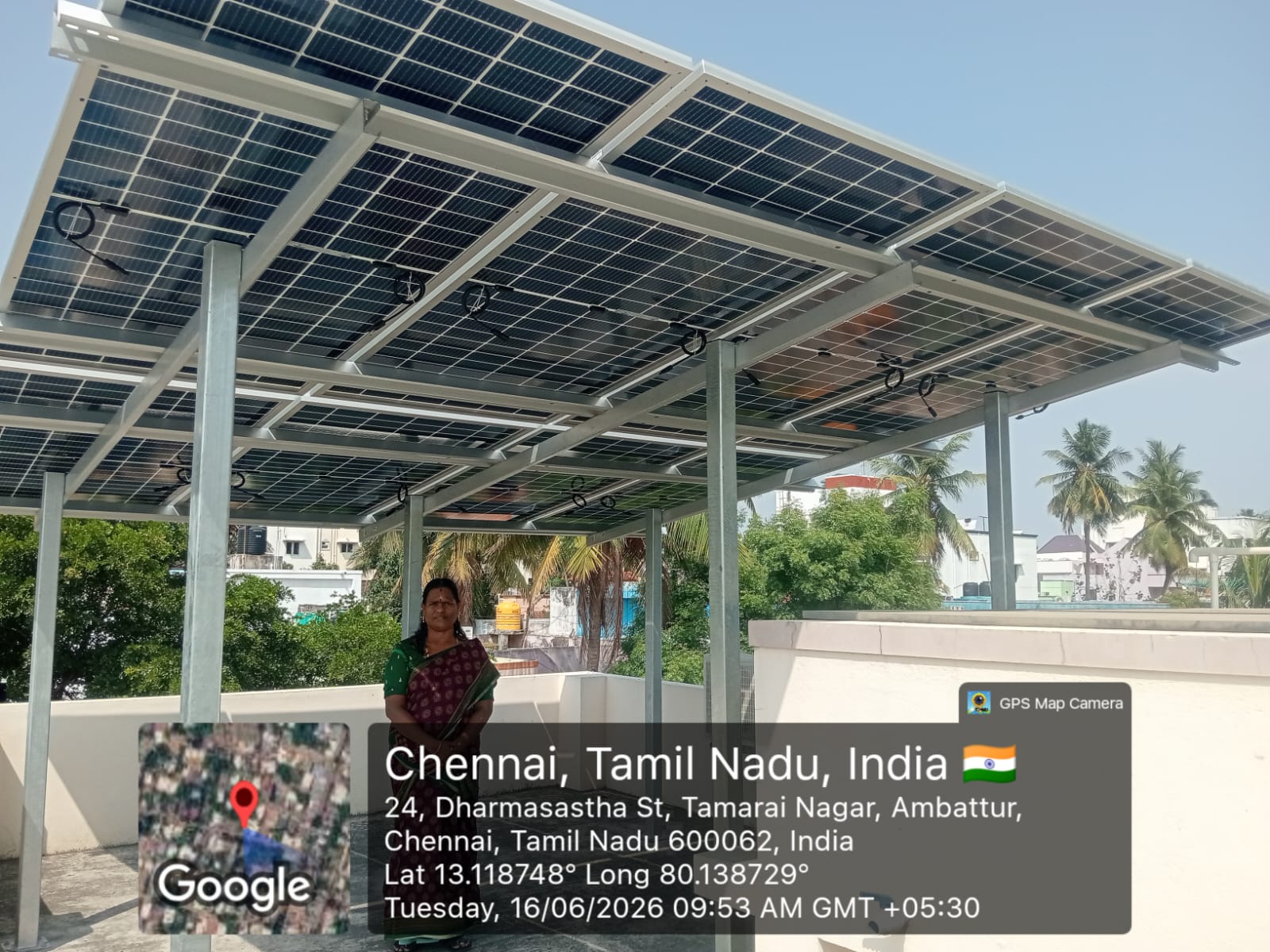
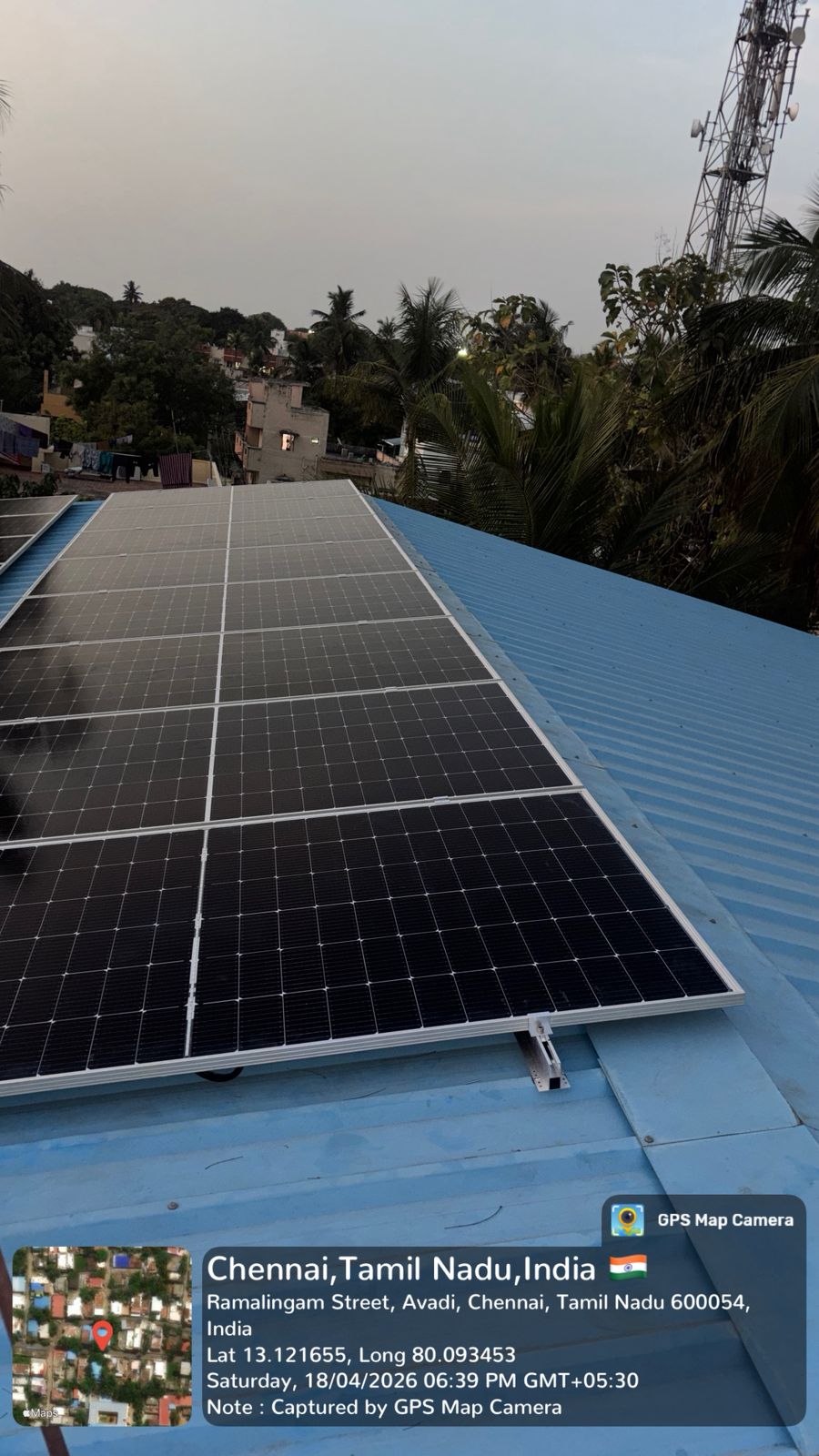
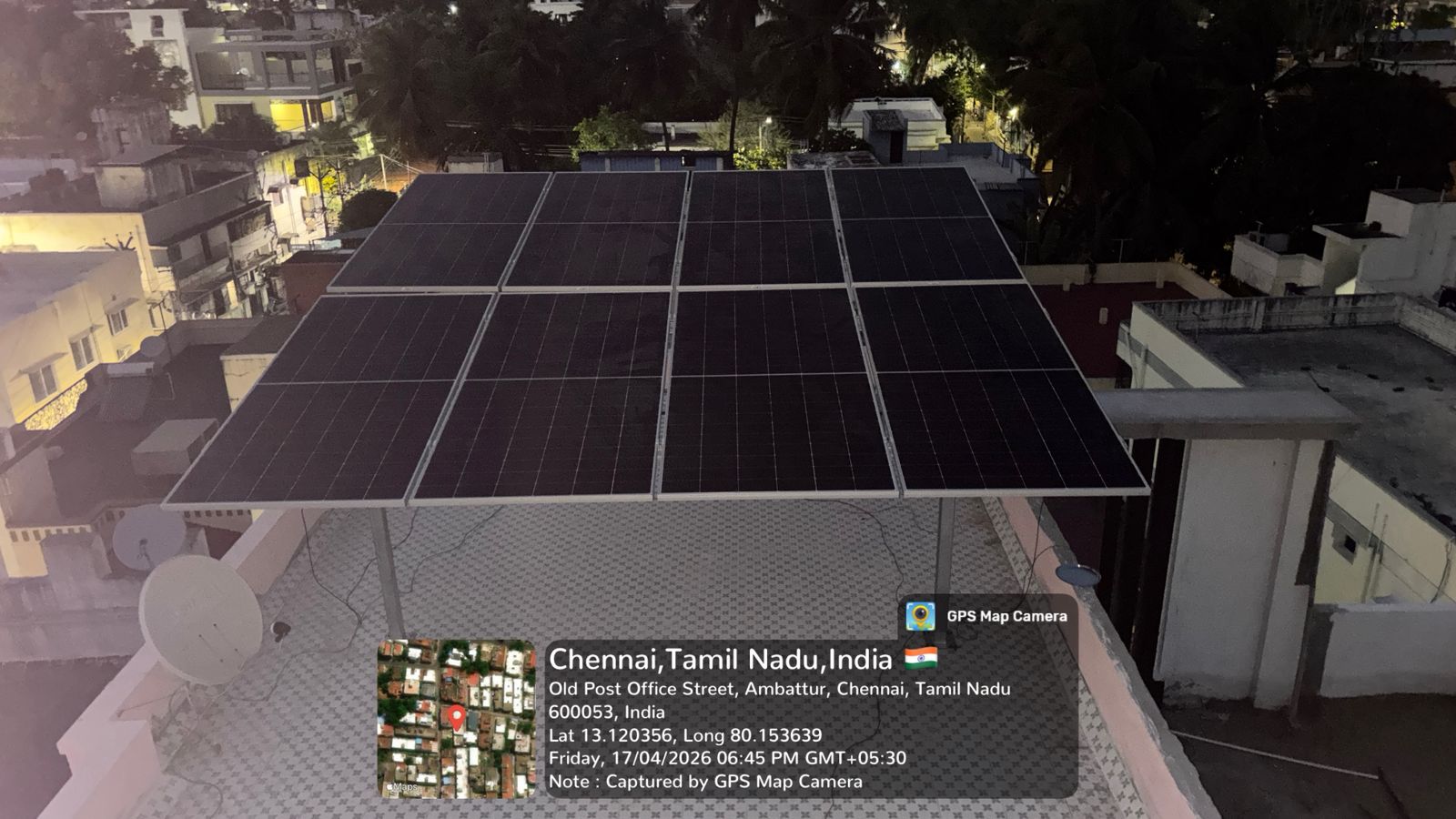
Take a 3 kW system quoted at a custom quote fully installed. A typical GenSolar customer pays a a custom quote down payment to begin the order and finances the balance through a collateral-free PM Surya Ghar bank loan at around 6% interest. Installation takes 8 to 10 hours on site, and TANGEDCO net metering follows in roughly 2 to 10 days.
After commissioning, the ₹78,000 central subsidy lands in the customer's own bank account. Most customers prepay it straight into the loan, which sharply reduces the remaining EMI — often to less than what they were paying TANGEDCO every month. Where state assistance also applies, the remaining balance falls further again. Generation, and therefore the bill saving, starts on the day the system is commissioned, usually before the subsidy is even credited.
What GenSolar handles for you
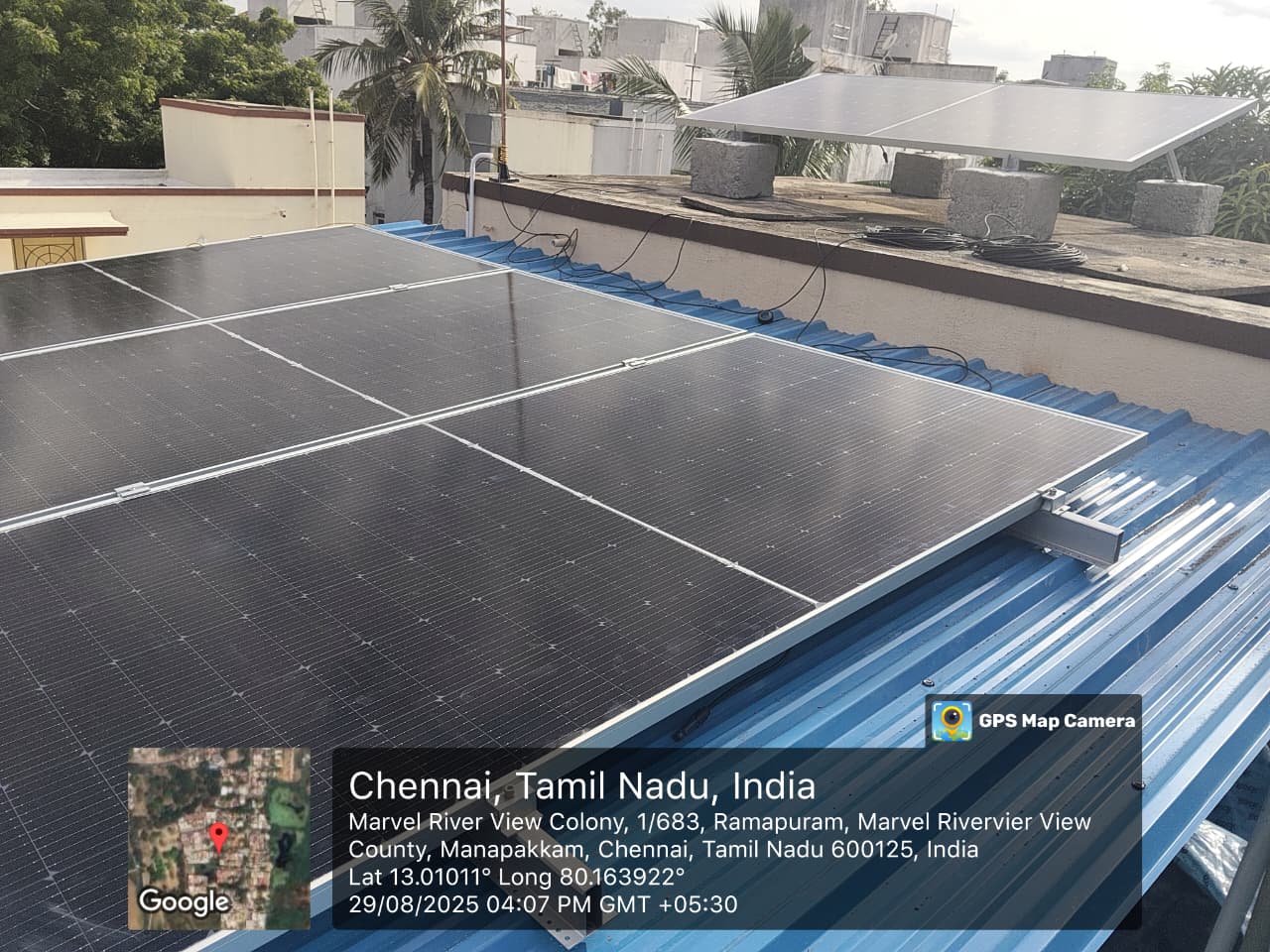
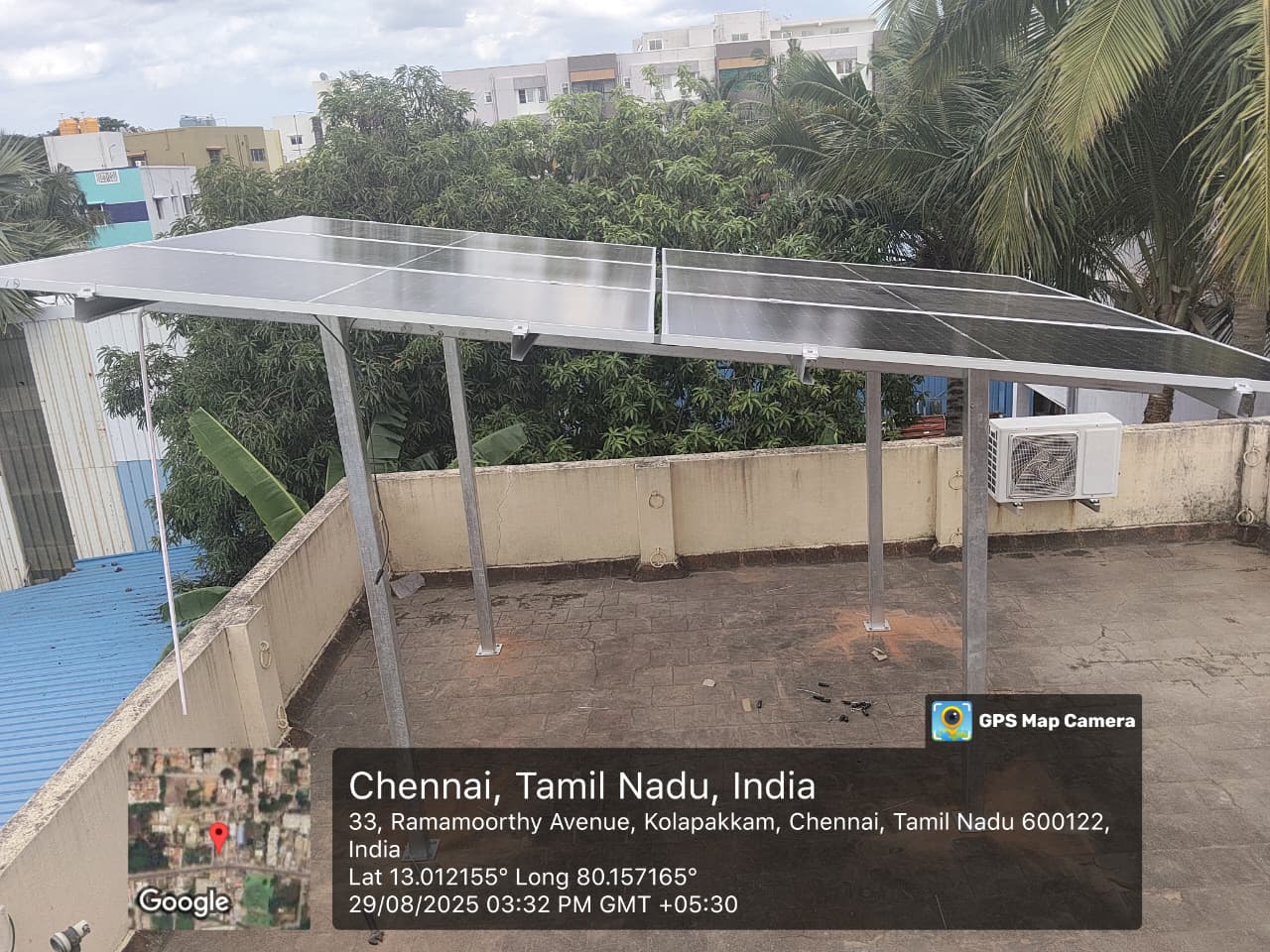
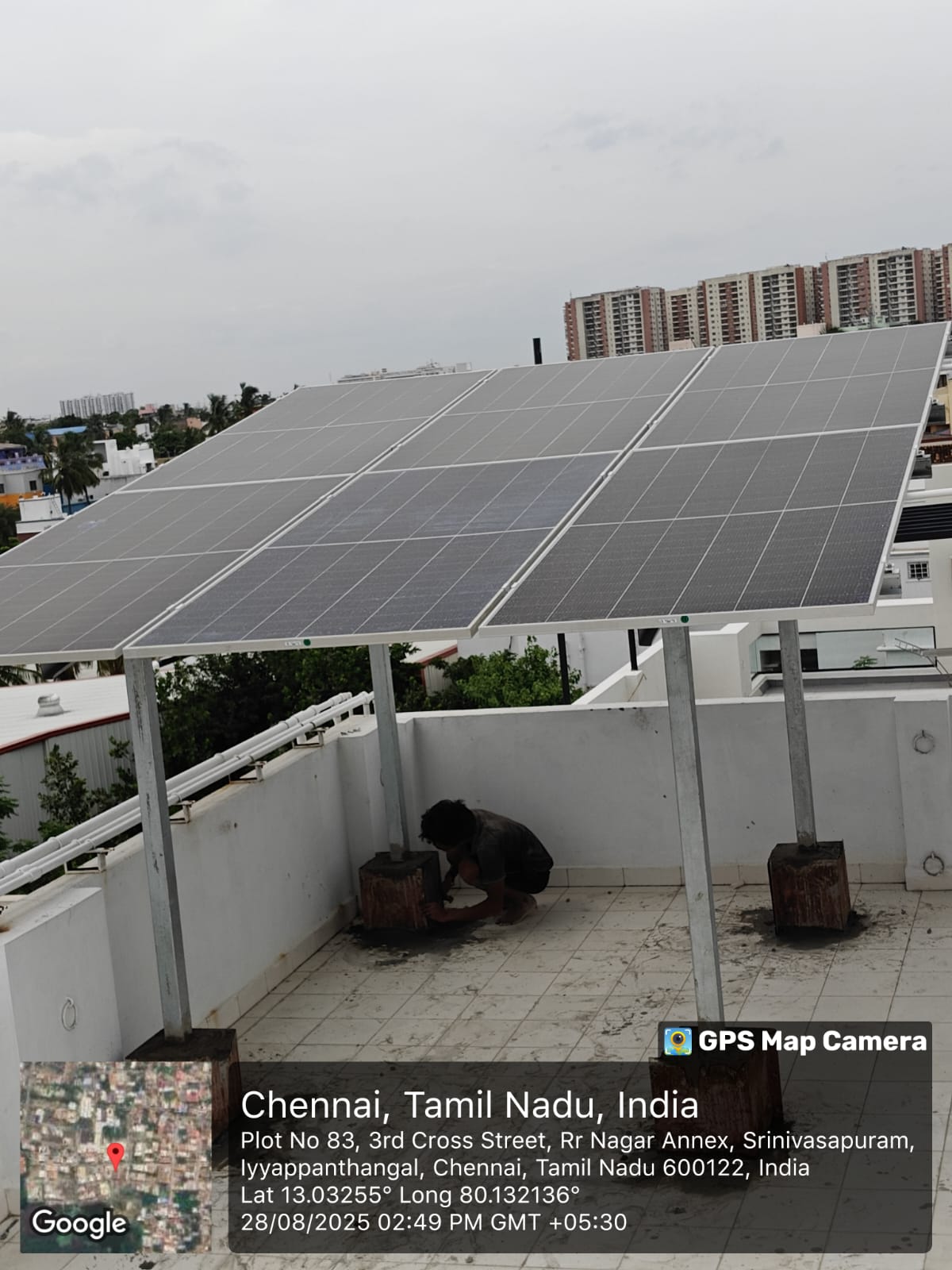
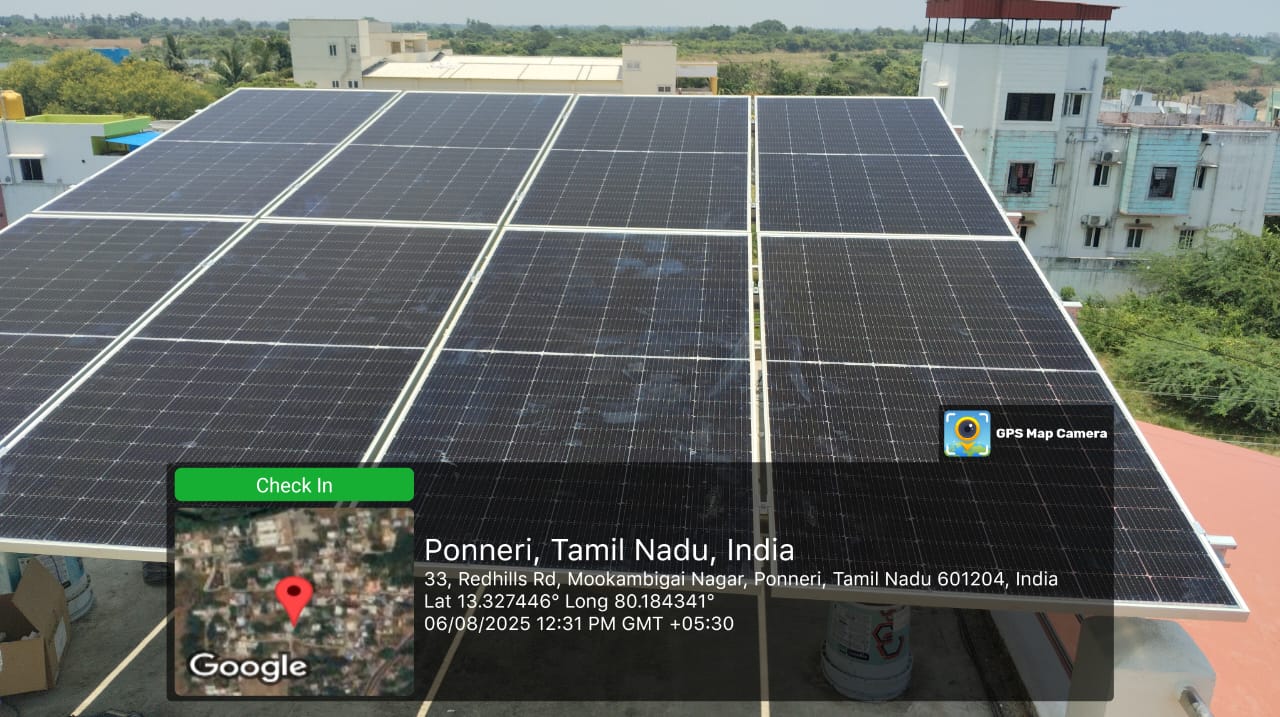
We file the portal application, prepare and follow the TANGEDCO net-metering file through the section office, install with our own in-house crews rather than sub-contracted labour, register the module and inverter warranties in your name, and review your first two post-commissioning bills to make sure the tariff configuration was actually updated — a step that is skipped surprisingly often and leaves the bill unchanged despite a working plant.
Send us a photo of your last electricity bill and your roof on 8939102517 and you will have an indicative quote within two hours, with the claimable subsidy stated separately from the price.
Frequently asked questions
How much solar subsidy can I get in Tamil Nadu in 2026?
The combined subsidy is ₹35,000 for 1 kW, ₹70,000 for 2 kW and ₹1,00,000 for 3 kW and above. The maximum combines ₹78,000 under PM Surya Ghar with Tamil Nadu's ₹22,000 state top-up.
Is the subsidy paid to me or to the installer?
Directly to the beneficiary's bank account after the system is commissioned and net metering is complete. It is never paid to the installer. Any vendor asking you to sign the subsidy over to them is operating outside the scheme rules.
What is the best system size to claim the maximum subsidy?
3 kW. It earns the maximum ₹1,00,000 combined subsidy, generates roughly 360 to 400 units a month, and clears the expensive top slabs of a typical domestic TANGEDCO bill. Larger systems receive the same capped amount.
How long does the whole process take?
Feasibility approval usually takes 2 to 5 business days, the physical installation 8 to 10 hours, and TANGEDCO net metering a further 2 to 10 days. Some of our installations have been generating and exporting within seven days end to end.
Can I take a loan for the balance amount?
Yes. Collateral-free PM Surya Ghar loans are available from nationalised banks starting at around 6% interest. Most customers start with a a custom quote down payment and prepay the subsidy into the loan once it is credited.
What disqualifies a subsidy application?
The most common causes are a name mismatch between the portal applicant and the electricity service connection, non-ALMM modules, installing before feasibility approval, a prior central subsidy already claimed on the same connection, and a non-residential connection category.
Want this applied to your own roof?
Run your own numbers on the savings calculator, or book a free site visit — share photos and your location and we return a fixed-price quote in about two hours. Call 8939102517.